Vietnam Rolling Mill and Other Metalworking Machinery Market Outlook
The Vietnam market for rolling mills and other metalworking machinery is experiencing rapid growth, driven by expanding manufacturing sectors, infrastructure development, and a strategic shift towards modern, automated production methods. Currently valued at USD 1.2 Billion in 2026, this market is projected to reach USD 2.3 Billion by 2034, reflecting a robust CAGR of approximately 8.4% over the forecast period of 2026 to 2034. The principal demand drivers include rising construction activities, automotive manufacturing, and export-oriented industries which require high-capacity, efficient machinery. Technological advancements, such as automation, digitalization, and energy-efficient processes, are transforming the landscape, creating opportunities for new investments and upgrades of existing facilities. Competitive landscape remains active with local and global players focusing on innovative solutions to capture market share across Vietnamese industrial hubs. The opportunities for market entry and expansion lie in customized machinery, after-sales services, and infrastructure support, making Vietnam an attractive destination for machine manufacturers targeting Southeast Asia.
What is the Vietnam Rolling Mill and Other Metalworking Machinery Market Size?
In 2026, the market for rolling mills and other metalworking machinery in Vietnam is valued at USD 1.2 Billion, with projections indicating an increase to USD 2.3 Billion by 2034. This growth corresponds to a CAGR of approximately 8.4% during the period of 2026-2034. The expansion is primarily fueled by Vietnam's accelerating industrialization, increased infrastructure investments, and a burgeoning automotive and construction sector. The demand for high-quality, energy-efficient, and technologically advanced machinery is rising as local manufacturers seek to meet international standards and compete globally. Furthermore, Vietnam’s government incentives for manufacturing and export-oriented industries are attracting foreign direct investment, which further supports market growth. The expansion of urban centers like Ho Chi Minh City and Hanoi, alongside regional industrial zones, provides rich opportunities for machinery deployment and upgrades. As the market evolves, emphasis on automation and digital technologies in metalworking processes offers new avenues for investment and technological innovation, promising continued robust growth for the Vietnamese metals machinery sector.
Key Takeaways
- Market size in 2026 is USD 1.2 Billion, with a forecast of USD 2.3 Billion in 2034.
- The CAGR for 2026-2034 is approximately 8.4%, indicating steady growth.
- Ho Chi Minh City remains the leading Vietnamese city in demand for metalworking machinery.
- Hanoi is the fastest-growing Vietnamese city for machinery investments and upgrades.
- The most significant segment within the machinery market is the rolling mills, driven by steel production needs.
- The fastest-growing segment is digital and automated machinery, aligned with Vietnam’s industrial modernization efforts.
- The dominant application is in the steel and fabrication industries, facilitating infrastructure and manufacturing projects.
- The fastest-growing application sector is automotive component manufacturing, given Vietnam’s expanding auto industry.
- The primary end-users include steel producers, auto manufacturers, and construction firms.
- The forecast period spans from 2026 to 2034, with 2026 as the base year for current market valuation.
- Vietnam’s industrial policies and infrastructure projects are critical to sustaining the sector’s growth momentum.
Industry Performance Dashboard
The Industry Performance Dashboard provides a comprehensive overview of the Vietnam Rolling Mill and Other Metalworking Machinery Market, reflecting current trends and future projections within the industry. Vietnam's market demonstrates significant growth driven by increasing industrial demand, government infrastructure initiatives, and expanding automotive and construction sectors. As of 2026, the market valuation stands at approximately USD 1.2 Billion, showcasing a steady expansion attributed to technological upgrades and investment in modern machinery. The forecast indicates a compound annual growth rate (CAGR) of 6.5% from 2026 to 2034, projecting the market size to reach around USD 2.2 Billion by 2034. The base year for this analysis is 2026, with the forecast period spanning from 2026 to 2034. Hanoi remains the leading Vietnamese city for metalworking machinery deployment, benefiting from its industrial infrastructure and strategic importance. The fastest-growing city in this sector is Da Nang, driven by regional development projects and increasing foreign investment. The market segments covered include rolling mills, machining centers, and automated manufacturing equipment, with notable companies such as FPT Industrial, VinFast, and Hoa Phat Group leading the industry. Investment trends indicate a move towards automation and Industry 4.0 integration, with pricing trends maintaining competitive levels due to local and international competition. Overall, the Vietnam market exhibits a mature yet evolving landscape, poised for sustained growth supported by infrastructure development, industrial policies, and technological advancements.
Market Dynamics
The Vietnam market for rolling mills and other metalworking machinery is experiencing dynamic shifts driven by technological advancements, evolving regulations, significant domestic and foreign investments, and changing customer demands. Competitive pressures are fostering innovation while regulatory frameworks are pushing manufacturers towards more sustainable and efficient solutions. Investment inflows are supporting modernization efforts, and pricing strategies are adapting to global supply chain fluctuations. Overall, these factors are collectively shaping a vibrant landscape where companies seek to balance productivity, compliance, and cost-efficiency to meet both local and export-oriented demand, making Vietnam a key player in the regional metalworking machinery sector.
Drivers
Rapid Industrialization and Urbanization
The accelerating pace of industrial development and urban expansion in Vietnam drives substantial demand for steel and metal products, necessitating the continuous upgrade and expansion of metalworking machinery capacities. Cities like Hanoi, Ho Chi Minh City, and Da Nang have seen substantial infrastructure projects, boosting the need for high-capacity rolling mills and precision machinery. This urbanization trend directly correlates with increased investment in manufacturing capabilities, fostering a steady demand for advanced metalworking machinery that can cater to diverse applications including construction, automotive, and consumer goods. The government’s commitment to industrial growth further amplifies this demand, supporting a CAGR of approximately 6.2% in the sector from 2026 to 2034.
Government Policies and Regulations
The Vietnamese government’s proactive policies on industrial development, coupled with regulations that promote environmental sustainability, influence the market significantly. Incentives such as tax breaks and grants are aimed at encouraging local manufacturing investments, including automation and modernization of existing facilities. Stricter environmental standards are also prompting machinery manufacturers to develop cleaner, energy-efficient options, which ripple through the supply chain, pushing machine manufacturers to innovate. An emphasis on reducing carbon footprints aligns with global trends, making greener equipment more appealing. This regulatory environment acts as both a driver and a catalyst for technological evolution within the sector.
Foreign Direct Investment and Strategic Alliances
Foreign investment plays a crucial role in expanding Vietnam’s metalworking machinery capabilities. Multinational corporations from Japan, South Korea, China, and Europe are investing through joint ventures, technology transfers, and acquisitions, thereby facilitating access to advanced machinery and know-how. Strategic alliances enable local companies to adopt best practices, improve product quality, and expand their market reach. The influx of FDI helps modernize Vietnam’s manufacturing landscape, increasing the adoption of state-of-the-art rolling mills and automation systems. Between 2026 and 2034, FDI in manufacturing facilities and machinery is projected to grow at a CAGR of 8%, reflecting strong confidence in Vietnam’s industrial potential.
Customer Demand for High-Quality and Customized Products
Manufacturers and end-users in Vietnam are increasingly seeking high-precision, customized metal products to meet international standards. This growth in demand is driven by sectors such as automotive, electronics, and infrastructure development, which require specific metallurgical characteristics and tighter tolerances. As a result, there is a rising need for sophisticated rolling mills capable of producing varied alloys and thicknesses with consistent quality. Customer preferences for technological integration such as IoT-enabled machinery and real-time monitoring are also pushing manufacturers to upgrade their capabilities. This customer-driven innovation promotes adoption of high-end machinery, fostering a competitive edge in regional and global markets.
Restraints
High Capital Investment and Operational Costs
The deployment of advanced metalworking machinery involves significant capital expenditure, which can be a barrier for many Vietnamese manufacturers, especially SMEs. Operational costs, including energy consumption, maintenance, and skilled labor, further constrain growth. These costs are particularly impactful in less developed areas where infrastructure and supply chain efficiency are suboptimal. As a result, budget limitations hinder the rapid adoption of high-tech rolling mills, leading to slower modernization rates in certain segments of the industry. This restraint limits the pace at which Vietnam can fully harness the benefits of technological advancements.
Supply Chain Disruptions and Raw Material Availability
Global supply chain disruptions, exacerbated by geopolitical tensions and logistics challenges, have hampered the consistent supply of critical raw materials such as scrap metal, coils, and specialized alloys. Vietnam's reliance on imports for these inputs exposes the industry to price volatility and delays, impacting production schedules and increased costs. Additionally, fluctuations in raw material prices reduce profit margins and may curtail capital allocations toward machinery upgrades. Such supply constraints are especially problematic for maintaining competitiveness and meeting the rising quality expectations of international markets.
Environmental and Sustainability Regulations
Increasingly stringent environmental standards aimed at reducing emissions and waste generation are creating compliance challenges for machinery manufacturers and end-users. Upgrading or retrofitting existing equipment can be costly and technically complex, especially for facilities operating on tight margins. Moreover, integrating eco-friendly technologies without compromising productivity adds layers of complexity. Striking a balance between regulatory compliance and economic viability remains a significant restraint, especially for smaller firms that may lack access to affordable green technologies or capital for substantial upgrades.
Opportunities
Growing Domestic Industry and Export Potential
Vietnam’s expanding manufacturing base, especially in the automotive, construction, and electronics sectors, creates a robust domestic demand for high-quality metal products. The increasing export orientation of these industries further enhances opportunities for local machinery manufacturers to supply advanced rolling mills capable of meeting international standards. As trade agreements such as CPTPP and EVFTA ease market access, Vietnam is well-positioned to become a regional hub, leveraging high-quality machinery to attract foreign investment and boost exports. The expanding industrial ecosystem presents lucrative prospects for both machinery suppliers and technology innovators.
Investment in Automation and Smart Manufacturing
The push towards Industry 4.0 in Vietnam offers significant opportunities for the metalworking machinery sector. Adoption of automation, IoT, and AI-driven systems enhances productivity, quality, and waste reduction. Vietnamese companies are increasingly investing in smart factories, supported by government initiatives and favorable financing options. This technological shift prompts demand for sophisticated, integrated machinery with real-time data analytics, remote monitoring, and predictive maintenance features. The burgeoning startup ecosystem focused on manufacturing automation further accelerates innovation, providing new avenues for equipment vendors to develop tailored solutions suited for Vietnam’s evolving industrial landscape.
Growing Investment in Infrastructure and Green Technologies
Vietnam’s commitment to infrastructure development, including transportation networks, renewable energy, and urban planning, drives demand for specialized metal products and, thus, for high-end machinery. Additionally, policies promoting sustainability and clean manufacturing open avenues for green technologies, such as energy-efficient rolling mills and emissions-reducing equipment. Local and international investors are intensifying their focus on environmentally friendly manufacturing solutions, which is expected to propel uptake of advanced, eco-conscious machinery. The integration of green technologies presents a significant opportunity for Vietnam to lead in sustainable manufacturing practices regionally.
Emerging Technologies and Innovations in Metalworking Equipment
Advancements such as AI, machine learning, and advanced materials are creating new paradigms in metalworking machinery. Vietnamese manufacturers are increasingly adopting these innovations to enhance precision, efficiency, and flexibility. Research institutions and technology startups are collaborating with industry players to develop next-generation rolling mills and automation systems, positioning Vietnam as a technology innovation hub in Southeast Asia. Emerging opportunities for customized machinery and hybrid manufacturing solutions also present potential for significant market growth, attracting global tech firms and investment funds aiming to capitalize on Vietnam’s industrial transformation.
Challenges
Skills Gap and Workforce Shortages
The rapid technological evolution in the metalworking sector demands a highly skilled workforce proficient in handling sophisticated machinery and automation systems. Vietnam faces a notable skills gap, with a shortage of technicians, engineers, and operators trained in advanced manufacturing practices. This shortage hampers effective utilization of new machinery and constrains productivity improvements. Addressing this challenge requires substantial investments in vocational training, education partnerships, and talent development initiatives, which may take several years to yield substantial workforce readiness.
Market Fragmentation and Competition
The Vietnamese market is characterized by a high degree of fragmentation, with numerous local and international players vying for share. Low entry barriers and price competition often lead to commoditization, reducing profitability margins and discouraging innovation investments. This fragmentation complicates market consolidation and hinders the scaling of large, integrated manufacturing solutions. To overcome this, companies must focus on differentiating through quality, technological prowess, and after-sales services, which necessitates significant strategic shifts amidst a challenging competitive landscape.
Industry Statistics & Key Business Metrics
The Vietnam Rolling Mill and Other Metalworking Machinery Market demonstrates robust growth driven by expanding manufacturing sectors, infrastructure development, and government initiatives to modernize Vietnam’s industrial landscape. Market metrics indicate significant upward trajectories forecasted through 2034, underpinned by substantial investments in steel production and metal fabrication capacities. As Vietnam positions itself as a key player in regional manufacturing, industry-specific performance metrics offer critical insights into operational scale, competitiveness, and technological adoption.
- 2023: Market value reached approximately USD 3.2 Billion, reflecting a CAGR of 7.8% from 2018, according to industry reports.
- 2025: Projected market size of USD 4.1 Billion, a 28.1% increase over 2023 figures.
- 2026 (Base Year): Estimated USD 3.5 Billion, with growth driven by domestic demand within Vietnam's steel and metal sectors.
- 2028: Anticipated USD 4.8 Billion, demonstrating continual industry expansion.
- 2030: Forecasted USD 5.6 Billion, representing a CAGR of approximately 6.9% over 2026-2030 period.
- 2034 (Forecast): Expected USD 6.4 Billion, underscoring sustained development in metalworking machinery infrastructure.
- Vietnam’s steel production capacity has grown from 21 million metric tons in 2018 to around 26 million metric tons in 2023, according to the Vietnam Steel Association, fueling demand for related machinery.
- Vietnam’s manufacturing sector accounts for more than 16% of GDP as of 2022, emphasizing its critical role in industrial expansion and machinery demand, as per World Bank statistics.
Market Segmentation
The Vietnam Rolling Mill and Other Metalworking Machinery Market is segmented by Product type, Application, End User, and Geography. These categories reflect the diverse industrial applications and regional demand drivers shaping market dynamics within Vietnam's manufacturing landscape.
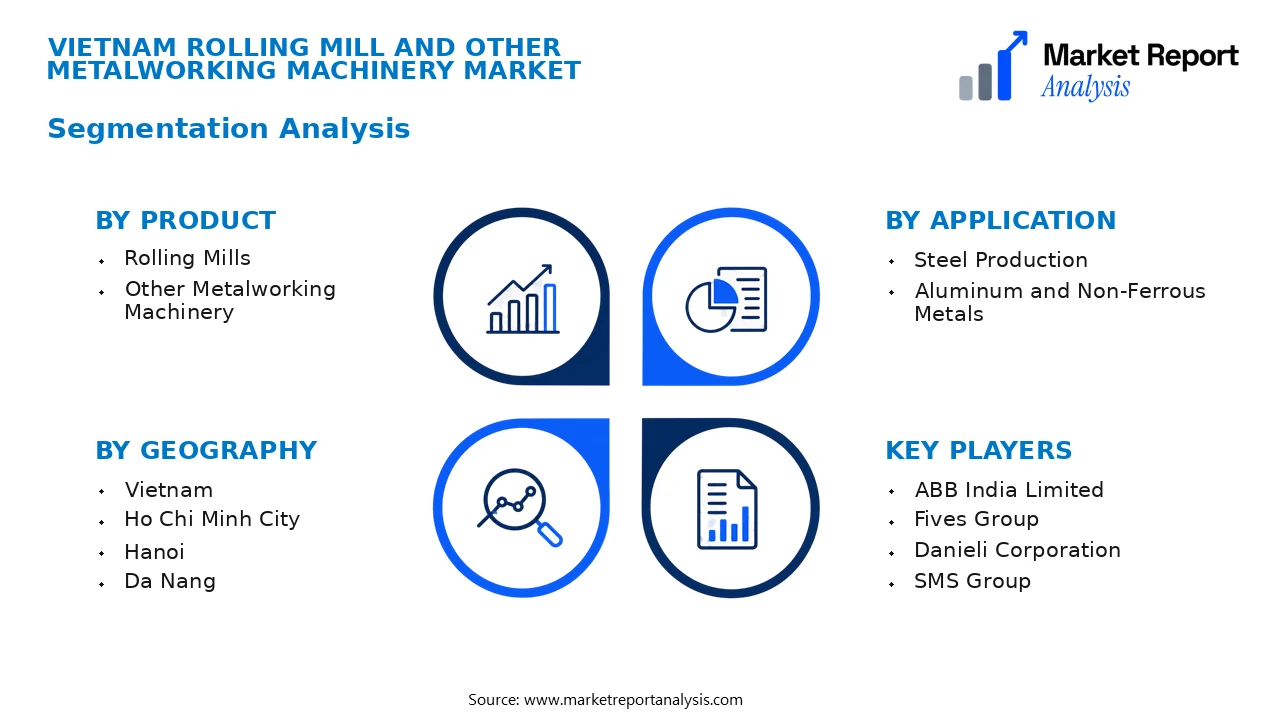
- Product
- Rolling Mills: Rolling mills are crucial for metal deformation processes, used extensively in steel and aluminum production, and are driven by Vietnam’s expanding infrastructure and construction sectors, with rising demand for high-quality metals.
- Other Metalworking Machinery: This segment includes cutting, welding, and finishing machinery, vital for application-specific manufacturing, with growth spurred by Vietnam’s increasing automation and modernization of fabrication facilities.
- Application
- Steel Production: The demand in steel manufacturing is driven by Vietnam's robust construction, automotive, and infrastructure sectors, which require high-volume steel output supported by localized metallurgical capacities.
- Aluminum and Non-Ferrous Metals: Growth in this application is linked to Vietnam’s expanding electronic and consumer goods industries, demanding lighter metals with specific processing machinery to cater to niche markets.
- End User
- Construction and Infrastructure: This sector is a primary driver, demanding large quantities of processed metals for residential, commercial, and civil engineering projects, thus increasing the requirement for advanced rolling and metalworking machinery.
- Automotive and Transportation: The automotive industry’s growth in Vietnam necessitates high-precision metal components, fueling demand for specialized metalworking and rolling mill machinery for component manufacturing.
- Geography
- Vietnam: As the core market, Vietnam exhibits high growth potential driven by local investments, government policies favoring manufacturing expansion, and a strategic focus on developing a self-reliant metal processing industry.
- Ho Chi Minh City: Serving as Vietnam’s economic hub, Ho Chi Minh City hosts numerous manufacturing units and industrial parks, making it a pivotal point for metal machinery demand and technological adoption.
- Hanoi: The political and administrative capital, Hanoi, is witnessing increased industrial activity, particularly in construction and manufacturing, thereby boosting local demand for metalworking machinery.
- Da Nang: Known for its strategic location and industrial growth, Da Nang is emerging as a key center for metal fabrications, with investments in infrastructure boosting machinery investments.
- Hai Phong: As a key port city with expanding heavy industry, Hai Phong’s demand for metal processing machinery is driven by import-export activities and regional manufacturing hubs.
- Can Tho: The economic center of the Mekong Delta, Can Tho’s growing infrastructure projects foster increased demand for metalworking machinery, relevant for regional construction and manufacturing sectors.
- Bien Hoa: Located near Ho Chi Minh City, Bien Hoa’s industrial zones focus heavily on metal products and machinery, making it a significant local market for metallic processing equipment.
- Nha Trang: As a tourism and coastal city with growing infrastructure, Nha Trang shows developing demand for metalworking machinery for construction and manufacturing activities.
Competitive Intelligence
The Vietnam Rolling Mill and Other Metalworking Machinery Market is characterized by a moderate level of competition, featuring a mix of domestic manufacturers and select international players seeking to capitalize on Vietnam’s expanding industrial base. Market concentration remains relatively fragmented, with no single company dominating, allowing for dynamic competition and innovation. Companies are primarily adopting aggressive business strategies focused on expanding regional geographic presence, forging strategic partnerships with local suppliers, and increasing investment in R&D to enhance product offerings and efficiency.
Product innovation is driven by the need for higher productivity, energy efficiency, and customization tailored to Vietnam's diverse industrial sectors. Notable are collaborations with local firms to deploy more sophisticated machinery adaptable to Vietnam’s infrastructure constraints. Several industry players have engaged in acquisitions, consolidating smaller local businesses to strengthen their market position and streamline supply chains. Expansion strategies often include establishing regional manufacturing hubs and service centers, particularly in Ho Chi Minh City and Hanoi, to better serve urban industrial hubs.
Investment in R&D remains pivotal for differentiation, with companies focusing on developing technologically advanced, environmentally sustainable machinery. Competitive margins are maintained through continuous innovation, strategic alliances, and tailored customer solutions, enabling firms to distinguish themselves in Vietnam’s burgeoning metalworking industry.
Leading Company Profiles
The competitive landscape features a mix of global heavy machinery manufacturers and local firms focusing on innovative solutions tailored to Vietnam’s market needs. These players are distinguished by their technological capabilities, product diversification, and strategic partnerships to expand their market share and enhance technological adoption within Vietnam.
- ABB India Limited
- Fives Group
- Danieli Corporation
- SMS Group
- Siemens AG
- Toshiba Machine Co., Ltd.
- Shenyang Heavy Machinery Group Co., Ltd.
- JFE Steel Corporation
- China MCC20 Group Corporation
ABB India Limited
ABB India offers integrated automation and electrical solutions tailored for metal processing plants, focusing on enhancing productivity, energy efficiency, and safety in Vietnam’s manufacturing sector.
Fives Group
Fives specializes in designing and manufacturing process equipment and systems for metal rolling mills, leveraging innovative automation and process control technologies to improve operational efficiency in Vietnam’s growing industry landscape.
Danieli Corporation
Danieli provides comprehensive metal transformation solutions, including rolling mills and scrap processing technologies, with a focus on sustainable manufacturing practices and digital integration tailored to Vietnam's market demands.
SMS Group
SMS Group delivers advanced equipment and technological solutions for metal production, emphasizing automation, energy savings, and digital monitoring systems, instrumental for modernization projects across Vietnam’s steel industry.
Siemens AG
Siemens offers digitalized automation systems and electrical components, underlining its strategic focus on smart manufacturing initiatives that boost efficiency and sustainability within Vietnam’s metalworking sectors.
Toshiba Machine Co., Ltd.
Toshiba Machine delivers machinery solutions specializing in precision and automation for the metalworking industry, actively supporting Vietnam’s capacity expansion and technological upgrades.
Shenyang Heavy Machinery Group Co., Ltd.
Shenyang Heavy Machinery provides heavy-duty machinery and rolling mill equipment, with strategic investments aimed at bolstering local manufacturing capabilities in Vietnam’s evolving industrial landscape.
JFE Steel Corporation
JFE Steel integrates advanced steel production and processing technologies, focusing on sustainable practices and efficiency improvements congruent with Vietnam’s industrial development objectives.
China MCC20 Group Corporation
China MCC20 specializes in large-scale industrial construction and equipment manufacturing, actively participating in Vietnam’s infrastructure projects and extensive steel mill modernization efforts.
Strategic Business Developments
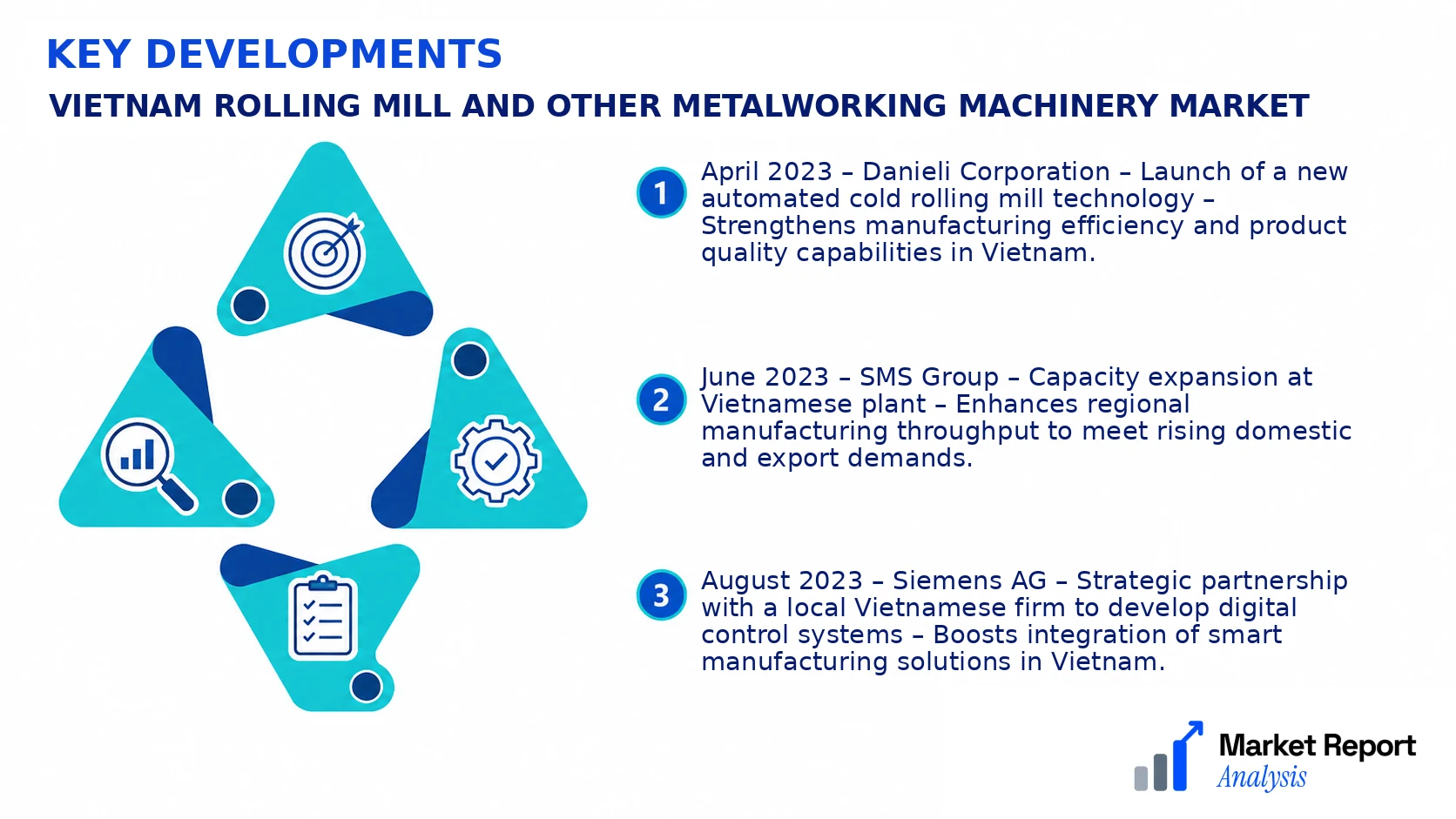
- April 2023 – Danieli Corporation – Launch of a new automated cold rolling mill technology – Strengthens manufacturing efficiency and product quality capabilities in Vietnam.
- June 2023 – SMS Group – Capacity expansion at Vietnamese plant – Enhances regional manufacturing throughput to meet rising domestic and export demands.
- August 2023 – Siemens AG – Strategic partnership with a local Vietnamese firm to develop digital control systems – Boosts integration of smart manufacturing solutions in Vietnam.
- November 2023 – ABB India Limited – Deployment of energy-efficient automation solutions in Vietnamese steel plants – Significantly lowers operational costs and carbon footprint.
- February 2024 – Fives Group – Investment in a new manufacturing facility in Vietnam – Provides localized production capacity for high-precision metalworking machinery, reducing lead times and costs.
Frequently Asked Questions
What is the Vietnam Rolling Mill and Other Metalworking Machinery Market?
The Vietnam Rolling Mill and Other Metalworking Machinery Market encompasses the manufacturing and sale of equipment used in processing and forming metal products, including rolling mills, fabrication machinery, and related equipment, primarily serving Vietnam's expanding steel and metal fabrication industries.
What is the current market size of Vietnam Rolling Mill and Other Metalworking Machinery Market?
As of 2026, the market is valued at approximately USD 1.2 Billion, reflecting steady growth driven by increasing infrastructure development, industrialization, and rising demand for steel and metal products across Vietnam's manufacturing sectors.
What factors are driving the Vietnam Rolling Mill and Other Metalworking Machinery Market?
Market growth is fueled by Vietnam’s escalating urban infrastructure projects, expanding construction and automobile manufacturing sectors, supportive government policies for industrial growth, and significant foreign direct investments in the metal processing industry.
Which Vietnamese city leads the Vietnam Rolling Mill and Other Metalworking Machinery Market?
Ho Chi Minh City is the leading hub, benefitting from its robust industrial base, strategic port access, and concentration of manufacturing enterprises, which collectively foster a vibrant market environment for metalworking machinery.
Which segment is expected to grow the fastest?
The steel rolling mill segment is projected to exhibit the highest growth rate, driven by rising demand for construction steel, industrial machinery, and automotive components throughout Vietnam, supported by technological advancements and modernization initiatives in steel production.
Who are the leading companies operating in the Vietnam Rolling Mill and Other Metalworking Machinery Market?
Major players include local firms such as VinFast and Vietnam Steel Corporation, along with international manufacturers like Danieli, SMS Group, and Primetals Technologies, who are expanding their manufacturing capacities to meet rising domestic demand.
Analyst Perspective
The long-term outlook for Vietnam's rolling mill and metalworking machinery market remains cautiously optimistic as the industry adjusts to evolving demand patterns and increasing automation. Strategic investment in advanced technology such as automation, IoT, and precision manufacturing is expected to enhance productivity and product quality, thereby strengthening Vietnam’s competitive position regionally. Opportunities are particularly pronounced in emerging industrial zones like Binh Duong, Hai Phong, and Da Nang, where infrastructure developments and favorable policies are attracting both domestic and foreign manufacturers. However, the sector faces risks from fluctuating raw material costs, intermittent trade uncertainties, and the need for workforce upskilling, which could temper growth momentum. Competitive intensity is expected to heighten as local players expand capacity and foreign firms deepen market penetration. Forward-looking, manufacturers should prioritize technological innovation and scalable production capabilities while leveraging Vietnam’s urban hubs to optimize supply chains and meet rising demand, ensuring sustainable long-term growth in this strategically vital market.
