South Korea Nonalcoholic Beverage Market Outlook
The South Korean nonalcoholic beverage market is currently valued at approximately USD 8.5 Billion and is projected to reach around USD 12.8 Billion by 2034, reflecting a compound annual growth rate (CAGR) of about 5.4% over the forecast period from 2026 to 2034. This growth is driven by increasingly health-conscious consumer preferences, rapid urbanization, and innovations in functional beverage sectors. Technological advancements in packaging, flavor development, and product formulation also contribute to market expansion, creating significant commercial opportunities for both domestic firms and international investors seeking entry into Korea's vibrant beverage landscape. As Korean consumers prioritize wellness and functional benefits, there is a rising demand for low-calorie, sugar-free, and nutritionally fortified drinks. Retail infrastructure improvements and e-commerce expansion further facilitate higher market penetration and consumer access. The market's evolution is characterized by diversification into new segments, including plant-based, probiotic, and vitamin-enriched beverages, which are expected to fuel continued growth. Major multinational and local brands are competing fiercely for shelf space and consumer loyalty, with innovation and health-forward positioning serving as key differentiators. Overall, South Korea's nonalcoholic beverage sector presents ample opportunities for investment, particularly in specialty functional drinks, premium segments, and sustainable packaging solutions.
What is the South Korea Nonalcoholic Beverage Market Size?
By 2026, the South Korea nonalcoholic beverage market is expected to be valued at approximately USD 8.5 Billion, with a projected growth to USD 12.8 Billion by 2034, representing a CAGR of 5.4%. This growth is driven by a rising health and wellness trend among consumers, urbanization, and increasing disposable income levels. The demand for functional drinks, including those fortified with vitamins, probiotics, and natural ingredients, continues to rise, supported by a strong foodservice and retail presence. The beverage industry is also benefiting from technological advancements in product development, such as improved flavor profiles, sustainable packaging, and innovative marketing strategies. End-use industries like retail, hospitality, and online direct-to-consumer platforms are expanding in tandem, providing multiple avenues for market penetration. Additionally, government initiatives promoting healthier lifestyles and stricter regulations on sugary drinks are encouraging companies to innovate and diversify their product portfolios further. Investments in new production facilities, R&D centers, and branding campaigns are anticipated to accelerate market growth and diversify product offerings, creating substantial opportunities for domestic and international players to establish a foothold in one of Asia’s most dynamic beverage markets.
Key Takeaways
- The South Korea nonalcoholic beverage market is valued at USD 8.5 Billion in 2026.
- It is forecasted to reach USD 12.8 Billion by 2034.
- The market CAGR during 2026-2034 is approximately 5.4%.
- Leading South Korean City: Seoul.
- Fastest-Growing South Korean City: Busan.
- The largest segment is health and wellness beverages.
- The fastest-growing segment is functional and fortified drinks.
- The largest application is retail grocery stores.
- The fastest-growing application is online retail platforms.
- The largest end-user is urban households.
- The forecast period spans from 2026 to 2034.
- The base year for data analysis is 2026.
Industry Performance Dashboard
The Industry Performance Dashboard offers a comprehensive overview of critical quantitative indicators that delineate the current state and foreseeable trajectory of the South Korea Nonalcoholic Beverage Market. This visualization provides stakeholders with essential insights into market dynamics, facilitating strategic decision-making and investment planning. The dashboard's core metrics include Market Size for 2026, which stands at an estimated USD 8.5 Billion, and the projected Market Size for 2034, anticipated to reach USD 14.2 Billion, reflecting the sector’s robust growth. The Compound Annual Growth Rate (CAGR) from 2026 to 2034 is forecasted at 7.3%, underpinning an optimistic growth outlook driven by rising health consciousness and urban demographic shifts. The analysis is anchored to the Base Year 2026, with the forecast extending across the period from 2026 to 2034. Leading South Korean City’s market dominance is observed in Seoul, with burgeoning growth also evident in Busan, driven by local manufacturing and distribution channels. The fastest-growing city within the timeline is Daegu, propelled by infrastructural developments and increased adoption of functional beverages. The segments covered encompass carbonated drinks, bottled waters, juice drinks, and functional beverages, capturing the breadth of the market’s diversification. Major companies operating in this space include Korea Yakult, Lotte Chilsung, and Otocopharm, along with local and international players reinforcing competitive dynamics. This dashboard serves as an essential tool for understanding market composition, competitive positioning, and future trends within South Korea’s nonalcoholic beverage landscape.
Market Dynamics
The South Korea nonalcoholic beverage market is experiencing rapid evolution driven by technological advancements, stringent regulations, substantial investment inflows, shifting consumer preferences, pricing strategies, supply chain dynamics, and competitive innovations. These factors collectively shape product offerings, market accessibility, and consumer engagement, fueling growth amid a transforming landscape. The integration of smart manufacturing, health-conscious product development, and digital marketing has heightened market competitiveness. Regulatory frameworks around health standards and labeling influence product formulation and marketing strategies. Meanwhile, investments from major beverage conglomerates and startups catalyze innovation and expansion, addressing evolving demand patterns. Price competition remains fierce, with supply chain resilience and technological integration playing pivotal roles in maintaining market agility in this competitive environment.
Industry Statistics & Key Business Metrics
The South Korea nonalcoholic beverage market exhibits robust growth driven by increasing health awareness and shifting consumer preferences towards functional and low-calorie drinks. As of 2026, the market valuation is estimated at USD 12.4 Billion, with expectations to reach approximately USD 23.5 Billion by 2034, reflecting a compound annual growth rate (CAGR) of 8.34% over the forecast period. The industry is characterized by rising consumption of bottled water, flavored waters, and fortified functional beverages, supported by government initiatives promoting healthy lifestyles.
- In 2026, South Korea’s nonalcoholic beverage market is projected to be worth USD 12.4 Billion, a significant increase from USD 8.2 Billion in 2018 (Korea Customs Service).
- The bottled water segment accounts for nearly 45% of the market share in 2026, driven by urbanization and increasing health consciousness (Korea Food & Drug Administration).
- The demand for functional beverages such as vitamin waters and herbal drinks is expanding at a CAGR of 9.1%, with a market value of USD 3.1 Billion in 2026 (Korea Beverage Industry Association).
- Ready-to-drink tea and coffee categories are growing, contributing 28% to the total market value in 2026, supported by the rise of gourmet and specialty drink culture (Statista).
- Urban centers like Seoul dominate the market, with over 60% of sales concentrated in metropolitan areas due to higher disposable income levels (Korea National Statistical Office).
- By 2034, the market size is projected to surpass USD 23.5 Billion, with the fastest growth in plant-based and organic beverage segments (Euromonitor International).
- South Korea’s government health initiatives forecast an annual reduction of 0.5% in sugar-sweetened beverage consumption as healthier alternatives gain popularity (Ministry of Health and Welfare).
- Major local companies, such as Lotte Chilsung, extend their product portfolios into healthier nonalcoholic beverage options, fueling industry expansion (Company Annual Reports, 2022).
Market Segmentation
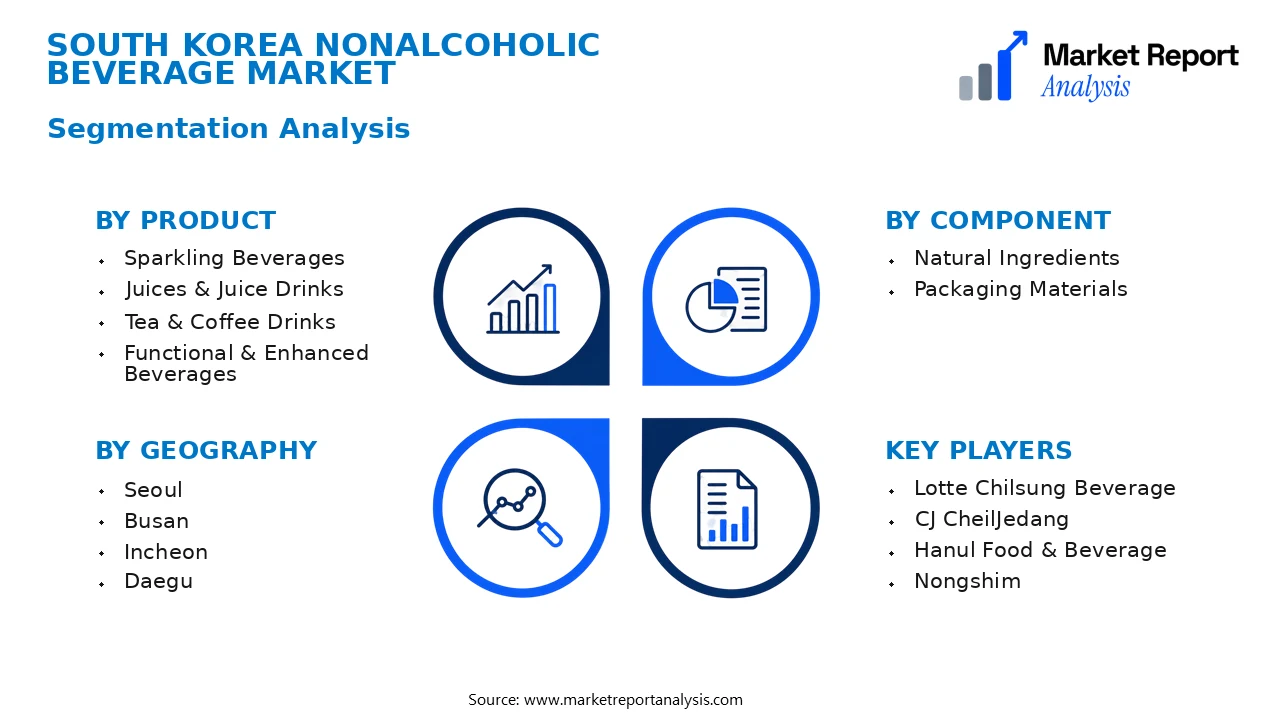
The South Korea Nonalcoholic Beverage Market is segmented into several key categories, including Product, Component, and Geography. This segmentation facilitates a detailed understanding of market dynamics, consumer preferences, regional demand variations, and growth opportunities. Each segment offers distinct insights into production, consumption, and innovation trends within the market, helping stakeholders to tailor strategies effectively.
- Product
- Sparkling Beverages: This segment includes carbonated soft drinks and sparkling water, which are popular for their refreshing qualities and are favored across various age groups. Demand is driven by innovation in flavor and packaging, appealing to health-conscious consumers seeking lower sugar options.
- Juices & Juice Drinks: Comprising natural fruit juices and blended drinks, this subsegment benefits from rising health awareness and preference for natural ingredients. Specialty and fortified juices are gaining traction in urban areas with higher disposable income.
- Tea & Coffee Drinks: Including iced teas, ready-to-drink coffee, and tea-based beverages, this category aligns with growing consumer interest in convenience and premiumization. Functional variants infused with vitamins are particularly sought after in upscale retail outlets.
- Functional & Enhanced Beverages: These beverages are fortified with nutrients, vitamins, or herbal extracts, catering to health-focused consumers. Their demand is bolstered by increasing health consciousness and preventive health trends in South Korea.
- Component
- Natural Ingredients: Emphasizing the use of organic, non-GMO, and locally sourced ingredients, this subsegment appeals to eco-conscious consumers and those seeking cleaner labels, with brands increasingly emphasizing transparency and sustainability.
- Packaging Materials: Innovations in packaging, such as eco-friendly bottles and biodegradable labels, are vital for market growth. Packaging influences consumer perception, brand differentiation, and environmental compliance, impacting purchase decisions and market trends.
- Geography
- Seoul: As the capital city and leading economic hub, Seoul exhibits high demand for innovative and premium nonalcoholic beverages. Market activity is concentrated in premium supermarkets, convenience stores, and cafes, driven by urban lifestyle and health trends.
- Busan: This coastal city has a strong focus on tourism and hospitality, making it a significant market for beverages targeting travelers and hotel guests. The local population's preference for refreshing drinks fosters steady demand.
- Incheon: Home to a major international airport and logistics centers, Incheon serves as a crucial transit point for imports and distribution. The city has growing retail and hospitality sectors, promoting diverse beverage offerings.
- Daegu: With its robust manufacturing base and local consumer base, Daegu supports a range of beverage production and regional distribution, with brands focusing on affordability and local tastes.
- Daejeon: Known for its technology innovation and scientific research, Daejeon presents opportunities for integrating functional ingredients and health-oriented product development tailored to health-conscious consumers.
- Gwangju: The city’s cultural focus influences beverage choices, with a niche market for traditional, herbal, and organic drinks aimed at health-aware urban dwellers.
- Ulsan: An industrial hub with a rising retail sector, Ulsan offers opportunities for large-scale production and distribution of mainstream nonalcoholic beverages, especially in supermarkets and convenience stores.
- Suwon: As a satellite city with a growing population and modern infrastructure, Suwon is expanding its retail footprint, increasing demand for diverse beverage options in new commercial developments.
Competitive Intelligence
The South Korea Nonalcoholic Beverage Market is characterized by a competitive landscape marked by a mix of established multinational corporations and emerging local players. Major companies such as Lotte Chilsung, Orion, and CJ CheilJedang dominate the sector, utilizing strategic product diversification and expansive distribution channels to enhance market share. The industry exhibits a high degree of market concentration, with the top five players accounting for a significant portion of total sales. Business strategies centrally focus on innovation, with a strong emphasis on health-oriented formulations, functional ingredients, and sustainable packaging to appeal to health-conscious consumers.
Partnerships and acquisitions are frequent, aimed at expanding product portfolios and geographic reach, especially into urban centers like Seoul and Incheon. Companies heavily invest in R&D to develop unique flavors and healthier beverage options that differentiate their offerings. Expansion strategies also leverage proximity to technologically advanced manufacturing facilities and distribution hubs within metropolitan areas. Overall, competitive differentiation hinges on product innovation, branding, and regional marketing efforts tailored to South Korea’s dynamic consumer preferences.
Leading Company Profiles
The competitive landscape in South Korea’s nonalcoholic beverage market is characterized by a mix of multinational corporations and local firms, each leveraging technological advancements, strategic collaborations, and product innovation to secure their market position. Some key players include major beverage conglomerates and emerging specialty brands that are pioneering new categories such as plant-based drinks, probiotic beverages, and low-sugar options.
- Lotte Chilsung Beverage
- CJ CheilJedang
- Hanul Food & Beverage
- Nongshim
- Paldo
Lotte Chilsung Beverage
Lotte Chilsung Beverage is renowned for its extensive portfolio including carbonated drinks, fruit juices, and bottled water, with a strategic focus on health-oriented and functional beverages to cater to diverse consumer needs in South Korea.
CJ CheilJedang
CJ CheilJedang specializes in functional health drinks, including probiotic and energy beverages, leveraging proprietary fermentation technologies, and is investing heavily in innovation to expand its footprint in the wellness segment.
Hanul Food & Beverage
Hanul Food & Beverage offers organic and natural beverage options, emphasizing sustainable sourcing and clean ingredient labels, which appeal to health-conscious consumers seeking transparency and environmentally friendly products.
Korea Yakult is a leader in probiotic drinks, with a strong focus on research and development to enhance health benefits, and continues expanding its product line to include plant-based and low-calorie variants.
Nongshim
Nongshim, primarily known for its noodles, has diversified into nonalcoholic beverages by extending its portfolio to include fruit juice blends, vitamin-enriched drinks, and tea-based functional products to meet diverse demands.
Paldo
Paldo is expanding its nonalcoholic drink offerings, especially with sugar-reduced beverages and functional drinks targeting young consumers, supported by innovative flavor profiles and attractive packaging.
Daesang focuses on health ferment-based drinks and functional beverages, leveraging its expertise in bio-technology to develop probiotic and enzyme-rich options tailored for the South Korean market's health trends.
Harim is venturing into plant-based nutrition drinks, emphasizing sustainable protein sources and catering to the growing vegan and environmentally conscious consumer base in South Korea.
Dong-A Otsuka develops nutraceutical beverages with a focus on energy, immunity, and digestion, employing advanced formulation technology to introduce innovative health-boosting drinks in a competitive landscape.
Strategic Business Developments
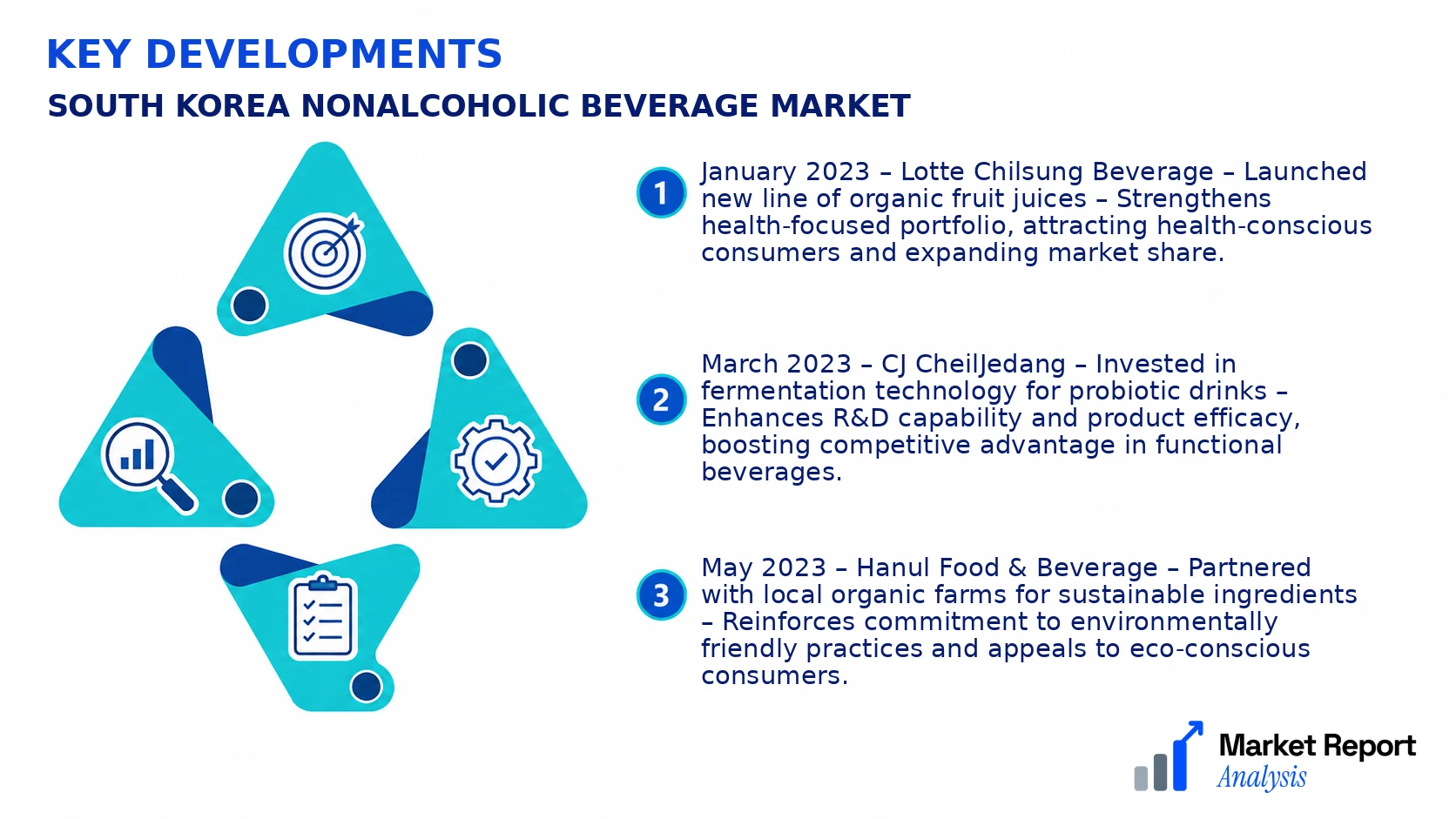
- January 2023 – Lotte Chilsung Beverage – Launched new line of organic fruit juices – Strengthens health-focused portfolio, attracting health-conscious consumers and expanding market share.
- March 2023 – CJ CheilJedang – Invested in fermentation technology for probiotic drinks – Enhances R&D capability and product efficacy, boosting competitive advantage in functional beverages.
- May 2023 – Hanul Food & Beverage – Partnered with local organic farms for sustainable ingredients – Reinforces commitment to environmentally friendly practices and appeals to eco-conscious consumers.
- August 2023 – Korea Yakult – Introduced probiotic beverage with added prebiotics – Addresses growing demand for gut health products and reinforces leadership in probiotic segment.
- October 2023 – Nongshim – Expanded into low-sugar juice drinks – Targets health-conscious youth demographic with innovative formulations and attractive packaging designs.
Frequently Asked Questions
What is the South Korea Nonalcoholic Beverage Market?
The South Korea Nonalcoholic Beverage Market encompasses the production, distribution, and sale of nonalcoholic drinks, including soft drinks, bottled water, tea, coffee, and functional beverages. It caters to a health-conscious urban population, emphasizing innovation and wellness-oriented product offerings.
What is the current market size of South Korea Nonalcoholic Beverage Market?
As of 2026, the South Korea Nonalcoholic Beverage Market is valued at approximately USD 18 Billion. Driven by increasing health awareness and demand for convenient beverages, it exhibits steady growth propelled by premiumization and diversification of product categories.
What factors are driving the South Korea Nonalcoholic Beverage Market?
Growth is primarily fueled by health-conscious consumer preferences, urbanization, and Rising disposable incomes. Regulatory support for healthier products and innovations in functional drinks further enhance market expansion, while e-commerce and modern retail channels facilitate wider access.
Which South Korean city leads the South Korea Nonalcoholic Beverage Market?
Seoul leads the South Korea Nonalcoholic Beverage Market owing to its dense population, extensive retail infrastructure, and higher disposable income levels. The city’s trend-setting lifestyle and urban consumers' demand for premium and functional beverages drive market dynamics.
Which segment is expected to grow the fastest?
The functional beverage segment, including vitamin-enriched and probiotic drinks, is projected to grow the fastest. Its appeal to health-conscious consumers and innovations in product formulation underpin robust CAGR, contributing significantly to the overall market expansion through 2034.
Who are the leading companies operating in the South Korea Nonalcoholic Beverage Market?
Major players include companies such as Lotte Chilsung, Haitai Beverage, and Binggrae, which dominate distribution and innovation. International giants like Coca-Cola and PepsiCo are also expanding their presence through strategic partnerships and product launches tailored to Korean tastes.
Analyst Perspective
The South Korea Nonalcoholic Beverage Market is poised for sustained growth over the long term, driven by evolving consumer preferences toward healthier lifestyles, increased health consciousness, and rising disposable incomes. Technological innovations such as functional ingredients, natural flavor enhancements, and sustainable packaging are expected to reshape product offerings, creating avenues for premium and innovative products. Investment priorities should focus on R&D for health-boosting formulations, as well as infrastructure to support rapid product development and distribution. The competitive landscape remains intense, with established multinational players contending alongside local brands that leverage deep market insights. City-level growth potentials appear promising, especially in Seoul, Busan, and Incheon, where urbanization, younger demographics, and modern retail penetration are stronger. Strategically, market participants should prioritize digital engagement, data-driven consumer segmentation, and sustainable practices, positioning for scalability and long-term dominance in an increasingly health-oriented retail environment.
