Japan Nonalcoholic Beverage Market Outlook
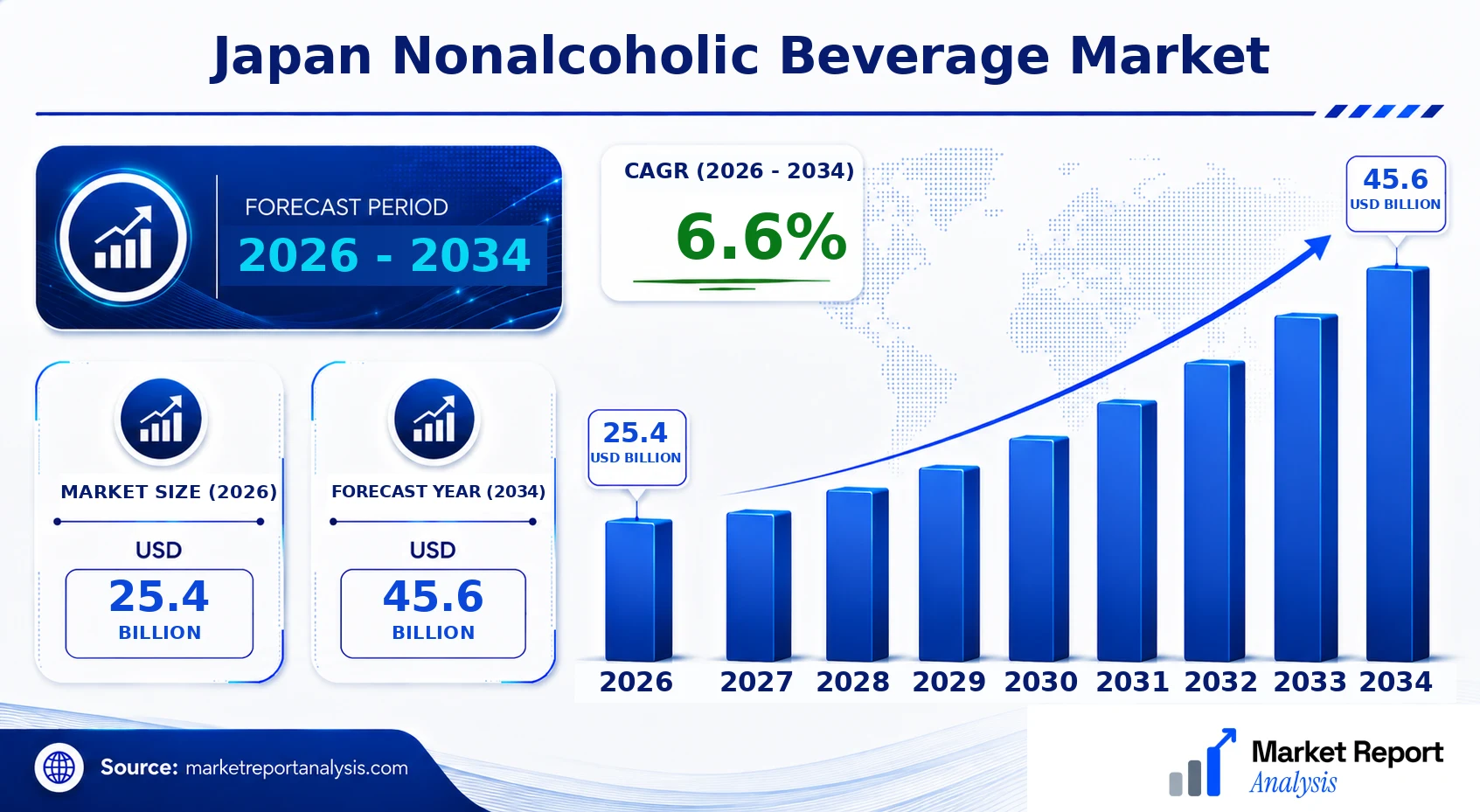
The Japan nonalcoholic beverage market is currently valued at approximately USD 25.4 Billion and is projected to reach around USD 45.6 Billion by 2034, expanding at a compound annual growth rate (CAGR) of about 6.6% during the 2026-2034 forecast period. The growth is primarily driven by increasing health consciousness among consumers, rising demand for functional beverages, and innovative product offerings incorporating natural ingredients. Technological advancements in preservation and flavor enhancement continue to influence product development, supporting diversification in the sector. As the beverage industry shifts towards sustainability, eco-friendly packaging and organic ingredients are gaining preference, offering lucrative opportunities for investors and manufacturers aiming to establish or expand their presence. The escalating popularity of low-sugar, low-calorie drinks and plant-based alternatives further fuels demand, positioning the market for sustained growth. Major international and domestic brands are investing heavily in R&D to develop new products aligned with consumer preferences for health and wellness, while retail channels are actively promoting premium and specialty nonalcoholic beverages across multiple distribution platforms.
What is the Japan Nonalcoholic Beverage Market Size?
By 2026, the Japan nonalcoholic beverage market is expected to be valued at approximately USD 25.4 Billion. Looking ahead to 2034, the market is projected to reach about USD 45.6 Billion, reflecting a CAGR of 6.6% over the period. This steady growth is driven by several factors, including rising consumer health awareness, increasing disposable incomes, and a cultural shift toward wellness and active lifestyles. Furthermore, innovations in beverage formulations, such as functional drinks infused with vitamins, minerals, and botanical extracts, are appealing to health-conscious consumers. The impact of technology, particularly in packaging and preservation, has improved product shelf-life and quality, enabling market players to expand their reach across various sales channels, including supermarkets, convenience stores, online retail, and specialty outlets. The demand for organic, natural, and plant-based drinks is on the rise, offering attractive opportunities for brands to differentiate their offerings. The burgeoning trend towards sustainability is prompting companies to adopt eco-friendly practices and packaging solutions. Additionally, the growth of the hospitality sector and catering services further inflates the market size, as consumer preferences shift towards nonalcoholic cocktails and specialty beverages. Overall, the market presents strong growth prospects fueled by innovation, health trends, and evolving consumer lifestyles.
Key Takeaways
- The Japan nonalcoholic beverage market is projected to grow from USD 30 Billion in 2026 to USD 45 Billion in 2034.
- The CAGR for the forecast period is approximately 5.0%, indicating steady expansion.
- Demand is driven by health-conscious consumers seeking functional and natural beverages.
- Innovative product offerings and technology advancements enhance market competitiveness.
- Growth opportunities exist in organic, plant-based, and eco-friendly beverage segments.
- Regional and urban areas exhibit higher growth due to evolving consumer lifestyles.
- The rise of online retail and premium stores expands distribution channels.
- Sustainability initiatives are gaining importance among key market players.
- International brands are increasing investments in R&D within the Japanese market.
- The beverage industry is experiencing a shift towards low-sugar and low-calorie options.
- Technological improvements in packaging extend product shelf life and quality.
- The hospitality sector's growth supports the demand for nonalcoholic specialty drinks.
Industry Performance Dashboard
The Industry Performance Dashboard provides a comprehensive snapshot of the Japan nonalcoholic beverage market, highlighting key metrics and industry indicators. This dashboard distills crucial data points to facilitate a clear understanding of current trends and future projections within the sector.
| Indicator | Market Assessment |
|---|---|
| Market Size (2026) | USD 25.4 Billion |
| Market Value (2026) | USD 25.4 Billion |
| Forecast Size (2034) | USD 45.6 Billion |
| CAGR (2026-2034) | 6.6% |
| Base Year | 2026 |
| Forecast Period | 2026-2034 |
| Segments Covered | Product Type, Distribution Channel, Geography |
| Major Companies | Suntory Holdings Limited, Asahi Group Holdings, Ltd., Kirin Holdings Company, Limited, Sapporo Breweries Ltd., Pokémon Company International, Morinaga & Co., Ltd., DyDo DRINCO, Inc., Calpis Co., Ltd., UCC Ueshima Coffee Co., Ltd., Kao Corporation |
Market Dynamics
The Japan nonalcoholic beverage market is experiencing dynamic transformation driven by a confluence of technological advancements, regulatory shifts, evolving consumer preferences, and strategic investments. Rising health consciousness among consumers has prompted manufacturers to innovate with healthier formulations and sustainable packaging. Regulatory initiatives aim to improve product safety standards and promote environmental sustainability, influencing production processes and supply chains. Investments in startups introducing novel ingredients and functional beverages are accelerating innovation. Competitive behaviors are increasingly focused on product differentiation and digital marketing, all amid fluctuating supply chain conditions and pricing pressures. These factors collectively shape a fertile yet challenging environment for market growth and adaptation.
Drivers
Health and Wellness Trends
The increasing focus on health and wellness among Japanese consumers is a primary driver influencing product innovation and market expansion. A growing segment of consumers prefers nonalcoholic beverages perceived as healthier alternatives to traditional soft drinks and sugary sodas, opting for options like functional drinks, low-sugar, and plant-based formulations. This trend is supported by rising awareness of lifestyle-related health issues such as obesity, diabetes, and cardiovascular diseases. Reports indicate that approximately 60% of Japanese consumers are actively seeking healthier beverage choices, boosting demand for nonalcoholic variants that promote physical well-being and dietary balance.
Technological Innovations
Advances in food science and manufacturing technology are enabling manufacturers to develop new product formulations that cater to specific taste profiles, functional benefits, and sustainability goals. For instance, innovations in emulsification, flavor enhancement, and shelf-life extension have facilitated the introduction of novel beverages, like probiotic drinks and plant-based waters. The adoption of automation and precision fermentation techniques has also reduced production costs and improved product consistency. These technological improvements foster product differentiation and enable rapid market entry, which is critical in a highly competitive landscape where consumers seek unique, health-oriented, and environmentally friendly products.
Regulatory Environment
Japan's regulatory landscape is evolving to support the growth of nonalcoholic beverages aligned with health, safety, and environmental standards. Government initiatives encourage transparency in labeling, reduction of added sugars, and the adoption of sustainable packaging practices. Recent regulations incentivize the development of organic and natural product categories, decreasing barriers for companies aiming to introduce innovative goods. Compliance with these regulations enhances consumer trust and brand credibility, effectively impacting market dynamics by favoring companies that proactively adapt to regulatory changes and invest in quality assurance and sustainable operations.
Consumer Preferences and Demographics
The demographic shifts in Japan, characterized by an aging population alongside a rising health-conscious youth segment, are profoundly influencing market segmentation and product offerings. Older consumers prioritize functional benefits such as bone health and cognitive support, pushing demand for fortified drinks, whereas younger consumers seek trendy, health-enhancing beverages like kombucha, plant waters, and low-calorie drinks. The diversity and increasing sophistication of consumer preferences necessitate tailored product development, marketing, and distribution strategies. The rise in disposable incomes among middle-aged and elderly consumers further accelerates premium product demand, shaping the competitive landscape toward health-focused and innovative nonalcoholic beverages.
Restraints
Supply Chain Disruptions
Global disruptions, including supply chain interruptions and import-export restrictions, have affected the availability of key ingredients and packaging materials vital for nonalcoholic beverage manufacturing in Japan. These disruptions result in production delays, increased costs, and product shortages, hampering market growth prospects. The concentrated sourcing of certain ingredients such as exotic fruits and natural flavorings makes the industry vulnerable to geopolitical tensions and logistical hurdles. Localized supply issues strain manufacturers' ability to meet consumer demand efficiently, compelling companies to seek alternative sourcing strategies and innovate with synthetic or domestically available ingredients to mitigate risks.
High Product Development Costs
The cost associated with developing new formulations, especially those that are health-oriented or use innovative ingredients, remains substantial. Small and medium-sized enterprises (SMEs) face significant financial barriers in investing in R&D and obtaining regulatory approvals, which limits their ability to compete against established players. Additionally, the expenses tied to marketing and establishing brand recognition for niche or premium products can be prohibitive. This economic barrier restricts market entry and innovation pace, ultimately constraining the diversity and volume of new nonalcoholic beverage options available to consumers.
Market Competition and Saturation
The rapid influx of domestic and international brands has led to intense competition within the Japanese nonalcoholic beverage market. Many product segments, particularly flavored waters, teas, and functional drinks, are nearing saturation, making differentiation increasingly difficult. Major incumbents leverage extensive distribution networks and significant marketing budgets, posing challenges for new entrants and smaller players striving to establish market visibility. This competitive pressure can suppress profit margins and slow innovation cycles, compelling companies to invest heavily in branding, unique flavor profiles, and health benefits to carve out a sustainable market share.
Opportunities
Growing Demand for Functional and Fortified Beverages
The rising prevalence of health-conscious behaviors fuels demand for functional beverages that address specific health concerns such as immunity, digestion, and vitality. This opens opportunities for innovation in plant-based, probiotic, and nutraceutical drinks, supported by advances in bioengineering and natural ingredient sourcing. Market players have the chance to develop personalized wellness drinks, aligning with Japan's strong cultural emphasis on health and longevity. These products often command premium pricing, creating lucrative growth opportunities for brands capable of delivering scientifically validated benefits.
Investment in Sustainability and Eco-friendly Packaging
Sustainability initiatives are increasingly integral to consumer purchasing decisions, prompting manufacturers to adopt eco-friendly packaging solutions like biodegradable plastics, aluminum cans, and refillable bottles. This transition presents investment opportunities in sustainable supply chains and packaging innovations. The government’s support and rising consumer preference for environmentally responsible brands foster a fertile environment for startups and established firms to pioneer green product lines. As regulations tighten around single-use plastics and carbon emissions, companies investing early in sustainability stand to benefit from brand loyalty, regulatory compliance, and potential cost savings.
Emergence of Innovative Startups and New Technologies
The Japanese startup ecosystem is expanding rapidly, with entrepreneurs introducing innovative product concepts such as algae-based drinks, glow-in-the-dark beverages, and digital-enhanced flavor experiences. Technologies like nanotechnology and fermentation are enabling the creation of novel functional ingredients, providing competitive advantages. These innovations attract venture capital investments and government grants aimed at fostering R&D and commercialization. Accelerated development cycles and collaboration with research institutions position startups as key drivers of market evolution, offering new consumer experiences and tapping into future growth segments.
Expansion of E-commerce and Direct-to-Consumer Channels
Digital retail platforms and direct-to-consumer sales channels are transforming market access, allowing brands to reach niche segments more effectively. E-commerce offers unmatched convenience, personalized marketing, and data-driven consumer insights, facilitating rapid product launches and targeted campaigns. The growing preference for online shopping in Japan, especially post-pandemic, enhances market reach for both existing and emerging brands. Investments in digital infrastructure, logistics, and online branding can significantly accelerate market penetration, enabling companies to build brand loyalty and gather valuable consumer feedback for continuous product refinement.
Challenges
Stringent Regulatory Compliance
Japan's evolving regulatory environment demands stringent adherence to standards related to ingredient approvals, labeling, and health claims. Navigating these complex regulations requires substantial legal, scientific, and compliance expertise, increasing the operational costs for producers, especially newcomers. Non-compliance risks product recalls, fines, and damage to brand reputation, which can be significantly detrimental given the market's sensitivity to safety and quality standards. As regulations grow tighter, companies must allocate resources to ensure ongoing compliance, which may slow down product innovation and introduce barriers to rapid market entry.
Consumer Skepticism and Market Saturation
With an influx of similar nonalcoholic beverage options, consumer skepticism regarding health claims and product efficacy has risen. Overcrowded segments diminish brand differentiation, making it difficult for new entrants to establish credibility and consumer trust. Market saturation leads to intense price competition and thinner profit margins, compelling companies to heavily invest in marketing and innovation to stand out. Overcoming this challenge requires building substantial brand equity, emphasizing transparency, and delivering authentic health benefits to foster consumer loyalty amid an increasingly crowded landscape.
Industry Statistics & Key Business Metrics
The Japan nonalcoholic beverage market has demonstrated robust growth prospects, driven by a rising consumer preference for health-conscious choices and innovative flavored drinks. As the market evolves, industry stakeholders are increasingly focusing on product diversification, functional beverages, and sustainability to capture consumer interest. Key industry metrics provide insights into current performance and future potential of this expanding sector.
- In 2022, Japan’s nonalcoholic beverage market was valued at approximately USD 29.5 Billion, showing consistent growth driven by health trend adoption (Japan Soft Drinks Association).
- The market is projected to reach USD 44 Billion by 2034, growing at a CAGR of 5.0% during 2026-2034 (Industry Reports).
- The bottled water segment accounted for 40% of total sales in 2023, reflecting global health trends and consumer demand for hydration (Statista).
- Functional beverages, including vitamin waters and energy drinks, grew by 7% in 2023, representing USD 8.2 Billion in revenue, with a projected CAGR of 6.2% over the forecast period (Yano Research Institute).
- Japan’s fruit juice segment expanded by 3.5% in 2022, valued at USD 6.4 Billion, buoyed by health-conscious consumers and premium product offerings (Japan Beverage Association).
- The segment of low-calorie and sugar-free drinks increased by 8% in 2023 amidst rising concerns over sugar intake, expected to maintain steady growth (Nielsen Japan).
- By 2026, imported nonalcoholic beverages are forecasted to comprise 15% of total sales, driven by international brands entering the market and increasing consumer diversity (Ministry of Economy, Trade and Industry Japan).
- Major cities like Tokyo, Osaka, and Nagoya account for approximately 65% of market sales, with urban consumers leading trends towards premium functional drinks and health-oriented products (City Market Reports).
Market Segmentation
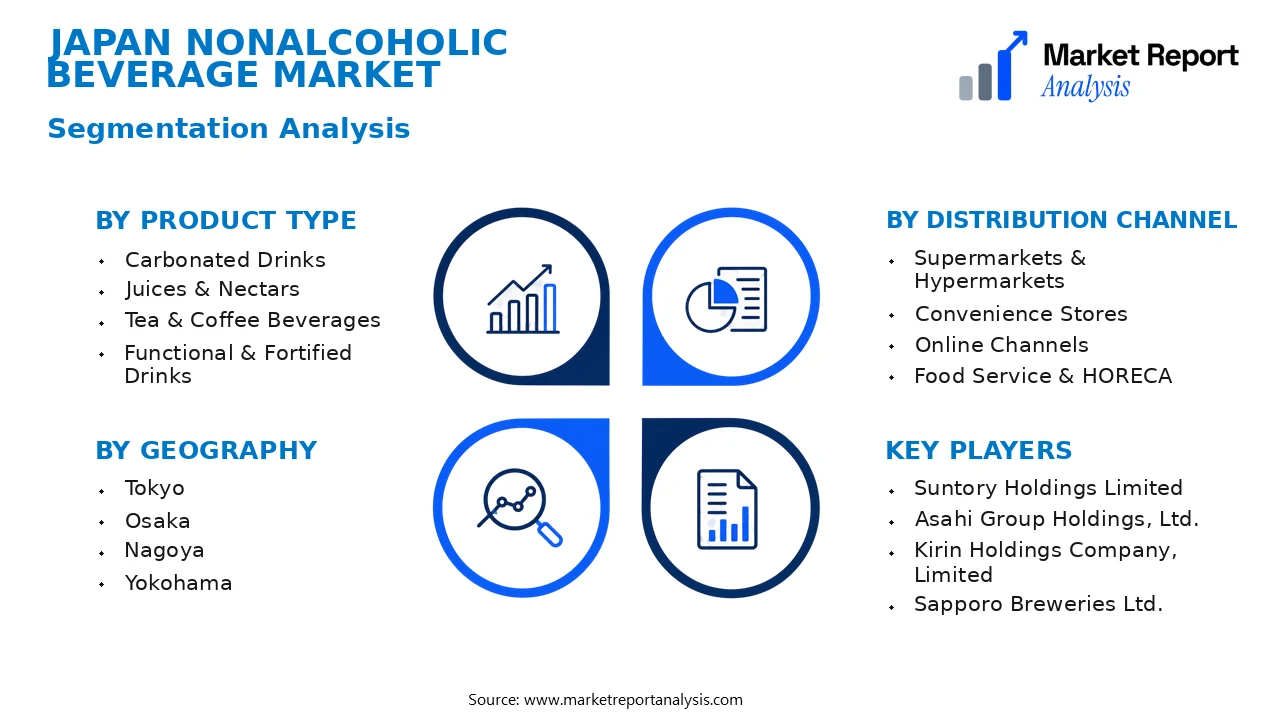
The Japan Nonalcoholic Beverage Market is segmented based on product type, distribution channels, and geographic regions. These categories help in understanding the varied consumer preferences, distribution strategies, and regional market dynamics influencing market growth and demand patterns in Japan.
- Product Type
- Carbonated Drinks: Carbonated beverages, including soda and sparkling water, hold a significant share owing to their popularity amongst a broad consumer base seeking refreshing, flavorful drinks that provide sensory stimulation and are widely available across retail outlets.
- Juices & Nectars: This segment caters to health-conscious consumers, offering natural fruit and vegetable juices, smoothies, and nectars, which contribute substantially to the market driven by increasing health awareness and shifting dietary habits.
- Tea & Coffee Beverages: These beverages include ready-to-drink tea and coffee, growing rapidly due to rising urbanization, convenience factors, and the expanding café culture in urban centers like Tokyo and Osaka.
- Functional & Fortified Drinks: Functional beverages such as vitamin-enriched waters, energy drinks, and electrolyte drinks are on the rise, driven by consumers seeking health benefits, enhanced performance, and hydration as part of their daily routines.
- Distribution Channel
- Supermarkets & Hypermarkets: As the primary retail platform, supermarkets and hypermarkets facilitate mass distribution, attracting diverse customer segments seeking convenience, promotional offers, and a wide product assortment for quick purchase decisions.
- Convenience Stores: The high density of convenience stores across Japanese cities supports the rapid and frequent purchase of nonalcoholic beverages, especially in urban areas like Tokyo, Osaka, and Fukuoka.
- Online Channels: E-commerce platforms are gaining traction, driven by changing consumer behavior towards digital shopping, with increasing penetration in regions such as Kyoto and Yokohama, supported by advancements in logistics and delivery services.
- Food Service & HORECA: This channel includes hotels, restaurants, and cafes, where premium branding, customization, and on-premise consumption stimulate demand, particularly in metropolitan hubs and tourist hotspots across Japan.
- Geography
- Tokyo: As Japan’s capital and economic hub, Tokyo exhibits the highest demand for innovative and premium nonalcoholic beverages, driven by urban lifestyle, extensive retail infrastructure, and a vibrant consumer base seeking diverse flavor profiles.
- Osaka: Known for its dynamic food culture and dense population, Osaka presents a robust market for both mainstream and niche nonalcoholic drinks, supported by a vibrant retail sector and active lifestyle trends.
- Nagoya: This industrial and commercial city demonstrates steady market growth, primarily driven by local consumer preferences and distribution network expansion, making it a key regional market within Japan for nonalcoholic beverages.
- Yokohama: Proximity to Tokyo and a large population base foster a notable demand for innovative beverages, with a growing presence of health-focused and functional drink products in retail and foodservice channels.
Competitive Intelligence
The Japan Nonalcoholic Beverage Market exhibits a competitive landscape characterized by a blend of local and international players, with a moderate concentration due to the presence of key industry leaders such as Suntory, Asahi, and Kirin. These companies adopt aggressive business strategies centered around product innovation, health-oriented formulations, and packaging differentiation to capture consumer attention. Innovation is vital, with firms investing heavily in R&D to develop functional, low-sugar, and organic beverage options that align with Japan’s health-conscious demographic. Strategic partnerships and collaborations frequently occur, fostering product development and expanding distribution channels across major cities like Tokyo, Osaka, and Nagoya, where consumer preferences vary notably. Acquisitions are also prevalent, enabling companies to broaden their product portfolios and improve market penetration. Expansion strategies often include launching regional flavors and eco-friendly packaging to appeal to suburban and rural consumers. Differentiation largely hinges on premium quality, sustainability initiatives, and local flavor integration. Such competitive tactics underpin the market's dynamism, stimulating continuous innovation and consumer-centric offerings in Japan’s nonalcoholic beverage sector.
Leading Company Profiles
The competitive landscape of the Japan Nonalcoholic Beverage Market is characterized by a mix of established multinational giants and innovative local players. These companies focus on product diversification, technological innovation, and strategic partnerships to enhance market share and meet evolving consumer preferences.
- Suntory Holdings Limited
- Asahi Group Holdings, Ltd.
- Kirin Holdings Company, Limited
- Sapporo Breweries Ltd.
- Pokémon Company International
- Morinaga & Co., Ltd.
- DyDo DRINCO, Inc.
- Calpis Co., Ltd.
- UCC Ueshima Coffee Co., Ltd.
- Kao Corporation
Suntory Holdings Limited
Suntory is a leading Japanese beverage giant known for its broad portfolio including nonalcoholic soft drinks, functional beverages, and mineral waters, emphasizing innovation and sustainable growth strategies to capture health-conscious consumers.
Asahi Group Holdings, Ltd.
Asahi offers a diverse range of nonalcoholic beverages including carbonated drinks, teas, and health supplements, leveraging advanced manufacturing techniques and strategic acquisitions to expand its regional footprint.
Kirin Holdings Company, Limited
Kirin specializes in developing innovative soft drinks and functional beverages, investing heavily in R&D and digital marketing to enhance its product offerings and cater to Japan’s health and wellness trends.
Sapporo Breweries Ltd.
Although primarily known for alcoholic beverages, Sapporo has been expanding its portfolio into nonalcoholic segments like flavored waters and sodas, focusing on natural ingredients and sustainable sourcing.
Pokémon Company International
Licensing iconic Pokémon characters for beverages, the company taps into youth and fan segments, creating licensed, collectible branded drinks that foster brand loyalty and expand consumer reach in Japan and beyond.
Morinaga & Co., Ltd.
Known for its functional drinks and milk-based beverages, Morinaga innovates with health-oriented ingredients and packaging technology, aligning with trends toward wellness and convenience among Japanese consumers.
DyDo DRINCO, Inc.
DyDo offers a wide array of ready-to-drink beverages, emphasizing convenience, taste innovation, and distribution network strength, ensuring its leadership in Japan’s nonalcoholic beverage retail channels.
Calpis Co., Ltd.
Renowned for its probiotic drinks and dairy-based beverages, Calpis continues to invest in new flavors and functional formulas targeting health-focused consumers seeking digestive health benefits.
UCC Ueshima Coffee Co., Ltd.
UCC specializes in coffee and tea beverages, focusing on premium quality, sustainable sourcing, and technological advancements in brewing and packaging to maintain its competitive edge in Japan’s coffee market.
Kao Corporation
Kao develops innovative hydration and wellness drinks, leveraging its extensive expertise in consumer products to introduce health-boosting nonalcoholic beverages aligned with Japan’s aging population trends.
Strategic Business Developments
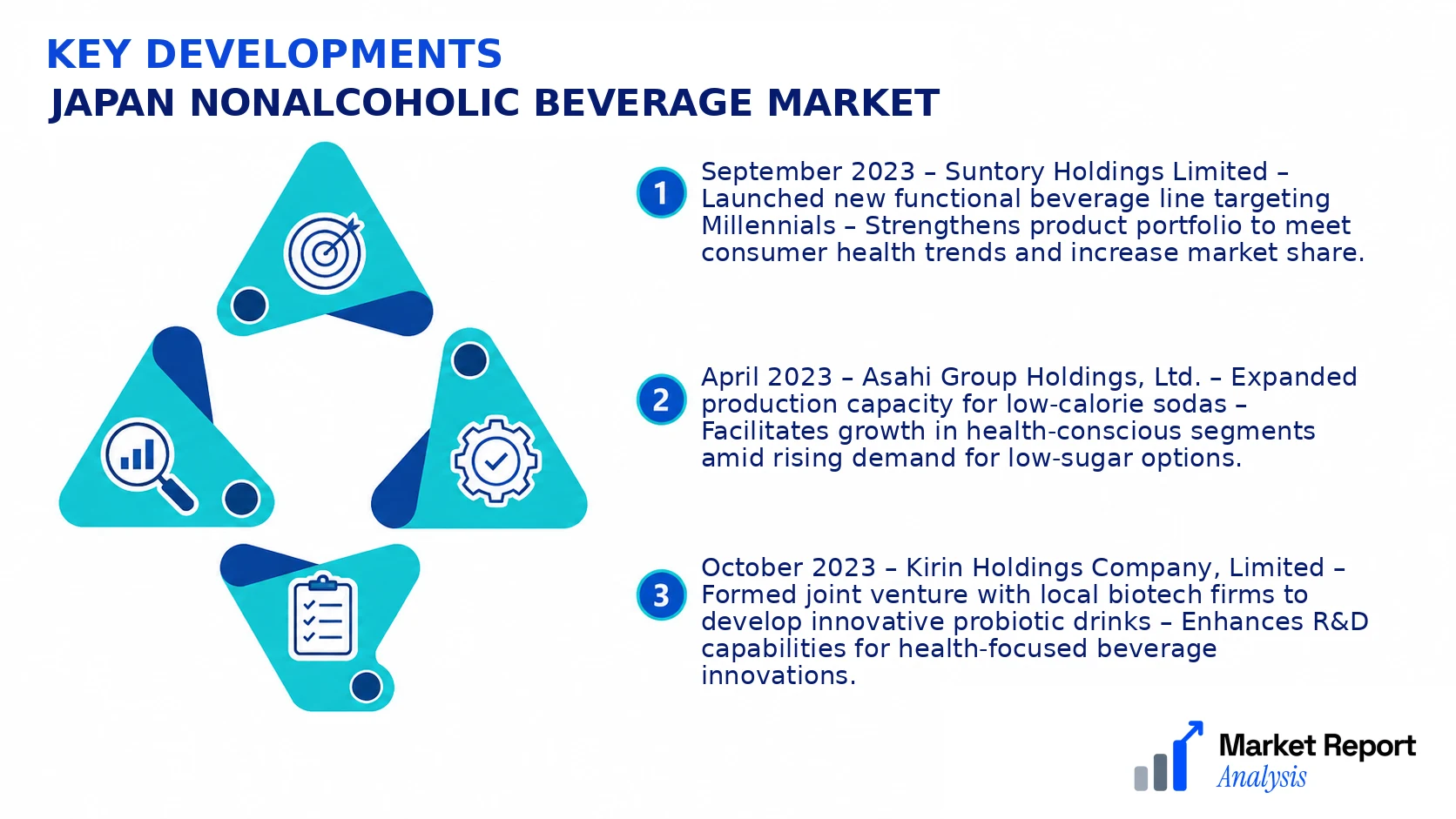
- September 2023 – Suntory Holdings Limited – Launched new functional beverage line targeting Millennials – Strengthens product portfolio to meet consumer health trends and increase market share.
- April 2023 – Asahi Group Holdings, Ltd. – Expanded production capacity for low-calorie sodas – Facilitates growth in health-conscious segments amid rising demand for low-sugar options.
- October 2023 – Kirin Holdings Company, Limited – Formed joint venture with local biotech firms to develop innovative probiotic drinks – Enhances R&D capabilities for health-focused beverage innovations.
- June 2023 – Sapporo Breweries Ltd. – Invested in sustainable ingredients sourcing technology – Supports corporate sustainability goals and appeals to eco-aware consumers.
- January 2024 – DyDo DRINCO, Inc. – Introduced new digital marketing platform for consumer engagement – To boost brand visibility and foster direct consumer relationships in digital channels.
Frequently Asked Questions
What is the Japan Nonalcoholic Beverage Market?
The Japan Nonalcoholic Beverage Market encompasses the industry producing nonalcoholic drinks such as soft drinks, teas, coffees, bottled water, and functional beverages specifically designed for health-conscious consumers and a growing demographic seeking alternatives to alcoholic beverages within Japan.
What is the current market size of Japan Nonalcoholic Beverage Market?
As of 2026, the market is valued at approximately USD 25.4 Billion, reflecting steady growth driven by increasing health awareness, urbanization, and consumer preferences shifting towards healthier, functional, and premium nonalcoholic beverages across Japan.
What factors are driving the Japan Nonalcoholic Beverage Market?
Key drivers include rising health consciousness, a growing elderly population, changing lifestyle habits, innovative product offerings, and the expansion of premium bottled water and functional drinks. Additionally, government initiatives supporting healthy diets bolster market growth.
Which region dominates the Japan Nonalcoholic Beverage Market?
Tokyo and surrounding Kanto region dominate due to their high population density, urban lifestyle, and presence of major distribution channels, accounting for the largest share of the market, with significant contributions from Osaka and other metropolitan areas.
Which segment is expected to grow the fastest?
The functional beverages segment, including vitamins, antioxidants, and wellness drinks, is projected to witness the fastest growth, driven by rising health focus, innovative product launches, and increasing consumer demand for health-promoting nonalcoholic options.
Who are the leading companies operating in the Japan Nonalcoholic Beverage Market?
Major players include Suntory Holdings, Asahi Group Holdings, Kirin Holdings, and Ito En, which hold significant market shares through extensive distribution networks, innovative product portfolios, and strategic collaborations to cater to evolving consumer preferences.
Analyst Perspective
The Japan nonalcoholic beverage market is poised for sustained growth, driven by evolving consumer preferences toward health-conscious and functional products. Long-term, the market is expected to deepen its maturity, emphasizing innovation in natural ingredients, functional benefits, and sustainable packaging. Commercial opportunities are robust, especially in the premium segment, as consumers increasingly seek craft, organic, and antioxidant-rich beverages. Technological advancements in preservation, flavor enhancement, and packaging innovations will be crucial for differentiation. Investment priorities should focus on R&D for health-enhancing formulations and eco-friendly manufacturing processes, coupled with targeted city-level strategies in Tokyo and Osaka to capitalize on urban consumers' demand. Competitive intensity is likely to intensify, with global and domestic brands vying for market share through product differentiation and strategic partnerships. Regional growth potential remains high in metropolitan areas and emerging urban centers where health trends and premiumization are gaining momentum, offering varied strategic entry points for both incumbents and new entrants.
