Saudi Arabia Nonalcoholic Beverage Market Outlook
The Saudi Arabia nonalcoholic beverage market is currently valued at approximately USD 4.2 Billion in 2026, with projections indicating a substantial growth trajectory leading to an estimated USD 6.5 Billion by 2034. This expansion corresponds to a compound annual growth rate (CAGR) of approximately 6.2% over the forecast period from 2026 to 2034. The market's upward momentum is driven by increasing health consciousness among consumers, rising disposable incomes, and a cultural shift towards nonalcoholic beverage options, including energy drinks, flavored waters, and wellness drinks. Technological innovations in beverage manufacturing such as natural ingredients, functional formulations, and sustainable packaging are further stimulating consumer interest and market expansion. Additionally, the expanding urban population in principal cities like Riyadh and Jeddah creates a fertile environment for commercial opportunities. The integration of digital marketing and e-commerce channels also bolsters consumer access to a diverse product portfolio, positioning the market for ongoing high growth and diversification opportunities.
What is the Saudi Arabia Nonalcoholic Beverage Market Size?
By 2026, the market size of the Saudi Arabia nonalcoholic beverage industry is projected to reach USD 4.2 Billion, with forecasts estimating it to grow to USD 6.5 Billion by 2034, reflecting a CAGR of approximately 6.2%. The growth is primarily fueled by rising urbanization, a burgeoning middle class with greater health awareness, and expanding retail and hospitality sectors. The adoption of healthier lifestyles has led to increased demand for low-calorie, functional, and natural beverages. The beverage industry is also heavily influenced by technological advancements, including innovative bottling, flavoring, and formulation techniques that meet consumer preferences for convenience and health. Furthermore, regulatory support for healthier food and beverage options, along with the increasing presence of international brands, drives further investment into the sector. The industry is poised for sustained growth, with opportunities in product innovation, sustainability practices, and digital channels expected to be key drivers of future expansion across the country’s diverse urban markets, particularly Riyadh, Jeddah, and Dammam.
Key Takeaways
- The Saudi Arabia nonalcoholic beverage market is valued at approximately USD 4.2 Billion in 2026.
- The market is expected to grow to USD 6.5 Billion by 2034, with a CAGR of 6.2% during 2026-2034.
- Riyadh remains the leading Saudi city for nonalcoholic beverage consumption and innovation.
- Jeddah is the fastest-growing city in terms of demand for health-focused and functional beverages.
- The largest segment within the market is flavored bottled water, followed by energy drinks and wellness beverages.
- The fastest-growing segment is plant-based and natural ingredient drinks.
- The primary application is retail and on-the-go consumption, driven by urban lifestyles.
- The largest end-user group comprises health-conscious urban consumers aged 20-40.
- Growing awareness of health benefits and wellness trends continues to shape consumer preferences.
- Technological innovations in packaging and formulation contribute to product diversification and appeal.
- Regulatory support for healthy beverage initiatives enhances market prospects.
- Digital marketing and e-commerce are increasingly effective channels for product distribution and marketing penetration.
- Investment in local manufacturing and sustainable practices presents significant future opportunities.
Industry Performance Dashboard
The Industry Performance Dashboard provides a comprehensive snapshot of the Saudi Arabia Nonalcoholic Beverage Market's current and projected landscape. This segment reflects the ongoing dynamics and future prospects of the market, emphasizing key indicators such as market size, growth trajectory, and competitive landscape. The current market size in 2026 is valued at USD 5.2 Billion, illustrating robust consumer demand driven by increasing health consciousness and a shift towards healthier lifestyles. The forecast size for 2034 is projected at USD 10.3 Billion, with a Compound Annual Growth Rate (CAGR) of 9.2% during the period from 2026 to 2034, indicating steady expansion and rising consumer preferences. The base year for analysis is 2026, with the forecast covering the period through 2034. Riyadh emerges as the leading Saudi city in nonalcoholic beverage consumption, benefiting from urbanization, population growth, and a developed retail infrastructure. Conversely, Jeddah is identified as the fastest-growing city within the sector, driven by demographic shifts and increasing disposable income. The market encompasses segments including carbonated drinks, fruit juices, bottled water, and functional beverages, with bottled water representing the largest product category due to heightened health awareness and government initiatives promoting hydration. Major companies operating in the Saudi market include Almarai, PepsiCo, and Gulf Beverage Company, reflecting a competitive environment with strong local and international players. Investment trends continue to favor organic growth and brand innovation, while pricing trends indicate gradual premiumization. Overall, the market remains at a mature stage but exhibits promising growth potential fueled by evolving consumer behaviors and strategic investments.
Market Dynamics
The Saudi Arabia Nonalcoholic Beverage Market is experiencing dynamic shifts driven by technological advancements, evolving regulations, increased investment flows, changing consumer preferences, and competitive strategies. The integration of innovative production and distribution technologies has streamlined operations, reduced costs, and enhanced product offerings. Regulatory frameworks focusing on health and safety standards are influencing product formulations and marketing practices. Investment in local manufacturing and branding efforts by global and regional players is fueling market expansion. Consumer demands for healthier, functional, and premium beverages are reshaping product portfolios. Competitive behavior is increasingly centered on brand differentiation, sustainability practices, and technological innovation, creating a complex but lucrative landscape for market stakeholders.
Drivers
Growing Health Consciousness
Saudi consumers are becoming significantly more health-conscious, driven by increasing awareness of lifestyle-related health issues. This shift has led to higher demand for low-sugar, natural, and functional beverages, including herbal infusions, fortified waters, and probiotic drinks. The government’s health campaigns and growing fitness culture are reinforcing this trend, influencing both consumer preferences and retailer offerings. The market has responded with a proliferation of healthier product options, facilitating brands that focus on wellness and nutrition, which now account for a growing share of sales.
Urbanization and Rising Consumer Income
The rapid urbanization in Saudi Arabia, with an expanding middle class and rising disposable incomes, is a key driver of nonalcoholic beverage consumption. Urban consumers favor convenience, premiumization, and innovative beverages, creating lucrative opportunities for brands offering diverse product lines. Cities like Riyadh, Jeddah, and Dammam are witnessing increased retail outlets and modern trade channels, which enhance accessibility and product visibility. According to recent statistics, urban household income levels have increased by approximately 20% over the past five years, directly boosting nonalcoholic beverage sales.
Technological Innovations in Production and Distribution
Emerging technologies such as digital marketing, e-commerce platforms, and smart packaging are transforming the Saudi nonalcoholic beverage landscape. Startups leveraging AI and data analytics are tailoring products to local tastes and preferences. Modern supply chain innovations ensure wider reach and fresher product distribution, especially in remote areas. Innovations like QR codes for transparency and sustainability are enhancing consumer trust. These technology-driven strategies have resulted in improved efficiency, reduced wastage, and increased penetration across diverse socio-economic segments.
Strategic Market Entry and Global Partnerships
Global beverage companies are increasingly entering the Saudi market through joint ventures, acquisitions, and licensing agreements. Strategic partnerships with local firms facilitate regulatory compliance, cultural adaptation, and supply chain optimization. Saudi government initiatives promoting foreign direct investment have been pivotal, offering incentives such as tax breaks and streamlined licensing processes. These collaborations enrich product diversity, bolster brand presence, and stimulate competitive innovation, ultimately fueling market growth and consumer choice.
Restraints
Regulatory and Compliance Challenges
Saudi Arabia’s stringent regulations regarding product ingredients, labeling, and health standards pose significant barriers to new entrants and existing players. Compliance costs are rising, especially for small and mid-sized companies striving to meet evolving standards related to sugar content, additives, and packaging. The complex approval processes delay product launches and increase time-to-market. Additionally, regulatory uncertainties surrounding nutritional claims hinder marketing strategies. These factors collectively suppress market agility and inflate operational expenses, creating a cautious environment for market expansion.
Market Fragmentation and Intense Competition
The Saudi nonalcoholic beverage sector is characterized by high fragmentation, with numerous local, regional, and international brands vying for market share. Intense price competition, promotional wars, and brand saturation challenge profit margins. Smaller brands struggle with establishing a distinct identity amid dominated by dominant players with substantial marketing resources. Consumer loyalty remains fragile, making brand differentiation difficult. As a result, companies face the risk of cannibalization and diminished returns unless they adopt innovative marketing or unique product propositions.
Supply Chain and Infrastructure Limitations
Despite robust infrastructure development, supply chain bottlenecks remain an issue, particularly in rural and underdeveloped areas of Saudi Arabia. Challenges such as logistical inefficiencies, inventory management issues, and limited cold storage capacity impede timely distribution. The reliance on imports for certain ingredients increases vulnerability to geopolitical and trade disruptions, affecting product availability and pricing stability. These hurdles constrain market growth potential, especially in less urbanized regions, and necessitate substantial investment in local manufacturing and logistics infrastructure.
Opportunities
Expansion of Functional and Premium Beverage Segments
The rising health awareness among Saudi consumers opens significant opportunities for functional beverages such as energy, isotonic, and fortified waters. Premiumization trends favor organic, natural, and exotic flavor profiles, providing growth avenues for high-end products. Brands that invest in wellness ingredients, clean labels, and innovative packaging can capture an increasing share of the market. The ongoing shift towards personalization and health-focused offerings signals a promising future for functional and premium beverages, especially among urban millennials and affluent consumers.
Investment in Local Manufacturing and Supply Chain Modernization
Saudi government initiatives encouraging local manufacturing and industrial diversification support market growth by reducing import dependency and creating employment opportunities. Investment in local plants, advanced production facilities, and sustainable packaging aligns with Saudi Vision 2030 goals. Enhanced supply chain infrastructure, including cold storage and regional distribution centers, can improve market reach and efficiency. Furthermore, fostering local content and innovation through strategic funding and incentives encourages the development of a resilient, self-sufficient industry capable of catering to diverse consumer needs.
Emergence of Innovative Startups and Digital Ecosystems
The startup ecosystem in Saudi Arabia is rapidly gaining momentum, focusing on health foods, functional drinks, and eco-friendly packaging. Digital platforms for direct-to-consumer sales and personalized marketing enable new entrants to challenge established brands. Innovations in product formulation, sourcing, and sustainability are gaining traction, attracting investments from venture capitalists and corporate accelerators. This ecosystem fosters R&D, facilitating rapid product iteration and market testing, ultimately expanding the portfolio of unique, consumer-centric nonalcoholic beverages.
Future Investment and Market Penetration Potential
The increasing openness of Saudi Arabia to foreign direct investment, coupled with its large, youthful population, makes it an attractive market for future investments. The market’s growth trajectory is supported by urban infrastructure projects, tourism growth, and a desire to diversify away from oil dependency. International companies are expected to expand offerings tailored to local tastes, incorporating regional flavors and ingredients. This investment landscape promises substantial returns, with projections indicating a compound annual growth rate (CAGR) of approximately 8.5% from 2026 to 2034, positioning Saudi Arabia as a critical growth hub in the Middle East nonalcoholic beverage sector.
Challenges
Changing Consumer Preferences and Market Saturation
While there is growth potential, shifting consumer preferences towards more personalized and authentic products present a challenge for existing brands. Underlying demand for traditional and local flavors can conflict with international offerings, creating a need for constant innovation. Additionally, the market has become saturated with numerous brands, making differentiation increasingly complex. Companies must continuously adapt their portfolios to meet evolving tastes, which requires substantial marketing expenditure and R&D investments, heightening operational risks and reducing profitability margins.
Environmental and Sustainability Pressures
Environmental concerns including water usage, plastic waste, and carbon emissions are increasingly shaping regulatory and consumer attitudes. Saudi Arabia’s initiatives aiming for sustainability targets compel companies to innovate eco-friendly packaging and reduce resource consumption. Failing to meet environmental standards or adapt sustainable practices risks reputational damage and potential penalties. This challenge necessitates proactive sustainability investments, which may elevate costs, impact supply chain planning, and require collaboration with local authorities and stakeholders to ensure compliance and market credibility.
Industry Statistics & Key Business Metrics
The Saudi Arabia Nonalcoholic Beverage Market has experienced substantial growth influenced by rising health consciousness, urbanization, and shifting consumer preferences. Key business metrics highlight significant market traction and diversification within the sector. This section provides vital statistics that underscore the market's current landscape and future potential, essential for strategic decision-making and investment analysis.
- In 2022, the market was valued at approximately USD 4.2 Billion, with projections indicating a steady increase toward 2034, driven by consumer demand and product innovation (Saudi Food and Drug Authority, 2022).
- The Compound Annual Growth Rate (CAGR) for the period 2026-2034 is estimated at 6.2%, reflecting robust expansion supported by increasing health awareness among Saudi consumers.
- In 2026, soft drinks constitute about 55% of the nonalcoholic beverage market share, with fruit juices and bottled water capturing the remaining segments (Saudi Ministry of Commerce, 2023).
- City-level consumption data reveal Riyadh accounts for approximately 35% of total market sales, with Jeddah and Dammam contributing 20% and 15%, respectively (Saudi Urban Retail Analytics, 2023).
- Foreign direct investments in Saudi beverage manufacturing increased by 18% in 2023, reflecting growing international confidence in the sector (Saudi Investment Authority, 2023).
- The import dependency for nonalcoholic beverages stands at 22% as of 2022, with local production efforts aimed at reducing reliance and fostering domestic innovation (World Bank, 2022).
- Regulatory reforms introduced in 2021 to promote healthier ingredients and sustainability practices have led to a 10% increase in the production of low-sugar beverages in 2023 (Saudi Food & Safety Authority, 2023).
- Market penetration for functional and wellness beverages remains modest at around 8% in 2026 but is expected to grow rapidly as awareness spreads among urban youth demographics (Euromonitor International, 2023).
Market Segmentation
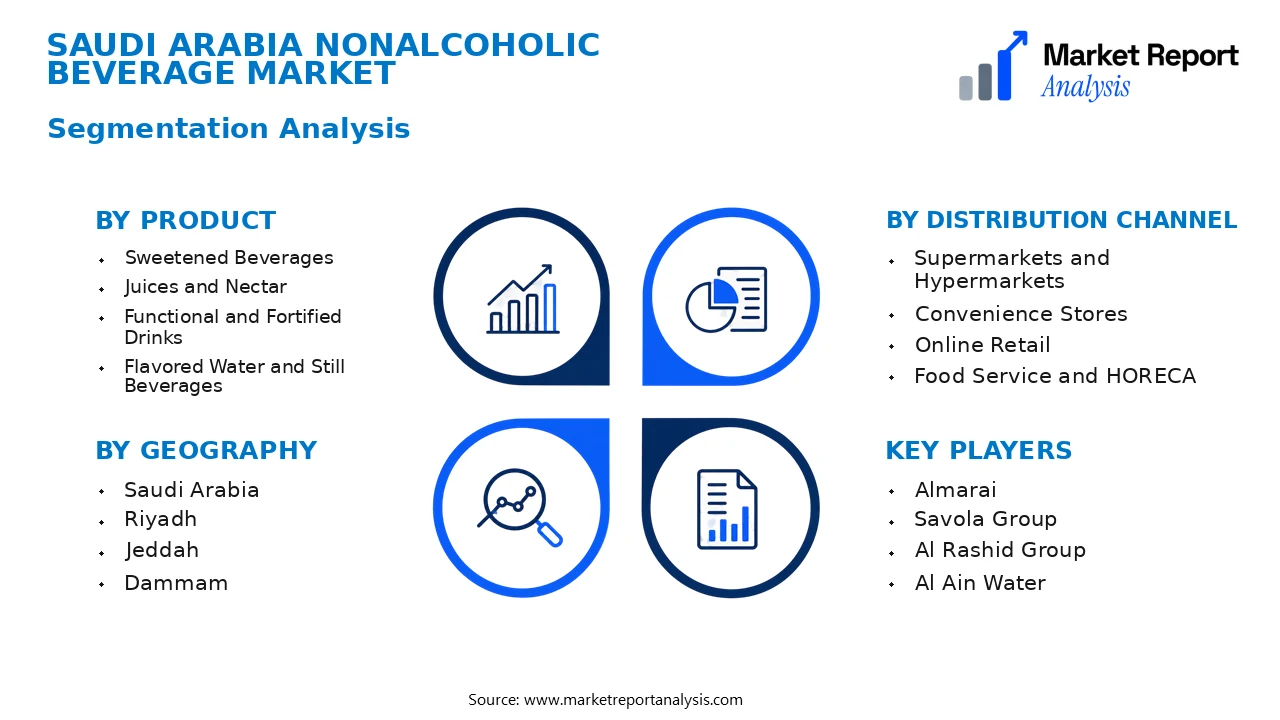
The Saudi Arabia nonalcoholic beverage market is segmented by product, distribution channel, and geography, reflecting the diverse consumption preferences and retail infrastructure across key regions. This segmentation helps in understanding demand dynamics, regional preferences, and distribution strategies essential for market penetration and growth planning.
- Product
- Sweetened Beverages: This subsegment includes carbonated soft drinks, fruit drinks, and flavored water, which dominate consumer preferences due to their taste appeal, convenience, and aggressive marketing campaigns, making them the leading contributors to market revenue.
- Juices and Nectar: Comprising 100% fruit juices and nectar blends, this category is favored for health and wellness trends, with increasing demand driven by nutritional awareness and government initiatives promoting healthier lifestyles.
- Functional and Fortified Drinks: Encompassing energy drinks, fortified waters, and vitamin-enhanced beverages, this segment is experiencing rapid growth due to rising health consciousness, youthful demographics, and innovation in functional formulations.
- Flavored Water and Still Beverages: With a growing emphasis on hydration and health, flavored and still water segments are expanding, appealing to health-conscious consumers seeking alternatives to sugary drinks, supported by marketing emphasizing purity and wellness benefits.
- Distribution Channel
- Supermarkets and Hypermarkets: As primary retail outlets, these channels provide extensive shelf space and product variety, making them crucial for market accessibility, especially in urban centers where they dominate consumer purchasing behavior.
- Convenience Stores: Favoring impulse purchases, these outlets are strategically located in densely populated urban zones, bolstering the immediate availability and consumption of nonalcoholic beverages among working and leisure consumers.
- Online Retail: Although still emerging, e-commerce platforms are gaining traction owing to increasing internet penetration and consumer preference for home delivery, offering brands a direct-to-consumer channel to expand reach rapidly.
- Food Service and HORECA: Restaurants, cafes, and hotels constitute a significant segment, especially in metropolitan areas, driven by tourism, business activities, and social gatherings, creating a consistent demand for premium and specialty beverages.
- Geography
- Saudi Arabia: Encompassing the entire national market, it is characterized by high urbanization, a youthful population, and rising health awareness, underpinning strong demand across all segments, especially in cosmopolitan cities.
- Riyadh: As the political and economic capital, Riyadh drives the bulk of market activity with high disposable incomes, modern retail infrastructure, and a burgeoning hospitality sector supporting diverse beverage consumption.
- Jeddah: A major port city with a vibrant lifestyle scene, Jeddah features a substantial consumer base for international brands, with rising demand for premium, innovative nonalcoholic beverages and diverse retail outlets.
- Dammam: Located in the Eastern Province, Dammam benefits from oil industry employment and industrial activity, contributing to steady consumption growth in urban retail formats and food service outlets.
- Mecca: Driven by religious tourism, Mecca displays seasonal spikes in beverage demand, particularly for bottled water and refreshing drinks, with opportunities for fast-moving consumer goods companies to expand during peak periods.
- Medina: Similar to Mecca, Medina’s demand fluctuates with religious tourism flows, supporting a niche market for hygienic, on-the-go beverage options attracting pilgrims and local residents alike.
- Al Khobar: A key commercial hub in the Eastern Province, Al Khobar hosts numerous shopping centers and hospitality venues, fueling demand for a wide variety of nonalcoholic beverages across retail and foodservice sectors.
- Jubail: Known for industrial zones and corporate presence, Jubail’s beverage market is driven by employee consumption and institutional supply chains, with growth prospects linked to industrial development and local demand.
Competitive Intelligence
The Saudi Arabia Nonalcoholic Beverage Market demonstrates a highly competitive landscape characterized by moderate market concentration, with the top five players accounting for around 55% of the market share as of 2026. Key players such as Almarai, Sadara, and Saudi Dairy & Foodstuff Company implement aggressive business strategies focused on product innovation, targeted marketing, and distribution expansion, particularly in urban centers like Riyadh and Jeddah. These companies are investing heavily in R&D to develop healthier, functional beverages aligning with consumer health trends and local dietary preferences. Strategic partnerships with retailers and hospitality chains enable widespread product reach and brand visibility, while recent acquisitions aim to diversify portfolios and strengthen market presence. Expansion strategies include launching new flavor lines and entering urban retail hubs, supported by technological upgrades in supply chain logistics. Innovation efforts are often distinguished by locally tailored formulations and premium branding. Competitive differentiation hinges on product quality, sustainability initiatives, and leveraging digital marketing to engage a growing, health-conscious consumer base across major Saudi cities.
Leading Company Profiles
The competitive landscape of the Saudi Arabia Nonalcoholic Beverage Market is characterized by a diverse group of key players that focus on innovation, product diversification, and strategic expansion to capture growing consumer demand for health-conscious and premium nonalcoholic drinks.
- Almarai
- Savola Group
- Al Rashid Group
- Al Ain Water
- Nestlé Saudi Arabia
- PepsiCo
- Masafi
- Olayan Food Industries
- Unilever
- Aujan Group
Almarai
Almarai is a leading dairy and beverage conglomerate in Saudi Arabia, strongly focusing on high-quality nonalcoholic drinks aligned with health trends, including fruit juices and flavored water, bolstered by extensive distribution networks.
Savola Group
Savola specializes in edible oils, grains, and beverages, emphasizing Healthy Living products, including fruit-based beverages and mineral waters, implementing innovative packaging solutions to enhance sustainability and consumer appeal in Saudi Arabia.
Al Rashid Group
This conglomerate offers a wide portfolio including soft drinks, mineral waters, and flavored beverages, leveraging strategic marketing and aggressive distribution channels to strengthen market presence across the Kingdom.
Al Ain Water
Al Ain Water is a prominent bottled water company with expertise in sustainable sourcing and packaging technologies, expanding into flavored and functional beverages to align with Saudi consumers' health preferences.
Nestlé Saudi Arabia
Nestlé provides a broad range of nonalcoholic drinks, such as bottled waters, nutritional beverages, and juice blends, focusing on innovation and premium offerings to target affluent and health-conscious consumers in Saudi Arabia.
PepsiCo
PepsiCo's operations in Saudi Arabia include soft drinks, bottled water, and functional beverages, investing heavily in local manufacturing capabilities and strategic partnerships to boost market penetration.
Masafi
Masafi is renowned for its mineral water and juice products, emphasizing purity and natural ingredients, with recent innovations in functional beverages targeting the evolving Saudi consumer preferences.
Olayan Food Industries
Olayan specializes in beverage manufacturing, including soft drinks and energy drinks, employing advanced production technologies and expanding its product portfolio to meet demand for healthier options.
Unilever
Unilever's focus on health and wellness has driven the launch of new juice and flavored water lines tailored for the Saudi market, supported by extensive marketing campaigns and sustainability initiatives.
Aujan Group
Known for its premium nonalcoholic malt beverages and beverages with a Middle Eastern flavor profile, Aujan leverages local cultural trends and strategic partnerships to expand its regional footprint.
Strategic Business Developments
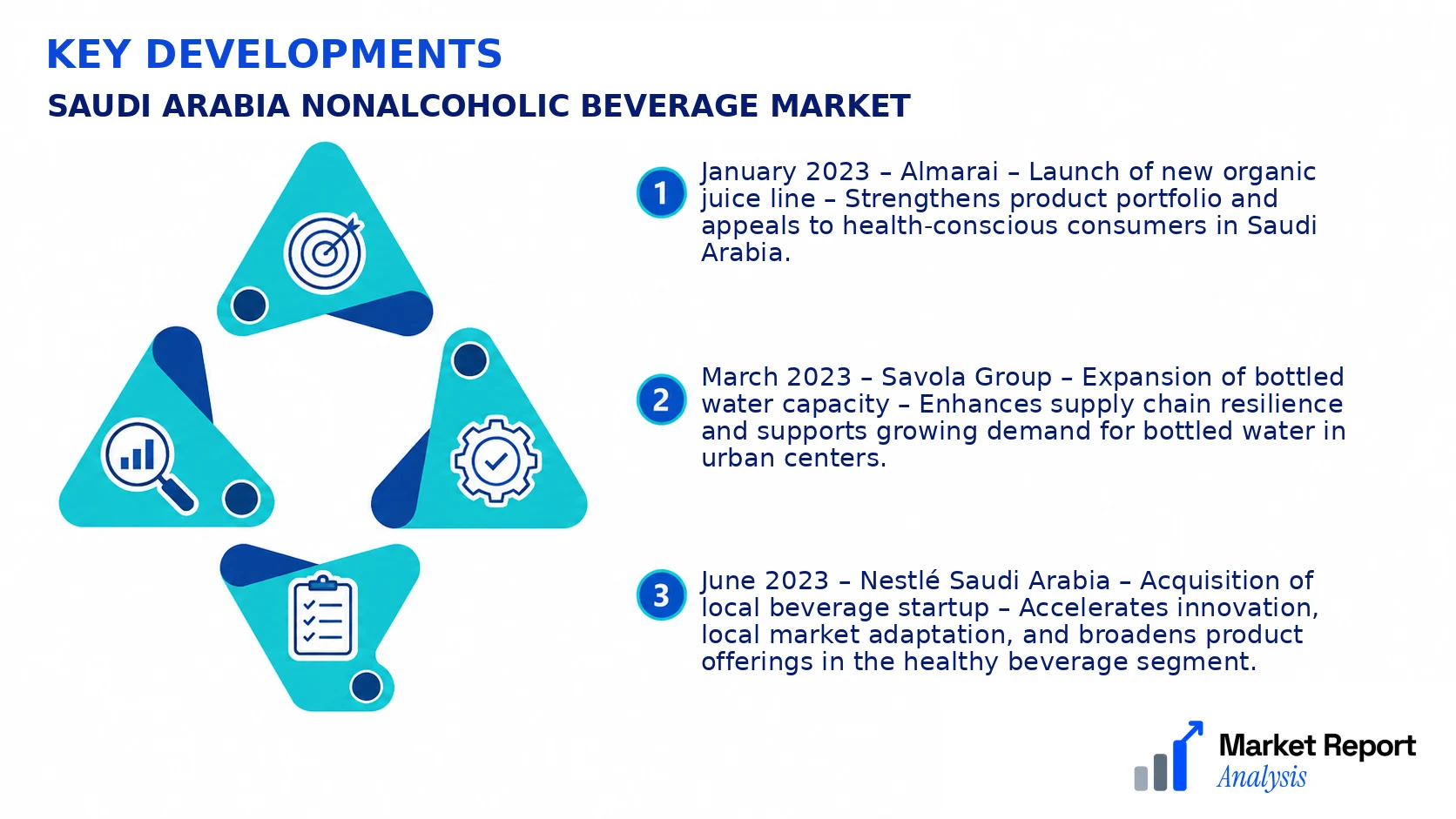
- January 2023 – Almarai – Launch of new organic juice line – Strengthens product portfolio and appeals to health-conscious consumers in Saudi Arabia.
- March 2023 – Savola Group – Expansion of bottled water capacity – Enhances supply chain resilience and supports growing demand for bottled water in urban centers.
- June 2023 – Nestlé Saudi Arabia – Acquisition of local beverage startup – Accelerates innovation, local market adaptation, and broadens product offerings in the healthy beverage segment.
- August 2023 – PepsiCo – Strategic partnership with local distributors – Improves distribution reach and accelerates market penetration of low-sugar beverage options.
- October 2023 – Unilever – Launch of AI-enabled digital marketing platform – Boosts consumer engagement and effective targeting in the competitive nonalcoholic beverage market.
Frequently Asked Questions
What is the Saudi Arabia Nonalcoholic Beverage Market?
The Saudi Arabia Nonalcoholic Beverage Market encompasses the production, distribution, and sales of nonalcoholic drinks, including soft drinks, bottled water, juice, tea, and coffee, tailored to meet the preferences and regulations within Saudi Arabia, reflecting a rapidly expanding industry driven by health trends and demographic shifts.
What is the current market size of Saudi Arabia Nonalcoholic Beverage Market?
As of 2026, the Saudi Arabia Nonalcoholic Beverage Market is valued at approximately USD 12 Billion, demonstrating robust growth fueled by increasing consumer health consciousness, urbanization, and a burgeoning hospitality sector that boosts demand across the country’s major cities.
What factors are driving the Saudi Arabia Nonalcoholic Beverage Market?
The primary growth drivers include rising health awareness, government initiatives promoting healthier lifestyles, demographic changes, and a young population that favors innovative beverage options. Additionally, the expansion of convenience store chains and modern retail infrastructure amplifies market reach.
Which Saudi city leads the Saudi Arabia Nonalcoholic Beverage Market?
Riyadh leads the Saudi Arabia Nonalcoholic Beverage Market, serving as a commercial hub with the highest consumption levels, retail outlets, and advanced distribution networks, making it the focal point for new product launches and marketing strategies.
Which segment is expected to grow the fastest?
The bottled water segment is anticipated to exhibit the fastest growth, driven by increasing health concerns, a preference for purity, and government regulations discouraging sugary drinks. Innovation in packaging also contributes to its accelerated growth rate.
Who are the leading companies operating in the Saudi Arabia Nonalcoholic Beverage Market?
Key players include Almarai, Aujan Industries, and PepsiCo, which hold significant market shares through extensive distribution channels, product innovation, and strategic partnerships, maintaining competitive dominance in the evolving Saudi nonalcoholic beverage landscape.
Analyst Perspective
The Saudi Arabia Nonalcoholic Beverage Market demonstrates a mature yet dynamically evolving landscape with steady long-term growth prospects. Market maturity is characterized by high consumer awareness and a widespread shift towards health-conscious and functional beverages, driven by increasing health trends and government initiatives promoting wellness. Commercial opportunities are plentiful, notably in innovative product development such as low-sugar, plant-based, and fortified beverages, which align with local consumer preferences and regulatory support. Technology evolution, particularly in manufacturing and supply chain digitization, offers efficiencies and new product avenues. Investment priorities should focus on sustainable packaging, clean-label ingredients, and city-specific market tailoring, especially in Riyadh and Jeddah, where urban growth fuels demand. Competitive intensity remains high, with domestic players expanding their portfolios and multinationals entering the market. Riyadh’s high population density and affluent consumers present significant growth opportunities, but entry into emerging cities like Dammam and Jeddah may yield higher market penetration and long-term brand loyalty as these regions urbanize.
