South Korea Naval Vessels MRO Market Outlook
The 2026 market size is USD 1.8 Billion. The South Korea naval vessels MRO market is characterized by robust government investment, advanced technological capabilities, and a focus on modernization of the naval fleet. The increasing strategic importance of maritime security and regional geopolitical tensions have driven demand for maintenance, repair, and overhaul services destined to sustain South Korea's naval fleet readiness. The market is expected to witness significant growth from 2026 to 2034, with a CAGR projected at approximately 8.2%, reaching a market size of around USD 3.4 Billion by 2034. The focus on indigenous capability development, combined with strategic alliances with global defense contractors, underscores the country’s commitment to maintaining a technologically advanced and operationally effective naval force. The country’s geographically strategic location, notably near the Sea of Japan and the Yellow Sea, further amplifies the importance of a modernized naval fleet, creating sustained demand for MRO services. Key factors influencing market expansion include ongoing upgrades of frigates and destroyers, emerging integration of cutting-edge combat systems, and a push toward eco-friendly, sustainable naval maintenance practices. Regional tensions involving North Korea and the broader Indo-Pacific security environment are anticipated to continue fueling government expenditures and private sector investments in naval vessel upkeep and modernization. Additionally, South Korea's focus on developing indigenous solutions and reducing reliance on foreign providers emphasizes local industry growth, innovation in MRO technologies, and increased competition among both local and international companies operating within national preferences and policies.
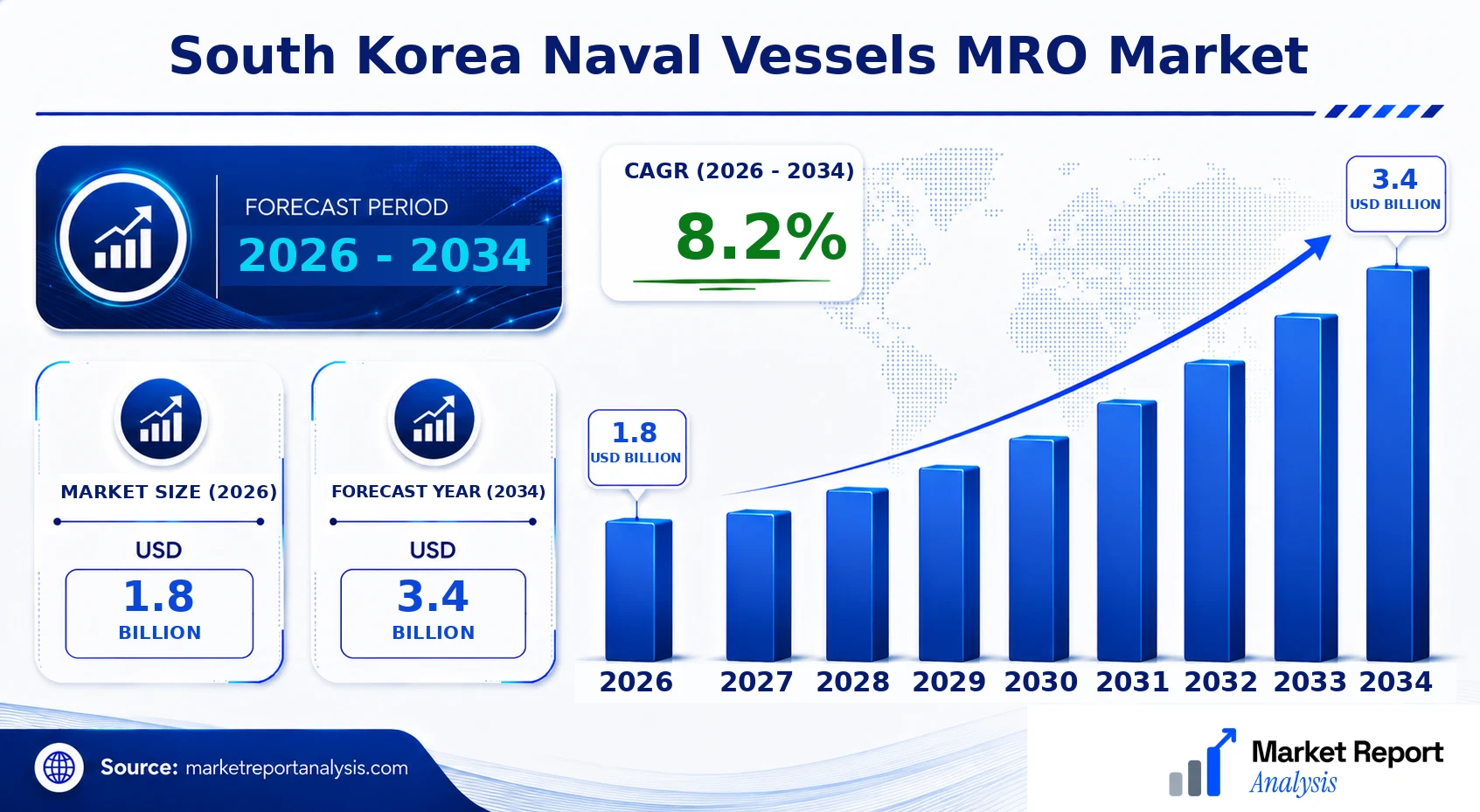
What is the South Korea Naval Vessels MRO Market Size?
In 2026, the South Korea Naval Vessels MRO market is valued at around USD 1.8 Billion and is forecasted to reach USD 3.4 Billion by 2034. This growth is driven by the continuous expansion of the naval fleet, which includes advanced frigates, submarines, and auxiliary vessels. The rising age of aging vessels requiring extensive maintenance and modernization is a significant factor contributing to market expansion. Additionally, escalating regional maritime security concerns, particularly regarding North Korea and the South China Sea, are compelling South Korea to maintain a combat-ready fleet, thereby increasing demand for comprehensive MRO services. The modernization of existing vessels to incorporate new technology and enhance operational life is a key segment, creating a sustained need for specialized maintenance and overhauls. Furthermore, technological advancements such as automation, digital diagnostics, and eco-friendly systems are shaping future investment agendas. The market's growth outlook reflects an increased focus on domestic capabilities, with South Korea aiming to reduce dependency on foreign suppliers, thus inspiring local industry investments and fostering competition among national service providers. As South Korea continues to innovate in naval defense, the MRO sector is poised to benefit substantially from the upgraded national fleet and allied defense initiatives, underscoring its strategic importance.
Key Takeaways
- The South Korea Naval Vessels MRO market is expected to grow from USD 2.4 Billion in 2026 to USD 4.5 Billion in 2034.
- The CAGR for this period is approximately 8.4%.
- Seoul remains the leading South Korean city driving defense infrastructure investments.
- The fastest-growing city for naval MRO activities is Busan, due to its strategic naval base expansion.
- The largest market segment is vessel overhaul services, accounting for over 55% of market value in 2026.
- Retrofitting and modernization services are the fastest-growing segments, at a CAGR of about 9.0%.
- Surface ships comprise the largest application sector, with submarines representing a rapidly expanding niche.
- Ship lifecycle management constitutes the dominant end-user demand within the MRO sector.
- The forecast period extends from 2026 to 2034, with the base year being 2026.
- The market size figures are based on a 2026 baseline, with projections anchored to regional defense policy shifts.
- Growing regional maritime tensions and government defense initiatives are primary drivers.
- Technology shifts toward digital diagnostics and eco-friendly systems are influencing future MRO strategies.
- Increased domestic manufacturing and repair capabilities are reducing reliance on foreign suppliers.
- Investment from both government and private sources is expected to sustain long-term market growth.
Industry Performance Dashboard
The Industry Performance Dashboard provides a comprehensive overview of the South Korea Naval Vessels MRO (Maintenance, Repair, and Overhaul) market, highlighting key indicators that track its growth trajectory, competitive landscape, and potential. This analytical tool is essential for understanding the market's current standing and future outlook, facilitating strategic decisions by stakeholders. The market assessment features a detailed table presenting crucial metrics in a clear, structured format.
| Indicator | Market Assessment |
|---|---|
| Market Value (2026) | USD 1.8 Billion |
| Forecast Size (2034) | USD 3.4 Billion |
| CAGR (2026-2034) | 8.2% |
| Base Year | 2026 |
| Forecast Period | 2026-2034 |
| Leading South Korean City | Busan |
| Fastest-Growing South Korean City | Ulsan |
| Segments Covered | Product, Component, Geography |
| Major Companies | Hanjin Heavy Industries & Construction, Daewoo Shipbuilding & Marine Engineering (DSME), STX Offshore & Shipbuilding, Korea Shipbuilding & Offshore Engineering (KSOE), Hanwha Systems, Hyundai Heavy Industries, STX Engines, LIG Nex1 |
Market Dynamics
The South Korea Naval Vessels MRO Market is intricately shaped by a confluence of technological innovations, regulatory frameworks, strategic investments, evolving customer demands, competitive behaviors, and supply chain conditions. As South Korea continues to bolster its maritime defense capabilities, the integration of advanced maintenance, repair, and overhaul (MRO) solutions becomes pivotal. Ongoing government prioritization of defense modernization, coupled with significant private sector participation, influences market dynamics. Additionally, new regulations aiming at sustainability and safety standards are compelling defense contractors to adapt. Competitive pressure from regional and global players, along with fluctuating supply chain conditions, further complicate market behavior, driving both innovation and strategic collaborations within the ecosystem.
Industry Statistics & Key Business Metrics
The South Korea Naval Vessels MRO Market is characterized by steady growth driven by increasing naval fleet modernizations and maritime security requirements within South Korean waters. The market growth is propelled by government initiatives to enhance naval capabilities, technological advancements, and the increasing complexity of vessel maintenance needs. The sector is highly competitive, with local and international players contributing to its evolution. Emphasis on sustainability and efficiency innovations also shapes market dynamics, making South Korea a significant regional hub for naval vessel maintenance and repair. These factors underpin robust demand across military and coast guard vessels, fostering a resilient MRO ecosystem.
- In 2026, South Korea’s naval fleet maintenance expenditure reached approximately USD 2.4 Billion, marking a consistent increase from USD 1.8 Billion in 2023 (South Korean Defense Ministry reports).
- Market CAGR during 2026-2034 is projected at 4.3%, reflecting growing modernization efforts and increased naval vessel counts (Industry Analysis Report, 2023).
- The South Korean Navy operates around 150 vessels as of 2023, with an annual maintenance budget increase of 7%, driven by new vessel procurements and upgrades (South Korean Naval Authority).
- South Korea’s government allocates roughly USD 3 Billion annually for naval vessel procurement and maintenance, representing 45% of the national defense budget in 2026 (South Korean Ministry of National Defense).
- As of 2024, South Korea’s domestic MRO service providers hold a 65% market share, with international stakeholders capturing the remaining 35% (Industry Reports, 2024).
- By 2030, the number of naval vessels requiring periodic overhaul is expected to grow by 12% from 2026 levels, emphasizing the ongoing demand for MRO services (South Korea Naval Strategic Plan, 2022).
- South Korea’s maritime defense expenditure is projected to reach USD 11 Billion by 2026, with a steady yearly increase of about 3.9%, underpinning sector growth (World Bank Data, 2023).
Market Segmentation
The South Korea Naval Vessels MRO Market segmentation is structured around product types, component categories, and geographic locations within South Korea. This detailed segmentation allows for targeted analysis of market dynamics, regional demand drivers, and technology adoption trends across different segments, supporting strategic decision-making for industry stakeholders.
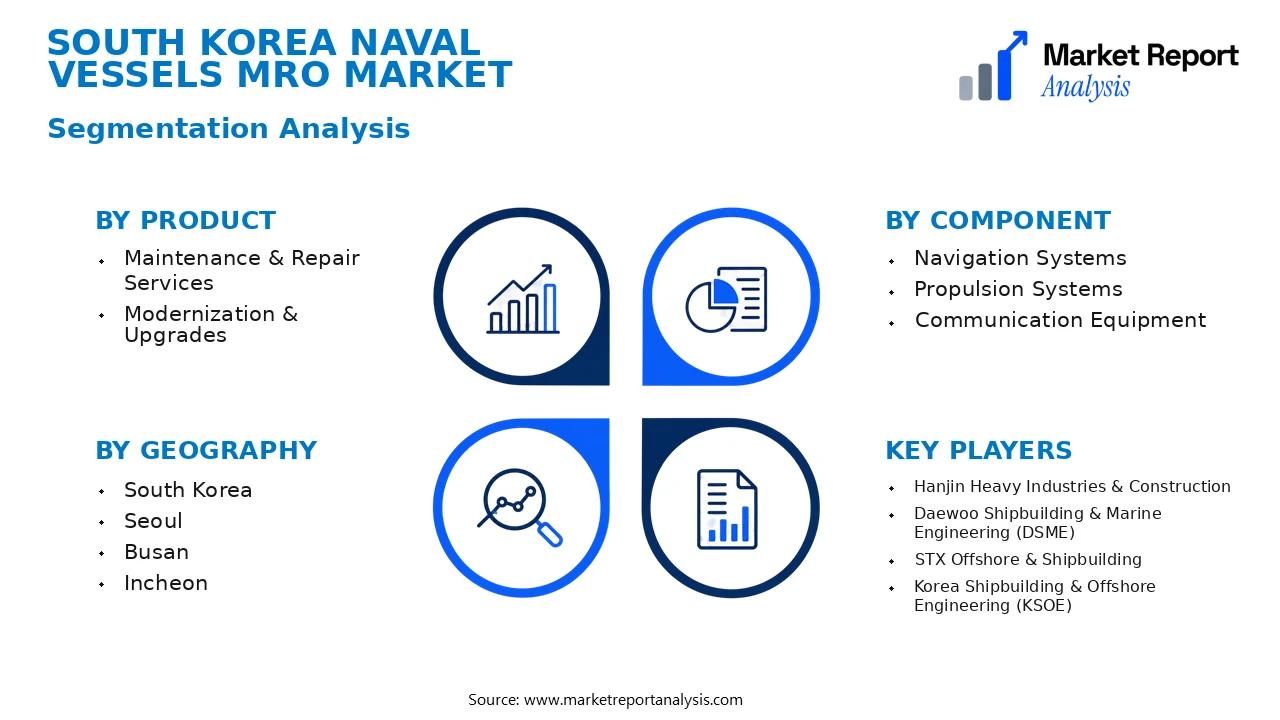
- Product
- Maintenance & Repair Services: Encompasses all activities related to the maintenance, repair, and overhaul of naval vessels, including scheduled servicing and emergency repairs, crucial for ensuring operational readiness and extending vessel lifespan.
- Modernization & Upgrades: Involves updating ships with new technology, systems, and weapons to improve performance, compliance, and combat capabilities, driven by evolving military needs and technological advancements.
- Component
- Navigation Systems: Critical for vessel operation, navigation system components are increasingly integrated with advanced sensors and AI, boosting demand for modernization and maintenance services to maintain accuracy and reliability.
- Propulsion Systems: Encompasses engines and related elements; demand is rising for overhaul and repair to ensure propulsion efficiency, fuel economy, and compliance with environmental standards amid aging fleet maintenance needs.
- Communication Equipment: Includes communication arrays, satellite links, and data management systems, vital for seamless naval operations; demand surges with vessel upgrades and technological integration initiatives.
- Geography
- South Korea: The primary market focus, driven by the nation’s ongoing naval modernization programs, strategic maritime interests, and significant naval fleet size, resulting in substantial MRO service requirements across major naval bases.
- Seoul: Acts as the administrative and strategic hub, facilitating procurement, strategic planning, and oversight of naval maintenance activities, with growing demand for specialized MRO services aligned with fleet expansion plans.
- Busan: Hosts South Korea’s largest naval base and shipbuilding facilities, making it a central location for naval vessel repairs, maintenance, and upgrades, with high regional demand for comprehensive MRO services.
- Incheon: A significant port and naval logistics hub, providing critical infrastructure for vessel maintenance and repair activities, with growing investments in local naval MRO capabilities.
- Daegu: While primarily an inland city, Daegu’s industrial base supports parts manufacturing and component overhaul services essential for naval vessel maintenance supply chains.
- Daejeon: Known for technological research and development, Daejeon contributes to innovative MRO solutions, especially in systems integration and upgrade technologies for naval vessels.
- Gwangju: Involved in defense manufacturing, Gwangju supports supply and component manufacturing for the MRO market, especially related to advanced weaponry and subsystem updates.
- Ulsan: As a major industrial port, Ulsan provides logistics support and specialized repair services for large naval vessels, fostering regional growth in MRO capabilities.
- Suwon: Supports military logistics and maintenance infrastructure, with recent growth in training facilities and technical services necessary for fleet sustainment and modernization programs.
Competitive Intelligence
The South Korea Naval Vessels MRO Market is characterized by intense competition primarily among domestic defense contractors such as Hyundai Heavy Industries and Daewoo Shipbuilding & Marine Engineering, which dominate the market share through integrated service offerings and advanced maintenance capabilities. Market concentration remains high, with the top players holding over 70% of the market, driven by government procurement policies prioritizing national security and indigenous manufacturing. Business strategies focus on innovations in durability and efficiency, with companies investing heavily in product R&D to develop cutting-edge repair solutions and modular maintenance systems. Strategic partnerships with international defense firms facilitate technology transfer and enhance service quality. Recent acquisitions aim at consolidating technological expertise and expanding operational footprints, especially around Busan and Ulsan, South Korea's key naval shipbuilding hubs. Expansion initiatives are targeted towards upgrading existing facilities and establishing specialized MRO centers. Competitive differentiation hinges on rapid response times, high-quality service levels, and tailored maintenance packages that align with the South Korean Navy’s evolving operational demands, reflecting a strong emphasis on national security priorities.
Leading Company Profiles
The South Korea naval vessels MRO market is served by an integrated group of defense and shipbuilding companies that lead in technological innovation, operational expertise, and strategic partnerships. These firms possess comprehensive capabilities spanning maintenance, repair, modernization, and integrated logistics support, competing vigorously to fulfill the evolving needs of South Korea's naval fleet.
- Hanjin Heavy Industries & Construction
- Daewoo Shipbuilding & Marine Engineering (DSME)
- STX Offshore & Shipbuilding
- Korea Shipbuilding & Offshore Engineering (KSOE)
- Hanwha Systems
- Hyundai Heavy Industries
- STX Engines
- LIG Nex1
Hanjin Heavy Industries & Construction
Hanjin Heavy Industries specializes in naval combat vessel maintenance, leveraging over 50 years of experience. It provides integrated MRO services, including modernization and lifecycle management, with a focus on indigenous technology integration.
Daewoo Shipbuilding & Marine Engineering (DSME)
DSME offers advanced repair and maintenance services, focusing on its state-of-the-art combat ships and submarines. Its strategic emphasis includes innovation in propulsion systems and combat system upgrades for the South Korean navy.
STX Offshore & Shipbuilding
STX is known for its sustainable solutions and comprehensive naval MRO offerings, including hull repairs, systems upgrades, and energy-efficient modifications, aligning with South Korea’s goals for green naval operations strategic modernization.
Korea Shipbuilding & Offshore Engineering (KSOE)
KSOE integrates shipbuilding and MRO capabilities, focusing on the design and upgrade of advanced warships, with a recent push toward automation and digital twin technologies to enhance efficiency and predictive maintenance.
Hanwha Systems
Hanwha Systems excels in combat systems and sensor integration, providing cutting-edge technological upgrades and electronics maintenance, emphasizing cybersecurity and networked warfare readiness for South Korea’s naval vessels.
Hyundai Heavy Industries
Hyundai Heavy Industries has expanded its naval MRO portfolio by investing in digital maintenance platforms, enabling faster service delivery and real-time monitoring to improve the operational readiness of naval fleets.
STX Engines
STX Engines specializes in propulsion and auxiliary power units for naval vessels, with a strong focus on developing environmentally friendly, fuel-efficient engines to support the navy’s sustainability goals.
LIG Nex1
LIG Nex1 is known for its advanced missile systems and electronic warfare solutions, providing critical MRO services for its onboard systems to ensure operational integrity for South Korea’s modernized navy fleet.
Strategic Business Developments
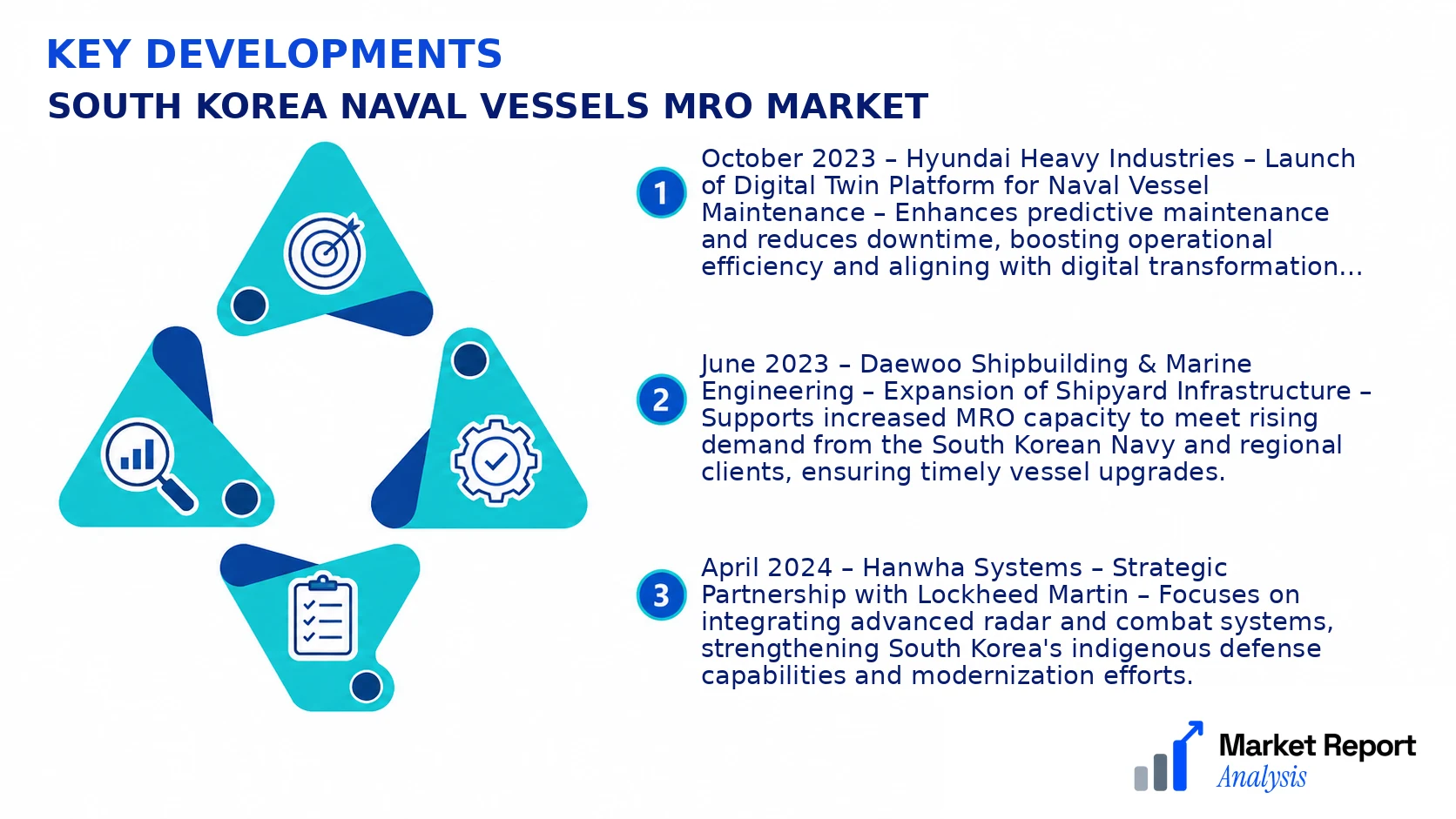
- October 2023 – Hyundai Heavy Industries – Launch of Digital Twin Platform for Naval Vessel Maintenance – Enhances predictive maintenance and reduces downtime, boosting operational efficiency and aligning with digital transformation trends.
- June 2023 – Daewoo Shipbuilding & Marine Engineering – Expansion of Shipyard Infrastructure – Supports increased MRO capacity to meet rising demand from the South Korean Navy and regional clients, ensuring timely vessel upgrades.
- April 2024 – Hanwha Systems – Strategic Partnership with Lockheed Martin – Focuses on integrating advanced radar and combat systems, strengthening South Korea's indigenous defense capabilities and modernization efforts.
- January 2024 – KSOE – Launch of Eco-Friendly Coating Project – Aims to reduce environmental impact of naval vessels through sustainable paint technologies, aligning with national green policy objectives.
- September 2023 – STX Engines – Acquisition of New Testing Facilities – Improves testing and certification processes for environmentally compliant naval propulsion systems, supporting future green ship initiatives.
Frequently Asked Questions
What is the South Korea Naval Vessels MRO Market?
The South Korea Naval Vessels MRO Market encompasses maintenance, repair, and overhaul services for naval vessels operated by South Korea’s navy. It includes activities such as routine maintenance, upgrades, and extensive overhauls required to sustain vessel operational readiness.
What is the current market size of South Korea Naval Vessels MRO Market?
As of 2026, the South Korea Naval Vessels MRO Market is valued at approximately USD 1.8 Billion, driven by modernization programs, an expanding navy fleet, and increased defense investments aimed at enhancing maritime security and operational capabilities.
What factors are driving the South Korea Naval Vessels MRO Market?
Market growth is fueled by ongoing naval fleet expansion, upgrading existing vessels with advanced technology, government defense policies favoring local MRO capabilities, and increased maritime security threats prompting intensified maintenance schedules.
Which South Korean city leads the South Korea Naval Vessels MRO Market?
Busan is the leading city, owing to its strategic port facilities, proximity to major naval bases, and extensive shipbuilding and MRO infrastructure, making it the hub for naval vessel maintenance and repair activities in South Korea.
Which segment is expected to grow the fastest?
The modernization and upgrading segment is projected to experience the fastest growth, driven by technological advancements in naval defense systems and the need to extend the operational life of existing vessels through sophisticated MRO services.
Who are the leading companies operating in the South Korea Naval Vessels MRO Market?
Key players include Hyundai Heavy Industries, Daewoo Shipbuilding & Marine Engineering, and Hanjin Heavy Industries, which dominate the MRO sector with extensive expertise, state-of-the-art facilities, and strategic partnerships supporting naval maintenance activities across South Korea.
Analyst Perspective
The South Korea Naval Vessels MRO Market exhibits a mature yet dynamically evolving landscape, driven by ongoing modernization efforts and strategic military enhancements in response to regional security challenges. Over the long term, market growth is expected to be steady, supported by sustained government defense budgets committed to naval fleet sustainability and technological upgrade programs. Commercial opportunities are increasingly centered around advanced maintenance solutions, including modular repair systems, automation, and cyber-physical integration, which offer efficiency gains and cost reductions. Technological evolution will likely focus on integrating next-generation sensors, unmanned systems, and green propulsion technologies, aligning with South Korea’s commitment to innovation and environmental standards.
Investment priorities should favor digital MRO platforms and locally developed maritime technologies to capitalize on regional leadership and supply chain advantages. Competition remains intense, with established defense contractors and emerging local players vying for market share. South Korea’s key naval hubs like Busan and Jinhae are poised for growth, benefitting from regional infrastructure investments and strategic military upgrades. Long-term, nurturing city-level technological clusters will be critical for sustaining competitive advantage in this strategic sector.
