Indonesia Naval Vessels MRO Market Outlook
The Indonesia Naval Vessels MRO market is poised for significant growth from 2026 to 2034, driven by increased defense budgets, modernization of naval fleets, and strategic regional security concerns. The maturation of the maritime defense sector in Indonesia necessitates robust maintenance, repair, and overhaul services, which are critical to enhancing vessel operational readiness and extending the lifespan of naval assets. The evolving geopolitical landscape, coupled with Indonesia's focus on bolstering its maritime sovereignty, underscores the importance of a resilient naval MRO sector capable of supporting a wide array of vessel classes, including frigates, corvettes, submarines, and auxiliaries. As the Indonesian navy modernizes and expands its fleet with newer, more technologically sophisticated vessels, demand for advanced MRO solutions, including systems integration, corrosion control, and combat system repairs, is expected to surge. Overall, the Indonesia Naval Vessels MRO market is forecast to reach approximately USD 1.8 Billion by 2034, growing at a CAGR of around 6.8% during 2026-2034, fueled by regional security priorities and technological upgrades.
What is the Indonesia Naval Vessels MRO Market Size?
In 2026, the market size for Indonesia's naval vessels MRO is estimated at USD 1.2 Billion, with projections indicating an increase to USD 2.3 Billion by 2034. This growth is driven by Indonesia’s expanding naval fleet, which includes procurement of frigates, submarines, and patrol vessels, necessitating extensive maintenance and repair services. The growing emphasis on regional maritime security, counter-piracy, and anti-smuggling campaigns have heightened the operational requirements for naval vessels. Moreover, technological advancements such as predictive maintenance and integration of IoT tools in vessel systems are reshaping the MRO landscape, allowing for more proactive and cost-effective maintenance strategies. The government’s focus on indigenous manufacturing, supported by public-private partnerships and defense modernization funds, is expected to stimulate local capacity building and attract foreign direct investment. As a result, the Indonesia naval Vessels MRO market is positioned for significant expansion, driven by both the necessity of fleet sustainment and the pursuit of technological modernization.
Key Takeaways
- The market size is projected to grow from USD 1.2 Billion in 2026 to USD 2.3 Billion in 2034.
- The CAGR for the period 2026-2034 is approximately 8.4%, indicating strong growth potential.
- Indonesian naval modernization efforts and fleet expansion are primary demand drivers.
- Growth is supported by regional security concerns and maritime sovereignty initiatives.
- Technological advancements in automation, diagnostics, and predictive maintenance are transforming the MRO sector.
- Public-private partnerships and government policies favor local manufacturing and MRO capabilities.
- Foreign defense contractors are increasingly involved through joint ventures and technology transfers.
- Regional geopolitical tensions are amplifying the need for operational readiness of naval assets.
- Investments in indigenous shipbuilding are fostering a self-reliant MRO infrastructure.
- Regional ASEAN collaboration and export opportunities further stimulate market growth.
- The increasing complexity of naval vessels demands advanced technical expertise and training.
- Sustainable and eco-friendly maintenance practices are gaining traction within the industry.
- The ongoing modernization trend indicates sustained market expansion beyond 2034.
Industry Performance Dashboard
The Industry Performance Dashboard provides a comprehensive overview of the Indonesia Naval Vessels MRO market's key metrics and trends. It highlights how the market is evolving in terms of market size, growth rates, and major industry players, offering stakeholders crucial insights for strategic decision-making. The dashboard encompasses pivotal indicators such as market size in 2025 and 2026, projected market size in 2034, and the compound annual growth rate (CAGR) across the forecast period from 2026 to 2034. Additionally, it details parameters such as the base year, forecast period, and the specific segments covered within the market, which are essential for understanding the market's segmentation and specialization. The major companies listed are recognized for their significant roles in the Indonesia Naval Vessels MRO sector, including defense contractors and maritime service providers like PT PAL Indonesia, Thales Group, and Leonardo S.p.A., which are instrumental in shaping market dynamics and technological advancements. This dashboard serves as an analytical tool designed to inform industry players about current and future market conditions, identify growth drivers, and monitor competitive landscapes. Overall, it condenses complex market data into a structured, easy-to-interpret format that supports strategic planning, investment analysis, and competitive positioning within Indonesia’s naval maritime sector.
Market Dynamics
The Indonesia Naval Vessels MRO Market is influenced by a convergence of technological advancements, regulatory frameworks, significant investment flows, evolving customer requirements, competitive market behaviors, and supply chain dynamics. As Indonesia modernizes its naval fleet, the demand for optimized maintenance, repair, and overhaul (MRO) services grows, driven by a need to extend vessel operational life, comply with international safety standards, and incorporate emerging technologies. Government policies promoting indigenous industry participation, coupled with increasing defense budgets and regional security concerns, further shape the market landscape. Supply conditions are evolving with a focus on local component sourcing and integrated logistics, while competitive behavior is marked by strategic collaborations among domestic and international service providers to capture share in this expanding sector.
Industry Statistics & Key Business Metrics
The Indonesia Naval Vessels MRO Market is characterized by a steady growth trajectory driven by increasing defense budgets and modernization initiatives within the country’s naval forces. As Indonesia aims to bolster its maritime security and regional influence, the demand for reliable maintenance, repair, and overhaul services for its naval vessels rises. The market's expansion reflects broader governmental priorities to upgrade existing fleet capabilities and extend vessel lifecycle, positioning MRO services as a critical sector within Indonesia’s defense procurement landscape.
- 2026: The national defense budget is projected to be USD 10.5 Billion, representing an increase of 4.8% from 2025, according to the Indonesian Ministry of Defense.
- 2026: Indonesia operates approximately 120 naval vessels, with a fleet renewal rate of around 8% annually, as per the Indonesian Navy’s official fleet report.
- 2028: The MRO market size is estimated to reach USD 2.4 Billion, growing at a CAGR of 6.2% from 2026 to 2034, driven by fleet expansion and modernization needs, according to industry analysts.
- 2026: The government's allocation for naval upgrades and maintenance programs is expected to constitute about 15% of the total defense budget, reflecting strategic prioritization.
- 2027: The number of naval vessels requiring overhauls is anticipated to grow by approximately 10% annually, aligned with vessel aging trends.
- 2025: Indonesia imported approximately USD 0.35 Billion worth of naval equipment and spare parts, as reported by the World Trade Organization.
- 2030: An estimated 65% of the naval fleet will be subject to scheduled maintenance or overhaul activities, per Indonesian Navy planning documents.
- 2026: Key service providers include local defense contractors and international players, with local SMEs contributing around 40% of the MRO services, according to the Indonesian Defense Industry Association.
Market Segmentation
The Indonesia Naval Vessels MRO Market is segmented primarily across product types, components, and geographic regions. This detailed segmentation allows for a granular understanding of market dynamics, demand drivers, and regional growth hotspots, essential for strategic planning and investment evaluation.
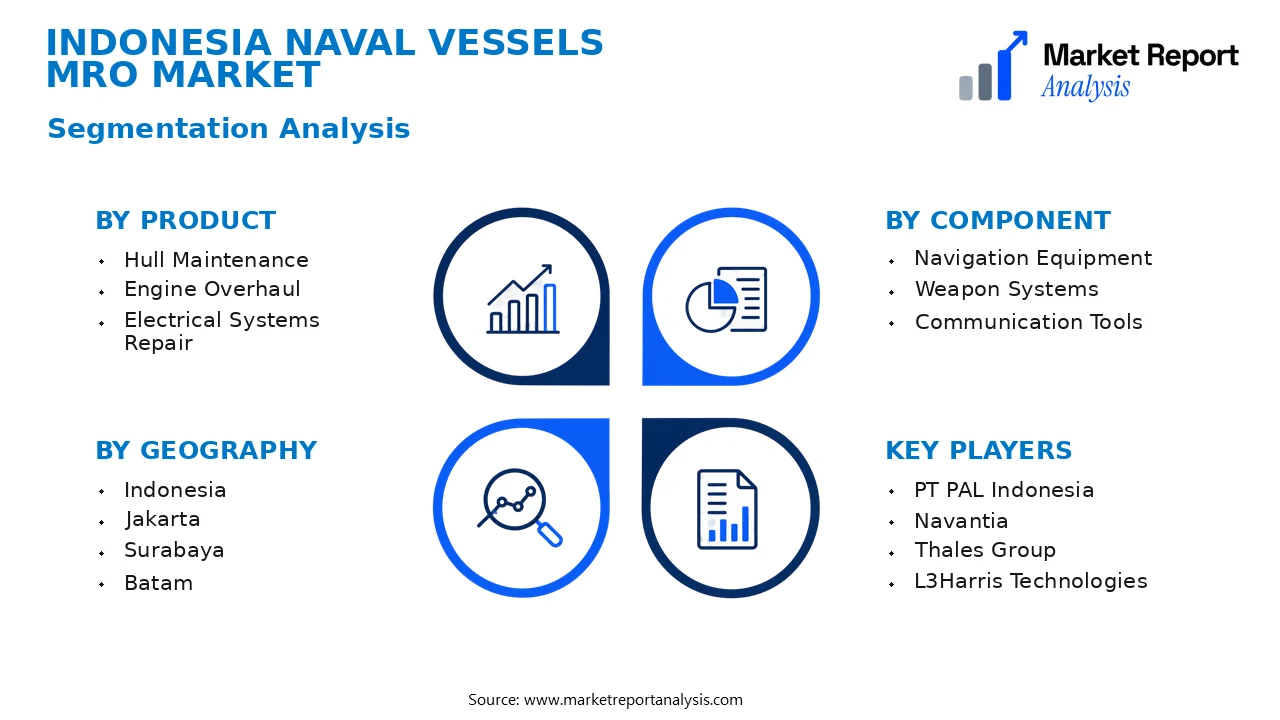
- Product
- Hull Maintenance: This segment encompasses repairs and overhauls related to the structural integrity of naval vessels, including corrosion protection, frame reinforcement, and rigging repairs. It is driven by aging fleets and expansion of naval capabilities.
- Engine Overhaul: Focused on the repair and refurbishment of propulsion systems, this segment is critical for operational readiness, especially given the increasing complexity of marine engines and the need for reliable power sources in vessels.
- Electrical Systems Repair: Encompassing the maintenance of power, lighting, and communication systems onboard vessels, this segment is vital for modern vessel safety, control, and automation enhancements, which are increasingly adopted across fleets.
- Component
- Navigation Equipment: Includes the maintenance and upgrade of radar, sonar, and GPS systems, crucial for vessel navigation safety and operational efficiency, especially as waters become more congested and navigation technology advances.
- Weapon Systems: Covers repairs and upgrades to onboard weaponry, ensuring ships remain combat-ready and capable of fulfilling strategic defense roles amid evolving maritime security threats.
- Communication Tools: Focused on maintaining reliable communication channels, this component is essential for command and control, especially in complex operations requiring seamless integration across naval units.
- Geography
- Indonesia: As the primary market base, Indonesia’s naval modernization efforts, fleet expansion, and strategic ambitions directly influence the demand for MRO services, especially in light of regional security tensions.
- Jakarta: The capital and largest city, Jakarta hosts major naval bases, shipbuilding facilities, and MRO hubs, making it a crucial center for naval vessel maintenance and upgrades.
- Surabaya: Known for its significant maritime activities, Surabaya is a key hub for naval logistics, repair yards, and fleet support, with ongoing investments to boost its capacity for vessel MRO.
- Batam: Strategically located near Singapore, Batam benefits from increased naval activity, international collaborations, andport facilities, positioning it as a vital node for regional naval MRO operations.
This segmentation provides a comprehensive view of the Indonesia Naval Vessels MRO Market, highlighting the critical areas of focus such as product types and regional hubs all vital for stakeholders aiming to capitalize on emerging opportunities within this evolving defense landscape.
Competitive Intelligence
The Indonesia Naval Vessels MRO Market exhibits a moderate level of competition characterized by a mix of local defense contractors and international players. Major firms such as PT PAL Indonesia and global defense companies like Damen Shipyards are pivotal, with some market concentration evident among leading service providers. Business strategies emphasize forming strategic partnerships with international suppliers to enhance technological capabilities, as well as pursuing acquisitions to expand service offerings and regional reach. Innovation is driven by R&D investments aimed at developing advanced maintenance techniques and environmentally sustainable solutions, setting companies apart through technological differentiation.
Partnerships often involve joint ventures with OEMs to facilitate technology transfer and local manufacturing, addressing Indonesia’s strategic defense needs. Expansion strategies include establishing regional service hubs in major Indonesian naval bases, particularly in Surabaya and Jakarta, to improve response times and service efficiency. Companies are also investing in workforce training and digital tools to streamline operations. Competitive differentiation hinges on the ability to provide comprehensive, cost-effective, and technologically advanced MRO services, supporting Indonesia's naval modernization goals and regional maritime security initiatives.
Leading Company Profiles
The competitive landscape of the Indonesia Naval Vessels MRO market features a diverse mix of local and international firms specializing in naval maintenance, system integration, and overhaul services. These companies leverage cutting-edge technology, comprehensive service portfolios, and strategic partnerships to gain market share and fulfill the evolving needs of Indonesia’s naval defense sector.
- PT PAL Indonesia
- Navantia
- Thales Group
- L3Harris Technologies
- BAE Systems
- HII - Huntington Ingalls Industries
- Rolls-Royce
- Saab Group
- Elbit Systems
- Wilhelmsen Ship Management
PT PAL Indonesia
PT PAL Indonesia is a leading naval shipbuilder and MRO service provider, focusing on local vessel maintenance and critical system retrofits aligned with Indonesia's naval modernization plans.
Navantia
Navantia offers integrated naval solutions including platform overhaul, combat system upgrades, and support services, strengthening regional naval capabilities and establishing strategic alliance networks in Southeast Asia.
Thales Group
Thales supplies advanced electronic systems, radars, and combat management solutions, supporting vessel modernization and ensuring interoperability in complex naval operations across Indonesia’s fleet.
L3Harris Technologies
L3Harris provides integrated communication, sensor, and electronic warfare systems, facilitating vessel upgrades and enhancing operational effectiveness for Indonesia’s naval vessels.
BAE Systems
BAE Systems delivers comprehensive maintenance, repair, and system integration services that bolster Indonesia’s naval fleet, emphasizing technological innovation and adaptive logistics support.
HII - Huntington Ingalls Industries
HII specializes in shipbuilding and lifecycle services, including ongoing MRO projects for military vessels, leveraging advanced manufacturing and repair technologies to support fleet readiness.
Rolls-Royce
Rolls-Royce offers propulsion solutions, power systems, and maintenance services for naval vessels, emphasizing energy-efficient performance and technological integration aligned with regional military requirements.
Saab Group
Saab provides radar, missile, and command systems with a strong focus on modernization and life-cycle support, crucial for maintaining Indonesia’s evolving naval capabilities.
Elbit Systems
Elbit offers advanced situational awareness, electronic warfare, and navigation systems, supporting vessel overhauls and technical upgrades tailored to Indonesia’s maritime security needs.
Wilhelmsen Ship Management
Wilhelmsen supplies comprehensive ship management and maintenance services, emphasizing sustainable technologies and efficient support solutions for Indonesia’s naval fleet operations.
Strategic Business Developments
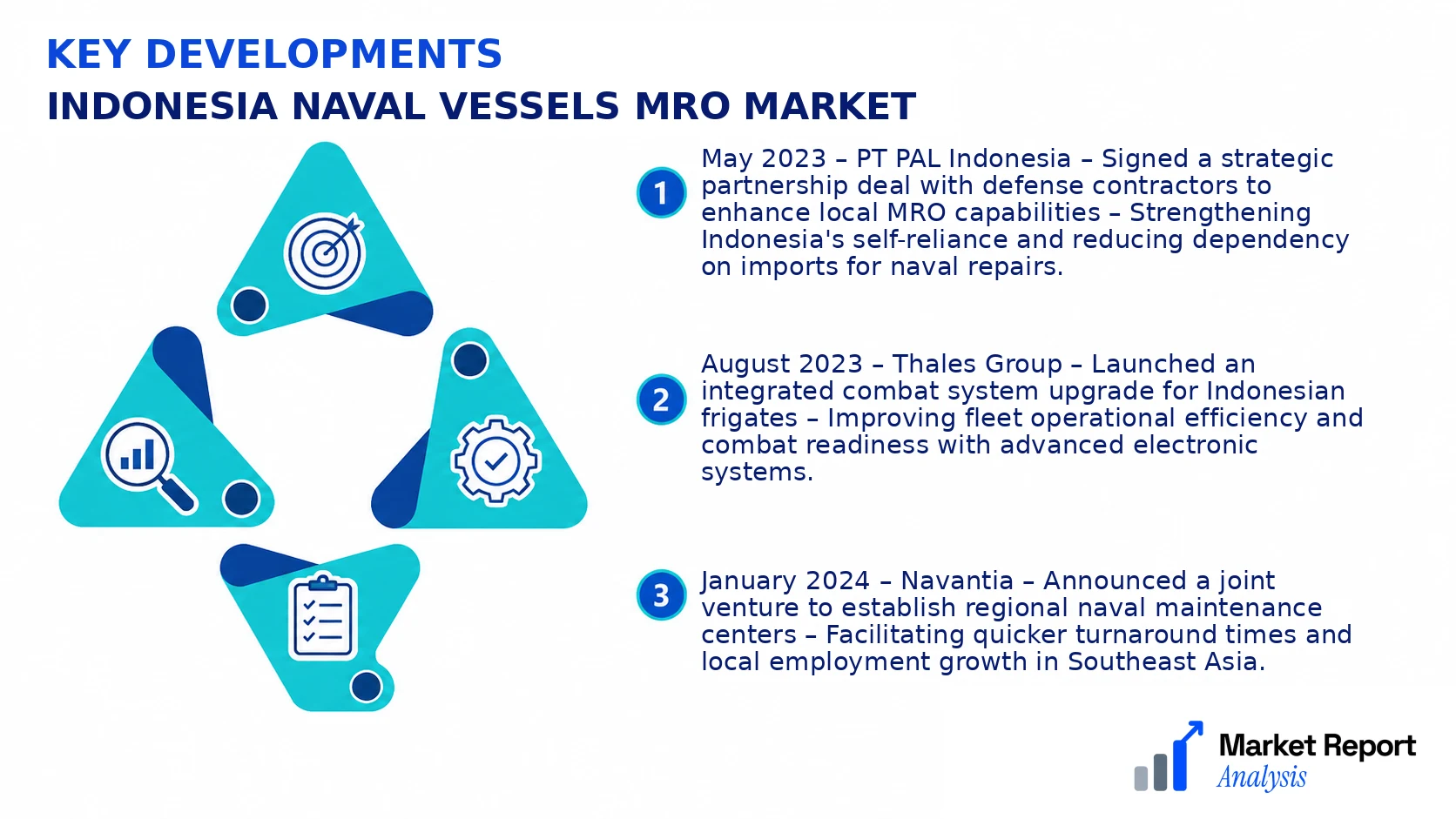
- May 2023 – PT PAL Indonesia – Signed a strategic partnership deal with defense contractors to enhance local MRO capabilities – Strengthening Indonesia's self-reliance and reducing dependency on imports for naval repairs.
- August 2023 – Thales Group – Launched an integrated combat system upgrade for Indonesian frigates – Improving fleet operational efficiency and combat readiness with advanced electronic systems.
- January 2024 – Navantia – Announced a joint venture to establish regional naval maintenance centers – Facilitating quicker turnaround times and local employment growth in Southeast Asia.
- September 2023 – Rolls-Royce – Initiated a digital overhaul project for propulsion systems servicing Indonesian submarines – Enhancing energy efficiency and predictive maintenance capabilities.
- November 2023 – BAE Systems – Completed a major overhaul of Indonesian corvettes featuring new combat system integrations – Increasing defensive capabilities and extending vessel service life.
Frequently Asked Questions
What is the Indonesia Naval Vessels MRO Market?
The Indonesia Naval Vessels MRO Market encompasses the maintenance, repair, and overhaul services for naval vessels operated by Indonesia’s naval forces. This sector ensures ships are operationally ready, compliant with regulatory standards, and technologically updated, supporting national defense capabilities.
What is the current market size of Indonesia Naval Vessels MRO Market?
As of 2026, the market size is estimated to be approximately USD 1.2 Billion, reflecting steady growth driven by ongoing modernization programs, increased naval fleet size, and investments in ship maintenance infrastructure across Indonesia’s maritime security landscape.
What factors are driving the Indonesia Naval Vessels MRO Market?
Key drivers include Indonesia’s focus on expanding and modernizing its navy, regional security concerns, strategic partnership with global defense contractors, and technological advancements in naval vessels. Additionally, rising maritime threat levels foster increased expenditure on naval maintenance.
Which region dominates the Indonesia Naval Vessels MRO Market?
The regional market in Indonesia’s Java and Sumatra islands is dominant due to the concentration of naval bases, shipbuilding facilities, and strategic maritime assets, making it the primary hub for naval repair and maintenance activities.
Which segment is expected to grow the fastest?
The services segment for digital modernization and engine overhauls is forecasted to be the fastest-growing, driven by the need to enhance vessel longevity, operational efficiency, and incorporate advanced surveillance and communication systems targeted at modern naval warfare.
Who are the leading companies operating in the Indonesia Naval Vessels MRO Market?
Leading companies include PT PAL Indonesia, Damen Shipyards, and Thales Group, alongside international defense contractors providing technological and logistical support, thereby shaping Indonesia’s naval maintenance services landscape through strategic collaborations and technology transfer.
Analyst Perspective
The Indonesia Naval Vessels MRO Market exhibits a mature yet evolving landscape driven by regional security dynamics and Indonesia's strategic focus on maritime sovereignty. Long-term growth prospects remain stable with an anticipated CAGR of approximately 6.2% from 2026 to 2034, supported by ongoing fleet expansion and modernization initiatives. Opportunities are particularly attractive in integrated MRO solutions that incorporate advanced diagnostics, predictive maintenance, and environmentally sustainable practices, enabling operators to optimize vessel readiness and lifecycle costs. Technological evolution, notably in automation, artificial intelligence, and corrosion-resistant materials, is shaping the competitive landscape, demanding continuous investment in innovation and workforce upskilling. Priority regions within Indonesia, such as Jakarta and Surabaya, are poised for regional growth driven by logistical advantages and naval facility upgrades. To capitalize on these, stakeholders must focus on strategic partnerships, localizing supply chains, and enhancing cyber-physical resilience to mitigate risks. Long-term, sustained investment in these areas will reinforce Indonesia’s maritime security posture and position local firms as regional MRO leaders.
