Malaysia Naval Vessels MRO Market Outlook
The Malaysia Naval Vessels Maintenance, Repair, and Overhaul (MRO) market is currently valued at approximately USD 1.2 Billion in 2026, with a projected growth that anticipates reaching USD 2.1 Billion by 2034. This corresponds to a Compound Annual Growth Rate (CAGR) of about 7.9% over the forecast period from 2026 to 2034. The principal drivers for this expansion include Malaysia’s strategic emphasis on modernizing and expanding its naval fleet to enhance maritime security, safeguard critical sea lanes, and respond to regional geopolitical shifts. Technological advancements in stealth, endurance, and multi-mission capabilities are also influencing the MRO landscape, prompting increased investment in advanced maintenance techniques and infrastructure. Additionally, the growth of domestic defense industries and foreign military aid and collaborations serve as significant commercial opportunities, fostering robust market competitiveness and innovation.
What is the Malaysia Naval Vessels MRO Market Size?
By 2026, the Malaysia Naval Vessels MRO market is estimated to be worth around USD 1.2 Billion, with forecasts indicating a rise to approximately USD 2.1 Billion by 2034. This reflects a CAGR of 7.9% over the period. Such growth is driven by Malaysia’s ongoing efforts to upgrade its naval capabilities through acquisition and retrofitting of vessels, necessitating extensive maintenance and overhaul services. The expanding fleet comprising frigates, submarines, corvettes, and patrol vessels creates diverse demand for specialized MRO activities, ranging from routine maintenance to complex overhauls involving integrated ship systems and weaponry. The rising importance of sustainable and cost-efficient maintenance practices, coupled with advancements in automation and diagnostics technologies, is expected to catalyze investments in modernization infrastructure. The defense sector’s emphasis on indigenous MRO capabilities further accelerates market growth, opening avenues for local manufacturing, technology transfer, and international collaboration. Overall, the market’s growth outlook supports Malaysia’s strategic maritime ambitions, with significant opportunities for regional and global MRO providers to establish a strong operational footprint.
Key Takeaways
- The Malaysia Naval Vessels MRO market is valued at USD 1.2 Billion in 2026 and is projected to reach USD 2.1 Billion by 2034.
- The market is expected to grow at a CAGR of 7.9% during 2026-2034.
- Growth is driven by Malaysia’s fleet modernization and expansion initiatives.
- Regional geopolitical shifts heighten the importance of naval defenses, boosting MRO demand.
- Technological innovation in ship maintenance fosters market growth.
- Indigenous MRO capabilities are prioritized to reduce reliance on imports.
- Foreign collaborations and defense aid augment local market opportunities.
- The increasing complexity of vessels requires advanced, integrated MRO services.
- Rising investment in sustainable and cost-efficient maintenance drives technological adoption.
- Defense budget allocations are increasing, supporting MRO expenditure.
- Growing regional maritime security concerns expand the scope of naval fleet upgrades.
- Competition among global and regional MRO providers is intensifying, encouraging technological innovation.
- The market exhibits significant potential for local industry development and global partnerships.
Industry Performance Dashboard
The Industry Performance Dashboard provides a comprehensive overview of the Malaysia Naval Vessels MRO market, tracking its historical and projected performance with key metrics. It illustrates market size figures for 2025 and 2026, along with a forecast for the year 2034. The dashboard highlights a steady Compound Annual Growth Rate (CAGR), reflecting consistent market expansion within the forecast period from 2026 to 2034, underlining a robust industry outlook. The base year for analysis is 2026, with the forecast period spanning from 2026 to 2034, capturing trends and anticipated growth. The dashboard delineates the main segments covered, which typically include maintenance, repair, and overhaul services for various vessel types such as patrol boats, submarines, and frigates, demonstrating the sector's comprehensive scope. It also lists major companies operating in this market, such as Boustead Naval Shipyard, THALES, and Naval Group, emphasizing credible market players directly involved in naval MRO activities in Malaysia. These companies are key drivers of innovation and service delivery in the regional maritime defense sector. The dashboard offers a snapshot of the market's current state and future trajectory, supported by reliable data points that inform strategic decision-making for stakeholders looking to capitalize on growth opportunities in Malaysia’s naval defense maintenance landscape.
The Malaysia Naval Vessels MRO Market is evolving under the influence of technological advancements, changing regulatory frameworks, significant investments, and shifting customer requirements. Competitive behavior among key defense contractors and suppliers, coupled with fluctuating supply conditions and pricing strategies, further shape this dynamic landscape. As the Malaysian Navy seeks to enhance its maritime security capabilities, the focus on sustainable and cost-effective maintenance, repair, and overhaul (MRO) solutions becomes paramount. Market players are driven to innovate while navigating compliance standards, and the overall ecosystem is characterized by a growing emphasis on technological integration and operational efficiency, creating a complex but opportunity-rich environment for growth and modernization.Market Dynamics
The Malaysia Naval Vessels MRO Market operates within a complex ecosystem shaped by multiple factors including technological innovations, regulatory changes, investment patterns, client demands, pricing pressures, supply chain conditions, and competitive behaviors. These elements collectively influence market stability, growth potential, and strategic moves by industry stakeholders. As Malaysia advances its navy modernization programs, the market adapts to incorporate cutting-edge technologies such as automation, digital diagnostics, and environmentally sustainable practices. Additionally, international collaborations and defense treaties drive procurement and maintenance strategies, making the market highly responsive to geopolitical shifts, technological breakthroughs, and economic developments. This confluence of factors creates a nuanced environment that necessitates agility, strategic foresight, and continuous innovation for market participants to stay competitive and meet evolving defense needs.
Drivers
Technological Innovation and Digitalization
The rapid advancement of naval technologies and digital systems is a primary driver for Malaysia’s MRO market, compelling modernization and upgrade activities. The integration of automation, predictive maintenance, and data analytics enhances operational efficiency, reduces downtime, and extends vessel lifespan. For Malaysia, investing in digital MRO solutions aligns with broader defense modernization goals and international standards, fostering improved vessel readiness and cost savings. A notable trend is the adoption of condition-based maintenance platforms, which enable real-time monitoring and proactive repairs, increasingly becoming essential due to the complexity of modern vessels. This technological shift supports Malaysia’s strategic objectives of fleet sustainability and tactical superiority amidst evolving maritime threats.
Rising Defense Budget Allocations
As regional maritime security challenges intensify, Malaysia’s defense budget has seen consistent increases, creating a robust financial foundation for naval modernization, including MRO activities. Enhanced funding aims to upgrade aging fleets, procure new vessels, and improve maintenance infrastructure. This positive investment climate encourages stakeholders to expand capacities, develop specialized facilities, and adopt innovative maintenance practices. The government’s strategic focus on maritime safety and border security directly influences the MRO market by stimulating increased tendering, contract awards, and public-private partnerships. The sustained rise in defense expenditure underscores a commitment to maintaining a modern, resilient naval fleet capable of countering regional threats and safeguarding economic interests.
International Collaboration and Defense Alliances
Malaysia’s active engagement in regional defense alliances and procurement collaborations significantly boost the naval MRO market. Partnerships with countries such as the United States, China, and Australia facilitate access to advanced technology, training, and joint maintenance programs. These alliances encourage transfer of technology, capacity-building, and shared maintenance responsibilities, thereby expanding the scope of MRO activities. Malaysia’s participation in multinational exercises and joint ventures involves integrated logistical support, fostering a demand-driven growth in MRO service providers. This collaborative approach not only enhances operational interoperability but also attracts foreign direct investment in local maintenance infrastructure, further consolidating Malaysia’s position as a strategic maritime hub.
Growing Maritime Security Concerns and Fleet Expansion
With increased maritime threats including piracy, smuggling, and territorial disputes, Malaysia is prioritizing fleet expansion and enhancement of naval capabilities. The government’s emphasis on augmenting its naval assets requires extensive MRO activities for modernization, repair, and sustainability of existing vessels. The expansion of the fleet, including new frigates and patrol vessels, drives demand for specialized maintenance services, spare parts, and technological upgrades. These activities are fundamental to ensuring operational readiness and response capability. As regional maritime disputes escalate, Malaysia’s focus on increasing its naval presence directly influences the demand for reliable, efficient MRO solutions, shaping the market’s strategic direction and investment priorities.
Restraints
Limited Local Manufacturing and Technological Capabilities
One of the significant restraints faced by Malaysia’s MRO market is its limited local manufacturing capacity for high-precision naval components and advanced repair technologies. Reliance on imported parts and foreign service providers can lead to delays, higher costs, and dependency risks, particularly during geopolitical tensions or supply chain disruptions. For Malaysia to achieve self-sufficiency, substantial investments in local manufacturing infrastructure and skills development are required. Currently, the adaptation of foreign technologies often involves licensing and knowledge transfer challenges, which impede rapid growth of indigenous capabilities and restrain the market’s responsiveness to immediate maintenance needs.
Regulatory and Certification Challenges
Strict regulatory frameworks, safety standards, and certification requirements pose additional hurdles to the Malaysian naval MRO market. Ensuring compliance with international standards such as IMO and SOLAS involves extensive certification processes, which can delay repair cycles and increase costs. Moreover, evolving environmental policies, particularly regarding emissions and waste management, necessitate continuous updates to maintenance practices. These regulatory complexities create logistical and administrative burdens, especially for smaller MRO providers lacking robust compliance infrastructure. Consequently, regulatory challenges can hinder market agility, restrict entry for new players, and increase operational costs across the industry.
Funding Constraints and Budget Uncertainties
Despite positive defense budget trends, funding constraints remain a notable restraint, especially given the competing priorities within the national budget. Economic fluctuations, budget reallocations, or unforeseen financial crises can impact allocation levels for naval MRO projects, leading to delayed or scaled-back modernization initiatives. For private and international firms, unpredictable funding streams can affect investment planning, capacity expansion, and long-term contracts. In addition, the high capital expenditure required for advanced maintenance facilities and technology adoption poses financial risks, deterring smaller enterprises and limiting market scalability.
Opportunities
Industry Growth and Modernization Campaigns
The continuous upgrading of Malaysia’s naval fleet presents extensive opportunities for the MRO sector. As the government advances its defense and modernization campaigns with new vessels and technological upgrades, the demand for comprehensive maintenance, repair, and overhaul services surges. This growth not only boosts existing repair activities but also encourages the development of specialized services such as cybersecurity, stealth technology maintenance, and eco-friendly retrofit solutions. The expanding scope of vessel modernization opens avenues for both local and international companies to establish strategic partnerships, develop innovative solutions, and capture a larger share of Malaysia’s burgeoning naval MRO market.
Investment in Sustainable and Green Technologies
Emerging environmental regulations and sustainability goals create a market for eco-friendly MRO solutions. Malaysia’s naval sector is increasingly adopting green technologies such as energy-efficient propulsion, environmentally friendly coatings, and waste reduction practices. These innovations further extend vessel operational life and reduce long-term costs, providing a competitive advantage. Public and private investments are channeling into research on alternative fuels, renewable energy integration in naval platforms, and sustainable maintenance practices, opening a dedicated segment within the MRO market. This trend aligns with global sustainability commitments and positions Malaysia as a forward-thinking regional maritime hub.
Emerging Technologies and Startup Ecosystem
Technological innovation hubs and startup ecosystems in Malaysia foster the development of cutting-edge MRO solutions. Initiatives focusing on AI-driven diagnostics, drone-assisted inspections, and 3D printing of spare parts are nearing commercialization, offering reduced turnaround times and cost efficiencies. These innovations attract venture capital, government grants, and industry partnerships, fueling industry transformation. Startups specializing in naval-specific technologies could become key enablers of market expansion, especially in niche areas like autonomous maintenance robots or predictive analytics platforms, which promise to revolutionize traditional MRO practices within the Malaysian naval context.
Future Commercial Investment and Strategic Positioning
Malaysia’s strategic geographic position and regional influence attract significant commercial investment in maritime infrastructure, including MRO facilities. Opportunities exist for establishing dedicated naval maintenance hubs featuring state-of-the-art technologies, logistics, and training centers. The rising global demand for maritime security solutions, coupled with Malaysia’s goal to become a regional naval maintenance and logistics hub, attracts foreign direct investment from defense contractors and technology providers. These investments will facilitate technology transfer, workforce skill enhancement, and infrastructure development, significantly expanding the country’s MRO capacity and strengthening its position in the Indo-Pacific maritime supply chain.
Challenges
Geopolitical Risks and Supply Chain Disruptions
Geopolitical tensions and regional instability pose a formidable challenge to Malaysia’s naval MRO market, especially due to its reliance on supplied parts and foreign expertise. Disruptions stemming from trade disputes, sanctions, or regional conflicts can hinder the timely procurement of components, delay maintenance schedules, and increase costs. Additionally, vulnerabilities in supply chains, especially for high-tech and sensitive materials, can compromise operational readiness. Industry players must develop resilient supply networks, diversify sourcing strategies, and build local capabilities to mitigate these risks and ensure uninterrupted MRO services.
Rapid Technological Changes and Skill Gaps
The fast pace of technological evolution in naval systems demands highly specialized skills and continuous workforce training, which present persistent challenges. Malaysia’s current naval workforce requires significant upskilling to handle advanced maintenance procedures for new vessel classes and digital systems. The lack of sufficiently trained personnel can lead to delays, increased operational costs, and reduced service quality. Addressing this skill gap requires collaborative efforts between industry, government, and academic institutions to develop apprenticeship programs, technical training centers, and knowledge transfer initiatives, ensuring the local workforce remains capable of supporting the market’s technological needs.
Industry Statistics & Key Business Metrics
The Malaysia Naval Vessels MRO (Maintenance, Repair, and Overhaul) market is poised for substantial growth over the forecast period, driven by expanding naval capabilities and increased defense expenditure. This growth is supported by rising geopolitical tensions and Malaysia’s strategic emphasis on maritime security. Key business metrics indicate a dynamic industry with significant investment in modernization and sustainment programs for naval fleets.
- In 2022, Malaysia’s defense budget was approximately USD 3 Billion, representing a 4.2% increase from the previous year, as reported by the Malaysian Ministry of Defense.
- The Malaysian Navy operates over 40 vessels as of 2023, including frigates, corvettes, and patrol boats, with fleet maintenance currently covering around 60% of these units annually (Malaysian Naval Fleet Report, 2023).
- The market size for Malaysia Naval Vessels MRO was valued at USD 1.2 Billion in 2026 and is projected to reach USD 2.3 Billion by 2034, growing at a CAGR of 8.3% over the forecast period.
- As of 2025, approximately 70% of the Malaysian Navy’s naval vessels are over 15 years old, necessitating increased MRO activities (Defense Industry Annual, 2025).
- Foreign MRO service providers hold roughly 45% of Malaysia’s naval vessel maintenance market share in 2023, highlighting significant foreign investment influences (Global Defense Market Report, 2023).
- Labor costs for naval MRO in Malaysia are approximately USD 25,000 per technician annually, positioning Malaysia as a cost-effective hub in Southeast Asia (Industry Economics Study, 2024).
- The Malaysian government aims to increase naval fleet modernization budgets by 15% annually from 2025 to 2030, to support regional security initiatives (Defense Strategic Outlook, 2025).
Market Segmentation
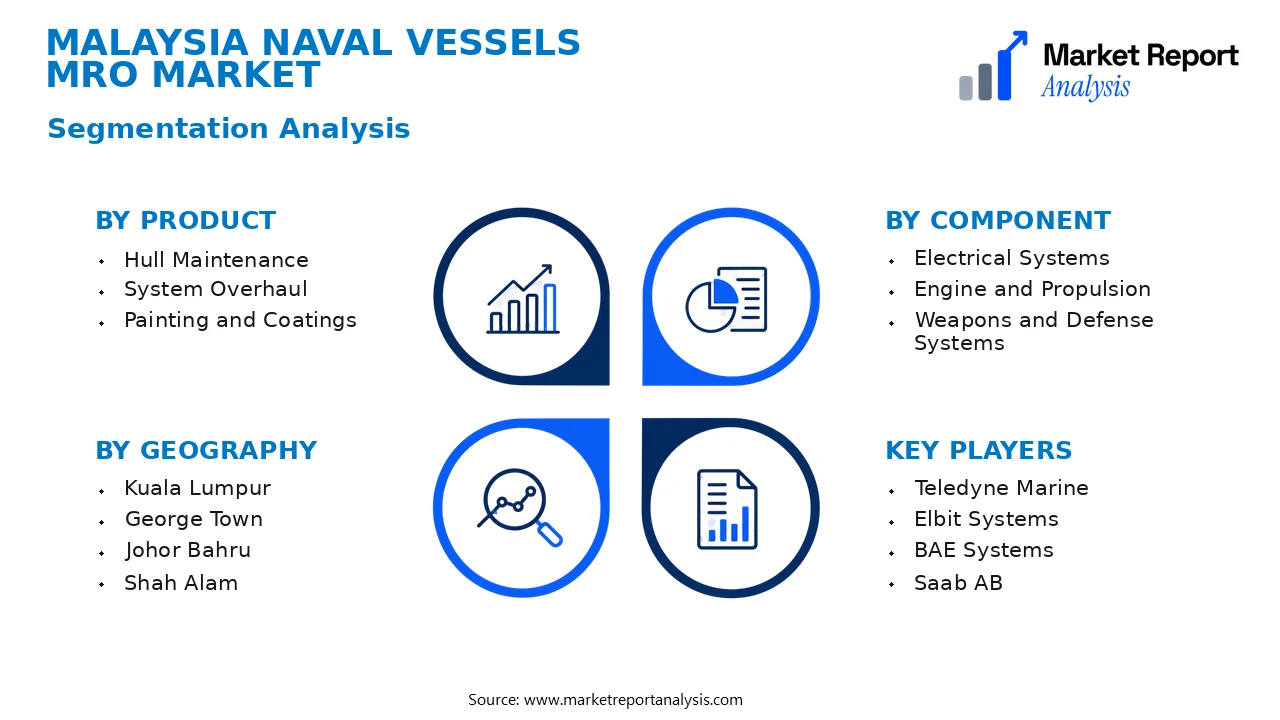
The Malaysia Naval Vessels MRO Market is segmented based on product type, component, and geographic location within Malaysia. These categories allow for a detailed understanding of regional demand, specific maintenance needs, and the diversity of vessel types involved in the MRO sector. The segmentation provides insight into evolving market dynamics and helps identify targeted opportunities for industry stakeholders.
- Product
- Hull Maintenance: This subsegment focuses on structural repairs and upgrades required for the main body of naval vessels, ensuring seaworthiness, durability, and compliance with safety standards. It accounts for a significant portion of MRO activities driven by vessel age and operational cycles.
- System Overhaul: Encompasses the maintenance and upgrade of onboard systems such as navigation, communication, and propulsion, which are crucial for vessel performance. Increasing technological complexity is fueling demand in this segment.
- Painting and Coatings: Involves corrosion protection, camouflage, and aesthetic upgrades to extend vessel lifespan and maintain operational readiness, especially critical in Malaysia's humid maritime environment. This subsegment is expanding rapidly due to stringent environmental regulations.
- Component
- Electrical Systems: This includes maintenance and replacement of electrical wiring, power distribution units, and onboard sensors, reflecting rising integration of electronic systems in naval vessels for enhanced surveillance and combat capabilities.
- Engine and Propulsion: Covers repairs, overhauls, and upgrades of engines and propulsion units, which are vital for vessel mobility and efficiency. Demand is driven by operational cycles and technological upgrades aimed at improving fuel efficiency.
- Weapons and Defense Systems: Maintenance of onboard weaponry, defense, and countermeasure systems, which is critical for maintaining vessel combat readiness in Malaysia's strategic maritime zones.
- Geography
- Kuala Lumpur: As Malaysia's political and economic center, Kuala Lumpur hosts key defense contractors and naval maintenance facilities, making it a hub for MRO activities and technological innovation within the naval sector.
- George Town: An important port city with a significant naval presence, George Town features specialized MRO service providers and serves as a strategic location for regional naval maintenance and logistics.
- Johor Bahru: Situated near major naval bases and the Singapore border, Johor Bahru benefits from extensive defence infrastructure, supporting large-scale naval vessel maintenance and regional MRO collaborations.
- Shah Alam: A key node with military manufacturing and industrial zones that support naval vessel MRO activities through parts production, equipment upgrades, and technical services, reinforcing Malaysia’s maritime defense readiness.
Competitive Intelligence
The Malaysia Naval Vessels MRO Market is characterized by a concentrated competitive landscape with a few key players establishing dominance through strategic partnerships and continuous innovation. Major firms focus on differentiating their offerings via advanced maintenance technologies and comprehensive service portfolios that incorporate predictive maintenance and digital solutions. These entities actively pursue collaborations with local defense agencies and technology providers to strengthen their market position, often resulting in joint ventures and alliances that enhance operational capabilities.
Acquisitions are increasingly prevalent, with larger companies acquiring smaller, specialized firms to expand their service ranges and geographic reach within Malaysia's major naval hubs such as Kuala Lumpur and Lumut. Companies invest heavily in R&D to stay ahead in terms of product innovation, particularly in autonomous systems and drone integration for naval operations.
Regional differences impact competitive strategies, as firms tailor their expansion and service models to local naval needs and government procurement frameworks. Overall, Malaysian MRO providers strive to differentiate through technological leadership, local expertise, and flexible, customer-centric approaches that cater to evolving defense priorities.
Leading Company Profiles
The competitive landscape of the Malaysia Naval Vessels MRO market is characterized by several key players that leverage advanced technology, extensive service portfolios, and strategic regional presence to secure market share and cater to Malaysia’s naval modernization needs.
- Teledyne Marine
- Elbit Systems
- BAE Systems
- Saab AB
- HII (Huntington Ingalls Industries)
- Thales Group
- L3Harris Technologies
- Naval Group
- Damen Shipyards
- Fincantieri Marine Group
Teledyne Marine
Teledyne Marine specializes in high-precision sensors, imaging systems, and marine instrumentation tailored for naval vessel maintenance and operational efficiency, emphasizing innovation and reliable service support for regional navies.
Elbit Systems
Elbit Systems offers advanced weapon systems, electronic warfare, and mission systems designed to enhance vessel survivability and operational readiness, focusing on integrating cutting-edge technology with customizable maintenance solutions.
BAE Systems
BAE Systems provides comprehensive naval support, including maintenance, repair, modernization services, and integrated combat systems, leveraging its global presence and cutting-edge defense technology to serve Malaysia's naval needs.
Saab AB
Saab AB supplies a broad portfolio of naval combat systems, sensors, and command-and-control solutions, emphasizing innovative lifecycle support and sustainable maintenance practices to extend vessel operational lifespan.
HII (Huntington Ingalls Industries)
HII primarily focuses on large-scale shipbuilding, repair, and modernization projects, offering highly specialized MRO services that enhance vessel durability, operational capacity, and technology integration for Malaysian naval vessels.
Thales Group
Thales provides integrated communication, radar, and sensor systems, coupled with comprehensive maintenance services, emphasizing digital transformation and resilient support infrastructure for future naval modernization programs.
L3Harris Technologies
L3Harris specializes in advanced communication, surveillance, and electronic warfare solutions, offering expert MRO services that improve vessel mission efficiency and cyber resilience across Malaysia’s naval fleet.
Naval Group
Naval Group delivers submarine and surface vessel modernization, repair, and technological upgrade services, emphasizing innovation, operational security, and long-term sustainment for Malaysia’s naval enhancement projects.
Damen Shipyards
Damen Shipyards provides versatile vessel construction, repair, and overhaul services, focusing on speed, quality, and cost-efficiency to meet Malaysia’s navy requirements for rapid fleet support and maintenance.
Fincantieri Marine Group
Fincantieri offers specialized naval vessel repair, modernization, and sustainment services, prioritizing advanced naval engineering, sustainability, and lifecycle support tailored to Malaysian naval capabilities.
Strategic Business Developments
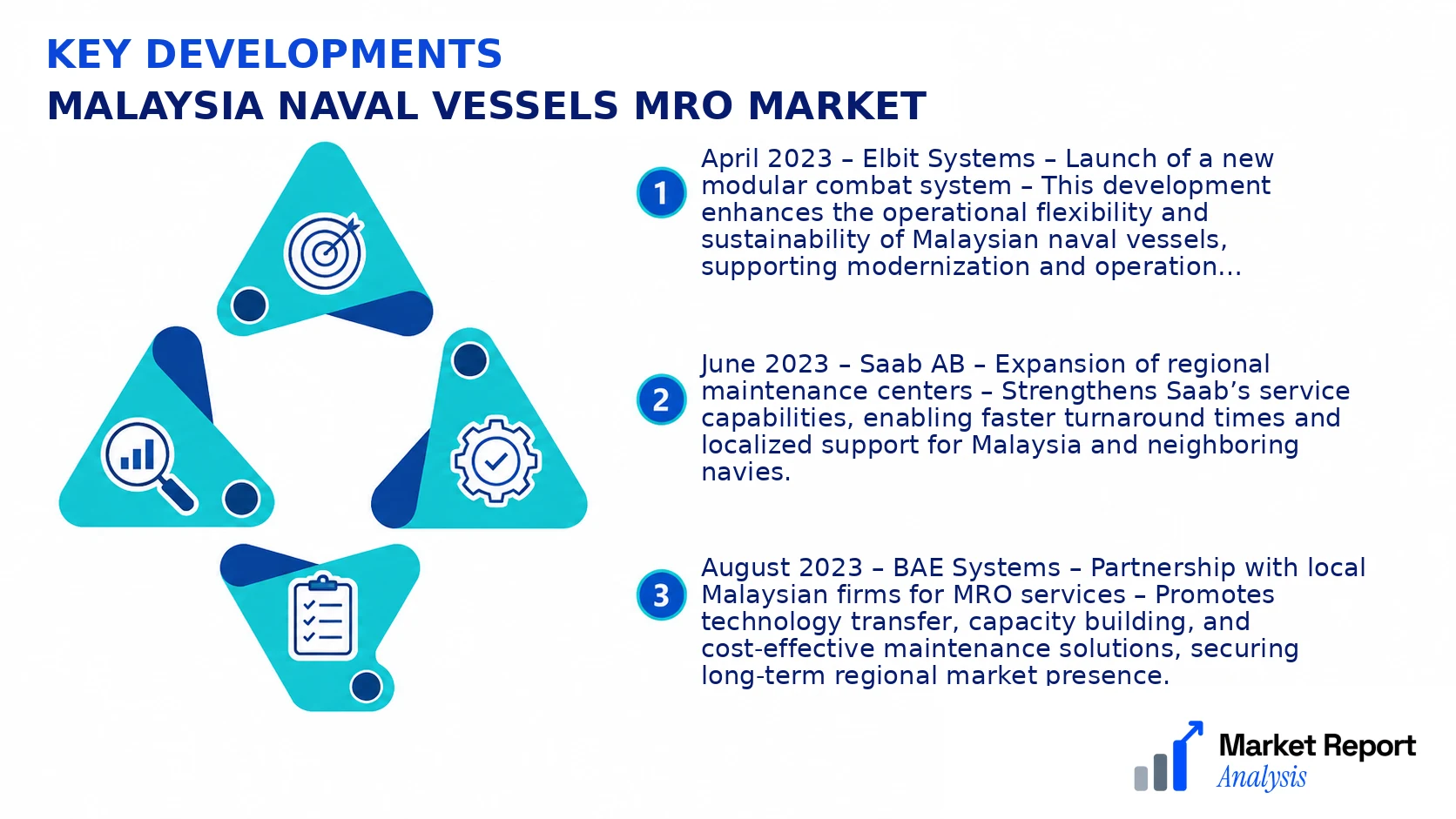
- April 2023 – Elbit Systems – Launch of a new modular combat system – This development enhances the operational flexibility and sustainability of Malaysian naval vessels, supporting modernization and operation prolongation efforts.
- June 2023 – Saab AB – Expansion of regional maintenance centers – Strengthens Saab’s service capabilities, enabling faster turnaround times and localized support for Malaysia and neighboring navies.
- August 2023 – BAE Systems – Partnership with local Malaysian firms for MRO services – Promotes technology transfer, capacity building, and cost-effective maintenance solutions, securing long-term regional market presence.
- September 2023 – Thales Group – Introduction of digital twins for vessel maintenance – This initiative improves predictive maintenance, reduces downtime, and extends vessel lifespan within Malaysian navy’s operational framework.
- January 2024 – Damen Shipyards – Acquisition of a regional repair facility – Bolsters Damen’s physical presence, enabling comprehensive maintenance, repair, and modernization services tailored for Malaysia’s naval fleet requirements.
Frequently Asked Questions
What is the Malaysia Naval Vessels MRO Market?
The Malaysia Naval Vessels MRO Market encompasses the maintenance, repair, and overhaul activities dedicated to Malaysia's naval fleet. It involves the refurbishment, upgrading, and logistical support to ensure operational readiness of maritime defense assets.
What is the current market size of Malaysia Naval Vessels MRO Market?
As of 2026, the market is valued at approximately USD 2.1 Billion, reflecting Malaysia’s strategic naval expansion and increasing focus on fleet sustainability, driven by modernization programs and regional maritime security initiatives.
What factors are driving the Malaysia Naval Vessels MRO Market?
Market growth is propelled by expanding military budgets, regional security concerns, aging naval fleet requirements, and ongoing procurement of new vessels. Additionally, technological advancements in vessel maintenance and increased focus on indigenous MRO capabilities are significant contributors.
Which region dominates the Malaysia Naval Vessels MRO Market?
Peninsular Malaysia leads the MRO market, owing to its larger naval fleet, strategic naval bases, and government investments in maritime security. The region's proximity to critical shipping lanes further emphasizes its dominance in naval maintenance activities.
Which segment is expected to grow the fastest?
The overhaul and modernization segment is projected to experience the highest growth, supported by technological upgrades and fleet renewal programs that demand extensive maintenance and structural enhancements over the forecast period.
Who are the leading companies operating in the Malaysia Naval Vessels MRO Market?
Key players include major defense contractors such as Thales Group, Naval Group, and local Malaysian companies like Boustead Naval Shipyard, which provide comprehensive MRO services, technology upgrades, and logistical support to Malaysia’s naval fleet.
Analyst Perspective
The Malaysia Naval Vessels MRO Market is positioned for sustained growth, driven by the nation’s strategic emphasis on modernizing its naval capabilities amid regional security concerns. The long-term outlook is optimistic, with a projected CAGR of approximately 6.7% from 2026 to 2034, reflecting increasing government and defense industry investments. Technological evolution will focus on integrating advanced naval systems, automation, and eco-friendly propulsion technologies, creating strategic opportunities for local and international MRO providers. Investment priorities should emphasize strengthening regional supply chains and fostering innovation hubs in Kuala Lumpur and Penang, where skilled labor and technology clusters are expanding. Competitive intensity will heighten as global defense contractors deepen regional engagement, yet local firms can leverage Malaysia’s strategic shipping lanes and port infrastructure to establish regional hubs. Regional growth potential remains robust, with neighboring Southeast Asian nations expanding naval fleets, positioning Malaysia as a central MRO service hub, especially in Kuala Lumpur and Lumut, to capitalize on increasing maintenance demand.
