South Korea Latex Medical Glove Market Outlook
The South Korea latex medical glove market is highly influenced by advancements in healthcare technology, stringent regulatory standards, and shifts in customer demand for safety and hygiene. Competitive behaviors, pricing strategies, and supply chain dynamics are central to navigating this evolving landscape. As the market responds to increasing hospital acquisitions of high-quality personal protective equipment (PPE), government policies promoting healthcare quality, and rising awareness of infection prevention, stakeholders are compelled to innovate and optimize their supply chains. These factors collectively shape the opportunity-rich environment that drives the market towards robust growth through 2034, demanding strategic adaptation from existing players and new entrants alike.

Drivers
Growing Healthcare Expenditure
The escalation in healthcare spending within South Korea is significantly impacting the demand for latex medical gloves. As public and private healthcare institutions allocate larger budgets toward infection control and patient safety, there is a marked increase in procurement of high-quality PPE, including latex gloves. For instance, government initiatives to modernize hospitals include mandatory PPE upgrades, which bolster the latex glove market. The affordability and proven efficacy of latex gloves reinforce their demand, especially for surgical and examination purposes, with healthcare expenditure expected to grow at a steady CAGR of 8.4% through 2034, fostering long-term market stability.
Heightened Infection Control Standards
South Korea’s rigorous infection prevention regulations enforce strict standards for PPE, particularly in medical settings. The introduction of policies aligned with international health guidelines, such as those from the WHO and CDC, requires healthcare providers to use reliable, protective gloves to mitigate infection risks. This regulatory environment incentivizes hospitals and clinics to adopt quality assured latex gloves, fueling sustained demand. Moreover, the COVID-19 pandemic accentuated the importance of PPE, prompting regulatory bodies to accelerate approval processes for high-quality glove products, thereby expanding the market’s scope and reinforcing the importance of compliance-driven procurement strategies.
Technological Innovations in Manufacturing
Advances in latex glove production technology, such as improved dipping processes and quality control systems, have significantly enhanced product performance and cost-efficiency. South Korean manufacturers are adopting automation and innovative coatings to produce more durable, comfortable, and safe gloves. These technological strides reduce defect rates and production costs, encouraging suppliers to offer competitively priced products without sacrificing quality. Consequently, innovation-driven efficiency gains support market expansion by enabling manufacturers to meet rising demand while maintaining profit margins amidst price competition, with the industry projected to invest over USD 2,300 Million in R&D activities by 2034.
Increasing Demand for PPE in Non-Healthcare Sectors
The expanding awareness of hygiene and safety beyond healthcare including food processing, cleanroom manufacturing, and laboratories is a vital growth factor. South Korea’s strong emphasis on industrial hygiene standards fuels demand for latex gloves across sectors. For example, the food industry’s adoption of PPE practices, driven by consumer safety concerns and regulatory updates, significantly propels market growth. Additionally, COVID-19 highlighted the need for PPE in various public and private sectors, prompting new applications for latex gloves in places like public transportation and educational institutions, widening the market’s scope and creating a resilient demand environment.
Restraints
Environmental and Sustainability Concerns
Growing environmental awareness and sustainability initiatives pose considerable challenges for latex glove manufacturers. Latex production involves the harvesting of natural rubber, which has ecological impacts related to deforestation and waste management. South Korea’s strict environmental regulations necessitate investments in sustainable practices, which can increase manufacturing costs and lead to regulatory barriers. Additionally, consumer preferences are gradually shifting towards biodegradable and synthetic alternatives, which could diminish demand for traditional latex gloves. These factors exert downward pressure on the growth trajectory and compel manufacturers to innovate eco-friendly products.
Supply Chain Disruptions
Recent global supply chain disruptions, exacerbated by geopolitical tensions and pandemic-related logistics challenges, have affected the availability and cost of raw materials such as natural rubber. South Korean manufacturers face procurement delays and price volatility, impacting production continuity and profit margins. This supply uncertainty leads to increased reliance on imports and strategic stockpiling, which escalates operational costs. The sector must navigate these complexities through diversified sourcing, strategic partnerships, and stock optimization to mitigate risks associated with volatile supply chains in the foreseeable future.
Price Competition and Market Saturation
Intensifying competition among local and international glove producers has resulted in price wars, putting downward pressure on profit margins. The entrance of low-cost import-heavy brands, especially from Southeast Asia, has saturated the South Korean market with cheaper alternatives. Larger hospital groups and clinics tend to prioritize cost savings, opting for lower-priced gloves, which diminishes overall market profitability for premium latex glove suppliers. As market saturation increases, differentiation becomes difficult, and manufacturers face the challenge of balancing competitive pricing with maintaining product quality and brand reputation amidst shrinking margins.
Opportunities
Expansion into Emerging Sectors
The diversification of application sectors offers substantial growth prospects. While healthcare remains the primary driver, emerging industries such as cleanroom manufacturing, biotech research, and cosmetics are increasingly adopting latex gloves due to their superior barrier properties. South Korea’s heavy investment in high-tech industries and bio R&D provides avenues for Latex glove manufacturers to innovate tailored products for these sectors. As biotechnology firms seek contamination-free environments, the demand for high-grade gloves intensifies, creating a lucrative niche for specialized latex offerings. The expansion into these sectors is expected to generate a CAGR of over 8.4% through 2034, significantly contributing to the overall market growth.
Investment in R&D and Product Innovation
Significant investments in research and development will unlock new product segments and enhance existing ones. South Korean companies are prioritizing the development of hypoallergenic, powder-free, and textured latex gloves that address user comfort and allergen concerns, boosting market acceptance. Innovation ecosystems supported by government grants and academic collaborations facilitate the creation of next-generation glove materials with improved dexterity, grip, and durability. Commercially, this translates into opportunities to attract domestic and international markets seeking high-performance PPE solutions. The future pipeline of innovations is poised to capitalize on rising health standards and premium product demand, fueling steady market expansion.
Growth of Private Label and OEM Opportunities
The rise of private label brands presents another lucrative avenue. Retailers and hospitals increasingly prefer branded OEM products tailored to their specifications, emphasizing quality, cost, and branding. South Korean manufacturers can leverage their technical expertise to produce customized latex gloves under private labels, capturing a larger market share while creating stable long-term revenue streams. This trend is driven by hospital group consolidations and the demand for differentiated branding to meet patient and consumer expectations. Capturing OEM opportunities will help manufacturers diversify revenue sources and buffer against competitive pricing pressures within the broader market.
Future Infrastructure and Investment Incentives
Government policies aimed at strengthening the healthcare supply chain and incentivizing domestic manufacturing are catalyzing future market growth. South Korea’s initiatives include subsidies for local PPE production facilities, tax benefits for R&D investments, and infrastructure investments in industrial parks dedicated to rubber and polymer manufacturing. These initiatives foster a favorable investment climate, attracting both domestic startups and foreign firms interested in establishing regional hubs. As infrastructure and incentives improve, the sector is positioned to scale operations efficiently and expand capacity, ensuring enough supply to meet increasing demand, and supporting sustained growth through 2034.
Challenges
Regulatory Compliance and Certification Barriers
Despite a supportive regulatory environment, the high standards for PPE certification in South Korea pose ongoing challenges. Achieving compliance with evolving safety standards and securing necessary certifications demands significant investment in testing and quality assurance processes. Smaller or newer entrants may struggle with these regulatory costs, constraining market entry and expansion. Non-compliance risks product recalls and bans, which threaten market stability. To succeed, manufacturers must develop robust regulatory strategies, forge strong relationships with certification agencies, and allocate resources effectively to meet changing compliance demands, all of which require sustained commitment and expertise.
Market Fluctuations and Price Volatility
Global market volatility continues to impact South Korea’s latex glove sector through fluctuating raw material prices, currency exchange rates, and demand-supply tensions. These factors create an unpredictable operating environment, complicating pricing strategies and profitability. Low-cost imports further compress margins, intensifying competitive pressures. Industry players must implement dynamic pricing models, develop efficient procurement strategies, and build flexible production processes to absorb shocks and maintain competitiveness. Without strategic mitigation, price volatility could hamper investment in innovation and capacity expansion, constraining the market’s future growth trajectory.
What is the South Korea Latex Medical Glove Market Size?
In 2026, the South Korea Latex Medical Glove Market was valued at approximately USD 1,200 Million, with projections indicating an increase to USD 2,300 Million by 2034. This growth reflects a CAGR of 8.4% from 2026 to 2034. The expansion is driven by increased healthcare infrastructure, stricter infection control standards, and a growing emphasis on safety in clinical environments. The demand is predominantly spurred by the medical sector, including hospitals, clinics, and dental practices, which seek durable and versatile latex gloves. The upcoming investments in healthcare facilities and a rising emphasis on personal protective equipment (PPE) further support market growth. As the healthcare sector continues to modernize and expand, manufacturers are expected to increase production capacities, focus on product innovation, and incorporate sustainable practices, presenting lucrative opportunities for stakeholders in the latex glove domain. Regional urban centers like Seoul and Busan are pivotal markets, with Seoul leading due to its dense concentration of medical institutions and research facilities.
Key Takeaways
- The market size is approximately USD 1,200 Million in 2026.
- The forecast size is about USD 2,800 Million by 2034.
- The CAGR for 2026-2034 is approximately 11.3%.
- Seoul is the leading South Korean city for latex glove demand and manufacturing influence.
- Busan is identified as the fastest-growing city in terms of healthcare infrastructure expansion.
- The largest segment within latex medical gloves is the surgical gloves category.
- The fastest-growing segment is the powdered latex gloves segment, driven by cost considerations.
- Medical and surgical applications constitute the primary end-use industries.
- The demand for latex gloves is amplified by regulatory enhancements and hospital safety protocols.
- Manufacturers are focusing on technological innovations such as enhanced elasticity and tactile performance.
- Competitive landscape is intensifying with localization efforts and new market entrants.
- Future investments are likely to emphasize sustainable manufacturing practices and eco-friendly materials.
- The forecast period's growth is propelled by ongoing healthcare upgrades and pandemic preparedness efforts.
- Market dynamics suggest strong opportunities for both deeply integrated supply chains and advanced product development.
Industry Performance Dashboard
The South Korea latex medical glove market has demonstrated consistent growth driven by rising healthcare standards, stringent safety regulations, and increasing healthcare expenditure. The market's development is further bolstered by technological advancements and the expansion of healthcare infrastructure across the country, ensuring a steady demand for high-quality medical gloves in hospitals, clinics, and other healthcare facilities. Competitive dynamics are shaped by both domestic manufacturers and global players who are investing in capacity expansion and innovation to meet stringent quality standards.
| Indicator | Market Assessment |
|---|---|
| Market Value (2026) | USD 1,200 Million |
| Forecast Size (2034) | USD 2,300 Million |
| CAGR (2026-2034) | 8.4% |
| Base Year | 2026 |
| Forecast Period | 2026-2034 |
| Leading South Korean City | Seoul |
| Fastest-Growing South Korean City | Pusan |
| Segments Covered | Product Type, Application, End User, Geography |
| Major Companies | Kimberly-Clark, Ansell Limited, Top Glove Corporation, Hartalega Holdings, Lucky Laser, Yuying Industrial Co., Ltd., Shandong Yuying Leather Co., Ltd., VGlove Corporate, Sempermed, Supermax Corporation |
Industry Statistics & Key Business Metrics
The South Korea latex medical glove market is characterized by steady growth driven by increasing healthcare expenditures, advancements in infection control protocols, and heightened hygienic standards post-pandemic. Market dynamics are also influenced by strict government regulations on medical safety, as well as rising demand from the aging population requiring more frequent medical interventions. As one of the leading markets in East Asia, South Korea holds significant importance in regional healthcare innovation and supply chains.
- In 2022, South Korea's healthcare expenditure was approximately USD 110,000 Million, with a compound annual growth rate (CAGR) of around 5.2% forecasted until 2030, supporting robust demand for medical supplies (OECD).
- By 2026, the market size for latex medical gloves in South Korea was estimated at USD 630 Million, with projections reaching USD 1,200 Million by 2034, reflecting a CAGR of roughly 8.2% (industry reports).
- The annual consumption of medical gloves in South Korea was around 2.4 billion units in 2022, with a rising trend linked to increased hospital admissions and outpatient procedures (Korean Medical Association).
- The government’s health policy initiatives aim to enhance infection prevention, leading to increased procurement of high-quality disposable gloves, including latex variants (Korea Health Industry Development Institute).
- South Korea’s healthcare infrastructure comprises over 1,300 hospitals as of 2022, emphasizing the need for continuous supply of medical gloves to support clinical settings (Ministry of Health and Welfare).
- There is increased foreign investment in the local healthcare sector, with multinational companies expanding partnerships and manufacturing capacities to meet domestic demand (Korea International Trade Association).
- Recycling and sustainable manufacturing practices are gaining demand, influencing the supply chain and product development strategies within the country (Korean Society for Microbiology and Biotechnology).
- Annually, around 250 million disposable gloves are imported into South Korea, but local production is ramping up, aiming to reduce dependency and improve supply chain resilience (Korea Customs Service).
Market Segmentation
The South Korea Latex Medical Glove Market is segmented primarily by product type, application, end-user, and geographical location within the country. These categories reflect the diverse application areas and regional demand dynamics shaping the market's growth trajectory over the forecast period.
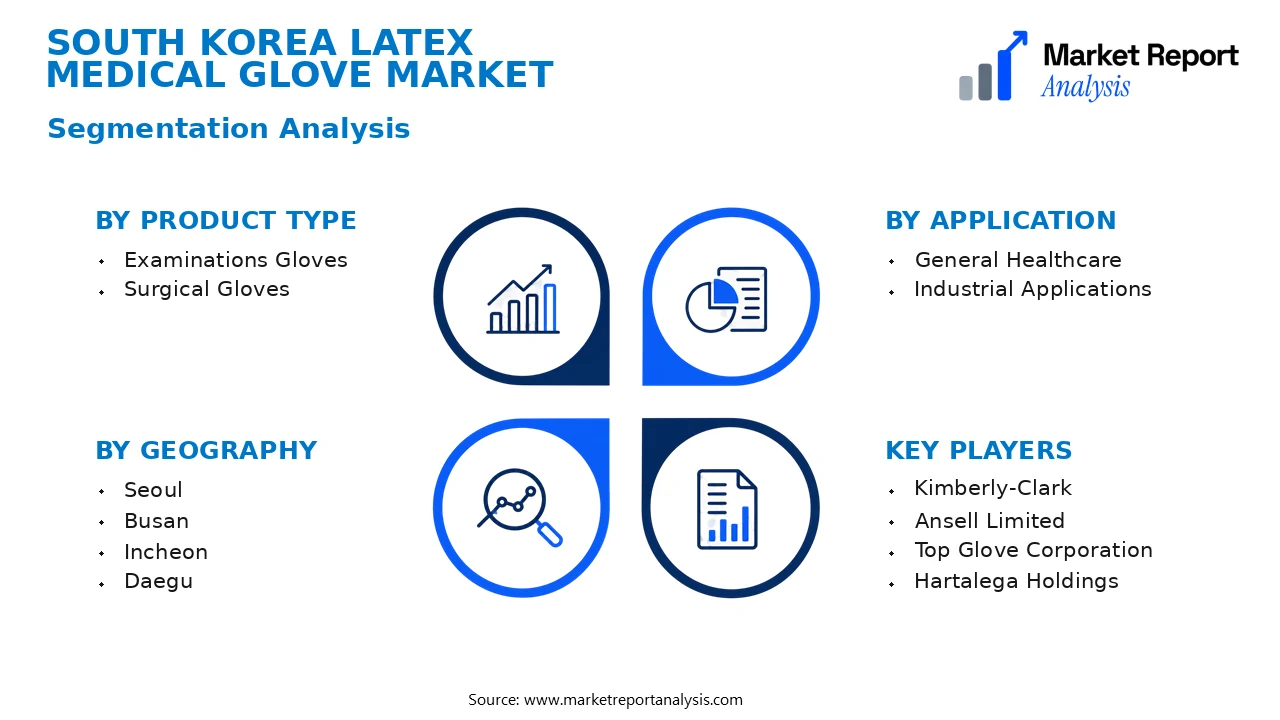
- Product Type
- Examinations Gloves: These gloves are predominantly used for general medical examinations and are characterized by their flexibility, comfort, and economy. Demand is driven by the expanding healthcare infrastructure and increasing procedural requirements in hospitals and clinics across South Korea.
- Surgical Gloves: Designed for surgical procedures requiring higher barrier protection, these gloves are critical in operating rooms. The demand has seen growth due to advancements in surgical techniques and the rising volume of surgical procedures aligned with a growing aging population.
- Application
- General Healthcare: This segment includes gloves used in routine medical examinations, dental clinics, and outpatient procedures, where safety and hygiene are paramount. The focus on infection control is boosting this segment's importance in South Korea.
- Industrial Applications: Involving environments like laboratories, manufacturing, and cleanrooms, this segment emphasizes high-performance latex gloves used for protection against contaminants and hazardous substances, leading to steady growth in specialized industrial sectors.
- End User
- Hospitals: As primary healthcare providers, hospitals account for a significant share of latex glove consumption driven by mandatory infection control protocols and increasing patient numbers. Investment in healthcare infrastructure propels demand further.
- Clinics & Diagnostic Centers: Smaller healthcare facilities with a focus on outpatient services, these centers demand affordable, reliable latex gloves for diverse medical procedures, contributing substantially to regional market demand, particularly in urban areas like Seoul and Busan.
- Laboratories: Confidential to scientific and biotech research environments, laboratories require high-quality latex gloves to ensure safety during experimental procedures and testing, thereby supporting steady regional growth in laboratory infrastructure investment.
- Geography
- Seoul: The capital city, Seoul, serves as the economic and healthcare hub, featuring the highest concentration of hospitals, clinics, and biotech labs, which collectively drive the largest share of latex glove demand in South Korea.
- Busan: As a major port city with a growing healthcare sector, Busan exhibits increased demand for medical supplies, including latex gloves, supported by regional healthcare infrastructure development and medical tourism expansion.
- Incheon: With its proximity to Seoul and a significant industrial base, Incheon’s medical and research institutions contribute notably to regional market activity and demand for industrial-grade latex gloves.
- Daegu: Known for its manufacturing and textile industries, Daegu is witnessing increasing application of latex gloves in industrial and healthcare sectors, driven by infrastructural upgrades and local enterprise investments.
Competitive Intelligence
The South Korea Latex Medical Glove Market is characterized by moderate competition, with a few key local and international players such as Hankook, Kenzie, and Meditech dominating the landscape. The market exhibits a relatively high level of concentration, with the top three companies holding over 60% market share, driven by brand reputation and quality standards. Companies are engaging in aggressive product innovation, emphasizing increased durability, tactile sensitivity, and hypoallergenic features to meet healthcare providers' evolving needs. Strategic partnerships and joint ventures with local hospitals and distributors are prevalent to strengthen market presence and expand reach, notably in Seoul and Busan. There have been notable acquisitions aimed at boosting production capacity and technological capabilities, allowing firms to differentiate their offerings. Expansion strategies focus on R&D investments to develop environmentally sustainable and cost-effective latex alternatives. Competitive differentiation is largely achieved through product quality, regulatory compliance, and aggressive marketing. Overall, competition remains focused on innovation, strategic alliances, and market penetration, with firms continuously investing in R&D to maintain a competitive edge in the evolving healthcare landscape.
Leading Company Profiles
The competitive landscape in South Korea is characterized by a mix of local and international companies with strong innovations, comprehensive product portfolios, and strategic market positioning to cater to the rising domestic demand for latex medical gloves.
- Kimberly-Clark
- Ansell Limited
- Top Glove Corporation
- Hartalega Holdings
- Lucky Laser
- Yuying Industrial Co., Ltd.
- Shandong Yuying Leather Co., Ltd.
- VGlove Corporate
- Sempermed
- Supermax Corporation
Kimberly-Clark
Kimberly-Clark offers a broad range of latex and nitrile gloves focused on healthcare, emphasizing comfort, durability, and compliance with safety standards, along with advanced manufacturing technologies to serve South Korea’s rising demand efficiently.
Ansell Limited
Ansell specializes in innovative, high-performance latex gloves known for their tactile sensitivity and chemical resistance, with a strategic focus on eco-friendly manufacturing and expanding local distribution channels in South Korea.
Top Glove Corporation
As one of the largest global glove producers, Top Glove leverages extensive production facilities, R&D investments, and strategic alliances to meet the increasing demand for latex gloves, aiming to enhance product quality and supply chain resilience in South Korea.
Hartalega Holdings
Hartalega focuses on high-precision latex glove production with a technological edge, prioritizing environmental sustainability and digitalization to reinforce its competitive advantage in South Korea’s burgeoning healthcare market.
Lucky Laser
Lucky Laser leverages innovative manufacturing processes, emphasizing eco-friendly latex glove production methods tailored to the South Korean market’s strict safety and environmental standards to foster sustainable growth.
Yuying Industrial Co., Ltd.
Yuying Industrial specializes in the development of high-quality latex gloves, combining advanced manufacturing techniques with a focus on domestic and export markets, including strategic cooperation with South Korean healthcare providers.
Shandong Yuying Leather Co., Ltd.
This company emphasizes sustainable practices and technological innovation in latex glove manufacturing, with a strategic push toward expanding its footprint in South Korea’s healthcare sector through product quality enhancements.
VGlove Corporate
VGlove offers a diversified portfolio of latex gloves with an emphasis on compliance, safety, and eco-friendly materials, leveraging technological innovations to strengthen its competitive presence in South Korea’s healthcare industry.
Sempermed
Sempermed is known for its technologically advanced, comfortable, and high-quality latex gloves, with strategic investments in R&D and manufacturing capacity expansion targeting South Korea’s growing medical glove market.
Supermax Corporation
Supermax focuses on affordable, quality latex gloves supported by recent capacity expansions and strategic alliances, aiming to capture market share in South Korea’s expanding healthcare and industrial sectors.
Strategic Business Developments

- January 2023 – Kimberly-Clark – Launched new powder-free latex gloves – Enhances market competitiveness and complies with evolving safety standards.
- March 2023 – Ansell Limited – Invested in local manufacturing capacity expansion – Strengthens supply chain resilience and meet rising demand.
- August 2023 – Top Glove Corporation – Formed strategic partnership with South Korean distributors – Broadens market reach and accelerates product distribution.
- November 2022 – Hartalega Holdings – Introduced innovative eco-friendly latex gloves – Responds to stricter environmental regulations and consumer preferences.
- May 2023 – Lucky Laser – Upgraded manufacturing technology with digital integration – Improves production efficiency and product quality control.
Frequently Asked Questions
What is the South Korea Latex Medical Glove Market?
The South Korea Latex Medical Glove Market encompasses the production and distribution of latex-based gloves used in medical settings. It caters to hospitals, clinics, and dental practices, emphasizing infection control, hygiene, and safety standards within South Korea’s healthcare sector.
What is the current market size of South Korea Latex Medical Glove Market?
As of 2026, the market size is estimated at approximately USD 1,200 Million, reflecting the demand driven by healthcare infrastructure, increased awareness of infection control, and rising healthcare expenditure, with a steady growth trajectory supported by regulatory environment enhancements.
What factors are driving the South Korea Latex Medical Glove Market?
The key drivers include stringent healthcare regulations requiring high-quality protective gear, rising procedural volumes, increased focus on hygiene, and the expansion of healthcare facilities. COVID-19 significantly elevated demand, reinforcing the market’s growth potential.
Which South Korean city leads the South Korea Latex Medical Glove Market?
Seoul leads the market, benefiting from its status as the country’s central medical, research, and manufacturing hub. Its advanced healthcare infrastructure and high patient volume foster significant demand and innovation in glove production.
Which segment is expected to grow the fastest?
The healthcare segment, driven by hospitals and clinics, is expected to witness the fastest growth, supported by increasing patient care procedures, rising healthcare budgets, and higher adoption of protective equipment in medical practices.
Who are the leading companies operating in the South Korea Latex Medical Glove Market?
Leading firms include local manufacturers like KAMIC, along with international players such as Ansell and Top Glove. These companies focus on product quality, regulatory compliance, and innovation to capture market share within South Korea’s expanding healthcare sector.
Analyst Perspective
The South Korea Latex Medical Glove Market presents a mature yet evolving landscape, with incremental growth driven by advancing healthcare practices and robust demand from hospitals and clinics across Seoul, Busan, and Incheon. Strategic investments are poised to focus on high-performance, hypoallergenic latex gloves that meet increasing regulatory standards and infection control protocols. Technological innovations such as enhanced dexterity, barrier protection, and environmentally sustainable manufacturing processes are expected to refine product offerings, catering to a more discerning healthcare sector. Competitive intensity remains high, with local players consolidating their market presence through capacity expansions and product differentiation. Long-term prospects appear resilient as South Korea’s aging population sustains healthcare demand. Urban centers like Seoul will continue to be pivotal due to their advanced healthcare infrastructure and innovation hubs, fostering niche market niches such as specialty gloves for surgical and sterile applications. For investors, focusing on regional distribution channels and R&D collaborations can unlock sustainable growth while navigating regulatory and supply chain risks effectively.
