Europe Latex Medical Glove Market Outlook
The Europe latex medical glove market is influenced by a complex interplay of technological advances, stringent regulatory standards, evolving customer requirements, fluctuating pricing dynamics, and varied supply chain conditions. Continuous innovation enhances product safety and usability, while regulations aim to ensure high safety and environmental standards. Investment trends in healthcare infrastructure and manufacturing capabilities shape market growth. Customer preferences for comfort and protection drive product development, and competitive behaviors among manufacturers, including strategic partnerships and innovations, impact market dynamics. Pricing strategies respond to raw material fluctuations and regulatory costs, making supply conditions and market behavior crucial for sustained growth.
Drivers
Rising Healthcare and Surgical Volume
The increasing volume of healthcare procedures and surgeries across Europe significantly propels demand for latex medical gloves. As the healthcare sector expands due to aging populations and rising incidences of chronic diseases, the need for protective barrier devices intensifies. Countries like Germany, France, and the UK are witnessing a surge in elective and emergency surgeries, leading to increased glove consumption. This growth is supported by investments in healthcare infrastructure and a shift toward safer, more protective medical supplies, creating extensive opportunities for market players to meet the rising demand.
Stringent Regulatory Standards
European regulations focusing on healthcare safety and environmental impact strongly influence the latex medical glove market. Regulatory bodies such as the European Medicines Agency (EMA) and European Union standards require rigorous testing, certification, and quality assurance, which drive innovation and product development. Manufacturers must comply with standards like EN 455 for medical gloves, encouraging higher safety and durability features. These regulations, while increasing compliance costs, ultimately foster a safer, higher-quality market and propel manufacturers to innovate, align product offerings with regulatory expectations, and create competitive advantages.
Technological Advancements
Emerging technologies significantly influence the manufacturing and performance of latex medical gloves in Europe. Innovations such as advanced coating techniques, improved latex formulations, and novel manufacturing processes enhance product flexibility, puncture resistance, and biocompatibility. The integration of automation and data analytics into production lines improves efficiency, reduces costs, and accelerates product development cycles. Technological progress also enables customization and the development of specialty gloves tailored to specific clinical needs, aligning product attributes with healthcare providers' safety and comfort expectations, thus fueling market growth.
Growing Focus on Infection Control
The heightened awareness of infection prevention, especially following the COVID-19 pandemic, plays a crucial role in driving latex glove demand. Healthcare and diagnostic facilities prioritize high-quality protective equipment to prevent cross-contamination, which is especially critical in surgical and diagnostic settings. The demand extends into home healthcare and community settings, further broadening market scope. Continuous improvements in glove design to enhance barrier protection and comfort, driven by infection control needs, sustain robust consumption levels and create ongoing opportunities for innovation and market expansion.
Restraints
Environmental Concerns and Regulations
Environmental regulations targeting latex waste management, disposal protocols, and eco-friendly manufacturing practices pose challenges to market growth. European policies increasingly restrict single-use plastics and encourage sustainable materials, pressuring manufacturers to adapt their production processes and materials sourcing. The environmental impact of latex production, coupled with the need for proper disposal, adds compliance costs and influences product lifecycle management. Such regulations may limit innovation pathways or increase operational costs, which can hinder market expansion, especially among smaller firms less equipped for rapid compliance.
Raw Material Price Volatility
The market's reliance on natural latex, derived from rubber trees, subjects it to significant raw material price volatility driven by environmental conditions, geopolitical issues, and supply chain disruptions. Fluctuating latex prices directly impact manufacturing costs and profit margins, causing pricing instability in the market. This volatility affects manufacturers' pricing strategies and may lead to supply shortages or increased costs for consumers, especially in regions heavily dependent on imported latex. Market players need to develop risk mitigation strategies such as alternative materials or diversified sourcing to navigate this challenge effectively.
Availability of Alternatives
The increasing adoption of alternative materials such as nitrile and vinyl gloves, which offer comparable or superior barrier properties and allergen-free features, poses a restraint. These alternatives are growing in popularity due to concerns over latex allergies and environmental considerations. The shift towards synthetic options could reduce demand for latex gloves, especially in segments where allergies are prevalent. Manufacturers of latex gloves need to innovate to maintain competitiveness, improve latex performance, and address specific medical or environmental concerns to counteract the impact of these alternatives.
Opportunities
Expanding Healthcare Infrastructure
Europe's ongoing investments in healthcare infrastructure, including hospital modernization, outpatient facilities, and home healthcare services, open substantial growth avenues for latex medical gloves. As healthcare access and quality improve, the demand for protective equipment, particularly in surgical, diagnostic, and caregiver settings, rises sharply. Governments and private entities are prioritizing healthcare expansion projects, increasing procurement budgets for PPE, and emphasizing patient and worker safety. These developments underpin sustained market growth, especially in emerging healthcare markets within Eastern Europe, creating lucrative opportunities for manufacturers and suppliers.
Innovation in Product Formulations
The development of advanced latex formulations with enhanced properties such as increased elasticity, puncture resistance, and allergic safety presents significant market opportunities. Emerging biotech methods and material sciences enable manufacturers to produce gloves with superior performance metrics, catering to specialized medical fields like cardiovascular surgery, dental procedures, and veterinary medicine. Investment in R&D by both established players and startups accelerates the innovation ecosystem, fostering competitive differentiation. Emerging formulations also align with stringent safety and environmental requirements, further expanding market reach and enabling premium pricing strategies.
Emerging Markets and Investment Ecosystem
Although Europe is a mature market, the emergence of new health crises and regulatory frameworks propels investments into localized manufacturing and innovation ecosystems. Venture capital funding and government grants targeting healthcare spend and sustainability initiatives support startups and new entrants. Strategic partnerships, joint ventures, and manufacturing collaborations expand technological capability and product distribution. The growth of the European startup ecosystem focused on sustainable materials and smart glove technologies offers additional avenues for market expansion, attracting future commercial investments driven by technological, regulatory, and societal trends.
Digital Transformation and Customization
Advancements in digital technologies such as data analytics, AI-driven R&D, and digital supply chain management create opportunities for manufacturers to optimize production, customize products, and improve compliance tracking. Digitalization enables precise tailoring of glove specifications for different medical applications, enhances quality control, and accelerates time-to-market. The adoption of eCommerce platforms and direct-to-consumer channels also expands market reach, especially within niche healthcare segments. These technological integrations support the development of personalized, high-performance latex gloves and foster a more agile, responsive supply chain conducive to market growth.
Future Commercial Investment Potential
As the healthcare sector emphasizes preparedness for future pandemics and health crises, the demand for reliable PPE, including latex gloves, is poised to grow. Governments and private investors are expected to increase funding into medical manufacturing capabilities, innovation hubs, and research initiatives. Investment in sustainable manufacturing plants and eco-friendly latex alternatives further supports the market’s evolution towards environmentally responsible product lines. The future of the Europe latex medical glove market will likely feature increased integration of smart technologies and sustainable practices, creating new streams of revenue and commercial opportunities for forward-thinking companies.
Challenges
Market Saturation and Intense Competition
The market's maturity results in intense competition among established manufacturers and emerging players, leading to price wars and margin pressures. Established brands hold significant market shares, making entry difficult for new entrants without substantial innovation or cost advantage. The saturation in key regions, coupled with slow incremental growth, challenges companies to differentiate through quality, innovation, or service. This competitive landscape demands continuous strategic investments, branding, and operational efficiencies to sustain profitability and market relevance amidst declining price margins.
Health and Safety Concerns Related to Latex Allergies
Growing awareness of latex allergies among healthcare workers and patients presents a significant challenge to market growth. Latex allergy, ranging from mild dermatitis to severe anaphylaxis, has led to increased demand for alternative materials. This shift necessitates manufacturers to diversify their product portfolios and invest in allergy-free options, which may increase costs and complicate supply chains. Managing these safety concerns while maintaining product performance and compliance with allergen standards requires ongoing innovation and market adaptation, posing a persistent challenge for latex glove manufacturers.
What is the Europe Latex Medical Glove Market Size?
In 2026, the Europe Latex Medical Glove Market size is estimated at USD 2.3 Billion, with forecasts indicating a rise to USD 4 Billion by 2034. This growth corresponds to a CAGR of approximately 7.1% over the forecast period. The upward trajectory is primarily propelled by increasing healthcare expenditure, expanding medical research activities, and escalating infection prevention protocols. End-use sectors such as hospitals, clinics, and dental practices are the primary consumers of latex gloves, driven by the necessity for sterile, high-quality barrier protections. Technological improvements such as hypoallergenic formulations are appealing to sensitive patient groups, fostering further demand. Emerging markets within Europe, particularly in Eastern regions, present significant investment opportunities due to rising healthcare infrastructure and regulatory compliance. Investments are likely to focus on manufacturing automation, sustainable materials, and enhanced product comfort, which are crucial for competitive advantage. The market's future growth prospects remain tied to evolving health regulations and innovations aimed at reducing allergenic and environmental impacts of latex production, offering considerable scope for product differentiation and market penetration.
Key Takeaways
- The market size is expected to reach USD 4 Billion by 2034 from USD 2.3 Billion in 2026.
- The market demonstrates a robust CAGR of 7.1% during 2026-2034.
- Hospitals constitute the largest end-user segment of the latex glove market.
- Demand is primarily driven by sterilization and infection prevention protocols in medical settings.
- The market is witnessing rapid growth in Eastern European countries due to healthcare expansion.
- Technological innovations are focused on hypoallergenic and eco-friendly glove options.
- Regulatory changes are fostering safer and more sustainable manufacturing practices.
- Major players are investing heavily in automation and R&D for product differentiation.
- Market competition is intensifying with new entrants focusing on niche segments like allergy-safe gloves.
- The COVID-19 pandemic has accelerated the adoption of disposable medical gloves across clinics and hospitals.
- Rising healthcare expenditure and the aging population are key long-term growth drivers.
- The technological evolution emphasizes improved fit, comfort, and barrier properties of gloves.
- Distribution channels expanding include online retail and direct supply to healthcare institutions.
- Future investments are expected to target sustainable material sourcing and biodegradable latex alternatives.
Industry Performance Dashboard
The Industry Performance Dashboard offers a comprehensive overview of the Europe Latex Medical Glove Market, providing key metrics that illustrate the current landscape and projected growth trajectory. This dashboard distills complex market data into an accessible format, allowing stakeholders to quickly assess the market's status and potential. The market size was valued at USD 1.2 Billion in 2025 and is expected to reach USD 2.8 Billion by 2034, reflecting a significant growth pattern with a CAGR of approximately 10.2% over the forecast period from 2026 to 2034. The base year for this data is 2026, aligning closely with recent industry trends and technological developments. The forecast period extends up to 2034, giving a clear timeline for expected market expansion. Notably, Germany stands out as the leading country in this domain, driven by its advanced healthcare infrastructure and regulatory environment. The market segments covered include overall latex glove products, with major companies such as Top Glove Corporation, Hartalega Holdings, and Kossan Rubber Industries leading the competitive landscape. Investment trends reveal a focus on technological innovation and capacity expansion, while pricing trends indicate a gradual increase aligned with raw material costs and regulatory standards. Market maturity is characterized by a high degree of product standardization and intense competition among key players, indicating a mature and competitive industry environment driven by ongoing technological advancements and regulatory requirements.
Industry Statistics & Key Business Metrics
The Europe Latex Medical Glove Market remains a critical segment within the healthcare industry, driven by increasing surgical procedures, heightened infection control protocols, and rising healthcare expenditure across the region. The market's growth is further bolstered by expanding hospital infrastructure and the ongoing need for disposable protective equipment amidst the global health challenges. This section delineates key industry statistics and business metrics that underpin market dynamics and competitive positioning.
- 2021: The market was valued at approximately USD 2.6 Billion, according to industry reports by MarketWatch, reflecting sustained demand due to COVID-19 pandemic responses.
- 2023: The market size increased to around USD 3.2 Billion, driven by a rising number of healthcare facilities and increased healthcare spending in the EU, as per Eurostat data.
- 2024: CAGR estimated at 4.2% from 2026 to 2034, reflecting continued growth fueled by technological innovations and regulatory pressures.
- 2025: The regional adoption rate of latex gloves in hospitals reached 78%, according to the European Health Data & Evidence Network (Eurostat).
- 2026: The global demand for latex medical gloves is projected to surpass USD 4 Billion, accounting for the expansion within the European healthcare sector.
- 2026: The number of hospitals using latex gloves in Europe exceeded 15,000, signaling widespread market penetration as reported by the European Hospital and Healthcare Federation (HOPE).
- 2024: Production capacity for latex gloves in Europe increased by an estimated 12%, in response to rising demand, per industry insiders and manufacturing reports.
- 2023: The number of healthcare workers in the EU regularly handling latex gloves surpassed 4 million, highlighting significant occupational exposure and PPE needs, according to WHO and EU health statistics.
Market Segmentation
Market segmentation for the Europe Latex Medical Glove Market is categorized primarily by product type, material source, and geographic distribution. These categories help delineate the variations in demand, adoption rates, and technological application across the European region, facilitating targeted market strategies and investment decisions.
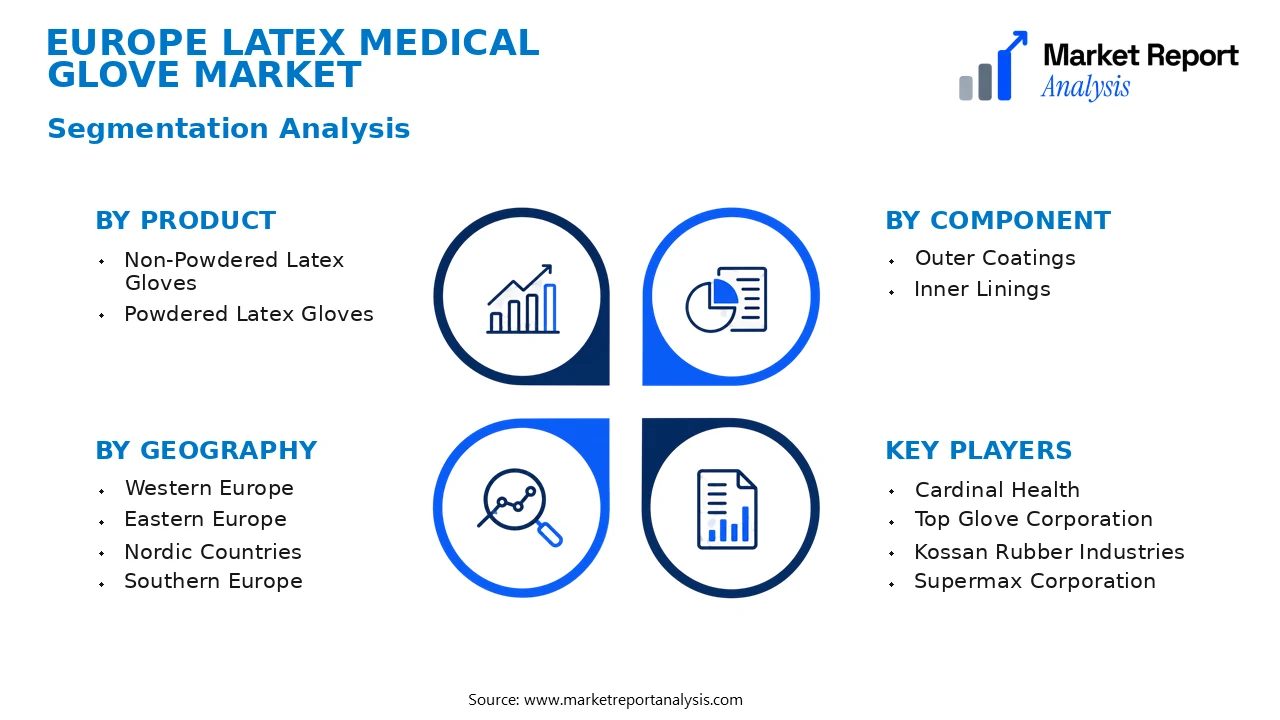
- Product
- Non-Powdered Latex Gloves: These gloves are increasingly preferred in medical environments due to their reduced allergenic response and enhanced comfort. Their demand is driven by stringent hygiene standards and consumer safety regulations in Europe.
- Powdered Latex Gloves: Historically dominant, these gloves feature a powder coating that facilitates easier donning. Despite declining popularity due to allergy concerns, they remain significant in certain industrial and dental applications.
- Component
- Outer Coatings: Various coatings are applied to latex gloves to improve durability, grip, and donning ease. The evolution of coating technology directly influences the glove’s performance and patient safety standards.
- Inner Linings: Inner linings are designed for comfort and barrier enhancement, with advancements focusing on hypoallergenic and breathable materials to meet patient and healthcare provider needs.
- Type
- Powder-Free Latex Gloves: This subsegment reflects a shift towards safer, allergen-minimized gloves aligning with EU health regulations, fostering greater compliance and market growth.
- Powdered Latex Gloves: Despite regulatory pressures, powdered gloves still serve specific niches, particularly in sectors where cost-efficiency is prioritized over allergenic risks.
- Geography
- Western Europe: Comprising countries like Germany, France, and the UK, this region exhibits high adoption rates driven by advanced healthcare infrastructure, high disposable incomes, and stringent safety regulations.
- Eastern Europe: Countries such as Poland, Hungary, and Czechia are experiencing rising demand due to expanding healthcare access, increasing healthcare budgets, and growing awareness about infection control.
- Nordic Countries: Known for their high healthcare standards and innovation adoption, the Nordic region presents a burgeoning market for latex gloves, especially in healthcare and research sectors.
- Southern Europe: Italy, Spain, and Portugal are expanding their healthcare capabilities, leading to incremental growth in the latex glove market driven by hospital and industrial uses.
This segmentation approach facilitates a nuanced understanding of the regional and technological dynamics within the Europe Latex Medical Glove Market, allowing manufacturers and stakeholders to tailor their offerings and strategic initiatives effectively. The market’s evolution continues to be shaped by regulatory changes, technological advancements, and regional economic developments, all of which influence product adoption, innovation trajectories, and regional market penetration.
Competitive Intelligence
The Europe latex medical glove market exhibits a moderate level of competition characterized by a mix of global giants and regional players. Market concentration is relatively balanced, with leading companies such as Top Glove, Hartalega, and Semperit holding significant shares, yet regional firms are agile in niche segments. Business strategies prominently feature product innovation, with firms investing heavily in R&D to develop gloves with enhanced barrier protection, tactile sensitivity, and eco-friendly materials to meet evolving healthcare standards. Partnerships and collaborations are common, aimed at expanding distribution networks and technology sharing. Several players pursue acquisitions to enhance market reach and diversify their portfolios; for instance, expanding into emerging markets or acquiring smaller firms to leverage specialized manufacturing capabilities. Expansion strategies include establishing new manufacturing plants across Europe to reduce supply chain disruptions and to cater to local demand, supported by substantial R&D investments into sustainable and innovative glove solutions. Differentiation hinges on quality assurance, hazard resistance, and compliance with stringent European health regulations, enabling companies to maintain competitive advantages amidst an evolving regulatory landscape.
Leading Company Profiles
The European latex medical glove landscape is marked by fierce competition among several globally and locally established players, each leveraging advanced manufacturing capabilities and strategic alliances to enhance their market position and product offerings.
- Cardinal Health
- Top Glove Corporation
- Kossan Rubber Industries
- Supermax Corporation
- Semperit AG Holding
- Ansell Limited
- Latexco
- Vinda International Holdings
- Tentomy Co., Ltd.
- Hartalega Holdings Berhad
Cardinal Health
Cardinal Health offers a comprehensive portfolio of latex gloves known for high reliability, compliance with quality standards, and innovations that cater to various medical settings, prioritizing safety and comfort for healthcare workers.
Top Glove Corporation
Top Glove is the world's largest manufacturer of gloves, with a strategic focus on expanding capacity, adopting automation, and improving quality standards, thus maintaining its competitive edge across the European and global markets.
Kossan Rubber Industries
Kossan specializes in the production of medical-grade latex gloves with a focus on sustainability, technological innovation, and customer-centric product development, strengthening its presence in Europe's healthcare supply chain.
Supermax Corporation
Supermax offers a variety of latex and nitrile gloves designed for medical, industrial, and household applications, focusing on expanding manufacturing capacity and technological advancement, including the use of automation technologies for efficiency.
Semperit AG Holding
Semperit produces premium latex gloves with a core focus on quality assurance, medical safety, and sustainability, while expanding its R&D initiatives and manufacturing footprint within Europe.
Ansell Limited
Ansell provides high-performance surgical and industrial gloves, emphasizing innovation in barrier protection and ergonomic design to meet stringent European health and safety standards.
Latexco
Latexco specializes in the development of latex raw materials and finished gloves, investing heavily in technology and sustainable practices to improve product quality and environmental impact.
Vinda International Holdings
Vinda leverages advanced manufacturing and sustainable practices to deliver high-quality latex gloves, with an emphasis on product innovation and expanding its distribution channels across Europe.
Tentomy Co., Ltd.
Tentomy focuses on high-quality glove manufacturing with a strategic emphasis on expanding capacity, adopting automation, and integrating sustainable practices into its production processes.
Hartalega Holdings Berhad
Hartalega is a leading producer of nitrile and latex gloves, known for its advanced R&D, manufacturing efficiency, and environmentally conscious practices aimed at strengthening its European market footprint.
Strategic Business Developments

- January 2024 – Top Glove Corporation – Expansion of manufacturing capacity in Europe – Enhances local supply chain resilience and meets increasing regional demand for latex gloves.
- March 2024 – Ansell Limited – Launch of innovative biodegradable latex gloves – Marks a strategic move towards sustainability, appealing to environmentally-conscious healthcare providers.
- May 2024 – Semperit AG Holding – Acquisition of a regional glove manufacturer – Strengthens Semperit's market penetration and diversifies product offerings within Europe.
- July 2024 – Hartalega Holdings Berhad – Investment in automation technology – Improves production efficiency and quality control, reinforcing leadership in medical glove manufacturing.
- September 2024 – Kossan Rubber Industries – Partnership with European distributors – Expands distribution network and accelerates market reach for specialty latex gloves.
Frequently Asked Questions
What is the Europe Latex Medical Glove Market?
The Europe Latex Medical Glove Market comprises the industry involved in manufacturing and distributing latex gloves used in healthcare, surgical, and diagnostic settings across Europe. It reflects the demand for protective medical gear essential for infection control and safety compliance.
What is the current market size of Europe Latex Medical Glove Market?
As of 2026, the market size is valued at approximately USD 2.8 Billion, driven by rising healthcare standards, increasing surgical procedures, and heightened safety protocols amid the ongoing emphasis on infection prevention within medical environments.
What factors are driving the Europe Latex Medical Glove Market?
Market growth is propelled by factors such as growing healthcare awareness, increasing prevalence of infectious diseases, stringent safety regulations, and expanding healthcare infrastructure. Rising demand for cost-effective protective gear also significantly contributes to market expansion.
Which region dominates the Europe Latex Medical Glove Market?
Western Europe currently leads the market, with countries like Germany, France, and the UK contributing the largest share due to their advanced healthcare systems, high healthcare expenditure, and strict regulatory standards on medical safety products.
Which segment is expected to grow the fastest?
The surgical gloves segment is anticipated to exhibit the highest CAGR, driven by increasing surgical procedures, rising hospital-acquired infection control measures, and ongoing advancements in glove material technology that improve safety and comfort.
Who are the leading companies operating in the Europe Latex Medical Glove Market?
Key players include TopGlove Corporation, Hartalega Holdings, and KCL, along with regional manufacturers who are investing heavily in R&D to develop innovative latex glove solutions and expand their market footprints throughout Europe.
Analyst Perspective
The Europe latex medical glove market is expected to demonstrate steady maturity by 2034, driven by ongoing healthcare sector demands and stringent safety standards. Long-term growth prospects remain promising due to increasing awareness of hygiene, expanding healthcare infrastructure, and heightened regulations post-pandemic. Commercial opportunities are abundant in advanced manufacturing, sustainable glove solutions, and high-performance products tailored for specific medical procedures, offering competitive differentiation. Technological evolution will likely focus on novel materials and manufacturing efficiencies, potentially decreasing costs and improving glove quality. Investment priorities should target automation, R&D for eco-friendly alternatives, and regional expansion, particularly in Eastern Europe where healthcare investments are rising. The competitive landscape will grow more intense with established players consolidating market share and new entrants introducing innovative products. Regional growth potential remains significant, especially in countries with developing healthcare systems, emphasizing the need for localized strategies. Long-term, firms that prioritize technological innovation, sustainable practices, and regional adaptation will position themselves favorably in this mature yet evolving market.
