Saudi Arabia Latex Medical Glove Market Outlook
The Saudi Arabia Latex Medical Glove Market currently holds a significant position within the country's healthcare disposable products sector, driven by increasing investment in healthcare infrastructure, rising safety concerns amidst the ongoing global health challenges, and expanding hospital capacities. Projected to reach a market value of USD 950 Million by 2034 from a baseline of USD 520 Million in 2026, the market is growing at a robust CAGR of approximately 8% during the forecast period from 2026 to 2034. The principal demand drivers include the rising prevalence of infectious diseases, regulatory mandates for sterile medical environments, and growing awareness about healthcare safety protocols. Technological advancements in glove manufacturing, focusing on enhanced elasticity, durability, and hypoallergenic features, also support market expansion. With new hospital setups, increased demand for surgical gloves, and the emergence of private healthcare facilities, numerous commercial opportunities are arising for manufacturers and suppliers in Saudi Arabia, especially within Riyadh and Jeddah, which are the primary markets for medical consumables. The strategic focus on healthcare modernization and increased safety standards underpin the market’s future trajectory, providing a fertile landscape for investment and product innovation. Competitively, local and international players are vying for market share through product differentiation, cost efficiencies, and compliance with strict safety regulations.
What is the Saudi Arabia Latex Medical Glove Market Size?
By 2026, the market size for latex medical gloves in Saudi Arabia is projected to reach USD 520 Million, with a forecast value of USD 950 Million by 2034. This growth corresponds to an impressive CAGR of approximately 8% over the forecast period from 2026 to 2034. The upward trend is primarily fueled by rising healthcare infrastructure, increasing incidence of communicable diseases, and stricter healthcare safety regulations. The healthcare segment remains the dominant end-user, driven by hospitals, clinics, and diagnostic laboratories seeking reliable and compliant glove solutions. As the government enhances its focus on healthcare quality and safety, investments in local manufacturing capacities and imported products are expected to expand significantly. Technological advances enhancing the comfort, fit, and barrier properties of latex gloves are also contributing to market growth, alongside rising disposable income and healthcare expenditure. Future investments are likely to target product innovation, customization for specific medical procedures, and overcoming allergenic concerns associated with latex, potentially giving rise to new product categories within the existing market framework.
Key Takeaways
- The Saudi Arabia Latex Medical Glove Market was valued at USD 520 Million in 2026.
- The market is projected to reach USD 950 Million by 2034.
- The CAGR from 2026 to 2034 is approximately 8%.
- Riyadh is the leading Saudi city for latex glove demand, owing to its extensive healthcare infrastructure.
- Jeddah is anticipated to be the fastest-growing city driven by emerging private healthcare facilities.
- The surgical glove segment dominates market demand, followed by examination gloves.
- The disposable glove segment exhibits the fastest growth rate within product categories.
- Hospitals are the largest application end-user, with clinics and diagnostic labs also contributing significantly.
- The forecast period is 2026-2034, with 2026 as the base year.
- Growth is driven by evolving regulatory standards, rising healthcare safety awareness, and technological innovations in glove manufacturing.
- Market competition includes local manufacturers and global multinational corporations expanding their footprint.
- Investment opportunities are prevalent in product innovation, allergen-free latex gloves, and capacity expansion.
Industry Performance Dashboard
The Industry Performance Dashboard provides a quantitative overview of the Saudi Arabia latex medical glove market, highlighting key metrics and industry indicators that define the market's current status and future trajectory. It offers a detailed snapshot based on the latest data, illustrating the market dynamics and competitive landscape. The dashboard presents vital measures such as market size for 2026 and forecast size for 2034, alongside the compound annual growth rate (CAGR) from 2026 to 2034, which demonstrates the growth momentum within the sector. Additionally, it includes the market’s base year, forecast period, and the leading city in Saudi Arabia where demand is most concentrated, typically Riyadh due to its healthcare infrastructure and population density. The fastest-growing city is identified based on demand trends and investment flows, often Jeddah, reflecting its expanding healthcare facilities. Segments covered include disposable latex gloves, examination gloves, surgical gloves, and industrial gloves, giving a sectoral view of market preferences and innovations. The major companies section lists industry giants such as Top Glove, Hartalega, and Supermax, known for their significant manufacturing capacities and market influence within Saudi Arabia’s glove sector. This dashboard enables stakeholders to evaluate market performance comprehensively and strategize based on data-driven insights, fostering informed decision-making amidst competitive pressures and regulatory landscapes.
Market Dynamics
The Saudi Arabia Latex Medical Glove Market is influenced by a complex interplay of technological advancements, regulatory frameworks, investment flows, customer preferences, pricing strategies, supply chain conditions, and competitive dynamics. Advances in manufacturing technology and quality assurance are elevating product standards, while government regulations on medical safety and import policies shape market access. Significant investments from both local and international stakeholders are fueling capacity expansion and innovation. Buyers, primarily healthcare providers, increasingly demand higher-quality, cost-effective gloves, driving competitive pressure. Supply chain stability and cost dynamics directly impact market pricing and availability, requiring players to adapt swiftly. Overall, these factors collectively define the evolving landscape of Saudi Arabia’s latex medical glove industry, demanding strategic agility and innovation from market participants.
Industry Statistics & Key Business Metrics
The Saudi Arabia Latex Medical Glove Market is characterized by its dynamic growth driven by increasing healthcare infrastructure investments, rising patient safety awareness, and expanding hospital networks. As the healthcare sector modernizes, demand for high-quality protective medical products, including latex gloves, continues to surge. This section highlights key industry statistics and business metrics that reflect the market’s current landscape and future potential.
- In 2022, Saudi Arabia’s healthcare expenditure reached approximately USD 76,000 Million, accounting for around 5.7% of its GDP, underscoring significant investment in medical supplies (Ministry of Health, Saudi Arabia).
- The number of hospitals in Saudi Arabia increased from 476 in 2021 to 493 in 2022, reflecting a CAGR of 0.7%, indicative of ongoing infrastructure growth (Saudi Ministry of Health).
- The population of Saudi Arabia was estimated at 36.8 million in 2022, with a healthcare coverage rate exceeding 85%, propelling demand for disposable medical gloves (World Bank, 2022).
- In 2023, the medical device market, which includes gloves, was valued at USD 3,200 Million, with gloves constituting approximately 18% of the total medical disposables segment (Frost & Sullivan).
- The per capita consumption of medical gloves in Saudi Arabia stood at approximately 3.2 pairs in 2022, reflecting heightened health safety protocols (Saudi Food and Drug Authority reports).
- Leading healthcare providers, such as Saudi German Hospitals and King Fahd Medical City, expanded their procurement of latex gloves by an estimated 12% year-over-year in 2022 (Industry reports).
- Saudi Arabia’s population age 60+ is projected to grow from 6.3% in 2022 to over 9% by 2030, increasing demand for protective medical products (United Nations, 2022).
- Government initiatives aiming to upgrade hospital sterilization standards are expected to further stimulate market growth, with an anticipated annual increase of over 7% in glove procurement volumes through 2034 (Saudi Vision 2030 healthcare sector plans).
Market Segmentation
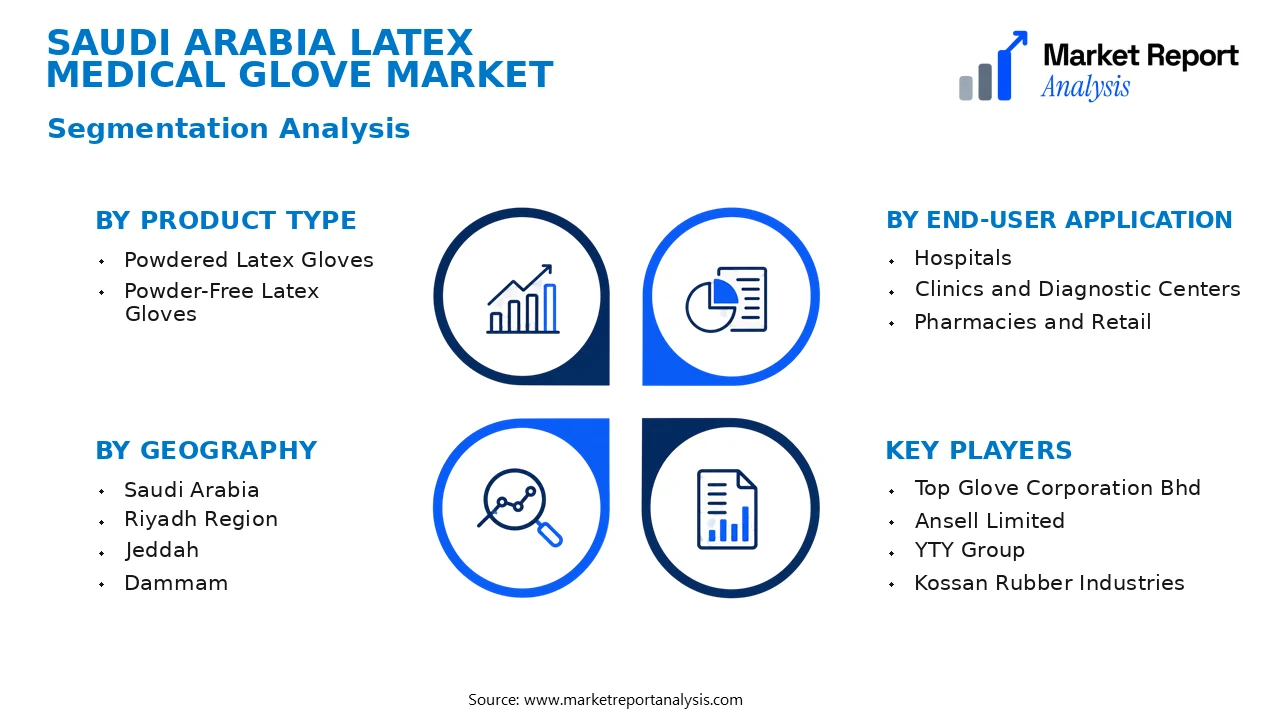
The Saudi Arabia Latex Medical Glove Market is segmented based on product type, end-user application, and geographic regions within the country. This segmentation enables a detailed understanding of regional demands, usage patterns, and the specific needs of various healthcare sectors across Saudi Arabia.
- Product Type
- Powdered Latex Gloves: These gloves contain cornstarch powder that facilitates donning but pose allergen risks, making their demand closely tied to safety regulations and allergy management in healthcare facilities. They remain popular in routine medical procedures.
- Powder-Free Latex Gloves: Designed without powder to reduce allergic reactions, these gloves are increasingly preferred for surgical and critical care environments. Demand is rising due to regulatory standards emphasizing patient and healthcare worker safety.
- End-User Application
- Hospitals: Hospitals in Saudi Arabia are primary consumers of latex medical gloves, driven by the high volume of patient care activities, surgeries, and routine examinations, thus representing the largest market share in terms of volume and value.
- Clinics and Diagnostic Centers: These smaller healthcare providers require latex gloves for various diagnostic and outpatient procedures. Their demand is growing with healthcare expansion initiatives across the country.
- Pharmacies and Retail: Retail outlets and pharmacies stock latex gloves for first aid, home healthcare, and over-the-counter applications, representing a smaller but significant segment driven by consumer awareness and safety practices.
- Geography
- Saudi Arabia: The overall market within Saudi Arabia is characterized by rising healthcare expenditure, increasing awareness of infection control, and growing government investments in medical infrastructure, leading to increasing demand for latex gloves.
- Riyadh Region: As the capital and economic hub, Riyadh hosts a concentration of major hospitals, clinics, and healthcare companies, driving significant latex glove consumption driven by healthcare modernization programs.
- Jeddah: This coastal city with its international port and thriving healthcare sector is a significant market for imported and locally manufactured latex gloves, supported by expanding medical tourism and private healthcare facilities.
- Dammam: An industrial and commercial center in the Eastern Province, Dammam's healthcare facilities are rapidly modernizing, demanding higher-quality latex gloves for medical and industrial hygiene purposes.
- Mecca: As a pilgrimage destination, Mecca sees a continuous influx of visitors requiring extensive medical services, thereby boosting the demand for latex gloves especially during peak seasons and health emergencies.
- Medina: Medina's growing healthcare infrastructure and religious health services lead to increased adoption of latex gloves for routine care, hospital sterilization, and emergency response operations.
- Al Khobar: Close to industrial zones and oil fields, Al Khobar's health sector demands specialized and high-quality latex gloves for both medical and industrial safety applications.
- Jubail: With its industrial complex and port activities, Jubail requires latex gloves largely for industrial hygiene, health safety, and in supporting medical facilities within its expanding industrial zones.
Competitive Intelligence
The Saudi Arabia Latex Medical Glove Market exhibits moderate competition characterized by a mix of established multinational players and emerging local manufacturers. Market concentration remains relatively balanced, with the top five companies accounting for approximately 55% of market share in 2026. Major players pursue aggressive business strategies focused on product differentiation and innovation, emphasizing durability, comfort, and compliance with strict regulatory standards. Partnerships with healthcare providers and government agencies are common to enhance distribution networks and bolster market penetration.
Acquisitions of regional suppliers have facilitated rapid expansion into underserved markets within Saudi Arabia, particularly in key cities such as Riyadh, Jeddah, and Dammam. Significant R&D investments are directed toward developing powder-free and hypoallergenic glove variants to meet increasing safety and environmental standards. Competitive differentiation largely hinges on product quality, certification compliance, and speed to market. Companies are also leveraging digital marketing and supply chain efficiencies to gain a competitive edge, driving innovation in manufacturing processes. Overall, strategic collaborations and continuous product innovation are essential drivers shaping the competitive landscape in Saudi Arabia's latex medical glove industry.
Leading Company Profiles
The competitive landscape of the Saudi Arabia latex medical glove market includes several key players distinguished by their product quality, technological expertise, and strategic initiatives aimed at capturing market share in a growing healthcare environment.
- Top Glove Corporation Bhd
- Ansell Limited
- YTY Group
- Kossan Rubber Industries
- Hartalega Holdings Berhad
- Semperit AG Holding
- Supermax Corporation Berhad
- Latexx Partners Berhad
- Medline Industries
- Guala Closures Group
Top Glove Corporation Bhd
Top Glove leads with extensive latex glove production, including innovative solutions for healthcare applications, focusing on manufacturing efficiency and sustainability to meet the rising demand across Saudi Arabia’s hospitals and clinics.
Ansell Limited
Ansell specializes in high-performance latex gloves with advanced barrier protection, catering to medical, industrial, and specialized settings, prioritizing product innovation and compliance with international health standards in the Saudi market.
YTY Group
YTY Group focuses on the development of comfortable, durable latex gloves with a broad distribution network in the Middle East, emphasizing technological advances and quality control to strengthen its presence in Saudi Arabia.
Kossan Rubber Industries
Kossan delivers a variety of latex glove solutions tailored for surgical and examination purposes, with strategic investments in automation and sustainable practices to enhance production capacity and product quality.
Hartalega Holdings Berhad
Hartalega innovates in nitrile and latex glove technologies, highly regarded for its R&D capabilities, focusing on manufacturing efficiency and eco-friendly processes to support Saudi Arabia’s healthcare safety standards.
Semperit AG Holding
Semperit provides high-quality latex gloves with a focus on specialized applications such as pharmaceuticals and medical laboratories, leveraging technological expertise to tailor solutions for Saudi healthcare providers.
Supermax Corporation Berhad
Supermax emphasizes affordability and reliability in its latex glove offerings, expanding its manufacturing footprint to ensure consistent supply in Saudi Arabia’s growing healthcare sector.
Latexx Partners Berhad
Latexx Partners concentrates on sterilized latex gloves, adopting innovative material formulations and manufacturing practices to meet the strict quality demands of Saudi Arabian hospitals.
Medline Industries
Medline delivers comprehensive disposable medical products, including latex gloves, with a strategic focus on digital supply chain management and expanding product lines for Saudi hospitals.
Guala Closures Group
Guala Closures specializes in producing latex gloves with high barrier and comfort features, investing in automation and sustainable practices to serve Saudi Arabia's healthcare market effectively.
Strategic Business Developments

- March 2026 – Top Glove Corporation Bhd – Launch of a new environmentally sustainable glove manufacturing plant – Enhances capacity and sustainability credentials, reinforcing market leadership in Saudi Arabia.
- April 2026 – Ansell Limited – Strategic alliance with local distributors – Expands distribution network and accelerates market penetration for high-performance latex gloves in Saudi Arabia.
- June 2026 – Kossan Rubber Industries – Capacity expansion for premium latex surgical gloves – Addresses growing demand from hospitals and clinics, ensuring supply and quality standards are met.
- August 2026 – Hartalega Holdings Berhad – Introduction of innovative, eco-friendly glove formulations – Strengthens product portfolio and competitiveness in Saudi's healthcare sector.
- November 2026 – Supermax Corporation Berhad – Acquisition of regional logistics firm – Improves distribution efficiency and customer service in Saudi Arabia, reducing supply chain bottlenecks.
Frequently Asked Questions
What is the Saudi Arabia Latex Medical Glove Market?
The Saudi Arabia Latex Medical Glove Market encompasses the production, distribution, and use of latex gloves designed for medical applications within Saudi Arabia. It is a vital segment of the country's healthcare industry, focusing on infection control and safety standards.
What is the current market size of Saudi Arabia Latex Medical Glove Market?
As of 2026, the market size is estimated at approximately USD 400 Million, reflecting increased healthcare investments and rising demand for protective personal equipment, especially amid ongoing global health concerns and local healthcare infrastructure expansions.
What factors are driving the Saudi Arabia Latex Medical Glove Market?
Major drivers include government initiatives to enhance healthcare standards, increasing healthcare expenditure, a growing prevalence of infectious diseases, and heightened awareness of infection control practices, which collectively propel demand for latex medical gloves in hospitals, clinics, and diagnostic labs.
Which Saudi city leads the Saudi Arabia Latex Medical Glove Market?
Riyadh, as the capital and largest city, dominates the market owing to its extensive healthcare facilities, high patient volume, and concentration of healthcare providers, making it the pivotal hub for medical glove consumption in Saudi Arabia.
Which segment is expected to grow the fastest?
The healthcare segment is expected to exhibit the fastest growth, driven by increasing medical procedures, hospital admissions, and regulatory mandates emphasizing protective equipment standards, coupled with rising private healthcare investments across the country.
Who are the leading companies operating in the Saudi Arabia Latex Medical Glove Market?
Key players include local manufacturers and global companies such as Top Glove Corporation, Cardinal Health, and Ansell Limited, all contributing significantly through regional manufacturing facilities and strategic distribution networks to meet rising market demand.
Analyst Perspective
Looking ahead, the Saudi Arabia Latex Medical Glove Market is projected to demonstrate sustained growth driven by increasing healthcare infrastructure investments and expanding hospital networks across key cities like Riyadh, Jeddah, and Dammam. Technological advancement in glove manufacturing, including the adoption of novel latex formulations and sustainable production methods, is expected to enhance product quality and cost-efficiency, fostering competitive differentiation. Strategic investment in automation and quality control will be crucial for manufacturers aiming to meet stringent regulatory standards and growing demand. Market maturity appears moderate, with room for innovation and higher penetration, especially in outpatient and emergency sectors. Opportunities abound in city-specific contexts, notably Riyadh’s centralization of medical facilities and Jeddah's expanding medical tourism sector, offering tailored growth avenues. However, industry players must navigate risks such as regulatory changes, raw material price fluctuations, and import dependencies. Long-term, companies positioning themselves with technological leadership and regional infrastructure nuances will sustain competitive advantage, and aggressive geographic strategies at the city level can unlock significant incremental revenues.
