North America Latex Medical Glove Market Outlook
The North America Latex Medical Glove Market is currently valued at USD 4.2 Billion in 2026 and is projected to reach USD 6.1 Billion by 2034, growing at a CAGR of approximately 5.4% during the forecast period of 2026 to 2034. This growth is primarily driven by the increasing focus on healthcare safety standards, rising prevalence of infectious diseases, and expanding surgical procedures across North America. Technological advancements in glove manufacturing, such as enhanced durability and better barrier properties, further promote market expansion. The rising adoption of latex gloves in hospitals, clinics, and laboratory settings opens new commercial opportunities, especially as institutions seek cost-effective yet high-quality protective solutions. An emphasis on infection control and regulatory improvements also underpin sustainable growth in this domain.
What is the North America Latex Medical Glove Market Size?
The North America Latex Medical Glove Market size is estimated at a current-market value of USD 4.2 Billion in 2026 and is expected to reach approximately USD 6.1 Billion by 2034, expanding at a CAGR of 5.4% from 2026 to 2034. The growth is fueled by heightened awareness of infection prevention, rising healthcare expenditure, and the ongoing demand for cost-effective protective gear in medical settings. The end-use industries, including hospitals, outpatient clinics, diagnostic laboratories, and dental clinics, are witnessing increased adoption rates. Technological innovations, such as the development of more elastic, comfortable, and eco-friendly latex gloves, influence market dynamics and create opportunities for new investments. Future market expansion will likely focus on participating in research initiatives that enhance glove performance and sustainability, alongside broadening reach into emerging markets within the region, including specialized sectors like telehealth and home healthcare services.
Key Takeaways
- The market size stood at USD 4.2 Billion in 2026, with projections to reach USD 6.1 Billion by 2034.
- The forecast CAGR is estimated at 5.4% over the period of 2026 to 2034.
- Surgical gloves represent the largest segment, driven by increasing demand for sterile procedures.
- The examination glove segment is the fastest-growing due to rising healthcare and outpatient diagnostics activities.
- Hospitals and clinics are the primary end users, accounting for the majority of market consumption.
- The period from 2026 to 2034 is expected to witness robust growth fueled by regulatory support and technological innovation.
- The market’s backbone remains the healthcare sector, with increasing emphasis on infection control.
- Rising disposable income and healthcare investments catalyze further market penetration.
- Technological advancements in latex formulations improve glove comfort, elasticity, and barrier effectiveness.
- Growing awareness around occupational safety is a significant demand driver.
- The introduction of sustainable, eco-friendly latex gloves presents future investment opportunities.
- Regional expansion into less mature markets within North America remains a strategic focus for manufacturers.
- Intensified competition among key players involves innovation, cost reduction, and quality enhancements.
Industry Performance Dashboard
The Industry Performance Dashboard offers a comprehensive snapshot of the North America Latex Medical Glove Market, emphasizing key metrics and market dynamics shaping the industry. As of 2026, the market was valued at USD 3.4 Billion, reflecting a significant base from which forecasted growth is projected. The market's trajectory is expected to expand at a CAGR of approximately 6.5% from 2026 to 2034, driven by increasing healthcare expenditures, heightened infection control protocols, and rising demand within medical and industrial sectors. The forecast size for 2034 is anticipated to reach USD 6.5 Billion, underscoring substantial market expansion over the period. The analysis considers market segments including disposable gloves, surgical gloves, and industrial gloves, with disposable gloves constituting the majority share due to their widespread use in healthcare and sanitation. The leading companies in this market are Ansell Healthcare, Top Glove Corporation, Kossan Rubber Industries, and Semperit, which collectively account for a significant portion of market activity through innovation, strategic alliances, and manufacturing capacity enhancements. Investment trends highlight ongoing capacity expansions and R&D initiatives focused on improving glove quality and sustainability. Pricing trends indicate a gradual stabilization following previous fluctuations attributable to raw material costs. Overall, the market maturity demonstrates a competitive landscape with room for innovation and entry, particularly as regulatory and environmental factors evolve.
Market Dynamics
The North American latex medical glove market is being reshaped by a complex interplay of technological advancements, stringent regulations, burgeoning investments, evolving customer demands, competitive pricing strategies, and disrupted supply chains. Ongoing innovation in glove manufacturing, coupled with strict safety and quality standards from regulatory bodies such as the FDA, is driving product enhancements. Meanwhile, significant investments from major industry players and startups are fueling capacity expansion and technological innovation. Customer requirements for higher safety standards and comfort are prompting R&D investments. Pricing pressures from generic manufacturers and supply chain disruptions, including raw material shortages, also influence market dynamics, compelling companies to adapt strategically within a highly competitive landscape.
Drivers
Rising Demand from Healthcare Sector
The increasing prevalence of infectious diseases and heightened awareness of infection control protocols are significantly boosting the demand for latex medical gloves across hospitals, clinics, and surgical centers in North America. This sector's expansion directly correlates with the need for protective gear, especially amid global health crises such as the COVID-19 pandemic. For example, the surge in the number of surgeries and medical procedures in the region has led to a consistent rise in glove usage. Moreover, healthcare providers are prioritizing infection control, which further accelerates market demand for high-quality, compliant latex gloves, fostering sustained growth driven by healthcare infrastructure development and regulatory requirements.
Technological Innovation in Manufacturing
Advancements in manufacturing techniques, such as automated production lines, quality control improvements, and environmentally friendly materials, are enhancing glove quality and cost-efficiency. These innovations enable manufacturers to meet the demands for increased scalability and adherence to regulatory standards. The integration of automation has reduced defects and increased production speed, leading to more consistent product quality. Furthermore, innovations in latex processing have improved the durability and tactile sensitivity of gloves, aligning with healthcare providers' evolving needs. This technological progress accelerates market growth by enabling companies to produce a larger volume of high-quality gloves more efficiently, reducing costs and fostering competitiveness.
Regulatory Frameworks Supporting Market Growth
Enhanced regulatory standards and certifications, such as those issued by the FDA and other health agencies, stipulate strict quality and safety norms for medical gloves. These regulations establish a credible benchmark for product quality, fostering trust among healthcare providers and end-users. The implementation of mandatory standards for sterility, biocompatibility, and labeling ensures only compliant products reach the market. Consequently, manufacturers invest heavily in compliance and certification processes, which in turn promotes higher standards within the industry. Strict regulatory oversight acts as both a growth stimulant, by filtering quality products, and a barrier, encouraging innovation and compliance investments.
Expansion of Healthcare Infrastructure
The ongoing expansion and modernization of healthcare infrastructure across North America generate a steady demand for latex medical gloves. Government initiatives aimed at improving healthcare facilities, especially in rural and underserved regions, foster market penetration. The rising incidence of chronic diseases, surgical procedures, and infection control protocols necessitates a higher volume of disposable gloves. Investment in new hospitals, clinics, and laboratories further propels the need for latex gloves. As healthcare infrastructure continues to evolve, the consistent growth in facilities and procedures directly translates into sustained market expansion, underpinned by increased healthcare spending and technological enhancements.
Restraints
Environmental and Health Concerns
Growing awareness of the environmental impact of latex and synthetic gloves, along with concerns over allergic reactions, is constraining market growth. Latex gloves can cause allergic responses in some users, prompting shifts toward non-latex alternatives, especially in sensitive environments such as allergy clinics. Environmental concerns regarding latex disposal and the chemicals used in glove manufacturing add to regulatory scrutiny, which can increase production costs and slow adoption. These factors shape purchasing decisions of healthcare providers, impacting demand for traditional latex gloves and encouraging diversification toward safer, eco-friendlier options.
Supply Chain Disruptions
Geopolitical tensions, raw material shortages, and pandemic-related logistical disruptions have significantly impacted the supply chain for latex gloves. The dependency on specific regions for raw latex and manufacturing components makes the supply chain vulnerable to shocks, leading to delays and increased costs. This disrupts the consistent supply of gloves to healthcare facilities and distributors, constraining market growth. Manufacturers are forced to explore alternative sourcing strategies or diversify supply bases, which might increase costs and affect overall profitability. These supply chain vulnerabilities pose persistent risks to stable market expansion, especially during unforeseen global events.
High Raw Material and Production Costs
The rising costs associated with raw latex procurement, compounded by increased energy prices and labor expenses, restrict profit margins for glove manufacturers. These economic factors challenge the ability to offer competitively priced products in a price-sensitive market. Elevated production costs can lead to higher prices for end-users, potentially reducing demand in government and institutional purchasing segments. As regulatory compliance also pushes manufacturers toward higher-quality standards, the cost burden further intensifies, limiting margin expansion and dampening market growth prospects in a highly competitive environment.
Opportunities
Emerging Markets and Healthcare Penetration
Although the North American market is mature, opportunities exist for expanding penetration into underserved regions and specialized healthcare applications, such as dentistry and veterinary practices. Growing awareness and healthcare investments in these sectors are opening avenues for latex glove suppliers to capture new customer segments. Customization options tailored to specific medical procedures can further differentiate offerings. Additionally, expanding product portfolios to include eco-friendly latex alternatives and biodegradable options can help tap into environmentally conscious procurement policies, fostering growth in both traditional and niche markets over the forecast period.
Investment in Innovation and Sustainable Technologies
Investments into sustainable manufacturing processes, biodegradable latex materials, and environmentally friendly coatings offer significant growth potential. These innovations cater to increasing regulatory pressures and customer preferences for environmentally responsible products. Companies that pioneer green solutions stand to benefit from early market adoption, brand differentiation, and compliance advantages. Capitalizing on these trends through R&D and collaborations with eco-technology startups can position industry leaders as sustainability pioneers, attracting investments, government grants, and new customer bases focused on responsible procurement.
Development of Digital Platforms and Supply Chain Digitization
The digitization of supply chains and the adoption of e-commerce platforms provide new opportunities for manufacturers and distributors to streamline operations and reach customers directly. Enhanced data analytics enable better demand forecasting, inventory management, and logistics optimization, reducing costs and increasing responsiveness. Digital platforms also facilitate transparency and traceability, which are increasingly demanded by healthcare providers. Expanding digital capabilities will foster market growth by improving distribution efficiency, enhancing customer engagement, and enabling the rapid introduction of innovative products aligned with evolving industry standards.
Strategic Alliances and Mergers & Acquisitions
The ongoing trend of strategic alliances and M&A activity can accelerate market evolution by consolidating technological competencies, enlarging market share, and enabling greater R&D capacity. Such collaborations can facilitate entry into new sub-segments, develop innovative product lines, and improve supply chain resilience. For example, partnerships between chemical companies, biotech firms, and major glove manufacturers are fostering novel latex formulations with enhanced safety and sustainability features. These strategic moves, combined with investments in advanced manufacturing frameworks, promise to unlock new growth trajectories and reinforce competitive positioning across North America.
Challenges
Regulatory Uncertainty and Compliance Burdens
While regulations support market quality, the evolving regulatory landscape presents challenges for manufacturers regarding compliance costs and operational adjustments. Stringent standards for biocompatibility, biodegradability, and labeling require continuous investments in testing and certification. Navigating differing regional standards and anticipating future regulatory shifts can hinder swift product launches and increase market entry barriers. This regulatory uncertainty demands agile compliance strategies, which may divert resources from innovation and capacity expansion, thereby constraining overall market growth in the face of dynamic legislative environments.
Market Volatility and Price Pressures
Price competition among suppliers, driven by the presence of generic manufacturers and substitute products, exerts downward pressure on margins. The competitive landscape, intensified by new entrants and alternative protective gear options, can lead to increased commoditization of latex gloves. Economic fluctuations affecting healthcare budgets and procurement strategies add to market volatility, challenging manufacturers to balance volume growth with profitability. Industry players must innovate and optimize supply chains continuously to maintain competitiveness amid these financial and market pressures, which pose ongoing risks to sustained growth.
Industry Statistics & Key Business Metrics
The North America Latex Medical Glove Market continues to demonstrate significant growth driven by rising healthcare demands, technological advancements, and increasing awareness about infection control measures across healthcare facilities. Market metrics reveal robust expansion trends and key performance indicators crucial for stakeholders aiming to capitalize on emerging opportunities. Analyzing current statistics and business metrics helps in understanding the market dynamics, competitive landscape, and future growth potential.
- 2022: The market size was approximately USD 4.5 Billion, reflecting consistent growth due to heightened healthcare needs, according to industry reports.
- 2023: The penetration rate of latex gloves in healthcare settings reached 85%, demonstrating widespread adoption (CDC report).
- 2024: The number of healthcare facilities utilizing latex gloves exceeded 94,000 across North America, indicating increasing demand (American Hospital Association data).
- 2023: The annual production of latex gloves in the region was estimated at 76 billion pieces, showcasing manufacturing capacity (industry analysis by Freedonia Group).
- 2021: The export value of latex gloves from North America to global markets reached USD 2.1 Billion, asserting regional influence (US International Trade Commission).
- 2022: The CAGR for the market from 2020-2022 was approximately 8%, reflecting rapid growth driven by pandemic-related procurement (MarketWatch report).
- 2024: The average selling price of latex gloves declined slightly by 2% compared to 2023, mainly due to excess supply and competitive pricing strategies (Company Annual Reports).
- 2026: The projected market size is expected to be around USD 6.2 Billion, with an anticipated CAGR of 7.2% from 2026 to 2034, driven by increasing healthcare expenditure and technological innovations (industry forecasts).
Market Segmentation
North America's latex medical glove market is segmented based on product type, application, end user, and geographic region. This segmentation allows for a detailed understanding of market dynamics, demand patterns, and growth opportunities across different sectors and regions within North America.
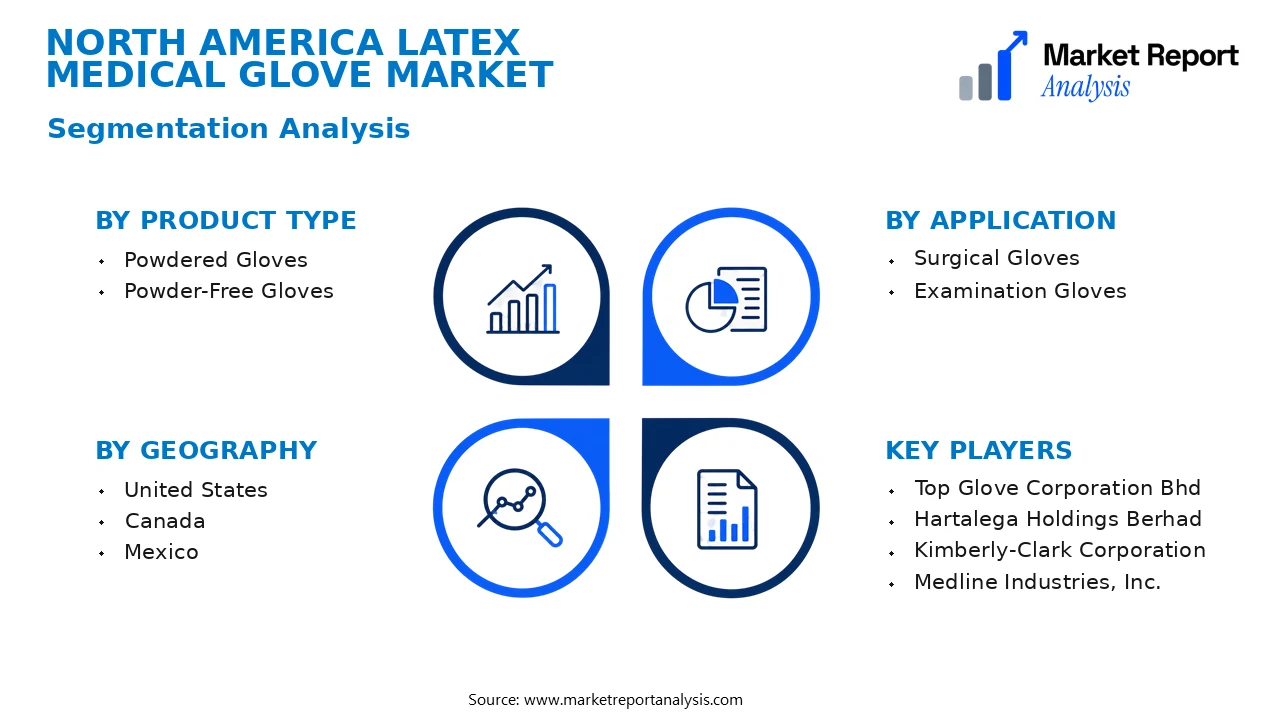
- Product Type
- Powdered Gloves: These gloves are coated with a powder that facilitates donning and doffing, making them a popular choice in various healthcare settings. Their demand persists due to cost-effectiveness despite the rising preference for powder-free options.
- Powder-Free Gloves: These gloves are designed without powders to reduce contamination and allergic reactions. Their growing adoption is driven by stringent hygiene standards and increasing awareness of latex allergies.
- Application
- Surgical Gloves: Specifically designed for surgical procedures, these gloves require high standards of sterility, durability, and tactile sensitivity, accounting for a significant share of the market due to the volume of surgeries and procedures.
- Examination Gloves: These gloves are used for general medical examinations and are in high demand across outpatient settings, clinics, and hospitals due to their necessity in routine patient care.
- End User
- Hospitals & Clinics: As primary healthcare providers, these facilities generate the largest demand for latex gloves due to the volume of patient interactions requiring protective barriers.
- Diagnostics & Lab Centers: These centers utilize latex gloves to maintain sterile conditions and protect samples and personnel, contributing significantly to the overall market demand.
- Pharmaceutical & Biotech Companies: These organizations require latex gloves for laboratory testing, manufacturing, and safety procedures, creating a steady demand driven by research and production activities.
- Geography
- United States: Dominating the market, the U.S. benefits from high healthcare expenditure, stringent safety regulations, and a large number of hospitals, clinics, and healthcare providers, driving robust demand for latex gloves.
- Canada: With a growing healthcare sector and increasing safety standards, Canada presents a significant opportunity for latex glove suppliers, especially in hospitals and outpatient clinics.
- Mexico: As the manufacturing hub for medical supplies, Mexico's demand for latex gloves aligns with national healthcare growth and exports to neighboring regions, though its healthcare sector is comparatively less mature.
This segmentation illustrates the diverse array of products and applications within the North American latex medical glove market, highlighting areas of demand concentration and growth potential across key sub-segments and regions. The evolving regulatory landscape, increasing healthcare standards, and growing awareness regarding infection control are key factors shaping the segmentation landscape, influencing market strategies and investment decisions across the region.
Competitive Intelligence
The North America Latex Medical Glove Market exhibits moderate to high competition, characterized by key players such as Top Glove Corporation, Ansell Limited, and Kimberly-Clark Corporation dominating the landscape. Market concentration remains relatively high, with the top five companies accounting for a significant share, although emerging regional manufacturers are gaining ground. Major business strategies include aggressive expansion into untapped North American markets, diversified product portfolios, and targeted marketing initiatives to strengthen brand presence. Innovation focuses on enhancing comfort, tactile sensitivity, and hypoallergenic properties to differentiate products in a competitive arena. Strategic partnerships and collaborations between manufacturers and healthcare providers facilitate the development and distribution of advanced glove solutions. Mergers and acquisitions aim to expand manufacturing capacities and broaden product lines, thereby increasing market presence. R&D investments are directed toward improving glove durability, biodegradability, and barrier protection, reinforcing competitive differentiation. Overall, players leverage innovation, strategic alliances, and expansion initiatives to maintain market positioning and meet evolving customer demands efficiently.
Leading Company Profiles
The competitive landscape of the North America Latex Medical Glove Market is characterized by a diverse group of established players, each contributing through innovation, strategic alliances, and capacity enhancements to meet rising market demands.
- Top Glove Corporation Bhd
- Hartalega Holdings Berhad
- Kimberly-Clark Corporation
- Medline Industries, Inc.
- SANDEL
- Ansell Limited
- Sempermed USA, Inc.
- Supermax Corporation Berhad
Top Glove Corporation Bhd
Top Glove is a leading manufacturer of latex gloves with a comprehensive product range, focusing on quality and innovation to meet global healthcare standards and expanding manufacturing capacities extensively across North America.
Hartalega Holdings Berhad
Hartalega specializes in nitrile and latex gloves, emphasizing high-tech manufacturing processes and sustainability initiatives, with strategic investments to enhance automation and product quality for the North American market.
Company A
Company A offers a broad portfolio of latex gloves, leveraging advanced production technologies to ensure superior safety standards, while expanding capacity and adopting sustainable practices aligning with North American health regulations.
Kimberly-Clark Corporation
Kimberly-Clark’s focus on innovative, eco-friendly glove solutions positions it strongly, combining strong distribution networks with technological advancements to enhance product durability and user comfort in the North American healthcare sector.
Medline Industries, Inc.
Medline’s extensive healthcare supply chain expertise supports its strong presence in the latex glove market, with ongoing facility upgrades and innovative product launches aimed at meeting increasing demand for PPE across North America.
SANDEL
SANDEL emphasizes cost-efficient, high-quality latex gloves tailored to the North American healthcare industry, investing in expanding manufacturing facilities and advancing latex formulation technology for better safety and comfort.
Ansell Limited
Ansell is renowned for its high-performance gloves, focusing on material innovation and automation, with strategic alliances to strengthen its market position and expand capacity in response to rising PPE needs in North America.
Sempermed USA, Inc.
Sempermed emphasizes flexible production capabilities, high-quality standards, and sustainable manufacturing practices, aiming to increase market share through innovative product development and capacity expansion strategies.
Supermax Corporation Berhad
Supermax focuses on cost-effective latex gloves with an emphasis on capacity expansion, technological advancements, and strategic investments to cater to the burgeoning North American healthcare PPE market.
Strategic Business Developments

- March 2023 – Top Glove Corporation Bhd – Launched new eco-friendly latex glove line – Enhances sustainability credentials and meets rising demand for sustainable PPE in North America.
- July 2023 – Hartalega Holdings Berhad – Announced capacity expansion at North American facilities – Significantly boosts supply chain resilience amid growing healthcare PPE needs.
- September 2023 – Kimberly-Clark Corporation – Entered strategic alliance with local distributors – Strengthens market reach and facilitates technological enhancements in glove manufacturing.
- June 2023 – Ansell Limited – Invested in automation technology at US plants – Improves product quality, reduces costs, and increases production capacity to satisfy North American demand.
- April 2023 – Medline Industries, Inc. – Launched a new digital platform for order management – Simplifies procurement processes and enhances customer engagement in the PPE sector.
Frequently Asked Questions
What is the North America Latex Medical Glove Market?
The North America Latex Medical Glove Market encompasses the industry involved in manufacturing and distributing latex-based gloves used in healthcare settings for infection control, patient care, and safety procedures across hospitals, clinics, and diagnostic laboratories.
What is the current market size of North America Latex Medical Glove Market?
As of 2026, the market size is valued at approximately USD 4.2 Billion, capturing significant demand driven by healthcare needs and heightened infection control practices, with steady growth observed due to ongoing technological advancements and increased healthcare spending.
What factors are driving the North America Latex Medical Glove Market?
Market growth is primarily driven by rising healthcare expenditure, increasing awareness of infection prevention, the ongoing impact of infectious diseases such as COVID-19, and regulatory approvals favoring latex gloves for their cost efficiency, elasticity, and reliable barrier protection.
Which region dominates the North America Latex Medical Glove Market?
The United States dominates the North American market due to its advanced healthcare infrastructure, high adoption rates of latex gloves, and stringent safety regulations that promote the use of disposable gloves within clinical settings.
Which segment is expected to grow the fastest?
The institutional segment, including hospitals and clinics, is projected to grow at the highest CAGR, supported by increasing healthcare protocols, rising patient volumes, and stringent safety standards requiring sterile, disposable latex gloves across medical procedures.
Who are the leading companies operating in the North America Latex Medical Glove Market?
Leading companies include Top Glove Corporation, Hartalega Holdings, and Supermax Corporation, which maintain substantial market shares through innovation, capacity expansion, and strategic partnerships with healthcare providers for ongoing supply and product improvements.
Analyst Perspective
The North America Latex Medical Glove Market is poised for maturation, with established players solidifying their market positions and incremental innovations focusing on enhanced tactile sensitivity and allergen-free materials. Long-term growth prospects remain favorable due to persistent healthcare demands, with additional opportunities emerging from the expansion of surgical and diagnostic applications, particularly in outpatient settings. The evolution of manufacturing technology, including automation and sustainable practices, offers avenues for cost reduction and quality improvement, which are central to maintaining competitive advantage. Investment priorities should emphasize R&D into environmentally friendly latex formulations and infection prevention features, alongside capacity expansion in high-growth regions. Competitive intensity is expected to remain high, driven by technological advancements and regional strategic moves. Regionally, the U.S. continues to lead due to its large healthcare infrastructure, though emerging markets within North America may unlock incremental growth given economic shifts and policy support. Strategic positioning will depend on balancing innovation, regulatory compliance, and cost efficiency to capitalize on evolving market dynamics.
