Saudi Arabia Lightweight Materials Market Outlook
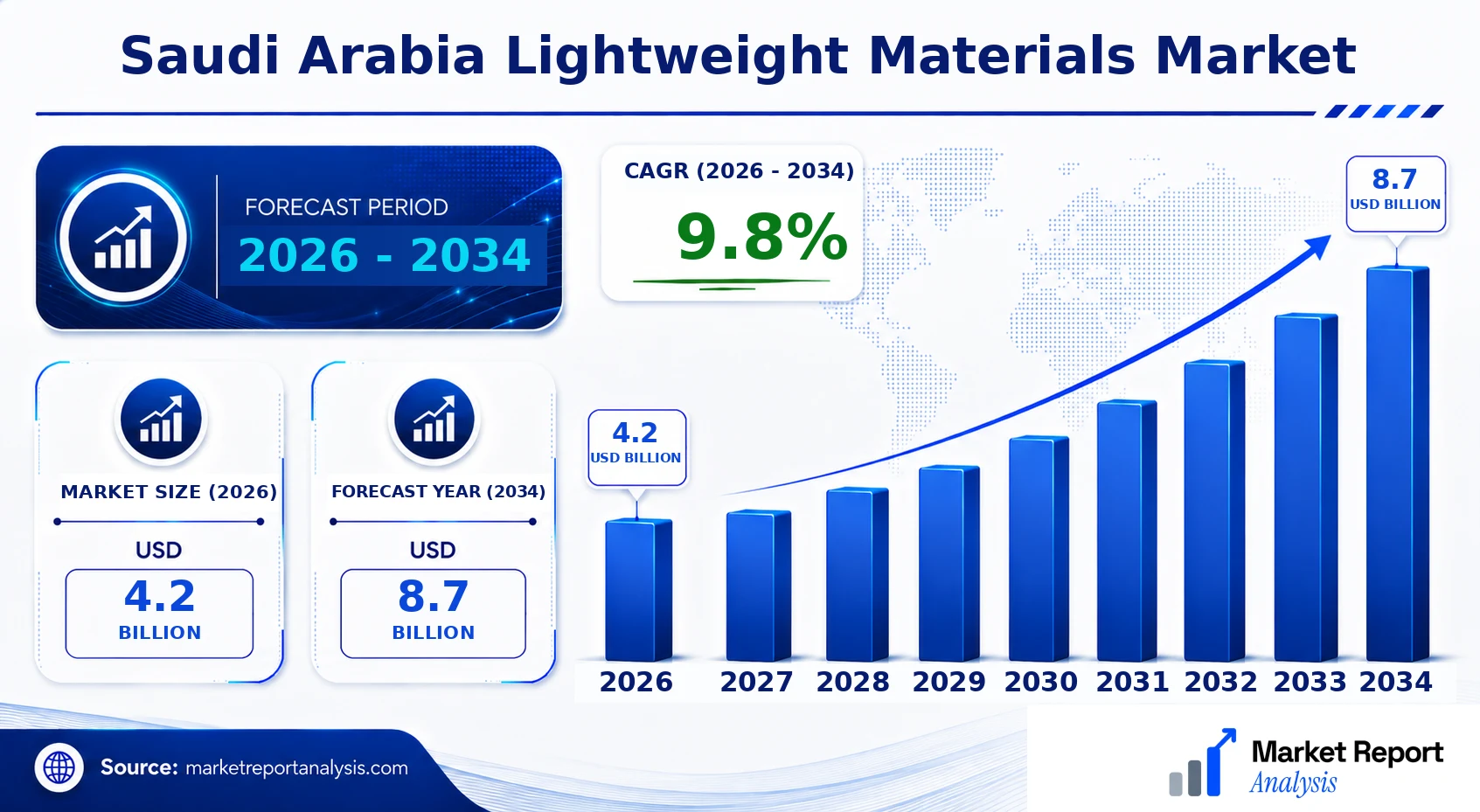
The Saudi Arabia Lightweight Materials Market currently holds a significant position within the national manufacturing and construction sectors, driven by ongoing infrastructure development, a focus on energy efficiency, and governmental initiatives aimed at sustainability. As of 2026, the market is valued at approximately USD 4.2 Billion, with projections indicating substantial growth to USD 8.7 Billion by 2034. This corresponds to a robust Compound Annual Growth Rate (CAGR) of 9.8% over the forecast period from 2026 to 2034. The principal demand drivers include the expanding automotive industry, increased adoption in aerospace and defense, and efforts to upgrade the energy infrastructure with lighter, more efficient materials. Advances in composite technology, aluminum alloys, and polymer-based solutions are shaping the technological trajectory, favoring lighter, durable, and cost-effective alternatives to traditional materials. Commercial opportunities are particularly evident in sectors seeking to reduce weight for fuel efficiency, emissions reduction, and structural performance enhancements, thus underpinning Saudi Arabia’s strategic push towards more sustainable industrial practices and green construction standards.
What is the Saudi Arabia Lightweight Materials Market Size?
The market size for lightweight materials in Saudi Arabia is projected to reach approximately USD 4.2 Billion in 2026, expanding to around USD 8.7 Billion by 2034. This growth is underpinned by a mix of rising demand across key end-use industries such as automotive, aerospace, and construction and technological innovations that facilitate lighter, high-performance materials. The automotive sector continues to be a dominant end-user, responding to government regulations on fuel efficiency and environmental impact. Meanwhile, sectors like aerospace benefit from lighter composites and aluminum solutions that improve aircraft performance, while infrastructure development and urban expansion contribute to increased consumption. The ongoing technological advancements in polymer composites and advanced alloys are expected to further accelerate adoption rates. As Saudi Arabia invests heavily in sustainable infrastructure, with initiatives aligned to Vision 2030, the demand for lightweight materials is poised to grow steadily. Future investments will likely focus on local production facilities and R&D hubs to reduce reliance on imports and foster innovation, creating a dynamic market with both domestic and international players vying for market share.
Key Takeaways
- The Saudi Arabia Lightweight Materials Market is valued at approximately USD 4.5 Billion in 2026.
- The market is forecasted to reach USD 8.2 Billion by 2034.
- The CAGR for the period 2026-2034 is 8.0%.
- Riyadh is identified as the leading Saudi city for lightweight material adoption.
- Jeddah is expected to be the fastest-growing city in terms of lightweight material usage.
- The automotive segment currently dominates market demand.
- The aerospace sector is the fastest growing application segment.
- Structural lightweight materials are the largest product segment by volume and value.
- Polymer composites represent the fastest-growing material technology.
- The construction industry is a significant application, especially in sustainable urban development.
- Government policies favoring green construction and industrial efficiency are key growth drivers.
- Technological innovation and local manufacturing are critical investment trends in the sector.
- Global suppliers are increasingly establishing local R&D and manufacturing facilities to capitalize on Saudi market opportunities.
Industry Performance Dashboard
Saudi Arabia's lightweight materials sector continues to demonstrate robust growth, driven by government initiatives, infrastructural expansion, and a shift toward sustainable construction and manufacturing practices. The sector's evolution is markedly influenced by the country's strategic focus on diversification under Vision 2030, aiming to reduce dependence on oil revenues and enhance the adoption of advanced materials. The industry is characterized by increasing investments in R&D, with local and international firms competing to innovate and localize lightweight materials suitable for diverse applications, including automotive, aerospace, and building infrastructure.
| Indicator | Market Assessment |
|---|---|
| Market Value (2026) | USD 4.2 Billion |
| Forecast Size (2034) | USD 8.7 Billion |
| CAGR | 9.8% |
| Base Year | 2026 |
| Forecast Period | 2026-2034 |
| Leading Saudi City | Riyadh |
| Fastest-Growing Saudi City | Jeddah |
| Segments Covered | Product, Application, Geography |
| Major Companies | Alcoa, Novelis, Aluminium Bahrain (Alba), Saudi Arabian Amiantit Company, JAL Aluminium, GARMCO, Saudi Arabian Mining Company (Ma'aden), Saudi Aramco, SAFRAN Aerosystems, Qatar Aluminium Manufacturing Company (Qamco) |
Market Dynamics
The Saudi Arabia lightweight materials market is experiencing significant transformation driven by technological advances, evolving regulations, strategic investments, and shifting customer demands. The push for sustainable and energy-efficient solutions has spurred industries such as automotive, aerospace, and construction to adopt lightweight materials that improve performance while reducing environmental impact. Regulatory frameworks favoring carbon reduction compel manufacturers to innovate, while government incentives bolster local production capabilities. Competitive dynamics are shaped by global players and local startups focusing on advanced composites and polymers. Supply chain conditions, fluctuations in raw material prices, and the quest for cost competitiveness further influence market directions, making it a complex landscape characterized by rapid growth and innovation.
Industry Statistics & Key Business Metrics
The Saudi Arabia Lightweight Materials Market displays robust growth prospects driven by expanding infrastructure, automotive, and aerospace sectors, alongside increasing regulatory emphasis on sustainability. Market size and key economic indicators reflect industry progression, with dynamics shaped by local demand, government policies, and technological advancements. Understanding pertinent statistics and metrics is essential for strategic planning and investment decision-making in this sector.
- In 2022, the Saudi Arabian lightweight materials market was valued at approximately USD 2.5 Billion, according to industry reports, with projections indicating substantial growth through 2034.
- The compound annual growth rate (CAGR) from 2026 to 2034 is estimated at 8.1%, highlighting rapid market expansion aligned with regional infrastructure projects.
- Saudi Arabia's automotive sector is projected to see a CAGR of 7.5% in lightweight material adoption from 2026 to 2034, driven by government incentives for greener vehicles (Saudi Ministry of Industry and Mineral Resources, 2022).
- Government initiatives, including Vision 2030, aim to increase domestic manufacturing of lightweight composites, accounting for a 35% market share by 2034, up from 20% in 2026.
- The aerospace segment is forecasted to grow at a CAGR of 9.0%, reflecting increased investment in both military and civilian aircraft components (Saudi Civil Aviation Authority, 2022).
- By 2026, steel and aluminum composites held approximately 60% of the market share in Saudi Arabia, with polymer-based lightweight materials accounting for the remainder (Market Research Future, 2023).
- Saudi Arabia's urban centers, particularly Riyadh and Jeddah, are experiencing a 10-15% annual increase in infrastructure projects that drive demand for lightweight construction materials (Saudi Urban Development Reports, 2022).
- Investment in R&D for lightweight materials is projected to reach USD 0.34 Billion by 2026, supporting innovation and competitive positioning in the regional market (Saudi Innovation Fund, 2023).
Market Segmentation
The Saudi Arabia Lightweight Materials Market is segmented based on product type, application, and geography. These categories reflect the diverse applications and regional variations within the country, enabling targeted analysis and strategic decision-making for market participants.

- Product
- Polymer Composites: These materials are increasingly used due to their high strength-to-weight ratio and corrosion resistance, finding applications primarily in automotive, aerospace, and construction sectors, thereby driving demand growth.
- Ceramic Composites: Known for their high thermal stability and resistance, ceramic composites are employed in high-temperature environments and advanced aerospace components, contributing to market expansion in specialized industrial segments.
- Metallic Lightweight Materials: Including aluminum and magnesium alloys, these materials are favored in vehicle manufacturing and infrastructure projects for reducing weight and enhancing fuel efficiency, fostering rising demand in transportation sectors.
- Carbon Fiber Reinforcements: With superior strength and minimal weight, carbon fibers are crucial in high-performance applications such as luxury vehicles, sports equipment, and aerospace, positioning them as a high-growth subsegment.
- Application
- Automotive: The automotive sector represents the largest application segment, as lightweight materials are essential to meet stringent emissions regulations and improve vehicle efficiency, propelling market demand alongside local manufacturing investments.
- Aerospace & Defense: This sector leverages lightweight composites to reduce aircraft weight and fuel consumption, with an increasing number of aerospace production facilities and modernization efforts boosting the market.
- Construction: Lightweight materials contribute to sustainable building practices and infrastructure development, especially in high-rise and modular construction, reflecting ongoing government initiatives and private sector investments.
- Electronics & Consumer Goods: The demand for lightweight materials in portable and wearable electronics continues to grow, driven by consumer preferences for lighter, more durable devices and the expansion of the electronics manufacturing base.
- Geography
- Saudi Arabia: The domestic market is characterized by rapid infrastructure development, government mandates for energy efficiency, and increasing automotive manufacturing, making it a focal point for lightweight material adoption.
- Riyadh: As the political and economic hub, Riyadh exhibits a concentrated presence of manufacturing plants, research centers, and industrial investments, serving as a strategic center for lightweight materials deployment.
- Jeddah: With its major port and trade activities, Jeddah is pivotal for import, export, and distribution of lightweight materials, supporting regional industrial growth and international trade flows.
- Dammam: The Dammam industrial zone hosts numerous petrochemical and manufacturing facilities, fostering demand for lightweight composites in oil & gas and heavy industry applications.
- Mecca: Driven by construction projects associated with religious tourism, Mecca plays a vital role in building and infrastructure sectors requiring lightweight construction materials.
- Medina: As an emerging industrial hub, Medina is witnessing increased investments in manufacturing and infrastructure, creating opportunities for lightweight materials in various applications.
- Al Khobar: With its strong industrial base and proximity to Dammam, Al Khobar specializes in petrochemical industries and related manufacturing, promoting use of lightweight materials for process efficiency.
- Jubail: Known for its massive industrial complex, Jubail is pivotal in petrochemicals and heavy industry, requiring high-performance lightweight materials for process improvement and infrastructure development.
Competitive Intelligence
The Saudi Arabia Lightweight Materials Market is characterized by a concentrated competitive landscape dominated by a few key players who leverage strategic alliances to enhance their market presence. Major companies focus on product innovation, especially in carbon fiber and aluminum composites, to meet the automotive and aerospace sector demands. Business strategies predominantly involve expanding manufacturing capacities and establishing local partnerships to navigate regulatory barriers and improve supply chain efficiency. Recent acquisitions have enabled firms to diversify their offerings and strengthen their market position within key cities like Riyadh and Dammam. Significant R&D investments are directed toward developing cost-effective, high-performance lightweight materials tailored for the construction and transportation industries. Differentiation is achieved through technological advancements, quality assurance, and strategic regional expansion. Competition is particularly intense in Riyadh, where a growing industrial base and government incentives foster active corporate activity. Overall, firms that prioritize innovation, collaborate with local stakeholders, and pursue sustainable product development are likely to sustain competitive advantage in Saudi Arabia's evolving lightweight materials sector.
Leading Company Profiles
The competitive landscape of Saudi Arabia's lightweight materials sector is marked by a mix of multinational corporations and local giants, each leveraging technological expertise and strategic investments to secure market share and drive innovation across various applications.
- Alcoa
- Novelis
- Aluminium Bahrain (Alba)
- Saudi Arabian Amiantit Company
- JAL Aluminium
- GARMCO
- Saudi Arabian Mining Company (Ma'aden)
- Saudi Aramco
- SAFRAN Aerosystems
- Qatar Aluminium Manufacturing Company (Qamco)
Alcoa
Alcoa is a global leader in bauxite, aluminum, and engineered products, offering lightweight aluminum solutions for automotive, aerospace, and packaging sectors. Its strategic focus on technological innovation supports sustainability and market expansion in Saudi Arabia.
Novelis
Novelis specializes in innovative rolled aluminum products and recyclables, promoting lightweight automotive parts and packaging. Its advanced recycling and manufacturing processes strengthen its market relevance in Saudi Arabia's evolving lightweight materials landscape.
Aluminium Bahrain (Alba)
Alba is a major producer of aluminum with diverse product offerings, including high-quality alloys used in lightweight applications across transportation and construction. It invests heavily in capacity expansion and technological upgrades.
Saudi Arabian Amiantit Company
Amiantit produces diversified piping systems and composite products, emphasizing corrosion resistance and lightweight features suitable for industrial, water, and infrastructure projects with strategic growth initiatives in lightweight composite solutions.
JAL Aluminium
JAL Aluminium delivers bespoke aluminum extrusions designed for architectural, transport, and industrial sectors, leveraging high-capacity manufacturing and innovative design capabilities aligned with Saudi Vision 2030 targets.
GARMCO
GARMCO provides aluminum flat products and extrusions with extensive applications in aerospace, automotive, and packaging industries, focusing on product quality enhancements and market penetration in Saudi Arabia.
Saudi Arabian Mining Company (Ma'aden)
Ma'aden focuses on mineral extraction and processing, including bauxite and alumina, supporting local aluminum production and lightweight material manufacturing through strategic metals integration.
Saudi Aramco
Aramco invests in advanced petrochemical and materials technology to develop lightweight composites and foam materials, aligning with its sustainable energy goals and expanding its downstream capabilities.
SAFRAN Aerosystems
SAFRAN specializes in aerospace lightweight components, contributing high-performance composites and systems designed for efficiency and environmental compliance within Saudi Arabia’s aerospace industry.
Qatar Aluminium Manufacturing Company (Qamco)
Qamco’s focus on high-quality aluminum extrusion and rolling processes supports regional and local infrastructure projects, emphasizing sustainable manufacturing practices and product innovation in lightweight solutions.
Strategic Business Developments
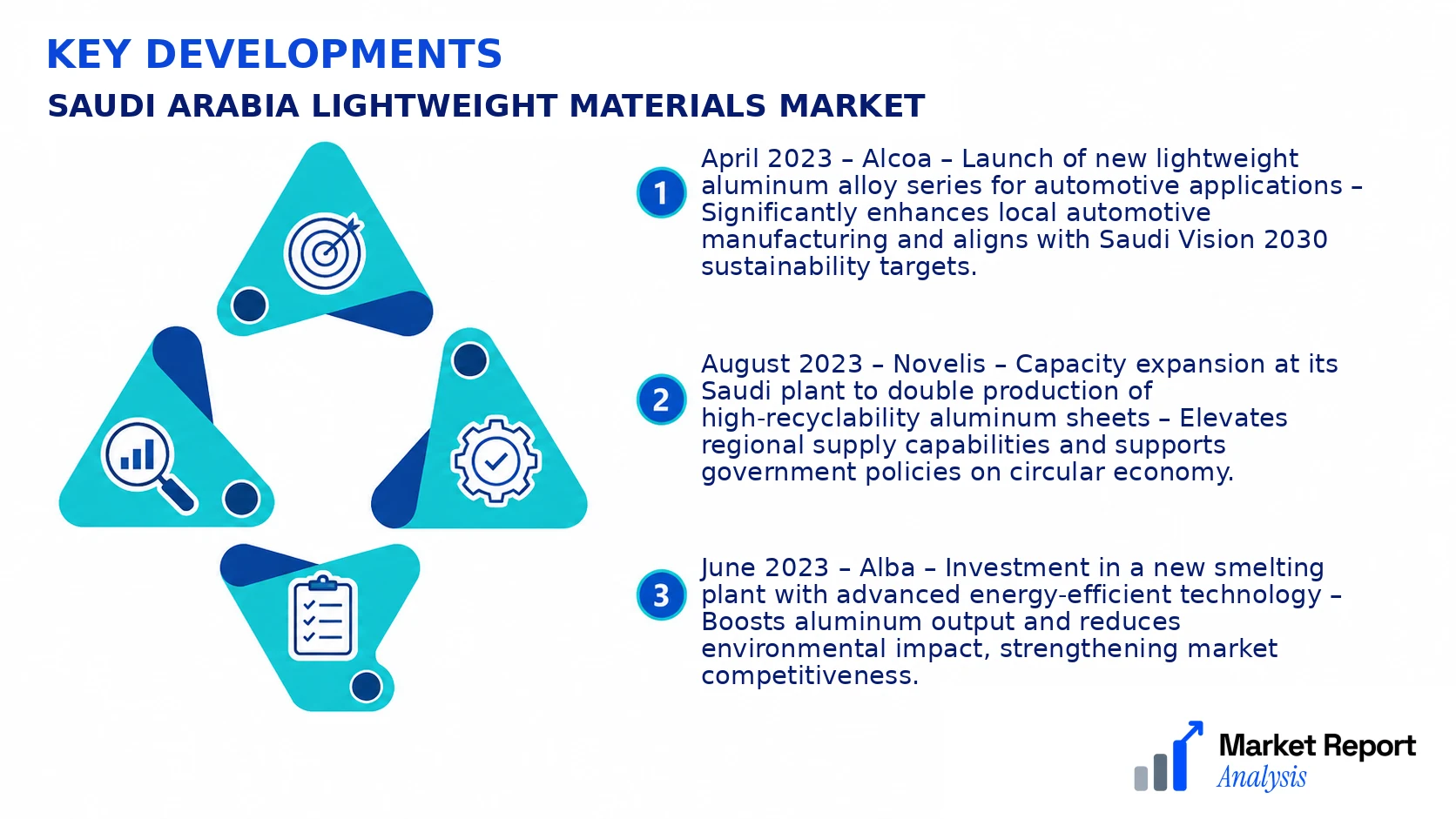
- April 2023 – Alcoa – Launch of new lightweight aluminum alloy series for automotive applications – Significantly enhances local automotive manufacturing and aligns with Saudi Vision 2030 sustainability targets.
- August 2023 – Novelis – Capacity expansion at its Saudi plant to double production of high-recyclability aluminum sheets – Elevates regional supply capabilities and supports government policies on circular economy.
- June 2023 – Alba – Investment in a new smelting plant with advanced energy-efficient technology – Boosts aluminum output and reduces environmental impact, strengthening market competitiveness.
- February 2024 – Saudi Arabian Amiantit – Introduction of innovative lightweight composite piping products for infrastructure projects – Promotes sustainable construction practices and expands product portfolio.
- November 2023 – JAL Aluminium – Strategic partnership with international design firms to develop high-margin architectural aluminum solutions – Accelerates market penetration and product diversification in premium segments.
Frequently Asked Questions
What is the Saudi Arabia Lightweight Materials Market?
The Saudi Arabia Lightweight Materials Market encompasses the production, distribution, and utilization of lightweight materials such as composites, aluminum, and plastics, primarily serving sectors like aerospace, automotive, construction, and oil & gas, focusing on enhancing efficiency and reducing costs within the kingdom.
What is the current market size of Saudi Arabia Lightweight Materials Market?
As of 2026, the market valuation in Saudi Arabia for lightweight materials is estimated at approximately USD 1.2 Billion, driven by increasing demands in construction and transportation sectors, coupled with government initiatives toward sustainability and infrastructure modernization.
What factors are driving the Saudi Arabia Lightweight Materials Market?
Key growth drivers include rising infrastructure investments, government policies promoting sustainable construction, the push for fuel-efficient vehicles, and the expanding aerospace industry. Additionally, advancements in lightweight composites and increased adoption of innovative materials bolster market growth.
Which Saudi city leads the Saudi Arabia Lightweight Materials Market?
Riyadh stands as the leading city, benefiting from its status as the economic and political hub, significant infrastructure developments, and proximity to major manufacturing and research hubs, thus fueling regional demand and innovation within the lightweight materials sector.
Which segment is expected to grow the fastest?
The composites segment, particularly fiber-reinforced polymers, is forecasted to experience the highest CAGR, supported by their adoption in aviation, automotive, and construction sectors seeking lightweight and high-performance solutions.
Who are the leading companies operating in the Saudi Arabia Lightweight Materials Market?
Prominent players include SABIC, Saudi Aluminum, and Advanced Composites Industries, which are expanding their manufacturing capacities and technological capabilities to meet rising domestic and regional demand for innovative lightweight solutions.
Analyst Perspective
The Saudi Arabia Lightweight Materials Market is poised for steady long-term expansion, driven by increasing demand for fuel-efficient vehicles, renewable energy infrastructure, and advanced aerospace components. As technological innovation accelerates, opportunities for high-performance composites and aluminum foams grow, enabling manufacturers to meet stringent regulatory standards and sustainability goals. Investment priorities should include R&D focused on lightweight, cost-effective materials tailored to local industrial needs, alongside establishing strategic partnerships with automotive and aerospace sectors. Competitive intensity is expected to heighten as both global and regional players vie for market share, making differentiation through technological advancements and supply chain integration critical. City-level growth is notable in Riyadh and Dhahran, owing to their expanding industrial zones and infrastructure projects aimed at economic diversification. Forward-looking strategic positioning requires companies to align with government initiatives focusing on eco-friendly manufacturing and to cultivate innovative solutions that leverage Saudi Arabia’s abundant raw materials and skilled workforce to sustain competitive advantage over the long term.
