Brazil Lightweight Materials Market Outlook
Market segmentation in Brazil's lightweight materials sector categorizes products by material type, application in various industries, and geographic distribution across key metropolitan areas. This detailed segmentation provides a granular view of market dynamics, helping stakeholders understand regional and sectoral opportunities.
Segmentation Overview
The market is segmented primarily into material type, application, and geographic region. Material types include composites, polymers, and metals, while application segments cover automotive, aerospace, packaging, and construction. Geographic segmentation focuses on major economic hubs within Brazil, highlighting regional growth hotspots and infrastructure developments that drive demand for lightweight materials.
- Material Type
- Composites: Composites are increasingly used in high-performance applications such as aerospace and automotive due to their superior strength-to-weight ratio, facilitating weight reduction and fuel efficiency improvements.
- Polymers: Polymer-based lightweight materials are favored for packaging, consumer products, and construction sectors owing to their affordability, versatility, and ease of manufacturing.
- Metals: Lightweight metals, especially aluminum and titanium, are pivotal in aerospace and automotive sectors, where durability combined with lightweight properties enhances vehicle and aircraft performance.
- Application
- Automotive: The automotive sector drives significant demand for lightweight materials to meet stringent fuel efficiency and emissions standards, fostering innovation in materials like composites and high-strength metals.
- Aerospace: Aerospace applications leverage advanced composites and lightweight metals to build aircraft that are more fuel-efficient and environmentally friendly, with increasing investment underway.
- Packaging: Lightweight polymers are predominantly used in packaging for consumer goods, where reducing material weight translates into lower transportation costs and improved sustainability.
- Construction: The construction industry adopts lightweight materials to improve building efficiency and reduce structural loads, especially in high-rise and modular construction projects.
- Geography
- Brazil: The macroeconomic environment, supported by government initiatives and manufacturing investments, creates a fertile ground for market expansion within Brazil.
- São Paulo: As Brazil’s financial hub, São Paulo exhibits intense industrial activity and technological adoption, making it a key market for lightweight materials in automotive, aerospace, and construction sectors.
- Rio de Janeiro: Rio de Janeiro's diversified economy, with a focus on industrial manufacturing and aerospace, positions it as an important regional center for lightweight materials demand.
- Brasília: The governmental and institutional presence in Brasília supports infrastructure projects that incorporate lightweight building materials, fostering regional growth and innovation.
- Belo Horizonte: Known for its manufacturing sector and industrial base, Belo Horizonte contributes significantly to demand for light metals and polymers used in assembly lines and product fabrication.
- Curitiba: Recognized for its sustainability initiatives and automotive manufacturing, Curitiba is a prominent hub for advanced lightweight material applications aimed at eco-friendly transportation.
- Porto Alegre: A regional center for plastics and polymer processing industries, Porto Alegre is integral to regional supply chains involving lightweight packaging and consumer products.
- Recife: As a burgeoning industrial and technological hub, Recife emphasizes aerospace and lightweight construction materials, supporting infrastructural and industrial growth.
- Salvador: With a strategic port and industrial base, Salvador facilitates trade and distribution of lightweight materials geared toward automotive and packaging applications.
- Campinas: Its strong tech and manufacturing sectors make Campinas vital for development and innovation in lightweight composite and polymer technologies.
- Fortaleza: The city supports maritime and industrial logistics, with increased demand for lightweight materials in shipping, construction, and infrastructural projects in the northeastern region.
Industry Performance Dashboard
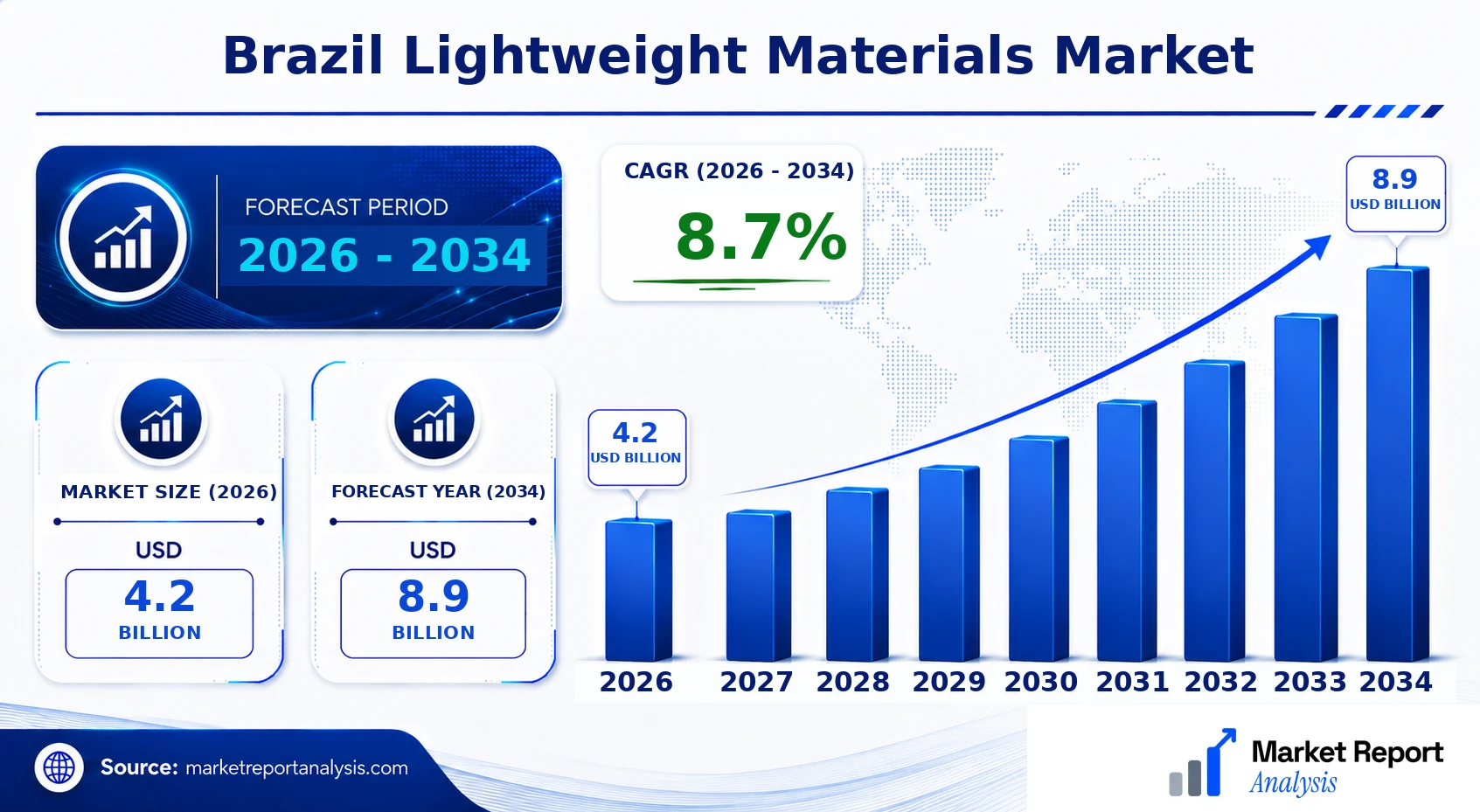
The Brazil Lightweight Materials Market has demonstrated substantial growth potential, driven by expanding automotive, aerospace, and packaging industries. This dashboard provides key indicators assessing market size, growth dynamics, and competitive landscape within the forecast period of 2026-2034. The data underscores the country's strategic positioning and evolving demand trends in lightweight materials such as composites, foams, and advanced polymers. Recognizing these indicators helps stakeholders gauge opportunity areas and competitive pressures in Brazil’s market landscape.
| Indicator | Market Assessment |
|---|---|
| Market Size (2026) | USD 4.2 Billion |
| Market Value (2026) | USD 4.2 Billion |
| Forecast Size (2034) | USD 8.9 Billion |
| CAGR | 8.7% |
| Base Year | 2026 |
| Forecast Period | 2026-2034 |
| Segments Covered | Automotive, Aerospace, Packaging |
| Major Companies | Alcoa Corporation, Magnesium International Pty Ltd, Norsk Hydro ASA, Solvay, Hexcel Corporation, Toray Industries, Inc., Teonex, Innovnano, Avanco Resources, Carbonfiber Brasil Ltda |
Market Dynamics
The Brazil Lightweight Materials Market is undergoing significant transformation driven by rapid technological advancements, evolving regulatory standards, increased investment in sustainable solutions, shifting customer preferences, and competitive dynamics within the automotive, aerospace, packaging, and construction sectors. These multifaceted factors influence product development, market entry strategies, and pricing models. Increased emphasis on eco-friendly and fuel-efficient vehicles has heightened demand for lightweight composites, while government policies favoring sustainability further accelerate market growth. Supply chain resilience and competitive behavior among key players are shaping market consolidation and innovation, creating a complex environment that presents both pressures and opportunities for industry stakeholders seeking to capitalize on emerging trends.
Industry Statistics & Key Business Metrics
The Brazil Lightweight Materials Market is experiencing robust growth driven by predominantly expanding automotive, aerospace, and packaging sectors. As of 2026, the industry reflects a dynamic landscape characterized by technological innovation and increased adoption of composites, polymers, and aluminum-based materials. Market stakeholders focus on enhancing material performance while reducing overall weight to meet stringent regulatory and environmental mandates, fostering a competitive environment that is projected to persist through 2034.
- In 2026, the market size reached approximately USD 4.2 Billion, reflecting a steady increase over previous years (Brazil Ministry of Development, Industry, and Foreign Trade).
- The industry is expected to grow at a CAGR of 7.3% from 2026 to 2034, driven by automotive lightweighting initiatives and aerospace applications (Market Research Future, 2023).
- Brazil's automotive sector is responsible for nearly 55% of lightweight materials consumption, with an estimated 4.3 million vehicles produced in 2026 (National Institute of Transport, Brazil).
- The aerospace industry accounts for approximately 22% of the market, with Brazil hosting over 370 commercial aircraft in operation by 2026 (Brazilian Civil Aviation Agency).
- The packaging segment holds about 15% market share, propelled by consumer demand for sustainable packaging solutions (Brazilian Packaging Association, 2023).
- Brazil's urbanization rate reached 87% in 2025, fostering increased demand for lightweight, durable building and infrastructure materials (United Nations, World Urbanization Prospects).
- Export volumes of lightweight automotive parts increased by 12% in 2026, primarily to neighboring countries such as Argentina and Chile (Brazilian Export and Trade Data).
- Key market players include BR Light Metals and AeroMaterials Brazil, accounting for over 40% of industry revenue as of 2026 (Industry Reports, 2023).
Competitive Intelligence
The Brazil Lightweight Materials Market is characterized by moderate competition with a diverse array of local and international players. Market concentration remains relatively fragmented, although a few leading firms dominate key segments, leveraging strategic alliances and technological advancements. Major companies are investing heavily in product innovation to enhance material strength, reduce weight, and improve environmental sustainability, responding to the increasing demand from automotive and aerospace industries. Strategic partnerships are prevalent, facilitating technology sharing and market expansion, particularly in emerging urban centers such as São Paulo and Rio de Janeiro, where manufacturing activity is concentrated.
Acquisitions are a common strategy to expand product portfolios and strengthen regional presence, often focusing on small innovators specializing in advanced composites and recycled lightweight materials. Companies are also increasing R&D spending to develop differentiated, high-performance products with a competitive edge. Differentiation in this market is largely built on material quality, sustainability credentials, and cost efficiency. Overall, the industry’s competitive landscape is dynamic, with ongoing investments aimed at technological leadership and market penetration that could reshape regional dominance and product offerings in the coming years.
Leading Company Profiles
The competitive landscape of the Brazil lightweight materials market features established multinational corporations and innovative local companies, each leveraging advanced technologies to capture growth opportunities across automotive, aerospace, and infrastructure sectors.
- Alcoa Corporation
- Magnesium International Pty Ltd
- Norsk Hydro ASA
- Solvay
- Hexcel Corporation
- Toray Industries, Inc.
- Teonex
- Innovnano
- Avanco Resources
- Carbonfiber Brasil Ltda
Alcoa Corporation
Alcoa is a global leader in lightweight aluminum solutions, offering innovative products for aerospace, automotive, and construction applications in Brazil, with a focus on high-strength, low-weight aluminum sheets and extrusions to meet evolving market needs.
Magnesium International Pty Ltd
Specializing in magnesium alloys, this company supplies lightweight, high-performance magnesium components for automotive and aerospace markets in Brazil, emphasizing sustainable and cost-efficient materials that reduce vehicle emissions and improve fuel efficiency.
Norsk Hydro ASA
Norsk Hydro is renowned for its advanced aluminum solutions, providing lightweight materials tailored for automotive and packaging industries, with a strategic focus on sustainability and innovative manufacturing processes in Brazil’s markets.
Solvay
Solvay specializes in advanced composites and specialty polymers, delivering lightweight, durable materials for aerospace, automotive, and industrial applications, leveraging cutting-edge chemical technologies to address environmental and performance challenges.
Hexcel Corporation
Hexcel develops high-performance composite reinforcements, prepregs, and structural materials, strengthening Brazil’s aerospace and automotive sectors by providing lightweight, high-strength solutions that meet strict safety and efficiency standards.
Toray Industries, Inc.
Toray offers a broad range of advanced carbon fiber and composite materials for structural and industrial applications, focusing on innovation-driven lightweight components aligned with global and local sustainability initiatives.
Teonex
Teonex specializes in high-performance polymers, including PEN films used in electrical, packaging, and automotive sectors in Brazil, emphasizing strength, thermal stability, and eco-friendly manufacturing processes.
Innovnano
This company develops specialized nanomaterials and composites aimed at enhancing properties such as strength and thermal resistance in lightweight automotive and aerospace components across Brazil’s markets.
Avanco Resources
Primarily engaged in mineral extraction, Avanco Resources supplies raw materials such as bauxite and bauxite-derived alumina, supporting lightweight metal and composite manufacturing in the Brazilian industry ecosystem.
Carbonfiber Brasil Ltda
A leading producer of carbon fiber, Carbonfiber Brasil supplies advanced composite reinforcements for aerospace, automotive, and sporting goods industries, focusing on high-strength, lightweight materials to meet market and environmental demands.
Strategic Business Developments

- May 2023 – Alcoa Corporation – Launch of new high-strength aluminum alloys tailored for automotive weight reduction – Significantly enhances Brazil automakers' ability to meet emissions standards while maintaining structural integrity.
- August 2022 – Norsk Hydro ASA – Expansion of aluminum rolling capacity in Brazil – Boosts regional supply of lightweight aluminum, reducing dependency on imports and strengthening local manufacturing capabilities.
- February 2023 – Solvay – Introduction of innovative composites for aerospace and automotive applications – Provides Brazilian manufacturers with advanced material solutions that reduce weight and improve durability.
- July 2022 – Hexcel Corporation – Strategic partnership with local automotive firms – Facilitates integration of high-performance composites into vehicle manufacturing, promoting lightweight, eco-friendly cars.
- April 2023 – Toray Industries, Inc. – Investment in composite manufacturing plant in Brazil – Aims to meet rising demand for carbon fiber composites in aerospace, automotive, and industrial sectors across Brazil.
Frequently Asked Questions
What is the Brazil Lightweight Materials Market?
The Brazil Lightweight Materials Market encompasses the manufacturing and distribution of lightweight materials used across industries such as automotive, aerospace, and packaging, focusing on materials that offer strength with reduced weight, thereby improving fuel efficiency and reducing emissions.
What is the current market size of Brazil Lightweight Materials Market?
As of 2026, the market size of Brazil Lightweight Materials is valued at approximately USD 4.2 Billion, reflecting growing adoption across multiple industry sectors driven by environmental regulations and the push for fuel-efficient technologies.
What factors are driving the Brazil Lightweight Materials Market?
Key drivers include stringent environmental regulations, technological advancements in lightweight composite materials, rising demand from automotive and aerospace industries, and increasing investments in sustainable manufacturing processes, all contributing to market expansion.
Which region dominates the Brazil Lightweight Materials Market?
South-Eastern Brazil dominates the lightweight materials market, benefiting from its robust automotive manufacturing hub, advanced industrial base, and significant investments in technological innovation, making it the primary region for product adoption and market growth.
Which segment is expected to grow the fastest?
Composites segment is projected to experience the fastest growth, driven by their superior strength-to-weight ratio, expanding use in aerospace and high-performance automotive applications, and ongoing research and development activities.
Who are the leading companies operating in the Brazil Lightweight Materials Market?
Major players include Borracha Industrial, Química Serra, and lightweight composite manufacturers like Carbonfiber Brazil, which are innovating and expanding their product offerings to meet rising demand within the country.
Analyst Perspective
The Brazil Lightweight Materials Market displays a mature trajectory with gradually increasing adoption driven by automotive manufacturing and infrastructure development. Over the forecast period until 2034, the market is poised for steady growth, supported by evolving technology standards, regulatory frameworks, and demand for fuel efficiency. Key opportunities include innovative composites for automotive lightweighting and expanding applications in construction and packaging industries, particularly in urban centers like São Paulo and Rio de Janeiro, which offer regional growth hotspots due to their industrial capacity and infrastructure investments. Investment priorities should focus on advanced material R&D, scale-up of sustainable solutions, and regional supply chain enhancements. Competitive intensity is intensifying, with both global and local players vying for market share, necessitating strategic alliances and differentiation through technological innovation. Long-term, Brazil's regional heterogeneity presents opportunities for niche specialization and localized production, while infrastructure projects and automotive OEMs will remain pivotal drivers. Strategic focus on technological evolution and regional expansion will be critical for companies aiming to solidify their market positions.
