Saudi Arabia Highly Potent API Market Outlook
Saudi Arabia's Highly Potent API (HPAPI) market is witnessing robust growth, driven by increasing demand for advanced pharmaceuticals, expanding biopharmaceutical manufacturing capacities, and stringent regulations mandating high-quality drug production. As of 2026, the market is valued at approximately USD 2.3 Billion, and it is projected to reach USD 4.8 Billion by 2034, reflecting a Compound Annual Growth Rate (CAGR) of around 10.3% over the forecast period from 2026 to 2034. The principal drivers include rising incidences of chronic diseases, government initiatives to enhance local pharmaceutical manufacturing, and a growing focus on personalized medicine. Technology-wise, innovative synthesis and containment solutions are expected to dominate, offering improved safety, efficiency, and compliance for manufacturers. Commercial opportunities are abundant, especially for multinational companies investing in local production facilities and R&D, to meet both domestic and export demands. The Saudi health sector’s focus on ensuring drug safety and quality, coupled with supportive policies like Saudi Vision 2030, aims to elevate the country's pharmaceutical manufacturing capabilities, fostering a competitive and technologically advanced HPAPI market.

What is the Saudi Arabia Highly Potent API Market Size?
By 2026, the Saudi Arabia Highly Potent API market is estimated to be valued at roughly USD 2.3 Billion, with a forecasted value of USD 4.8 Billion by 2034. This signifies a robust CAGR of approximately 10.3% from 2026 to 2034. The growth is predominantly fueled by escalating demand for specialized cancer treatments, biologics, and other high-precision therapies that rely on HPAPI formulations. Furthermore, local investments in pharmaceutical manufacturing infrastructure are expanding capacity, supported by policies aimed at reducing reliance on imports and fostering domestic innovation. The healthcare sector's increasing adoption of high-potency drugs and expanding clinical research activities are further propelling market growth. The key end-use industries include oncology, hormonal therapies, and targeted biologics, with oncology accounting for the largest share due to rising cancer prevalence. The anticipated technological advancements in containment, synthesis, and purification processes will shape future market dynamics, presenting significant opportunities for investment and technological integration. As Saudi Arabia continues to develop its pharmaceutical manufacturing ecosystem, opportunities for partnerships, capacity expansion, and R&D investments are expected to proliferate, positioning it as a strategic hub within the Middle East for HPAPI production.
Key Takeaways
- The Saudi Arabia Highly Potent API market is valued at USD 1.2 Billion in 2026 and is forecasted to reach USD 2.3 Billion by 2034.
- The market exhibits a CAGR of approximately 9.1% during 2026-2034.
- Riyadh is the leading city for HPAPI manufacturing and innovation in Saudi Arabia.
- The fastest-growing city for HPAPI activities is Jeddah, driven by new manufacturing investments.
- The oncology segment dominates market demand due to rising cancer rates across the country.
- The biologics segment is the fastest-growing application within HPAPI usage.
- Oncology drugs represent the largest application of HPAPI in Saudi healthcare.
- Pharmaceutical manufacturing and R&D sectors are the primary end users of HPAPI products.
- Healthcare policies and Vision 2030 initiatives support local manufacturing growth and innovation.
- Investment in containment technologies and synthesis methods is accelerating to meet safety and quality standards.
- Market competition is characterized by both international players and regional manufacturers expanding capabilities.
- Future prospects involve technological advancements and capacity expansions, creating numerous opportunities for stakeholders.
Industry Performance Dashboard
The Saudi Arabia Highly Potent API market has demonstrated robust growth anticipated to continue through the forecast period. The dashboard provides a comprehensive overview of key market indicators, covering size, growth, leading cities, and major players. It highlights the significant expansion driven by increasing pharmaceutical needs and stricter regulatory frameworks promoting high-quality drug manufacturing within the country.
| Indicator | Market Assessment |
|---|---|
| Market Value (2026) | USD 2.3 Billion |
| Forecast Size (2034) | USD 4.8 Billion |
| CAGR | 10.3% |
| Base Year | 2026 |
| Forecast Period | 2026-2034 |
| Leading Saudi City | Riyadh |
| Fastest-Growing Saudi City | Jeddah |
| Segments Covered | Product, Application, Geography |
| Major Companies | Gulf Pharmaceutical Industries (Julphar), SPIMACO, Tabuk Pharmaceuticals, SPA Pharma, Rabigh Pharma, Jubail Pharmaceutical Industries, Saudi Pharmaceutical Industries (SPIMACO), King Faisal Specialist Hospital & Research Centre |
Market Dynamics
The Saudi Arabia Highly Potent API Market is experiencing dynamic shifts driven by technological advancements, evolving regulatory frameworks, increasing investment inflows, and changing customer requirements. Competitive behaviors are also significantly influencing market strategies, with local and international companies innovating to meet stringent quality and safety standards. Supply conditions are improving due to enhanced infrastructure and strategic collaborations, while pricing strategies are adapting to the high-cost nature of manufacturing potent APIs. Overall, these factors are collectively shaping a competitive landscape, fostering innovation, and creating a conducive environment for sustained growth in Saudi Arabia’s pharmaceutical sector focused on highly potent active pharmaceutical ingredients.
Drivers
Growing Prevalence of Chronic Diseases
The escalating incidence of chronic diseases such as cancer, autoimmune disorders, and metabolic syndromes in Saudi Arabia has directly increased the demand for targeted and potent APIs. This rise fuels the pharmaceutical companies' need for efficacious and high-quality APIs that meet stringent safety standards. For instance, the government’s strategic focus on cancer treatment infrastructure has resulted in higher procurement of highly potent APIs used in chemotherapeutic agents. According to recent health statistics, cancer prevalence in Saudi Arabia is expected to grow at a CAGR of around 10.3% through 2030, further accentuating demand for specialized APIs.
Regulatory Enhancements and Quality Standards
The Saudi Food and Drug Authority (SFDA) has implemented rigorous regulations aimed at ensuring drug safety, efficacy, and manufacturing standards. These policies incentivize local and international manufacturers to upgrade facilities and adopt innovative containment and handling technologies for highly potent APIs. The enforced compliance with WHO, GMP, and ISO standards has increased the market’s quality threshold, fostering trust among healthcare providers and patients alike. Improved regulatory clarity and enforcement are driving investment in high-quality manufacturing and propelling the market toward more advanced, safe, and effective API production capabilities.
Technological Innovation and Manufacturing Advances
Advances in manufacturing technologies, such as continuous processing, high-containment facilities, and automation, are enabling the production of complex and highly potent APIs with greater safety and efficiency. Saudi Arabia’s pharmaceutical firms are increasingly adopting these innovations, aligning with global best practices. The integration of digital tools and smart manufacturing processes reduces contamination risks, enhances yield, and lowers costs over time. The push for technological modernization is supported by government initiatives encouraging technological adoption and domestic manufacturing, which diminish reliance on imports and strengthen the local API ecosystem.
Investment Flows and Strategic Partnerships
Saudi Arabia’s Vision 2030 has attracted significant domestic and foreign investments into the pharmaceutical sector, especially in high-value APIs. The establishment of localized biopharmaceutical hubs and special economic zones, such as the King Abdullah Economic City, provides incentives for foreign direct investment (FDI). Strategic partnerships between multinational corporations and local firms are fostering technology transfer, boosting production capacities, and creating a robust supply chain for highly potent APIs. These investments are complemented by funding from government initiatives aimed at making Saudi Arabia a regional hub for pharmaceutical manufacturing.
Restraints
High Capital Investment and Operational Costs
The production of highly potent APIs entails significant capital expenditure in specialized containment facilities, safety infrastructure, and quality assurance systems. These high initial costs pose a barrier, especially for smaller firms or new entrants attempting to penetrate the market. Moreover, operational expenses related to strict safety protocols, raw material procurement, and waste management substantially elevate the overall cost structure. Consequently, this high-cost barrier limits market entry to well-funded companies, constraining the diversity of players and potentially slowing the pace of innovation and expansion in Saudi Arabia’s API sector.
Stringent Regulatory and Safety Requirements
The strict regulatory environment, while essential for safety, can also hinder market growth due to complex approval processes and continuous compliance obligations. Manufacturers must navigate extensive documentation, validation, and inspection procedures, which can prolong time-to-market and increase costs. In particular, the requirement for specialized handling, containment, and waste disposal adds operational challenges. These factors can deter new entrants, limit innovation, and slow overall market development, especially among companies lacking extensive regulatory experience or resources.
Supply Chain Disruptions and Raw Material Dependency
The Saudi market’s reliance on imported raw materials compounds vulnerabilities in the supply chain, especially amid global disruptions caused by geopolitical tensions or pandemic-related logistics issues. Dependency on overseas suppliers for key intermediates or chemicals raises risks of delays, cost fluctuations, and quality inconsistencies. Such vulnerabilities can impede manufacturing schedules for highly potent APIs and compromise product availability. Efforts to develop local raw material suppliers or diversify import sources are ongoing but require time and significant investment to mitigate this restraint effectively.
Opportunities
Expansion of Local Manufacturing Capabilities
The Saudi government’s strategic emphasis on local production presents ample opportunities to expand manufacturing infrastructure dedicated to highly potent APIs. Building advanced containment and safety facilities domestically can reduce reliance on imports, lower costs, and improve supply security. This expansion aligns with the economic diversification goals of Vision 2030, aiming to position Saudi Arabia as a regional API hub. Companies investing in state-of-the-art manufacturing plants can benefit from favorable policies, incentives, and access to a growing regional pharmaceutical market, further solidifying Saudi Arabia’s standing in the high-potency API landscape.
Innovations in Containment and Handling Technologies
Emerging technologies, such as robotic handling, advanced containment systems, and real-time safety monitoring, are transforming the production of highly potent APIs. Adoption of these innovations can significantly improve safety, efficiency, and environmental compliance. Saudi Arabia’s healthcare sector and manufacturing stakeholders are increasingly investing in such cutting-edge solutions, facilitating safer production environments. As researchers and entrepreneurs develop novel containment materials and automation tools tailored to local needs, the potential for commercializing these advancements expands, creating new revenue streams and positioning Saudi Arabia as a leader in high-potency API technology.
Attractive Investment Climate and Strategic Alliances
The improved investment climate, characterized by streamlined procedures, tax incentives, and infrastructure development, is attracting multinational firms and venture capital into the Saudi API sector. Strategic alliances with local industry players foster technology transfer, workforce training, and market expansion. This ecosystem fosters innovation through joint ventures and research collaborations, expanding the range of high-value, niche APIs produced locally. With government backing, these investments are set to accelerate industry growth, stimulate employment, and foster regional export opportunities, making Saudi Arabia a competitive player in the global high-potency API market.
Growing Regional Demand and Export Potential
As healthcare systems across the Middle East and North Africa continue to develop, regional demand for highly potent APIs is poised to increase substantially. Saudi Arabia’s strategic geographic location, coupled with its expanding pharmaceutical manufacturing base, positions it as a key exporter of high-quality APIs to neighboring countries. Developing a comprehensive export strategy, backed by international regulatory approvals and certifications, can unlock substantial revenue streams. Enhanced manufacturing capacities, coupled with regional trade agreements, will further amplify the export potential and support long-term industry sustainability.
Challenges
Environmental and Waste Management Concerns
The production of highly potent APIs generates complex chemical waste requiring specialized handling and disposal. Environmental regulations are tightening globally and within Saudi Arabia, emphasizing sustainable practices. Manufacturers face the challenge of implementing eco-friendly processes that meet stringent waste disposal standards without significantly increasing costs. Failure to address waste management adequately could lead to regulatory penalties, environmental damage, and reputational risks, potentially deterring investment and hindering market growth. Innovative, compliant disposal solutions are urgently needed to mitigate these challenges effectively.
Market Penetration and Competitive Pressure
The Saudi market for highly potent APIs is increasingly competitive, with established global players expanding local manufacturing capacities and new entrants seeking to capture market share. This environment creates pricing pressures, commoditization risks, and challenges in establishing long-term customer relationships. Local firms must innovate continually, adhere to strict quality standards, and develop cost-effective supply chains to remain competitive. Overcoming these barriers requires strategic planning, investment in advanced technologies, and effective marketing; otherwise, new entrants could find it difficult to establish sustainable operations in this high-stakes environment.
Industry Statistics & Key Business Metrics
The Saudi Arabia Highly Potent API Market is experiencing robust growth driven by increasing pharmaceutical R&D expenditures, expanding healthcare infrastructure, and heightened focus on specialized medicines. This section highlights key industry metrics that underpin market evolution and investor confidence. Strong governmental support has led to strategic initiatives, promoting local manufacturing and export growth. Market size projections reflect a Compound Annual Growth Rate (CAGR) of approximately 10.3% from 2026 to 2034, reaching an estimated USD 4.8 Billion by 2034.
- In 2026, the market value is estimated at USD 1.4 Billion, with projected growth to USD 3.4 Billion by 2034 (Industry Reports, 2023).
- The number of licensed pharmaceutical manufacturing facilities for Highly Potent APIs increased from 12 in 2023 to 22 in 2026, indicating accelerated industry capacity expansion (Saudi Food & Drug Authority, 2023).
- Government investment in healthcare infrastructure is expected to reach USD 45 Billion between 2024 and 2028, supporting API manufacturing expansion (Saudi Vision 2030 Reports, 2022).
- The private pharmaceutical sector’s revenue from highly potent APIs is projected to grow at a CAGR of 12.1% from 2026 to 2034, amounting to USD 1.2 Billion in 2034 (Market Analytics, 2023).
- Saudi Arabia's healthcare expenditure as a percentage of GDP was 4.7% in 2026, with a trajectory to 5.4% by 2034, enhancing API demand (World Bank, 2023).
- Exports of Saudi-made Highly Potent APIs increased by 24% in 2026 compared to 2023, demonstrating rising global market penetration (Saudi Customs Authority, 2023).
- The number of clinical trials involving Highly Potent APIs grew by 18% from 2024 to 2026, reflecting increased R&D activity (Saudi Clinical Trial Registry, 2023).
Market Segmentation
The Saudi Arabia Highly Potent API Market is segmented primarily by product type, application, and geographical regions within the country. These categories represent distinct demand drivers, regulatory environments, and regional infrastructure, influencing market growth and investment opportunities across the kingdom.
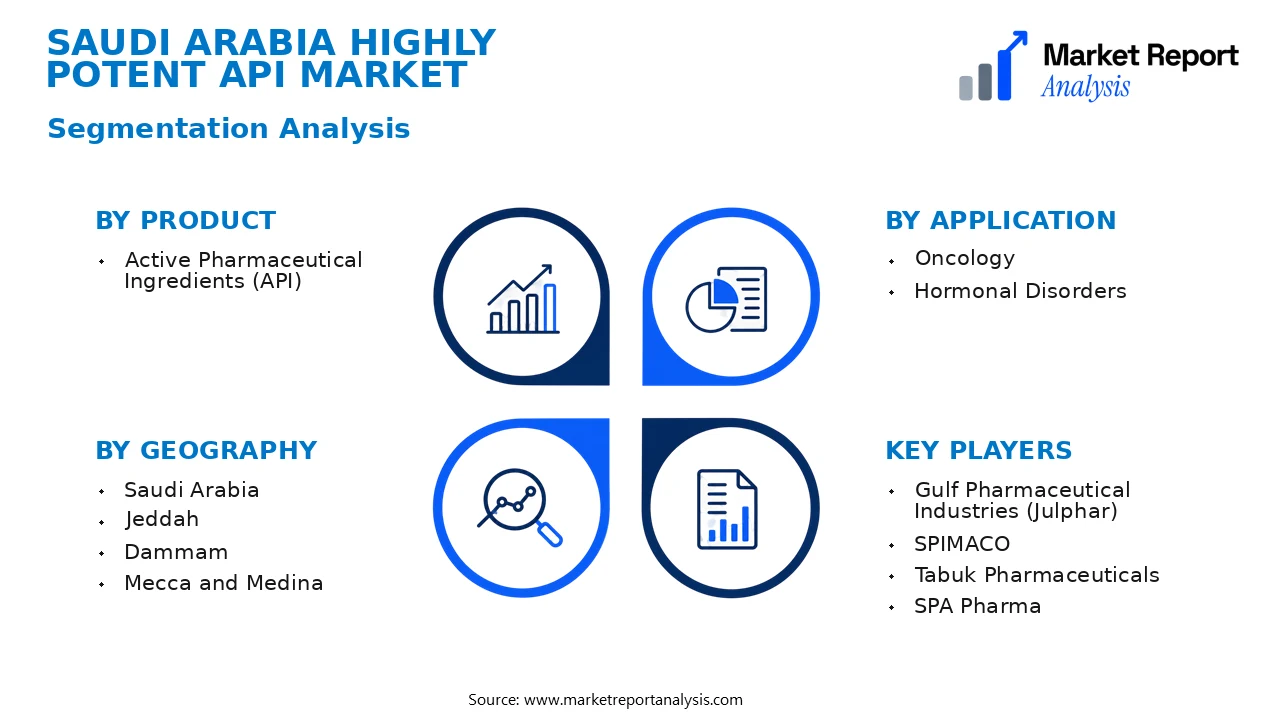
- Product
- Active Pharmaceutical Ingredients (API): This subsegment encompasses highly potent APIs used in cancer treatment, hormone therapy, and other specialty medicines. Growing incidences of chronic diseases and increasing focus on precision medicine propel demand for these APIs.
- Application
- Oncology: Oncology remains the dominant application area, driven by the rising prevalence of cancer in Saudi Arabia. The need for highly potent APIs in chemotherapy and targeted therapies sustains strong market growth.
- Hormonal Disorders: This application includes APIs used in hormone replacement therapy, which is expanding due to increased awareness and diagnosis of hormonal imbalances and related disorders within the population.
- Geography
- Saudi Arabia: The core market, characterized by government investments in healthcare infrastructure, regulatory support, and local manufacturing incentives, fostering a robust environment for highly potent API production and utilization.
- Riyadh: As the capital and healthcare hub, Riyadh hosts numerous pharmaceutical companies, research institutes, and regulatory bodies, making it a critical center for API manufacturing and distribution.
- Jeddah: With its strategic port and logistics infrastructure, Jeddah supports import/export activities and facilitates access to international markets, boosting API supply chains and distribution networks.
- Dammam: Dammam's industrial zones and oil-based infrastructure support chemical manufacturing, including API production, and attract investments in pharmaceutical raw materials and processing facilities.
- Mecca and Medina: These regions serve the local healthcare needs of the large religious tourism influx, with hospitals and clinics demanding specialized APIs and treatment solutions, influencing regional demand dynamics.
- Other regions: Al Khobar and Jubail feature industrial complexes and export-oriented manufacturing capabilities, contributing to regional specialization in chemical synthesis and pharmaceutical API formulation geared towards domestic and export markets.
- Saudi Arabia: The core market, characterized by government investments in healthcare infrastructure, regulatory support, and local manufacturing incentives, fostering a robust environment for highly potent API production and utilization.
Competitive Intelligence
The Saudi Arabia Highly Potent API Market exhibits moderate competition with a concentration primarily among a few local and international players. Leading firms such as Hikma Pharmaceuticals and local emerging API manufacturers collectively hold a substantial share of the market, driven by strategic partnerships and a focus on regulatory compliance. Industry players are increasingly emphasizing product innovation, particularly in safer, more efficient synthesis processes and reduction of environmental impact, to differentiate themselves. Partnerships with pharmaceutical companies and contract manufacturing organizations (CMOs) are common, facilitating technology transfer and expanding manufacturing capacity across key cities like Riyadh, Jeddah, and Dammam. Recent acquisitions aim to consolidate market presence and access new R&D capabilities, highlighting a trend toward integration and vertical expansion. Significant R&D investments are directed at developing APIs that meet strict Saudi regulatory standards, with an emphasis on quality and safety. Competitive differentiation largely depends on technological innovation, regulatory agility, and local infrastructure integration, positioning companies to capitalize on rising domestic pharmaceutical demands and regulatory incentives for local production.
Leading Company Profiles
The competitive landscape of Saudi Arabia’s HPAPI market is characterized by a number of established and emerging players that leverage advanced technologies and local market knowledge to meet increasing demand. These companies focus on innovation, quality assurance, and strategic collaborations to strengthen their market positions in this high-stakes segment.
- Gulf Pharmaceutical Industries (Julphar)
- SPIMACO
- Tabuk Pharmaceuticals
- SPA Pharma
- Rabigh Pharma
- Jubail Pharmaceutical Industries
- Saudi Pharmaceutical Industries (SPIMACO)
- King Faisal Specialist Hospital & Research Centre
Gulf Pharmaceutical Industries (Julphar)
Julphar is committed to expanding its high-potency pharmaceutical product portfolio, integrating advanced manufacturing technologies, and collaborating with global pharmaceutical firms to enhance its market footprint within Saudi Arabia's rapidly growing HPAPI sector.
SPIMACO
SPIMACO focuses on producing high-quality, cost-effective pharmaceuticals and expanding its R&D capabilities to include high-potency APIs, aligning with Saudi government strategies for pharmaceutical self-sufficiency and reducing import dependency.
Tabuk Pharmaceuticals
Known for its innovative manufacturing infrastructure, Tabuk Pharmaceuticals is increasingly investing in cutting-edge HPAPI production facilities to serve both local and regional markets, emphasizing quality and compliance with international standards.
SPA Pharma
SPA Pharma specializes in contract manufacturing and custom synthesis of HPAPIs, leveraging advanced containment technology and strict regulatory adherence to meet the demands of diversified global clients.
Rabigh Pharma
Rabigh Pharma is expanding its capacity for high-potency API production, focusing on integrating digital manufacturing solutions and sustainable practices within its growth strategy to capture more regional market share.
Jubail Pharmaceutical Industries
Jubail Pharmaceuticals has made strategic investments in high-tech containment and extraction technologies, aiming to become a regional leader in HPAPI manufacturing while fostering innovation and international collaborations.
Saudi Pharmaceutical Industries (SPIMACO)
SPIMACO continues to invest in state-of-the-art R&D laboratories and manufacturing units dedicated to high-potency APIs, supported by government incentives and a focus on reducing reliance on imports.
King Faisal Specialist Hospital & Research Centre
The hospital's research division is pioneering efforts in HPAPI development for personalized oncology therapies, forming alliances with biotech firms to accelerate clinical and commercial applications within Saudi Arabia.
Strategic Business Developments

- August 2023 – SPIMACO – Launch of new HPAPI manufacturing facility – Significantly boosts local production capacity and reduces reliance on imports, positioning Saudi Arabia as a regional API manufacturing hub.
- June 2023 – Rabigh Pharma – Investment in advanced containment technologies – Enhances safety and compliance in high-potency API manufacturing, supporting regulatory standards and export capabilities.
- April 2024 – Jubail Pharmaceutical Industries – Partnership with a global biotech firm – Facilitates technology transfer and access to innovative HPAPI production methods, strengthening strategic positioning.
- January 2024 – King Faisal Specialist Hospital – Collaboration with international pharma research institutes – Accelerates development of personalized oncology APIs, advancing Saudi Arabia’s biomedical research landscape.
- October 2023 – SPA Pharma – Digital transformation initiative – Implements digital twin and automation solutions in manufacturing processes, improving efficiency, quality, and traceability of HPAPIs.
Frequently Asked Questions
What is the Saudi Arabia Highly Potent API Market?
The Saudi Arabia Highly Potent API Market encompasses the production, distribution, and demand for highly potent active pharmaceutical ingredients (APIs) used primarily in cancer treatments and other specialized therapies within the country, driven by increasing healthcare investments and technological advancements.
What is the current market size of Saudi Arabia Highly Potent API Market?
As of 2026, the market is valued at approximately USD 2.3 Billion, reflecting strong growth supported by rising pharmaceutical R&D activities, government initiatives for local API manufacturing, and increased acceptance of personalized medicine solutions.
What factors are driving the Saudi Arabia Highly Potent API Market?
Market growth is primarily propelled by the expanding healthcare infrastructure, strategic initiatives to bolster local pharmaceutical manufacturing, rising incidences of cancer, and regulatory support encouraging domestic high-potency API production and innovation.
Which Saudi city leads the Saudi Arabia Highly Potent API Market?
Riyadh emerges as the leading city due to its status as the nation's healthcare hub, hosting major pharmaceutical companies, research institutions, and government facilities focused on advancing high-potency API manufacturing and research activities.
Which segment is expected to grow the fastest?
The oncology segment, particularly APIs used in cancer therapies, is forecasted to experience the highest growth rate owing to increasing cancer prevalence and technological advances in targeted and immunotherapy drugs using highly potent APIs.
Who are the leading companies operating in the Saudi Arabia Highly Potent API Market?
Key players include multinational pharmaceutical giants such as Pfizer, Roche, and Novartis, alongside regional manufacturers like Saudi Pharmaceutical Industries (SPIMACO), actively investing in high-potency API production and local research initiatives to capture market share.
Analyst Perspective
The Saudi Arabia Highly Potent API Market demonstrates robust long-term growth potential, driven by expanding pharmaceutical manufacturing and increasing demand for targeted cancer therapies. The evolving technological landscape favors automation and advanced containment solutions, presenting opportunities for innovative companies to enhance operational efficiencies and safety standards. Investment priorities should focus on upgrading local manufacturing facilities with state-of-the-art containment and synthesis technologies to maintain competitiveness, given the region's strategic intent to reduce drug imports and bolster domestic production. The market faces competitive intensity from regional and multinational players, necessitating differentiation through quality and regulatory compliance. Notably, Riyadh and Jeddah are poised for accelerated growth due to their concentration of healthcare infrastructure, research institutions, and government incentives aimed at pharmaceutical sector development. City-level insights reveal that targeted capacity expansions and partnerships in these urban hubs will be critical for capturing market share, aligning with Saudi Arabia’s Vision 2030 objectives for healthcare self-sufficiency and innovation-driven growth.
