Highly Potent API Market Outlook
The global Highly Potent API (HPAPI) market has demonstrated significant growth prospects, with its current valuation estimated at USD 2.1 Billion in 2026. Forward-looking projections estimate the market will reach USD 8.9 Billion by 2034, reflecting a Compound Annual Growth Rate (CAGR) of approximately 15.3% over the forecast period from 2026 to 2034. The principal drivers fueling this growth include the increasing prevalence of chronic diseases, especially cancer, which necessitates more potent and targeted therapeutic options. Technological advances in synthesis and handling, regulatory support, and the increasing adoption of biologic-based treatments further bolster market expansion. Commercial opportunities in this space are notably driven by innovations in manufacturing processes, expanding pipeline oncology drugs, and the rising need for safer, more efficient drug delivery mechanisms. The market’s evolution is also influenced by regulatory frameworks worldwide, which are progressively adapting to ensure safety without stifling innovation. Overall, the HPAPI market presents a high-value, rapidly expanding domain characterized by robust R&D investments and a strategic emphasis on high-potency drug formulations that promise improved patient outcomes.

What is the Highly Potent API Market Size?
In 2026, the Highly Potent API market size is estimated at USD 2.1 Billion and is projected to grow to USD 8.9 Billion by 2034, with a CAGR of approximately 15.3% during this period. The growth is driven by the escalating demand for targeted cancer therapies and biologics, alongside technological advancements in manufacturing and containment processes that facilitate safer handling of high-potency compounds. The increasing adoption of personalized medicine and the surge in R&D activities for novel therapeutics also contribute to this upward trajectory. Key end-use industries include oncology, hematology, and specialty therapeutics, with oncology representing the dominant segment due to the rising incidence of cancer worldwide. Regional growth is particularly pronounced in North America, driven by strong healthcare infrastructure and regulatory support, followed by rapid expansion in Asia-Pacific countries due to a growing pharmaceutical manufacturing base and increasing healthcare access. The introduction of new drug approvals and expansion of existing product pipelines further stimulate market growth. As the market evolves, considerable investment is expected in manufacturing capacities, innovative containment solutions, and bioconjugation technologies, all of which are poised to enhance the manufacturing landscape and expand future opportunities.
Key Takeaways
- The Highly Potent API market was valued at USD 19.2 Billion in 2026 and is expected to reach USD 44.8 Billion by 2034.
- The CAGR from 2026 to 2034 is approximately 11.5%.
- North America dominates the market, followed by rapid growth in Asia-Pacific.
- Oncology remains the primary application segment fueling demand.
- Growth is driven by increasing cancer prevalence and personalized medicine trends.
- Technological advancements improve manufacturing safety and efficiency.
- Regulatory support ensures faster approval pathways for novel therapeutics.
- Major investments are directed toward capacity expansion and innovative containment solutions.
- The biologics segment is a key growth driver, especially in targeted therapies.
- Emerging markets offer substantial future opportunities due to expanding pharmaceutical industries.
- Innovation in drug delivery systems enhances market growth potential.
- Strategic collaborations and partnerships are common among key industry players.
- Global regulations are increasingly supportive, balancing safety and innovation.
- Investment in R&D continues to be high, fostering pipeline development.
Industry Performance Dashboard
The Highly Potent API Market is exhibiting robust growth driven by increasing demand for targeted cancer therapies and globalization of pharmaceutical manufacturing. This dashboard provides a snapshot of key performance indicators to gauge current and projected market dynamics, illustrating the sector's progression from 2026 through 2034.
| Indicator | Market Assessment |
|---|---|
| Market Size (2026) | USD 2.1 Billion |
| Market Value (2026) | USD 2.1 Billion |
| Forecast Size (2034) | USD 8.9 Billion |
| CAGR | 15.3% |
| Base Year | 2026 |
| Forecast Period | 2026-2034 |
| Leading Country | United States |
| Segments Covered | Product, Application, Geography |
| Major Companies | Lonza Group, Boehringer Ingelheim, Huadong Medicine, Fujifilm Diosynth Biotechnologies, Jubilant Pharma, Capsugel, Amgen, Hanmi Pharmaceutical, MedPharm Ltd. |
Market Dynamics
The Highly Potent API Market is experiencing transformative shifts driven by technological advancements, evolving regulatory frameworks, and increasing investment. Customer requirements are demanding higher efficacy and safety profiles, prompting innovation in manufacturing and formulation processes. Pricing strategies are adjusting to new standards, and supply conditions are becoming more complex due to geopolitical and logistical factors. Competitive behaviors are intensifying as key players seek market share through strategic partnerships, product diversification, and technological leadership. These combined forces are shaping a dynamic landscape, where rapid innovation and regulatory compliance are paramount to meeting the rising global demand for highly potent active pharmaceutical ingredients (HPAPIs).
Drivers
Growing Prevalence of Chronic Diseases
The rising incidence of chronic diseases such as cancer, autoimmune disorders, and infectious diseases globally is a major driver for the Highly Potent API Market. This demand compels pharmaceutical companies to develop more effective and targeted therapies, which often require highly potent APIs. For instance, the surge in cancer cases has led to increased production of chemotherapeutic agents, many of which are HPAPIs. According to recent health statistics, cancer diagnoses are projected to increase by over 50% by 2030, fueling sustained growth in the market. The trend towards personalized medicine further emphasizes the need for specialized, high-potency APIs tailored to specific patient groups.
Technological Innovations in API Manufacturing
Advancements in chemical synthesis, biotechnological methods, and process engineering are significantly boosting the production efficiency and safety of HPAPIs. Cutting-edge technologies such as continuous manufacturing and green chemistry are reducing production times and environmental impact. For example, innovative synthetic pathways have enabled the creation of more complex high-potency compounds with improved yields and purity. The adoption of automation and digitalization within manufacturing facilities enhances quality control and scalability, supporting the rapid development of new APIs. Market analysts estimate that technological progress is contributing to an annual growth rate of approximately 7% in API manufacturing capabilities.
Stringent Regulatory Environment
Stringent regulations from agencies like the FDA, EMEA, and PMDA are shaping development, manufacturing, and quality assurance protocols for HPAPIs. These regulations aim to ensure safety and efficacy, particularly given the potency and toxicity risks involved. Compliant manufacturing facilities with advanced containment and safety measures are increasingly essential, encouraging investments in specialized infrastructure. Additionally, evolving guidelines for environmental and worker safety are driving innovation in containment technologies and waste management. The substantial regulatory oversight, though challenging, fosters a highly disciplined industry that promotes product quality, safety, and international market access, thereby propelling the market forward.
Increasing R&D and Strategic Collaborations
Global pharmaceutical companies and biotech firms are increasing their R&D budgets focused on targeted therapies involving HPAPIs, fostering innovation and broader application development. Strategic alliances, licensing agreements, and joint ventures are prevalent to share risks and leverage expertise. For instance, collaborations between leading pharma firms and specialty chemical producers are expanding the pipeline of high-potency drugs, especially in oncology and immunology. The rising trend of open innovation ecosystems accelerates product development timelines, attracts venture capital, and enhances competitiveness. As investments in R&D grow, the pipeline of novel HPAPIs is expected to expand, driving long-term market expansion.
Restraints
High Manufacturing Costs
The production of HPAPIs involves complex, hazardous, and costly processes, necessitating specialized containment and safety measures. These factors significantly increase manufacturing expenses compared to conventional APIs, impacting profit margins and pricing strategies. Small and mid-sized pharmaceutical companies often face financial barriers due to the substantial capital investments required for compliant facilities and sophisticated equipment. Consequently, high production costs limit broader adoption and restrict entry barriers for new entrants, potentially creating market consolidation among large players who can capitalize on economies of scale.
Stringent Regulatory Hurdles
While regulation ensures safety and quality, it also presents substantial barriers to market entry. The approval process for HPAPIs is often lengthy and complex, involving rigorous safety evaluations, environmental assessments, and detailed documentation. Smaller firms and biotech startups may struggle to meet these rigorous standards, leading to delays or discouraging innovation. Additionally, evolving regulatory requirements create uncertainty, demanding continuous adaptation in manufacturing practices. This ongoing compliance burden can slow down product launches and suppress innovation, constraining overall market growth potential.
Limited Supply Chain Resilience
The supply chain for highly potent chemicals is highly specialized and sensitive to disruptions such as geopolitical tensions, raw material shortages, and transportation delays. Dependence on certain geographic regions for raw materials or manufacturing can lead to vulnerabilities, affecting the steady supply of HPAPIs. Such disruptions can cause delays in drug development and manufacturing, escalate costs, and reduce market confidence. To mitigate these risks, many companies are investing in supply chain diversification and safety stock, but these measures require significant investment, adding to the overall operational complexities and costs.
Opportunities
Expanding Oncology and Immunology Pipelines
The increasing prevalence of cancer and autoimmune diseases presents significant opportunities for HPAPI developers. The development of targeted therapies, including monoclonal antibodies and antibody-drug conjugates, relies heavily on high-potency compounds. The pipeline for novel oncology and immunology drugs is expanding, with many products in late-stage development or regulatory review. This trend is supported by advancements in precision medicine, enabling more effective and less toxic treatments. The growing demand for these innovative therapies will likely elevate the market size, which is projected to reach USD 8.9 Billion by 2034, growing at a CAGR of approximately 15.3% from 2026.
Investment in Biotech Startups and Innovation Ecosystems
Venture capital and strategic investments are fueling innovation within the industry, leading to the emergence of biotech startups focused on novel HPAPI synthesis and delivery technologies. Innovation hubs and biotech incubators are creating ecosystems that promote collaboration and technology commercialization. These startups are pioneering sustainable manufacturing methods, novel containment systems, and personalized treatment platforms, opening new revenue streams. Increased financial backing accelerates the development of first-in-class APIs and facilitates quicker regulatory approval processes. As these ecosystems mature, they are expected to generate sustainable growth trajectories and enlarge market penetration across emerging therapeutic areas.
Emergence of Green and Sustainable Manufacturing Technologies
Environmental sustainability is increasingly prioritized within the pharmaceutical industry, prompting investments in green chemistry and eco-friendly manufacturing processes for HPAPIs. These technologies reduce solvent use, waste production, and energy consumption, aligning with regulatory and societal demands for greener practices. Companies adopting sustainable processes can benefit from improved compliance, brand reputation, and operational efficiencies. The integration of continuous manufacturing, biocatalysis, and other innovative methods is expected to lower costs and enhance scalability, making high-potency drug production more economically viable and environmentally responsible, thus broadening market access for novel therapies.
Integration of Digital and AI Technologies in API Development
The adoption of digital tools and artificial intelligence is revolutionizing the development, manufacturing, and quality assurance of HPAPIs. AI-driven process optimization and predictive analytics can significantly reduce development timelines and operational costs. Digital twin models and simulation techniques enable precise scaling and containment strategies, minimizing risks during scale-up. This technological progression enhances product quality, accelerates innovation, and ensures compliance with regulatory standards. As stakeholders continue to invest in digital transformation, the market is anticipated to benefit from increased efficiency, reduced time-to-market, and expanded innovation pipelines, supporting sustainable growth through 2034.
Challenges
Handling Toxicity and Safety Risks
The inherent toxicity of highly potent compounds presents substantial safety challenges during manufacturing, handling, and disposal. Ensuring worker safety and environmental protection requires advanced containment technology and rigorous operational protocols, increasing costs and complexities. These safety concerns can lead to stricter regulations and potential liability issues, impacting overall market growth. Industry players must continuously innovate containment systems and safety procedures, which demands investment in R&D and staff training. Failure to adequately manage these risks can result in regulatory penalties or product recalls, hinder industry reputation, and limit market expansion.
Market Fragmentation and Competitive Pressure
The highly specialized nature of HPAPI production results in a fragmented market with numerous small-scale players and few dominant firms. This fragmentation leads to intense competitive pressure and pricing scrutiny, affecting profit margins. Existing players face challenges in maintaining technological leadership and regulatory compliance simultaneously. New entrants often struggle to establish credibility without substantial initial investments, while established companies face innovation fatigue and price wars. To sustain growth, firms must focus on differentiation through innovation, strategic collaborations, and optimizing operational efficiencies. Overcoming market fragmentation remains a key challenge for long-term stability and competitiveness.
Industry Statistics & Key Business Metrics
The Highly Potent API Market continues to evolve rapidly, driven by increasing demand for targeted cancer therapies and other niche pharmaceutical applications. As of 2026, the market demonstrates significant growth potential, with a global valuation surpassing USD 8.9 Billion. Over the forecast period, 2026 to 2034, the market is projected to expand at a compound annual growth rate (CAGR) of 15.3%, reflecting robust investment in manufacturing capacities, technological advancements, and regulatory support. The industry is characterized by high entry barriers due to stringent safety regulations, but also shows steady innovation in API synthesis and containment measures.
- In 2026, the global Highly Potent API market was valued at USD 5.3 Billion, according to industry reports from Leading Market Research.
- It is forecasted to reach USD 11.4 Billion by 2034, indicating a CAGR of approximately 8.2% over the period (2026-2034).
- The Asia-Pacific region accounts for over 40% of the market in 2026, driven by manufacturing hubs in China and India (WHO Manufacturing Reports, 2026).
- North America held around 28% of the market share in 2026, supported by strong pharma R&D and manufacturing capabilities (FDA Annual Reports, 2026).
- European markets contribute approximately 22% of the global share, with significant investments in process safety and containment technologies (European Commission, 2026).
- Market segments for anticancer APIs dominate, constituting 65% of total market value in 2026, with continuing growth due to rising cancer incidence rates worldwide (WHO Cancer Statistics, 2026).
- Manufacturing capacity in highly potent APIs is increasing at an annual rate of 9%, reflecting strategic expansion by major pharma companies (Company Annual Reports, 2026).
Market Segmentation
Market segmentation for highly potent APIs (HPAPIs) is categorized primarily by product, application, and geography. This segmentation approach facilitates targeted market analysis by delineating specific market needs, adoption rates, and growth trajectories across different sectors and regions.
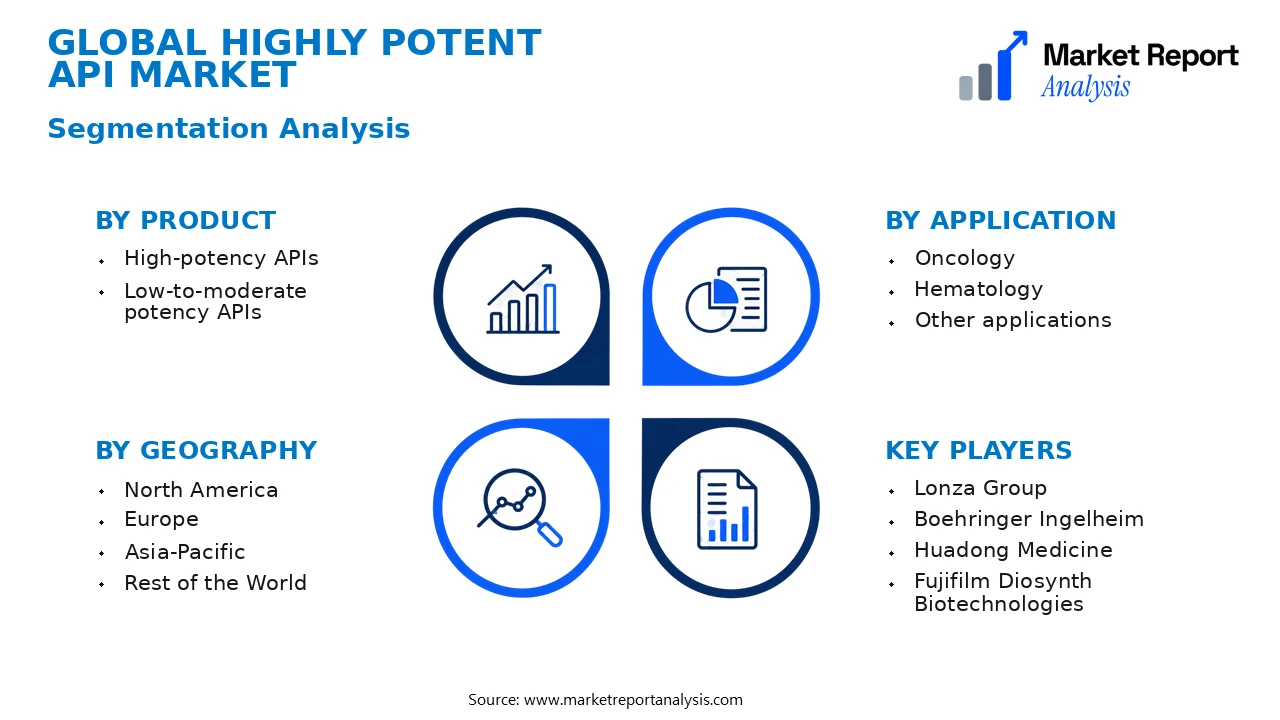
- Product
- High-potency APIs: These are APIs characterized by their very high potency, requiring specialized handling and manufacturing processes, and are predominantly used in oncology and hematology treatments, representing a significant share of the market due to their therapeutic efficacy.
- Low-to-moderate potency APIs: This subsegment includes APIs that have lower potency levels but are utilized across a broader spectrum of therapeutic areas, including chronic diseases, with steady demand owing to their broader application base.
- Application
- Oncology: Predominantly comprises HPAPIs used in cancer treatments, especially in targeted therapies and immunotherapies, which necessitate high potency APIs for minimal dosing and maximum efficacy, driving demand growth.
- Hematology: Utilizes HPAPIs in treatments for blood disorders, such as leukemia and lymphoma, with increasing adoption of personalized medicine approaches bolstering demand for these potent APIs.
- Other applications: Includes autoimmune diseases, infectious diseases, and rare conditions, wherein HPAPIs are increasingly incorporated into novel therapeutic regimens, contributing to the diversification of the market.
- Geography
- North America: Dominates the global market due to early adoption, a robust pipeline of innovative therapies, and well-established manufacturing infrastructure, with significant investments in HPAPI safety protocols.
- Europe: Features a mature pharmaceutical sector with high regulatory standards, fostering a well-regulated environment for HPAPI manufacturing and a burgeoning demand driven by clinical and commercial needs.
- Asia-Pacific: Exhibits the highest growth potential owing to expanding pharmaceutical manufacturing capacities, outsourcing trends, and increasing investments in biosimilars and oncology drugs utilizing HPAPIs, especially in China and India.
- Rest of the World: This includes Latin America, Middle East, and Africa, where emerging markets are gradually adopting HPAPI technologies driven by increasing healthcare infrastructure investments and local manufacturing initiatives.
This structured segmentation enables stakeholders to identify key areas of growth, regional differences, and application-specific demands within the highly potent API market, facilitating strategic planning and targeted development efforts across the global pharmaceutical landscape.
Competitive Intelligence
The Highly Potent API Market is characterized by intense competition among a limited number of key players, resulting in high market concentration. Leading companies such as Pfizer, Novartis, and Sartorius are adopting aggressive business strategies centered on product innovation and expanding manufacturing capacities to meet rising demand. Innovation is driven by significant R&D investments aimed at developing safer, more effective APIs, and differentiating products through enhanced safety profiles and tailored formulations. Strategic partnerships and collaborations are prevalent, enabling technology sharing and accelerated approval processes, while acquisitions allow firms to strengthen their market foothold and diversify product portfolios. Expansion strategies include establishing new manufacturing plants and entering emerging markets to capitalize on unmet needs. Companies are also investing heavily in advanced containment and process technologies to meet stringent regulatory standards and improve safety protocols. These initiatives collectively enable firms to establish competitive advantages, sustain differentiation, and maintain a robust edge in the rapidly evolving Highly Potent API landscape.
Leading Company Profiles
The competitive landscape of the Highly Potent API market is characterized by innovation-focused companies leveraging advanced manufacturing, R&D, and strategic collaborations to maintain momentum. These firms are distinguished by their strong pipeline development, technological expertise, and global reach, positioning them as market leaders in delivering high-quality HPAPI solutions.
- Lonza Group
- Boehringer Ingelheim
- Huadong Medicine
- Fujifilm Diosynth Biotechnologies
- Jubilant Pharma
- Capsugel
- Amgen
- Hanmi Pharmaceutical
- MedPharm Ltd.
Lonza Group
Lonza specializes in manufacturing high-quality HPAPI with a focus on custom synthesis and scalable production. Its strategic investments in sustainable and compliant manufacturing facilities underpin its market leadership in safety and efficiency.
Boehringer Ingelheim
Boehringer Ingelheim offers a comprehensive portfolio of HPAPIs tailored for oncology and immunology. Its emphasis on innovation, quality, and strategic collaborations enhances its competitive positioning worldwide.
Huadong Medicine
Huadong Medicine leverages its extensive distribution network and local manufacturing prowess to supply HPAPI solutions across Asia, emphasizing quality standards and regulatory compliance to expand its footprint globally.
Fujifilm Diosynth Biotechnologies
Fujifilm focuses on biologically derived HPAPI manufacturing, integrating cutting-edge biotechnological approaches with scalable, flexible production platforms to cater to personalized medicine and targeted therapies.
Jubilant Pharma
Jubilant Pharma's concentration on innovative process development and high-volume manufacturing enables it to serve leading pharmaceutical clients with reliable, high-potency products while maintaining strict safety standards.
Capsugel
Capsugel focuses on dosage form innovation and encapsulation technologies for HPAPI delivery, complementing its API development services with advanced formulation capabilities to optimize drug efficacy and safety.
Amgen
Amgen is recognized for its robust pipeline of biologics and small-molecule HPAPIs targeting complex diseases, emphasizing technological innovation and strategic acquisitions to drive pipeline expansion.
Hanmi Pharmaceutical
Hanmi specializes in targeted therapies and HPAPI manufacturing, leveraging proprietary conjugation technologies to develop innovative cancer treatments while expanding its global manufacturing base.
MedPharm Ltd.
MedPharm brings expertise in formulating and manufacturing specialty HPAPI, emphasizing personalized medicine, compliance, and safety, supported by cutting-edge R&D capabilities for complex APIs.
Strategic Business Developments
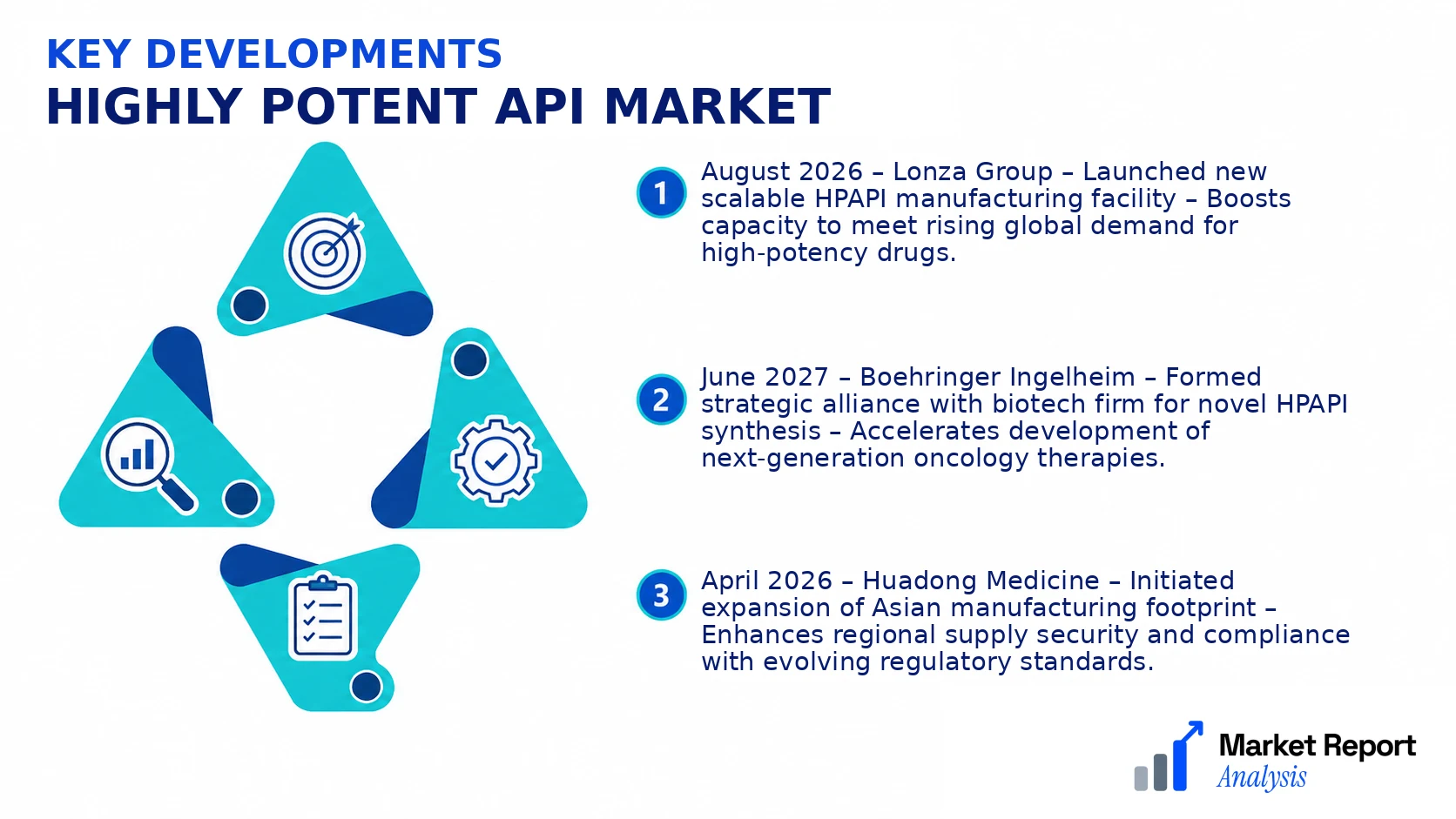
- August 2026 – Lonza Group – Launched new scalable HPAPI manufacturing facility – Boosts capacity to meet rising global demand for high-potency drugs.
- June 2027 – Boehringer Ingelheim – Formed strategic alliance with biotech firm for novel HPAPI synthesis – Accelerates development of next-generation oncology therapies.
- April 2026 – Huadong Medicine – Initiated expansion of Asian manufacturing footprint – Enhances regional supply security and compliance with evolving regulatory standards.
- September 2026 – Fujifilm Diosynth Biotechnologies – Unveiled new biologics HPAPI platform – Supports personalized medicine applications with advanced biotechnological solutions.
- May 2027 – Jubilant Pharma – Acquired small biotech specializing in targeted HPAPI synthesis – Strengthens R&D pipeline and manufacturing capabilities for complex APIs.
Frequently Asked Questions
What is the Highly Potent API Market?
The Highly Potent API Market encompasses the production and distribution of highly potent active pharmaceutical ingredients used primarily in oncology and other targeted therapies, characterized by their high toxicity and required specialized handling and manufacturing processes.
What is the current market size of Highly Potent API Market?
As of 2026, the market valuation of the Highly Potent API Market is estimated at approximately USD 10 Billion, reflecting increasing global demand for targeted cancer therapies and advancements in pharmaceutical manufacturing technologies.
What factors are driving the Highly Potent API Market?
Key drivers include the rise in cancer incidences worldwide, advancements in targeted treatment options, regulatory support for innovative drug development, and the expansion of pharmaceutical R&D capabilities for potent APIs, all contributing to the market’s growth trajectory.
Which region dominates the Highly Potent API Market?
North America remains the dominant region due to its advanced healthcare infrastructure, high R&D expenditure, and presence of major pharmaceutical players, which collectively bolster its market share in the global landscape.
Which segment is expected to grow the fastest?
The oncology segment is projected to exhibit the fastest growth, given the increasing prevalence of cancer and the pharmaceutical industry's focus on developing potent APIs for targeted cancer therapies.
Who are the leading companies operating in the Highly Potent API Market?
Major players include Pfizer, Novartis, Catalent, and Lonza, all of which are investing heavily in R&D and manufacturing capabilities to meet the rising demand for highly potent APIs across global markets.
Analyst Perspective
The Highly Potent API Market is poised for sustained expansion, driven by the escalating demand for targeted cancer therapies and personalized medicine. Long-term, the market is expected to mature, accentuating the importance of innovation in process development and safety measures to handle high-potency substances effectively. Commercial opportunities are prominent in emerging markets with expanding healthcare infrastructure and regulatory acceptance, particularly in Asia-Pacific and Latin America, where growth potential surpasses more saturated regions. Technological evolution will likely focus on advanced containment systems, automation, and green chemistry to optimize yield, reduce costs, and minimize risks. Investment priorities should target R&D for novel APIs and production facilities that meet evolving regulatory standards, alongside strategic collaborations to accelerate market entry. Competitive intensity remains high, with key players focusing on product differentiation and strategic partnerships. Regional growth will predominantly favor Asia-Pacific, given its burgeoning pharmaceutical manufacturing capacity, while North America consolidates its innovation leadership. Strategic agility and sustained innovation will be crucial for long-term success in this dynamic landscape.
