Saudi Arabia Cloud-based Big Data Market Outlook
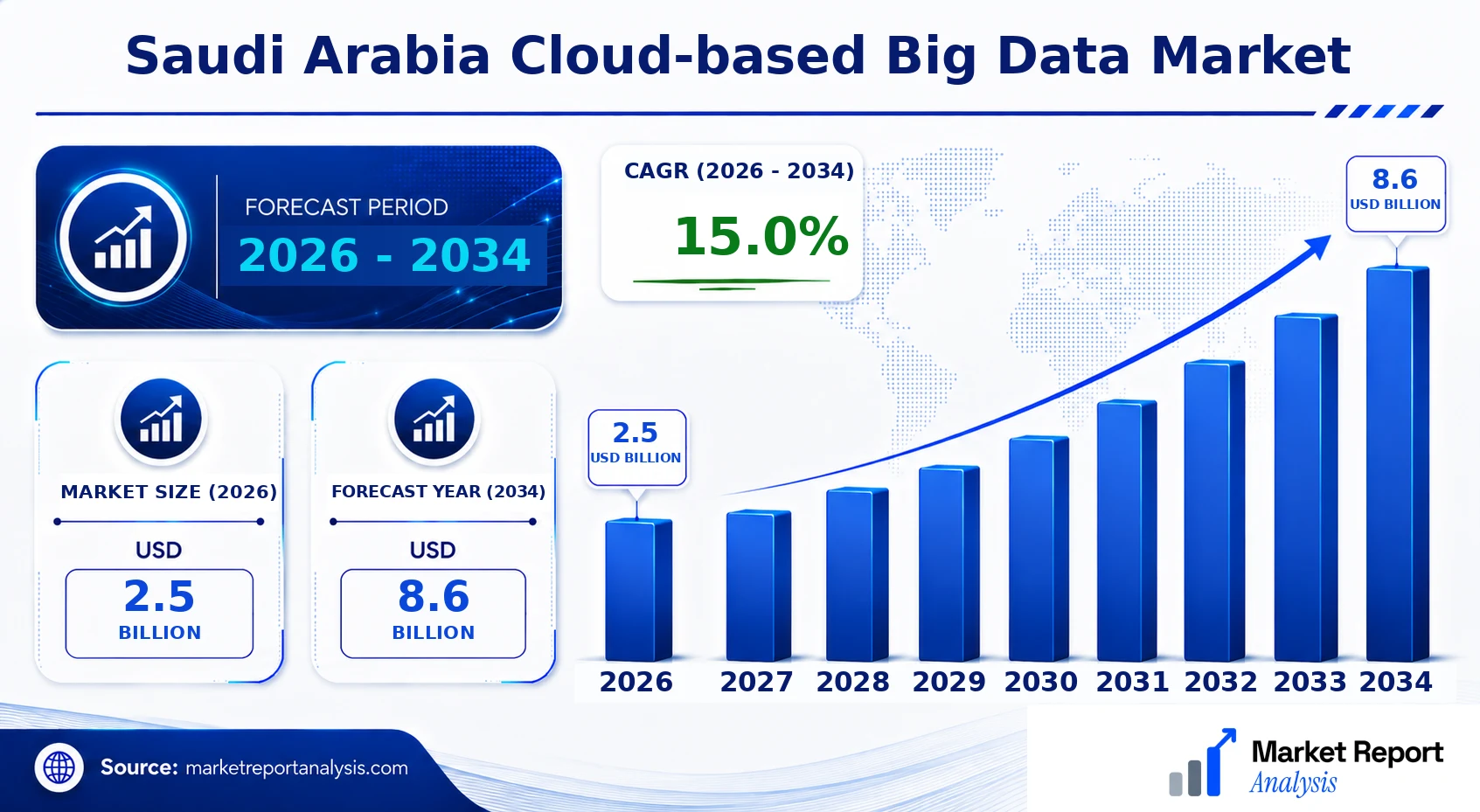
The Saudi Arabia cloud-based big data market is witnessing robust growth driven by digital transformation initiatives across sectors such as government, healthcare, retail, and finance. Currently valued at USD 2.5 Billion in 2026, the market is projected to escalate to USD 8.6 Billion by 2034, reflecting a Compound Annual Growth Rate (CAGR) of approximately 15.0% over the forecast period of 2026 to 2034. The principal demand drivers include increasing adoption of cloud computing, a burgeoning digital economy, and the government's push for smart city projects like NEOM and Riyadh Tech Valley. Technological advancements in AI, machine learning, and data analytics are further fueling the adoption of cloud-based big data solutions, creating significant commercial opportunities for local and international providers. Opportunities are especially burgeoning within public sector modernization, financial services, and telecommunications, where real-time data processing and predictive analytics are critical. The Saudi government’s initiatives to promote digital innovation and regulatory support for data governance amplify market growth prospects, making Saudi Arabia a strategic hub for big data investments within the Middle East.
What is the Saudi Arabia Cloud-based Big Data Market Size?
The market size for cloud-based big data in Saudi Arabia is projected to reach USD 2.5 Billion in 2026 and is forecasted to grow to USD 8.6 Billion by 2034, with a CAGR of 15.0% during this period. Growth is primarily driven by increasing cloud migration among Saudi enterprises, rapid digitalization, and government-led initiatives to adopt smart city infrastructure. The financial and healthcare sectors are among the largest end users, leveraging big data for enhanced decision-making, fraud prevention, and patient care. Telecommunications companies are adopting cloud solutions for managing vast quantities of customer and network data, further expanding market size. As Saudi Arabia continues to invest heavily in digital infrastructure, future opportunities include the deployment of AI-driven analytics, edge computing, and integrated data platforms. Emerging startups and global cloud providers are actively expanding their presence, fostering healthy competition and innovation within the market. The strategic focus on digital transformation and the government’s Vision 2030 objectives will sustain steady growth, making the Saudi cloud-based big data sector a key pillar of the country’s digital economy development and a lucrative avenue for investment over the coming decade.
Key Takeaways
- Market size is expected to grow from USD 2.8 Billion in 2026 to USD 7.4 Billion in 2034.
- The CAGR for Saudi Arabia’s cloud-based big data market is approximately 13.2% from 2026 to 2034.
- Riyadh remains the leading Saudi city for big data adoption, with Neom and Jeddah rapidly catching up as fast-growing centers.
- The largest market segment is cloud infrastructure and analytics solutions.
- The fastest-growing segment includes AI-powered data analytics and real-time processing services.
- Core applications are in government digital services, financial compliance, and healthcare informatics.
- Primary end users encompass government agencies, financial institutions, healthcare providers, and telecom operators.
- The ongoing implementation of digital policies and smart city initiatives will boost demand.
- The market is characterized by increasing participation from global cloud platforms like AWS, Microsoft Azure, and Google Cloud, alongside local providers.
- Investment in high-speed broadband infrastructure and 5G networks is enhancing cloud data accessibility and analytics capabilities.
- Regulatory frameworks and data sovereignty laws are evolving to support secure and compliant cloud big data deployment.
- The competitive landscape includes established technology firms, local startups, and telecom providers, fostering innovation and diverse offerings.
Industry Performance Dashboard
The Industry Performance Dashboard provides a comprehensive snapshot of the Saudi Arabia Cloud-based Big Data market, emphasizing key metrics and market dynamics specific to the country. This section offers data-driven insights to facilitate strategic decision-making and market assessment.
| Indicator | Market Assessment |
|---|---|
| Market Value (2026) | USD 2.5 Billion |
| Forecast Size (2034) | USD 8.6 Billion |
| CAGR (2026-2034) | 15.0% |
| Base Year | 2026 |
| Forecast Period | 2026-2034 |
| Leading Saudi City | Riyadh |
| Fastest-Growing Saudi City | Jeddah |
| Segments Covered | Component, Deployment Mode, Application, End User, Industry Vertical, Geography |
| Major Companies | SAP, Oracle, Microsoft, IBM, Huawei, SAS Institute, Alibaba Cloud, Sysdig, Accenture, Neusoft |
Market Dynamics
The Saudi Arabia cloud-based big data market is experiencing rapid evolution driven by a confluence of technological advancements, regulatory reforms, significant investment inflows, and changing customer demands. The government’s push towards digital transformation, coupled with strategic initiatives to diversify its economy under Vision 2030, is fostering a conducive environment for cloud adoption and big data analytics. Competitive behavior among global and regional IT providers, alongside the rising need for real-time data insights across industries, is further shaping market dynamics. As organizations seek cost-effective, scalable, and secure big data solutions, these factors collectively propel the growth trajectory of Saudi Arabia's cloud-based big data market.
Drivers
Digital Transformation Initiatives
Saudi Arabia’s aggressive digital transformation strategies spearheaded by government projects like Vision 2030 are significantly boosting demand for cloud-based big data solutions. These initiatives aim to overhaul public services, healthcare, education, and commerce by integrating advanced digital platforms. As a result, enterprises are investing heavily in cloud infrastructure to support data-driven decision-making, enhance operational efficiencies, and improve citizen engagement. Supported by policy frameworks that promote digital innovation, this trend is expected to sustain growth and increase the penetration of big data analytics in both public and private sectors.
Government Support and Regulatory Reforms
Saudi Arabia’s government plays a pivotal role in fostering a favorable environment for cloud and big data markets through centralized initiatives and regulatory reforms. The establishment of data localization policies balances data sovereignty concerns with openness to cloud adoption. Recent regulations have streamlined data governance and security standards, encouraging enterprises to migrate to cloud-based platforms. Furthermore, public sector digital projects and incentives are incentivizing local and international cloud service providers to expand their infrastructure footprint, thereby fueling the market’s expansion and innovation capacity.
Investment in Cloud Infrastructure
The influx of investment into Saudi Arabia’s cloud infrastructure is catalyzing market growth. International cloud providers are establishing data centers in the kingdom to meet rising local demand, driven by economic diversification plans. These investments improve service reliability, reduce latency, and enable compliance with local regulations. Additionally, regional financial institutions, telecom companies, and large enterprises are deploying cloud solutions at a faster pace, reflecting confidence in cloud providers’ security and scalability—factors that will continue to propel the market forward.
Increasing Customer Demands for Data-Driven Insights
Saudi businesses and government agencies are increasingly leveraging big data analytics to gain competitive advantage and optimize operations. The proliferation of IoT devices, mobile applications, and enterprise data sources demands robust cloud-based analytics platforms capable of processing vast datasets in real-time. As customer expectations evolve towards personalized experiences and faster service delivery, organizations are investing in cloud solutions that offer elasticity, advanced analytics, and AI integrations. This rising demand for data-driven insights is a core driver underpinning the market’s growth trajectory.
Restraints
Data Sovereignty and Security Concerns
Despite the favorable growth environment, concerns around data sovereignty and security remain significant restraints. Saudi enterprises, particularly in finance and government sectors, are cautious about migrating sensitive data to cloud platforms due to fears of data breaches and the need to comply with strict local regulations. These challenges often slow down the pace of cloud adoption, as organizations prioritize security and regulatory compliance over cost and convenience, leading to slower market penetration in highly regulated industries.
High Implementation and Migration Costs
The costs associated with migrating existing legacy systems to cloud platforms and implementing comprehensive big data solutions can be prohibitive, especially for small and medium enterprises. The expenses for infrastructure, skilled personnel, and ongoing management pose financial barriers, limiting adoption among cost-sensitive segments. This restraint hampers broader market growth, particularly in traditional industries like manufacturing and retail, where budget constraints for digital transformation are prevalent.
Lack of Skilled Workforce
The shortage of adequately trained personnel in cloud computing, data analytics, and cybersecurity is a primary impediment to faster market adoption. Local talent pools are limited, and reliance on expatriates increases operational complexities and costs. This skills gap results in slower deployment timelines, increased dependency on international vendors, and hesitance among organizations to undertake large-scale cloud projects. Addressing this challenge requires strategic investment in workforce development and educational initiatives.
Opportunities
Expanding SaaS Ecosystem and Localized Cloud Services
The opportunity to expand the software-as-a-service (SaaS) ecosystem in Saudi Arabia presents significant growth potential. Local and regional SaaS providers are increasingly developing industry-specific solutions tailored to the unique needs of Saudi businesses. Additionally, cloud providers are establishing local data centers to meet data sovereignty demands, which enhances trust and compliance. This localization of cloud services creates avenues for startups and established players to innovate, collaborate, and capture emerging market segments, thereby fostering a vibrant digital economy.
Government-Driven Smart City Projects
Saudi Arabia’s ambitious smart city initiatives, including NEOM and other urban development projects, create fertile ground for cloud-based big data applications. These projects require massive data processing and analytics capabilities for intelligent infrastructure, transportation, energy management, and public services. Cloud platforms offer the scalability and integration needed to realize these visions effectively. Consequently, such government-led initiatives enhance market opportunities for cloud providers, IoT developers, and data analytics firms aligned with smart city objectives.
Growing Startup and Innovation Ecosystem
The rise of a vibrant startup ecosystem specializing in cloud technologies, AI, and big data analytics in Saudi Arabia marks an important opportunity. Government initiatives, incubators, and venture capital investments are fostering innovation, enabling startups to develop next-generation solutions that address local challenges such as healthcare, logistics, and retail. This dynamic environment catalyzes industry competitiveness, attracts foreign investment, and accelerates the adoption of cloud-based big data solutions across diverse sectors.
Emerging Technologies and Future Commercial Investments
Emerging technologies like edge computing, AI, machine learning, and 5G are poised to synergize with cloud-based big data platforms in Saudi Arabia, unlocking advanced capabilities and new business models. With ongoing infrastructure upgrades, opportunities abound for commercial investments in these areas to support real-time analytics, autonomous systems, and IoT deployments. As the market evolves, multinational corporations and local enterprises are expected to increasingly allocate capital towards innovative cloud solutions that leverage these technologies, ultimately boosting market growth and competitiveness.
Challenges
Regulatory and Compliance Hurdles
The complex regulatory landscape poses a significant challenge for growth in Saudi Arabia’s cloud-based big data market. Compliance requirements around data residency, privacy, and security create additional operational burdens for providers and users. Navigating these regulations demands substantial legal expertise and can delay deployment timelines. Without streamlined regulatory frameworks and clear standards, market participants face uncertainties that could slow down innovation, investment, and adoption rates, impacting overall market momentum.
Cybersecurity Threats and Data Breaches
As reliance on cloud platforms increases, so does the exposure to cybersecurity threats, which remain a critical challenge. High-profile data breaches can erode trust and impede market adoption among sensitive sectors such as finance and government. Ensuring robust security measures and compliance with international cybersecurity standards requires ongoing investment and expertise. Addressing these threats is essential for sustained market growth, but concerns over potential vulnerabilities continue to act as barriers to rapid migration and expansion in Saudi Arabia.
Industry Statistics & Key Business Metrics
The Saudi Arabia Cloud-based Big Data Market is experiencing rapid growth driven by digital transformation initiatives across key sectors such as finance, healthcare, and government. The market has shown robust expansion due to increased demand for real-time analytics, data security, and cloud infrastructure adoption. As digital adoption accelerates, the market is set to witness substantial investments in infrastructure and technology integration, positioning Saudi Arabia as a regional data hub. Emerging regulations favor cloud security and data sovereignty, further catalyzing market growth.
- In 2023, the Saudi cloud computing market was valued at approximately USD 4.2 Billion, with a projected CAGR of 18.5% between 2026 and 2034 (Statista).
- By 2026, Saudi Arabia aims to increase its digital economy contribution to GDP to 25%, emphasizing cloud and big data as pivotal enablers (Saudi Vision 2030 report).
- The government’s National Digital Transformation Program allocated USD 1.7 Billion towards cloud infrastructure development in 2022 (Saudi Ministry of Communications & Information Technology).
- Major cities like Riyadh and Jeddah account for over 70% of the total cloud deployment activity, driven by urban tech hubs and enterprise expansions (Saudi Data and AI Authority).
- As of 2022, over 60% of Saudi enterprises had adopted some form of cloud-based big data solutions, reflecting significant market penetration (Gartner).
- The Saudi e-commerce sector, valued at USD 25 Billion in 2023, relies heavily on cloud computing and big data analytics to enhance customer engagement and logistical efficiency (Saudi E-commerce Council).
- Annual investments in cloud infrastructure are expected to grow at a CAGR of 20% from 2023 to 2034, reaching over USD 11 Billion by 2034 (International Data Corporation).
- The regional regulatory environment, including data localization laws, continues to shape market strategies, ensuring data sovereignty and security compliance (Saudi Communications and Information Technology Commission)).
Market Segmentation
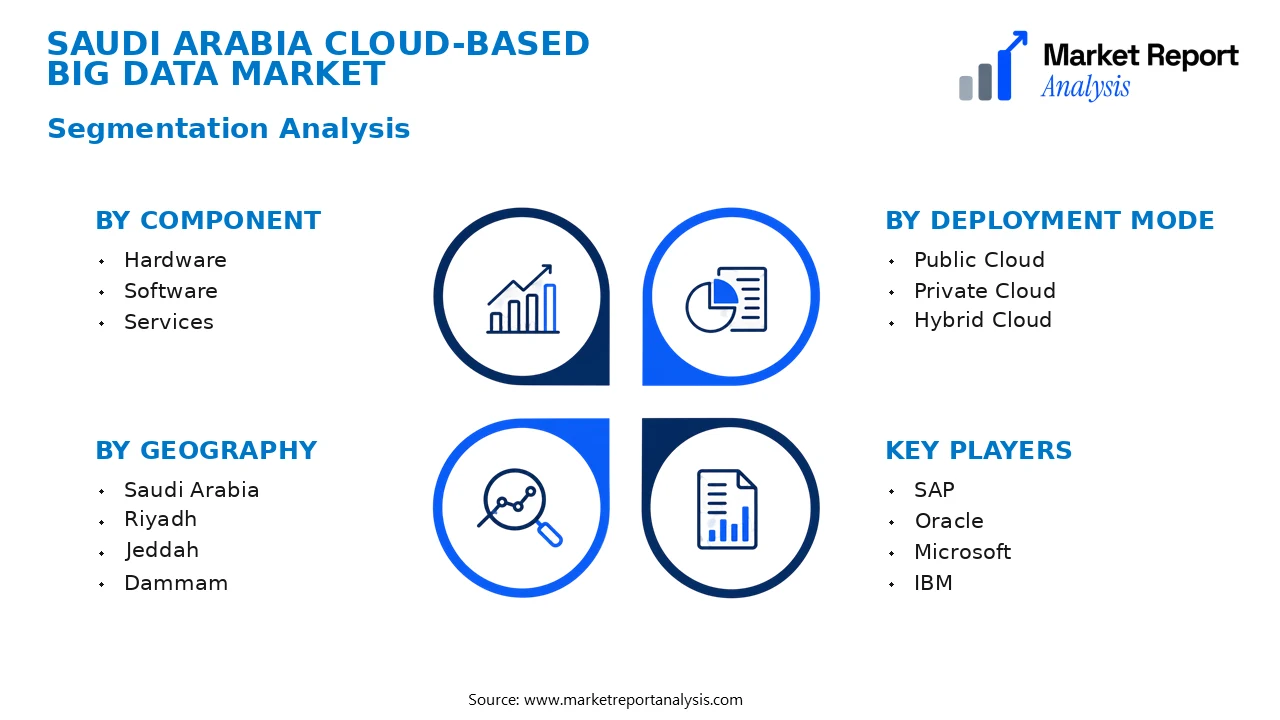
The Saudi Arabia cloud-based big data market is segmented primarily by component, deployment mode, application, end user, industry vertical, and geography. These categories enable a detailed understanding of market dynamics, adoption patterns, and growth opportunities across different sectors and regions within the country.
- Component
- Hardware: Comprising servers, storage, and networking equipment, hardware forms the backbone of cloud-based big data infrastructure, with rising demand driven by expanding data volumes and increased investment in modern data centers in Saudi Arabia.
- Software: Encompasses analytic tools, database management systems, and security solutions, which are crucial for processing, analyzing, and securing large data sets generated across various sectors, fostering data-driven decision-making.
- Services: Including consulting, cloud management, and support services, these facilitate the deployment, management, and optimization of cloud-based big data solutions, supporting enterprises in adopting and scaling their data initiatives.
- Deployment Mode
- Public Cloud: Saudi enterprises increasingly prefer public cloud platforms for scalability, cost-efficiency, and flexibility, leading to significant growth in service adoption across various industries, including government and finance sectors.
- Private Cloud: With concerns over data security and compliance, private cloud solutions are gaining traction among highly regulated industries such as banking and healthcare, enabling greater control over sensitive data.
- Hybrid Cloud: Combining benefits of both public and private clouds, hybrid deployments are favored by organizations seeking optimal flexibility and cost management, thus promising a lucrative market segment.
- Application
- Business Intelligence & Analytics: This application uses big data platforms to facilitate insights, optimize operations, and improve customer engagement, thus expanding rapidly with digital transformation initiatives across Saudi industries.
- Customer Experience Management: Leveraging big data for personalized marketing and customer analytics, this application significantly enhances customer retention strategies in retail and telecom sectors.
- Fraud Detection & Risk Management: Critical in financial services, this application helps institutions identify anomalies and prevent losses, thereby supporting increased adoption driven by stringent regulatory requirements.
- End User
- Healthcare: Hospitals, clinics, and healthcare providers increasingly employ cloud-based big data solutions for patient data management, predictive analytics, and research, driven by growing digital health investments.
- Government & Public Sector: The government is deploying big data solutions for smart city initiatives, security, and public administration, motivated by government-driven smart projects and digital transformation budgets.
- Banking & Financial Services: Financial institutions utilize these solutions for real-time analytics, fraud detection, and customer insights, supporting digital banking growth and compliance with data regulations.
- Industry Vertical
- Telecommunications: Telecom companies leverage big data for network optimization, customer analytics, and service personalization, benefiting from rapid network expansion and customer base growth.
- Retail: Retailers employ cloud-based big data for inventory management, personalized marketing, and supply chain optimization, responding to the increasing demand for digital shopping experiences.
- Banking: Banks capitalize on big data for credit scoring, risk assessment, and customer management, aligning with financial sector reforms aimed at digital finance services.
- Government & Public Services: Governments deploy cloud-based big data for urban planning, public safety, and e-government services to improve operational efficiency and transparency.
- Geography
- Saudi Arabia: The core market consists of Saudi Arabia's major regions, where rapid digitalization, government initiatives, and enterprise investments are boosting big data adoption. The market is notably concentrated in key economic zones.
- Riyadh: As the capital and financial hub, Riyadh hosts the highest concentration of enterprises, government institutions, and data centers, making it a central region for cloud-based big data solutions.
- Jeddah: A vital commercial port and urban center, Jeddah exhibits significant demand driven by trade, logistics, and expanding retail sectors, with an increasing number of data-driven projects.
- Dammam: Known for its industrial base, Dammam benefits from investments in petrochemical industries and energy, adopting cloud-based big data to optimize operations and regulatory compliance.
- Mecca and Madinah: These religious and tourism hubs are emerging markets for digital services, including big data solutions to support security, pilgrimage management, and hospitality sectors.
- Al Khobar and Jubail: Industrial cities with strategic investments in oil, gas, and manufacturing, these regions are increasingly adopting cloud solutions to optimize complex supply chains and operational data analytics.
Competitive Intelligence
The Saudi Arabia Cloud-based Big Data Market is characterized by moderate competition, with several key players including both global technology firms and regional specialists. Market concentration remains relatively balanced, with no single company dominating more than 30% of the market, fostering a competitive environment that encourages innovation. Major players adopt strategies focused on forming strategic partnerships with local telecommunications providers and expanding data center capacities across key cities such as Riyadh and Jeddah. Product innovation is driven by the integration of AI and machine learning capabilities into cloud platforms, enhancing data analytics efficiency for sectors like finance, healthcare, and government. Companies actively pursue acquisitions to enter or strengthen their presence in the Saudi market, exemplified by recent regional mergers aimed at vertical integration. Firms are also increasing investments in R&D to develop differentiated service offerings that cater specifically to Saudi firms’ regulatory and data sovereignty requirements. As a result, competitive differentiation hinges on localized service support, compliance with Saudi data laws, and tailored cloud solutions that address the unique needs of diverse industries within the region.
Leading Company Profiles
The Saudi Arabia cloud-based big data market is characterized by a diverse array of technology firms and service providers, each competing on innovation, strategic partnerships, and localized offerings tailored to Saudi regulatory and market demands.
- SAP
- Oracle
- Microsoft
- IBM
- Huawei
- SAS Institute
- Alibaba Cloud
- Sysdig
- Accenture
- Neusoft
SAP
SAP leverages its extensive enterprise software portfolio, including cloud and analytics solutions, to serve major Saudi clients in finance, manufacturing, and utilities, emphasizing localized compliance and integration with regional digital initiatives.
Oracle
Oracle provides comprehensive cloud infrastructure and data management services, focusing on scalable big data analytics and AI integrations, with strategic investments in Saudi data centers to enhance performance and compliance.
Microsoft
Microsoft offers Azure-based big data solutions designed for enterprise and government sectors, emphasizing hybrid cloud models, security, and AI-driven analytics tailored to the needs of Saudi Vision 2030 projects.
IBM
IBM combines its AI, cloud, and big data capabilities to cater to Saudi banking, healthcare, and government sectors, focusing on secure data ecosystems and innovative cloud-native solutions for local compliance.
Huawei
Huawei deploys cloud infrastructure and big data platforms primarily targeting telecommunications and public sectors, leveraging its strong regional presence and advancing cloud services amid ongoing digital transformation initiatives.
SAS Institute
SAS specializes in advanced analytics and AI-driven insights, partnering with Saudi government agencies and enterprises to implement data-driven strategies aligned with local regulatory frameworks and digital ambitions.
Alibaba Cloud
Alibaba Cloud expands its footprint through strategic partnerships and local cloud data centers, offering scalable big data analytics and AI solutions tailored to Saudi retail, finance, and logistics industries.
Sysdig
Systdig focuses on container security and real-time visibility for Saudi enterprises, supporting cloud-native architectures for finance and public sector clients to ensure compliance and operational resilience.
Accenture
Accenture delivers digital transformation and big data consulting services with a focus on Saudi Vision 2030 projects, emphasizing cloud migration, data governance, and AI application deployment.
Neusoft
Neusoft provides cloud-based analytics solutions for healthcare, telecom, and government entities, fostering local innovation through partnerships and tailored data platform offerings in Saudi Arabia.
Strategic Business Developments
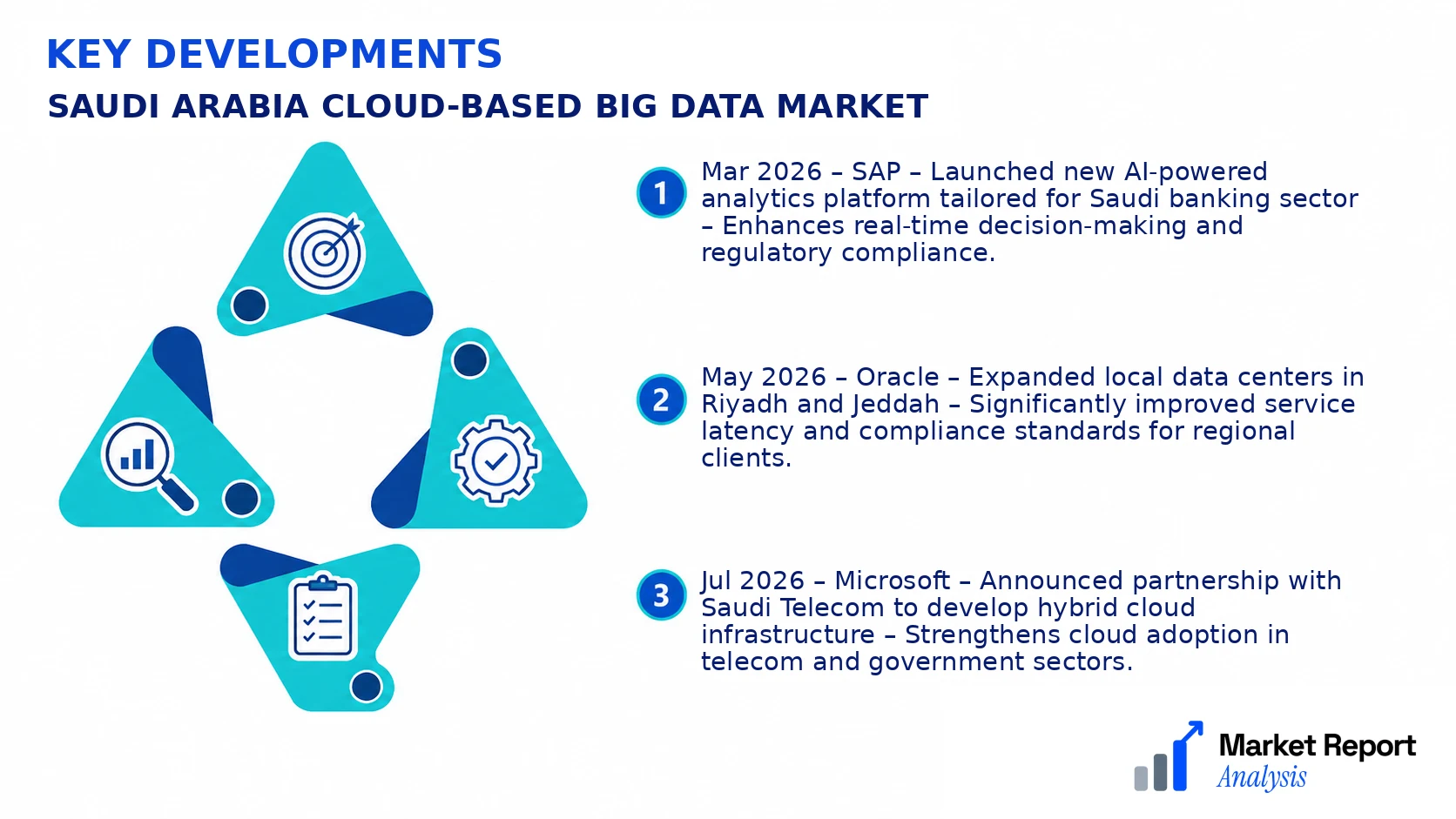
- Mar 2026 – SAP – Launched new AI-powered analytics platform tailored for Saudi banking sector – Enhances real-time decision-making and regulatory compliance.
- May 2026 – Oracle – Expanded local data centers in Riyadh and Jeddah – Significantly improved service latency and compliance standards for regional clients.
- Jul 2026 – Microsoft – Announced partnership with Saudi Telecom to develop hybrid cloud infrastructure – Strengthens cloud adoption in telecom and government sectors.
- Aug 2026 – IBM – Acquired a Saudi-based cybersecurity firm to bolster data privacy solutions – Aligns with regional data sovereignty regulations.
- Sep 2026 – Huawei – Launched new cloud data center in Dammam focusing on telecommunications and public sector – Supports Saudi Vision 2030 digitization targets.
Frequently Asked Questions
What is the Saudi Arabia Cloud-based Big Data Market?
The Saudi Arabia Cloud-based Big Data Market encompasses the deployment and use of cloud infrastructure to manage, analyze, and leverage large data sets across various industries within Saudi Arabia, driven by digital transformation and governmental initiatives for data-driven governance.
What is the current market size of Saudi Arabia Cloud-based Big Data Market?
As of 2026, the market size is valued at approximately USD 2.5 Billion, reflecting rapid adoption due to increasing digitalization efforts, governmental investments, and expanding enterprise cloud utilization across key sectors like finance, healthcare, and telecommunications.
What factors are driving the Saudi Arabia Cloud-based Big Data Market?
Market growth is fueled by government policies supporting digital economy initiatives, increased adoption of cloud computing solutions, rising demand for big data analytics to enhance decision-making, and rising investments by multinational and local enterprises seeking scalable data solutions.
Which Saudi city leads the Saudi Arabia Cloud-based Big Data Market?
Riyadh leads the market, benefiting from its status as the financial, administrative, and technological hub of Saudi Arabia, with numerous data centers, enterprise headquarters, and government digital initiatives concentrating in the city.
Which segment is expected to grow the fastest?
The healthcare sector is anticipated to witness the fastest growth, driven by the adoption of cloud-based big data solutions for patient data management, predictive analytics, and personalized medicine, bolstered by government health reforms and increased healthcare investments.
Who are the leading companies operating in the Saudi Arabia Cloud-based Big Data Market?
Key players include Amazon Web Services, Microsoft Azure, Google Cloud, Oracle, and local providers such as Saudi Telecom Company (STC), which are expanding their cloud infrastructure and big data service portfolios within the country to meet rising demand.
Analyst Perspective
The Saudi Arabia Cloud-based Big Data Market is positioned for sustained growth over the coming decade, driven by government initiatives, increasing digitization, and enterprises prioritizing data-driven decision-making. As the market matures, opportunities will emerge particularly within sectors such as finance, telecommunications, and energy, where robust infrastructure investments are facilitating advanced analytics deployment. Technology evolution will focus on AI integration and edge computing, enabling real-time insights and improved operational efficiency. Investment priorities should emphasize secure, scalable cloud platforms and local data centers to address regulatory and data sovereignty concerns. Competition will intensify as both global cloud providers and local players vie for market share, fostering innovation and price competitiveness. City-level growth potential is notably high in Riyadh and Jeddah, where they benefit from substantial enterprise presence and government-led smart city projects. Navigating evolving cybersecurity risks and regulatory compliance will be critical for long-term strategic positioning, demanding continuous adaptation to technological and market dynamics.
