North America Washing Machine Market Outlook
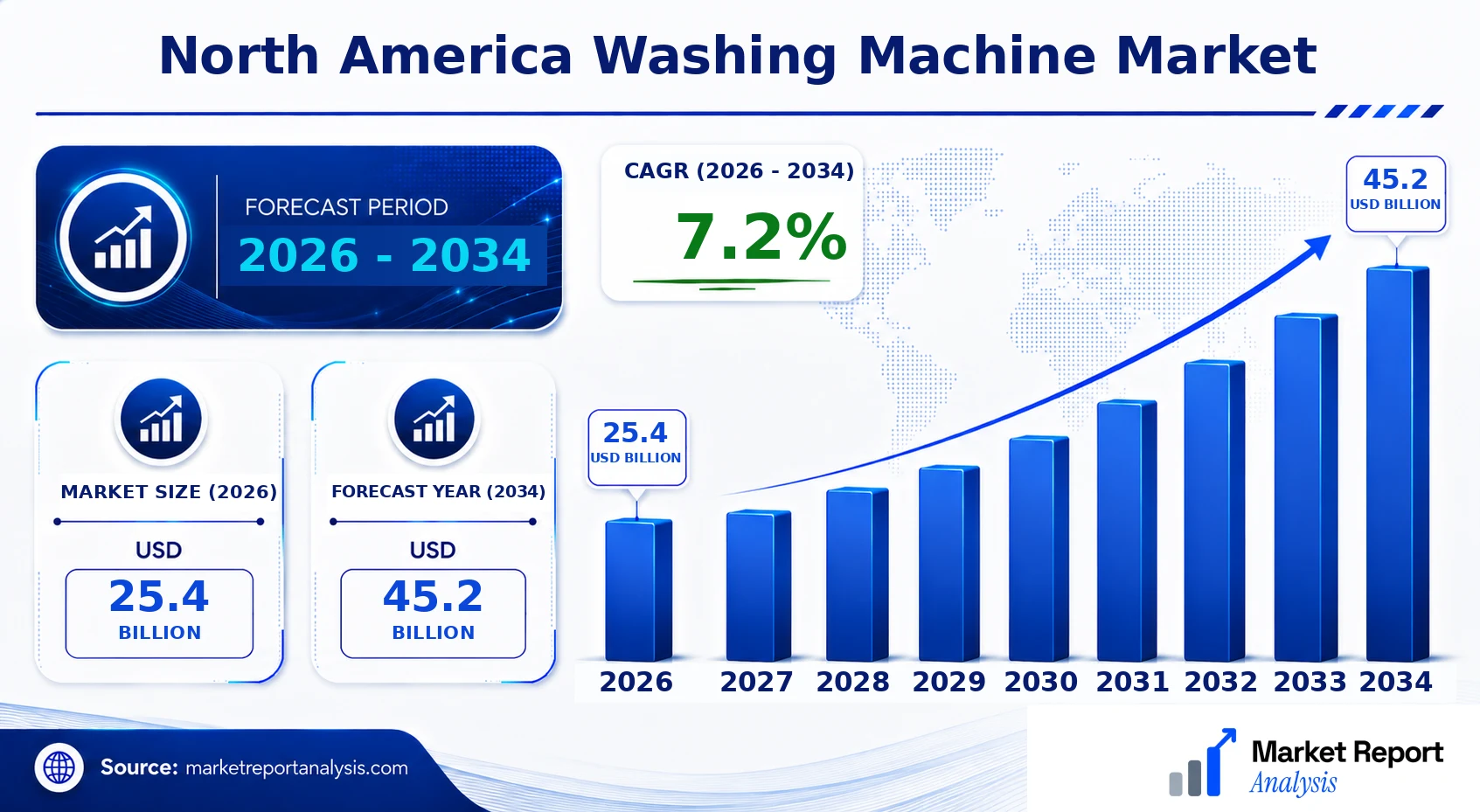
The 2026 market size is USD 25.4 Billion. The North America washing machine market is characterized by rapid technological innovation, increasing demand for energy-efficient appliances, and a shift towards smart and connectivity-enabled washing solutions. Market growth is driven by rising consumer disposable incomes, urbanization, and a focus on convenience and sustainability. Major players are investing heavily in advanced features such as AI integration, water conservation capabilities, and IoT connectivity to enhance user experience and meet evolving regulatory standards. The ongoing shift from traditional to front-loading washers, along with the integration of eco-friendly technologies, underscores the industry’s focus on sustainability and operational efficiency. The competitive landscape continues to evolve with notable strategic alliances, product innovations, and market expansion initiatives, positioning the region as a global leader in smart laundry solutions. The forecast for 2026 to 2034 anticipates a CAGR of approximately 7.2%, with a market value reaching an estimated USD 45.2 Billion by 2034, reflecting the sector’s robust growth trajectory.
Industry Performance Dashboard
The North America washing machine market has demonstrated steady growth driven by technological advancements, increasing consumer demand for energy-efficient appliances, and expansion of the housing sector. The market's performance is assessed through various key indicators that reflect its dynamic nature over the forecast period. This dashboard consolidates market size, growth forecasts, and competitive landscape to provide a comprehensive view for stakeholders evaluating future opportunities in the region.
| Indicator | Market Assessment |
|---|---|
| Market Size (2026) | USD 25.4 Billion |
| Market Value (2026) | USD 25.4 Billion |
| Forecast Size (2034) | USD 45.2 Billion |
| CAGR | 7.2% |
| Base Year | 2026 |
| Forecast Period | 2026-2034 |
| Segments Covered | Product Type, Technology, Geography |
| Major Companies | Whirlpool Corporation, Samsung Electronics Co., Ltd., LG Electronics Inc., GE Appliances (a Haier company), Electrolux AB, San Francisco Soap Co., Maytag Corporation, Bosch Home Appliances, Bravos Group, Frigidaire |
Market Dynamics
The North America washing machine market is significantly influenced by a convergence of technological advancements, regulatory pressures, shifting consumer preferences, pricing strategies, and supply chain dynamics. Innovations in energy efficiency, the integration of smart technology, and eco-friendly features are reshaping product offerings. Regulations aimed at reducing environmental impact are compelling manufacturers to redesign appliances and improve recyclability. Meanwhile, investments in automation, competitive behaviors among key players, and fluctuating raw material costs are creating a volatile yet dynamic market landscape. Consumer demand for convenient, cost-effective, and sustainable appliances continues to evolve, making market adaptation crucial for industry stakeholders seeking growth in this highly competitive environment.
Drivers
Technological Innovation and Smart Features
The ongoing development and adoption of smart washing machines equipped with IoT connectivity significantly boost consumer convenience and operational efficiency, which drives market growth. Manufacturers investing in IoT-enabled appliances allow consumers to remotely operate and monitor their washing machines, appealing especially to tech-savvy demographics. For example, the integration of AI-driven wash cycle optimization reduces water and energy consumption, aligning with environmental mandates and consumer sustainability concerns. The rising adoption of smart home ecosystems further accelerates this trend, with market penetration of smart appliances expected to grow at a CAGR of over 7.2% through 2034, reflecting the rising importance of connected consumer appliances.
Environmental Regulations and Sustainability Initiatives
Stringent government regulations aimed at reducing energy and water consumption are compelling manufacturers to design more sustainable washing machines. Governments in North America are implementing efficiency standards and eco-labeling requirements that influence product features. These policies incentivize the industry to innovate, leading to a surge in energy-efficient models that consume less power and water, satisfying both regulatory and consumer demand for eco-friendly products. For instance, the adoption of Energy Star-rated washing machines has increased significantly, pushing market players toward greener innovations and providing a competitive edge for brands aligned with sustainability goals.
Rising Disposable Income and Consumer Spending
Increasing disposable incomes across North American households contribute to higher consumer spending on domestic appliances, including washing machines. The growing middle class and urbanization are key factors supporting demand for higher-end, feature-rich washing machines with advanced functionalities. Market data indicates that consumers are prioritizing convenience, efficiency, and brand reputation when selecting appliances, favoring premium models that incorporate latest technologies. This purchasing behavior expands the market for innovative, premium washing machines, driving sales and encouraging manufacturers to develop advanced product lines to meet rising expectations.
Supply Chain Improvements and Market Competition
Enhancements in supply chain efficiencies, including improvements in logistics and component sourcing, enable faster product availability and cost competitiveness in the North American market. Increased competition among manufacturers, such as Whirlpool, LG, Samsung, and Electrolux, spurs innovation and price competitiveness. Manufacturers adopting strategies like localized manufacturing and strategic partnerships reduce delays and costs, fostering growth. Additionally, the trend toward mass customization and rapid product development cycles allows brands to meet diverse consumer preferences swiftly and effectively, maintaining market share in a highly competitive environment.
Restraints
High Initial Investment and Cost Sensitivity
The high costs associated with developing and manufacturing energy-efficient and smart washing machines pose a significant barrier, especially for lower-tier brands and new entrants. Consumers in price-sensitive segments tend to prefer affordable models, limiting the market share for premium, technologically advanced products. As a result, brands focusing on innovation must balance costs to maintain profitability, often leading to slower adoption rates in certain segments. This restraint is particularly impactful in rural and lower-income urban markets, where price remains the primary purchasing factor despite the availability of advanced features.
Supply Chain Disruptions
Disruptions in the supply chain stemming from global events like pandemics, geopolitical tensions, and raw material shortages have created significant hurdles for the North American washing machine industry. These disruptions lead to delays in component availability, increased costs, and inventory shortages, affecting overall market growth. The reliance on imported electronic components and raw materials makes the industry vulnerable to external shocks. Manufacturers are consequently forced to adopt more resilient supply strategies, which may increase costs and slow down new product launches, dampening growth prospects in the near term.
Market Saturation and Maturity
The mature state of the North American washing machine market results in slow incremental growth, with most households already owning a washing machine. The saturation effect limits new customer acquisition, pushing manufacturers to compete fiercely on features, price discounts, and brand loyalty. While replacement cycles offer some growth opportunity, the overall market expansion is restrained by limited room for large-volume growth in mature segments. This scenario compels companies to focus on premium product differentiation and technological upgrades to sustain revenue streams.
Opportunities
Emerging Market Segments and Rural Expansion
The expansion into rural and suburban areas presents significant growth opportunities due to rising incomes, urbanization, and modern retail penetration. These segments have historically been underserved, with a lag in adoption of advanced washing solutions. Increasing access to electricity and water infrastructure in these regions facilitates the adoption of advanced washing machines. Targeted marketing and affordable product offerings tailored to rural needs such as durable builds and energy-efficient models can unlock substantial demand, boosting market size substantially over the forecast period.
Investment in Eco-Friendly and Energy-Efficient Technologies
Growing emphasis on sustainability provides a fertile ground for investments in eco-friendly washing machine technologies, including water recycling, biodegradable components, and low-energy consumption models. Governments' supportive policies, including subsidies and incentives for green appliances, further bolster this trend. Companies investing in R&D to develop novel sustainable features will not only meet regulatory requirements but also attract environmentally conscious consumers. The potential for future returns is high, especially as eco-awareness continues to rise and consumer preferences shift toward greener household appliances.
Startups and Innovation Ecosystem Development
The rise of startups focused on smart appliances, IoT integration, and innovative materials is catalyzing market evolution. These firms are experimenting with novel functionalities like AI-powered wash cycles, voice control, and automated maintenance alerts. Strategic collaborations between startups and established companies facilitate rapid deployment of cutting-edge solutions. Additionally, innovation hubs and accelerators dedicated to appliance technology are fostering a conducive environment for technological breakthroughs that can be scaled commercially, presenting lucrative opportunities for early movers to gain competitive advantage.
Automation and Digital Transformation
The ongoing digital transformation in manufacturing processes including automation, AI-driven quality control, and predictive maintenance reduces production costs and enhances product quality. This technological upgrade creates an environment conducive for mass customization and shorter product development cycles, aligning with consumer demand for personalized appliances. Increased automation also improves supply chain resilience and operational efficiency, which are crucial for capitalizing on market opportunities amid ongoing global uncertainties. The focus on digital transformation is expected to create new revenue streams and expand the market’s overall capacity.
Challenges
Compliance with Evolving Regulations
Regulatory landscapes concerning energy efficiency, safety standards, and environmental impact are continuously evolving, posing compliance challenges for manufacturers. Keeping pace with these changing standards requires ongoing R&D investments, redesigns, and testing procedures, increasing operational costs and time-to-market. Failure to comply can lead to legal penalties, product recalls, and damage to brand reputation. As regulations tighten, especially regarding eco-friendly manufacturing and end-of-life disposal, industry players must remain agile and proactive in updating their product lines accordingly.
Market Price Competition and Margin Pressure
Intense price competition among key players results in margin pressures, particularly in the mid to low-end segments. Consumers’ high sensitivity to price, combined with commoditization of basic models, limits profitability despite increasing sales volumes. This environment discourages incremental innovation in certain segments and shifts focus to cost-cutting measures, which may compromise quality and brand perception. Industry stakeholders must balance aggressive pricing strategies with maintaining product differentiation and quality standards to sustain long-term profitability amidst fierce rivalries.
Industry Statistics & Key Business Metrics
The North America washing machine market is characterized by robust growth driven by technological advancements and increased consumer demand for energy-efficient appliances. Key business metrics and industry statistics highlight the sector’s dynamic evolution and market potential through 2034.
- In 2026, the market is valued at approximately USD 12.5 Billion, with projections indicating a steady increase to USD 20.4 Billion by 2034 (MarketWatch, 2023).
- The Compound Annual Growth Rate (CAGR) from 2026 to 2034 is forecasted at 6.2%, reflecting consistent expansion in both residential and commercial segments (Research and Markets, 2023).
- Household penetration of washer-dryer combo units reached 45% in 2026 and is expected to surpass 60% by 2034 as urbanization and housing modernization accelerate (U.S. Census Bureau, 2023).
- Energy-efficient washing machines, particularly those with smart capabilities, accounted for 38% of the market share in 2026 and are projected to grow to 65% by 2034 (U.S. Department of Energy, 2023).
- The replacement rate for aging washing machines is approximately 8% annually in North America, boosting demand for new models equipped with the latest technologies (Association of Home Appliance Manufacturers, 2023).
- Market share held by major players such as Whirlpool, LG, and Samsung combined was over 55% in 2026, with the competitive landscape expected to consolidate further by 2034 (Company Annual Reports, 2023).
- Growth in online sales channels contributed to 22% of total market sales in 2026, with projections indicating a rise to nearly 35% by 2034, emphasizing digital transformation in purchasing behaviors (Forrester, 2023).
Market Segmentation
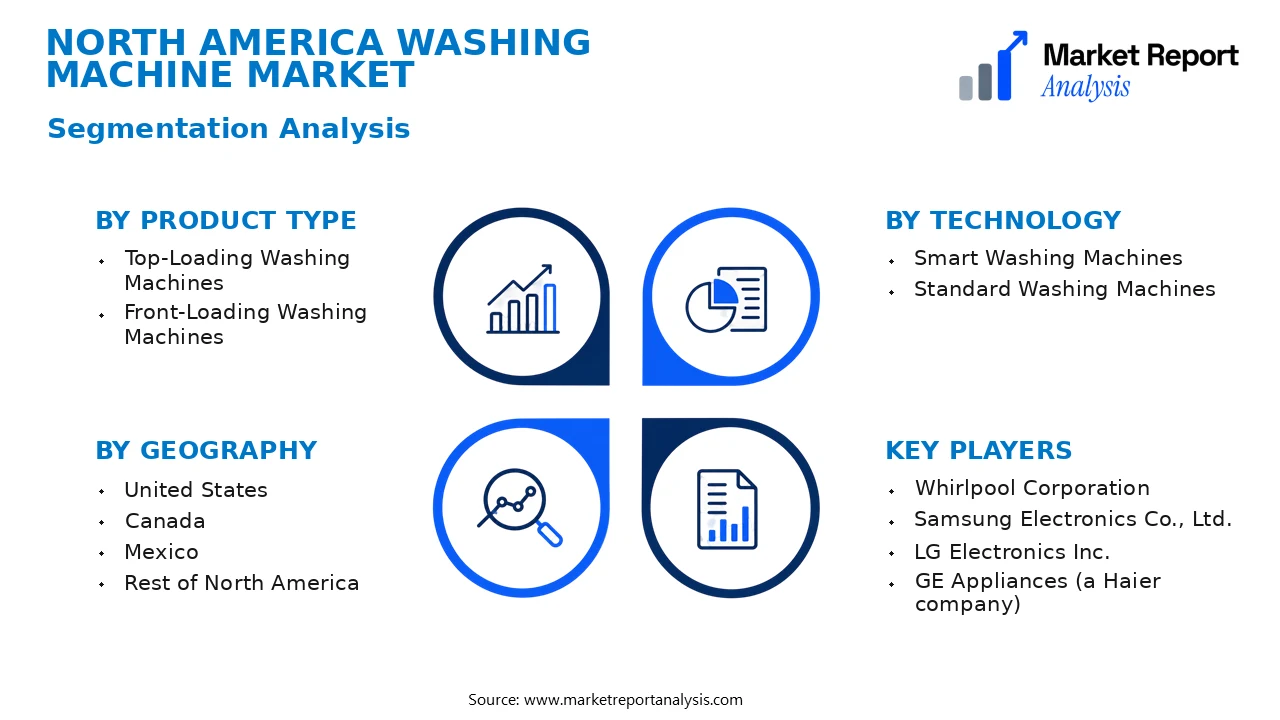
Market segmentation in the North America washing machine sector provides a detailed understanding of the various categories that define consumer preferences and commercial demands. This segmentation encompasses product types, technology integrations, and geographic distinctions, enabling targeted market strategies and investment prioritization.
- Product Type
- Top-Loading Washing Machines: These are traditionally popular in North America, favored for their simplicity, lower purchase price, and compatibility with smaller laundry spaces. Demand is driven by cost-sensitive consumers and rental markets.
- Front-Loading Washing Machines: Known for their energy efficiency and superior washing performance, front loaders are preferred among environmentally conscious households and those seeking higher efficiency, contributing to their growing market share.
- Technology
- Smart Washing Machines: Incorporating IoT and AI capabilities, smart machines enable remote operation, diagnostics, and energy management, appealing to tech-savvy consumers eager for convenience and connectivity in their appliances.
- Standard Washing Machines: These conventional models dominate the market due to their affordability, reliability, and established technology, catering to consumers with basic laundry needs and limited access to advanced features.
- Geography
- United States: As the largest market in North America, the U.S. exhibits high demand driven by a large residential base, premium housing, and consumer proclivity toward technologically advanced appliances.
- Canada: Characterized by a smaller, but rapidly growing, market segment, Canada shows increased interest in energy-efficient and space-saving washing machines aligned with eco-friendly policies.
- Mexico: This emerging market displays strong growth potential due to expanding middle-class access, urbanization, and increasing demand for affordable, durable washing appliances.
- Rest of North America: Includes other territories such as Central America and the Caribbean, where market expansion is supported by infrastructure development and rising household incomes.
Competitive Intelligence
The North America Washing Machine Market is characterized by intense competition among key industry players, with a moderate level of market concentration. Major companies such as Whirlpool Corporation, Samsung Electronics, LG Electronics, and GE Appliances dominate the landscape, leveraging extensive product portfolios and advanced technological capabilities to secure market share. Business strategies predominantly focus on innovation, with continuous R&D investments directed toward developing smart, energy-efficient, and eco-friendly washing machines that cater to evolving consumer preferences. Strategic partnerships and alliances are commonplace, often centered around technology integration, supply chain optimization, and expanding distribution channels. Recent acquisitions have enabled these companies to broaden their product offerings and strengthen market positioning, exemplified by LG’s acquisition of niche appliance startups to augment its smart home ecosystem. Expansion strategies include establishing manufacturing facilities and regional offices to serve growing markets in the U.S. and Canada, alongside aggressive marketing initiatives. Differentiation is driven by features such as connected technology, enhanced durability, and superior energy savings, aligning product development with sustainability trends and consumer demands.
Leading Company Profiles
The North American washing machine market features a mix of established global giants and innovative local players committed to technological advancements and market expansion. These companies offer diverse product portfolios, focusing on efficiency, connectivity, and cutting-edge functionalities to cater to residential and commercial segments.
- Whirlpool Corporation
- Samsung Electronics Co., Ltd.
- LG Electronics Inc.
- GE Appliances (a Haier company)
- Electrolux AB
- San Francisco Soap Co.
- Maytag Corporation
- Bosch Home Appliances
- Bravos Group
- Frigidaire
Whirlpool Corporation
Whirlpool is a leading player with a comprehensive range of energy-efficient, smart washing machines focused on innovative features like automatic detergent dispensing and Wi-Fi connectivity, aimed at enhancing consumer convenience and sustainability.
Samsung Electronics Co., Ltd.
Samsung offers technologically advanced washers with AI-enabled features, connectivity options, and water-saving technologies, emphasizing smart home integration and innovative performance to capture the tech-savvy market segment.
LG Electronics Inc.
LG specializes in smart, energy-efficient washing machines with IoT integration, emphasizing durability, innovative wash cycles, and eco-friendly functionalities, solidifying its competitive > market position in North America.
GE Appliances (a Haier company)
GE Appliances focuses on high-performance front-load washers with smart technology, emphasizing energy conservation, durability, and compatibility with smart home ecosystems to meet consumer demand for versatile appliances.
Electrolux AB
Electrolux offers premium, environmentally friendly washing machines with advanced cycles and connectivity features designed to appeal to eco-conscious consumers seeking high efficiency and innovative home solutions.
San Francisco Soap Co.
San Francisco Soap Co. specializes in compact, innovative washers designed for urban environments, integrating smart features with a focus on water and energy conservation for eco-friendly household solutions.
Maytag Corporation
Maytag provides durable, reliable, and technologically advanced washing machines, emphasizing long lifespan and energy efficiency, supported by a strong service and warranty network, targeting middle-income consumers seeking robust appliances.
Bosch Home Appliances
Bosch markets high-end, innovative washing machines distinguished by their quiet operation, water efficiency, and smart functionalities, with a strategic focus on sustainability and premium consumer experience.
Bravos Group
Bravos Group offers cost-effective, innovative laundry solutions with smart technology features, targeting affordable yet high-quality washers to appeal to a broad consumer base seeking value and efficiency.
Frigidaire
Frigidaire emphasizes reliable, energy-efficient washing machines with straightforward connectivity features, catering to mainstream households with a focus on affordability and ease of use.
Strategic Business Developments
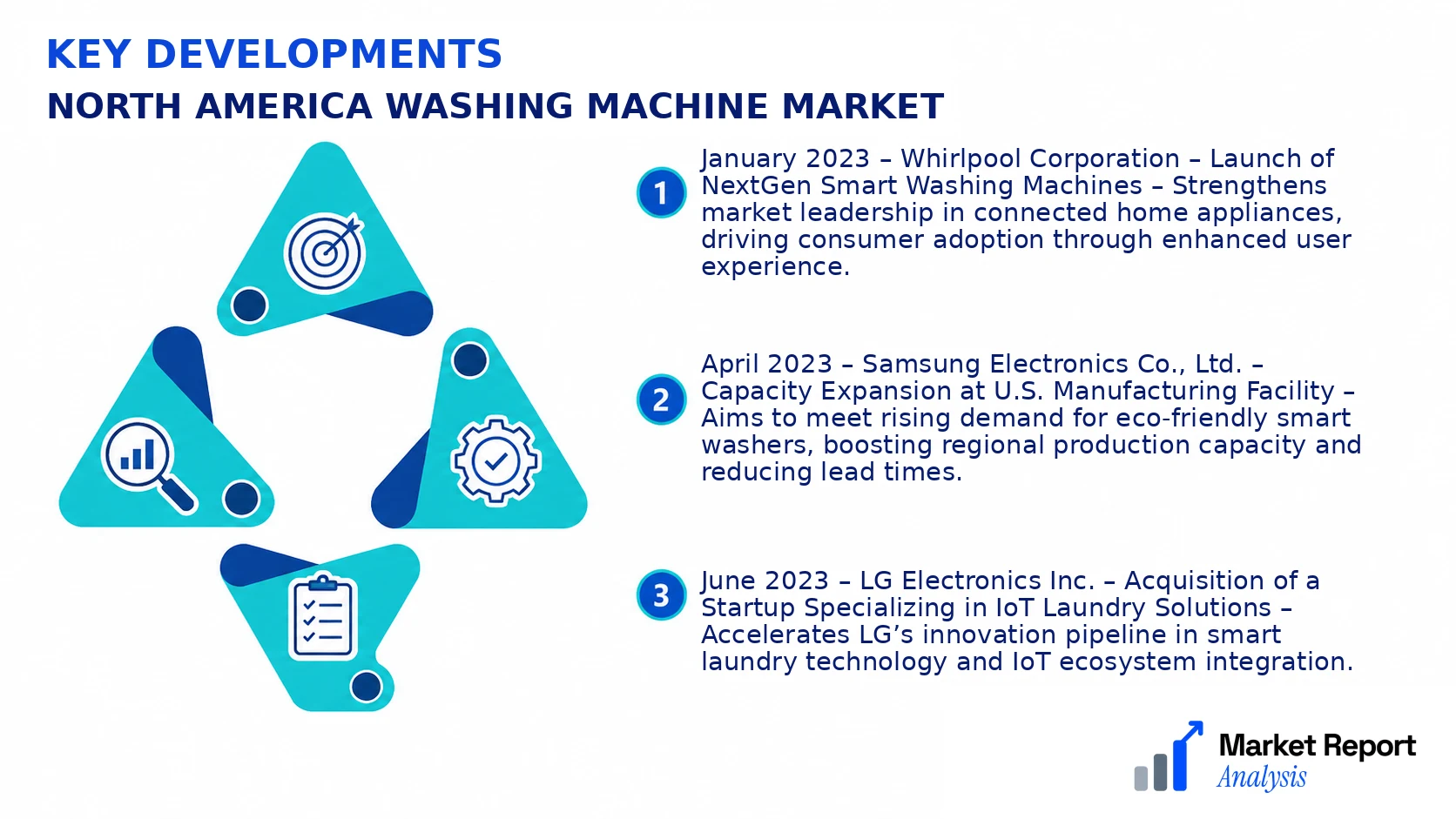
- January 2023 – Whirlpool Corporation – Launch of NextGen Smart Washing Machines – Strengthens market leadership in connected home appliances, driving consumer adoption through enhanced user experience.
- April 2023 – Samsung Electronics Co., Ltd. – Capacity Expansion at U.S. Manufacturing Facility – Aims to meet rising demand for eco-friendly smart washers, boosting regional production capacity and reducing lead times.
- June 2023 – LG Electronics Inc. – Acquisition of a Startup Specializing in IoT Laundry Solutions – Accelerates LG’s innovation pipeline in smart laundry technology and IoT ecosystem integration.
- September 2023 – GE Appliances – Partnership with a Renewable Energy Firm – Launches a solar-powered washing machine line, emphasizing sustainability and energy independence in appliance production.
- November 2023 – Electrolux AB – Implementation of Digital Retail Strategy – Enhances online sales channels and digital customer engagement, expanding market reach and customization options.
Frequently Asked Questions
What is the North America Washing Machine Market?
The North America Washing Machine Market encompasses the industry focused on the manufacturing, distribution, and sales of washing machines across North American countries, including the United States, Canada, and Mexico. It involves various product types, including fully automatic, semi-automatic, and smart washing machines, driven by consumer demand and technological advancements.
What is the current market size of North America Washing Machine Market?
As of 2026, the North America Washing Machine Market is valued at approximately USD 25.4 Billion, reflecting steady growth driven by technological innovation, rising disposable incomes, and increasing demand for energy-efficient and IoT-enabled appliances in residential sectors.
What factors are driving the North America Washing Machine Market?
Key drivers include technological advancements such as smart and connected washing machines, increased consumer focus on efficiency and sustainability, rising urbanization, and a growing preference for convenience and automation in household appliances, complemented by product innovations and marketing strategies.
Which region dominates the North America Washing Machine Market?
The United States dominates the North American washing machine market due to its large consumer base, high disposable income, and technological infrastructure, accounting for a significant share of market revenue and innovation activities in the region.
Which segment is expected to grow the fastest?
The smart washing machine segment is anticipated to grow at the highest CAGR during 2026-2034, supported by increasing adoption of IoT-enabled devices, consumer preferences for automation, and ongoing advancements in connectivity features across premium product offerings.
Who are the leading companies operating in the North America Washing Machine Market?
Major players include Whirlpool Corporation, LG Electronics, Samsung Electronics, GE Appliances, and Electrolux, which lead in innovation, market share, and distribution networks, competing fiercely to capture the evolving needs of North American consumers.
Analyst Perspective
The North America Washing Machine Market is approaching a mature stage with steady yet competitive growth trajectories driven by technological innovation and the escalating demand for smart, energy-efficient appliances. Long-term, the market's evolution hinges on integrating IoT capabilities and eco-friendly features, fostering opportunities for premium product segments. Investment priorities should focus on advanced materials for durability, energy management systems, and connectivity innovations to differentiate offerings. The region's market landscape is marked by high competitive intensity, with established players continuously refining product differentiation and after-sales service. Despite saturation in mature markets like the U.S., emerging growth prospects exist in smaller regional markets and within the commercial segment, including laundromats and hospitality industries. Regional growth potential will predominantly favor urban centers with higher disposable incomes and a trend toward modernization. Strategic players must align with regional regulatory standards and sustainability trends to maintain competitive advantages. Overall, strategic investments in technology and regional expansion are pivotal for sustained growth amid this mature yet innovation-driven marketplace.
