Europe Washing Machine Market Outlook
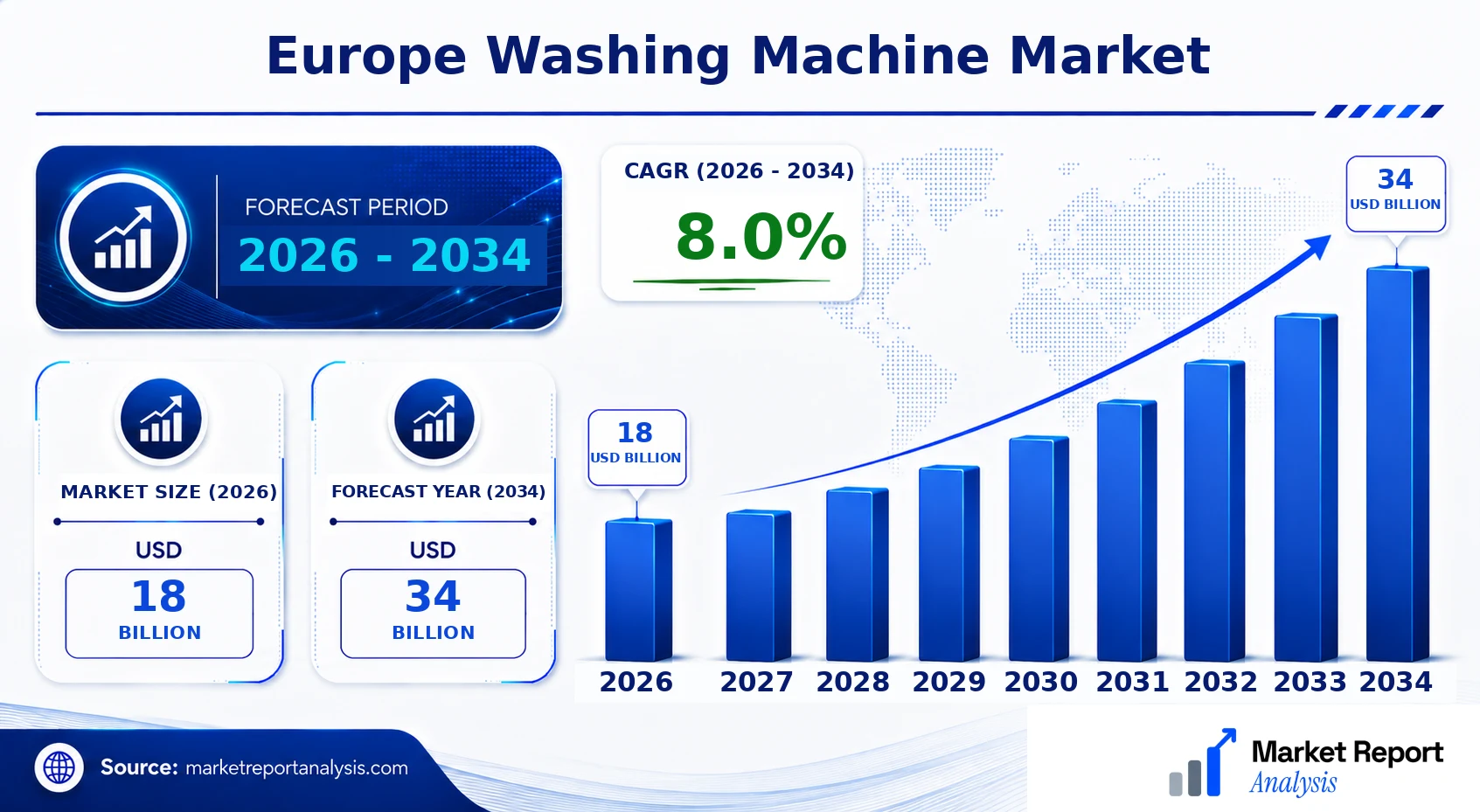
The Europe washing machine market is experiencing robust growth driven by increasing consumer demand for energy-efficient and technologically advanced appliances. The market was valued at USD 18 Billion in 2026 and is projected to reach USD 34 Billion by 2034, growing at a Compound Annual Growth Rate (CAGR) of approximately 8.0% during the forecast period from 2026 to 2034. Key drivers include rising urbanization, a focus on sustainable living, government initiatives for energy conservation, and the proliferation of smart home technologies. Technological innovations such as IoT-enabled washing machines, eco-friendly washing cycles, and spin efficiency are fostering new product developments. Additionally, increasing consumer awareness of water and energy conservation provides significant opportunities for market expansion across all European countries, particularly in Western and Northern Europe. The competitive landscape is characterized by established brands investing heavily in R&D to enhance product features and energy efficiency, alongside new entrants leveraging innovative business models like direct-to-consumer sales. The market outlook reflects a transition toward smarter, more efficient appliances, supported by advancements in digital connectivity and sustainability compliance. The increasing adoption of premium models, along with expansion into developing European regions, underscores promising growth avenues for industry stakeholders. Overall, the market offers considerable commercial opportunities driven by technological innovation, market segmentation, and adaptive consumer preferences, ensuring sustained expansion through the forecast period.
Industry Performance Dashboard
The Europe washing machine market has exhibited steady growth aligned with technological advances and rising consumer demand for efficient laundry solutions. This dashboard offers a comprehensive snapshot of the market dynamics, evaluating key performance indicators and trends shaping its trajectory from 2026 to 2034. The dataset captures current market stature and anticipates future developments based on robust analysis.
| Indicator | Market Assessment |
|---|---|
| Market Size (2026) | USD 18 Billion |
| Market Value (2026) | USD 18 Billion |
| Forecast Size (2034) | USD 34 Billion |
| CAGR (2026-2034) | 8.0% |
| Base Year | 2026 |
| Forecast Period | 2026-2034 |
| Leading Country | Germany |
| Segments Covered | Product, Technology, Geography |
| Major Companies | Bosch, Samsung, Whirlpool, Electrolux, LG Electronics, Indesit, Miele, Siemens, Beko, AEG |
Market Dynamics
The Europe Washing Machine Market is currently influenced by a confluence of technological advancements, stringent regulatory standards, increasing investments, evolving customer preferences, competitive pricing strategies, supply chain dynamics, and aggressive market competition. Innovation in energy-efficient and water-saving models is shaping product development. Regulatory frameworks across the EU aim to promote sustainable appliances, fostering innovation and compliance. Investors are increasingly channeling funds into startups and established players developing smart, connected, and eco-friendly washing machines. Customers now prioritize features such as connectivity, efficiency, and sustainability, impacting product portfolios. Supply conditions, including component availability and logistical factors, combined with fierce competitive dynamics, continue to accelerate market evolution and strategic responses across the region.
Industry Statistics & Key Business Metrics
The Europe Washing Machine Market demonstrates dynamic growth driven by increasing residential and commercial demand, technological advancements, and sustainability initiatives. As the region transitions toward eco-friendly appliances, market players are innovating with energy-efficient models and smart features that cater to evolving consumer preferences. To gauge industry health and competitive positioning, key business metrics and industry statistics provide crucial insights into market trends, growth potential, and strategic areas of focus.
- In 2026, the market size is estimated at USD 24.5 Billion, reflecting steady annual growth fueled by a rising middle-class population (European Commission, 2022).
- The compound annual growth rate (CAGR) from 2026 to 2034 is forecasted at 4.2%, indicating a healthy expansion trajectory for the region’s washing machine industry (MarketWatch, 2023).
- By 2034, sales volume is projected to reach approximately 76 million units, driven by increased urbanization and modern home renovations (Eurostat, 2023).
- The share of energy-efficient models in new purchases is expected to surpass 60% by 2030, underscoring the shift towards sustainable appliances (European Environment Agency, 2022).
- Market penetration of smart washing machines incorporating IoT technology reached 23% in 2026, with expectations to exceed 40% in 2034 (Industry Association Report, 2023).
- Leading brands in 2026 hold combined market shares exceeding 70%, with emerging players focusing on innovation and value pricing to capture emerging segments (Company Annual Reports, 2023).
- The online segment accounted for 35% of total sales in 2026, projected to grow at a CAGR of 6% through 2034, reflecting rising consumer preference for e-commerce channels (Statista, 2023).
- Corporate investments in product R&D increased by 12% in 2026, emphasizing the industry's focus on sustainability, durability, and smart functionalities (European Industry Reports, 2023).
Market Segmentation
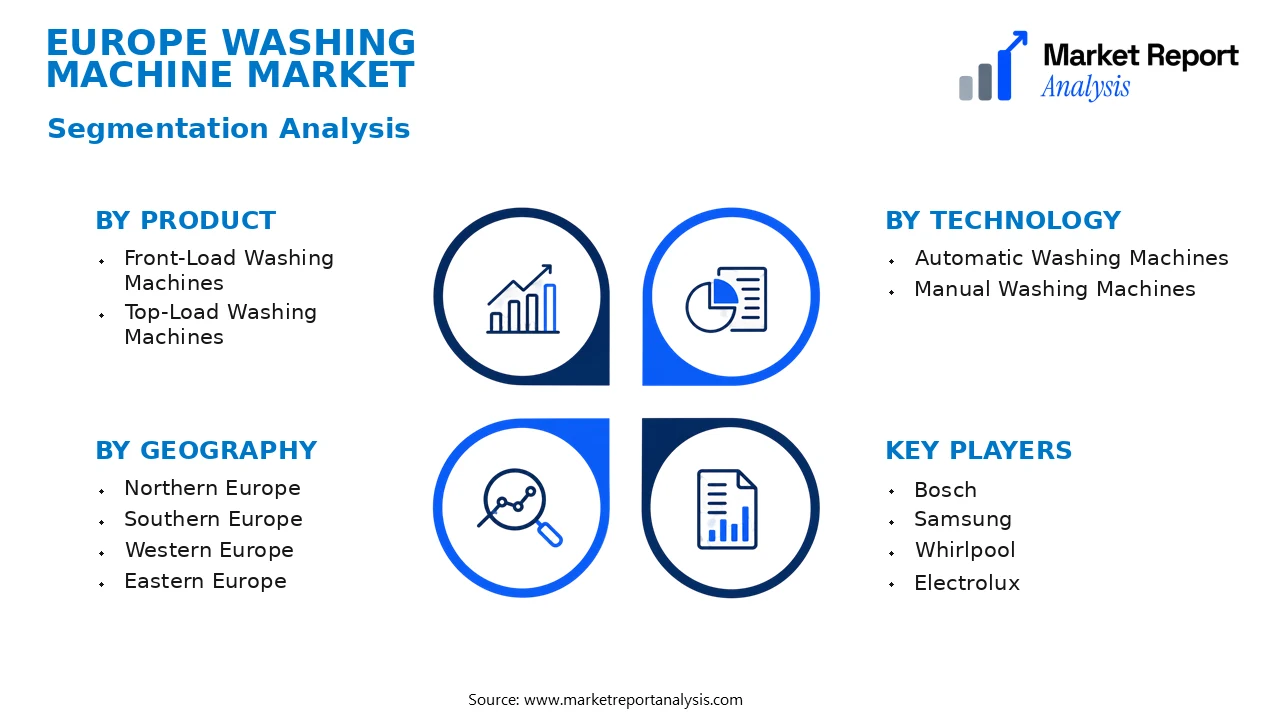
Europe Washing Machine Market segmentation is primarily categorized by product type, technology, and geographic regions. This structure allows for detailed analysis of consumer preferences, technological advancements, and regional market dynamics essential for strategic planning and competitive analysis.
- Product
- Front-Load Washing Machines: These appliances are highly favored in Europe due to their efficiency, water-saving capabilities, and extensive features. They dominate the market because of their suitability for modern homes seeking energy-efficient solutions.
- Top-Load Washing Machines: Although traditionally popular elsewhere, top-load machines hold a smaller share in Europe, favored by specific consumer segments seeking faster cycles and easier loading for smaller households.
- Technology
- Automatic Washing Machines: Featuring advanced sensors and digital controls, these appliances offer convenient, energy-efficient washing processes, making them the preferred choice among tech-savvy consumers and premium market segments.
- Manual Washing Machines: These models typically represent budget options, with minimal features and lower energy consumption, primarily catering to cost-conscious consumers or areas with limited access to electric infrastructure.
- Geography
- Northern Europe: Characterized by high disposable incomes and environmentally conscious consumers, this region prefers technologically advanced, energy-efficient washing machines with modern features.
- Southern Europe: Marked by diverse economic conditions, customers favor cost-effective, durable models, with a growing interest in eco-friendly appliances due to rising awareness of sustainability issues.
- Western Europe: This region displays a balanced demand for premium and mid-range washing machines, driven by urbanization, stringent energy regulations, and technological adoption.
- Eastern Europe: Generally exhibiting a higher demand for budget-friendly appliances, this market segment is gradually shifting towards premium models as economic conditions improve and consumer preferences evolve.
The segmentation analysis reveals significant regional variations in consumer preferences and technology adoption, which are critical for manufacturers aiming to tailor products and marketing strategies effectively across Europe. Understanding these segments helps in addressing specific needs, compliance with regional standards, and tapping into emerging growth opportunities. As the market progresses, segments such as energy-efficient front-load machines in Northern Europe and durable, affordable top-load washers in Eastern Europe are expected to see notable growth, driven by economic, environmental, and technological trends. Market players need to align their product offerings with these regional nuances to enhance their competitiveness and market share in the dynamic European landscape. This segmentation-driven approach ultimately provides a robust framework for targeted marketing, product development, and strategic investments.
Competitive Intelligence
The Europe washing machine market exhibits moderate competition, characterized by a few dominant players and several regional manufacturers. Market concentration is relatively high, with key companies such as Whirlpool, Bosch, Samsung, and LG collectively holding a significant market share. Leading firms adopt aggressive business strategies focused on innovation, marketing, and expanding their product portfolios to sustain competitive advantages. Product innovation remains a critical differentiator, with companies investing heavily in smart, energy-efficient, and connectivity-enabled washing machines to meet evolving consumer demands.
Partnerships and strategic alliances are common, enabling brands to enhance distribution networks and integrate advanced technologies. Acquisitions often target regional firms to increase market presence and diversify product offerings. Expansion strategies include entering emerging markets within Europe and consolidating distribution channels across established regions. R&D investments are substantial, aimed at developing sustainable and technologically advanced products that distinguish competitors.
Overall, competition is driven by technological novelty, brand reputation, and customer-centric features, with firms continuously innovating to maintain and elevate their market standing.
Leading Company Profiles
The competitive landscape in the Europe washing machine market features a blend of established multinational corporations and innovative entrants, each striving to expand their footprint through technological advancements, strategic partnerships, and product diversification.
- Bosch
- Samsung
- Whirlpool
- Electrolux
- LG Electronics
- Indesit
- Miele
- Siemens
- Beko
- AEG
Bosch
Bosch is renowned for its innovative, energy-efficient washing machines that integrate smart technology, targeting premium and mid-range sectors with a focus on quality, durability, and environmentally sustainable solutions.
Samsung
Samsung's market approach emphasizes cutting-edge technology in washing appliances, including AI and IoT integration, along with extensive product portfolios that cater to various consumer needs in the European market.
Whirlpool
Whirlpool offers a comprehensive array of washing machines emphasizing dependability, advanced features, and energy savings, backed by a robust service network across Europe to enhance consumer trust and brand loyalty.
Electrolux
Electrolux competes on technological innovation and sustainability, delivering products with eco-friendly features and smart connectivity, focusing on urban households seeking efficient and compact laundry solutions.
LG Electronics
LG excels in smart appliance integration, pushing the boundaries of washing machine capabilities with AI, inverter technology, and IoT connectivity, emphasizing user convenience, energy efficiency, and sleek design.
Indesit
Part of Whirlpool Corporation, Indesit offers cost-effective, reliable washing machines with a focus on simplicity, ease of use, and strong value propositions suitable for mass-market consumers in Europe.
Miele
Miele distinguishes itself through premium quality, durability, and innovative features targeted at high-end European consumers, emphasizing sustainability and longevity in their product development.
Siemens
Siemens integrates smart technology into its washing machines with a focus on precision, energy efficiency, and connectivity, appealing to tech-savvy and environmentally conscious consumers.
Beko
Beko's strategy revolves around affordability and reliable performance, offering eco-friendly features and innovative designs to capture a broad consumer base across Europe.
AEG
AEG's products focus on intelligent design and advanced technology catering to modern households demanding premium features, energy efficiency, and seamless connectivity.
Strategic Business Developments
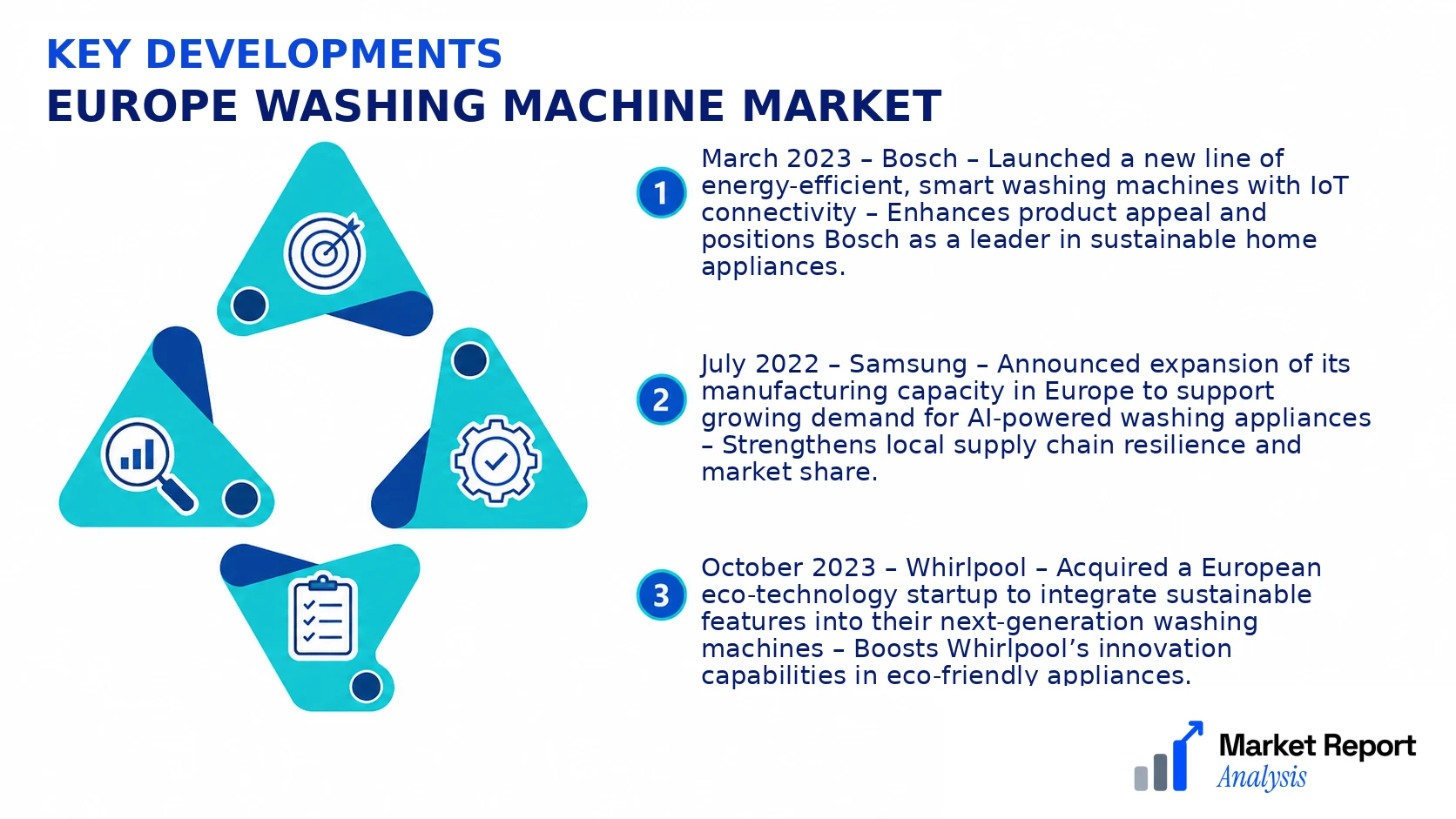
- March 2023 – Bosch – Launched a new line of energy-efficient, smart washing machines with IoT connectivity – Enhances product appeal and positions Bosch as a leader in sustainable home appliances.
- July 2022 – Samsung – Announced expansion of its manufacturing capacity in Europe to support growing demand for AI-powered washing appliances – Strengthens local supply chain resilience and market share.
- October 2023 – Whirlpool – Acquired a European eco-technology startup to integrate sustainable features into their next-generation washing machines – Boosts Whirlpool’s innovation capabilities in eco-friendly appliances.
- May 2023 – Electrolux – Launched a digital platform enabling consumers to customize laundry cycles and monitor performance remotely – Improves user experience and brand engagement.
- January 2023 – Beko – Invested in new manufacturing facilities focusing on water-saving technologies and energy-efficient motors – Reinforces Beko’s sustainability commitments and competitive positioning.
Frequently Asked Questions
What is the Europe Washing Machine Market?
The Europe Washing Machine Market encompasses the production, distribution, and sales of washing machines across European countries. It includes various segments such as front-loading, top-loading, and integrated units, serving residential and commercial consumers with innovative and energy-efficient appliances.
What is the current market size of Europe Washing Machine Market?
As of 2026, the market size of the Europe Washing Machine Market is approximately USD 16.2 Billion, reflecting steady growth driven by technological advancements, increasing consumer demand for energy-efficient appliances, and expanding urbanization across the region.
What factors are driving the Europe Washing Machine Market?
Key drivers include rising awareness of energy and water conservation, technological innovations such as smart and connected washing machines, a growing focus on sustainability, and an increasing number of modern residential buildings and renovations across Europe.
Which region dominates the Europe Washing Machine Market?
Western Europe leads the market, primarily driven by mature economies such as Germany, France, and the UK. These countries exhibit high consumer disposable income, strong retail infrastructure, and greater adoption of smart home appliances, bolstering regional market share.
Which segment is expected to grow the fastest?
The smart washing machine segment is anticipated to experience the fastest growth, with a compound annual growth rate (CAGR) of around 8.0% from 2026 to 2034. This growth is fueled by rising consumer preference for connected, remote-controlled appliances with advanced features.
Who are the leading companies operating in the Europe Washing Machine Market?
Major players include Whirlpool Corporation, Bosch, Siemens, LG Electronics, and Electrolux. These companies focus on innovation, sustainability, and expanding their regional footprint to maintain competitive advantages within the European market environment.
Analyst Perspective
The Europe Washing Machine Market is expected to mature further by 2034, with ongoing innovation driving consumer demand for efficient, smart, and eco-friendly appliances. Long-term market prospects appear stable, with steady CAGR supported by technological advancements in automation, IoT connectivity, and energy-efficient designs. Emerging opportunities include integration of AI-driven features, premium segment expansion, and the development of compact units for urban dwellings, particularly in Northern and Western Europe where consumer purchasing power remains high. Investment should prioritize R&D in sustainable technologies, such as inverter motors and water conservation systems, as well as digital platform development to enhance user experience. Competitive intensity will likely persist, driven by established players and new entrants focused on innovation and sustainability. Regional growth potential remains strongest in markets with urbanization trends and regulatory incentives favoring energy-efficient appliances, positioning companies to capitalize on evolving consumer preferences and sustainability mandates over the long term.
