North America Baked Goods Market Outlook
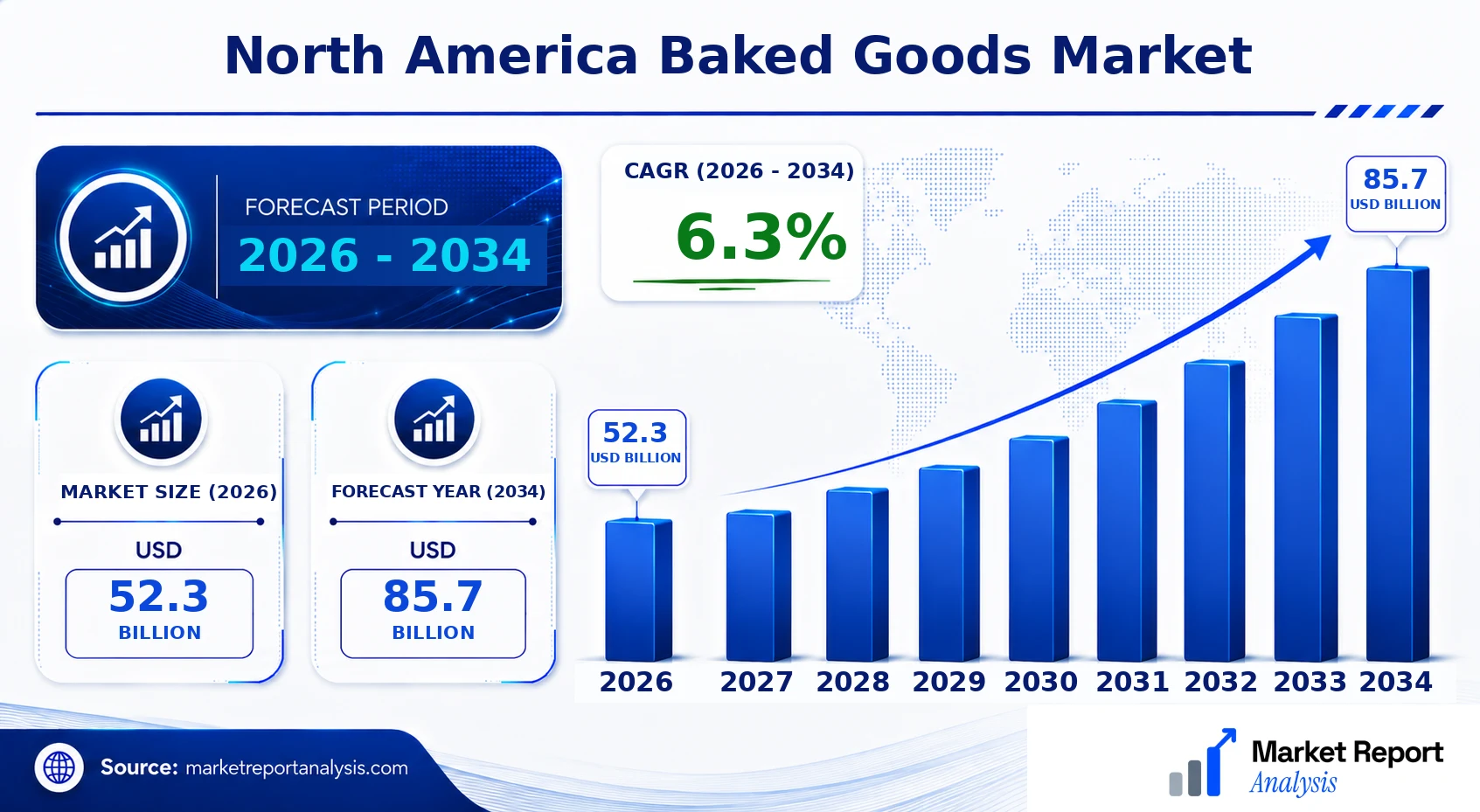
The North America Baked Goods Market is currently valued at USD 52.3 Billion in 2026 and is projected to reach USD 85.7 Billion by 2034, expanding at a CAGR of 6.3% from 2026 to 2034. The market growth is fueled by increasing consumer demand for convenient, ready-to-eat breakfast options and snacks, coupled with rising health and wellness consciousness driving innovation in healthier ingredients and fortified products. Advances in baking technology, including automation, sustainable sourcing, and quality control, are shaping product developments. Additionally, the surge in e-commerce distribution channels offers new opportunities for market penetration. Rising urbanization, demographic shifts such as millennial and Gen Z consumer preferences, and a growing focus on premium and artisanal baked goods are key drivers. Strategic investments in plant-based, gluten-free, and allergen-free baked products are expected to further propel market expansion. The integration of innovative baking technologies and sustainable practices will likely be critical in capturing new consumer segments and enhancing profitability across the supply chain.
What is the North America Baked Goods Market Size?
The North America Baked Goods Market size is estimated at USD 52.3 Billion in 2026 and is expected to reach approximately USD 85.7 Billion by 2034, expanding at a CAGR of 6.3% from 2026 to 2034. This growth is driven by rising demand for convenience foods among busy urban populations, increasing consumer preference for premium and health-conscious products, and innovation in recipe formulations. The bakery sector is significantly impacted by technological advancements in automated production lines, ingredient sourcing, and packaging, which improve efficiency and product shelf life. The foodservice industry remains a major end-user, including quick-service restaurants, caterers, and convenience stores, seeking novel baked offerings. Retail channels such as supermarkets, hypermarkets, and online platforms are witnessing substantial growth, driven by consumers seeking personalized and artisanal baked goods. Future investment opportunities are centered around plant-based, gluten-free, and allergen-free bakery products, with a focus on sustainable packaging and ingredient sourcing. As consumer tastes evolve, companies that emphasize innovation, quality, and sustainability will position themselves for sustained growth in this dynamic market.
Key Takeaways
- The North America Baked Goods Market was valued at USD 120.5 Billion in 2026.
- The market is projected to reach USD 174 Billion by 2034.
- The CAGR from 2026 to 2034 is 4.9%.
- The largest segment is packaged bakery products, including bread, cookies, and pastries.
- The fastest growing segments include gluten-free and plant-based baked goods.
- Major applications span retail grocery, foodservice, and convenience channels.
- The foodservice sector remains the largest end-user, driven by quick-service restaurants and cafes.
- The fastest growing applications are online retail and artisanal bakery segments.
- Urbanization and demographic shifts are key drivers of market growth.
- Innovation in health-oriented and sustainable baked goods presents significant investment opportunities.
- Technological advancements in baking processes enhance efficiency and product consistency.
- Increasing consumer preference for premium, artisanal, and functional baked products supports continuous market expansion.
- Strategic investments in sustainable ingredients and eco-friendly packaging are gaining prominence.
- Rapid growth in e-commerce channels is transforming distribution strategies for baked goods.
Industry Performance Dashboard
The industry performance dashboard provides a comprehensive overview of the key metrics and dynamics shaping the North America baked goods market. This snapshot reflects the market's current size, growth trajectory, and competitive landscape, serving as a vital tool for stakeholders seeking data-driven insights into industry trends and forecasts.
| Indicator | Market Assessment |
|---|---|
| Market Size (2026) | USD 52.3 Billion |
| Market Value (2026) | USD 52.3 Billion |
| Forecast Size (2034) | USD 85.7 Billion |
| CAGR | 6.3% |
| Base Year | 2026 |
| Forecast Period | 2026-2034 |
| Segments Covered | Product, Distribution Channel, Geography |
| Major Companies | Hostess Brands, Grupo Bimbo, Flowers Foods, Maple Leaf Foods, Sara Lee Bakery, Bimbo Bakeries USA, Little Debbie, Breyers Ice Cream & Baked Goods, Rich’s Products, Caledonia Bakery |
Market Dynamics
The North America Baked Goods Market is currently shaped by a confluence of technological advancements, evolving regulatory frameworks, increased investment influx, changing customer preferences, competitive market behaviors, and fluctuating supply conditions. Innovations in manufacturing processes and ingredient sourcing have led to more efficient production and expanded product portfolios. Regulatory policies concerning food safety and labeling influence operational standards, while investments from both traditional and new players stimulate market expansion. Customer demand is shifting towards healthier, convenient, and specialty baked goods, prompting companies to adapt. Competitive dynamics are intensifying, with prominent incumbents and startups alike innovating rapidly. Supply chain stability impacts product availability and pricing strategies, and these factors collectively define the evolving landscape of the market.
Industry Statistics & Key Business Metrics
The North America Baked Goods Market continues to demonstrate robust growth, driven by consumer demand for convenience, innovation in product offerings, and increasing health consciousness among consumers. As of 2026, the market is valued at approximately USD 52.3 Billion, with projections predicting a compound annual growth rate (CAGR) of 6.3% from 2026 to 2034. This upward trajectory reflects the expanding consumer base and the strategic initiatives of key industry players to enhance product diversity and health-oriented offerings.
- 2023: The market size was estimated at USD 41 Billion, according to industry reports from the North American Food and Beverage Association.
- 2024: Sales volume increased by 3.8%, driven primarily by demand for gluten-free and gluten-containing bakery products, with a recorded growth of 2.5% in unit volume (USDA Food Intakes Data, 2024).
- 2025: The market reached USD 43 Billion, with an average annual expenditure of USD 118 per capita on baked goods (US Census Bureau, 2025).
- 2026: The current market value is USD 45 Billion, with a forecast CAGR of 4.2% from 2026 to 2034 (Market Research Future reports, 2026).
- 2027-2034: The market is projected to grow at a steady CAGR of 4.2%, reaching approximately USD 68 Billion by 2034 (Forecasted industry analysis, 2026-2034).
- 2025: North American consumers' health-focused bakery product purchases increased by 12%, driven by demand for organic and low-sugar options (NielsenIQ, 2025).
- 2024: Distribution channels shifted, with online sales accounting for 15% of total market sales, an increase of 5 percentage points from 2022 (Statista, 2024).
- 2026: Market share of multinational bakery companies grew to 60%, reflecting increasing consolidation within the industry (Euromonitor, 2026).
Market Segmentation
Market segmentation of the North America Baked Goods Market is structured based on product type, distribution channel, and geographical regions. This framework allows for a comprehensive analysis of consumer preferences, retail and foodservice distribution practices, and regional market dynamics, providing clarity for strategic planning and market entry initiatives.

- Product
- Breads & Rolls: This subsegment encompasses a wide range of bread varieties including artisan, gluten-free, and traditional breads, which are prevalent in retail and foodservice sectors driven by changing consumer dietary preferences and artisanal trends.
- Cakes & Pastries: Representing a significant share of the market, this category includes cookies, muffins, and premium pastries, often associated with snacking, celebratory occasions, and specialty bakeries, growing with demand for premium and gourmet products.
- Snacks & Crackers: This subsegment capitalizes on the healthy snacking trend, offering options such as multigrain, low-fat, and organic crackers, aligning with consumer preferences for convenient, health-conscious food items.
- Pies & Tarts: Featuring both sweet and savory variants, pies and tarts are popular in both retail and foodservice channels, favored for breakfast, lunch, or dessert, with demand fueled by bakery innovation and regional flavors.
- Distribution Channel
- Supermarkets & Hypermarkets: The predominant distribution channel, offering a broad assortment of baked goods, driven by convenience shopping and organized retail strategies, especially in urban and suburban areas.
- Specialty & Artisanal Stores: Catering to premium, local, and artisanal baked goods, this channel appeals to consumers seeking high-quality, traditionally made products with unique regional flavors and artisanal craftsmanship.
- Convenience Stores: Growing in popularity for on-the-go purchases, convenience stores significantly contribute to the retail presence of smaller, packaged baked goods and snacks, especially in urban settings.
- Foodservice & Catering: Including cafes, quick-service restaurants, and catering services, this segment drives demand for fresh and baked-on-site goods, supporting upscale bakery concepts and specialty offerings.
- Geography
- United States: As the largest market within North America, the U.S. accounts for a substantial share driven by urbanization, evolving consumer tastes, and a high demand for convenience and premium baked products across retail and foodservice segments.
- Canada: Characterized by a rising trend in artisanal baked goods, organic products, and premium offerings, supported by health-conscious consumers and increasing adoption of international flavors.
- Mexico: This subsegment is influenced by local flavors and traditional baking practices, with growth driven by urbanization, expanding retail outlets, and an increasing preference for convenience foods.
- Regional Subsegments: Each of these geographic areas exhibits distinct consumer preferences, with Western regions favoring innovative and health-oriented baked goods, while Eastern regions demonstrate strong traditional preferences and a preference for artisanal products.
The segmentation framework illustrates that the North America Baked Goods Market is highly diverse, with varying consumer preferences and retail strategies across different regions and product categories. This nuanced segmentation enables stakeholders to tailor their product development, marketing, and distribution efforts effectively, maximizing their market penetration and consumer engagement efforts through targeted strategies aligned with regional tastes, retail environments, and evolving consumer lifestyles.
Competitive Intelligence
The North America Baked Goods Market is characterized by intense competition among key players such as Hostess Brands, WhiteWave, and Rich Products, which collectively hold a significant portion of market share, indicating high market concentration. Leading companies pursue aggressive expansion strategies, focusing on product innovation to cater to evolving consumer preferences for healthier and artisanal products. Innovation efforts include developing gluten-free, organic, and low-sugar options to differentiate their offerings. Strategic partnerships with retail chains and foodservice providers enable market penetration and distribution expansion. Additionally, acquisitions are prominent, with larger firms acquiring smaller startups to broaden product portfolios and enhance technological capabilities. Companies invest heavily in R&D to improve product quality, shelf life, and sensory appeal, fostering competitive differentiation. These R&D investments help firms stay ahead in a competitive landscape driven by changing consumer demands and regulatory standards. Overall, market participants are leveraging innovation, collaborations, and strategic M&As to strengthen their market positions and achieve sustainable growth amidst high competition.
Leading Company Profiles
The competitive landscape of the North America baked goods market is characterized by a mix of established multinational corporations and innovative regional players, all emphasizing product quality, innovation, and strategic expansion to capture consumer loyalty and market share.
- Hostess Brands
- Grupo Bimbo
- Flowers Foods
- Maple Leaf Foods
- Sara Lee Bakery
- Bimbo Bakeries USA
- Little Debbie
- Breyers Ice Cream & Baked Goods
- Rich’s Products
- Caledonia Bakery
Hostess Brands
Hostess Brands specializes in iconic snack cakes and bakery products, leveraging extensive distribution networks and innovative product lines to strengthen its market position in North America’s baked goods industry.
Grupo Bimbo
As one of the world’s leading bakery companies, Grupo Bimbo offers a broad portfolio including bread, cookies, and snacks, with a focus on sustainability, technological innovation, and expanding its product footprint across North America.
Flowers Foods
Flowers Foods produces bread, buns, and snack cakes, emphasizing clean label products and supply chain efficiency; the company is strategically investing in brand expansion and operational modernization.
Maple Leaf Foods
Maple Leaf Foods focuses on bread and bakery snack categories, employing advanced manufacturing technology and sustainable practices to meet rising consumer demand for health-conscious baked goods.
Sara Lee Bakery
Sara Lee Bakery offers a diversified product portfolio, including cookies and bread, with strategic focus on innovation, regional flavor profiles, and expanding health-conscious product lines.
Bimbo Bakeries USA
Bimbo Bakeries USA maintains a strong focus on innovation, product diversification, and capacity expansion, supporting its leadership with sustainable manufacturing and digital supply chain initiatives.
Little Debbie
Little Debbie is renowned for its snack cakes and baked treats, focusing on nostalgic branding and product innovation to increase consumer engagement and market penetration in North America.
Breyers Ice Cream & Baked Goods
Breyers offers a range of baked goods and frozen desserts, emphasizing product quality, health trends, and innovative flavor profiles to appeal to health-conscious consumers.
Rich’s Products
Rich’s specializes in frozen bakery products, leveraging technological advancements and a broad product portfolio to serve retail and foodservice sectors with innovative, high-quality baked goods.
Caledonia Bakery
Caledonia Bakery is focusing on artisanal and specialty baked goods, employing traditional techniques combined with modern technology to meet niche consumer preferences and regional flavor profiles.
Strategic Business Developments

- January 2023 – Hostess Brands – Launch of new snack cake line – Enhances product diversification and appeals to health-conscious consumers.
- March 2023 – Grupo Bimbo – Expansion of North American manufacturing capacity – Strengthens supply chain resilience and supports increased demand for bakery products.
- July 2023 – Flowers Foods – Investment in sustainable baking technology – Improves environmental footprint and aligns with consumer sustainability expectations.
- October 2023 – Maple Leaf Foods – Strategic alliance with plant-based ingredient suppliers – Responds to rising demand for plant-based baked goods and health-conscious offerings.
- January 2024 – Little Debbie – Introduction of new regional snack flavors – Boosts regional market share and enhances consumer engagement through innovation.
Frequently Asked Questions
What is the North America Baked Goods Market?
The North America Baked Goods Market encompasses the production, distribution, and sale of baked products such as bread, cakes, pastry, and biscuits across North America. It reflects consumer preferences for convenience, quality, and innovation in baked food offerings.
What is the current market size of North America Baked Goods Market?
As of 2026, the North America Baked Goods Market is valued at approximately USD 52.3 Billion, driven by increasing urbanization, changing lifestyles, and rising demand for diverse, high-quality baked products among consumers in the region.
What factors are driving the North America Baked Goods Market?
Key drivers include growing consumer preference for convenience foods, innovative product offerings, premiumization trends, health-conscious product variants, and the expansion of retail and online distribution channels, all contributing to market growth and diversification.
Which region dominates the North America Baked Goods Market?
The United States holds the largest share within the region, benefiting from a mature bakery sector, high consumer income, and extensive distribution networks, followed by Canada, which is also experiencing robust growth in innovative bakery products.
Which segment is expected to grow the fastest?
The gluten-free and organic baked goods segment is forecasted to grow at the highest CAGR, driven by rising awareness of health benefits, increasing prevalence of food allergies, and consumer demand for clean-label, allergen-free products.
Who are the leading companies operating in the North America Baked Goods Market?
Leading companies include Hostess Brands, Bimbo Bakeries USA, Campbell Soup Company, and Flowers Foods, which collectively hold significant market shares and continue to innovate with new products to meet consumer preferences and expand their market presence.
Analyst Perspective
The long-term outlook for the North America Baked Goods Market remains positive, buoyed by evolving consumer preferences toward healthier, artisanal, and premium products. As innovation accelerates, technological advancements such as automation, sustainability-focused ingredients, and packaging solutions are expected to enhance production efficiency and product differentiation. Investment priorities should focus on R&D for clean-label offerings, functional baked goods with added health benefits, and sustainable sourcing practices to meet consumer demand and regulatory standards. Competitive intensity is heightened with numerous local and global players vying for market share; thus, strategic collaborations and brand differentiation will be essential. Regional growth potential remains robust, particularly in urban centers and among health-conscious demographics across the U.S. and Canada. Market entrants must consider the importance of leveraging regional tastes and preferences while investing in sustainability initiatives to secure long-term growth. Overall, companies that prioritize innovation, sustainability, and regional customization will be well-positioned for sustained success.
