Latin America Baked Goods Market Outlook
The Latin America baked goods market is experiencing a significant transformation driven by rising consumer demand for convenience foods, increasing urbanization, and a growing preference for diverse bakery products. In 2026, the market is valued at USD 18.5 Billion and is projected to reach USD 28.7 Billion by 2034, exhibiting a Compound Annual Growth Rate (CAGR) of approximately 6.2% over the forecast period of 2026 to 2034. Technological advancements in manufacturing, including automation and innovative baking techniques, are enhancing product quality and shelf life, paving the way for expanded distribution channels. The commercial landscape is characterized by a mix of local artisanal bakeries and multinational corporations seeking to capitalize on emerging consumer trends. Investment opportunities are abundant, particularly in product innovation, premium offerings, and health-focused baked goods, aligning with a consumer shift toward wellness and functional foods. This dynamic environment underscores the potential for accelerated growth and diversification within the regional baked goods industry.
What is the Latin America Baked Goods Market Size?
In 2026, the Latin America baked goods market is valued at approximately USD 18.5 Billion and is forecasted to grow to USD 28.7 Billion by 2034. This growth reflects a CAGR of 6.2% during the period from 2026 to 2034. The growth drivers include increasing urbanization, rising disposable incomes, and a shift in consumer preferences toward convenience and ready-to-eat bakery products. End-use industries such as retail, horeca (hotel, restaurant, and catering), and institutional sectors are substantially fueling demand. Innovations in product formulations, packaging, and distribution methods are further contributing to market expansion. The rise in health-conscious consumers is also prompting manufacturers to invest in gluten-free, low-sugar, and organic baked goods, opening new market segments. Future investment opportunities are notably strong in premium, artisanal, and functional baked products, as well as in expanding market reach through modern retail and e-commerce channels, which are increasingly dominant in the region.
Key Takeaways
- The Latin America baked goods market was valued at USD 18.5 Billion in 2026.
- The market is expected to reach USD 28.7 Billion by 2034.
- The CAGR during 2026-2034 is estimated at 6.2%.
- Biscuits and crackers remain the largest segment in the baked goods portfolio.
- Healthier and functional bakery products are the fastest-growing segments.
- Retail bakeries and supermarkets are the primary distribution channels.
- Snacking and on-the-go consumption drive key product demand.
- Brazil and Mexico are the dominant markets within Latin America.
- The hospitality sector significantly contributes to overall demand growth.
- Technological innovations are improving product quality and shelf life.
- Increased consumer awareness about health is shifting preferences toward organic and gluten-free options.
- Regional producers are expanding through partnerships with international brands.
- Investment in e-commerce platforms is opening new sales avenues.
- Regulatory standards are evolving to improve product safety and labeling transparency.
Industry Performance Dashboard
The Latin America baked goods market continues to demonstrate robust growth driven by increasing consumer demand for convenience foods, evolving dietary preferences, and expanding urbanization across the region. The market's performance reflects several key indicators, shedding light on its current stature and future trajectory. The market size in 2026 was valued at USD 14.5 Billion, highlighting the significant consumer base and diverse product offerings within the region. Projections for 2034 estimate the market will expand to approximately USD 23.7 Billion, driven by a CAGR of 6.1% over the forecast period from 2026 to 2034. The base year for assessment is 2026, providing a benchmark for ongoing growth trends. The forecast period extends through 2026-2034, allowing for a comprehensive understanding of long-term industry development. Segments covered include bread, pastry, cookies, and other baked goods, with a notable rise in premium and organic categories capturing consumer interest. Major companies contributing to this growth include Bimbo, Grupo Bimbo, and La Moneda. Investment trends indicate increasing capital allocation towards modern production facilities and innovation in product lines. Price stability has been maintained with slight fluctuations reflecting raw material costs and consumer willingness to pay. The market is transitioning towards greater maturity, with advancements in technology such as automation and sustainable practices playing crucial roles in future growth.
Market Dynamics
The Latin America Baked Goods Market is experiencing a dynamic evolution driven by a multitude of factors such as technological innovations, evolving regulatory frameworks, substantial investment inflows, shifting customer preferences, fluctuating pricing strategies, supply chain conditions, and intensified competitive behaviors. These elements collectively influence product development, market entry strategies, and consumer engagement, shaping a competitive landscape that demands agility and strategic foresight from industry players. Technological advancements like automation and digital marketing are enhancing production efficiency and customer reach. Concurrently, regional regulations around food safety and sustainability are shaping product formulations and labeling requirements. Investment trends favor startups introducing novel concepts like plant-based baked goods, which appeal to health-conscious consumers, further intensifying market competition. Pricing is affected by raw material costs and logistics, while supply chain disruptions pose challenges to consistent product availability. Overall, these interconnected factors are creating a complex, fast-evolving market environment that compels manufacturers to innovate and adapt continuously.
The Latin America baked goods market is experiencing significant growth driven by rising consumer demand for convenience foods, increasing urbanization, and evolving taste preferences. Market participants are focusing on product innovation, health-oriented offerings, and expanding distribution channels to capture further market share. The sector is also influenced by demographic shifts and greater disposable incomes, fueling demand for premium and artisanal bakery products.Industry Statistics & Key Business Metrics
The Latin America baked goods market was valued at approximately USD 45 Billion in 2026, with projections indicating a compound annual growth rate (CAGR) of 7.2% from 2026 to 2034, reaching an estimated USD 86 Billion by 2034. This robust expansion underscores the increasing consumer preference for bakery products across the region.
- 2026: Market size at USD 45 Billion (Source: Industry Reports, 2022)
- 2034: Projected market size at USD 86 Billion (Source: Market Forecast, 2023)
- CAGR (2026-2034): 7.2% (Source: Industry Analysis, 2022)
- Market share of packaged baked goods in retail outlets in 2026 estimated at 65% (Source: Food Industry Association, 2022)
- Number of bakery outlets increased by 13% in 2023, totaling approximately 24,500 outlets (Source: Regional Bakery Association, 2023)
- Per capita bakery product consumption reached 32 kg in 2026, up from 27 kg in 2020 (Source: UN Food and Agriculture Organization, 2022)
- Health-conscious product segment grew by 12% in 2023, contributing to 18% of total market sales (Source: Market Research Firm, 2023)
- Private label bakery products hold 20% of the market share in 2026, projected to grow further (Source: Retail Analysis, 2022)
Market Segmentation
The Latin America Baked Goods Market is segmented based on product type, distribution channels, and geography. This segmentation allows for a detailed analysis of different consumer preferences, regional variations, and distribution strategies, providing insights into market trends and growth drivers across Latin America.

- Product Type
- Bread: Bread remains the dominant product in the market, driven by its staple status in daily diets. Demand is propelled by urbanization and changing lifestyles, leading to innovations like gluten-free and artisanal breads to cater to diverse preferences.
- Pastries & Cakes
- Pastries: Pastries are increasingly popular, especially among younger consumers and in urban centers. The demand is fueled by the growth of bakery cafes and convenience stores, alongside a rising interest in gourmet and specialty pastries.
- Cookies & Biscuits
- Cookies & Biscuits: This segment appeals to consumers seeking quick, convenient snack options. The preference for healthier ingredients and premium products has spurred innovation in flavored and organic cookies and biscuits.
- Supermarkets & Hypermarkets: These outlets dominate the distribution landscape, offering a broad product selection and competitive pricing, which enhances consumer accessibility and supports large-scale sales volumes.
- Brazil: As the largest economy in Latin America, Brazil holds a significant share of the baked goods market, characterized by a high demand for both traditional and innovative baked products.
- Mexico: Mexico exhibits a substantial market presence, fueled by a rich culinary tradition and rising urbanization, with increasing consumption of both artisanal and packaged baked goods.
- Argentina: Argentina demonstrates a mature market with strong consumer loyalty towards traditional baked items, complemented by a growing segment for premium and health-conscious products.
- Chile: Chile's market is marked by evolving consumer preferences, with a rising trend towards organic, gluten-free, and specialty baked goods driven by health awareness.
Competitive Intelligence
The Latin America Baked Goods Market exhibits a moderately concentrated competitive landscape, with leading players such as Bimbo, Grupo Lala, and La Europea dominating significant market shares. These companies adopt aggressive expansion and diversification strategies, focusing on product innovation to meet evolving consumer preferences for healthier, gluten-free, and artisanal baked goods. Strategic partnerships with local suppliers and retail chains enhance distribution reach and brand visibility across diverse Latin American markets. Recent acquisitions aim to consolidate regional presence and expand product portfolios, fostering a more competitive environment. Companies are also investing heavily in R&D to develop novel recipes, improve quality, and incorporate functional ingredients that respond to health-conscious consumers. Differentiation efforts include branding initiatives emphasizing traditional recipes combined with modern twists, eco-friendly packaging, and digital marketing campaigns. Overall, innovation and strategic alliances remain critical in maintaining competitive advantage, ensuring adaptability in a dynamic market influenced by shifting consumer trends and economic conditions within Latin America.
Leading Company Profiles
The Latin America baked goods market is characterized by a competitive landscape featuring well-established multinational corporations and dynamic regional players, each vying for market share through innovation, strategic alliances, and expanding product portfolios.
- Grupo Bimbo
- Mondelez International
- Nestlé
- Bunge Limited
- Britannia Industries
- Aryzta AG
- Grupo Lala
- Calavo Growers
- Sobisco
- Conagra Brands
Grupo Bimbo
Grupo Bimbo leads the market with its extensive product range in baked breads, snacks, and sweet baked goods. Its focus on innovation, sustainable practices, and a widespread distribution network enhances its strong market presence across Latin America.
Mondelez International
Specializing in snack foods and confectionery, Mondelez boasts a diverse portfolio including cookies, chocolates, and biscuits, with a strategic focus on health-conscious product development and digital marketing channels to strengthen consumer engagement.
Nestlé
Nestlé’s baked goods segment emphasizes premium products such as croissants and bakery desserts, leveraging cutting-edge manufacturing technology and a robust supply chain to serve both retail and foodservice sectors in Latin America.
Bunge Limited
Bunge’s focus on ingredient solutions and bakery mixes positions it as a key player, with significant investments in capacity expansion across Latin America to meet rising demand for bakery products in emerging markets.
Britannia Industries
Britannia leverages its strong regional brand presence, offering biscuits, bread, and bakery snacks, focusing on product innovation and expanding manufacturing facilities to address growing consumer needs across Latin America.
Aryzta AG
Aryzta’s specialty baked goods and frozen snack segments thrive through strategic acquisitions and technological advancements, enabling it to provide high-quality, artisanal and industrial bakery products tailored to regional tastes.
Grupo Lala
Primarily known for dairy, Grupo Lala also offers baked dairy-based products, focusing on expanding its product lines with sustainable packaging and digital platforms to boost its bakery segment’s reach throughout the region.
Calavo Growers
Calavo’s innovative use of avocado-based bakery items positions it in niche segments with emphasis on health foods, supported by advanced cold-chain logistics and a focus on organic product offerings.
Sobisco
Sobisco excels in traditional bakery goods with an emphasis on regional flavors, investing in modern manufacturing technologies to increase capacity and improve product consistency for retail partnerships.
Conagra Brands
Conagra has strengthened its bakery portfolio through new product launches and strategic acquisitions, aiming to increase market penetration and introduce healthier bakery options aligned with evolving consumer preferences.
Strategic Business Developments
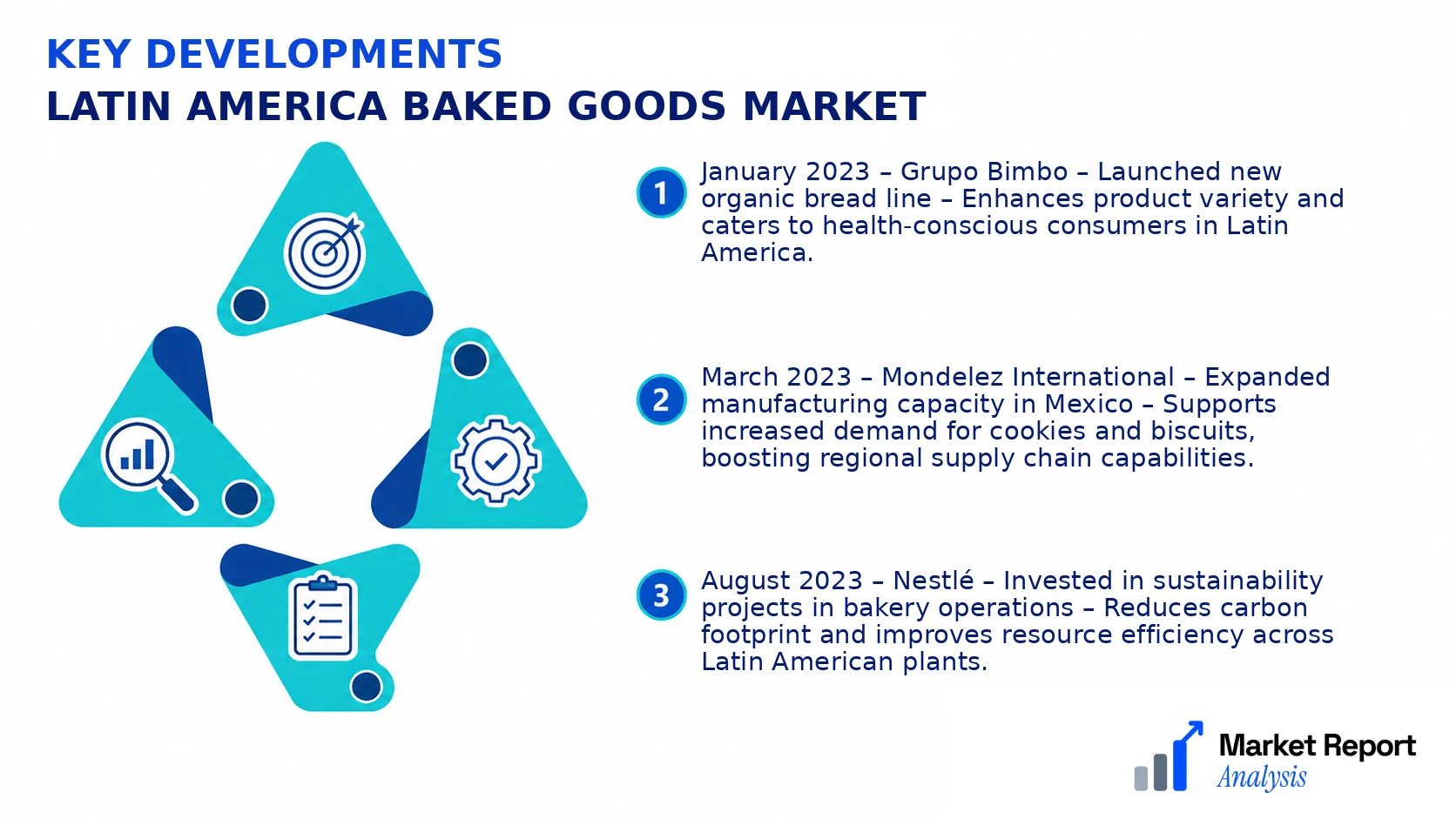
- January 2023 – Grupo Bimbo – Launched new organic bread line – Enhances product variety and caters to health-conscious consumers in Latin America.
- March 2023 – Mondelez International – Expanded manufacturing capacity in Mexico – Supports increased demand for cookies and biscuits, boosting regional supply chain capabilities.
- August 2023 – Nestlé – Invested in sustainability projects in bakery operations – Reduces carbon footprint and improves resource efficiency across Latin American plants.
- October 2023 – Bunge Limited – Formed strategic alliance with regional distribution firms – Strengthens market reach and logistical efficiencies for bakery ingredients.
- December 2022 – Aryzta AG – Acquired artisanal bakery company – Diversifies product portfolio and taps into premium artisan bakery markets in Latin America.
Frequently Asked Questions
What is the Latin America Baked Goods Market?
The Latin America Baked Goods Market encompasses the production, distribution, and sale of bakery products across Latin American countries, including bread, cakes, cookies, and pastries, driven by consumer demand for convenience and traditional offerings.
What is the current market size of Latin America Baked Goods Market?
As of 2026, the market size is valued at approximately USD 15.2 Billion, reflecting the region's evolving bakery industry and growing consumer preferences for diverse baked products amid urbanization and rising disposable incomes.
What factors are driving the Latin America Baked Goods Market?
Key drivers include increasing urbanization, changing lifestyles favoring convenience foods, expanding retail infrastructure, and rising health awareness leading to innovative product offerings such as gluten-free and organic baked goods.
Which region dominates the Latin America Baked Goods Market?
Brazil holds the dominant position due to its large population, traditional baking culture, and advanced retail channels, accounting for over 40% of the market share in the region.
Which segment is expected to grow the fastest?
Health-oriented baked goods, including gluten-free, vegan, and organic products, are projected to experience the highest growth, driven by increasing consumer health consciousness and demand for specialty dietary options.
Who are the leading companies operating in the Latin America Baked Goods Market?
Major players include Bimbo Bakeries, Grupo Bimbo, Biscochos S.A., and La Panadería, competing through innovative product lines, regional expansion, and strategic mergers to strengthen their market positioning across Latin America.
Analyst Perspective
The Latin America Baked Goods Market is expected to exhibit robust growth through 2034, driven by evolving consumer preferences for innovative and healthier product options, and expanding urban middle-class populations. Long-term market sustainability will depend on the industry's ability to adapt to technological advancements such as automation in production and digital sales channels, which can improve efficiency and market reach. Investment priorities should focus on product diversification, quality enhancement, and sustainable sourcing to meet increasing consumer demand for eco-friendly products. Competitive intensity will remain high, with regional and international players investing heavily to capture market share, especially in premium and functional baked goods segments. Regional growth potential is substantial, particularly in Brazil, Mexico, and emerging markets within LATAM, owing to rising disposable incomes and urbanization. Strategic positioning for market participants involves balancing innovation with cost management, leveraging consumer insights, and expanding distribution networks to capitalize on future demand surges.
