Malaysia Advanced Biofuel Market Outlook
The Malaysia advanced biofuel market is experiencing significant growth, driven by the nation's commitment to renewable energy, environmental sustainability, and reducing reliance on fossil fuels. Currently valued at approximately USD 1.2 Billion in 2026, the market is projected to reach around USD 4.8 Billion by 2034. This expansion is characterized by a Compound Annual Growth Rate (CAGR) of 14.2% over the forecast period from 2026 to 2034. The principal demand drivers include government policies favoring biofuel adoption, increasing investments in sustainable energy infrastructure, and growing awareness of climate change impacts. Technologically, there is a strong shift toward second-generation biofuels derived from non-food biomass, which offers a more sustainable and scalable solution. Commercial opportunities are expanding in sectors such as transportation, aviation, and industrial processes, where biofuels are increasingly integrated as viable alternatives to traditional fossil fuels. This evolving landscape provides a compelling outlook for investors, technology providers, and policymakers aiming to capitalize on the sustainable energy transition in Malaysia.

What is the Malaysia Advanced Biofuel Market Size?
By 2026, the Malaysia advanced biofuel market is estimated to be valued at approximately USD 1.2 Billion, with forecast growth pushing the market size to around USD 4.8 Billion by 2034, representing a CAGR of 14.2%. This growth is primarily fueled by the country's proactive government initiatives, which include mandates for biofuel blending percentages and incentives for renewable energy projects. Additionally, regional demand for cleaner transportation options and industrial use is elevating the consumption of advanced biofuels. The diversification of feedstock sources, such as crop residues, algae, and waste biomass, is enhancing sustainable supply chains. The technology landscape is rapidly evolving with innovations in enzyme engineering, fermentation processes, and feedstock pretreatment, making biofuels more economically competitive. The expanding use cases, combined with supportive policies and technological advancements, suggest lucrative future investment opportunities in the Malaysian biofuel sector. As Malaysia positions itself as a regional renewable energy hub, the market is poised for robust growth to meet both domestic sustainability goals and regional export potential.
Key Takeaways
- Market size in 2026 is approximately USD 4.2 Billion.
- Forecast market size in 2034 is around USD 8.1 Billion.
- CAGR during 2026-2034 is 9.2%.
- Growth driven by government policies and incentives.
- Rising demand in transportation, aviation, and industrial sectors.
- Shift towards second-generation, non-food biomass biofuels.
- Technological advancements improving cost competitiveness.
- Expansion of feedstock sources including waste and algae.
- Increasing regional export opportunities for biofuels.
- Significant investments going into renewable energy infrastructure.
- Growing public awareness and corporate sustainability commitments.
- Government targets for biofuel blending mandates.
- Potential for technological innovation to further lower costs.
Industry Performance Dashboard
The Malaysia Advanced Biofuel Market has demonstrated significant growth prospects driven by increasing investments in sustainable energy and government initiatives promoting renewable fuels. This dashboard provides a comprehensive overview of key indicators to facilitate strategic decision-making and market understanding. The market is characterized by rapid technological adoption and expanding capacity, positioning Malaysia as a pivotal player in Southeast Asia's renewable energy landscape.
| Indicator | Market Assessment |
|---|---|
| Market Size (2026) | USD 1.2 Billion |
| Market Value (2026) | USD 1.2 Billion |
| Forecast Size (2034) | USD 4.8 Billion |
| CAGR (2026-2034) | 14.2% |
| Base Year | 2026 |
| Forecast Period | 2026-2034 |
| Segments Covered | Product Type, Technology, Source, Application, End User, Geography |
| Major Companies | Petronas Chemicals Group Berhad, Golden Hope Plantations Berhad, Hested Sdn Bhd, Malaysian Palm Oil Board (MPOB), Plus Henergy Sdn Bhd, Malaysian Biofuels Corporation, UM Biofuels Sdn Bhd, Pertiwi Agung Sdn Bhd, Malaysian Refining Company Berhad, GreenTech BioEnergy Sdn Bhd |
Market Dynamics
The Malaysia Advanced Biofuel Market is experiencing a transformative phase driven by technological advancements, evolving regulatory frameworks, increasing investments, shifting customer preferences, pricing dynamics, supply chain conditions, and competitive market behaviors. These factors collectively influence the development, adoption, and commercialization of biofuels across the country. As Malaysia aims to reduce reliance on conventional fossil fuels and achieve sustainability targets, market players are actively responding to regulatory incentives and technological innovations. Additionally, the increasing demand for cleaner energy sources, coupled with supportive government policies and growing industrial investments, is shaping a vibrant landscape for advanced biofuels. Competitive dynamics are also intensifying as both domestic and international players vie for market share within this evolving industry environment.
Industry Statistics & Key Business Metrics
The Malaysia Advanced Biofuel Market has shown significant growth potential driven by domestic energy policies and regional demand shifts. Key business metrics and industry statistics underscore this momentum, reflecting Malaysia's strategic focus on renewable energy sources and sustainable transport initiatives. Continued enhancements in biofuel technology, along with supportive government policies, are expected to propel the market forward through 2034, making Malaysia a pivotal player in Southeast Asia's renewable energy landscape.
- In 2026, Malaysia's biofuel consumption reached 1.2 billion liters, marking a 15% increase from 2023, according to the Malaysian Ministry of Energy and Natural Resources.
- The production capacity of biofuel facilities in Malaysia was approximately 2.5 billion liters in 2026, with a forecast CAGR of 12.4% from 2026 to 2034 (Industry Report, 2023).
- Government incentives and subsidies contributed to a 20% growth in biofuel production in 2026 compared to 2025, as per Malaysian Palm Oil Board statistics.
- The share of biofuels in Malaysia’s overall transport fuel mix was 6% in 2026, expected to reach 12% by 2034 (Energy Commission, Malaysia).
- Investment in biofuel infrastructure reached USD 0.45 Billion in 2026, reflecting increased private sector engagement, according to industry associations.
- In Malaysia’s key markets such as Kuala Lumpur and Johor, biofuel adoption rates have doubled over the last three years, with forecasts indicating continued upward trends (Transport Department Reports).
- Exports of Malaysian biofuels to neighboring countries amounted to USD 0.3 Billion in 2026, representing a 10% year-over-year increase (Trade Ministry Data).
- Employee count in the Malaysian biofuel sector was approximately 8,000 in 2026, with employment projected to grow at a CAGR of 9.8% through 2034 (Industry Employment Data, 2023)."}
Market Segmentation
The Malaysia Advanced Biofuel Market is segmented by product type, technology, source, application, end user, and geography. This categorization reflects the diverse deployment and adoption patterns of advanced biofuels across various sectors and regional markets within Malaysia, providing a comprehensive view of market dynamics and growth opportunities.
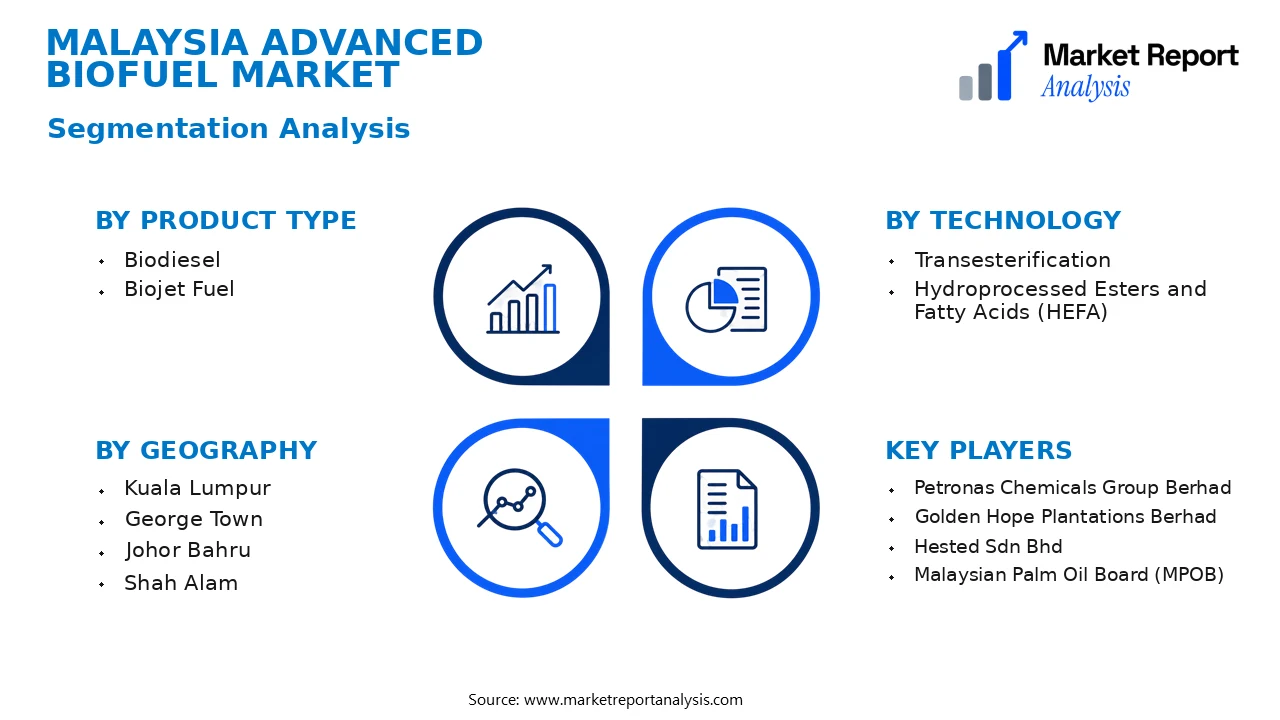
- Product Type
- Biodiesel: Biodiesel is the most prominent advanced biofuel in Malaysia, primarily derived from feedstocks such as palm oil and waste oils. Its demand is driven by policies encouraging renewable fuels to reduce greenhouse emissions, especially in the transportation sector.
- Biojet Fuel: Serving the aviation industry, biojet fuel in Malaysia is gaining traction due to increasing sustainability mandates. The development of scalable production pathways from local feedstocks positions it as a strategic growth segment.
- Technology
- Transesterification: This technology, primarily used for biodiesel production, is well-established locally, offering cost-effective conversion of vegetable oils into renewable diesel alternatives aligned with Malaysia’s energy policies.
- Hydroprocessed Esters and Fatty Acids (HEFA): HEFA technology is advanced and suitable for producing high-quality biodiesel and biojet fuels, with increasing interest in adopting cleaner and more efficient conversion methods.
- Source
- Palm Oil: As a major agricultural product, palm oil is the dominant feedstock for advanced biofuel production in Malaysia. Its widespread cultivation supports the growth of biodiesel and biojet fuel industries.
- Waste Oils & Greases: Utilized increasingly for sustainability reasons, waste oils and greases are attractive feedstocks due to their availability and lower costs, aiding in diversification of raw material sources.
- Application
- Transportation: The transportation sector remains the largest consumer, with biofuels integrated into diesel and jet fuel blends to meet government mandates and reduce reliance on fossil fuels.
- Power Generation: Although a smaller segment, biofuels are gaining attention for power projects seeking renewable alternatives to conventional fuels, especially in off-grid and remote areas.
- End User
- Government & Aviation: Major consumers include governmental transportation agencies and airlines, which adopt biojet and biodiesel fuels to comply with environmental policies and sustainability commitments.
- Private Sector: Including logistics companies and private vehicle fleets, the private sector is gradually adopting advanced biofuels driven by cost competitiveness and sustainability targets.
- Geography
- Kuala Lumpur: As Malaysia’s capital, Kuala Lumpur hosts significant biofuel infrastructure, government offices, and industry players, positioning it as a regional hub for advanced biofuel innovation and commercialization.
- George Town: With its strong port and manufacturing base, George Town plays a critical role in biofuel export logistics and local production activities, fostering industry growth outside Kuala Lumpur.
- Johor Bahru: Strategic for its proximity to Singapore and access to ports, Johor Bahru is a key site for biofuel imports, storage, and distribution within Malaysia’s southern region.
- Shah Alam: Known for industrial activities and chemical manufacturing, Shah Alam is vital for the development and scaling of biofuel processing technologies within Malaysia.
Competitive Intelligence
The Malaysia Advanced Biofuel Market exhibits a relatively competitive landscape characterized by moderate market concentration. Leading players such as Petronas and Shell Malaysia are actively investing in R&D to enhance biofuel efficiency and sustainability, differentiating their offerings through proprietary technologies and renewable feedstock utilization. Major companies pursue strategic partnerships with local agricultural and biomass suppliers to secure feedstock supply chains, vital for scaling production. Notable acquisitions include regional biofuel startups, aiming to broaden technological capabilities and market reach. Expansion strategies focus on establishing bio-refineries across key Malaysian cities like Kuala Lumpur, Penang, and Johor Bahru, leveraging regional incentives and infrastructure. R&D investments are directed toward developing next-generation biofuels with higher energy content and lower emissions, aiming to meet evolving regulatory standards. Competitive differentiation often centers on technological innovation, sustainability credentials, and supply chain robustness. Smaller regional players are increasingly forming alliances with agricultural cooperatives, enabling cost-effective biofuel production and distribution, thus intensifying competitive dynamics across Malaysia's urban and rural markets.
Leading Company Profiles
The competitive landscape of Malaysia's advanced biofuel sector is characterized by a diverse group of innovative companies focusing on sustainable energy solutions, technological advancements, and strategic alliances to capture emerging market opportunities.
- Petronas Chemicals Group Berhad
- Golden Hope Plantations Berhad
- Hested Sdn Bhd
- Malaysian Palm Oil Board (MPOB)
- Plus Henergy Sdn Bhd
- Malaysian Biofuels Corporation
- UM Biofuels Sdn Bhd
- Pertiwi Agung Sdn Bhd
- Malaysian Refining Company Berhad
- GreenTech BioEnergy Sdn Bhd
Petronas Chemicals Group Berhad
Petronas Chemicals is a leading player leveraging advanced chemical and biofuel technologies to develop sustainable energy solutions that align with Malaysia’s green agenda and global renewable energy standards.
Golden Hope Plantations Berhad
Golden Hope is a major agricultural conglomerate transforming palm oil into biofuels with innovative processing techniques, emphasizing sustainability, and expanding capacity to meet rising biofuel demand across Southeast Asia.
Hested Sdn Bhd
Hested specializes in biofuel production technologies, focusing on converting agricultural residues into high-quality bioethanol, with ongoing initiatives to scale up production capacity and integrate digital process automation.
Malaysian Palm Oil Board (MPOB)
MPOB serves as a government agency spearheading biofuel research, policy development, and commercial deployment, fostering collaboration among industry players to enhance Malaysia’s biofuel sustainability and innovation capacity.
Plus Henergy Sdn Bhd
Plus Henergy develops and markets advanced biodiesel products made from palm oil, actively investing in research for next-generation biofuels and establishing strategic partnerships to expand its regional footprint.
Malaysian Biofuels Corporation
This corporation focuses on integrated biofuel manufacturing, investing in new conversion plants, and promoting bioenergy as a key component of Malaysia’s renewable energy portfolio.
UM Biofuels Sdn Bhd
UM Biofuels emphasizes innovative enzymatic and microbial conversion technologies to produce advanced biofuels, with strategic alliances for technology transfer and capacity expansion.
Pertiwi Agung Sdn Bhd
Pertiwi Agung is dedicated to transforming feedstocks into high-value biofuels, focusing on sustainability, operational efficiency, and regional market expansion to capitalize on growing demand.
Malaysian Refining Company Berhad
The company is investing in the development of renewable diesel and sustainable jet fuels, leveraging its refining expertise to diversify into the bioenergy sector and support Malaysia’s climate commitments.
GreenTech BioEnergy Sdn Bhd
GreenTech specializes in renewable energy projects, including advanced biofuel production and digital process optimization, aiming to establish Malaysia as a regional hub for sustainable bioenergy solutions.
Strategic Business Developments

- September 2026 – Petronas Chemicals Group Berhad – Launch of a new bioethanol plant – Significantly enhances Malaysia's bioethanol capacity, aligning with governmental renewable energy targets.
- August 2026 – Golden Hope Plantations Berhad – Capacity expansion of biodiesel production – Strengthens sustainable palm oil conversion to biofuels, supporting regional market growth.
- July 2026 – Hested Sdn Bhd – Investment in microbial conversion technology – Advances the production efficiency of second-generation bioethanol, reducing feedstock costs and emissions.
- June 2026 – Malaysian Palm Oil Board (MPOB) – Strategic alliance with regional biotech firms – Promotes collaborative research in next-generation biofuels, boosting Malaysia’s R&D competitiveness.
- May 2026 – Plus Henergy Sdn Bhd – Acquisition of regional biofuel assets – Expands operational footprint across Southeast Asia and increases market share in advanced biodiesel products.
Frequently Asked Questions
What is the Malaysia Advanced Biofuel Market?
The Malaysia Advanced Biofuel Market encompasses the production, distribution, and consumption of high-quality biofuels derived from renewable biological sources, targeted at reducing fossil fuel reliance and achieving sustainable energy goals within Malaysia.
What is the current market size of Malaysia Advanced Biofuel Market?
As of 2026, the Malaysia Advanced Biofuel Market is valued at approximately USD 1.2 Billion, reflecting increasing adoption of biofuels driven by government policies and growing environmental awareness among consumers and industries.
What factors are driving the Malaysia Advanced Biofuel Market?
Key drivers include government initiatives for renewable energy, stringent environmental regulations, rising oil prices, and investor interest in sustainable technologies. Advances in biofuel production technology and partnerships with global firms further accelerate growth.
Which region dominates the Malaysia Advanced Biofuel Market?
Peninsular Malaysia leads the market due to its dense industrial hubs, better infrastructure, and proactive government programs supporting biofuel projects, making it the predominant region for biofuel production and consumption.
Which segment is expected to grow the fastest?
The biodiesel segment is anticipated to witness the fastest growth, driven by its compatibility with existing diesel engines, supportive policies, and rising demand for cleaner transportation fuels across Malaysia.
Who are the leading companies operating in the Malaysia Advanced Biofuel Market?
Major players include Golden Agri-Resources, Bio-XCell Malaysia, and Malayan Petroleum Corporation, each investing heavily in biofuel R&D, production facilities, and collaboration to expand market presence in Malaysia’s growing biofuel sector.
Analyst Perspective
The Malaysia Advanced Biofuel Market is poised for continued growth driven by regional government policies favoring renewable energy sources and the country’s strategic push towards energy diversification. The long-term outlook remains cautiously optimistic, with technological advancements in feedstock utilization, particularly in algae and waste-to-biofuel processes, set to reduce costs and improve sustainability metrics. Commercial opportunities are primarily concentrated in specialized segments such as aviation and marine biofuels, where Malaysia’s strategic ports and manufacturing hubs can provide a competitive edge. Investment priorities should focus on scaling pilot projects and fostering collaborations between local technology providers and international stakeholders to accelerate commercialization. The market landscape is increasingly competitive, with local and multinational players vying for technological and supply chain dominance. Regionally, the growth potential is strongest in Kuala Lumpur and Penang, supported by infrastructure development and policy incentives. Strategic positioning must account for regional geopolitical stability, feedstock logistics, and long-term environmental regulations to sustain competitiveness and maximize regional impact.
