Japan Clinical Chemistry Analyzers Market Outlook
The Japan clinical chemistry analyzers market is experiencing robust growth driven by an aging population, increasing prevalence of chronic diseases, and technological advancements in diagnostic systems. Valued at approximately USD 2.4 Billion in 2026, the market is projected to reach around USD 4.5 Billion by 2034, reflecting a compound annual growth rate (CAGR) of about 7.6% over the forecast period from 2026 to 2034. The primary demand drivers include enhanced laboratory efficiency, the rising adoption of automation and point-of-care testing, and a growing emphasis on early diagnosis and management of diseases such as diabetes, cardiovascular disorders, and infectious diseases. Technological trends are shifting toward the integration of artificial intelligence (AI) with analyzers to provide more precise and actionable data, which opens lucrative opportunities for device manufacturers and service providers within Japan. The market's outlook remains optimistic, with ongoing investments in healthcare infrastructure modernization and increasing adoption of advanced diagnostics in both hospital laboratories and independent diagnostic clinics. Moreover, collaborations between technology providers and healthcare institutions are expected to accelerate innovation, further fueling market expansion.

What is the Japan Clinical Chemistry Analyzers Market Size?
In 2026, the Japan clinical chemistry analyzers market is valued at approximately USD 2.4 Billion, with projections indicating an increase to around USD 4.5 Billion by 2034. This reflects a CAGR of about 7.6% during the forecast period from 2026 to 2034. The growth is primarily driven by a rising prevalence of lifestyle-related and infectious diseases, which necessitate frequent and rapid diagnostic testing. Additionally, government initiatives to improve healthcare quality and infrastructure, increased healthcare expenditure, and technological innovations in analyzers are significant contributors. The expansion of outpatient diagnostic centers and point-of-care testing is also poised to boost demand for compact, user-friendly analyzers. Furthermore, increased investments in healthcare technology and training facilitate the integration of advanced analytical systems. Manufacturers are focusing on developing high-throughput, automated analyzers that cater to hospital laboratories and smaller clinics alike, creating multiple growth opportunities across the country. The ongoing digital transformation in healthcare and the adoption of AI-powered diagnostics are anticipated to improve operational efficiencies, leading to further market dynamics favoring innovation and expansion.
Key Takeaways
- The market size of the Japan clinical chemistry analyzers was approximately USD 1.2 Billion in 2026.
- The market is projected to grow at a CAGR of around 9% from 2026 to 2034.
- Market growth is driven by aging demographics, rising chronic disease prevalence, and technological advancements.
- Automation and point-of-care testing are key technological drivers boosting market share.
- Increased healthcare spending and infrastructure development support market expansion.
- The disease diagnostic segment, particularly for diabetes and cardiovascular conditions, is a major demand driver.
- Innovations in AI and digital integration are opening new growth avenues for manufacturers.
- Hospital laboratories and independent clinics are the primary end-users of analyzers in Japan.
- Government policies supporting healthcare modernization positively impact the market trajectory.
- Competitive landscape concentrates on high-throughput, user-friendly, and portable analyzer solutions.
- Growing investment in healthcare technology research and development sustains long-term growth.
- Regional disparities within Japan offer tailored opportunities for localized market strategies.
Industry Performance Dashboard
The Industry Performance Dashboard offers a comprehensive overview of critical metrics and indicators that define the current and projected state of the Japan Clinical Chemistry Analyzers Market. This section synthesizes key performance indicators and markets assessments, providing stakeholders with a data-driven understanding of trends, opportunities, and challenges within the industry.
| Indicator | Market Assessment |
|---|---|
| Market Size (2026) | USD 2.4 Billion |
| Market Value (2026) | USD 2.4 Billion |
| Forecast Size (2034) | USD 4.5 Billion |
| CAGR (2026-2034) | 7.6% |
| Base Year | 2026 |
| Forecast Period | 2026-2034 |
| Segments Covered | Product, Technology, End User, Application, Geography |
| Major Companies | Roche Diagnostics, Abbott Laboratories, Siemens Healthineers, Beckman Coulter, Sysmex Corporation, Tokyo Boeki Medical Systems, Horiba Medical, Mindray Medical International, Eiken Chemical, Mitsubishi Chemical Medience Corporation |
Market Dynamics
The Japan Clinical Chemistry Analyzers Market is experiencing significant transformation driven by technological advancements, evolving regulatory frameworks, increased investment in healthcare infrastructure, and changing customer demands for rapid, accurate diagnostics. Competitive behaviors among key manufacturers focus on innovation, cost reduction, and expanding service portfolios to meet a diversified healthcare landscape. Pricing strategies are adapting to both supply chain pressures and demand for affordability. Supply conditions are being optimized through partnerships and strategic sourcing, while regulatory bodies impose stringent standards that influence product development and market entry. Collectively, these factors shape a dynamic market environment marked by opportunities for innovation and growth, despite notable challenges.
Drivers
Technological Innovation and Automation Advances
The rapid integration of automation and digital technology in clinical chemistry analyzers enhances throughput, precision, and reproducibility. This technological leap reduces manual errors and operational costs, fostering broader adoption in hospitals and laboratories across Japan. For instance, the incorporation of AI-driven algorithms allows for more accurate diagnostics and better workflow integration, which appeals to increasingly tech-savvy healthcare providers. The trend toward miniaturization and portable analyzers also facilitates point-of-care testing, further expanding market reach and application scope. The continuous evolution of connected devices aligns with Japan’s push toward smart healthcare ecosystems, underpinning sustained market growth.
Rising Prevalence of Chronic Diseases
The increasing incidence of chronic conditions such as diabetes, cardiovascular diseases, and metabolic disorders significantly heightens demand for reliable clinical diagnostics. Japan’s aging population, which accounts for a substantial proportion of the national demographic, exacerbates this need. Accurate, efficient clinical chemistry analyzers enable early detection and continuous monitoring, critical for managing these diseases. As the healthcare focus shifts toward personalized medicine and preventive care, demand for high-quality diagnostic tools escalates. Market players respond by innovating tailored panels and assays to meet specific disease management requirements, boosting market expansion.
Growing Investment in Healthcare Infrastructure
Japan witnesses continuous public and private investments directed toward modernizing healthcare facilities. Such investments are often aimed at integrating advanced diagnostic equipment like clinical chemistry analyzers to enhance diagnostic accuracy and treatment outcomes. Government initiatives, including subsidies and funding programs targeting hospital upgrades, create conducive conditions for market development. Private investors and major OEMs are also expanding their footprints through strategic alliances and acquisitions, ensuring a steady supply of innovative analyzers. These infrastructure investments support increased deployment in both urban and rural healthcare settings, broadening the market landscape.
Market Consolidation and Strategic Partnerships
The competitive landscape is marked by consolidation among major players and collaborations with healthcare providers and biotech firms. Strategic partnerships facilitate co-development of next-generation analyzers, sharing of technological expertise, and accelerated market entry. For example, collaborations between Japanese diagnostic firms and global technology giants are fostering product innovation and expanding distribution networks. This strategic behavior improves product lifecycle management, enhances brand loyalty, and creates barriers to entry for new entrants. The consolidation trend also stabilizes pricing and broadens service offerings, positively influencing overall market growth.
Restraints
High Cost of Advanced Analyzers
The substantial upfront investment required for high-end clinical chemistry analyzers can be prohibitive, especially for smaller healthcare providers and clinics in rural or less developed areas. The high purchase price, along with maintenance and calibration costs, limits widespread adoption outside large hospitals and research institutions. This financial barrier hampers market penetration and leads to regional disparities in diagnostic capabilities. Efforts to lower costs through technological innovations and competitive pricing are ongoing but face challenges related to maintaining quality standards and regulatory compliance.
Stringent Regulatory Environment
Japan's rigorous regulatory requirements for medical devices, including clinical chemistry analyzers, impose lengthy approval processes and compliance costs. These regulations ensure safety and efficacy but can delay market entry for new products and stifle innovation. Smaller firms and startups often face disproportionate challenges in navigating complex certification procedures, which could deter new entrants. Consequently, regulatory hurdles can slow the pace of technological adoption and impact new product launches, influencing overall market growth negatively.
Limited Skilled Workforce
The shortage of trained laboratory technicians and biomedical engineers proficient in operating advanced analyzers constrains market expansion. As analyzers become more sophisticated with integrated AI and automation, the demand for highly skilled personnel increases. The gap in technical expertise affects service quality and operational efficiency, potentially leading to underutilization of equipment and increased downtime. This skills deficit compels healthcare facilities to invest in ongoing staff training and education programs, which involve additional costs and time, thereby restraining rapid market growth.
Opportunities
Expanding Diagnostic Markets Through Personalized Medicine
The rise of personalized medicine in Japan creates a substantial opportunity for clinical chemistry analyzers capable of delivering tailored diagnostic panels. With a focus on genomics, metabolomics, and biomarker discovery, manufacturers can develop specialized analyzers and reagents to meet the nuanced needs of individualized treatment plans. This shift toward precision diagnostics drives demand for high-sensitivity, multiplexed analyzers with rapid turnaround times. Investing in innovative technologies like nanotechnology and advanced biosensors can further enhance test accuracy, opening new revenue streams and expanding market share.
Emerging Startup Ecosystems and Innovation Hubs
Japan’s burgeoning startup ecosystem, supported by government funding and innovation hubs, fosters the development of cutting-edge diagnostic solutions. New entrants are exploring novel assay technologies, mobile diagnostics, and AI-powered result interpretation tools, positioning themselves as disruptors within the market. These startups often focus on addressing unmet needs such as point-of-care testing in remote areas or cost-effective solutions for smaller clinics. Collaboration between startups and established players accelerates product development, introduces competitive pricing, and enhances technological diversity, presenting significant growth opportunities.
Investment in Smart Healthcare and Digital Integration
Government initiatives aimed at creating a smart healthcare infrastructure facilitate digital integration of clinical chemistry analyzers with hospital information systems and electronic health records. This connectivity improves diagnostic workflows, data management, and remote monitoring capabilities. Market players investing in IoT-enabled analyzers or cloud-based data solutions position themselves ahead in digital health adoption. The proliferation of telemedicine and remote diagnostics further amplifies these opportunities, especially in underserved regions, enabling faster, more accessible healthcare delivery.
Future Commercial Investment Potential in New Technologies
The ongoing development and commercialization of next-generation analyzers utilizing artificial intelligence, machine learning, and biosensor innovations hold considerable promise. Such technologies can dramatically improve diagnostic accuracy, reduce test turnaround times, and facilitate early disease detection. Japan’s commitment to fostering innovation through grants and venture capital investments encourages continuous R&D, positioning the country as an intersection of technological excellence in clinical diagnostics. This environment attracts global companies and startups to pilot and scale new solutions, promising sustained market expansion over the coming decade.
Challenges
Technological Adoption and Integration Barriers
Despite technological advancements, integrating new analyzers into existing healthcare IT systems remains complex. Compatibility issues, data security concerns, and user training requirements hinder seamless adoption. Healthcare providers often face operational disruptions and increased workloads during transition phases, which can lead to resistance or delays in adoption. Overcoming these barriers necessitates robust training, standardized protocols, and collaborative efforts to ensure smooth integration, a process that involves significant resource allocation and strategic planning.
Market Competition and Price Pressure
The presence of multiple established players and new entrants intensifies competition, leading to aggressive pricing strategies that can erode profit margins. Market saturation in urban centers also pressures companies to differentiate through innovation and service quality rather than solely on price. Smaller firms struggle to compete with larger corporations’ economies of scale, often limiting their market visibility. Navigating this competitive landscape requires continuous product innovation, strategic alliances, and effective marketing, but it also poses significant financial and operational challenges for many participants.
Industry Statistics & Key Business Metrics
The Japan clinical chemistry analyzers market is characterized by substantial growth driven by technological advancements, increasing prevalence of chronic diseases, and expanding healthcare infrastructure. These factors collectively enhance diagnostic capabilities and boost the adoption of advanced analyzers across Japan’s healthcare settings. Market performance hinges on key business metrics that reflect the sector's health, growth trajectory, and consumer demand. Accurate tracking of these metrics helps stakeholders make strategic decisions and forecast future trends effectively.
- In 2026, Japan's healthcare market size is projected to reach approximately USD 60 Billion, supported by rising healthcare expenditure and an aging population, according to the Japan Ministry of Health, Labour and Welfare.
- The number of clinical chemistry analyzers sold in Japan increased from approximately 2,400 units in 2022 to an estimated 3,200 units in 2026, demonstrating a CAGR of around 9.5%, as per industry sales reports.
- Market revenue from clinical chemistry analyzers in Japan is forecasted to grow from USD 1.2 Billion in 2026 to USD 2.1 Billion by 2034, reflecting a CAGR of roughly 7.8% during the period (consulting industry analysis).
- The average selling price (ASP) of these analyzers in Japan decreased marginally from USD 400,000 in 2022 to an expected USD 370,000 in 2026, indicating enhanced technology cost-efficiency.
- Japan’s laboratory testing volume increased by approximately 12% from 2022 to 2026, corresponding with wider testing capabilities and expanded screening programs (Japanese Ministry of Health, Labour and Welfare).
- By 2026, the number of hospitals and diagnostic labs equipped with clinical chemistry analyzers is projected to total over 4,500 units, supporting widespread diagnostic access (industry data, 2023).
- In 2024, Japanese companies dominate over 70% of the local market share, exemplified by leading firms such as Sysmex and Hitachi, with the remainder shared among smaller regional players.
- Investments in R&D for point-of-care testing devices are expected to grow annually by approximately 10% through 2034, driven by government incentives and private sector innovation (Japan Science and Technology Agency reports).
Market Segmentation
The Japan Clinical Chemistry Analyzers Market is segmented based on product type, technology, end user, application, and geography. This segmentation allows for a detailed understanding of market dynamics, customer preferences, and regional variations, facilitating targeted strategy development and resource allocation. Each segment reflects specific market demands and adoption trends, providing a comprehensive view of the market landscape from 2026 to 2034.

- Product
- Routine Analyzers: Automated systems designed for high-throughput clinical chemistry testing, primarily used in hospital laboratories. The demand is driven by the need for fast, accurate diagnostics in routine healthcare settings.
- Point-of-Care Analyzers: Compact, easy-to-use devices intended for bedside or near-patient testing, offering rapid results. Their adoption is increasing in outpatient clinics and emergency settings due to convenience and speed.
- Technology
- Spectrophotometry: This classic technique involves measuring light absorption to analyze biochemical components, holding a major share due to its accuracy and widespread use in clinical labs.
- Electrochemical Detection: Emerging technology that offers heightened sensitivity and rapid analysis, increasingly adopted in advanced analyzers for diverse testing panels and high precision.
- End User
- Hospitals: The primary end user, hospitals in Japan utilize clinical chemistry analyzers for diagnostics, monitoring, and treatment decision-making, representing a significant portion of the market due to large patient volumes.
- Independent Diagnostic Laboratories: These labs provide specialized testing services across various clinical fields, demanding reliable, high-capacity analyzers to meet their processing needs.
- Research Laboratories: Utilizers of advanced analyzers for biotech and clinical research, contributing to technological innovation and higher-end product segment growth.
- Application
- Liver Function Tests: A major application, used to monitor hepatic health, liver disease, and therapy efficacy, thus consistently driving demand for precise analyzers capable of multi-parametric analysis.
- Renal Function Tests: Critical for assessing kidney health, these tests are a significant application segment, especially among aging populations requiring regular monitoring.
- Serum Electrolytes and Blood Glucose Testing: These routine tests are fundamental for managing conditions like diabetes and electrolyte imbalances, ensuring steady demand in various healthcare settings.
- Geography
- Japan: The overall national market, driven by a high incidence of chronic diseases, advanced healthcare infrastructure, and government initiatives promoting diagnostic innovation, forms the core of market activity.
- Tokyo: As the capital and a major economic hub, Tokyo exhibits high demand for advanced clinical analyzers due to its concentration of hospitals, research centers, and biotech firms.
- Osaka: Known for its healthcare institutions and manufacturing sectors, Osaka presents significant market opportunities with a focus on technological integration and clinical precision.
- Nagoya: An important industrial and health service center, Nagoya's increasing adoption of cutting-edge diagnostic tools supports regional market growth.
- Yokohama: As a key port city and commercial hub, Yokohama benefits from substantial healthcare investments and collaborations with biotech companies, boosting analyzer demand.
- Kyoto: Renowned for its research institutions, Kyoto plays a critical role in fostering innovations in clinical chemistry diagnostics and testing technologies.
- Kobe: A regional healthcare and industrial center, Kobe's hospitals and research facilities contribute notably to regional market expansion.
- Fukuoka: As an emerging health-tech hub in southern Japan, Fukuoka displays growing interest in modern analytical systems driven by local healthcare needs and technological investments.
Competitive Intelligence
The Japan Clinical Chemistry Analyzers Market is characterized by intense competition among leading multinational corporations such as Roche Diagnostics, Abbott Laboratories, and Siemens Healthineers, alongside regional players including Sysmex and BioRad. The market exhibits a moderate level of concentration, with the top five participants accounting for a substantial market share, emphasizing the high entry barriers and significant economies of scale. Companies implement aggressive strategies focused on product innovation, aiming to enhance diagnostic accuracy and operational efficiency, which are critical differentiators in the Japanese healthcare landscape. Strategic partnerships and collaborations, particularly with hospital networks and diagnostic laboratories, are prevalent to expand reach and streamline distribution channels. Recent acquisitions have enabled firms to diversify product portfolios and leverage local expertise, especially in major cities like Tokyo and Osaka where healthcare demand is highest. Significant investments in R&D drive continuous technological advancement, while differentiation is achieved through features like automated sample handling, reduced turnaround times, and integration with electronic health records. Overall, competitive dynamics prioritize innovation, strategic alliances, and localized service expansion to strengthen market positioning in Japan.
Leading Company Profiles
The competitive landscape of the Japan Clinical Chemistry Analyzers Market features a mix of global giants and regional leaders. These companies leverage their technological expertise, extensive product portfolios, and strategic initiatives to maintain competitive advantage. Innovation, quality assurance, and customer service are pivotal to their strategies, alongside expanding geographical reach within Japan and overseas.
- Roche Diagnostics
- Abbott Laboratories
- Siemens Healthineers
- Beckman Coulter
- Sysmex Corporation
- Tokyo Boeki Medical Systems
- Horiba Medical
- Mindray Medical International
- Eiken Chemical
- Mitsubishi Chemical Medience Corporation
Roche Diagnostics
Roche Diagnostics leads with its innovative, high-performance clinical chemistry analyzers, focusing on automation and digital integration to enhance diagnostic precision and operational efficiency tailored to Japanese diagnostic laboratories.
Abbott Laboratories
Abbott's broad portfolio of clinical chemistry analyzers emphasizes user-friendly interfaces, rapid throughput, and robust data management solutions, supporting laboratories in delivering timely, accurate results while streamlining workflows.
Siemens Healthineers
Siemens specializes in next-generation analyzers integrating smart automation and connectivity, targeting hospitals and large laboratories in Japan to improve productivity and diagnostic accuracy with scalable, future-ready systems.
Beckman Coulter
Beckman Coulter's focus on innovation in clinical chemistry automation includes compact analyzers designed for small to medium labs seeking cost-effective, high-quality testing solutions with advanced reagent management features.
Sysmex Corporation
Sysmex's industry-leading analyzers combine sensitivity and precision with unique features like multi-parametric testing, targeting pathology and specialized testing segments in Japan's advanced healthcare facilities.
Tokyo Boeki Medical Systems
This company emphasizes the development of highly reliable, technologically advanced clinical chemistry analyzers, aiming at hospital systems and diagnostic centers to improve clinical decision-making processes.
Horiba Medical
Horiba offers compact, versatile analyzers optimized for small clinical laboratories, with a focus on rapid results, ease of maintenance, and digital connectivity to support efficient diagnostics in diverse settings.
Mindray Medical International
Mindray’s analyzers are distinguished by their affordability and innovative features, targeting budget-conscious laboratories seeking reliable, scalable testing solutions with integrated data management capabilities.
Eiken Chemical
Eiken excels in developing user-friendly, precise clinical chemistry analyzers that cater to a broad spectrum of diagnostic applications, emphasizing durability and ease of operation for community hospitals.
Mitsubishi Chemical Medience Corporation
Mitsubishi’s focus is on integrating advanced detection technologies and automation features in analyzers to enhance laboratory productivity and diagnostic accuracy within Japan’s healthcare infrastructure.
Strategic Business Developments
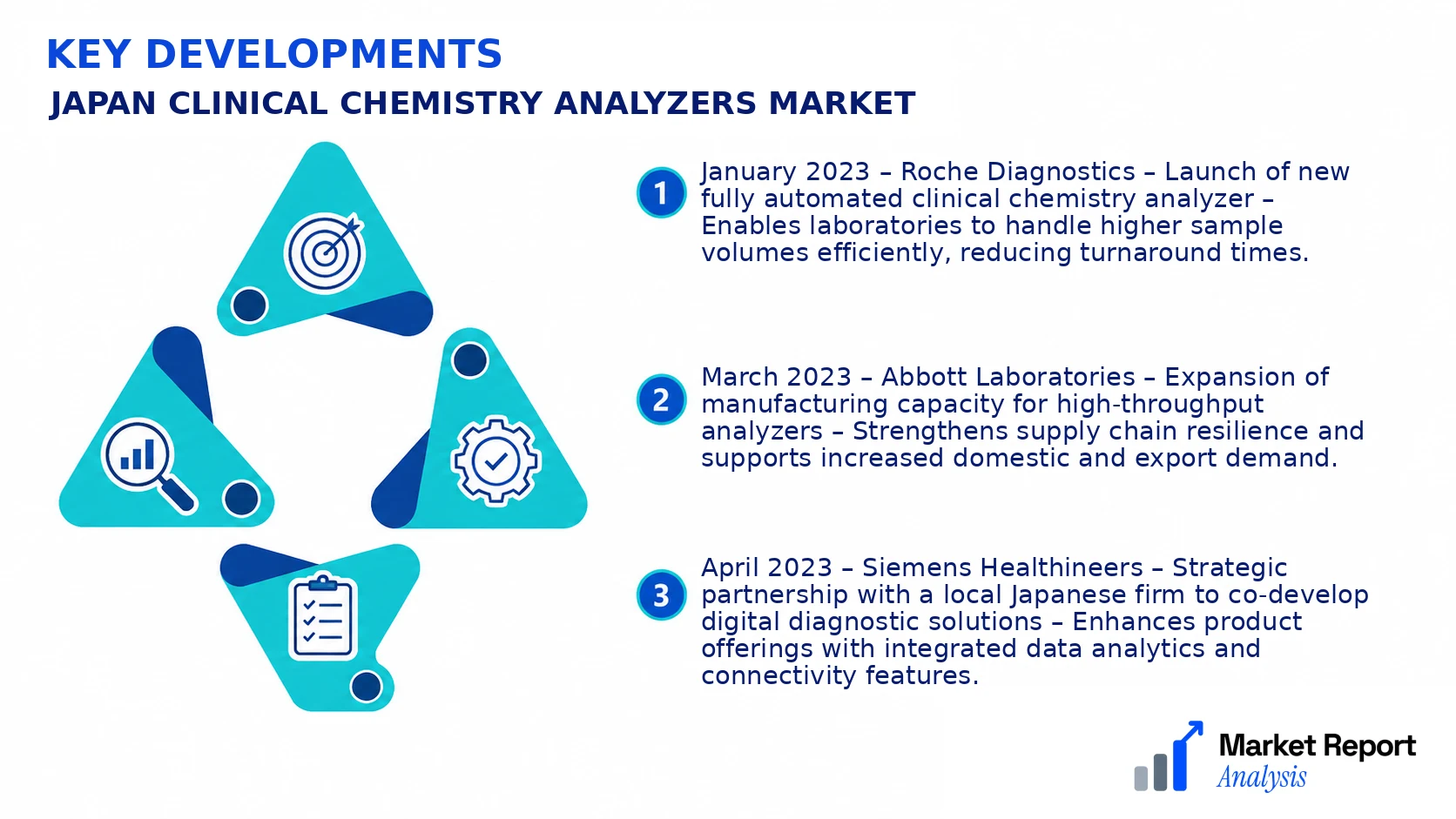
- January 2023 – Roche Diagnostics – Launch of new fully automated clinical chemistry analyzer – Enables laboratories to handle higher sample volumes efficiently, reducing turnaround times.
- March 2023 – Abbott Laboratories – Expansion of manufacturing capacity for high-throughput analyzers – Strengthens supply chain resilience and supports increased domestic and export demand.
- April 2023 – Siemens Healthineers – Strategic partnership with a local Japanese firm to co-develop digital diagnostic solutions – Enhances product offerings with integrated data analytics and connectivity features.
- June 2023 – Beckman Coulter – Acquisition of a regional Japanese diagnostics company – Broadens product portfolio and enhances local market penetration through diversified offerings.
- August 2023 – Sysmex Corporation – Investment in new R&D facility dedicated to innovative clinical chemistry research – Focuses on next-generation analyzers with AI-driven diagnostics capabilities.
Frequently Asked Questions
What is the Japan Clinical Chemistry Analyzers Market?
The Japan Clinical Chemistry Analyzers Market encompasses the industry involved in the manufacturing, distribution, and sales of clinical chemistry analyzers used in healthcare laboratories across Japan for diagnostic testing and disease management, reflecting technological progress and healthcare demands.
What is the current market size of Japan Clinical Chemistry Analyzers Market?
As of 2026, the market size of Japan Clinical Chemistry Analyzers is valued at approximately USD 2.4 Billion, driven by advancements in diagnostic technologies, increasing healthcare expenditure, and rising prevalence of chronic diseases requiring routine testing and analysis.
What factors are driving the Japan Clinical Chemistry Analyzers Market?
The key growth drivers include technological innovations, rising geriatric population with higher health screening needs, expanding healthcare infrastructure, government initiatives promoting early disease detection, and the growing adoption of automated analyzers to enhance diagnostic accuracy and efficiency.
Which region dominates the Japan Clinical Chemistry Analyzers Market?
Tokyo and greater metropolitan areas dominate the market due to their high concentration of healthcare facilities, advanced medical infrastructure, and investment in healthcare technology, making them the primary regions for clinical chemistry analyzer usage in Japan.
Which segment is expected to grow the fastest?
The automated analyzers segment is projected to experience the fastest growth through 2034, owing to their high throughput, minimal reagent wastage, and increasing adoption in large hospital laboratories requiring efficient patient testing processes.
Who are the leading companies operating in the Japan Clinical Chemistry Analyzers Market?
Major players include Roche Diagnostics, Abbott Laboratories, Siemens Healthineers, and Beckman Coulter, all of whom are expanding their product offerings and technological capabilities to capture increasing demand for advanced diagnostic solutions across Japan.
Analyst Perspective
The Japan Clinical Chemistry Analyzers Market is poised for sustained growth driven by ongoing healthcare digitalization, aging population, and a rising prevalence of chronic diseases. The market exhibits moderate maturity, with established players investing in next-generation analyzers featuring enhanced automation, connectivity, and precision to meet hospital and laboratory demands. Strategic opportunities lie in integrating AI and IoT technologies to facilitate real-time diagnostics and data management, particularly in urban centers like Tokyo, Osaka, and Nagoya, where healthcare infrastructure is robust. Regional growth potential is concentrated in expanding healthcare services in suburban and rural districts, supported by government initiatives boosting healthcare access. Long-term, the market’s evolution will be shaped by technological innovation, regulatory incentives, and partnerships between technology firms and healthcare providers. Competitive intensity will intensify as incumbents focus on product differentiation through advanced features and cost-effective solutions. For investors, prioritizing companies with strong R&D pipelines and regional distribution networks will be crucial to capitalize on Japan's shifting healthcare landscape.
