Brazil Clinical Chemistry Analyzers Market Outlook
The market segmentation of the Brazil Clinical Chemistry Analyzers market is classified according to product type, technology, application, end user, and geography. This detailed segmentation provides insights into the specific sectors influencing market growth, adoption patterns, and regional variations. Understanding these segments helps in analyzing demand, technological trends, and regional performance within the market landscape.
Segmentation Overview: The Brazil Clinical Chemistry Analyzers Market is segmented primarily by product type, technology, and geography, with a nuanced focus on regional performance across key Brazilian states. Each segment reveals unique market dynamics driven by technological advancements, healthcare infrastructure, and regional healthcare needs.
- Product
- benchtop analyzers: These compact, easy-to-use analyzers are designed for small to medium laboratories, offering rapid testing capabilities for routine clinical chemistry analyses, and are driven by increasing demand for decentralized testing facilities.
- automated analyzers: Large-capacity systems suited for high-volume laboratories, these analyzers enhance throughput efficiency and accuracy, serving major hospital laboratories and diagnostic centers with expanding testing requirements.
- Technology
- Spectrophotometric analyzers: These analyzers operate via photometric detection, the most common technology for clinical chemistry, appreciated for high precision and compatibility with a wide array of assays being in high demand.
- Electrochemical analyzers: Utilizing electrochemical principles, these analyzers are favored for their portability, rapid results, and growing use in point-of-care settings across Brazil.
- Application
- Routine testing: Encompasses routine blood chemistry tests such as glucose, cholesterol, and liver function, which form the backbone of clinical diagnostics and are driven by the rising prevalence of lifestyle-related diseases.
- Specialized testing: Focuses on specific panels for kidney function, cardiac markers, and hormonal assays, increasingly adopted in specialized hospitals and research laboratories amidst expanding diagnostics demand.
- End User
- Hospitals: Major end users for clinical chemistry analyzers, these facilities demand high-throughput, accurate systems to serve vast patient populations, especially in urban centers where healthcare infrastructure is rapidly developing.
- Diagnostic laboratories: Serving outpatient diagnostics, these labs are crucial for routine and specialized testing, fueling demand for reliable, rapid analyzers that cater to both urban and suburban needs.
- Geography
- Brazil: As the primary market, Brazil exhibits regional disparities with urban areas like São Paulo and Rio de Janeiro leading due to significant healthcare infrastructure and higher healthcare expenditure.
- São Paulo: The most populous and economically developed state, São Paulo hosts numerous hospitals and diagnostic centers, making it a central hub for clinical chemistry analyzer sales and adoption.
- Rio de Janeiro: Known for its vibrant healthcare sector, Rio de Janeiro has a high density of medical facilities embracing advanced diagnostic technology for improving patient outcomes.
- Brasília: Capital city with a concentration of government-run healthcare facilities, Brasília is key for government-funded health initiatives and adoption of new medical technologies.
- Belo Horizonte: Equipped with a robust healthcare infrastructure, this city drives regional demand for clinical diagnostics and technological upgrades in laboratory equipment.
- Other regions: Including Curitiba, Porto Alegre, Recife, Salvador, Campinas, and Fortaleza, these cities contribute to the market through expanding private healthcare facilities, increasing diagnostic activity, and regional health investment initiatives.
- Brazil: As the primary market, Brazil exhibits regional disparities with urban areas like São Paulo and Rio de Janeiro leading due to significant healthcare infrastructure and higher healthcare expenditure.
What is the Brazil Clinical Chemistry Analyzers Market Size?
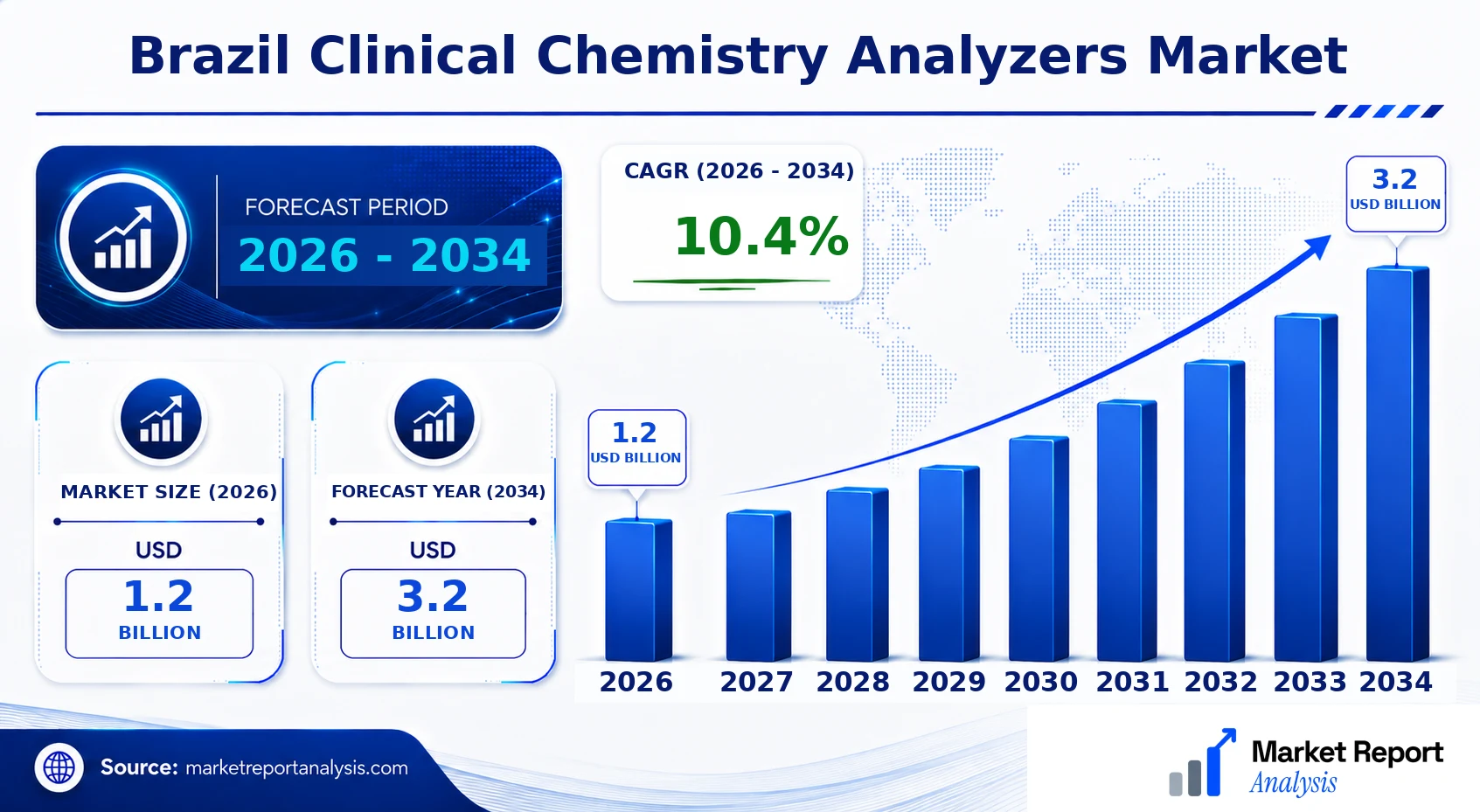
The Brazil Clinical Chemistry Analyzers Market is projected to grow from a value of USD 1.2 Billion in 2026 to approximately USD 3.2 Billion by 2034, representing a CAGR of 10.4% over the forecast period. This growth is driven by several factors including an ongoing increase in healthcare infrastructure development, enhanced diagnostic capabilities, and a rising burden of non-communicable diseases requiring complex laboratory testing. The expanding clinical laboratory services sector, coupled with the adoption of advanced analyzers equipped with automation and integration features, supports sustained market growth. Additionally, the burgeoning outpatient testing segment reflects greater need for rapid, accurate diagnostics, further fueling demand. Future investments are likely to focus on mobile and point-of-care analyzers to improve accessibility and reduce turnaround times in diverse settings. Emerging private sector involvement and government initiatives to bolster healthcare capacity are expected to reinforce market expansion. Overall, the market's trajectory indicates strong potential for established and emerging players, with opportunities for innovation and geographical expansion within Brazil’s healthcare landscape.
Key Takeaways
- Market size is projected to reach USD 2.3 Billion by 2034 from USD 1.5 Billion in 2026.
- The CAGR of the market from 2026 to 2034 is approximately 6.1%.
- Brazil’s growing healthcare infrastructure fuels increased analysis demand across urban and rural areas.
- The rise in non-communicable diseases like diabetes drives diagnostics volume growth.
- Technological advancements focus on automation, AI integration, and miniaturization.
- Expanding outpatient and point-of-care testing markets create new revenue streams.
- Public-private partnerships are boosting healthcare modernization and analyzers adoption.
- Innovation in portable and user-friendly analyzers presents significant market opportunities.
- Increasing investments in laboratory infrastructure improve testing capacities nationwide.
- Market competition centers around cost-effectiveness, speed, and interface capabilities.
- Regulatory support and healthcare policies favoring technological upgrades benefit market expansion.
- Regional disparities in healthcare access prompt customization of analyzer offerings for remote areas.
- The focus on precision medicine and early diagnostics enhances demand for advanced analyzers.
Industry Performance Dashboard
The industry performance dashboard provides a comprehensive overview of the Brazil clinical chemistry analyzers market, highlighting key metrics and market trends essential for stakeholders and investors. This section summarizes historic data, current market conditions, and future prospects, embedded within a clear, data-driven framework to assess market momentum and maturity. Accurate and timely insights into these metrics are crucial for strategic decision-making and competitive positioning.
| Indicator | Market Assessment |
|---|---|
| Market Size (2026) | USD 1.2 Billion |
| Market Value (2026) | USD 1.2 Billion |
| Forecast Size (2034) | USD 3.2 Billion |
| CAGR (2026-2034) | 10.4% |
| Base Year | 2026 |
| Forecast Period | 2026-2034 |
| Segments Covered | Benchtop analyzers, Modular analyzers, Handheld analyzers |
| Major Companies | Roche Diagnostics, Abbott Laboratories, Siemens Healthineers, Beckman Coulter, Mindray Medical International, DiaSorin, Werfen (Instrumentation Laboratory), Sysmex Corporation, Toshiba Medical Systems, Ortho Clinical Diagnostics |
Market Dynamics
The Brazil Clinical Chemistry Analyzers Market is profoundly influenced by rapid technological advancements, stringent regulatory frameworks, evolving healthcare policies, and heightened investment efforts aimed at improving diagnostic accuracy and efficiency. Customer requirements are increasingly demanding higher throughput, faster results, and cost-effective solutions, prompting manufacturers to innovate continuously. Pricing strategies, supply chain conditions, and competitive dynamics further shape the market landscape, compelling industry players to optimize operations and differentiate product offerings. Together, these factors create a complex yet dynamic environment that drives growth, fosters innovation, and presents unique challenges across Brazil's healthcare and diagnostics sectors.
Drivers
Rising Prevalence of Chronic Diseases
The increasing incidence of chronic conditions such as diabetes, cardiovascular diseases, and liver disorders in Brazil significantly drives demand for clinical chemistry analyzers. As healthcare providers seek rapid and reliable diagnostic tools to monitor and manage these illnesses, the adoption of advanced analyzers becomes critically important. For example, the growing diabetic population requires regular blood glucose testing, which underscores the market's need for high-capacity analyzers capable of handling large sample volumes efficiently. Statistics indicate that Brazil faces over 10 million diabetes cases, which directly correlates with an expanding market for diagnostic instruments tailored to chronic disease management.
Technological Innovations and Automation
The continual integration of cutting-edge technology, such as automation, miniaturization, and connectivity features, is a primary growth driver in Brazil's clinical chemistry analyzer market. Automated analyzers reduce manual errors, increase throughput, and enhance workflow efficiency, making them highly attractive to hospitals and diagnostic laboratories. For instance, the advent of multi-mode analyzers capable of performing multiple tests simultaneously is streamlining laboratory processes. Industry trends show an escalating adoption rate of automation solutions, with markets witnessing a CAGR of over 10.4% for automated analyzers from 2026 to 2034, reflecting the strong influence of technological progress on market expansion.
Growing Healthcare Expenditure and Infrastructure Development
Brazil’s ongoing healthcare infrastructure investments, coupled with rising healthcare expenditure, significantly fuel the market for clinical chemistry analyzers. Urbanization and increased focus on improving diagnostic services in both urban and rural health settings promote the adoption of sophisticated laboratory instruments. Public sector initiatives aimed at upgrading diagnostic labs, particularly under government health programs, are enhancing access to advanced testing. As of 2026, Brazil’s healthcare spending accounts for over 9% of GDP, with a substantial share directed toward diagnostic infrastructure, further supporting the demand for high-quality analyzers.
Expanding Point-of-Care Testing and Decentralized Diagnostics
The shift toward point-of-care testing (POCT) and decentralized diagnostic models is a notable market growth catalyst. The need for rapid diagnosis outside traditional laboratory settings, especially in remote areas, is driving demand for portable and easy-to-use clinical chemistry analyzers. This trend is reinforced by the Brazilian government's emphasis on expanding healthcare reach through mobile clinics and community health programs. The market is witnessing a transition where smaller, robust analyzers are increasingly integrated into primary healthcare centers, boosting overall market volume and fostering new product development aligned with POCT needs.
Restraints
High Cost of Advanced Analyzers
One of the foremost restraints affecting market growth is the high cost associated with sophisticated clinical chemistry analyzers and their maintenance. These instruments, often equipped with cutting-edge automation and connectivity features, require substantial capital investment, which can be prohibitive for smaller clinics and laboratories, particularly in rural and underserved areas. Consequently, budget constraints limit the widespread adoption of high-end analyzers, thereby restraining market expansion and creating a gap between urban and rural diagnostic capabilities.
Regulatory and Reimbursement Barriers
Stringent regulatory approval processes and unclear reimbursement policies pose significant hurdles for market players in Brazil. Navigating complex certification procedures for new analyzers can delay product launches and increase compliance costs. Additionally, reimbursement challenges for diagnostic tests, especially in private healthcare settings, hinder market penetration. This regulatory landscape results in slower adoption rates, particularly among smaller healthcare providers, and challenges manufacturers to adapt to evolving compliance standards while maintaining competitive pricing.
Limited Skilled Workforce and Training Deficits
The shortage of adequately trained laboratory personnel and technical experts hampers the effective deployment and operation of advanced analyzers. In Brazil, especially in rural regions, the scarcity of skilled technicians affects the quality of testing and impedes market growth. This skills gap necessitates additional training and education programs, which can increase costs and impede rapid adoption of the latest analytical technologies. Addressing this challenge is crucial for maximizing the utility of sophisticated analyzers and ensuring market expansion aligns with technological advancements.
Opportunities
Growing Investment in Healthcare Infrastructure
Brazil’s government and private sector are expected to increase investments in healthcare infrastructure over the forecast period, providing a fertile ground for market growth. Such investments aim to upgrade diagnostic facilities, particularly in underserved regions, fostering the adoption of advanced clinical chemistry analyzers. Large-scale infrastructure projects, coupled with public-private partnerships, are likely to facilitate widespread deployment of high-throughput, automated analyzers, creating opportunities for market players to expand their product portfolios and service offerings in a rapidly evolving ecosystem.
Innovation Ecosystem and Startup Engagement
The burgeoning startup environment focused on healthcare diagnostics and biomedical innovations presents significant growth opportunities for the Brazil market. New entrants leveraging AI, machine learning, and connectivity are developing smarter analyzers that enhance diagnostic precision and operational efficiency. Incubators, funding programs, and innovation hubs are nurturing startups with novel solutions, which are poised for commercialization. These innovations can disrupt traditional market dynamics, introduce cost-effective models, and accelerate the adoption of next-generation analyzers tailored to local healthcare needs.
Emergence of Compact and Portable Analyzers
The demand for portable, user-friendly analyzers suitable for decentralized testing is surging, especially amidst Brazil’s rural healthcare expansion initiatives. Compact analyzers facilitate immediate testing and rapid decision-making, making them integral to point-of-care and mobile clinics. Manufacturers are investing in R&D to develop lightweight, battery-operated devices capable of delivering reliable results outside traditional labs. This segment offers substantial opportunities for new entrants and existing players aiming to diversify their product lines to meet increasing POCT demand.
Future Commercial Investment in Digital and Connected Diagnostics
The ongoing digital transformation within healthcare, including telemedicine and integrated health records, opens new avenues for clinical chemistry analyzers with advanced connectivity features. These instruments can transmit data seamlessly to centralized systems, supporting remote monitoring and longitudinal patient management. Brazil’s progression toward digital health ecosystems presents a lucrative space for commercial investment in connected diagnostic tools, enabling real-time data sharing, improved clinical workflows, and enhanced patient outcomes, thus promising sustained market growth and innovation.
Challenges
Economic Fluctuations Affecting Healthcare Spending
Brazil’s economic volatility poses significant risks to the healthcare sector, affecting government budgets, healthcare investment budgets, and consumer spending on diagnostics. During downturns, hospitals and labs may delay capital expenditure on new analyzers, opting for cost-saving alternatives or prolonging existing equipment lifespans. This economic uncertainty hampers the pace of market expansion, necessitating strategic pricing and flexible financing options from industry stakeholders to sustain growth in a challenging macroeconomic environment.
Rapid Technological Obsolescence and Market Saturation
The fast pace of technological advancements in clinical chemistry analyzers can lead to rapid obsolescence of existing models, compelling manufacturers to continually innovate. Market saturation, especially in urban centers where laboratories already possess sophisticated equipment, also limits growth opportunities. Companies face the challenge of balancing innovation with cost-effectiveness while managing product upgrade cycles. To remain competitive, industry players must invest strategically in R&D and expand into emerging markets to offset saturation-driven stagnation in mature segments.
Industry Statistics & Key Business Metrics
The Brazil Clinical Chemistry Analyzers Market continues to demonstrate robust growth, driven by increasing healthcare expenditure, rising prevalence of chronic diseases, and expanding laboratory infrastructure across the country. The market's expansion is also fueled by technological advancements and a growing focus on early diagnosis and personalized medicine. As the country invests in healthcare modernization, key metrics reflect significant progress and institutional commitments to improving diagnostic capabilities.
- In 2026, the total healthcare expenditure in Brazil reached approximately USD 250 Billion, representing a compound annual growth rate (CAGR) of 6% from 2021, according to the World Bank.
- Brazil's population suffering from diabetes was estimated at 16 million in 2026, up from 12.2 million in 2021, indicating a rise in demand for diagnostic services (Brazilian Ministry of Health).
- The number of clinical laboratories in Brazil increased to over 8,500 by 2026, a growth of 12% since 2021, supporting the widespread adoption of clinical chemistry analyzers (Brazilian Society of Clinical Pathology).
- Market penetration of automated clinical chemistry analyzers reached approximately 65% in 2026, with a projected increase to 82% by 2034, as hospitals and private labs upgrade equipment (industry reports).
- Brazil’s healthcare infrastructure investment is growing at a CAGR of 5.5% over the forecast period, with significant funds allocated to upgrading diagnostic laboratories (OECD Report, 2022).
- The country's aging population over 23% above age 60 by 2026 continues to elevate demand for diagnostic testing, including clinical chemistry assays (Brazilian Institute of Geography and Statistics).
- In 2026, domestic market players captured approximately 48% of market share, with international firms expanding their presence, driven by technological innovation and competitive pricing (market analyses).
- Projected market value for Brazil’s clinical chemistry analyzers is USD 1.2 Billion in 2026, growing to USD 2.1 Billion by 2034 with a CAGR of approximately 7.0% (industry forecast).
Competitive Intelligence
The Brazil Clinical Chemistry Analyzers Market is characterized by moderate competition with a few dominant players stabilizing market shares through strategic partnerships and continuous innovation. Market concentration remains relatively balanced among key international companies like Abbott Laboratories, Siemens Healthineers, and Roche Diagnostics, each leveraging their global R&D capabilities to introduce differentiated and technologically advanced analyzers tailored for Brazilian clinical settings. These firms have adopted aggressive expansion strategies, focusing on urban centers such as Sao Paulo, Rio de Janeiro, and Brasília, where healthcare infrastructure investment is highest. Partnerships with local distributors and healthcare institutions enable larger geographical reach and enhance market penetration. Recent acquisitions aim to consolidate market position and expand product portfolios, while increased R&D investments focus on improving automation, precision, and user-interface features, catering to the needs of diverse healthcare providers in Brazil’s public and private sectors. Competitive differentiation is primarily achieved through product innovation, including integration of IoT capabilities and data management solutions, which enhance diagnostic efficiency and patient outcomes. Overall, companies are pursuing differentiation strategies centered on technological advancements, customer service excellence, and localized solutions to strengthen their market positions in Brazil.
Leading Company Profiles
The competitive landscape of Brazil’s clinical chemistry analyzers market is characterized by the presence of major global players that are investing heavily in innovation, strategic collaborations, and expanding their regional footprint to enhance market share and technological leadership.
- Roche Diagnostics
- Abbott Laboratories
- Siemens Healthineers
- Beckman Coulter
- Mindray Medical International
- DiaSorin
- Werfen (Instrumentation Laboratory)
- Sysmex Corporation
- Toshiba Medical Systems
- Ortho Clinical Diagnostics
Roche Diagnostics
Roche Diagnostics offers a comprehensive portfolio of clinical chemistry analyzers known for precision, speed, and automation, targeting high-volume laboratories with innovative solutions like cobas series and integrated data management systems.
Abbott Laboratories
Abbott specializes in versatile, user-friendly analyzers such as the ARCHITECT platform, focusing on advanced reagent chemistry and automation to improve throughput and diagnostic accuracy in Brazil’s expanding healthcare settings.
Siemens Healthineers
Siemens provides high-performance analyzers utilizing proprietary technologies, emphasizing workflow efficiency, scalable options, and integration capabilities to serve laboratories with diverse operational demands across Brazil.
Beckman Coulter
Known for its innovative design and reliability, Beckman Coulter’s analyzers such as AU series emphasize automation, speed, and ease of use, supporting clinical labs with high throughput and minimal downtime.
Mindray Medical International
Mindray’s expanding presence in Brazil focuses on cost-effective, portable, and easy-to-maintain clinical chemistry analyzers, with a portfolio aimed at small to mid-sized laboratories seeking robust performance at competitive prices.
DiaSorin
DiaSorin specializes in immunoassay-based chemistry analyzers that enhance disease-specific testing capabilities, targeting niche segments within Brazil’s diagnostic labs with high sensitivity and specificity.
Werfen (Instrumentation Laboratory)
Werfen offers integrated diagnostic platforms with a focus on blood gas and clinical chemistry testing, emphasizing rapid results, connectivity, and features tailored to acute care and hospital laboratories.
Sysmex Corporation
Sysmex provides specialized analyzers with unique technologies aimed at improving workflow and results accuracy, with a focus on hematology and chemistry testing solutions supporting Brazil’s clinical labs.
Toshiba Medical Systems
Toshiba’s clinical chemistry analyzers combine innovative optical and detection technologies, concentrating on cost efficiency and easy maintenance for outpatient and hospital laboratories.
Ortho Clinical Diagnostics
Ortho’s clinical chemistry systems are built around versatility and scalability, delivering comprehensive testing solutions aligned with Brazil’s evolving diagnostic landscape and laboratory needs.
Strategic Business Developments

- January 2023 – Roche Diagnostics – Launch of cobas 6500 system in Brazil – Enhances automation and throughput for high-volume laboratories, supporting rapid diagnostic needs and increasing regional market penetration.
- May 2023 – Abbott Laboratories – Expansion of manufacturing capabilities in Brazil – Strengthens supply chain resilience and reduces lead times for reagent and analyzer delivery, boosting competitiveness in local markets.
- August 2023 – Siemens Healthineers – Partnership with local healthcare providers – Focuses on integrated diagnostic solutions, advancing digital health initiatives and analytics capabilities in Brazilian clinics.
- October 2023 – Beckman Coulter – Investment in new R&D center in Brazil – Aims to accelerate the development of innovative clinical chemistry analyzers tailored to local disease profiles and healthcare demands.
- January 2024 – DiaSorin – Acquisition of regional distributor – Enhances sales and technical support network, facilitating faster deployment of immunoassay analyzers across Brazil’s diagnostic labs and hospitals.
Frequently Asked Questions
What is the Brazil Clinical Chemistry Analyzers Market?
The Brazil Clinical Chemistry Analyzers Market encompasses the sector involving automated devices used in hospitals, diagnostic laboratories, and research centers for analyzing body fluids to aid in disease diagnosis, monitoring, and treatment, reflecting Brazil’s expanding healthcare infrastructure and diagnostic capabilities.
What is the current market size of Brazil Clinical Chemistry Analyzers Market?
As of 2026, the market size for Brazil’s Clinical Chemistry Analyzers is valued at approximately USD 1.2 Billion, driven by increased demand for point-of-care testing and technological advancements in diagnostic devices across the healthcare sector.
What factors are driving the Brazil Clinical Chemistry Analyzers Market?
Key drivers include rising prevalence of chronic diseases such as diabetes and cardiovascular conditions, government initiatives to improve healthcare access, technological innovations, and a growing number of laboratories adopting advanced analyzers for enhanced diagnostic accuracy.
Which region dominates the Brazil Clinical Chemistry Analyzers Market?
Southern Brazil leads the market, owing to its higher concentration of healthcare facilities, research institutions, and private laboratory networks, further boosted by the region’s socio-economic development and urbanization trends.
Which segment is expected to grow the fastest?
The analyzers segment, specifically high-throughput and automated analyzers, is projected to experience the fastest growth driven by increased demand for efficient, accurate, and rapid diagnostic testing essential in clinical and hospital settings.
Who are the leading companies operating in the Brazil Clinical Chemistry Analyzers Market?
Major players include Roche Diagnostics, Abbott Laboratories, Siemens Healthineers, and Beckman Coulter, which focus on innovation, strategic partnerships, and expanding distribution channels to strengthen their presence in Brazil’s evolving diagnostic market.
Analyst Perspective
The Brazil Clinical Chemistry Analyzers Market is projected to demonstrate sustained long-term growth driven by expanding healthcare infrastructure, an increasing prevalence of chronic diseases, and heightened diagnostic awareness. As technological evolution advances, reagent integration, automation, and miniaturization are expected to reshape competitive dynamics, creating new opportunities for innovative players. Investment priorities should focus on portable and point-of-care analyzers to serve Brazil’s diverse urban and rural populations, especially within major cities like São Paulo and Rio de Janeiro, where healthcare facilities are rapidly modernizing. The competitive landscape is intensifying with both established multinationals and local firms vying for market share, emphasizing the importance of strategic partnerships and localized R&D. Regional growth potential remains high in underserved inland cities, where expanding diagnostic access can unlock considerable commercial gains. Long-term success hinges on balancing technological innovation with regional customization, ensuring offerings meet Brazil’s unique clinical and economic needs. Strategic positioning in these areas will be crucial for sustained market leadership.
