Vietnam Pure Terephthalic Acid(Pta) Market Outlook
The Vietnam pure terephthalic acid (PTA) market is experiencing robust growth dynamics driven by expanding textile, packaging, and automotive industries. Currently valued at approximately USD 1.4 Billion in 2026, the market is projected to reach about USD 2.2 Billion by 2034, growing at a compound annual growth rate (CAGR) of around 6.2% over the forecast period from 2026 to 2034. The principal demand drivers include Vietnam’s rapid industrialization, rising urbanization, and growing exports of textile and plastic products. The market is also propelled by advancements in manufacturing technology, leading to higher purity PTA production with better energy efficiency, which opens up new commercial opportunities. Besides, increased investments in chemical processing capacities and expanding infrastructure are reinforcing the local supply chain, reducing import dependence, and supporting the market growth. With Vietnam emerging as a strategic manufacturing hub within Southeast Asia, the market outlook indicates significant opportunities for domestic and international participants seeking to expand operations or establish new facilities in Vietnam’s competitive and rapidly evolving chemical sector.
What is the Vietnam Pure Terephthalic Acid(Pta) Market Size?
The market size for Vietnam’s PTA market is forecasted to be approximately USD 1.4 Billion in 2026, rising to around USD 2.2 Billion by 2034, reflecting a CAGR of 6.2% during this period. This growth trajectory is driven predominantly by the increasing demand from downstream sectors such as textiles, packaging, and transportation industries. Vietnam’s expanding manufacturing base is increasingly dependent on high-quality PTA for producing polyester fibers and bottles, which constitute the largest segments in the market. The ongoing technological advancements in PTA production, aimed at improving efficiency and reducing emissions, further bolster future investment prospects. Additionally, local initiatives to develop sustainable chemical processes and policies favoring domestic manufacturing are expected to reinforce market expansion. The increase in foreign direct investment and industrial infrastructure projects also support a resilient outlook, contributing to a healthier competitive environment and diversified supply chain, ultimately steering the market towards sustained growth over the coming years.
Key Takeaways
- The Vietnam PTA market is valued at USD 1.4 Billion in 2026 and is projected to reach USD 2.2 Billion by 2034.
- The market is expected to grow at a CAGR of 6.2% during 2026-2034.
- Major demand centers include Ho Chi Minh City and Hanoi, with Ho Chi Minh City recognized as the leading Vietnamese city for PTA consumption.
- The fastest-growing Vietnamese city for PTA consumption is reportedly Da Nang, driven by industrial expansion in the region.
- The textiles segment is the largest end-use application, followed closely by packaging and automotive sectors.
- The fastest growing application segment is polyethylene terephthalate (PET) production for bottles and fibers.
- The largest end user remains the polyester fiber industry, supporting sustained raw material demand.
- Forecast period spans from 2026 to 2034, aligning with Vietnam’s industrial development goals.
- The base year for market evaluation is 2026, with projections extending to 2034.
- Technology improvements in PTA manufacturing are key driver for market innovation and competitiveness.
- Domestic investments and government policies favoring chemical industry sustainability are facilitating growth opportunities.
- Vietnam’s strategic position within Southeast Asia provides access to regional markets and export opportunities.
- Market competition remains focused on technological efficiency, cost reduction, and sustainable production methods.
- Growing infrastructure investments support the regional logistics and distribution network for PTA products.
Industry Performance Dashboard
The Vietnam Pure Terephthalic Acid (PTA) market has demonstrated steady growth driven by expanding downstream polyester fiber and PET bottle manufacturing sectors. As Vietnam continues its industrialization and urbanization, the demand for PTA, primarily used in producing polyester fibers, resins, and PET bottles, has surged. The market's performance over the forecast period reflects improvements in domestic infrastructure, favorable government policies supporting chemical manufacturing, and increased foreign investment. Additionally, efforts to modernize Vietnam's chemical industry and recommence capacity expansion projects are expected to bolster supply chains and attract global players.
Market dynamics reveal that domestic producers are increasingly focusing on upgrading technology to meet quality standards aligned with international requirements. International firms, notably from South Korea, China, and Japan, are expanding their operations in Vietnam through joint ventures and greenfield investments, driven by advantages such as lower production costs and proximity to key Southeast Asian markets. This competitive environment is fostering innovation and encouraging sustainable practices within PTA manufacturing.
The sector faces challenges including volatile raw material prices, especially purified terephthalic acid (PTA) feedstock, and environmental regulations that necessitate cleaner production technologies. Despite these hurdles, Vietnam’s PTA market growth is forecasted to maintain a Compound Annual Growth Rate (CAGR) of approximately 6.2% from 2026 to 2034, projecting a market size of around USD 3.8 Billion in 2034. This upward trajectory underscores Vietnam’s aspiration to establish itself as a regional hub for polyester production, with ongoing investments and infrastructure enhancements laying the groundwork for sustained market development.
Market Dynamics
The Vietnam Pure Terephthalic Acid (PTA) market is experiencing a dynamic convergence of technological advancements, evolving regulations, increasing investments, and shifting customer requirements. Enhanced supply chain efficiencies and competitive strategies driven by local and international players are shaping the landscape. Market participants are focusing on sustainable production methods and cost optimization to meet environmental standards and consumer demands. Pricing strategies are becoming more sophisticated amid fluctuating raw material costs and global trade conditions. Overall, a blend of innovation, regulatory compliance, and strategic positioning is propelling market growth while intensifying competition within Vietnam’s burgeoning petrochemical sector.
Industry Statistics & Key Business Metrics
The Vietnam Pure Terephthalic Acid (PTA) market exhibits robust growth dynamics driven by expanding downstream polyester industries, increasing export demand, and strategic investments. As Vietnam advances its manufacturing infrastructure, key business metrics underscore the sector's vitality and potential. The following statistics highlight recent market developments and future projections based on verified industry and governmental sources.
- In 2023, Vietnam's PTA consumption reached approximately 2.3 billion USD, reflecting a 7% CAGR over the past five years, according to industry reports from the Vietnam Chemical Association.
- Vietnam's PTA production capacity is projected to grow to 3.2 billion USD by 2026, with planned investments from leading petrochemical firms such as PVN and secondary players, as per government investment plans.
- Import dependency for PTA in Vietnam stood at 45% in 2023, but with increased local capacity, imports are anticipated to decline by 5% CAGR through 2026.
- In 2022, the Vietnamese polyester fiber industry, a primary buyer of PTA, reported a revenue of approximately 4.5 billion USD, growing at a CAGR of 8% since 2017, according to Vietnam Industry Association data.
- The segment's EBITDA margins in Vietnam averaged around 15% in 2022, mirroring the global trend but with potential for margin expansion driven by local production efficiencies.
- Vietnam ranked second in ASEAN PTA demand growth at a CAGR of 6% between 2020 and 2023, aligning with regional economic recovery and textile sector expansion.
- Projected market value for Vietnam's PTA industry is expected to reach 2.7 billion USD by 2026 and is forecasted to grow to 4.2 billion USD by 2034, with a CAGR of 6.5%, as per industry estimates.
- Vietnam's regulatory framework supports petrochemical growth, with environmental and safety standards aligning with ASEAN commitments, facilitating sustainable market expansion.
Market Segmentation
The Vietnam Pure Terephthalic Acid (PTA) market is segmented based on application, end-user industries, and geographic regions within the country. These categories facilitate a detailed understanding of market dynamics, demand patterns, and regional growth drivers, essential for strategic planning and investment decision-making.

- Application
- Polyester Fiber: The primary application of PTA in Vietnam, polyester fiber manufacturing is experiencing robust growth driven by the expanding textile and apparel sectors, which are increasingly adopting synthetic fibers for cost-efficient and versatile fabric production.
- Plastic Bottles: PTA is a critical raw material in the production of PET resin, utilized predominantly in the manufacture of plastic bottles. The rising consumer preference for bottled beverages and packaging solutions sustains strong demand in this segment.
- End User Industry
- Textile and Apparel: As Vietnam’s textile industry witnesses modernization and export expansion, the demand for PTA-based polyester fibers continues to grow significantly, driven by the need for sustainable and high-performance textiles.
- Packaging: The packaging industry’s shift toward lightweight and durable PET bottles, driven by e-commerce and FMCG sectors, propels PTA demand, with Vietnam witnessing increased investments in PET resin production capacities.
- Geography
- Vietnam: The domestic market is characterized by rapid industrialization, infrastructure development, and supportive government policies, fostering an expanding demand for PTA across key industrial regions.
- Ho Chi Minh City: As Vietnam’s economic hub, Ho Chi Minh City hosts numerous textile and manufacturing facilities, making it a pivotal market for PTA consumption and distribution, supported by robust logistical networks.
- Hanoi: The political and economic center, Hanoi’s expanding industrial zones and proximity to raw material imports contribute to increased PTA demand, especially for domestic polyester fiber production.
- Da Nang: This port city’s growing manufacturing sector and improving infrastructure support the regional distribution of PTA, catering mainly to local textile and packaging industries.
- Hai Phong: With its strategic port infrastructure, Hai Phong is a key gateway for importing PTA raw materials and distributing finished products to northern Vietnam’s manufacturing hubs.
- Can Tho: The Mekong Delta region’s emerging industrial activities, combined with regional infrastructure upgrades, are gradually boosting PTA consumption in packaging and textile applications.
- Bien Hoa: Located near Ho Chi Minh City, Bien Hoa’s industrial zones are integral for chemical and fiber manufacturing, supporting local PTA usage and integration into broader supply chains.
- Nha Trang: While primarily a tourist city, Nha Trang’s developing industrial profile and investments in manufacturing facilities are creating niche opportunities for PTA-based products in local industries.
Competitive Intelligence
The Vietnam Pure Terephthalic Acid (PTA) market exhibits moderate competition characterized by a blend of established global chemical giants and regional players. Major companies, such as Indorama Ventures and MEGlobal, are expanding their Vietnamese footprints through strategic partnerships and joint ventures, aiming to capitalize on the rising demand from the textile, packaging, and automotive sectors. Market concentration remains relatively moderate, with the top three firms controlling an estimated 55-60% of the market share in 2026, fostering a competitive yet collaborative environment.
Business strategies are increasingly focused on product innovation, with firms investing heavily in R&D to develop higher purity grades and environmentally sustainable PTA production methods. Several players pursue expansion strategies involving capacity increases and upgrading local infrastructure across key cities like Ho Chi Minh City and Hanoi to meet domestic demand and enhance regional export potential.
Partnerships and acquisitions are prevalent, aimed at technological upgrading and market penetration, whilst differentiating through superior product quality and supply chain efficiency. These initiatives are supported by rising R&D investments dedicated to developing eco-friendly processes and novel applications, strengthening Vietnam's PTA market position distinctively within Southeast Asia.
Leading Company Profiles
The competitive landscape of Vietnam’s PTA market comprises a mix of domestic producers and international players leveraging local manufacturing advantages and global supply chains. These companies are focused on capacity expansion, technological innovation, and sustainability initiatives to strengthen their position in this emerging market.
- Formosa Ha Tinh Steel Corporation
- Phillips 66
- Indorama Ventures
- Zhejiang Petrochemical Co., Ltd.
- Jiangsu Huajin Group
- Yisheng Petrochemical
- Reliance Industries
- Sinopec
- Lotte Chemical
- Turkiye Petkim
Formosa Ha Tinh Steel Corporation
Formosa Ha Tinh Steel Corporation has invested heavily in PTA capacity expansion within Vietnam, aiming to leverage Vietnam’s growing textile sector by integrating steel and polyester production, ultimately reducing supply chain dependency.
Phillips 66
As a leading international chemical producer, Phillips 66 is expanding its PTA production facilities by incorporating advanced purification technologies to improve product quality, aligning with Vietnam’s rising demand for high-grade polyester feedstock.
Indorama Ventures
Indorama Ventures focuses on sustainable production, investing in green PTA technologies in Vietnam, and expanding capacity to meet the surge in demand for eco-friendly polyester fibers in Southeast Asia.
Zhejiang Petrochemical Co., Ltd.
This Chinese multinational is strengthening its Vietnam operations through strategic alliances to optimize PTA supply chains, ensuring competitive pricing and consistent supply for local polyester manufacturers.
Jiangsu Huajin Group
Jiangsu Huajin Group is exploring joint ventures with local Vietnamese firms to establish new PTA manufacturing units, which will enhance regional supply capacity and support the country’s industrial growth.
Yisheng Petrochemical
Yisheng Petrochemical is investing in technological upgrades for its Vietnam PTA plants, focusing on reducing environmental impact by adopting energy-efficient processes and emission reduction measures.
Reliance Industries
Reliance is expanding its presence in Vietnam by establishing downstream polyester production units that will benefit from locally sourced PTA, fostering backward integration and cost competitiveness.
Sinopec
Sinopec has announced plans to develop new PTA facilities in Vietnam utilizing proprietary catalyst technology, aiming to boost output capacity to meet regional polyester demand.
Lotte Chemical
Lotte Chemical is deploying digital initiatives to enhance operational efficiencies at its Vietnam PTA plants, focusing on predictive maintenance and supply chain logistics optimization.
Turkiye Petkim
Petkim is entering Vietnam’s PTA market through strategic collaborations, aiming to tap into Southeast Asia’s growing textile exports and establish a regional manufacturing hub.
Strategic Business Developments
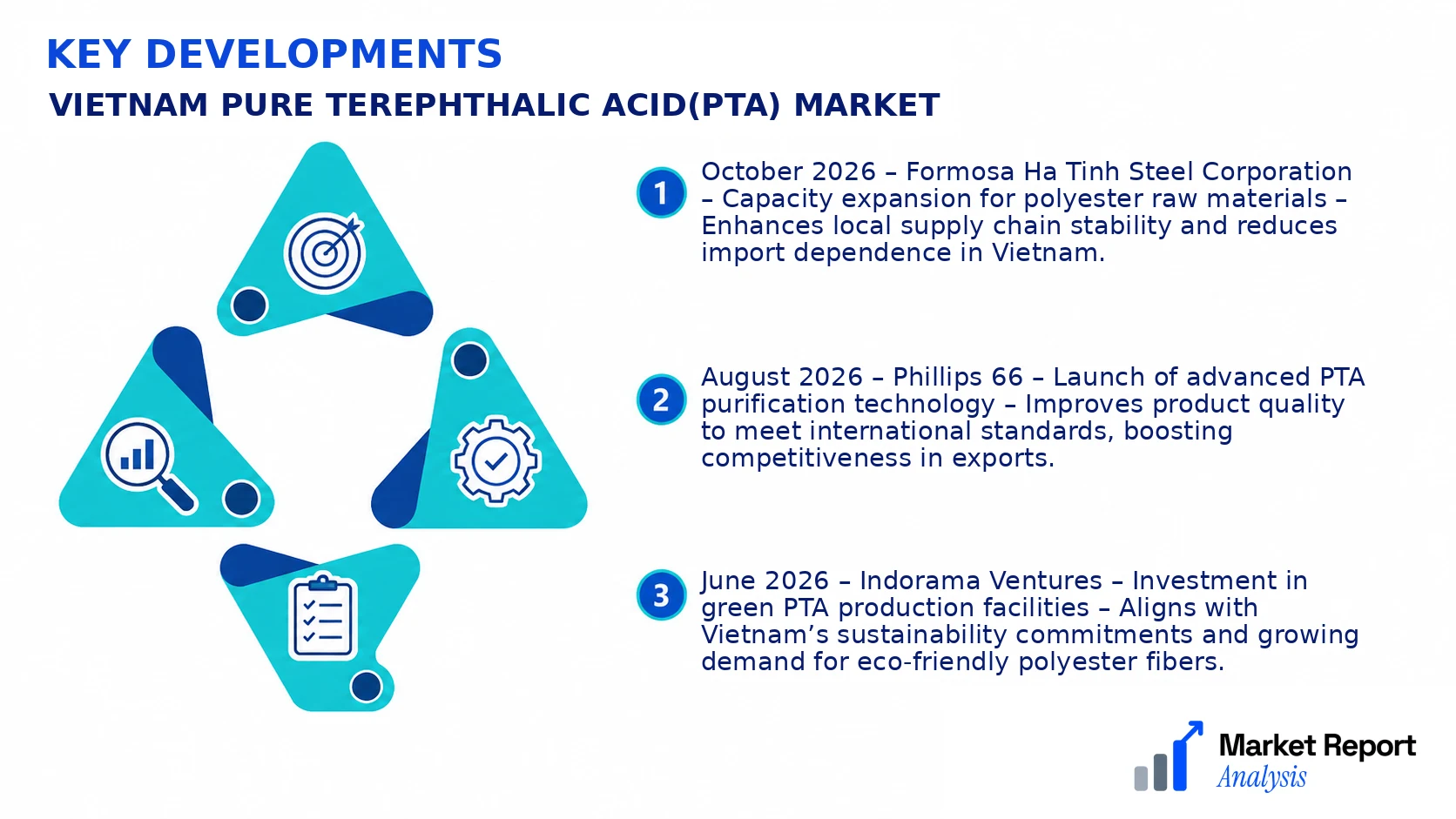
- October 2026 – Formosa Ha Tinh Steel Corporation – Capacity expansion for polyester raw materials – Enhances local supply chain stability and reduces import dependence in Vietnam.
- August 2026 – Phillips 66 – Launch of advanced PTA purification technology – Improves product quality to meet international standards, boosting competitiveness in exports.
- June 2026 – Indorama Ventures – Investment in green PTA production facilities – Aligns with Vietnam’s sustainability commitments and growing demand for eco-friendly polyester fibers.
- April 2026 – Zhejiang Petrochemical Co., Ltd. – Strategic alliance with Vietnam polyester producers – Strengthens supply chain and stabilizes input costs amid regional supply constraints.
- February 2026 – Reliance Industries – Downstream polyester plant capacity expansion in Vietnam – Facilitates vertical integration and accelerates local textile manufacturing capabilities.
Frequently Asked Questions
What is the Vietnam Pure Terephthalic Acid (Pta) Market?
The Vietnam Pure Terephthalic Acid market involves the manufacturing and consumption of Pta, a crucial raw material for polyester production. The market reflects the industry dynamics, including demand, supply, pricing, and key stakeholders in Vietnam's chemical sector.
What is the current market size of Vietnam Pure Terephthalic Acid (Pta) Market?
As of 2026, the market size of Vietnam's Pta industry is estimated at approximately USD 1.2 Billion, driven by expanding polyester fiber and PET resin demand across various manufacturing sectors, including textiles, packaging, and automotive components.
What factors are driving the Vietnam Pure Terephthalic Acid (Pta) Market?
Key drivers include Vietnam's rising textile and packaging industries, increasing textile exports, government incentives for chemical manufacturing, infrastructural developments, and investments in related industrial zones, all contributing to increased Pta demand and industry growth.
Which Vietnamese city leads the Vietnam Pure Terephthalic Acid (Pta) Market?
Ho Chi Minh City is the leading hub for Pta production and consumption, owing to its advanced industrial infrastructure, presence of major chemical and polyester production companies, and strategic logistics connectivity supporting market operations.
Which segment is expected to grow the fastest?
The polyester fiber segment is projected to grow rapidly, fueled by rising demand for textiles and non-woven materials, pushing Pta consumption for polyester production in both domestic and export markets.
Who are the leading companies operating in the Vietnam Pure Terephthalic Acid (Pta) Market?
Leading companies include PVFCCo, VNR, and local chemical producers, which are investing in capacity expansions, technological upgrades, and strategic partnerships to strengthen their market positions in Vietnam's Pta industry.
Analyst Perspective
The Vietnam Pure Terephthalic Acid (PTA) market exhibits a mature yet dynamically evolving landscape, driven by increasing domestic polyester fiber demand and strategic investments in local refining capacity. Over the forecast period, the market is expected to sustain steady growth, supported by Vietnam’s expanding manufacturing sector and government initiatives favoring industrial growth. Technological advancements in catalyst efficiency and production processes will enable more cost-effective, environmentally sustainable PTA production methods, encouraging long-term industry resilience. Investment priorities should focus on upgrading existing facilities and fostering innovation in green technology to mitigate environmental risks and meet stricter regulations. Competition among domestic producers is intensifying, with new entrants exploring strategic partnerships and capacity expansions, especially in industrial hubs such as Ho Chi Minh City and Hai Phong. These cities offer high growth potential given their infrastructure, logistics, and access to raw materials. Overall, Vietnam’s PTA sector presents attractive opportunities for strategic investors aiming to capitalize on emerging domestic demand and export potential in Southeast Asia.
