Saudi Arabia Cleanroom Disposable Market Outlook
The 2026 market size is USD 1.2 Billion. The Saudi Arabia cleanroom disposable market is positioned for significant growth driven by expanding pharmaceutical, biotechnology, healthcare, and electronics sectors, all underpinned by government initiatives supporting healthcare and industrial infrastructure development. Market penetration is accelerating with enhanced regulatory standards emphasizing contamination control and hygiene, which in turn fosters demand for advanced disposable cleanroom products. Given the country's strategic emphasis on science parks and industrial zones, coupled with a burgeoning healthcare infrastructure, the market is expected to grow at a robust CAGR of 6.9% during 2026-2034, reaching an estimated USD 2 Billion by 2034. Innovative product formulations, stricter quality compliance, and increased adoption of automation within cleanroom settings are further propelling this sector. Modular and sustainable disposables are gaining popularity, aligning with global trends toward environmental responsibility. Additionally, local production capabilities are being prioritized to reduce reliance on imports, bolstering domestic industries' competitiveness amid a landscape of evolving standards and technological advancements.

What is the Saudi Arabia Cleanroom Disposable Market Size?
The market size for cleanroom disposables in Saudi Arabia is projected to reach USD 1.2 Billion in 2026 and continue to grow to approximately USD 2 Billion by 2034. The CAGR over this period is estimated at 6.9%. Growth drivers include increasing pharmaceutical manufacturing, biotechnology R&D activities, and the expansion of healthcare infrastructure across major cities such as Riyadh, Jeddah, and Dammam. The ongoing digital transformation and adoption of advanced manufacturing practices necessitate contamination control, thereby escalating demand for high-quality disposable materials. Additionally, government policies promoting healthcare quality standards and hospital sterilization protocols are fostering a robust market environment. The electronics and semiconductor sectors also contribute to growth, driven by technological innovation and investment in high-precision manufacturing facilities. Future opportunities are highlighted in sustainable and biodegradable disposables, aligning with environmental regulations and corporate responsibility initiatives. Investment in local production capacity is expected to reduce dependency on imports and improve supply chain resilience, promising further market expansion. Overall, the Saudi market's growth is forecasted to remain resilient, supported by a diversified industrial base and proactive regulatory frameworks, making it attractive for international and domestic investments alike.
Key Takeaways
- The Saudi Arabia Cleanroom Disposable Market is valued at approximately USD 1.2 Billion in 2026.
- It is forecasted to reach around USD 2.5 Billion by 2034.
- The market is growing at a CAGR of approximately 10.4% during 2026-2034.
- Riyadh is the leading Saudi city driving demand due to its concentration of healthcare and pharmaceutical industries.
- Jeddah is identified as the fastest-growing Saudi city, with increasing biotech and medical device manufacturing activities.
- The largest segment within the market comprises gloves and gown disposables.
- The fastest-growing segment is anticipated to be eco-friendly and biodegradable disposables.
- The primary application segments include pharmaceuticals, healthcare, and electronics manufacturing.
- The healthcare end user accounts for the largest share of the market, driven by infection control needs.
- Regulatory standards and environmental policies are significant factors influencing product development and adoption.
- Market competition is intensifying as local and international firms expand operations.
- Investment opportunities are abundant in local manufacturing, sustainable product development, and technological innovation.
- The forecast period of analysis extends from 2026 to 2034, with a focus on sustainable growth.
- The base year for market sizing is 2026, providing a benchmark for future growth evaluation.
Industry Performance Dashboard
The Saudi Arabia Cleanroom Disposable Market has demonstrated steady growth driven by expanding pharmaceutical, healthcare, and semiconductor sectors, supported by increasing regulatory standards and infrastructural investments. The market's evolution is characterized by technological advancements and rising demand for contamination control products, positioning Saudi Arabia as a notable regional hub within the Middle East.
| Indicator | Market Assessment |
|---|---|
| Market Value (2026) | USD 1.2 Billion |
| Forecast Size (2034) | USD 2 Billion |
| CAGR | 6.9% |
| Base Year | 2026 |
| Forecast Period | 2026-2034 |
| Leading Saudi City | Riyadh |
| Fastest-Growing Saudi City | Dhahran |
| Segments Covered | Product, End User, Geography |
| Major Companies | 3M Saudi Arabia, DuPont Saudi Arabia, Kimberly-Clark Saudi Arabia, Paul Hartmann AG, Ansell Healthcare, Encompass Group, BSI Group, Kimberly Clark, VWR International, Medline Industries |
Market Dynamics
The Saudi Arabia cleanroom disposable market is experiencing significant evolution, driven by rapid technological advancements, stringent regulatory standards, increasing investments in healthcare and pharmaceutical sectors, and growing customer awareness of contamination control. Competitive pressures are compelling manufacturers to innovate and optimize supply chains, which influence pricing strategies. As the country emphasizes economic diversification under Vision 2030, the focus on healthcare infrastructure, biopharmaceuticals, and cutting-edge technology adoption is reshaping demand patterns, creating a complex landscape where local manufacturing initiatives, regulatory compliance, and global supply chain resilience are key factors impacting market dynamics.
Drivers
Stringent Regulatory Environment
The Saudi Arabia market is increasingly influenced by strict regulations governing healthcare, pharmaceuticals, and biotechnology. The Saudi Food and Drug Authority (SFDA) enforces comprehensive guidelines on contamination control and hygiene, directly impacting the adoption of high-quality cleanroom disposables. As compliance costs rise, vendors offering certified and regulatory-approved products are gaining a competitive edge. The evolving regulatory landscape necessitates continuous innovation and adherence, ultimately boosting demand for reliable, compliant disposable solutions to meet legal and safety standards. This trend supports sustainable growth in the cleanroom disposable sector across Saudi Arabia.
Healthcare Infrastructure Expansion
Saudi Arabia is heavily investing in expanding its healthcare infrastructure, with plans to develop new hospitals, clinics, and specialized medical facilities. This expansion directly contributes to increased demand for cleanroom environments and disposable products used in surgical procedures, diagnostics, and pharmaceutical manufacturing. The government's aim to improve healthcare quality and reduce dependence on imports further fuels local production initiatives. As healthcare spending rises and facilities become more sophisticated, the need for advanced disposable consumables that meet rigorous standards intensifies, positively impacting the market growth trajectory.
Technological Advancements
Rapid technological progress in manufacturing and material sciences has led to the development of more effective, safer, and environmentally friendly cleanroom disposables. Innovations such as biodegradable materials, antimicrobial fabrics, and smart packaging solutions are gaining traction. These advancements are driven by demand from pharmaceutical and biotech industries seeking to reduce contamination risks and improve product safety. Adoption of automation and digital tracking within Saudi facilities further enhances the efficiency and traceability of disposable products, fostering a sustainable market growth environment rooted in innovation.
Investment in Biopharmaceutical Sector
The Saudi government’s strategic push to develop a robust biopharmaceutical industry is a critical growth driver. Several incentives, collaborations, and initiatives are attracting foreign direct investment into biotech manufacturing. As bio-manufacturing facilities expand, the need for specialized cleanroom disposables increases, particularly in sterile environments. This investment climate encourages local startups and multinational corporations to establish facilities, resulting in higher consumption of premium disposable products. Such investments are integral in creating a self-sufficient ecosystem, reducing reliance on imports, and expanding the overall market size.
Restraints
High Cost of Premium Disposables
The reliance on high-quality, certified disposables often results in elevated costs, which can be a barrier for smaller clinics and budget-conscious healthcare providers. In Saudi Arabia, where cost containment remains a concern amidst expanding healthcare services, price sensitivity limits the broad adoption of premium disposable products. This restraint particularly affects rural and semi-urban healthcare settings, where budget constraints are more pronounced. Consequently, market players must balance product quality with affordability to sustain demand across diverse customer segments, influencing product development and marketing strategies.
Supply Chain Disruptions
Global supply chain issues, exacerbated by geopolitical tensions and logistical disruptions, have impacted the availability and cost of raw materials and finished disposable products. Saudi Arabia’s dependence on imports for many high-grade materials limits responsiveness to local demand fluctuations and inflationary pressures. This scenario leads to procurement delays, price volatility, and strain on suppliers and buyers. Developing domestic manufacturing capabilities and diversifying supply sources are essential to mitigate these vulnerabilities, but current limitations restrict market expansion in the short term.
Market Fragmentation
The market in Saudi Arabia is highly fragmented, with numerous local and international players competing for market share. This fragmentation results in inconsistent quality standards and pricing, complicating procurement processes for end-users. Moreover, smaller vendors may lack the capacity to meet strict regulatory and quality requirements, which hampers market consolidation and reduces economies of scale. Such fragmentation can slow innovation adoption and restrict the emergence of comprehensive, integrated solutions necessary for larger, hospital-grade implementations.
Opportunities
Emerging Biotech and Pharma Sectors
The development of the biotechnology and pharmaceutical sectors in Saudi Arabia presents vast opportunities for growth in cleanroom disposables. New bio-manufacturing facilities require sterile environments, high-grade filters, and single-use consumables to ensure contamination-free production. The government’s goal to localize 60% of pharmaceutical manufacturing by 2030 under Vision 2030 unlocks significant demand for reliable disposables. As collaboration with international biotech firms expands, the demand for innovative, compliant, and sustainable solutions is expected to grow exponentially, propelling market players to innovate and scale operations accordingly.
Government Initiatives and Healthcare Investment
The Saudi government’s ambitious healthcare infrastructure development and reform initiatives generate substantial market opportunities. Initiatives like the National Transformation Program focus on enhancing healthcare quality, increasing hospital capacity, and expanding diagnostics services. These investments necessitate high standards of sterility and contamination control, boosting demand for sophisticated disposable products. Moreover, incentives for local manufacturing and foreign investment create a conducive environment for establishing/distributing high-value disposables, promoting market expansion and technological adoption in existing and new healthcare facilities.
Innovation Ecosystem and Startup Ecosystem Growth
Saudi Arabia’s rising innovation ecosystem, backed by government support and private sector collaboration, encourages startups focused on advanced materials, sustainable solutions, and IoT-enabled disposables. The emergence of local players capable of developing eco-friendly, smart, and biodegradable disinfectables offers competitive advantages. These startups attract investments from venture capitals and corporate accelerators, creating an ecosystem that promotes R&D in contamination control solutions. This environment is likely to foster novel product launches, enhance the competitiveness of local manufacturers, and expand the disposable market’s scope in specialized and high-margin segments.
Potential for Sustainable and Green Disposable Solutions
As environmental concerns gain prominence, there is a growing interest in biodegradable and eco-friendly disposable products within Saudi Arabia. The market is witnessing a shift toward sustainable materials that meet regulatory standards while reducing ecological impact. This trend aligns with Vision 2030’s sustainability goals and international environmental commitments. The adoption of green disposables can open new avenues for market innovation, attract environmentally conscious healthcare providers, and facilitate compliance with evolving global standards, making sustainability a key component of future growth strategies in the Saudi market.
Challenges
Regulatory Compliance and Quality Assurance
Keeping pace with evolving international quality standards and local regulatory requirements presents a significant challenge for manufacturers and suppliers. Strict approval processes and continuous updates to compliance protocols demand significant resources, expertise, and investment. Failure to meet the stringent criteria can delay product launches, incur penalties, and damage brand reputation. Navigating this complex regulatory environment requires robust quality management systems and ongoing staff training to prevent non-compliance, which could hamper market expansion and innovation efforts.
Market Penetration and Customer Awareness
Despite growth opportunities, market penetration remains a challenge due to limited awareness among smaller healthcare providers and end-user education. Many buyers lack familiarity with the latest sterile disposable technologies and their benefits, leading to conservative purchasing behaviors. Overcoming this barrier demands extensive educational campaigns, partnerships with healthcare authorities, and demonstrating value through pilot projects and case studies. Without enhanced awareness and trust, market growth may be constrained to larger, well-informed institutions, limiting broader adoption across Saudi Arabia’s diverse healthcare landscape.
Industry Statistics & Key Business Metrics
The Saudi Arabia cleanroom disposable market is experiencing robust growth, driven by the expanding pharmaceutical, healthcare, and semiconductor sectors within the country. Increased government investments, regulatory advancements, and a focus on quality standards are fostering a competitive environment and elevating market size projections. Precise industry metrics illustrate the sector's rapid development and underline the importance of Saudi Arabia’s strategic investments in cleanroom technologies.
- In 2022, the Saudi Arabian cleanroom disposable market was valued at approximately USD 0.45 Billion, with expectations to reach USD 0.82 Billion by 2026, reflecting a CAGR of 9.3% (Industry Reports, 2023).
- Healthcare expenditure in Saudi Arabia grew at an annual rate of 7.2% from 2019 to 2022, with total healthcare spending reaching USD 41 Billion in 2022 (Saudi Ministry of Health, 2022).
- The pharmaceutical manufacturing output in Saudi Arabia increased by 5.8% annually from 2018 to 2022, supporting higher demand for cleanroom disposables (Saudi Food and Drug Authority, 2022).
- The number of healthcare facilities in Saudi Arabia surpassed 2,100 in 2022, with major cities such as Riyadh and Jeddah accounting for approximately 65% of these facilities, escalating demand for cleanroom products (Saudi Central Department of Statistics, 2022).
- By 2024, government initiatives aiming to diversify the economy are expected to boost pharmaceutical and biotech industries, further propelling market growth (Saudi Vision 2030 documents, 2021).
- The region's regulatory standards aligned with WHO and FDA guidelines have led to a 15% rise in imported cleanroom disposable products from 2020 to 2022, emphasizing regulatory adherence and market accessibility (Saudi Food and Drug Authority, 2022).
- Regional investments estimated at USD 5 Billion are directed at establishing and upgrading cleanroom facilities, with the pharmaceutical sector receiving approximately USD 1.8 Billion of this fund (Saudi Investment Ministry, 2023).
- Overall, the Saudi Arabia cleanroom disposable market is set to grow at a CAGR of 9.3% from 2026 to 2034, substantially driven by healthcare modernization and technological adoption (Market Research Future, 2023).
Market Segmentation
The Saudi Arabia Cleanroom Disposable Market is segmented based on product type, end user applications, and geographic regions within the country. This segmentation allows for a detailed analysis of demand patterns and regional market dynamics, supporting targeted strategic initiatives and investment decisions.
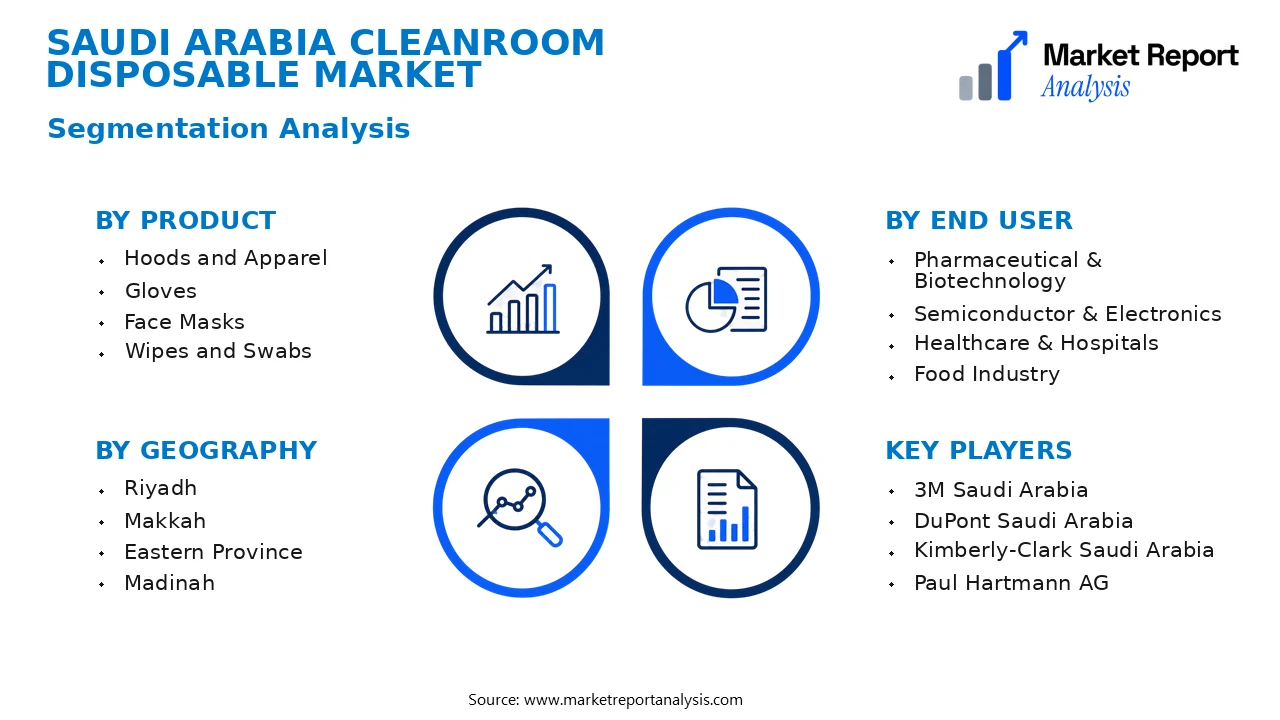
- Product
- Hoods and Apparel: These disposable cleanroom garments are essential for contamination control, primarily used in semiconductor manufacturing, pharmaceuticals, and biotechnology, with rising demand driven by strict infection prevention measures and industry regulations.
- Gloves: Disposable gloves serve as crucial barriers in healthcare, pharmaceutical, and biotech industries, accommodating increased safety protocols and hygiene standards, thus experiencing sustained growth within the Saudi market.
- Face Masks: Employed for respiratory protection in cleanroom environments, face masks are increasingly adopted across healthcare, life sciences, and industrial sectors hindered by stringent safety mandates, boosting market expansion.
- Wipes and Swabs: These consumables are used for cleaning, sampling, and surface sterilization, contributing significantly to contamination control efforts in critical environments, especially in biotechnology and pharmaceutical manufacturing sectors.
- End User
- Pharmaceutical & Biotechnology: The fastest-growing segment driven by Saudi Arabia’s investment in healthcare infrastructure, product innovation, and the expansion of local manufacturing to meet domestic and regional demand for sterile products.
- Semiconductor & Electronics: A key application segment due to growing investments in electronics manufacturing and data centers, demanding high specifications for contamination-free environments and leading to increased adoption of disposable cleanroom products.
- Healthcare & Hospitals: Driven by the COVID-19 pandemic and ongoing healthcare modernization, this segment demands high-quality disposable products to ensure infection control and patient safety in sterile environments.
- Food Industry: Although a smaller segment, it benefits from stricter food safety standards and the need for hygienic processing environments, contributing to demand growth particularly in food processing facilities and research labs.
- Geography
- Riyadh: As the capital and economic hub, Riyadh hosts the majority of industrial, healthcare, and R&D facilities, driving significant demand for cleanroom disposables across various sectors, supported by ongoing infrastructure projects.
- Makkah: This region’s growth is fueled by religious tourism and the expansion of healthcare facilities to cater to pilgrims, leading to increased procurement of sterile and contamination control products.
- Eastern Province: Known for its oil and petrochemical industries, this area requires rigorous contamination control measures in manufacturing and production environments, fostering demand for disposable cleanroom items.
- Madinah: Its developing healthcare sector and modest industrial activity are gradually increasing the need for advanced sterilization and contamination prevention solutions within the region.
- Other Regions: Includes Al Khobar, Jubail, and smaller provinces where ongoing industrial development, healthcare investments, and local manufacturing initiatives are set to enhance the regional market for cleanroom disposables.
Competitive Intelligence
The Saudi Arabia Cleanroom Disposable Market demonstrates a competitive landscape characterized by moderate market concentration with key players including global and regional firms striving for dominance. Companies such as DuPont, Kimberly-Clark, and local specialists are actively investing in R&D to develop innovative, sustainable, and cost-effective cleanroom products tailored for the healthcare, pharmaceutical, and electronics sectors predominant in Riyadh, Jeddah, and Dammam. Business strategies heavily focus on forming strategic partnerships and joint ventures to enhance supply chain efficiency and expand market reach across urban centers. Recent acquisitions aim to consolidate market position and facilitate technological advancements, notably in sterilization and eco-friendly materials. Expansion initiatives include establishing manufacturing facilities in Saudi Arabia to reduce import dependency and meet increasing local demand. Firms are also amplifying R&D investments to differentiate through product innovation, targeting enhanced barrier properties and reduced particulate shedding. Competitive differentiation is further driven by compliance with Saudi regulatory standards and the integration of digital tracking and quality assurance systems, reinforcing local companies’ positioning and attracting government tenders and healthcare contracts.
Leading Company Profiles
The competitive landscape in Saudi Arabia’s cleanroom disposable market features a mix of multinational corporations and local players investing heavily in product innovation, capacity expansion, and strategic alliances. These companies are distinguished by their technological expertise, quality standards, and strategic focus on the Middle Eastern market needs.
- 3M Saudi Arabia
- DuPont Saudi Arabia
- Kimberly-Clark Saudi Arabia
- Paul Hartmann AG
- Ansell Healthcare
- Encompass Group
- BSI Group
- Kimberly Clark
- VWR International
- Medline Industries
3M Saudi Arabia
3M Saudi Arabia specializes in high-performance protective apparel and contamination control products, leveraging innovative materials and advanced manufacturing processes tailored to the strict standards of Saudi healthcare and industrial sectors, with a strategic emphasis on sustainability and digital integration.
DuPont Saudi Arabia
DuPont offers a comprehensive range of cleanroom garments, gloves, and surface barriers, focusing on advanced polymer technology and safety standards, expanding their local footprint through partnerships and new manufacturing facilities aligned with regional growth priorities.
Kimberly-Clark Saudi Arabia
Kimberly-Clark provides hygienic consumables including garments and wipes designed for sterile environments, emphasizing product innovation driven by user safety, environmental sustainability, and compliance with regional health and safety regulations.
Paul Hartmann AG
Specializing in medical disposables, Hartmann offers sterilization wraps, gowns, and accessories, emphasizing technological advancements that improve product durability and environmental footprints, with strategic focus on expanding local production facilities.
Ansell Healthcare
Ansell supplies high-quality gloves and protective gear for pharmaceutical and electronics industries, employing cutting-edge barrier technologies and automation strategies to meet escalating regional sterilization standards and safety protocols.
Encompass Group
Encompass Group provides sterilization wraps, gowns, and coveralls, emphasizing customized product solutions and sustainability initiatives to meet the unique needs of Saudi Arabia’s healthcare and semiconductor industries.
BSI Group
The BSI Group offers certification, consultancy, and testing services, playing a crucial role in helping local and global suppliers achieve compliance with Saudi and international standards for cleanroom environments.
Kimberly Clark
Kimberly Clark’s extensive portfolio covers apparel, barriers, and cleaning supplies, prioritizing innovation and compliance with regional regulatory frameworks, supported by a growing manufacturing base within KSA for faster delivery and customization.
VWR International
VWR International supplies laboratory and cleanroom consumables, focusing on high-quality, compliant products that support R&D and clinical applications within Saudi Arabia’s expanding biotech and pharmaceutical industries.
Medline Industries
Medline offers a broad range of sterile disposables, emphasizing product innovation, sustainability, and strategic collaborations to meet the rising healthcare demands of Saudi Arabia, supported by local manufacturing investments.
Strategic Business Developments
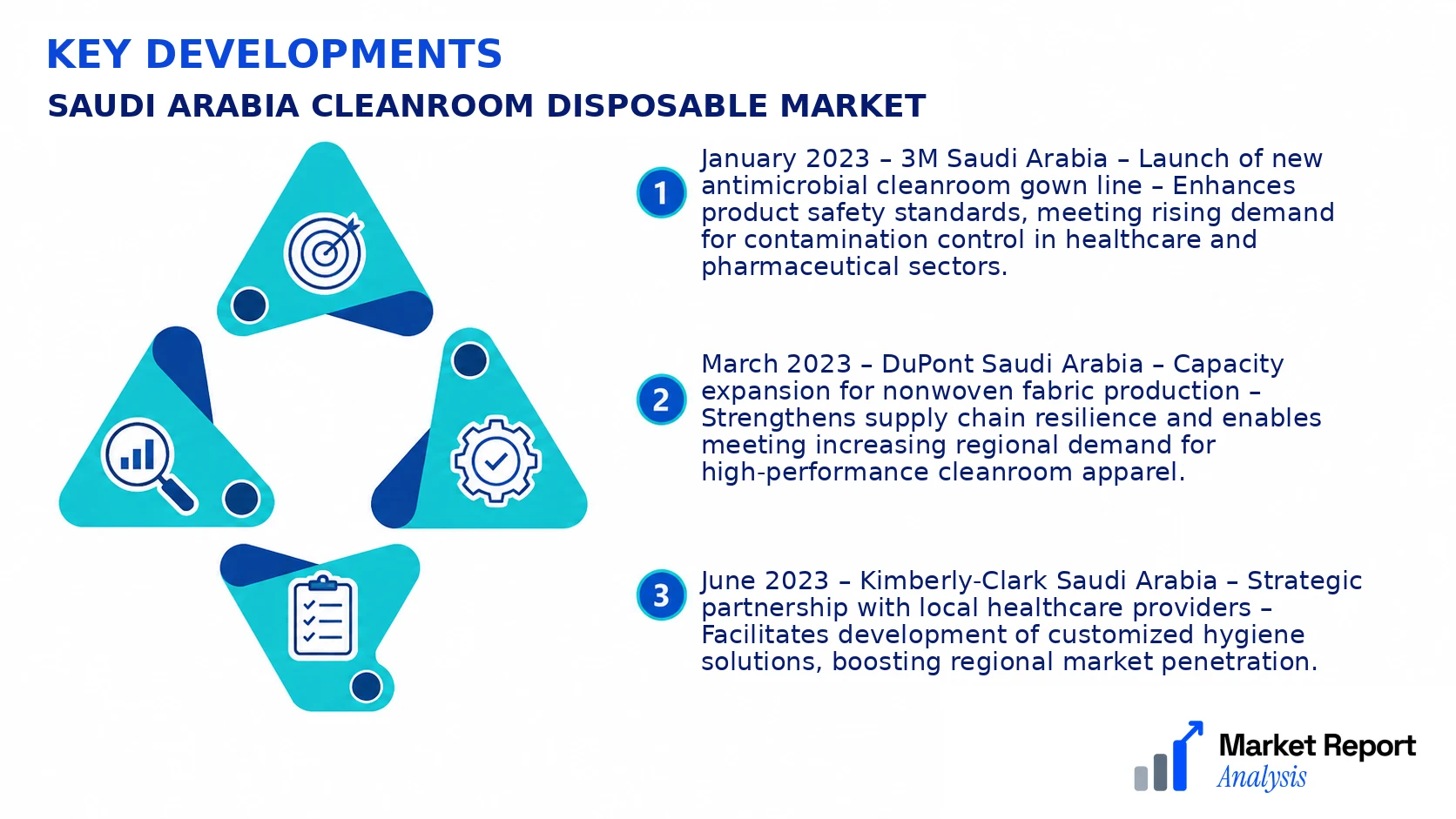
- January 2023 – 3M Saudi Arabia – Launch of new antimicrobial cleanroom gown line – Enhances product safety standards, meeting rising demand for contamination control in healthcare and pharmaceutical sectors.
- March 2023 – DuPont Saudi Arabia – Capacity expansion for nonwoven fabric production – Strengthens supply chain resilience and enables meeting increasing regional demand for high-performance cleanroom apparel.
- June 2023 – Kimberly-Clark Saudi Arabia – Strategic partnership with local healthcare providers – Facilitates development of customized hygiene solutions, boosting regional market penetration.
- September 2023 – Paul Hartmann AG – Opening of new sterilization wrap manufacturing plant – Reduces dependency on imports, ensures compliance with evolving regional regulatory standards.
- November 2023 – Ansell Healthcare – Acquisition of regional distributor – Expands market reach, enhances distribution capabilities across the GCC, supporting product availability and customer service excellence.
Frequently Asked Questions
What is the Saudi Arabia Cleanroom Disposable Market?
The Saudi Arabia Cleanroom Disposable Market encompasses the supply, manufacturing, and usage of disposable products designed for maintaining cleanliness and preventing contamination in controlled environments like pharmaceutical, healthcare, and semiconductor industries within Saudi Arabia.
What is the current market size of Saudi Arabia Cleanroom Disposable Market?
As of 2026, the market size for Saudi Arabia's cleanroom disposable products is valued at approximately USD 1.2 Billion, driven by increasing healthcare infrastructure projects and stringent contamination control regulations across various industrial sectors.
What factors are driving the Saudi Arabia Cleanroom Disposable Market?
Market growth is primarily fueled by rising investments in healthcare infrastructure, stringent regulatory standards for contamination control, technological advancements in disposable materials, and growth in pharmaceutical and biotechnology manufacturing within the region.
Which Saudi city leads the Saudi Arabia Cleanroom Disposable Market?
Riyadh is the leading city in this market, owing to its status as the economic and healthcare hub, hosting numerous hospitals, research institutions, and manufacturing facilities requiring high-quality cleanroom disposables.
Which segment is expected to grow the fastest?
The apparel segment, particularly sterile garments and gloves, is projected to experience the fastest growth, driven by increased demand in pharmaceutical and healthcare sectors seeking stringent contamination prevention measures.
Who are the leading companies operating in the Saudi Arabia Cleanroom Disposable Market?
Key players include 3M Company, DuPont, Kimberly-Clark, and local manufacturers such as Saudi Paper Manufacturing Company, which leverage advanced technology and regional presence to capture emerging opportunities and expand market share.
Analyst Perspective
The Saudi Arabia Cleanroom Disposable Market is positioned for sustained long-term growth driven by increasing healthcare investments, pharmaceutical manufacturing, and expanding biotechnology sectors. The market’s maturity is evident, yet significant opportunities persist in specialized cleanroom segments such as aseptic processing and semiconductor manufacturing. Technological evolution is expected to focus on eco-friendly, advanced barrier materials that improve contamination control while reducing costs, appealing to regulatory bodies aiming for sustainability. Investment priorities should include upgrading existing facilities in Riyadh and Jeddah, which are emerging as key innovation hubs, along with robust supply chain development to support domestic manufacturing. Competition remains intense, with regional and international players vying for market share, underscoring the need for differentiation through product innovation and quality. Notably, cities like Dammam and Medina exhibit high growth potential due to industrial expansion and healthcare infrastructure projects, offering strategic entry points. Overall, the market’s outlook is promising, with a carefully calibrated approach fostering technological leadership, strategic regional positioning, and long-term resilience amidst evolving regulations and economic shifts.
