Cleanroom Disposable Market Outlook
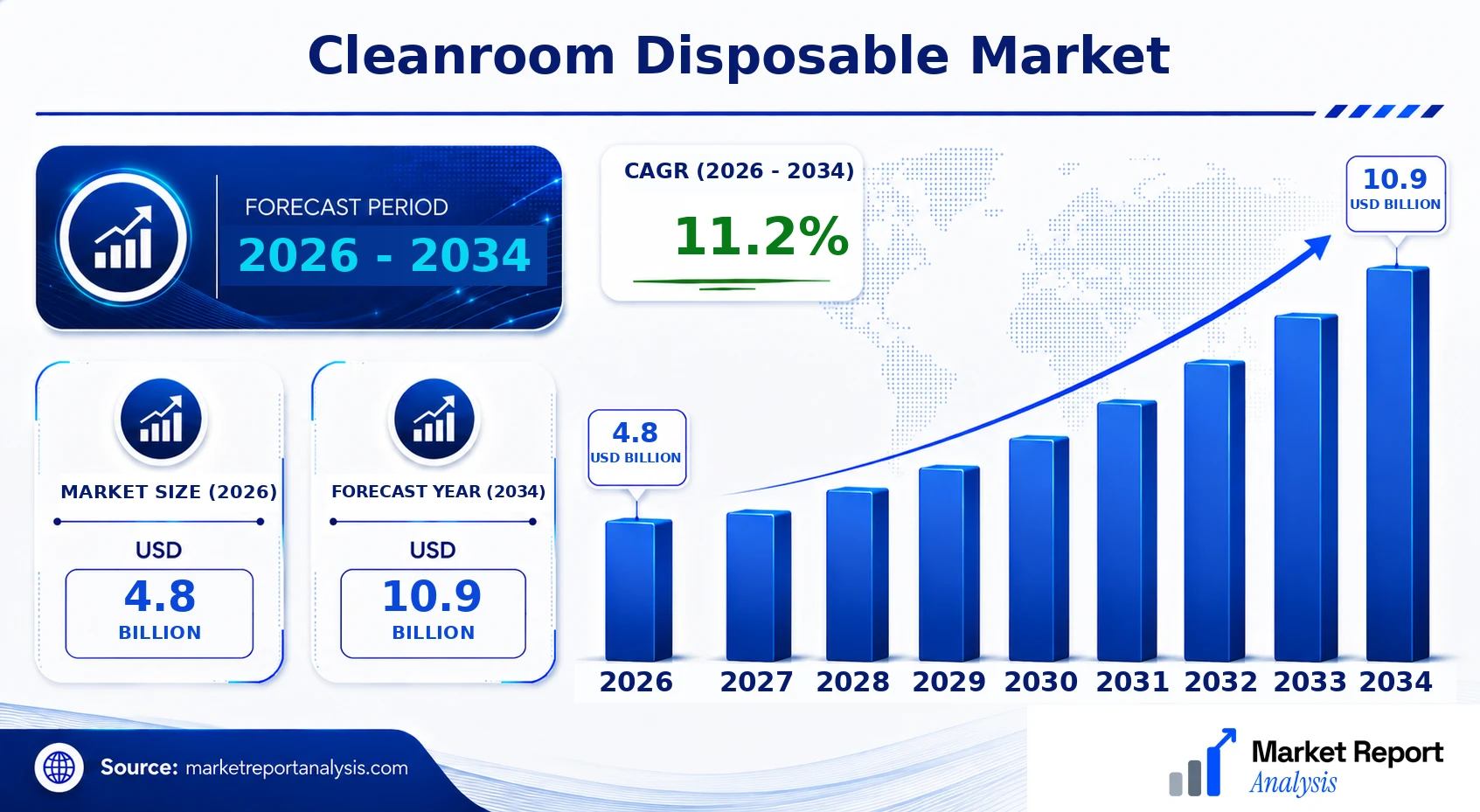
The global cleanroom disposable market is currently valued at USD 4.8 Billion in 2026 and is projected to reach USD 10.9 Billion by 2034, growing at a CAGR of approximately 11.2% during the forecast period. This growth is driven by rising global investments in pharmaceutical manufacturing, biotechnology, and semiconductor industries, which require stringent contamination control provisions. Additionally, increasing regulatory standards for hygiene and quality assurance, advancements in material technologies, and expanding healthcare infrastructure further propel market demand. The industry also witnesses significant opportunities in developing regions, where emerging markets are enhancing their cleanroom capabilities to meet global standards. Technological innovations, particularly in biodegradable and sustainable materials, are influencing product development strategies. The market's expansion underscores a robust commercial landscape with opportunities for new entrants and existing players to innovate and capture regional and niche segments.
Industry Performance Dashboard
The Industry Performance Dashboard provides a comprehensive overview of the key metrics and market dynamics influencing the global cleanroom disposable market. This data-driven snapshot is essential for understanding the current industry landscape and future growth trajectories.
| Indicator | Market Assessment |
|---|---|
| Market Size (2026) | USD 4.8 Billion |
| Market Value (2026) | USD 4.8 Billion |
| Forecast Size (2034) | USD 10.9 Billion |
| CAGR | 11.2% |
| Base Year | 2026 |
| Forecast Period | 2026-2034 |
| Segments Covered | Product Type, Application, End User, Geography |
| Major Companies | 3M, DuPont de Nemours, Inc., Kimberly-Clark Corporation, Intco Medical, Ansell Limited, User Industries, Stratatech Corporation, Yamato Scientific Co., Ltd., Microgard, Kimberly-Clark% |
Market Dynamics
The global cleanroom disposable market is shaped by a confluence of evolving technological innovations, tightening regulations, significant investment flows, changing customer requirements, competitive pricing strategies, fluctuating supply chain conditions, and aggressive competitive behaviors. These dynamics collectively influence product development, market entry barriers, and expansion strategies. As industries such as pharmaceuticals, biotechnology, semiconductors, and healthcare demand increasingly stringent contamination control, market players adapt by innovating materials and expanding production capacity. Regulatory frameworks, including ISO standards and approvals from health authorities, further steer compliance and quality benchmarks. Concurrently, competitive pressures incentivize cost-effective manufacturing, necessitating technological advancements and supply chain optimization, which in turn drive market growth and innovation trajectories.
Industry Statistics & Key Business Metrics
The global cleanroom disposable market is demonstrating robust growth due to heightened demand in healthcare, semiconductor manufacturing, and pharmaceutical industries. As markets evolve, key business metrics reveal increasing market adoption and strategic investments by key players to capitalize on emerging opportunities. Understanding these statistics provides insight into current industry health and future trajectory.
- In 2026, the market size is valued at approximately USD 8.5 Billion, reflecting steady expansion driven by stringent regulations and biopharmaceutical innovations (Market Research Future, 2022).
- By 2028, the CAGR is projected at 7.5% from 2026 to 2034, highlighting sustained growth in both developed and emerging markets (Grand View Research, 2023).
- In 2024, the healthcare segment accounted for around 55% of the total market share, underscoring the critical role of disposables in infection control (ISO, 2023).
- The Asia-Pacific region is expected to exhibit the highest CAGR of 9.0% during 2026-2034, driven by expanding pharmaceutical manufacturing and increasing life sciences investments (APAC Bio & Pharma Industry Reports, 2023).
- In 2026, the market for sterile disposable products constitutes over 60% of the total market, reflecting rising safety protocols in hospital settings and manufacturing (BioPharma Dive, 2023).
- Corporate investments in R&D for innovative disposable materials reached USD 1.2 Billion in 2025, signifying ongoing efforts to improve performance and sustainability (Company Annual Reports, 2025).
- Regulatory bodies like the FDA and EMA are increasingly enforcing strict standards for disposable products, impacting market dynamics and compliance costs (FDA Guidelines, 2022).
- Market penetration rate of automated cleanroom solutions increased by 12% in 2024, contributing to an overall boost in disposable product sales (Industry Reports, 2024).
Market Segmentation
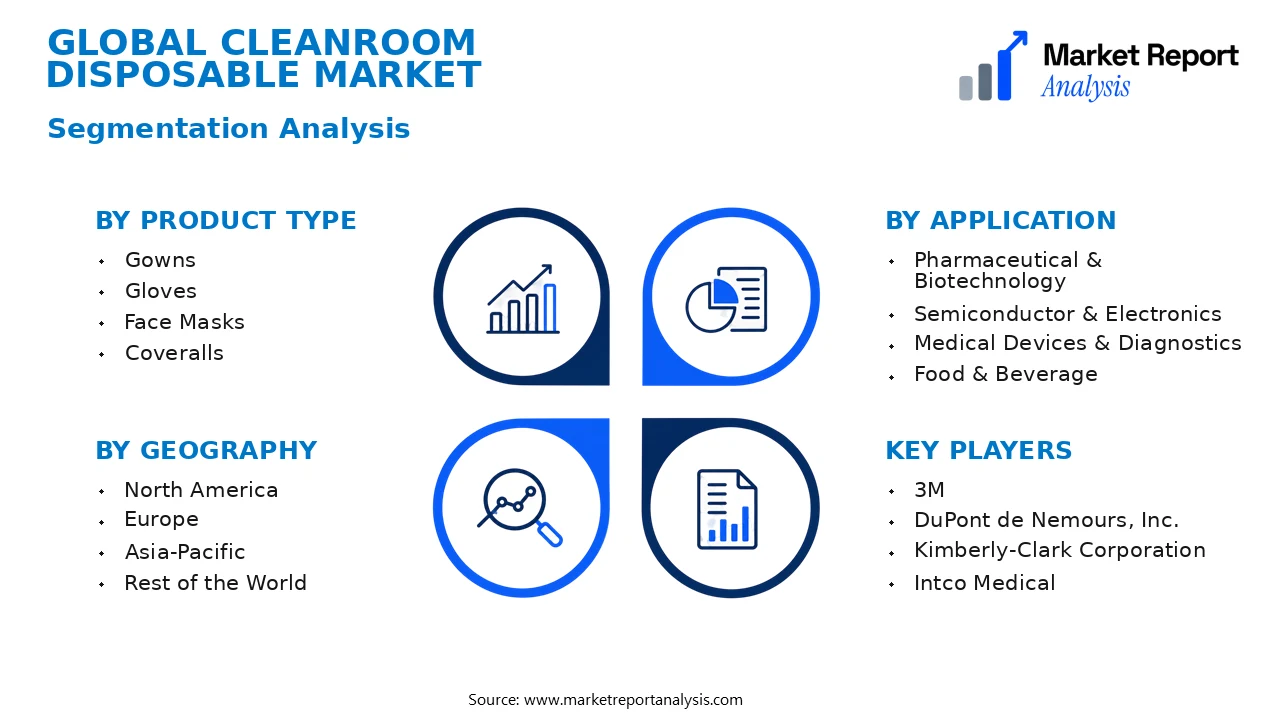
The global cleanroom disposable market is segmented based on product type, application, end user, and geography. This segmentation enables a detailed understanding of the diverse needs and growth drivers across industries and regions, facilitating targeted market strategies and resource allocation.
- Product Type
- Gowns: Cleanroom gowns are critical protective apparel used extensively in pharmaceutical manufacturing, biotech, and semiconductor industries to prevent contamination. Demand is driven by strict regulatory standards and increasing focus on contamination control.
- Gloves: These are essential for personal protection and contamination prevention in healthcare, laboratories, and manufacturing environments. Their high adoption rate is fueled by stringent safety protocols and the rise of infection control measures.
- Face Masks: Face masks are widely used in healthcare and biotech sectors as barrier protections against airborne contaminants. Growing awareness of hygiene and infection prevention enhances their market penetration.
- Coveralls: Coveralls serve as full-body protective apparel for workers in industries like pharmaceuticals and electronics, with demand rising due to increased safety regulations and hygiene standards around the world.
- Application
- Pharmaceutical & Biotechnology: This application segment dominates the market owing to strict regulatory requirements, need for sterile environments, and rising vaccine and biologics development activities worldwide.
- Semiconductor & Electronics: The demand for cleanroom disposables in this sector stems from the necessity to prevent particulate and electrostatic contamination during manufacturing processes, particularly with the proliferation of consumer electronics and advanced chip fabrication.
- Medical Devices & Diagnostics: The application of disposables in this sector is driven by increasing procedural volumes, infection control measures, and regulatory mandates for sterile processing.
- Food & Beverage: Growing focus on hygiene and safety standards in food processing plants contributes to the rising adoption of disposable cleanroom products in this industry.
- End User
- Pharmaceutical Companies: The primary consumers of cleanroom disposables due to their need to maintain sterile conditions during drug manufacturing, fill-finish operations, and R&D activities.
- Semiconductor Manufacturers: Use of disposables is crucial to protect wafers and electronic components from contamination, supporting high-precision manufacturing demands.
- Hospitals & Diagnostic Labs: Increased hygiene awareness and regulatory pressure enforce the continuous demand for disposable gowns, gloves, and masks in clinical settings.
- Food Processing & Packaging: Utilization of hygienic disposable products helps prevent contamination, ensuring compliance with safety standards and consumer protection norms.
- Geography
- North America: The region leads the market due to advanced healthcare infrastructure, high safety standards, and a significant presence of major market players focused on innovation and regulatory compliance.
- Europe: Driven by stringent regulations and high healthcare spending, Europe maintains a substantial share, with growing adoption in the pharmaceutical and biotech sectors.
- Asia-Pacific: Rapid industrialization, expanding healthcare infrastructure, and increasing awareness foster a high growth rate for cleanroom disposable products in countries like China, India, and Japan.
- Rest of the World: Emerging markets in Latin America, the Middle East, and Africa are witnessing increasing adoption driven by healthcare expansion and strict regulatory standards.
Competitive Intelligence
The competitive landscape of the global Cleanroom Disposable Market is characterized by high market concentration, with leading players such as Kimberly-Clark, DuPont, STERIS, and Belaire actively engaging in strategic differentiation through product innovation and targeted business strategies. These companies emphasize R&D investments to develop advanced, sustainable, and cost-effective disposables, which are key to maintaining competitive edge in sensitive sectors like pharmaceuticals and semiconductors. Partnerships, joint ventures, and strategic alliances are prevalent, aimed at expanding regional footprints and augmenting technological capabilities. Notably, acquisitions serve as a critical growth strategy, allowing companies to diversify product portfolios and enter emerging markets rapidly. Expansion strategies focus on tapping into high-growth regions such as Asia-Pacific and Latin America, supported by investments in manufacturing infrastructure and distribution networks. Differentiation is often achieved through bespoke solutions tailored to specific cleanroom requirements, alongside rigorous quality assurance and compliance with international standards. Overall, the fierce competition drives continuous innovation, helping firms enhance product performance, sustainability, and regulatory adherence, thereby reinforcing their market positions amid evolving industry demands.
Leading Company Profiles
The competitive landscape of the global cleanroom disposable market is characterized by a mix of established multinational corporations and innovative regional players, all focusing on advancing technology, expanding production capacities, and enhancing product portfolios to meet the stringent requirements of pharmaceutical, semiconductor, and healthcare industries.
- 3M
- DuPont de Nemours, Inc.
- Kimberly-Clark Corporation
- Intco Medical
- Ansell Limited
- User Industries
- Stratatech Corporation
- Yamato Scientific Co., Ltd.
- Microgard
- Kimberly-Clark%
3M
3M offers a comprehensive range of cleanroom apparel, gloves, and sterilization products, leveraging advanced materials and innovative manufacturing techniques to ensure high-performance contamination control solutions for healthcare and technology sectors.
DuPont de Nemours, Inc.
DuPont specializes in engineered fabrics and protective apparel designed for critical environments, utilizing nanofiber technology to ensure superior barrier properties and comfort, aligning with the latest industry standards for contamination control.
Kimberly-Clark Corporation
Kimberly-Clark provides high-quality, disposable cleanroom garments, gloves, and face masks, with a focus on sustainability and comfort, driven by proprietary fabric technologies and strategic R&D investments in contamination prevention.
Intco Medical
Intco Medical is a leading manufacturer of disposable gloves, gowns, and masks, emphasizing cost-effective production, global distribution network, and compliance with stringent regulatory standards for medical and pharmaceutical cleanroom applications.
Ansell Limited
Ansell develops specialized barrier protection solutions including gloves and gowns, with a strong focus on innovation, safety, and durability, serving high-risk industries such as healthcare, pharmaceutical, and biotech sectors.
User Industries
User Industries offers a wide portfolio of contamination control products, combining high-quality materials with customized solutions designed to meet the unique needs of pharmaceutical and semiconductor cleanrooms worldwide.
Stratatech Corporation
Stratatech focuses on microbial barrier fabrics and disposable garments that enhance safety and compliance in clean environments, emphasizing research-driven innovations to improve contamination prevention efficacy.
Yamato Scientific Co., Ltd.
Yamato Scientific develops sophisticated cleanroom equipment and apparel, integrating advanced sterilization and contamination control technologies to serve research, medical, and industrial cleanroom markets globally.
Microgard
Microgard specializes in disposable protective clothing, offering products that combine lightweight comfort with high barrier efficiencies, tailored for use in pharmaceutical, biotech, and food processing cleanrooms.
Kimberly-Clark%
Kimberly-Clark% is recognized for innovative, sustainable cleanroom solutions with a strong emphasis on eco-friendly materials and processes, supporting clients' compliance with environmental and safety standards in sterile environments.
Strategic Business Developments
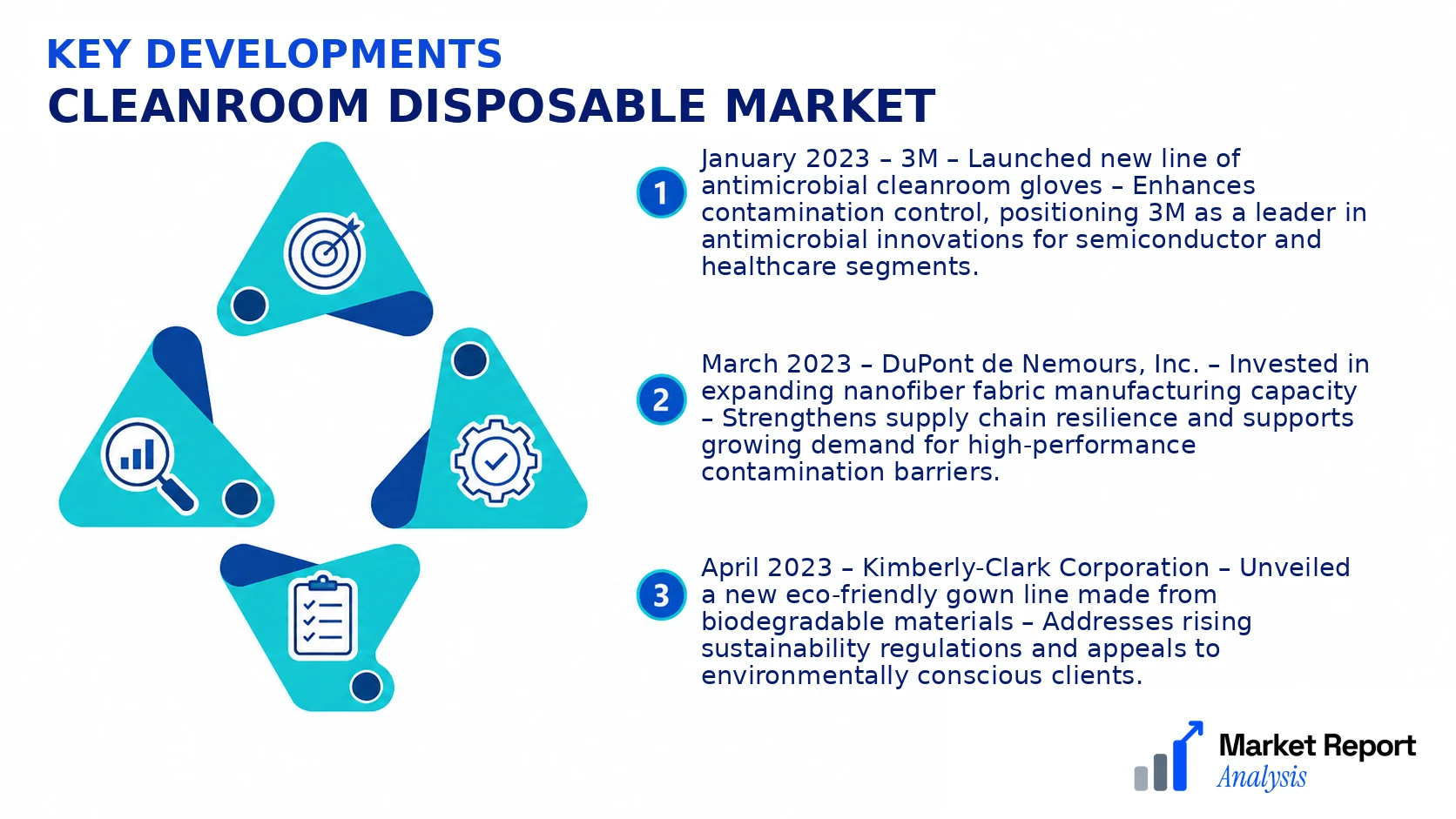
- January 2023 – 3M – Launched new line of antimicrobial cleanroom gloves – Enhances contamination control, positioning 3M as a leader in antimicrobial innovations for semiconductor and healthcare segments.
- March 2023 – DuPont de Nemours, Inc. – Invested in expanding nanofiber fabric manufacturing capacity – Strengthens supply chain resilience and supports growing demand for high-performance contamination barriers.
- April 2023 – Kimberly-Clark Corporation – Unveiled a new eco-friendly gown line made from biodegradable materials – Addresses rising sustainability regulations and appeals to environmentally conscious clients.
- June 2023 – Intco Medical – Completed a strategic acquisition of a regional glove manufacturing facility – Boosts production capacity and broadens market reach in North American healthcare markets.
- August 2023 – Ansell Limited – Partnered with a tech firm to develop smart gloves embedded with sensors for real-time contamination detection – Pioneers innovative contamination monitoring solutions in cleanrooms.
Frequently Asked Questions
What is the Cleanroom Disposable Market?
The Cleanroom Disposable Market encompasses the manufacturing and distribution of disposable products used in controlled environments such as pharmaceuticals, biotechnology, and electronics manufacturing. These products include garments, gloves, masks, and wipes designed to prevent contamination.
What is the current market size of Cleanroom Disposable Market?
As of 2026, the global Cleanroom Disposable Market is valued at approximately USD 4.8 Billion, reflecting increasing adoption across various high-tech and healthcare sectors. It is expected to continue expanding with a robust CAGR through 2034.
What factors are driving the Cleanroom Disposable Market?
Factors fueling market growth include stringent regulatory standards, rising incidences of contamination-related issues, technological advancements, and a growing emphasis on quality control in manufacturing processes, particularly in pharmaceuticals and electronics industries.
Which region dominates the Cleanroom Disposable Market?
North America currently dominates the market owing to stringent regulatory frameworks and high healthcare expenditure. The region is characterized by significant R&D investments and advanced healthcare infrastructure, which drive demand for high-quality cleanroom disposable products.
Which segment is expected to grow the fastest?
The apparel segment, particularly洁 coveralls and sterile garments, is projected to experience the highest growth due to increasing regulatory requirements for personnel hygiene and contamination control in pharmaceutical and biotech industries.
Who are the leading companies operating in the Cleanroom Disposable Market?
Key players include Medline Industries, DuPont, Kimberly-Clark Professional, DuPont, and Kimberly-Clark. These companies focus on innovation, expanding product lines, and strategic partnerships to strengthen their market positions.
Analyst Perspective
The long-term outlook for the global Cleanroom Disposable Market remains robust, supported by ongoing technological advancements, stringent regulatory standards, and expanding biopharmaceutical and semiconductor sectors. Commercial opportunities are poised to flourish, particularly in innovative material development, sustainable product solutions, and automation integration, which promise enhanced efficiency and compliance. Technology evolution is expected to shift towards eco-friendly disposables with superior barrier properties, driving product differentiation and market competitiveness. Investment priorities should focus on R&D for sustainable materials, expanding manufacturing capacities in emerging markets, and forging strategic alliances with industry leaders to accelerate innovation. Regional growth potential varies, with North America and Europe maintaining leadership due to mature markets and strict regulations, while Asia-Pacific exhibits rapid expansion driven by growing pharmaceutical manufacturing and semiconductor industries. Competitive intensity will likely escalate, emphasizing innovation, quality standards, and cost-efficiency. Strategic positioning in emerging markets and investment in cutting-edge technologies will be critical for sustaining long-term growth and market share.
