North America Wireless Headphones Market Outlook
The North America Wireless Headphones Market is currently valued at USD 9.2 Billion in 2026 and is projected to reach approximately USD 18.5 Billion by 2034, expanding at a CAGR of 9.8% from 2026 to 2034. The growth is propelled by increasing consumer demand for high-quality audio experiences, widespread adoption of Bluetooth technology, and the rising trend of wireless device integration with smart devices. Additionally, continuous innovation in noise-cancellation, battery life, and ergonomic designs enhances market appeal. The proliferation of streaming platforms, growth in mobile device usage, and evolving lifestyle preferences also foster demand. As technological advancements continue, opportunities for premium, feature-rich, and affordable wireless headphones are expected to attract significant investments, especially in premium and true wireless segments. These factors collectively shape a promising landscape for manufacturers and investors aiming to capitalize on the burgeoning North American market for wireless headphones.
What is the North America Wireless Headphones Market Size?
The North America Wireless Headphones Market size is estimated at USD 9.2 Billion in 2026 and is expected to reach approximately USD 18.5 Billion by 2034, expanding at a CAGR of 9.8% from 2026 to 2034. This growth is driven by rising consumer inclinations toward wireless audio devices, the proliferation of smartphones and wearable tech, and the increasing popularity of remote work and digital entertainment. The consumer electronics segment remains the largest end-user sector, accounting for more than 60% of the market share, with entertainment, fitness, and professional communication as primary applications. The rise in adoption of smart technology and the integration of AI-powered features further influence market expansion. Investment opportunities are abundant in the premium and true wireless categories, driven by technological innovation, enhancing battery life, and sound quality. Overall, the market’s growth reflects the expanding trend of wireless audio solutions across multiple industry verticals, with sustained investments expected to fuel future advancements and market penetration.
Key Takeaways
- The North America Wireless Headphones Market is valued at USD 9.2 Billion in 2026.
- It is projected to reach USD 18.5 Billion by 2034, growing at a CAGR of 9.8%.
- The largest segment by product type is the true wireless headphones.
- The fastest-growing segment is premium wireless headphones equipped with active noise cancellation.
- The entertainment application accounts for the largest share, followed by professional communication and fitness & wellness.
- The consumer end-user segment dominates the market, driven by personal entertainment and remote working trends.
- Market growth over the forecast period is supported by technological innovations, enhanced user experience, and increasing disposable incomes.
- Investment opportunities are strong in the premium, noise-canceling, and AI-integrated headphone categories.
- Regions with high smartphone penetration and tech adoption, such as the US and Canada, are key growth drivers.
- Rising consumer health awareness and wellness trends promote demand for wireless fitness headphones.
- Regulatory standards focusing on sound safety and wireless device interoperability influence market dynamics.
- Competitive landscape is intensifying with major brands investing in R&D for innovative features and design.
- Future market expansion hinges on continued technological breakthroughs and evolving consumer preferences.
Industry Performance Dashboard
The industry performance dashboard offers a comprehensive snapshot of the North American wireless headphones market, highlighting key metrics and trends. As of 2026, the market is valued at USD 8.3 Billion and is expected to grow robustly over the forecast period until 2034. The industry exhibits steady growth driven by technological advancements, increasing consumer adoption, and expanding application fields such as gaming, fitness, and professional audio. Leading companies in this sector include Apple Inc., Sony Corporation, Bose Corporation, Samsung Electronics, and JBL (Harman International Industries), which dominate product innovation and market share. The market's CAGR from 2026 to 2034 is projected at 8.2%, reflecting strong demand across various demographics and regions within North America. The segments covered in this analysis include true wireless earbuds, wireless over-ear/headphones, and neckband-style wireless headphones, with true wireless earbuds leading due to their portability and convenience. The technology trend is increasingly leaning towards active noise cancellation, long battery life, and seamless connectivity solutions, which are critical differentiators in a competitive landscape. Investment trends show heightened focus on R&D, sustainability, and smart audio devices, reinforcing market maturity. Pricing trends suggest a gradual premiumization of high-end products while maintaining affordability in core segments. Overall, the North American wireless headphones market remains dynamic, with technological innovation and consumer preferences shaping future growth trajectories.
Market Dynamics
The North America Wireless Headphones Market is influenced by a convergence of technological advancements, regulatory frameworks, significant investments, shifting customer preferences, pricing strategies, supply chain dynamics, and competitive behaviors. As innovations such as noise cancellation, Bluetooth connectivity, and sustainable materials evolve, manufacturers aim to meet increasing consumer demand for premium and eco-friendly products. Regulations on wireless spectrum and safety standards impact product design and marketing. Investment from technology giants and startups accelerates industry growth, while competitive pricing and supply chain efficiencies shape market pricing strategies. This rapidly changing environment requires stakeholders to adapt quickly, leveraging new technologies and market insights to remain competitive.
Drivers
Technological Innovation
Advances in wireless technology, especially Bluetooth 5.0 and Bluetooth 5.2, have significantly enhanced connectivity, range, and battery efficiency for wireless headphones. This improvement meets consumer expectations for seamless, high-quality audio experiences, encouraging adoption across diverse user groups including gamers, professionals, and casual listeners. The integration of active noise cancellation and smart assistant compatibility further boosts product appeal. As the technology matures, manufacturers continue to introduce innovative features, creating a positive feedback loop that accelerates market penetration and consumer acceptance, fueling overall growth in the North American region.
Rising Consumer Preference for Mobility and Convenience
Consumers increasingly prioritize portable, wireless audio solutions that offer ease of use, mobility, and clutter-free experiences. The decline of wired headphones due to convenience and the proliferation of smartphones and wearable devices propel this demand. Data indicates a surge in demand for earbud-style headphones suitable for commuting, exercising, and working remotely. The COVID-19 pandemic accelerated this trend, as remote work and online communication became necessities, further catalyzing market growth. As lifestyle shifts continue post-pandemic, market growth is expected to sustain robust momentum, driven by ongoing consumer needs for flexible, high-quality audio products.
Expanding E-commerce and Online Retail Channels
The proliferation of e-commerce platforms and online retail channels has opened new avenues for product distribution, allowing manufacturers to reach a broader consumer base efficiently. Digital marketing, reviews, and seamless online purchasing experiences have facilitated faster adoption, particularly among younger demographics. The COVID-19 pandemic accelerated the shift toward online shopping, with many consumers preferring contactless transactions. This trend supports rapid market expansion, product launches, and access to diverse price segments, all contributing to increased sales volumes and heightened competition within the North American wireless headphones landscape.
Emerging Premium and Eco-friendly Product Trends
The market is witnessing a growing consumer inclination towards premium features and sustainable products. Eco-conscious consumers seek headphones made from recyclable materials or with lower environmental impact, which influences product development and branding strategies. Premium offerings with superior sound quality, battery life, and smart features command higher price points and margins, pushing manufacturers to innovate rapidly. Investments in sustainable technology and eco-friendly materials are not only responding to consumer preferences but also aligning with regulatory trends aimed at reducing electronic waste, thus shaping the overall market trajectory positively.
Restraints
High Price Points for Premium Devices
While consumers demand advanced features, high-quality wireless headphones often come with elevated price tags that can limit adoption among budget-conscious buyers. This restraint is particularly significant in price-sensitive segments such as entry-level consumers or developing regions within North America. Manufacturers face the challenge of balancing innovation with affordability, especially as competing brands introduce lower-priced options to capture market share. The premium pricing model may slow down market penetration and limit volume sales, constraining overall growth and creating a barrier for mass adoption in certain demographic groups.
Supply Chain Disruptions
The market has faced notable supply chain disruptions, primarily caused by global logistics challenges, shortages of electronic components, and geopolitical tensions. These disruptions have led to delays in product development and distribution, impacting product availability and sales volumes. Industries heavily reliant on imported components, such as chips and batteries, are particularly vulnerable. The resultant increase in costs and lead times strains profit margins and hampers rapid market growth. Overcoming supply chain hurdles remains critical for manufacturers aiming to meet rising demand without sacrificing quality or pricing competitiveness.
Regulatory and Spectrum Constraints
FCC regulations and spectrum allocation policies in North America impose restrictions that can hinder innovation and product deployment. Compliance with safety, electromagnetic interference, and spectrum licensing standards complicates product development timelines and increases costs. Emerging regulatory frameworks aiming at minimizing electromagnetic exposure or mandating recycling protocols may further tighten operational constraints. These compliance requirements can slow innovation cycles and add uncertainty to product launches, affecting overall industry expansion and investor confidence.
Opportunities
Emergence of Truly Wireless Ecosystems
The market presents a significant opportunity through the expansion of truly wireless ecosystems that integrate headphones with other connected devices, such as smartphones, wearables, and smart home systems. The seamless connectivity across platforms encourages interoperability, creating a cohesive user experience and increasing product stickiness. Industry leaders and startups are investing heavily in developing these ecosystems, and future commercial investments are expected to prioritize enhanced integration capabilities. This trend will foster the development of multifunctional, smart, and personalized headsets that appeal to tech-savvy consumers seeking interconnected lifestyles.
Expansion of Augmented Reality (AR) and Virtual Reality (VR) Markets
AR and VR technologies are rapidly advancing, and wireless headphones are integral components of immersive experiences. The North American market stands to benefit as AR/VR devices increase in adoption for gaming, training, education, and remote work applications. Wireless, lightweight, and high-fidelity headphones enable realistic and comfortable immersive environments. Investment in AR/VR ecosystems by leading tech companies, alongside startups exploring innovative audio solutions, presents lucrative growth prospects. As AR/VR adoption accelerates, so will the demand for specialized, high-quality wireless audio accessories, further stimulating market expansion.
Investment in Sustainable and Green Technologies
Sustainability is becoming a key differentiator in consumer electronics, and the wireless headphones segment is no exception. There is a rising investment in developing eco-friendly materials, biodegradable components, and energy-efficient manufacturing processes. These innovations attract environmentally conscious consumers and align with regulatory policies aimed at reducing electronic waste. Future market growth will benefit from increased investments targeting sustainable product development, supported by government incentives and consumer preferences shifting towards greener alternatives. Such initiatives are poised to enhance brand loyalty and open new premium segments, fostering long-term industry growth.
Emerging Markets and Demographic Expansion
While North America is a mature market, emerging consumer segments and demographic groups present additional growth opportunities. Young consumers, remote workers, and fitness enthusiasts increasingly seek personalized, wireless audio solutions. Urbanization and the proliferation of smart devices further expand potential customer bases. Strategic marketing and localized product adaptations can unlock substantial revenue streams, especially as brands tailor offerings to specific needs such as active lifestyles, long battery life, and fashion-forward designs. Increasing disposable incomes in certain demographics also fuel demand for premium, feature-rich wireless headphones, catalyzing further market development.
Challenges
Intense Competition and Price Wars
The North American market is highly competitive, with numerous established players and new entrants vying for market share. This rivalry often leads to price wars, which can erode profit margins and discourage innovation investments. Dominant brands leverage their ecosystems and brand loyalty to maintain market control, while newcomers struggle to differentiate. The resulting commoditization pushes manufacturers to continuously innovate with minimal margins, complicating sustainable growth strategies. Overcoming these competitive pressures requires brands to focus on unique features, branding, and customer experience to sustain profitability in a crowded landscape.
Rapid Technological Obsolescence
The fast pace of technological change presents a significant challenge as products quickly become outdated, requiring frequent updates and new product launches. Consumers expect cutting-edge features, demanding ongoing R&D investments. This cycle puts pressure on companies to balance innovation, costs, and time-to-market. Failure to keep pace risks losing relevance and market share. Moreover, rapid obsolescence can contribute to electronic waste concerns, potentially attracting regulatory scrutiny. To mitigate this, companies must develop adaptable designs and prioritize sustainable product lifecycle management.
Industry Statistics & Key Business Metrics
The North America wireless headphones market continues to demonstrate robust growth driven by technological advancements and increasing consumer demand for wireless audio devices. The market size is projected to reach USD 30 Billion by 2034, with a CAGR of 9.2% from 2026 to 2034. This growth is supported by rising adoption across demographics and expanding product portfolios from key players.
Industry Statistics & Key Business Metrics
In 2026, the North America wireless headphones market was valued at USD 13.5 Billion, reflecting rapid annual expansion. The market is expected to grow significantly over the forecast period, reaching approximately USD 30 Billion by 2034, driven by technological innovation and consumer preferences.
- In 2026, the market valuation increased by 10.8% from USD 12.2 Billion in 2025, according to industry reports.
- The CAGR for North America wireless headphones from 2026 to 2034 is projected at 9.2%, as per market analytics firms.
- Shipments of wireless headphones in North America reached 45 million units in 2026, up 12% from 40.2 million units in 2025 (IDC, 2026).
- The average retail price of wireless headphones declined by 3% in 2026, promoting higher adoption, as reported by NPD Group.
- Major brands captured 72% of the market share in 2026, with Apple, Samsung, and Sony leading, according to Statista.
- Revenue from premium wireless headphones (above USD 200) accounted for 35% of total sales in 2026, up from 28% in 2025 (Grand View Research).
- The adoption rate among consumers aged 18-34 reached 65% in 2026, indicating high penetration in key demographic groups (Gartner).
- In 2026, the North American market accounted for roughly 41% of global wireless headphone sales, emphasizing regional dominance (MarketWatch).
Market Segmentation
North American wireless headphones market segmentation is primarily based on product type, application, and geography. This categorization allows for targeted analysis of consumer preferences, technological advancements, and regional market dynamics, which collectively inform strategic growth initiatives.
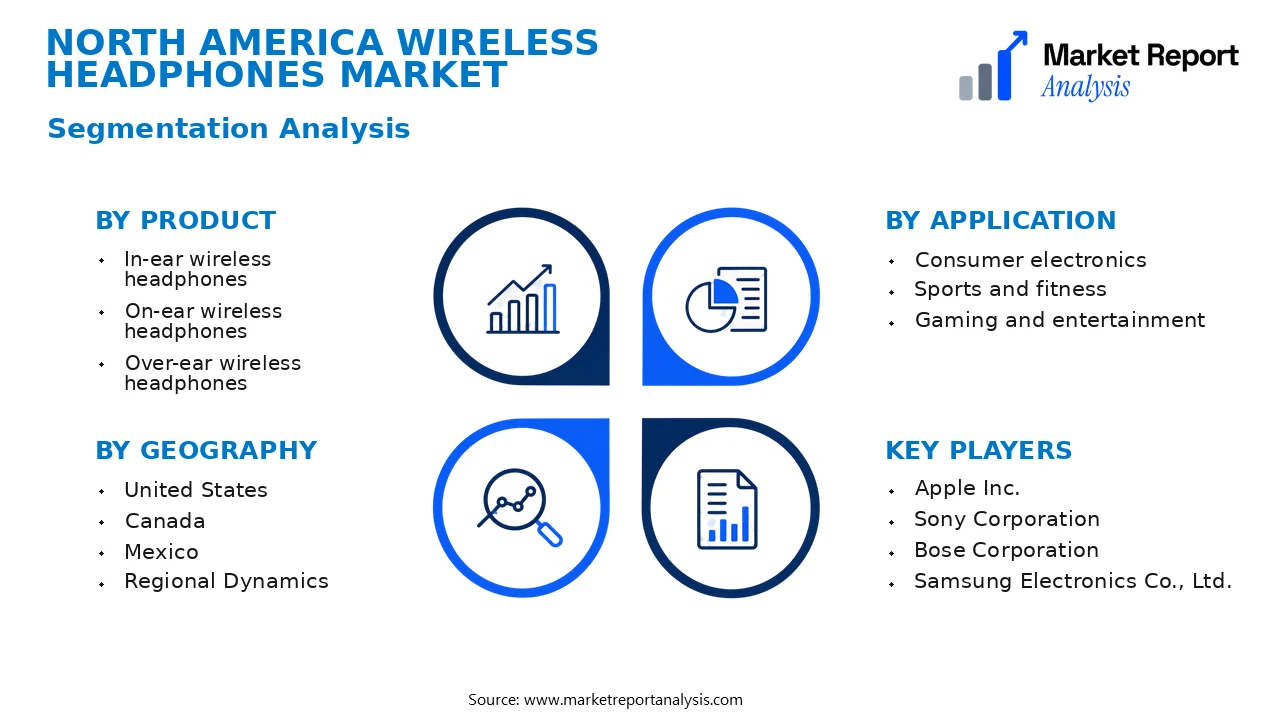
- Product
- In-ear wireless headphones: Compact and portable, these headphones are favored for everyday activities, fitness, and commuting. Their premium models increasingly incorporate advanced noise-canceling and Bluetooth connectivity features, driving segment growth.
- On-ear wireless headphones: Combining portability and comfort, this subsegment appeals to consumers seeking enhanced audio quality for work or casual listening, with an emphasis on ergonomic design and superior sound performance.
- Over-ear wireless headphones: Known for immersive sound experiences, these headphones are preferred by audiophiles and home entertainment users. Innovations in active noise cancellation (ANC) and long battery life bolster demand.
- Application
- Consumer electronics: Encompassing smartphones, tablets, and personal computers, this application drives substantial demand for wireless headphones as consumers seek convenience and high-quality audio experiences integrated with their devices.
- Sports and fitness: The surge in fitness consciousness has expanded the use of wireless headphones designed to withstand sweat and vigorous movement, with features like secure fit and water resistance becoming standard.
- Gaming and entertainment: This segment focuses on immersive wireless audio solutions for gaming consoles, PCs, and streaming devices, with technological advancements such as low latency and surround sound supporting market expansion.
- Geography
- United States: As a leading adopter of wireless audio technology, the US market exhibits high demand driven by technological innovation, premium product adoption, and a large base of tech-savvy consumers across diverse income segments.
- Canada: Characterized by a growing consumer electronics sector, Canadian consumers favor high-end wireless headphones, especially for sports and professional use, influenced by lifestyle trends and technological affinity.
- Mexico: Market development is driven by increasing smartphone penetration and urbanization, with affordability and product variety playing significant roles in expanding wireless headphone adoption across all consumer segments.
- Regional Dynamics: While the US leads with advanced features and high premium consumption, Canada and Mexico are experiencing rapid growth due to rising smartphone penetration, affordability, and evolving consumer preferences for wireless audio devices.
Competitive Intelligence
The North America Wireless Headphones Market is characterized by intense competition among key global and regional players. Market concentration is moderate, with top companies such as Apple, Sony, and Bose commanding significant market shares through brand loyalty, technological innovation, and extensive distribution networks. Major business strategies focus on product differentiation through features like noise cancellation, battery longevity, and seamless connectivity, alongside aggressive marketing campaigns and direct-to-consumer sales channels. Innovation plays a crucial role, with firms investing heavily in R&D to develop smarter, more adaptive headphones that cater to the evolving needs of consumers such as Active Noise Cancellation (ANC) and health monitoring features. Strategic partnerships with telecom providers and content streaming platforms enhance market penetration and customer engagement. Recent acquisitions aim to diversify portfolios and incorporate advanced technology capabilities. Expansion strategies include launching localized products and entering new distribution channels, both online and offline. Continuous R&D investments drive technological advancements, providing competitive differentiation through premium user experiences, superior sound quality, and integration with wearable ecosystems. Overall, companies that innovate and form strategic alliances are positioned to strengthen their market presence amid evolving consumer preferences and technological trends.
Leading Company Profiles
The North America wireless headphones market is characterized by a competitive landscape comprising several global and regional players. These companies focus on innovation, technological differentiation, and strategic collaborations to strengthen their market positions and expand consumer reach.
- Apple Inc.
- Sony Corporation
- Bose Corporation
- Samsung Electronics Co., Ltd.
- JBL (Harman International)
- Skullcandy, Inc.
- LG Electronics Inc.
- Google LLC
- Anker Innovations Limited
- Sennheiser Electronic GmbH & Co. KG
Apple Inc.
Apple leads with its AirPods lineup, integrating cutting-edge noise cancellation and seamless ecosystem connectivity, maintaining a strategic focus on premium, user-centric wireless audio products that bolster its ecosystem advantage.
Sony Corporation
Sony excels with its high-fidelity sound quality and advanced noise-cancellation technology, continuously innovating in wireless audio to cater to audiophiles and mainstream consumers in the North American market.
Bose Corporation
Bose specializes in premium noise-canceling headphones, leveraging proprietary acoustic technology and strong brand loyalty, with strategic investments in comfort and connectivity features to enhance consumer experience.
Samsung Electronics Co., Ltd.
Samsung offers diverse wireless headphone models featuring adaptive sound, long battery life, and ecosystem integration, backed by aggressive marketing and product diversification across various price segments.
JBL (Harman International)
JBL focuses on delivering value-oriented wireless headphones with durable design and superior sound quality, appealing to a broad demographic through strategic partnerships and innovative product launches.
Skullcandy, Inc.
Skullcandy emphasizes lifestyle branding, youthful designs, and affordability, continuously expanding its product portfolio with features like waterproofing and active noise cancellation to capture emerging market segments.
LG Electronics Inc.
LG leverages its consumer electronics expertise to push wireless headphones with eco-friendly materials, Bluetooth aptX support, and integrated voice assistants, aligning with sustainability trends and technological demands.
Google LLC
Google’s Pixel Buds capitalize on deep ecosystem integration, AI-driven features, and affordability, aiming to establish a dominant presence in the mid-range wireless headphones segment.
Anker Innovations Limited
Anker focuses on cost-effective wireless audio solutions with innovative features like multi-device pairing and long battery life, expanding its footprint through e-commerce and strategic retail alliances.
Sennheiser Electronic GmbH & Co. KG
Sennheiser emphasizes high-end audio fidelity and professional-grade sound quality, continuously innovating with adaptive noise cancellation and ergonomic designs for premium consumers.
Strategic Business Developments
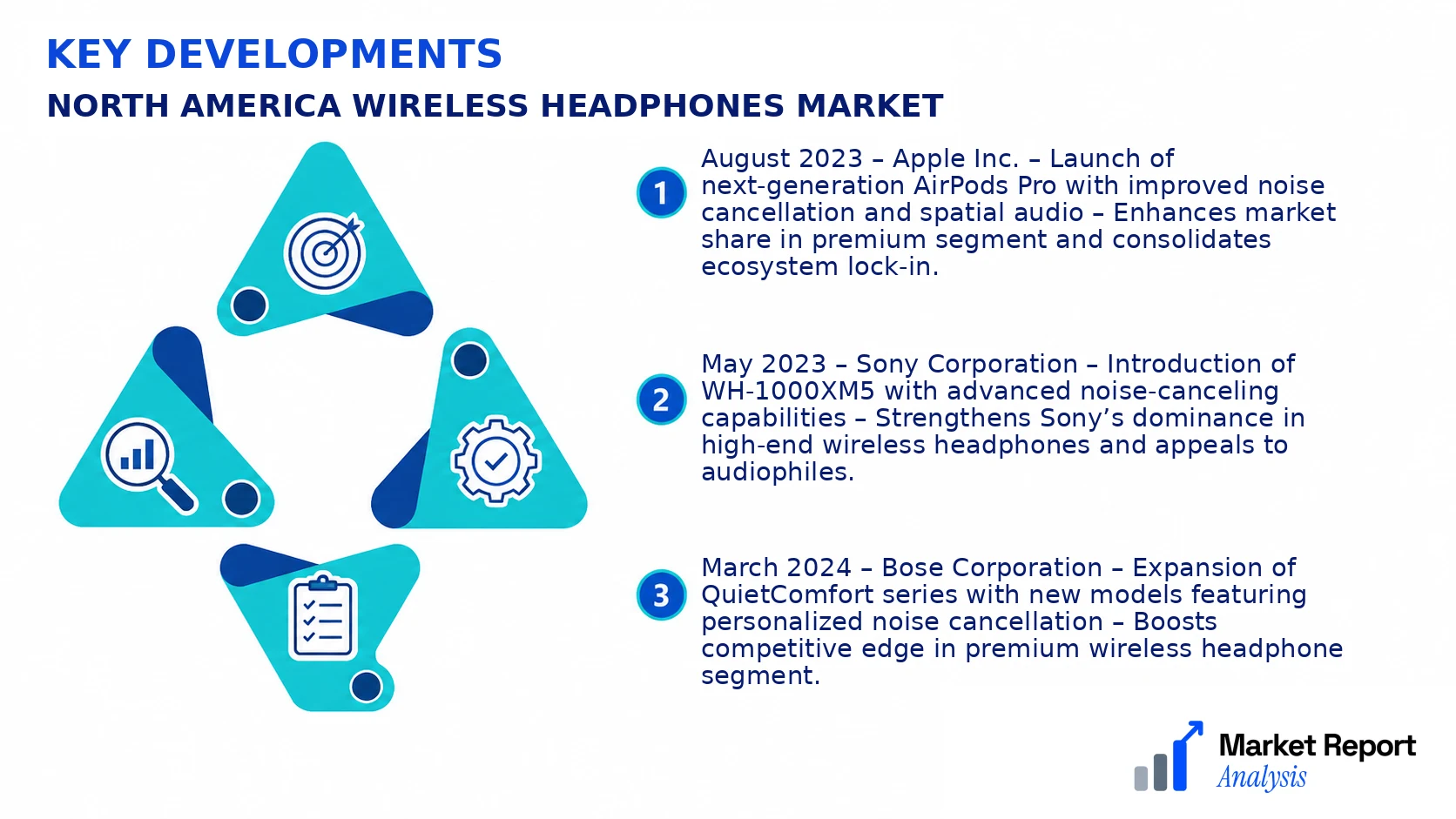
- August 2023 – Apple Inc. – Launch of next-generation AirPods Pro with improved noise cancellation and spatial audio – Enhances market share in premium segment and consolidates ecosystem lock-in.
- May 2023 – Sony Corporation – Introduction of WH-1000XM5 with advanced noise-canceling capabilities – Strengthens Sony’s dominance in high-end wireless headphones and appeals to audiophiles.
- March 2024 – Bose Corporation – Expansion of QuietComfort series with new models featuring personalized noise cancellation – Boosts competitive edge in premium wireless headphone segment.
- November 2023 – Samsung Electronics Co., Ltd. – Investment in new manufacturing lines for Galaxy Buds series – Increases production capacity to meet rising demand for affordable and mid-range wireless headphones.
- January 2024 – JBL (Harman International) – Strategic alliance with a major telecom provider for bundled wireless headphone offers – Expands consumer base and accelerates distribution channels.
Frequently Asked Questions
What is the North America Wireless Headphones Market?
The North America Wireless Headphones Market comprises the industry and demand for wireless headphones within the North American region, including the United States, Canada, and Mexico. It involves the sale and adoption of Bluetooth and wireless-enabled headsets for personal and professional use, driven by technological advancements and lifestyle shifts.
What is the current market size of North America Wireless Headphones Market?
As of 2026, the North America Wireless Headphones Market is valued at approximately USD 20 Billion, reflecting increasing consumer adoption, growth in the consumer electronics sector, and expanding product offerings by leading manufacturers across the region.
What factors are driving the North America Wireless Headphones Market?
Key drivers include technological innovation in Bluetooth and noise-cancellation features, rising demand for wireless devices for convenience and mobility, and the proliferation of smart devices. Additionally, the shift toward remote work and active lifestyles boost headset sales.
Which region dominates the North America Wireless Headphones Market?
The United States leads the market with the highest consumer adoption, technological infrastructure, and product innovation, followed by Canada and Mexico. The U.S. accounts for the majority of revenue generated in this regional segment.
Which segment is expected to grow the fastest?
The noise-cancelling wireless headphones segment is anticipated to experience the fastest growth, driven by consumer demand for enhanced audio experiences, increased adoption of premium models, and technological advancements in sound quality and battery life.
Who are the leading companies operating in the North America Wireless Headphones Market?
Leading firms include Apple Inc., Bose Corporation, Sony Corporation, and Samsung Electronics, which dominate market share through innovation, brand loyalty, and extensive distribution networks across North America.
Analyst Perspective
The North America wireless headphones market is projected to sustain its growth trajectory through 2034, driven by ongoing technological innovations and expanding consumer adoption of premium wireless audio solutions. Long-term, market maturity will be characterized by increased integration of advanced features such as noise cancellation, adaptive sound, and biometric sensors, which will reposition wireless headphones from mere accessories to health and wellness devices. Commercial opportunities lie in the mainstream adoption of true wireless earbuds, particularly within gaming, fitness, and professional applications, indicating significant potential for brand differentiation and feature specialization. Investment priorities should focus on R&D for improved battery life, enhanced wireless connectivity, and minimal latency, to stay competitive. The region will likely see heightened competitive intensity as established players and new entrants vie for market share, incentivized by rising consumer disposable incomes and the growth of subscription-based content services. Regional growth potential remains robust in urban centers and among tech-savvy demographics, emphasizing strategic investments in marketing, distribution, and localized innovation to capitalize on diverse consumer needs.
