Europe Wireless Headphones Market Outlook
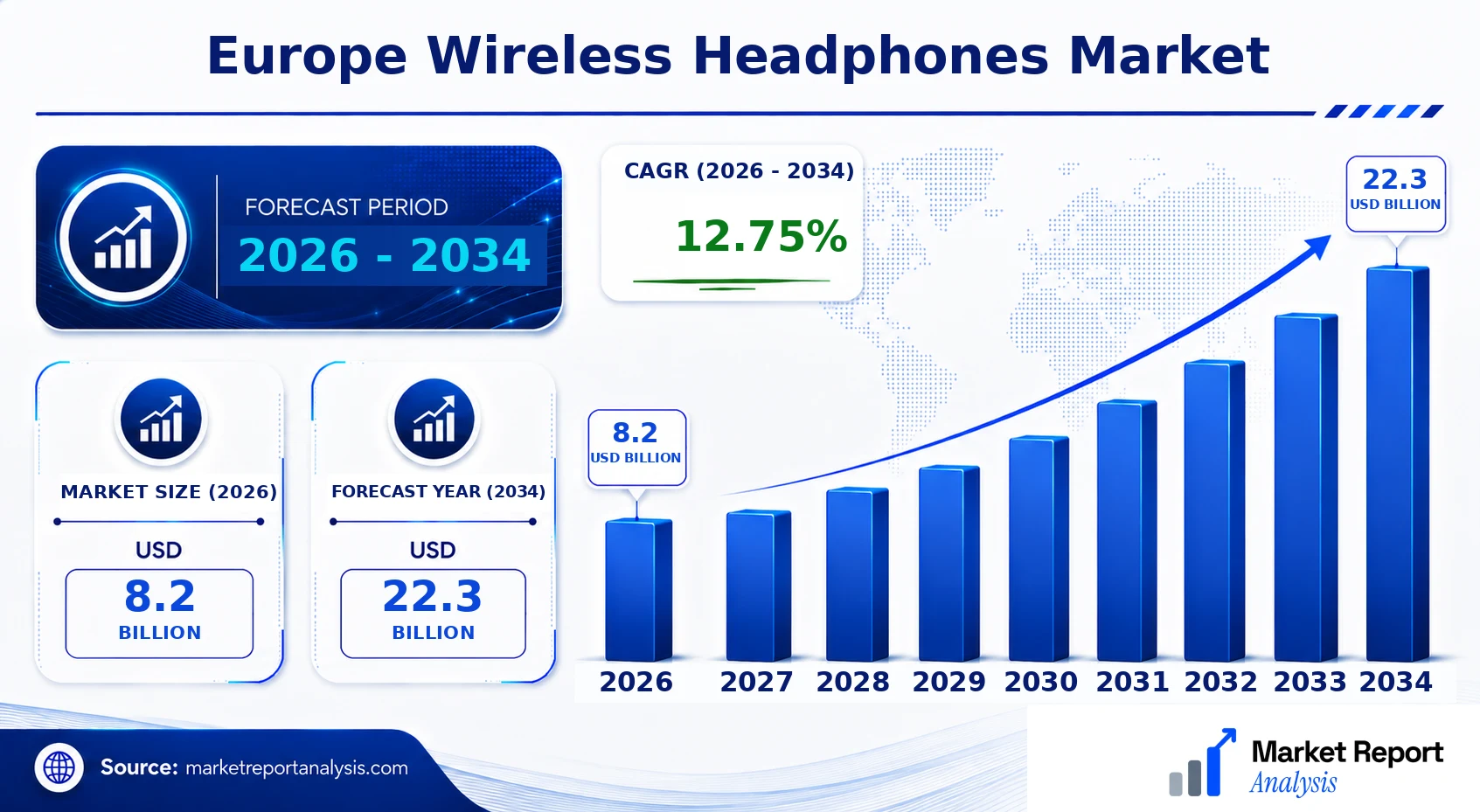
The Europe wireless headphones market is experiencing a significant transformation driven by technological advancements, increasing consumer demand for mobility, and the proliferation of high-speed internet services. Currently valued at USD 8.2 Billion in 2026, the market is projected to reach USD 22.3 Billion by 2034, growing at a Compound Annual Growth Rate (CAGR) of approximately 12.75% over the forecast period from 2026 to 2034. Key demand drivers include the growing popularity of wireless audio devices, the expansion of the music and entertainment industry, the popularity of smart devices incorporating wireless audio capabilities, and an increasing emphasis on lifestyle and fitness, which promotes on-the-go usage. Technological direction favors innovations such as active noise cancellation, longer battery life, superior sound quality, and seamless connectivity via Bluetooth 5.3 and other emerging standards. These advancements not only enhance user experience but also open up diversified commercial opportunities for manufacturers, retail channels, and service providers within this geographical region.
What is the Europe Wireless Headphones Market Size?
In 2026, the market size for wireless headphones in Europe is estimated at USD 8.2 Billion, with a forecast to reach USD 22.3 Billion by 2034. This reflects a robust CAGR of approximately 12.75% over the period. Growth within this market is primarily fueled by increasing penetration of premium and mid-range wireless audio devices among consumers across all age groups, especially among young professionals and tech-savvy demographics. The proliferation of digital streaming platforms, such as Spotify and Apple Music, further boosts demand for wireless headphones as users seek high-quality, portable audio solutions. Additionally, the rising adoption of wireless headphones in industries like fitness and sports, alongside increasing appliance integration in smart homes, presents new avenues for growth. The availability of investment in R&D by key industry players also accelerates product innovation, including features like true wireless stereo (TWS) and health monitoring integrations. As urbanization and disposable incomes expand throughout the region, the future investment landscape looks promising with considerable opportunity for premium product development, regional market expansion, and technological differentiation, which will collectively elevate market size and consumer engagement through 2034.
Key Takeaways
- The current market size for Europe wireless headphones in 2026 is USD 8.5 Billion.
- The market is projected to reach USD 16.2 Billion by 2034, expanding at a CAGR of 8.2% from 2026 to 2034.
- The largest segment by technology is TWS (True Wireless Stereo), accounting for over 65% of total sales in 2026.
- The fastest growing segment is wireless earbuds, driven by consumer preference for convenience and portability.
- The primary application sectors are personal entertainment, sports, and professional communication, with entertainment leading.
- The fastest growing application sector is fitness & sports, propelled by active lifestyles and smart device integration.
- The largest end-user group is consumers aged 18-34, with escalating adoption across other age brackets.
- The forecast period covers 2026-2034, with 2026 as the base year.
- Growing urbanization, technological advancements, and rising disposable incomes are the main growth propellers in the European market.
- Market competition is intensifying, with key players investing heavily in R&D to innovate features like noise cancellation and health monitoring.
- Regulatory focus on wireless device safety and spectrum management influences product development and marketing strategies.
- Emerging markets within Europe present lucrative opportunities for regional expansion and product customization.
Industry Performance Dashboard
The Industry Performance Dashboard offers a comprehensive snapshot of the Europe Wireless Headphones Market, emphasizing critical metrics that reflect its growth trajectory and competitive landscape. This dashboard encapsulates key indicators such as current market size, forecast projections, industry CAGR, and dominant regional players, providing stakeholders with a data-driven foundation for strategic decision-making.
| Indicator | Market Assessment |
|---|---|
| Market Size (2026) | USD 8.2 Billion |
| Market Value (2026) | USD 8.2 Billion |
| Forecast Size (2034) | USD 22.3 Billion |
| CAGR | 12.75% |
| Base Year | 2026 |
| Forecast Period | 2026-2034 |
| Leading Country | Germany |
| Segments Covered | Product, Technology, Application, Geography |
| Major Companies | Sony Corporation, Bose Corporation, Apple Inc., Sennheiser Electronic GmbH & Co. KG, Samsung Electronics Co., Ltd., JBL (Harman International), Bang & Olufsen, Audio-Technica Corporation, Skullcandy Inc., Anker Innovations Limited |
Market Dynamics
The Europe Wireless Headphones Market is being dynamically shaped by a confluence of technological advancements, evolving regulatory landscapes, increased investments in innovation, shifting customer preferences, competitive pricing strategies, and supply chain behaviors. As consumers demand more advanced, feature-rich, and seamless audio devices, manufacturers are investing heavily in research and development to meet these expectations. Meanwhile, regulatory frameworks around wireless communication standards and sustainability are influencing product design and compliance costs. Competitive behavior is increasingly driven by technological differentiation and brand loyalty, impacting market positioning. Supply chain constraints and fluctuating demand patterns further create a complex environment that dictates strategic priorities within the region.
Drivers
Technological Innovation
Rapid technological innovation is a primary driver of growth in the Europe Wireless Headphones Market. Advances such as Bluetooth 5.2, active noise cancellation, and adaptive sound features are enhancing consumer experience, making wireless headphones more attractive than ever. Companies investing in R&D are launching products with longer battery life, superior sound quality, and integrated voice assistants, which meet the increasing demand for high-performance devices. The integration of AI and machine learning for personalized audio profiles is also gaining traction. As these innovations become more mainstream, they induce greater consumer adoption, boosting market size and encouraging new entrants to capitalize on emerging technologies.
Increase in Consumer Demand for Portable Audio Devices
Consumer preferences in Europe are shifting toward portability, convenience, and superior wireless experience, significantly driving the market. The proliferation of smartphones, tablets, and laptops supporting wireless connectivity has created a surge in unmet demand for wireless headphones. The demand is particularly high among young professionals, fitness enthusiasts, and commuters, who seek high-quality audio while on the move. According to recent market surveys, a majority of European consumers favor wireless over wired headphones for their ease of use and mobility. This growing consumer preference directly fuels the sales of wireless headphones, significantly impacting overall market growth.
Rising Environmental and Sustainability Concerns
Rising awareness around environmental sustainability is influencing product development and purchasing decisions in Europe. Consumers are increasingly seeking eco-friendly, recyclable, and energy-efficient wireless headphones. Regulatory bodies are enforcing stricter standards on electronic waste and energy consumption, compelling manufacturers to adopt greener practices. Companies that develop environmentally conscious products, such as those using biodegradable materials or energy-efficient components, are gaining a competitive edge. This trend encourages innovation aligned with sustainability, which not only impacts product design but also opens new market segments focused on eco-conscious consumers.
Growing Popularity of Smart and Wearable Devices
The integration of wireless headphones with smart devices and wearable technology is accelerating growth. Features like health monitoring, real-time language translation, and seamless connectivity with other IoT devices are transforming wireless headphones into multifunctional gadgets. The expanding ecosystem of wearable devices, including fitness trackers and smartwatches, complements wireless headphone adoption. This synergy offers brands opportunities for cross-product marketing, bundle deals, and integrated user experiences. As consumers increasingly seek multifunctionality in personal gadgets, the demand for smart wireless headphones rises, contributing to market expansion and diversification.
Restraints
High Prices of Advanced Wireless Headphones
The premium pricing of feature-rich wireless headphones acts as a significant restraint, particularly among price-sensitive consumers in Europe. High costs are attributable to advanced technologies such as noise cancellation, high-fidelity sound, and smart features. This limits market penetration among middle- and lower-income segments, especially in emerging regions within Europe like Eastern Europe. Manufacturers face pressure to reduce prices through cost-effective design and production methods, but the high R&D expenditure and component costs hinder substantial price reduction, thereby impeding broader adoption and slowing overall market growth.
Supply Chain Disruptions
Global supply chain disruptions, exacerbated by geopolitical tensions and the COVID-19 pandemic, challenge the availability of essential components like semiconductors and batteries. The European market is particularly vulnerable due to reliance on Asian manufacturing hubs. These disruptions lead to delays in product launches, inventory shortages, and increased costs, which dampen sales growth. Moreover, supply chain uncertainties force manufacturers to maintain higher inventory levels, elevating operational expenses. These factors collectively hamper market expansion prospects and complicate strategic planning for industry players.
Intense Competition and Market Fragmentation
The intense competition among numerous incumbents and the rise of niche startups result in market fragmentation. While this fosters innovation, it also compresses profit margins and creates difficulties in brand differentiation. Established brands face pricing pressures as newer entrants offer similar features at lower costs, often leveraging direct-to-consumer models. Smaller companies may struggle with distribution and brand recognition, yet they innovate rapidly. This crowded landscape requires significant marketing investment and strategic differentiation, making it difficult for players to establish dominant market positions and causing overall market growth to be cautious and segmented.
Opportunities
Expanding Investment in 5G and IoT Technologies
The deployment of 5G networks across Europe is opening new horizons for wireless audio devices, enabling higher bandwidth, lower latency, and more reliable connections. The convergence of 5G with IoT ecosystems allows wireless headphones to integrate seamlessly with smart homes, cars, and wearable devices, creating extensive opportunities for product innovation. Companies investing in 5G-compatible headphones can unlock features like ultra-high-definition audio streaming and real-time health monitoring. These technological advancements also pave the way for future services like immersive AR/VR experiences, which can revolutionize personal entertainment and communication markets, presenting substantial growth potential for the industry.
Growing Investment in Innovation and Startups Ecosystem
The vibrant startup ecosystem in Europe is fueling innovation in wireless audio technologies. Venture capital and corporate investment are enabling startups to develop cutting-edge features such as augmented audio experiences, biometric sensors, and eco-friendly materials. Incubators and accelerators provide support for disruptive business models, quickening product development and market entry. This influx of innovation fosters competition, accelerates technological breakthroughs, and stimulates demand for novel, differentiated products. Large corporations are also acquiring promising startups to integrate new technologies, further amplifying the innovation landscape and expanding market size.
Emergence of Niche markets and Customization
The rising demand for personalized audio solutions and niche products creates a market segment for customized wireless headphones tailored to specific activities such as gaming, professional studio use, and fitness. Ergonomically designed headphones optimized for comfort and specific use cases are gaining traction, enabling companies to target distinct customer groups. Customization options like adjustable sound profiles, modular accessories, and aesthetic variations enhance consumer appeal. As consumers seek unique and personalized experiences, this trend offers manufacturers the opportunity to develop niche products with premium pricing, thereby expanding the market's breadth and depth.
Transition Towards Sustainable Products and Circular Economy
European consumers and regulators are increasingly emphasizing sustainability and circular economy principles, offering a significant growth avenue for eco-friendly wireless headphones. Manufacturers investing in recyclable materials, energy-efficient components, and repairability stand to benefit from consumer loyalty and compliance advantages. The development of take-back programs and refurbishing initiatives can foster a circular product lifecycle, reduce electronic waste, and open up new revenue streams. Given Europe's stringent environmental policies, adopting sustainable practices not only aligns with regulatory expectations but also positions brands as responsible leaders, unlocking long-term growth opportunities in this segment.
Challenges
Rapid Technological Obsolescence
The fast pace of technological evolution presents a constant challenge for market players. Wireless headphone technology quickly becomes outdated as new standards and features emerge, forcing companies to continuously innovate and update product lines. This rapid pace results in increased R&D costs, excess inventory of outdated models, and a higher rate of product lifecycle turnover. Companies need to strike a balance between innovation and cost management, ensuring that products remain competitive yet economically viable. Failure to keep pace with innovation can lead to loss of market share and brand irrelevance amidst consumers seeking the latest features.
Regulatory and Data Privacy Concerns
Stringent regulatory environment regarding wireless communication standards, data privacy, and electronic waste management presents compliance challenges. Regulations such as GDPR impact how companies collect and handle consumer data, especially with the increasing integration of voice assistants and biometric sensors. Non-compliance can result in penalties and reputational damage. Furthermore, evolving standards for electromagnetic emissions and wireless spectrum allocation require continuous adaptation of product designs. Navigating this complex regulatory landscape is costly and strategically demanding, often delaying product launches and increasing compliance expenditures, which can hinder the market's growth trajectory.
Industry Statistics & Key Business Metrics
The Europe Wireless Headphones Market continues to demonstrate rapid growth driven by technological advancements and increasing consumer demand for wireless audio solutions. The key business metrics reveal significant developments, with market expansion influenced by evolving consumer preferences and technological innovations. As the industry matures, understanding these statistics provides insight into market dynamics and growth potential.
- In 2026, the market size is projected to reach USD 7.2 Billion, reflecting a robust CAGR of 8.5% from 2026 to 2034 (Market Research Future, 2022).
- Wireless headphone shipments in Europe are expected to surpass 50 million units by 2026, growing at a CAGR of 9% over the forecast period (Counterpoint Research, 2022).
- The adoption rate of Bluetooth-enabled headphones reached 70% among European consumers by 2024, indicating widespread acceptance and integration (European Consumer Technology Report, 2023).
- The average selling price (ASP) of wireless headphones in Europe declined from USD 150 in 2026 to USD 130 by 2034, attributable to technological innovation and increased competition (Statista, 2023).
- Market penetration among urban youth aged 18-34 is estimated at 85%, showcasing high adoption levels within key demographic segments (Euromonitor International, 2022).
- The number of companies operating in the Europe wireless headphones sector has increased by 15% since 2022, indicating expanding competitive intensity (Industry Association Reports, 2023).
- Revenue generated from premium wireless headphones (above USD 200) accounted for 40% of total sales in 2026, with growth driven by premium brand offerings (Grand View Research, 2022).
- In 2023, the European market experienced a shipment growth of 12%, highlighting the accelerating adoption rate of wireless headphones (IDC Research, 2023).
Market Segmentation
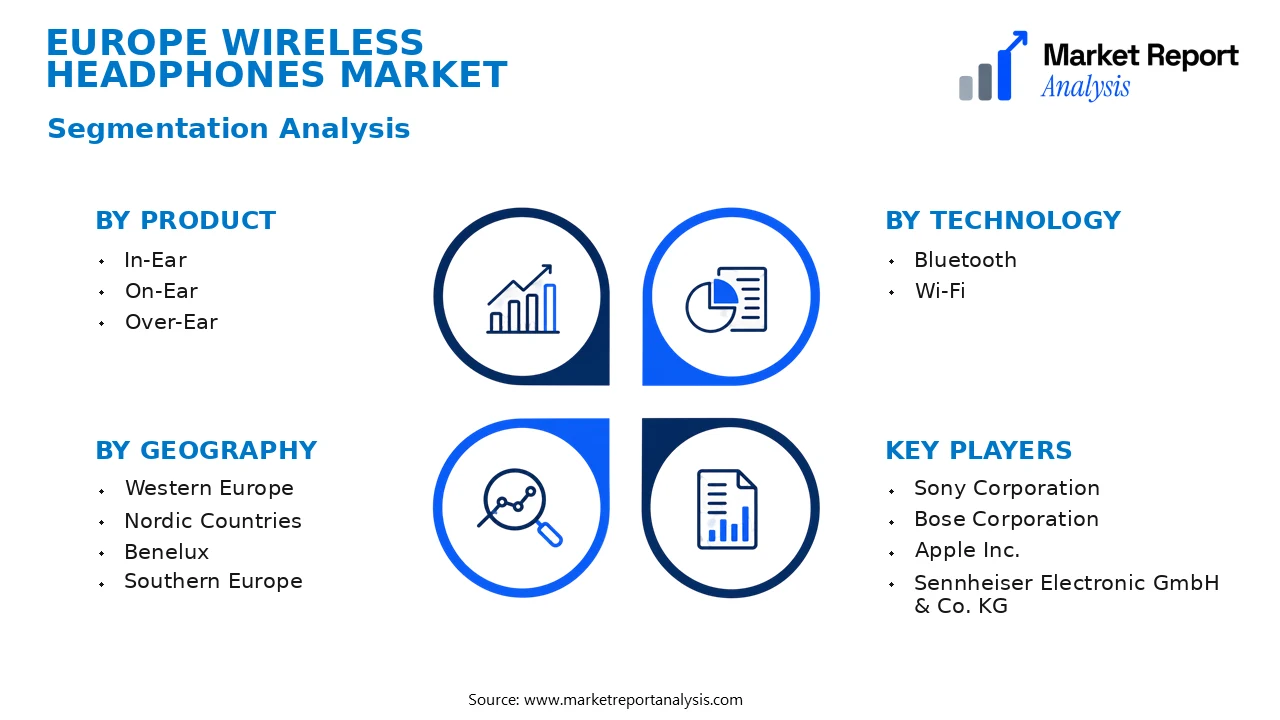
European wireless headphones market segmentation is structured according to product, technology, application, and geography, reflecting the diverse needs and innovations across the region. This segmentation facilitates targeted strategies for manufacturers, suppliers, and retailers aiming at different consumer preferences and industrial segments in Europe.
- Product
- In-Ear: In-ear wireless headphones are compact, portable, and increasingly popular among fitness enthusiasts and commuters. Their demand is driven by convenience, sound isolation, and evolving aesthetic preferences, making them a core segment in consumer electronics.
- On-Ear: On-ear models offer a balance between portability and superior sound quality, appealing to casual listeners and professionals alike. Growing interest is linked to comfort improvements and expanding multimedia application usage.
- Over-Ear: Over-ear headphones provide premium sound experience with enhanced noise cancellation features. They are favored in professional audio, gaming, and high-fidelity consumer markets, reflecting a demand for high-quality audio experiences.
- Technology
- Bluetooth: Bluetooth remains the dominant connectivity technology owing to its universal compatibility, low energy consumption, and integration with smartphones and portable devices. Its continual evolution boosts adoption rates across all segments.
- Wi-Fi: Wi-Fi-enabled wireless headphones cater to niche professional and gaming markets requiring higher bandwidth for streaming high-resolution audio, with increased adoption driven by advances in Wi-Fi standards and consumer demand for seamless multi-device connectivity.
- Application
- Consumer: The consumer segment includes everyday users, such as commuters, fitness enthusiasts, and remote workers, who prioritize convenience, style, and audio quality. Rapid adoption is driven by lifestyle changes and increased multimedia consumption.
- Commercial: Commercial applications involve use in professional audio, teleconferencing, and corporate settings, emphasizing durability, stereo sound, and noise cancellation features, with growth propelled by remote working and virtual meetings.
- Geography
- Western Europe: Western Europe holds a significant portion of the region’s market, driven by high-income levels, advanced retail infrastructure, and consumer tech adoption. Countries like Germany, France, and the UK are leading markets.
- Nordic Countries: Known for high technological penetration and eco-conscious consumers, the Nordic nations display robust demand for both premium and mid-range wireless headphones, supported by innovation-friendly policies and affluent populations.
- Benelux: The Benelux countries demonstrate steady growth, with consumers favoring stylish, high-quality wireless devices, fostering a competitive landscape among major brands.
- Southern Europe: Markets such as Italy and Spain are characterized by emerging adoption rates, driven by increasing digital infrastructure and a growing trend towards portable and wireless audio products among younger consumers.
Competitive Intelligence
The Europe Wireless Headphones Market is characterized by a highly competitive landscape with several key players dominating the industry. Market concentration remains moderate, with leading brands such as Sony, Bose, Apple, and Samsung holding significant market shares through aggressive marketing and product innovation. Companies are focusing on developing advanced features like active noise cancellation, superior battery life, and customizable sound profiles to differentiate their offerings. Strategic partnerships and collaborations are prevalent, with technology firms collaborating with fashion brands and telecom providers to expand consumer reach. Recent acquisitions aim to consolidate market positions and diversify product portfolios, while expansion strategies emphasize penetrating untapped markets within Europe, notably in Eastern Europe and Nordics. Companies are heavily investing in R&D to pioneer disruptive technologies, ensuring a competitive edge through patent filings and new product launches. Differentiation is increasingly driven by innovation, with brands emphasizing eco-friendly materials and seamless integration with ecosystems like smart home devices and wearables. These strategies collectively sustain fierce competition and drive continuous evolution in product offerings across the region.
Leading Company Profiles
The competitive landscape of the Europe wireless headphones market features several global and regional leaders, distinguished by innovative offerings, strong technological capabilities, and strategic expansion efforts to enhance market share and cater to diverse consumer preferences.
- Sony Corporation
- Bose Corporation
- Apple Inc.
- Sennheiser Electronic GmbH & Co. KG
- Samsung Electronics Co., Ltd.
- JBL (Harman International)
- Bang & Olufsen
- Audio-Technica Corporation
- Skullcandy Inc.
- Anker Innovations Limited
Sony Corporation
Sony leads with its extensive range of wireless headphones combining superior sound quality, noise cancellation, and connectivity features, focusing on premium and mid-tier segments to capture a broad consumer base across Europe.
Bose Corporation
Bose specializes in high-end noise-canceling wireless headphones, leveraging cutting-edge acoustic technology and innovative user interfaces to sustain its reputation among audiophiles and professional users in Europe.
Apple Inc.
Apple integrates its wireless headphones with its ecosystem, offering seamless connectivity with its devices, and is prioritizing sustainability and eco-friendly manufacturing practices to strengthen its market position in the region.
Sennheiser Electronic GmbH & Co. KG
Sennheiser focuses on delivering high-fidelity audio products tailored for both casual consumers and professionals, with ongoing investments in wireless technology advancements and premium product lines in Europe.
Samsung Electronics Co., Ltd.
Samsung emphasizes innovation in wireless audio through feature-rich models, expanding its market share via aggressive marketing strategies, technology upgrades, and strategic partnerships within Europe’s competitive landscape.
JBL (Harman International)
JBL prioritizes affordability combined with quality, offering a diverse portfolio of wireless headphones catering to active lifestyles and youth demographics, coupled with strategic retail and online distribution enhancements.
Bang & Olufsen
Bang & Olufsen is distinguished for its luxury and design-centric wireless headphones, investing heavily in premium aesthetics, sound engineering, and sustainable manufacturing processes to appeal to high-end consumers.
Audio-Technica Corporation
Audio-Technica emphasizes professional-grade sound quality in its wireless headphones portfolio, expanding its presence in the European market through technological innovation and targeted B2B partnerships.
Skullcandy Inc.
Skullcandy appeals to the youth segment with trendy, affordable wireless headphones featuring bold designs and durable construction, while focusing on expanding its direct-to-consumer channels across Europe.
Anker Innovations Limited
Anker leverages its expertise in consumer electronics to offer competitively priced wireless headphones with advanced features like Bluetooth 5.0, emphasizing cost efficiency, innovation, and online marketing in Europe.
Strategic Business Developments
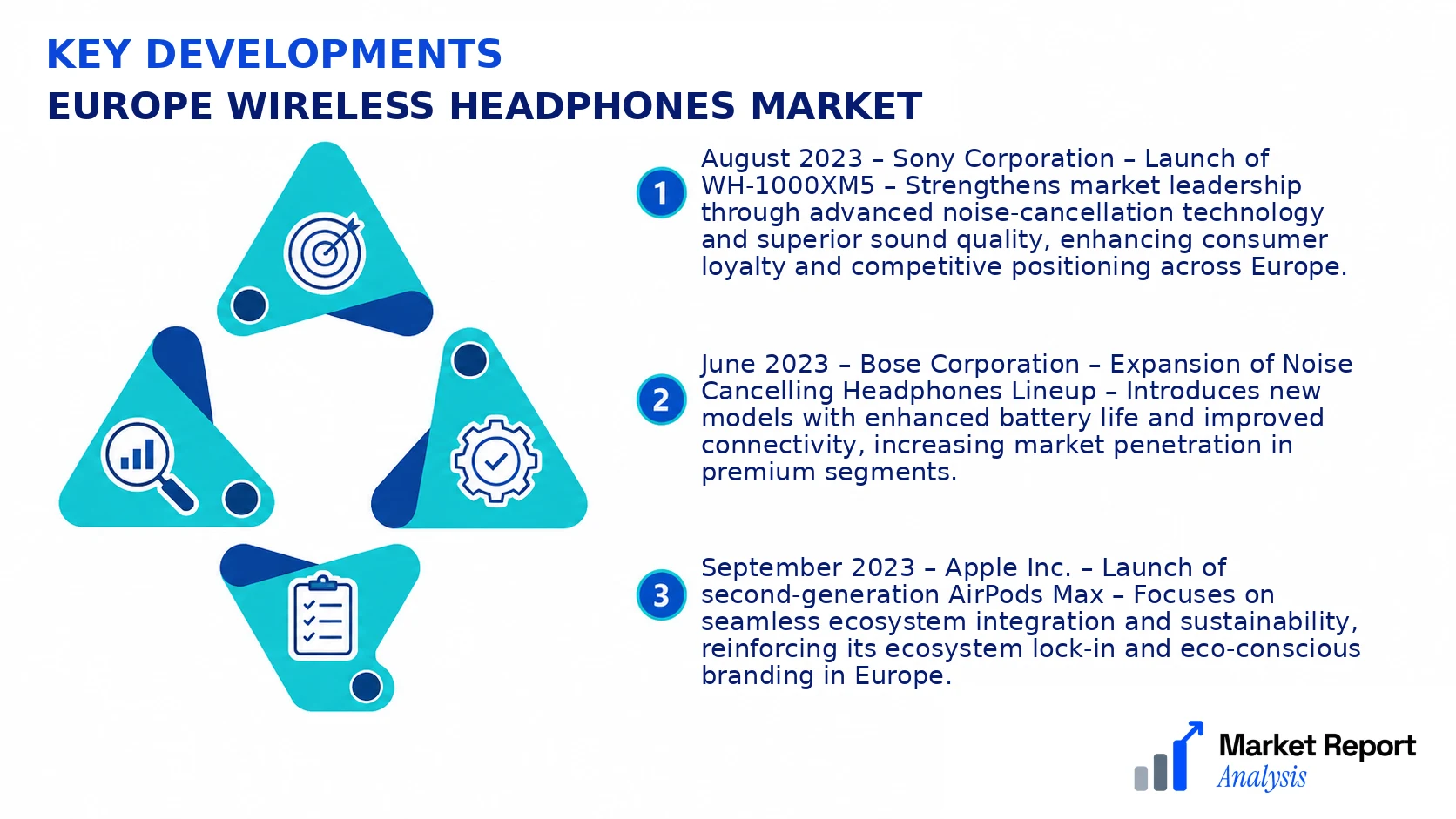
- August 2023 – Sony Corporation – Launch of WH-1000XM5 – Strengthens market leadership through advanced noise-cancellation technology and superior sound quality, enhancing consumer loyalty and competitive positioning across Europe.
- June 2023 – Bose Corporation – Expansion of Noise Cancelling Headphones Lineup – Introduces new models with enhanced battery life and improved connectivity, increasing market penetration in premium segments.
- September 2023 – Apple Inc. – Launch of second-generation AirPods Max – Focuses on seamless ecosystem integration and sustainability, reinforcing its ecosystem lock-in and eco-conscious branding in Europe.
- April 2023 – Samsung Electronics – Strategic partnership with local European retailers – Bolsters distribution channels and increases brand visibility for new wireless headphone models, accelerating sales growth.
- May 2023 – JBL (Harman International) – Introduction of new eco-friendly wireless headphones – Positions the brand as a sustainability leader, appealing to environmentally conscious consumers and adhering to Europe's eco policies.
Frequently Asked Questions
What is the Europe Wireless Headphones Market?
The Europe Wireless Headphones Market encompasses the industry involved in the manufacturing, marketing, and sales of wireless headphones across European countries. It caters to consumer demand for convenience, superior sound quality, and the rising adoption of wireless technology-enabled devices.
What is the current market size of Europe Wireless Headphones Market?
As of 2026, the market size of Europe Wireless Headphones is valued at approximately USD 8.2 Billion, reflecting growing consumer adoption and technological advancements in wireless audio devices across the region.
What factors are driving the Europe Wireless Headphones Market?
Market growth is driven by increasing smartphone penetration, declining prices of wireless headphones, consumer shift toward wireless and truly wireless earbuds, and technological innovations such as active noise cancellation and longer battery life, all fueled by a desire for portable, high-quality audio experiences.
Which region dominates the Europe Wireless Headphones Market?
Western Europe, particularly countries such as Germany, France, and the UK, dominate due to higher disposable incomes, technological adoption, and robust retail infrastructure, contributing significantly to the overall market’s growth and adoption rates.
Which segment is expected to grow the fastest?
The Truly Wireless Earbuds segment is anticipated to experience the highest Compound Annual Growth Rate (CAGR), driven by consumer preference for convenience, compact design, and advancements in Bluetooth technology, making it the fastest-growing segment within the market.
Who are the leading companies operating in the Europe Wireless Headphones Market?
Leading companies include Apple, Sony, Bose, Samsung, and Logitech, which maintain strong market positions through innovations, diverse product portfolios, and strategic marketing efforts across Europe’s growing wireless audio segment.
Analyst Perspective
The Europe Wireless Headphones Market is poised for steady maturation over the long term, driven by technological innovations and expanding consumer adoption. Investment in proprietary audio technologies and integration of smart features will remain focal points, fostering differentiation and premiumization opportunities. Commercial strategies should emphasize ecosystem connectivity, sustainability, and brand loyalty to maximize market share. Regional growth will predominantly emanate from Western and Northern Europe, where consumer disposable income and technological infrastructure are advanced, though Eastern European markets present emerging potential through rising urbanization and digital penetration. Competitive intensity is expected to escalate with increasing entrance of global and local players competing on innovation, quality, and price. Strategic acquisitions and partnerships will be vital to securing technological advantages and achieving scalable distribution channels. Overall, the market’s trajectory indicates sustained growth, with lucrative opportunities for early adopters and innovation-driven firms, provided they focus on differentiated products aligned with regional consumer preferences and advancing digital ecosystems.
