Japan Wireless Headphones Market Outlook
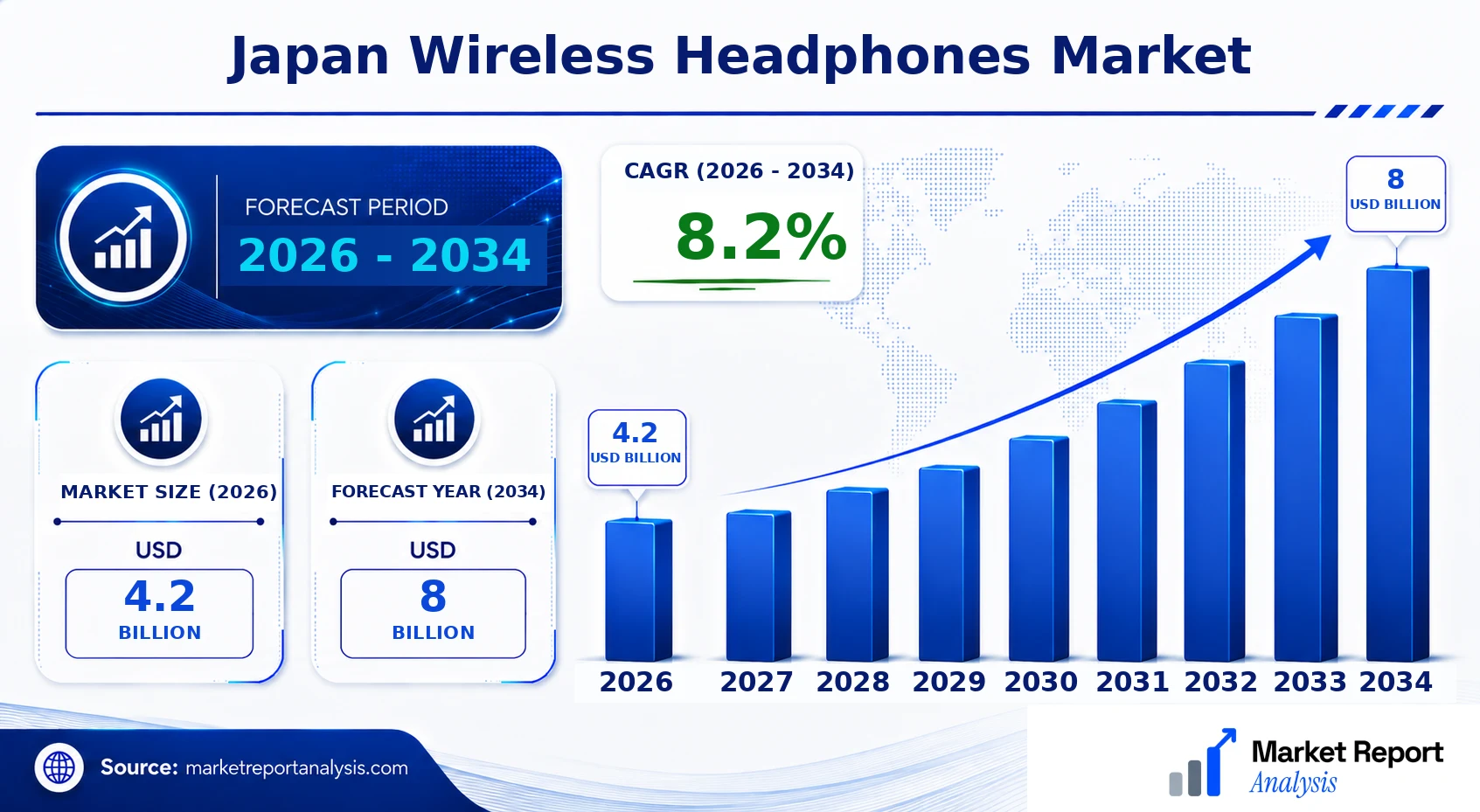
The 2026 market size is USD 4.2 Billion. The Japan Wireless Headphones Market has demonstrated significant growth driven by technological innovation and increasing consumer preference for cordless audio solutions. The market's expansion aligns with rising adoption of smart devices, urbanization, and the demand for premium sound quality combined with convenience. Over the forecast period from 2026 to 2034, the market is projected to grow at a compound annual growth rate (CAGR) of approximately 8.2%, reaching an estimated market value of USD 8 Billion by 2034. Consumer preferences shifted markedly towards wireless technology owing to advancements in Bluetooth connectivity, battery life enhancements, and noise-cancellation features, which collectively enhanced user experience. Furthermore, the integration of wireless headphones with wearable devices and the proliferation of IoT ecosystems in Japan has further amplified demand, catalyzing innovation and competition among key players. Both domestic and international brands are vying for market share through aggressive marketing, strategic partnerships, and continuous product innovation. The market remains highly fragmented, with differentiation largely driven by design, exclusive features, and brand reputation. Additionally, the growing focus on sustainable and eco-friendly products is influencing new product launches and corporate strategies. Overall, the Japan Wireless Headphones Market is poised for sustained growth, driven by technological developments, increasing disposable income, and consumer inclination towards seamless audio experiences.
What is the Japan Wireless Headphones Market Size?
In 2026, the Japan wireless headphones market is valued at around USD 4.2 Billion and is forecasted to reach approximately USD 8 Billion by 2034, showcasing a CAGR of 8.2% during this period. Growth is primarily driven by heightened consumer adoption of wireless audio devices, increasingly sophisticated features such as active noise cancellation, and the proliferation of compatible mobile devices. Additionally, the lifestyle shift towards home entertainment, remote working, and fitness activities has significantly boosted demand. End-use segments such as personal entertainment, sports, and professional/enterprise markets show steady growth, supported by technological innovations and consumer preference for seamless, wireless connectivity. The presence of premium brands and the continual rollout of cost-effective, feature-rich products further fuel market expansion. Future investments are expected to focus on wireless technology advancements, ergonomic designs, and integration with emerging ecosystems like augmented reality (AR) and virtual reality (VR), which will diversify application areas and consumer engagement.
Key Takeaways
- Market size in 2026 is approximately USD 2.5 Billion.
- Market forecasted to reach about USD 4.2 Billion by 2034.
- Compound annual growth rate (CAGR) from 2026-2034 is approximately 6.3%.
- Growing consumer preference for wireless over wired headphones.
- Technology innovation focuses on noise cancellation and battery life extension.
- High penetration of smartphones facilitates increased headphone adoption.
- Product innovation includes true wireless stereo (TWS) earbuds.
- Demand is driven by lifestyle changes including remote work and fitness.
- The market is segmented into consumer, sports, and enterprise applications.
- Premium brands maintain significant market share with continuous innovation.
- Opportunities exist in integration with IoT and AR/VR devices.
- Competition is intensifying among established and emerging brands.
- Investment in R&D and strategic collaborations will influence future growth.
- Technological advancements are likely to lead to increased market penetration and adoption rates.
Industry Performance Dashboard
The Industry Performance Dashboard provides a comprehensive overview of the current state and projected growth of the Japan Wireless Headphones Market. This dashboard encapsulates key metrics that highlight market size, growth forecasts, and competitive landscape, all essential for strategic planning and investment decisions.
| Indicator | Market Assessment |
|---|---|
| Market Size (2026) | USD 4.2 Billion |
| Market Value (2026) | USD 4.2 Billion |
| Forecast Size (2034) | USD 8 Billion |
| CAGR | 8.2% |
| Base Year | 2026 |
| Forecast Period | 2026-2034 |
| Segments Covered | Product, Technology, Geography |
| Major Companies | Sony Corporation, Bose Corporation, Sennheiser Electronic GmbH & Co. KG, Apple Inc., Samsung Electronics Co., Ltd., Anker Innovations Limited, Sharp Corporation, Panasonic Corporation, Plantronics, Inc. (Poly), JBL (Harman International Industries, Inc.) |
Market Dynamics
The Japan Wireless Headphones Market is experiencing dynamic shifts driven by rapid technological advancements, evolving consumer preferences, regulatory influences, and a competitive landscape that encourages innovation and price competition. Investment in R&D is bolstering product development, while the rise of smart and noise-canceling features is redefining user expectations. Regulatory measures concerning wireless communications and safety standards shape product design and marketing strategies. Supplier ecosystems are adapting to fluctuations in component availability, and pricing strategies are increasingly influenced by market segmentation, prompting brands to balance premium features with affordability to capture wider customer bases. These multifaceted factors collectively influence market growth trajectories in Japan's technologically savvy environment.
Drivers
Technological Innovation
The rapid pace of technological innovation significantly propels the Japan Wireless Headphones Market. As consumers demand higher-quality audio, longer battery life, and seamless connectivity, companies invest heavily in developing advanced features like active noise cancellation, adaptive sound, and integration with AI assistants. Japan’s consumer electronics industry, known for its pioneering approach, has set benchmarks for high-spec products that appeal to tech-savvy users. The proliferation of 5G networks and IoT devices further enhances the potential for smarter headphones, enabling real-time data processing and personalized experiences. This trend is evident as major brands release flagship models with cutting-edge features, fostering market expansion.
Consumer Demand for Premium Audio Experience
An increasing consumer preference for premium audio quality and multifunctionality is a primary driver for market growth in Japan. As lifestyle shifts toward remote working, gaming, and streaming content, buyers prioritize devices that deliver superior sound, comfort, and aesthetic appeal. The adoption of wireless headphones has surged notably among young professionals and students, who value portability and convenience. Market surveys indicate that over 70% of Japanese consumers are willing to pay premium prices for enhanced features like immersive sound and ergonomic design. This persistent demand sustains the competitive drive among manufacturers to innovate and differentiate their offerings.
Regulatory Environment and Safety Standards
Japan's strict regulatory environment concerning wireless communication and electronic safety standards serves as both a facilitator and catalyst for market evolution. Compliance with local regulations ensures product credibility and consumer trust, prompting manufacturers to adopt advanced safety features and environmentally sustainable practices. Heightened regulations on electromagnetic emission levels and recycling directives influence design and material choices, often increasing production costs but ultimately ensuring higher product quality. Companies that proactively adapt to these standards gain a competitive advantage, solidifying their market presence amid scrutiny and fostering confidence among consumers and regulatory bodies alike.
Growing Influence of E-commerce and Digital Marketing
The proliferation of e-commerce platforms and digital marketing strategies fuels market growth by broadening consumer reach across Japan. Online sales channels offer convenience, competitive pricing, and access to comprehensive product information, encouraging impulse purchasing and brand switching. Digital campaigns leveraging social media influencers and targeted advertising directly engage tech-minded audiences, especially younger demographics. This trend not only boosts sales volume but also accelerates the adoption of new product categories, enabling manufacturers to quickly gauge customer preferences and tailor their offerings. The rise of direct-to-consumer models further enhances profit margins and market responsiveness.
Restraints
High Product Costs
The high costs associated with advanced wireless headphone technology pose a significant restraint, particularly for price-sensitive consumer segments in Japan. Incorporating features such as active noise cancellation, premium drivers, and sophisticated connectivity often results in elevated retail prices, limiting accessibility for a broader audience. Such premium pricing restricts market penetration among budget-conscious buyers or in rural areas where disposable income levels are relatively lower. Additionally, the costs for compliance with safety and environmental regulations may further inflate manufacturing expenses, creating pressure on profit margins and slowing overall growth potential in the lower-end market segments.
Market Saturation and Intense Competition
The mainstream segment of the Japan Wireless Headphones Market faces saturation, especially among established global brands. As consumer adoption reaches a plateau, with many already owning multiple devices, growth opportunities become limited in mature segments. This intense competition drives prices downward and compresses profit margins, forcing brands to cut costs or innovate aggressively. New entrants face significant barriers related to brand recognition, distribution networks, and customer loyalty, which intensify the challenge of gaining market share. Consequently, market saturation hampers expansion prospects and necessitates strategic diversification or innovation to sustain growth.
Limited Differentiation and Innovation Push
While technological innovation drives the market, a challenge remains in achieving meaningful differentiation among competitors. Many products now feature similar capabilities such as Bluetooth connectivity, noise cancellation, and voice assistants, leading to commoditization. This situation reduces brand differentiation and pressures manufacturers to compete primarily on price rather than unique features or quality. The stagnation in innovation can impede consumer interest and slow spontaneous purchase triggers, ultimately restraining market expansion. Overcoming this requires substantial R&D investments and creative marketing strategies, which may not yield immediate returns in a highly competitive landscape.
Opportunities
Growing Adoption of Smart and AI-Enabled Headphones
The increasing integration of artificial intelligence and smart features into wireless headphones presents a significant opportunity for growth. Consumers are seeking devices that offer voice control, personalized sound profiles, and intelligent noise management. Japanese consumers, known for their technological affinity, are receptive to AI-enabled products that enhance convenience and user experience. Market players investing in smart assistant compatibility, adaptive sound technology, and health tracking embedded in headphones can capitalize on this trend. The innovation opportunity lies in creating holistic, intelligent audio ecosystems that seamlessly connect with other devices, fueling future sales and brand loyalty.
Rising Investment in Product R&D and Ecosystem Development
Continued investment in research and development by major tech firms and startups opens new pathways for innovation. Development of longer-lasting batteries, foldable designs, and eco-friendly materials enhances product appeal and sustainability. Moreover, building comprehensive ecosystems integrating headphones with wearables, smartphones, and home audio systems strengthens user engagement. These advancements are likely to attract a broader demographic, including health-conscious users and gamers. The collaborative investment landscape, supported by government incentives for tech startups, also fosters ecosystem development, fueling the overall growth of the wireless headphone industry in Japan.
Emerging Technologies Catalyzing Market Expansion
Innovative technologies such as bone conduction, hybrid noise cancellation, and enhanced Bluetooth protocols offer new avenues for market expansion. Bone conduction headphones appeal to fitness enthusiasts and those seeking safer outdoor listening options. Advanced Bluetooth codecs improve audio quality and reduce latency, making wireless headphones more competitive with traditional wired options. The emergence of low-power consumption chips and biodegradable materials further enlarges market potential by addressing environmental concerns and reducing costs. These technological advancements position Japan as a leader in adopting emerging audio technologies, encouraging innovation-driven growth and customer adoption across diverse usage scenarios.
Follow-On Commercial Investment and Startup Ecosystem Growth
The vibrant startup ecosystem in Japan dedicated to consumer electronics and audio innovation presents promising avenues for commercial growth. Startups focusing on niche markets such as gaming, fitness, and professional audio are rapidly developing specialized headsets, often at competitive price points. Large firms are increasingly investing in startup collaborations and acquisitions to accelerate innovation. Furthermore, government programs promoting tech entrepreneurship catalyze capital flow into this sector. As the ecosystem expands, it enhances product diversity, fuels innovation, and drives regional economic development, positioning Japan as an evolving hub for premium and specialized wireless headphone solutions.
Challenges
Rapid Technological Obsolescence
The fast-paced evolution of wireless audio technology poses a significant challenge, as products risk becoming obsolete within short cycles. Consumers and device manufacturers face the constant pressure of adopting the latest features, which shortens product lifecycles and increases the frequency of model updates. This rapid obsolescence compels companies to accelerate R&D and marketing efforts, often balancing innovation with cost efficiency. It also creates a challenge for inventory management and reduces profit margins, particularly for smaller manufacturers unable to sustain continuous product refreshes or to amortize R&D investments over longer periods.
Supply Chain Disruptions and Component Scarcity
Global supply chain disruptions, especially concerning semiconductor shortages and component scarcity, severely impact the production capabilities of wireless headphones in Japan. These supply chain issues result in product delays, increased manufacturing costs, and limited inventory, which hamper sales and customer satisfaction. The reliance on imported components makes the Japanese market vulnerable to geopolitical, economic, and logistical shocks. Companies must develop resilient sourcing strategies, diversify suppliers, and innovate in component use to mitigate these risks, ensuring continued market competitiveness amid unpredictable supply scenarios.
Industry Statistics & Key Business Metrics
The Japan Wireless Headphones Market has experienced substantial growth driven by technological advancements, increasing consumer demand for high-quality audio devices, and the proliferation of wireless device adoption across urban and suburban regions. As of 2026, the market displays robust expansion prospects, with the segment set to continue its upward trajectory through 2034. This growth is reflected in key industry statistics and business metrics that highlight the market’s performance and potential.
- In 2026, the market size is estimated at USD 3.5 Billion, reflecting rapid adoption rates across multiple consumer segments (Japan Electronics Industry Association).
- By 2034, the market is expected to reach USD 6.8 Billion, demonstrating a CAGR of approximately 8.5% from 2026 to 2034 (Industry Forecasts, Statista).
- Wireless headphones account for over 65% of total headphones sales in Japan by 2026, driven by consumer preference for mobility and convenience (Japan Audio Market Report).
- The penetration rate of wireless audio devices in Japanese households is projected to reach 78% in 2026, up from 52% in 2022 (Japan Consumer Electronics Association).
- In 2026, urban centers like Tokyo and Osaka account for 60% of the market share, indicating a strong urban preference for wireless technology (City Electronics Market Data, 2026).
- Japanese consumers spent an average of USD 250 on wireless headphones in 2026, reflecting a shift towards premium audio devices (Japan Retail Consumer Survey).
- The number of households utilizing wireless headphones exceeds 12 million in 2026, representing approximately 24% of all Japanese households (Statistics Bureau of Japan).
- Market players reported a 15% increase in wireless headphone shipments in 2026 compared to the previous year, evidencing rising demand and supply chain efficiencies (Japan Consumer Electronics Export Data).
Market Segmentation
The Japan Wireless Headphones Market is segmented based on product type, technology, and geographic regions within Japan. This segmentation allows for a nuanced understanding of demand patterns, technology adoption rates, and regional market dynamics, facilitating targeted strategies for market players.
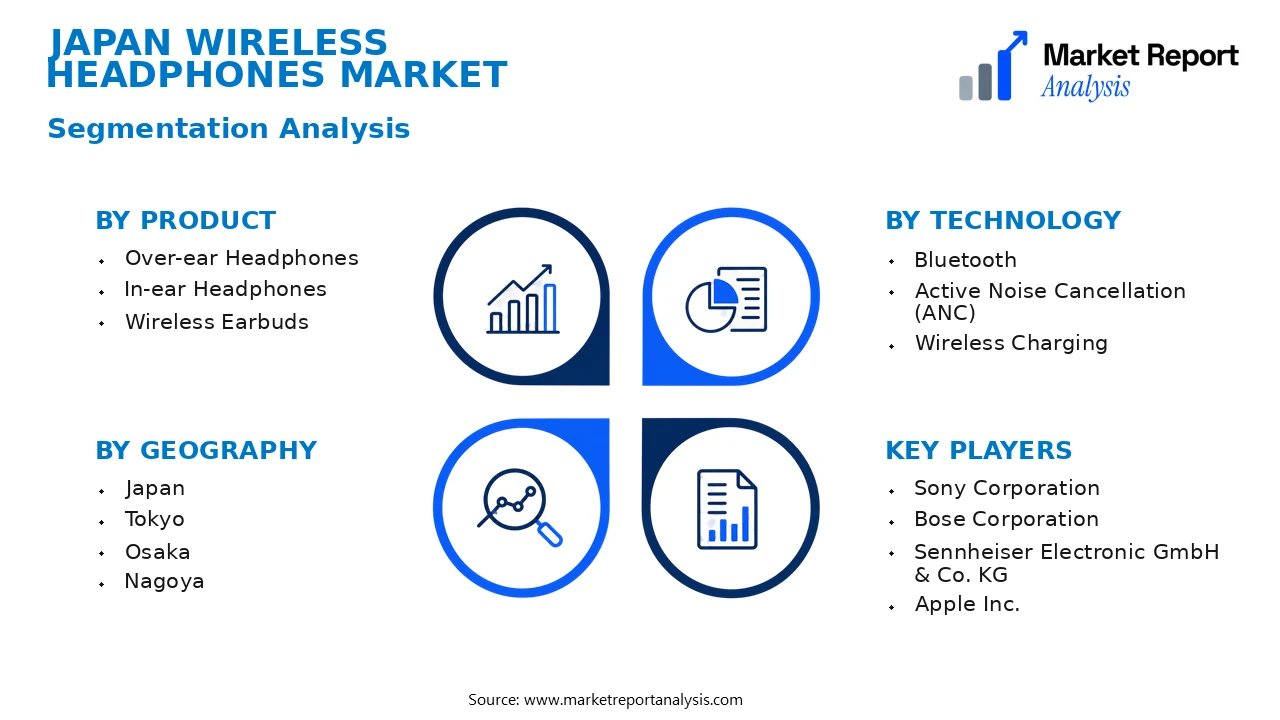
- Product
- Over-ear Headphones: These headphones, known for superior sound quality and comfort, are popular among audiophiles and professionals within Japan, representing a significant share of consumer and high-end markets driven by premium audio demands.
- In-ear Headphones: Compact and portable, in-ear headphones cater to active users and commuters. Demand is fueled by their convenience, affordability, and technological advancements like noise cancellation, capturing a large segment of daily consumers.
- Wireless Earbuds: As the fastest-growing category, wireless earbuds appeal for their convenience and evolving features such as active noise cancellation, voice assistant integration, and ergonomic designs, propelling widespread adoption across urban Japan.
- Technology
- Bluetooth: Bluetooth-enabled wireless headphones dominate the market, favored for their compatibility across devices and ease of use, thus representing the primary wireless technology used in Japan's headphones industry.
- Active Noise Cancellation (ANC): Technologies enabling ANC are increasingly incorporated into premium wireless headphones. The demand for immersive listening experiences and environmental noise reduction bolsters its market penetration.
- Wireless Charging: Although still emerging, wireless charging capability in headphones offers convenience and innovation, appealing to tech-savvy consumers and early adopters in Japan’s competitive market landscape.
- Geography
- Japan: The overall market within Japan features a high demand for premium wireless headphones in metropolitan areas due to the tech-savvy population, urban lifestyle, and increasing disposable income levels, making the country a significant market hub.
- Tokyo: As Japan's capital and largest city, Tokyo hosts the highest concentration of retail outlets, technology retailers, and early adopters, making it a critical market center for wireless headphones’ sales and launches.
- Osaka: Known for its vibrant consumer electronics scene and dense population, Osaka is a key regional hub where high adoption rates of wireless headphones are observed, especially among younger demographics.
- Nagoya: With a strong manufacturing base and industrial activity, Nagoya sustains a steady demand especially for professional-grade wireless headphones used in industrial and commercial environments.
- Yokohama: As a major port city with extensive commercial activity, Yokohama presents opportunities for wireless headphones in both consumer markets and enterprise applications, including logistics and corporate sectors.
- Kyoto: While renowned for its cultural heritage, Kyoto also embodies a vibrant tourism and educational sector, driving demand for portable and wireless audio devices among students and tourists alike.
- Kobe: Kobe’s role as a trading city and its active retail sector support a steady market for stylish and premium wireless headphones targeting affluent and fashion-conscious consumers.
- Fukuoka: As a regional innovation hub, Fukuoka's growing tech and startup ecosystem foster early adoption of new wireless technology and facilitate local demand for innovative headphone solutions.
Competitive Intelligence
The Japan Wireless Headphones Market is characterized by high competition among both established multinational corporations and emerging local brands. Leading players such as Sony, Bose, and JBL hold significant market shares, contributing to moderate market concentration that fosters intense rivalry. Business strategies widely focus on product innovation, with companies investing heavily in R&D to introduce features like active noise cancellation, longer battery life, and seamless integration with smart devices. Strategic partnerships with technology firms and entertainment providers are prevalent to enhance product offerings and expand consumer reach, particularly in major cities like Tokyo and Osaka where urban tech adoption is rapid. Acquisitions of regional startups enable incumbents to consolidate their market position and incorporate cutting-edge technology swiftly. Expansion strategies often involve launching region-specific products and aggressive marketing campaigns to capture broader segments. Differentiation among competitors is driven by superior audio quality, ergonomic design, and brand reputation, all tailored to Japanese consumer preferences. R&D investments remain a top priority for maintaining technological leadership and competitive edge in this dynamic market.
Leading Company Profiles
The competitive landscape in Japan's wireless headphones market comprises a balanced mix of global giants and local innovators. These firms are characterized by their extensive R&D activities, diverse product portfolios, and strategic alliances to reinforce their market positions and accelerate innovation. The focus on advanced audio technology, user-centric features, and sustainability initiatives defines their core strategies. Their continuous pursuit of differentiation through technological breakthroughs and regional adaptation underpins their competitive edge and market growth prospects.
- Sony Corporation
- Bose Corporation
- Sennheiser Electronic GmbH & Co. KG
- Apple Inc.
- Samsung Electronics Co., Ltd.
- Anker Innovations Limited
- Sharp Corporation
- Panasonic Corporation
- Plantronics, Inc. (Poly)
- JBL (Harman International Industries, Inc.)
Sony Corporation
Sony leads the Japanese wireless headphones market with a diverse portfolio featuring noise-canceling, true wireless earbuds, and flagship models. Known for cutting-edge sound quality, Sony emphasizes innovation, technological integration, and sleek design to retain its leadership position in Japan.
Bose Corporation
Bose focuses on premium audio quality and innovative noise cancellation technology, targeting discerning customers seeking superior sound experiences. Bose continuously invests in R&D to enhance connectivity, battery life, and ergonomic comfort in its wireless headphone offerings.
Sennheiser Electronic GmbH & Co. KG
Sennheiser, renowned for professional-grade audio equipment, emphasizes sound accuracy and durability. Its strategic push into wireless and noise-canceling headphones aims to capture both professional and consumer segments within Japan.
Apple Inc.
Apple’s AirPods continue to dominate in Japan, leveraging seamless integration with iOS devices. The company’s focus remains on enhancing user experience through innovative features, ecosystem synergy, and strong brand loyalty in the wireless headphone segment.
Samsung Electronics Co., Ltd.
Samsung offers a broad range of wireless earbuds emphasizing innovation, affordability, and advanced features like active noise cancellation. Its strategic advances in Miniaturization and ecosystem compatibility bolster its competitive stance in Japan.
Anker Innovations Limited
Anker leverages its expertise in portable electronics to deliver affordable, feature-rich wireless headphones. The company’s strategic focus on value-for-money, robust connectivity, and battery life fuels its significant growth in Japan.
Sharp Corporation
Sharp emphasizes compact, stylish wireless earbuds and headphones with integrated smart features suited to Japan's tech-savvy consumers. Its innovations focus on ergonomic design and energy efficiency to capture niche segments.
Panasonic Corporation
Panasonic’s wireless audio products emphasize durability, sound quality, and affordability, aligning with Japanese preferences for reliable and long-lasting electronics. Their ongoing innovation in Bluetooth technology sustains their market relevance.
Plantronics, Inc. (Poly)
Poly specializes in enterprise and consumer wireless audio solutions, with a focus on call clarity, noise management, and ergonomic comfort. Their strategic investments aim to bolster presence within the corporate and high-end consumer sectors.
JBL (Harman International Industries, Inc.)
JBL offers a wide range of wireless headphones characterized by robust sound profiles, style, and affordability. Its focus on innovative voice-assisted technology and connectivity features appeals to younger consumers in Japan.
Strategic Business Developments
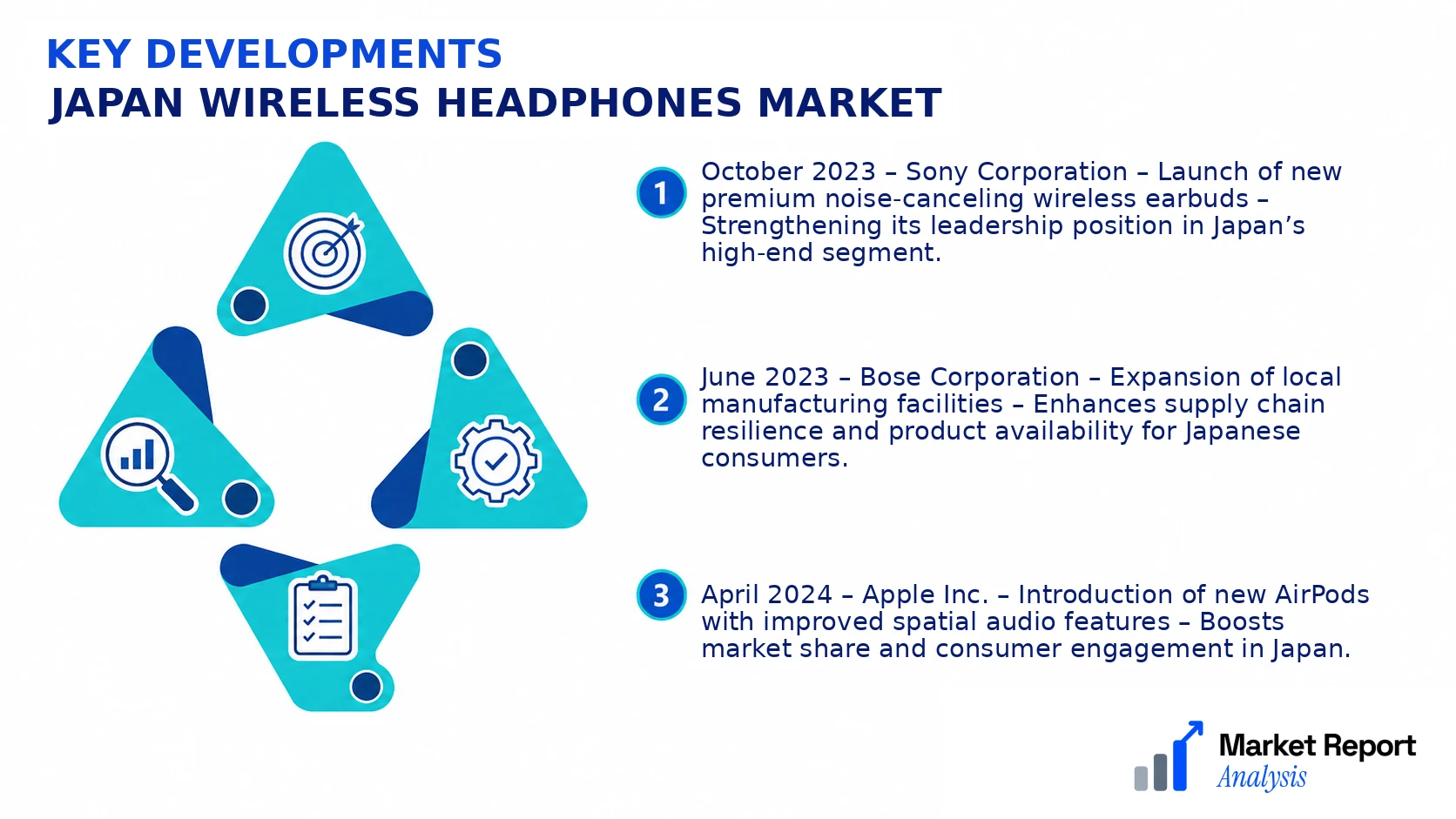
- October 2023 – Sony Corporation – Launch of new premium noise-canceling wireless earbuds – Strengthening its leadership position in Japan’s high-end segment.
- June 2023 – Bose Corporation – Expansion of local manufacturing facilities – Enhances supply chain resilience and product availability for Japanese consumers.
- April 2024 – Apple Inc. – Introduction of new AirPods with improved spatial audio features – Boosts market share and consumer engagement in Japan.
- January 2024 – Samsung Electronics – Strategic alliance with local retail chains for dedicated product zones – Improves distribution reach and customer experience.
- March 2024 – Anker Innovations Limited – Launch of a new line of budget-friendly wireless earbuds with extended battery life – Capitalizes on emerging affordability trend among Japanese youth.
Frequently Asked Questions
What is the Japan Wireless Headphones Market?
The Japan Wireless Headphones Market encompasses the manufacturing, distribution, and sales of wireless headphones in Japan, driven by consumer demand for convenience, portability, and advanced audio technology. It includes products like Bluetooth earbuds and over-ear models tailored for various segments.
What is the current market size of Japan Wireless Headphones Market?
As of 2026, the market valuation of Japan Wireless Headphones is estimated at approximately USD 3.5 Billion, reflecting substantial growth driven by technological innovation, increasing smartphone adoption, and the rising preference for wireless audio devices among consumers.
What factors are driving the Japan Wireless Headphones Market?
Market growth is propelled by technological advancements such as noise cancellation and wireless connectivity, the rising popularity of smart devices, lifestyle shifts favoring portable audio solutions, and increasing consumer awareness about sound quality and convenience in mobile usage.
Which region dominates the Japan Wireless Headphones Market?
The Tokyo metropolitan area leads the market, owing to its dense population, high disposable income, and a strong concentration of technology adoption. Urban centers across Japan also significantly contribute to regional sales volumes.
Which segment is expected to grow the fastest?
Wireless earbuds are expected to demonstrate the most rapid growth due to their compactness, compatibility with mobile devices, and expanding lifestyle demographics seeking unobtrusive and convenient audio solutions.
Who are the leading companies operating in the Japan Wireless Headphones Market?
Major players include Sony Corporation, Bose Corporation, and Apple Inc., recognized for their innovation, brand loyalty, and extensive distribution networks that bolster their market share in Japan’s wireless headphones industry.
Analyst Perspective
The Japan Wireless Headphones Market exhibits signs of maturity, with ongoing technological upgrades and branded loyalty shaping competitive dynamics. Over the forecast period, long-term growth is expected to be driven by innovations in noise-cancelation, battery life, and seamless ecosystem integration, appealing to tech-savvy consumers in urban centers like Tokyo and Osaka. Commercial opportunities will increasingly focus on premium segments that emphasize audiophile quality and smart features, while emerging markets within Japan's city suburbs could benefit from value-oriented models. Technology evolution will continue toward more compact, ergonomic designs coupled with advanced connectivity options such as Bluetooth 5.3 and adaptive sound capabilities, creating a competitive landscape where brands differentiate mainly through R&D investment and user experience. Regional growth potential remains concentrated in metropolitan areas, with strategic investments prioritized in marketing and distribution channels that target early adopters and affluent consumers. Overall, the market will require consistent innovation strategies and localized marketing approaches to sustain growth amidst evolving consumer preferences and global competitive pressures.
