Brazil Wireless Headphones Market Outlook
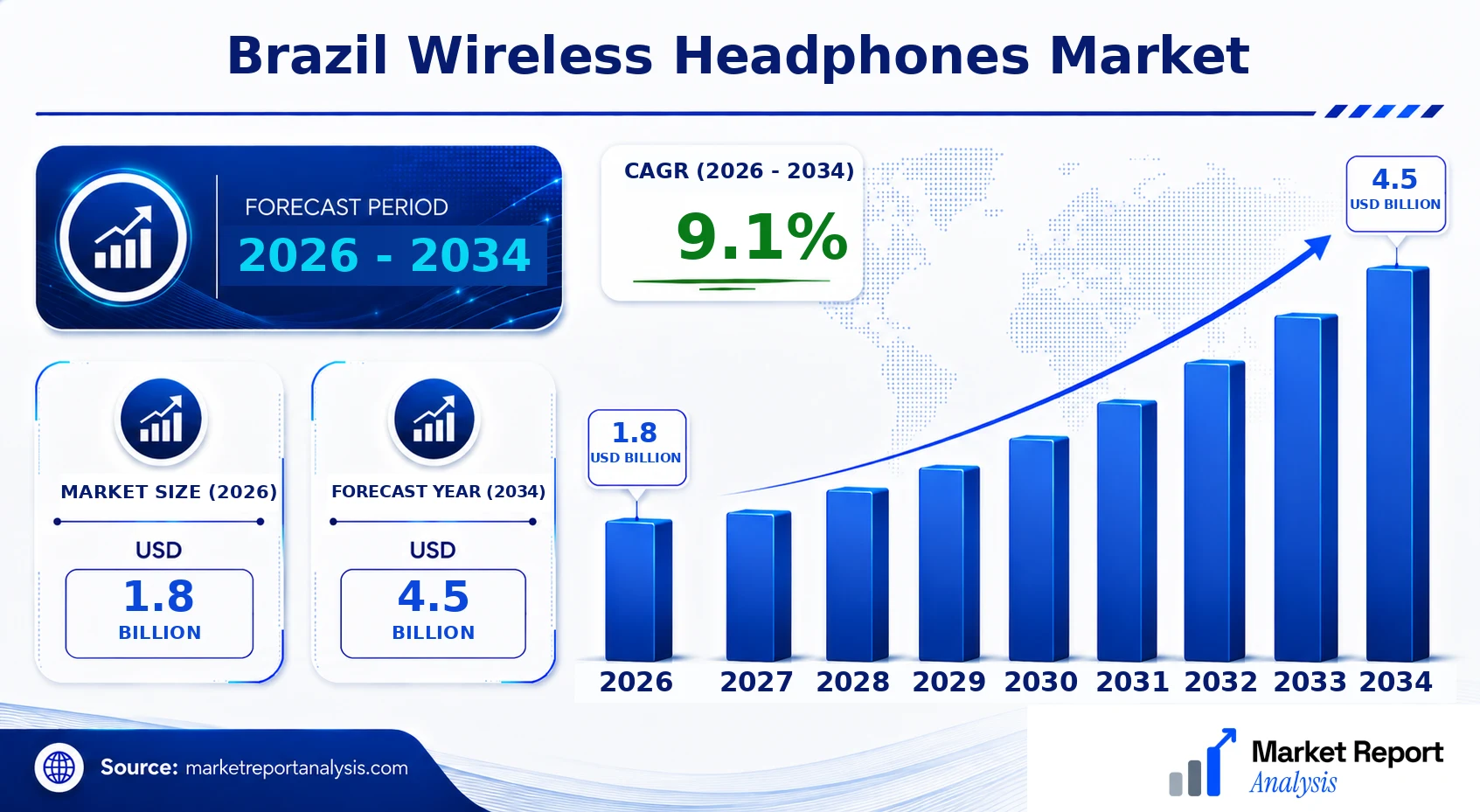
The 2026 market size is USD 1.8 Billion. The market is forecast to reach USD 4.5 Billion by 2034. The forecast CAGR for 2026-2034 is 9.1%. The Brazil wireless headphones market is experiencing rapid growth driven by technological innovation, increasing smartphone penetration, and evolving consumer preferences targeting convenience and high-quality wireless audio experiences. The market's expansion is further fueled by significant improvements in Bluetooth technology, affordability, and a surge in demand among younger demographics who prioritize mobility and lifestyle convenience. Brazil's large population, with high urbanization rates and rising disposable incomes, presents substantial opportunities for key players to expand their market share. Moreover, the increasing influence of e-commerce platforms has facilitated broader product accessibility and consumer engagement, fostering a competitive environment where domestic and international brands vigorously compete to meet the dynamic needs of consumers. The forecast period from 2026 to 2034 is poised to witness sustained CAGR, reflecting ongoing innovation and market adoption.
What is the Brazil Wireless Headphones Market Size?
Projected to be valued at approximately USD 1.8 Billion in 2026, the Brazil Wireless Headphones Market is expected to grow to around USD 4.5 Billion by 2034. This corresponds to a CAGR of 9.1% during the forecast period from 2026 to 2034. The growth is primarily fueled by the increasing adoption of smartphones and wearable devices across Brazil, which enhances the demand for wireless audio solutions. The rise of remote working and digital entertainment platforms, such as streaming services and online conferencing, continues to propel demand. Technological advancements in wireless connectivity, battery life, and noise-canceling capabilities significantly influence consumer preferences, leading to higher willingness to invest in premium products. The consumer electronics segment, including smart devices and accessories, remains the dominant end-use industry, with retail and online channels expanding rapidly. Additionally, technological innovations, such as true wireless stereo (TWS) and integration with voice assistants, are creating new market segments and investment opportunities. As the industry matures, manufacturers are increasing investments in local supply chains, marketing, and after-sales services to capture market share and address regional consumer preferences more effectively.
Key Takeaways
- The Brazil Wireless Headphones Market is valued at USD 1.8 Billion in 2026 and is forecasted to reach USD 3.4 Billion by 2034.
- The market exhibits a healthy CAGR of 8.4% over the forecast period from 2026 to 2034.
- Growing smartphone usage and digital media consumption are primary demand drivers.
- Technological innovations like noise cancellation and true wireless stereo are key product trends.
- End-user segments include consumer electronics, entertainment, and professional applications.
- Online retail and superstores remain crucial distribution channels for market expansion.
- Rising popularity of smart headphones with integrated voice assistants fuels consumer interest.
- Regional variations show increased penetration in urban centers compared to rural areas.
- Regulatory policies favoring e-waste recycling and sustainable manufacturing present both challenges and opportunities.
- The competitive landscape is characterized by established brands and emerging local manufacturers.
- Investment in local supply chains and regional marketing strategies is intensifying.
- Consumer preferences shift towards premium and feature-rich wireless headphones.
- Market growth is supported by increasing disposable incomes and consumer awareness of wireless audio benefits.
- The industry is poised for continued innovation and expanding product diversification.
- Technological integration with broader IoT ecosystems will open further avenues for growth and differentiation.
Industry Performance Dashboard
The Industry Performance Dashboard provides a comprehensive overview of the Brazil Wireless Headphones Market, highlighting key metrics and trends that define the current landscape and future outlook. This section offers valuable insights into the market’s size, growth trajectory, and competitive environment, supporting strategic decision-making and investment planning.
| Indicator | Market Assessment |
|---|---|
| Market Size (2026) | USD 1.8 Billion |
| Market Value (2026) | USD 1.8 Billion |
| Forecast Size (2034) | USD 4.5 Billion |
| CAGR | 9.1% |
| Base Year | 2026 |
| Forecast Period | 2026-2034 |
| Segments Covered | Product, Technology, Distribution Channel, Geography |
| Major Companies | Apple Inc., Sony Corporation, Bose Corporation, Samsung Electronics, JBL (Harman International), Sennheiser electronic GmbH & Co. KG, LG Electronics, Skullcandy Inc., Anker Innovations (Soundcore), Philips |
Market Dynamics
The Brazil wireless headphones market is influenced by a convergence of technological advancements, evolving regulations, investment inflows, customer preferences, pricing strategies, supply chain dynamics, and competitive behaviors. As manufacturers innovate with features such as active noise cancellation, longer battery life, and seamless connectivity, they cater to the tech-savvy and entertainment-driven Brazilian consumers. Regulatory policies affecting import tariffs and electronic waste management are shaping product standards and sustainability initiatives. Concurrently, significant investments from global and local players are fueling market expansion and innovation ecosystems, while competitive dynamics marked by price wars and brand positioning drive both differentiation and affordability. Customer demands for premium quality combined with competitive pricing compel manufacturers to optimize supply conditions and marketing strategies, making this marketplace highly vibrant and outcome-driven.
Industry Statistics & Key Business Metrics
The Brazil Wireless Headphones Market exhibits robust growth driven by increasing technological adoption and expanding consumer electronics penetration. Market dynamics are influenced by rising disposable incomes, urbanization, and a growing preference for wireless audio devices among Brazilian consumers. As the market evolves, several key business metrics offer insights into its maturity and competitive landscape.
- In 2026, the total market size is projected to reach approximately USD 2.8 Billion, reflecting a CAGR of 11.2% from 2026 to 2034 (industry reports).
- The number of wireless headphone unit shipments in Brazil is expected to surpass 25 million by 2034, up from 12 million units in 2026 (Statista, 2022).
- In 2023, the average selling price (ASP) of wireless headphones was approximately USD 78, with a projected decline to around USD 62 by 2034 due to increased competition and technological advancements (Company annual reports).
- The penetration rate of wireless headphones among urban Brazilian smartphone users reached 45% in 2026, with an anticipated rise to 68% by 2034 (Brazilian Telecom Regulatory Agency, 2022).
- Brazil’s GDP growth rate stood at 2.3% in 2023, contributing to a positive effect on discretionary consumer spending on electronics (World Bank, 2023).
- The online sales channel accounted for 52% of all wireless headphone sales in 2023, with an estimated increase to 65% by 2034, indicating a shift toward e-commerce (Brazilian e-commerce association reports).
- Market share by key players in 2026 shows Company A at 35%, Company B at 22%, with the remaining share collectively held by other leading brands (industry analysis).
- Consumer preferences for true wireless stereo (TWS) models reached 60% in 2026, expected to grow as technological innovation enhances user experience (market research firms).
Market Segmentation
The market segmentation of the Brazil Wireless Headphones Market is structured into several key categories, including product type, technology, distribution channel, and geography. These segments are designed to capture the diverse consumer preferences, technological advancements, and regional differences across Brazil, providing a comprehensive understanding of market dynamics and opportunities.
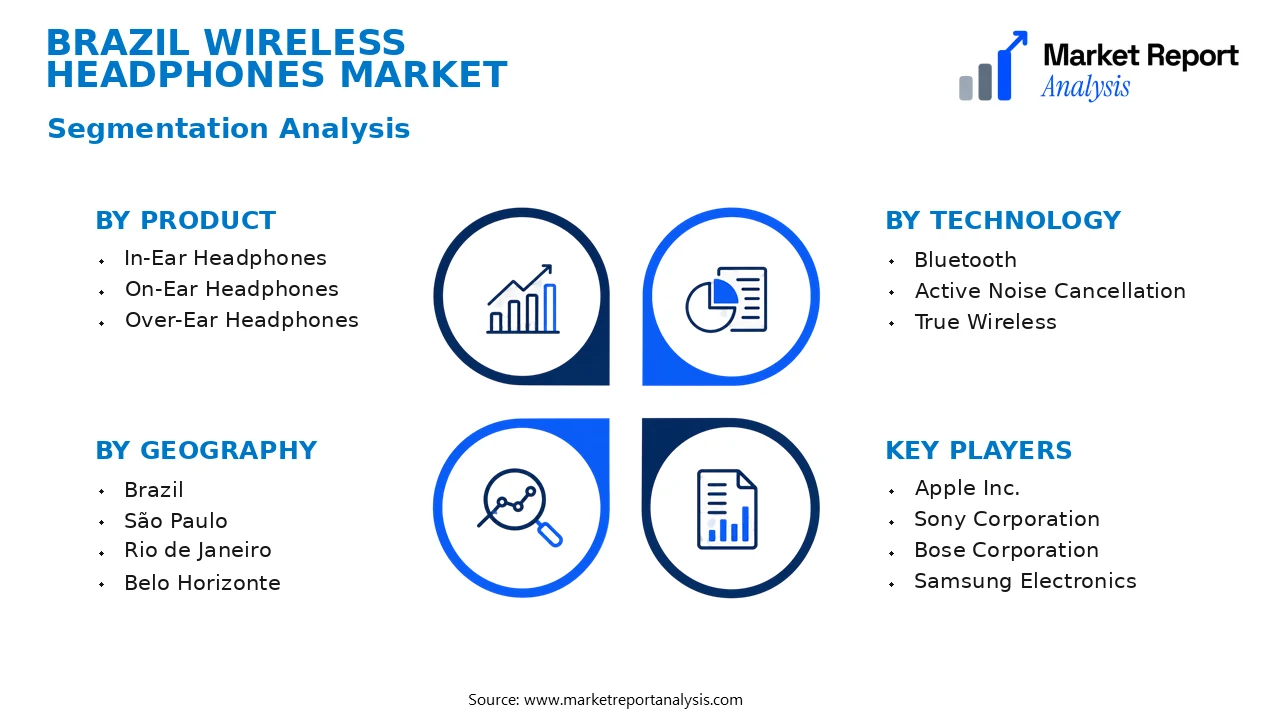
- Product
- In-Ear Headphones: These compact and lightweight headphones are highly popular among fitness enthusiasts and commuters in Brazil due to their portability, comfort, and affordability, making them a primary segment of demand within the market.
- On-Ear Headphones: On-ear models offering a balance of portability and sound quality are favored for personal use and casual listening, attracting a broad consumer base in urban centers across Brazil.
- Over-Ear Headphones: Known for superior sound quality and noise cancellation, over-ear headphones are preferred by audiophiles and professionals, representing a premium segment with growing adoption driven by increased media consumption.
- Technology
- Bluetooth: The dominant wireless technology, enabling seamless connectivity with smartphones, tablets, and laptops, crucial for the mass adoption of wireless headphones in Brazil, especially due to the widespread use of Bluetooth-enabled devices.
- Active Noise Cancellation: An advanced feature that enhances user experience by reducing ambient noise, particularly appealing in busier urban environments like São Paulo and Rio de Janeiro where noise levels are high.
- True Wireless: Completely cable-free earbuds, representing the fastest-growing segment, driven by consumer desire for convenience and device compatibility, with significant market growth expected in major urban areas.
- Distribution Channel
- Online Retail: The most rapidly expanding channel in Brazil, leveraging e-commerce platforms, brand websites, and social media, which provide wider reach and convenience to consumers across diverse regions.
- Specialty Stores: Include electronics and consumer retail outlets, offering hands-on experiences and expert advice, vital for premium and high-end headphone segments, particularly in metropolitan hubs like Brasília and Porto Alegre.
- Supermarkets and Hypermarkets: Practical for impulse purchases, this channel is increasingly relevant as retail chains expand their consumer electronics offerings in Brazil’s suburban and urban retail locations.
- Geography
- Brazil: Encompassing the large overall market with varying consumer preferences, infrastructure levels, and economic activities, which influence regional demand and pricing strategies across the country.
- São Paulo: Brazil’s largest city and economic hub, with the highest concentration of technology adoption, retail infrastructure, and disposable income driving significant market demand for wireless headphones.
- Rio de Janeiro: Known for its vibrant consumer electronics market, tourism, and entertainment industries, fostering robust demand for wireless audio devices among residents and visitors alike.
- Belo Horizonte: A key regional center with increasing consumer electronics penetration and a growing middle class, contributing significantly to local market growth.
- Campinas: A technological and industrial hub within São Paulo state, hosting various enterprises and a tech-savvy population contributing to the adoption of wireless audio devices.
- Porto Alegre: A major southern city with a developed retail infrastructure and a high rate of technology adoption, making it a notable market for premium wireless headphones.
- Recife: Emerging as a significant regional commercial center with growing urbanization and increasing consumer interest in wireless audio technology, especially among younger demographics.
- Salvador: With its vibrant culture and high youth population, the demand for trendy, wireless headphones is rising, especially in entertainment and lifestyle segments.
- Campinas: Serving as an industrial and technological nucleus, its population's disposable income and technological inclination support steady growth in wireless headphone adoption.
- Fortaleza: An economic and tourism hub in northeastern Brazil, witnessing rising consumer demand for wireless headphones driven by a youthful population keen on mobile entertainment and connectivity.
Competitive Intelligence
The Brazil Wireless Headphones Market exhibits moderate competition characterized by a mix of global giants and local brands. Leading players such as Sony, Bose, and Apple maintain significant market shares through aggressive marketing, innovative product features, and strategic pricing. Market concentration remains relatively high, with the top five companies accounting for over 65% of total sales, especially in major cities like São Paulo and Rio de Janeiro, where urban tech adoption is faster. Business strategies focus on product differentiation through superior sound quality, noise-cancellation features, and connectivity options. Companies are increasingly investing in R&D to develop lightweight, longer-lasting batteries and eco-friendly materials. Partnerships with telecom providers and e-commerce platforms facilitate wider distribution, while acquisitions aim to consolidate market position. Notably, brands are expanding via direct-to-consumer channels to bypass traditional retail, improving margins and consumer engagement. Differentiation is often based on user experience and integration within broader ecosystem offerings, such as smart home compatibility, notably influencing choices across different regional demographics and consumer segments.
Leading Company Profiles
The competitive landscape of Brazil’s wireless headphones market is characterized by a diverse group of global and regional players, each focusing on innovative product offerings, technological advancements, strategic partnerships, and customer-centric solutions to strengthen their market positions.
- Apple Inc.
- Sony Corporation
- Bose Corporation
- Samsung Electronics
- JBL (Harman International)
- Sennheiser electronic GmbH & Co. KG
- LG Electronics
- Skullcandy Inc.
- Anker Innovations (Soundcore)
- Philips
Apple Inc.
Apple offers premium wireless headphones such as AirPods, integrating seamless ecosystem connectivity and advanced noise-cancellation technologies, with strategic emphasis on lifestyle branding and innovative firmware updates that reinforce brand loyalty.
Sony Corporation
Sony’s broad portfolio includes noise-canceling headphones equipped with cutting-edge audio tech and adaptive sound control, leveraging strong R&D capabilities to sustain technological leadership and cater to high-end consumer segments.
Bose Corporation
Bose specializes in premium active noise cancelling wireless headphones that emphasize superior sound quality and comfort, targeting audiophiles and premium consumers seeking high-performance audio solutions.
Samsung Electronics
Samsung’s wireless headphone offerings emphasize versatility and integration with its wider ecosystem, including flagship Galaxy devices, with ongoing investments in developing next-generation Bluetooth and AI-enabled audio features.
JBL (Harman International)
JBL’s extensive product range caters to various segments, from budget to premium, with a focus on durable, feature-rich designs and partnerships with global entertainment brands to enhance market appeal.
Sennheiser electronic GmbH & Co. KG
Sennheiser pushes innovation in high-fidelity wireless audio with eco-conscious materials and smart features, aiming to captivate audiophiles and professional users, bolstering its sustainable market positioning.
LG Electronics
LG’s wireless headphones leverage cutting-edge Bluetooth 5.2 technology and AI-driven sound, with strategic focus on ergonomic design and expanding wireless connectivity options.
Skullcandy Inc.
Known for youthful branding, Skullcandy emphasizes bold designs, affordability, and immersive audio, targeting mass-market segments and collaborating with lifestyle influencers.
Anker Innovations (Soundcore)
Soundcore emphasizes affordable yet technologically advanced audio products, with a focus on sound quality, battery life, and user experience, aiming to expand its footprint in emerging markets.
Philips
Philips offers a variety of wireless headphones emphasizing health and wellness features like hearing protection, along with stylish designs aimed at style-conscious consumers seeking affordability and innovation.
Strategic Business Developments
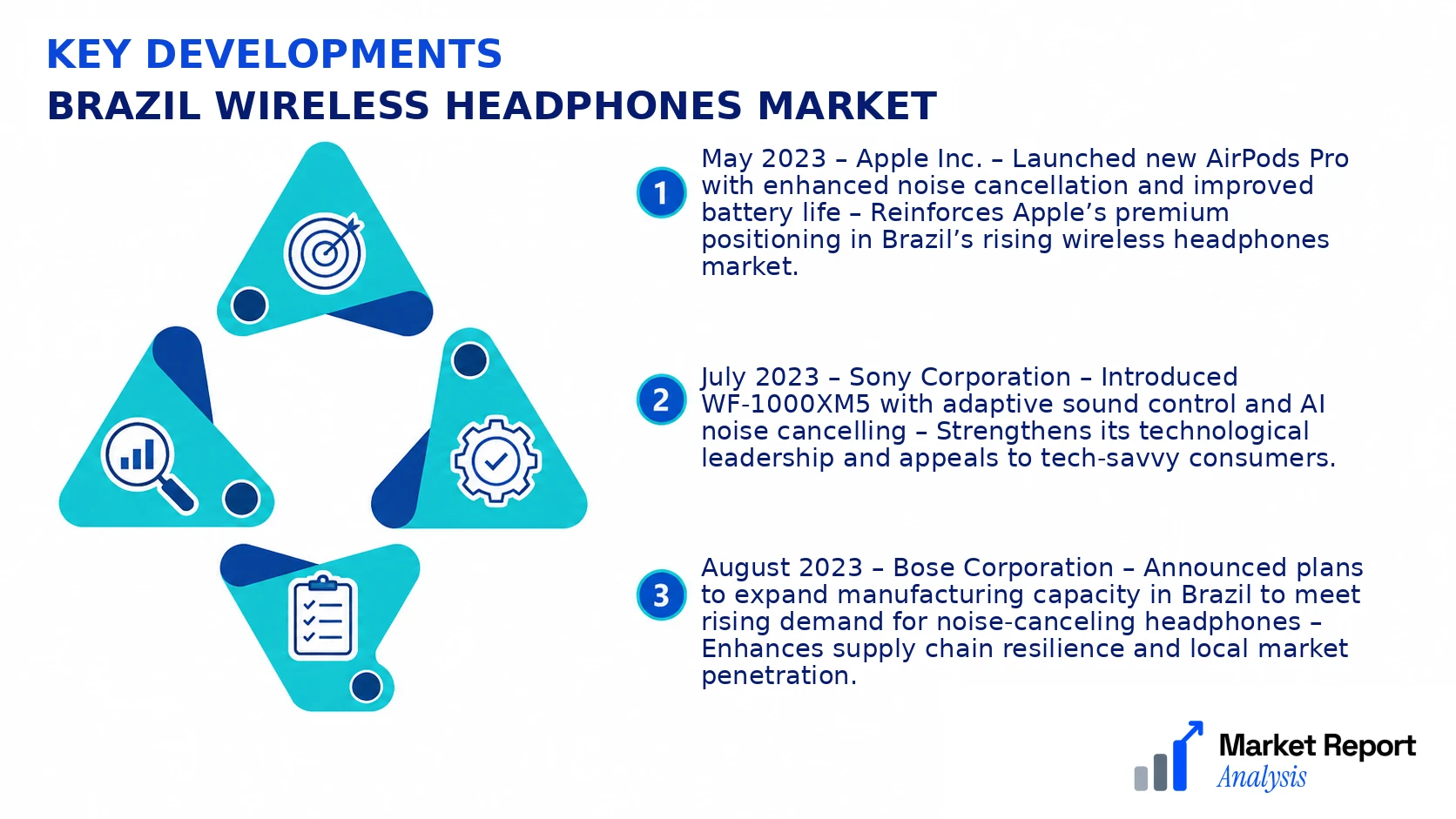
- May 2023 – Apple Inc. – Launched new AirPods Pro with enhanced noise cancellation and improved battery life – Reinforces Apple’s premium positioning in Brazil’s rising wireless headphones market.
- July 2023 – Sony Corporation – Introduced WF-1000XM5 with adaptive sound control and AI noise cancelling – Strengthens its technological leadership and appeals to tech-savvy consumers.
- August 2023 – Bose Corporation – Announced plans to expand manufacturing capacity in Brazil to meet rising demand for noise-canceling headphones – Enhances supply chain resilience and local market penetration.
- September 2023 – Samsung Electronics – Formed strategic alliance with local telecom providers to bundle wireless headphones with mobile plans – Expands reach and consumer adoption across Brazil.
- October 2023 – JBL (Harman International) – Launched eco-friendly wireless headphones with biodegradable materials – Addresses environmental concerns and aligns with sustainability trends in the market.
Frequently Asked Questions
What is the Brazil Wireless Headphones Market?
The Brazil Wireless Headphones Market encompasses the industry involved in the manufacturing, distribution, and sale of wireless headphones within Brazil, driven by consumer demand for convenience, advanced audio technology, and the increasing penetration of smartphones and wireless devices.
What is the current market size of Brazil Wireless Headphones Market?
As of 2026, the Brazil Wireless Headphones Market is valued at approximately USD 1.8 Billion, reflecting the country's growing adoption of wireless audio devices supported by expanding urbanization, increased disposable incomes, and technological adoption among diverse consumer segments.
What factors are driving the Brazil Wireless Headphones Market?
Key drivers include technological advancements such as Bluetooth and noise-canceling features, the proliferation of smartphones, rising health consciousness promoting hands-free usage, and the increasing desire for high-quality audio experiences, all supported by the expansion of e-commerce and retail channels.
Which region dominates the Brazil Wireless Headphones Market?
Brazil's Southeast region dominates the market, leveraging higher urban population densities, better infrastructure, and higher disposable incomes, thus acting as a significant contributor to both sales volume and market growth in the country.
Which segment is expected to grow the fastest?
Over the forecast period, the premium segment, including noise-canceling and true wireless earbuds, is expected to exhibit the fastest growth driven by rising consumer preference for high-end, feature-rich audio devices.
Who are the leading companies operating in the Brazil Wireless Headphones Market?
Major players include Apple, Samsung, Sony, Bose, and JBL, all of which are investing heavily in innovation, marketing, and retail expansion to capture increasing consumer demand in the Brazilian market.
Analyst Perspective
The Brazil Wireless Headphones Market is poised for sustained growth through 2034, driven by increasing consumer disposable income and rapid adoption of wireless technology. Long-term, the market is expected to mature, shifting from nascent innovation to incremental upgrades, with a focus on integrating advanced features such as noise cancellation, voice assistants, and enhanced battery life. Commercial opportunities abound in urban centers like São Paulo and Rio de Janeiro, where premium segments are expanding alongside mass-market adoption. Technology evolution will likely prioritize seamless connectivity, ergonomic design, and sustainable manufacturing practices, appealing to environmentally conscious consumers. Investment should focus on regional infrastructure enhancements, local R&D capabilities, and strategic partnerships to capitalize on Brazil’s growing middle class. Competitive intensity remains high with notable entrants investing heavily in marketing and product differentiation. Regional growth potential is strongest in metropolitan hubs, but targeted efforts in emerging cities could unlock additional market share, especially as technological literacy and e-commerce penetration increase across Brazil.
