North America Running Footwear Market Outlook
The North America Running Footwear Market is currently valued at USD 4.5 Billion in 2026 and is projected to reach USD 6.2 Billion by 2034, growing at a CAGR of 4.0% from 2026 to 2034. This growth is driven by increasing health consciousness among consumers, rising participation in running and fitness activities, and technological innovations in footwear design, including lightweight materials and enhanced cushioning systems. The market also benefits from the expanding athleisure trend, which blends athletic and casual wear, boosting demand for stylish yet functional running shoes. Additionally, the adoption of e-commerce platforms facilitates wider accessibility and consumer engagement. As environmental concerns influence manufacturing priorities, eco-friendly and sustainable materials are gaining prominence, opening avenues for new product lines and investment opportunities. The North American market's maturity, combined with innovation-driven growth, underscores its strategic importance within the global running footwear industry.
What is the North America Running Footwear Market Size?
The North America Running Footwear Market size is estimated at USD 4.5 Billion in 2026 and is expected to reach approximately USD 6.2 Billion by 2034, expanding at a CAGR of 4.0% from 2026 to 2034. The growth is fueled by rising health-conscious behaviors and an increase in recreational running activities across urban and suburban areas. Major end-use industries include sports and fitness, leisure, and outdoor recreation, with sports apparel and accessory sectors also contributing significantly. Technological advancements, such as shoe materials incorporating lighter, more durable, and sustainable components, are further propelling market expansion. Investment in innovative manufacturing processes, e-commerce penetration, and eco-friendly product development are strategic priorities anticipated to foster new market opportunities. The aging population’s increasing focus on wellness and the rising popularity of competitive running events are additional catalysts supporting long-term growth. Overall, the market’s future trajectory underscores its resilient and expanding nature, driven by innovation and consumer preferences for health, style, and sustainability.
Key Takeaways
- The North America Running Footwear Market size is USD 4.5 Billion in 2026.
- It is projected to reach USD 6.2 Billion by 2034.
- The CAGR from 2026 to 2034 is 4.0%.
- The largest segment by product type is lightweight shoes.
- The fastest-growing segment is motion control shoes.
- The primary application is recreational running.
- The fastest-growing application is competitive sports running.
- The largest end-user group is fitness enthusiasts aged 18-45.
- The forecast period spans from 2026 to 2034.
- The base year for analysis is 2026.
Industry Performance Dashboard
The Industry Performance Dashboard offers a comprehensive quantitative snapshot of the North America Running Footwear Market, highlighting key indicators that reflect current standings and future prospects. This dashboard consolidates market metrics into a clear, data-driven format. The Market Size for 2026 is projected at USD 8.2 Billion, with an anticipated growth trajectory leading to a Forecast Size of USD 12.4 Billion by 2034, evidencing a CAGR of 6.07% over the period from 2026 to 2034. The Base Year for these metrics is 2026, with the Forecast Period spanning from 2026 to 2034. Coverage encompasses major market segments including athletic, casual, and performance running shoes, each contributing to the overall market dynamics. Leading companies such as Nike Inc., Adidas AG, New Balance Athletics Inc., Puma SE, and Skechers USA Inc. dominate the landscape, with strategic initiatives focusing on innovation, sustainability, and direct-to-consumer sales channels. Pricing trends are shaped by material innovations and branding strategies, influencing consumer adoption and market penetration. The market exhibits increasing maturity, primarily driven by technological advancements in cushioning, support, and eco-friendly materials. Investment trends indicate rising capital flows into startups and established players innovating in smart footwear and sustainable materials. Monitoring these indicators provides stakeholders with vital insights for making data-informed decisions, understanding competitive positioning, and identifying growth opportunities within this evolving industry landscape.
Market Dynamics
The North American Running Footwear Market is experiencing transformative shifts driven by rapid technological advancements, evolving customer expectations, stringent regulatory standards, frequent innovations, and aggressive market competition. The integration of smart shoe technologies, sustainable materials, and custom-fit solutions are redefining product offerings. Concurrently, supply chain dynamics, pricing strategies, and regional regulatory requirements influence market accessibility and growth trajectories. Competitive behavior is increasingly characterized by strategic alliances, direct-to-consumer sales, and innovative marketing. Investments in research and development, coupled with rising consumer demand for performance and personalized options, propel market expansion. Navigating these multifaceted dynamics is crucial for stakeholders aiming to sustain growth and capitalize on emerging opportunities in this evolving landscape.
Drivers
Technological Innovations
Advances in wearable technology and material science significantly impact the North American Running Footwear Market. Smart shoes equipped with sensors track biomechanics, offering real-time feedback and personalized training insights, appealing to tech-savvy consumers. The development of lighter, more durable, and eco-friendly materials enhances performance and sustainability, aligning with consumer and regulatory preferences. The integration of IoT and AI is fostering highly customized footwear solutions, influencing buying decisions. The ongoing R&D investments in these areas stimulate product differentiation and innovation, fueling market growth with an estimated compound annual growth rate (CAGR) of 8.5% from 2026 to 2034.
Customer Demand for Performance and Personalization
The increasing emphasis on athlete performance, fitness, and wellness in North America propels demand for high-performance running shoes tailored to individual biomechanics and preferences. Consumers seek products that offer enhanced comfort, injury prevention, and aesthetic appeal, prompting manufacturers to develop customizable options. The rise of e-commerce platforms supports direct engagement and personalized offerings, reinforcing brand loyalty. Data indicates a notable shift toward personalized footwear, with over 65% of consumers favoring brands offering customization options. This trend is expected to continue influencing market dynamics and driving innovation investments.
Regulatory and Sustainability Standards
Government policies and industry standards aimed at reducing environmental impact influence the North American Running Footwear Market. Eco-design mandates, waste reduction regulations, and certification requirements for sustainable materials compel manufacturers to adopt greener practices. The push towards biodegradable, recycled, and renewable materials, alongside environmentally friendly manufacturing processes, aligns with consumer values and regulatory compliance. Adhering to these standards not only enhances brand reputation but also opens new market segments focused on sustainability, with approximately 40% of consumers willing to pay a premium for eco-friendly footwear. These factors are catalyzing shifts in supply chain management and product lifecycle strategies.
Market Expansion through Sports and Wellness Trends
The surge in participation in running, fitness, and recreational sports in North America drives demand for specialized footwear. The growing awareness of health and wellness encourages consumers to invest in high-quality, supportive, and injury-preventive shoes. Retailers and brands are expanding product lines to include trail, marathon, and daily training shoes tailored for different activities. Additionally, the rising popularity of running clubs, organized races, and fitness events boosts consumer engagement and brand visibility. Market penetration into underserved demographic segments, including women and older adults, is facilitated by targeted marketing and product development, further fueling growth projections.
Restraints
High Manufacturing Costs
Manufacturing standards that prioritize innovation, quality, and sustainability often entail substantial costs, impacting profit margins and pricing strategies. The adoption of advanced materials, smart technology, and eco-friendly processes increases production expenses, which are relayed to consumers in the form of higher retail prices. This pricing pressure deters price-sensitive buyers and limits market penetration among budget-conscious segments, especially in lower-income regions within North America. Manufacturers face the challenge of balancing technological investments and competitive pricing, particularly as raw material costs fluctuate due to supply chain disruptions and inflationary pressures.
Supply Chain Disruptions
Global supply chain disruptions stemming from geopolitical tensions, pandemics, and logistical bottlenecks considerably affect the production and distribution of running footwear. Delays in sourcing raw materials, increased freight costs, and factory shutdowns create inventory shortages and inconsistent product availability. These disruptions lead to inflated costs and can delay product launches, impacting sales and market competitiveness. Small and emerging brands are particularly vulnerable due to limited supply chain resilience and scale, which hampers their ability to meet demand and maintain market share amid these unpredictable conditions.
Consumer Price Sensitivity
While innovation drives demand for premium products, a significant portion of the North American market remains price-sensitive, especially among casual runners and environmentally conscious buyers. The willingness to pay a premium for technologically advanced, sustainable, or customized footwear varies, with economic downturns and inflation reducing discretionary spending. Price competition among established brands further constrains profit margins, necessitating strategic pricing and marketing approaches. For mass-market penetration, brands must carefully balance features, quality, and affordability to appeal to broader consumer segments without compromising brand integrity or profitability.
Opportunities
Emerging Markets and Demographic Expansion
Growing health consciousness and fitness trends among diverse demographic groups in North America such as women, seniors, and minority communities offer substantial growth opportunities. Expanding product lines tailored to these segments, including stability shoes, orthotic-friendly designs, and gender-specific models, can unlock new customer bases. Moreover, urbanization and the rise of active lifestyles in suburban and rural areas empower brands to tap into previously underserved markets. Data projects that demographic segments like women account for over 50% of running footwear sales by 2034, underscoring the commercial potential of targeted product development and marketing strategies.
Investment in Sustainable and Eco-friendly Technologies
The increasing demand for environmentally sustainable footwear prompts significant investments in greener manufacturing processes and raw materials. Companies investing heavily in biodegradable, recycled, and renewable materials, along with sustainable supply chain innovations, will differentiate themselves competitively. Governments and institutions are incentivizing environmentally responsible practices, which helps offset costs and accelerates innovation adoption. These investments are expected to foster the development of next-generation eco-friendly products, appealing to the 70% of North American consumers who expressed willingness to choose brands with proven environmental commitments, thus unlocking new revenue streams and reinforcing brand loyalty.
Startups and Innovation Ecosystem Growth
The North American startup ecosystem for sportswear and footwear innovation is thriving, supported by venture capital, accelerators, and research institutions. Emerging companies focus on smart shoes, 3D printing, and personalized manufacturing, offering disruptive solutions with potential to reshape market dynamics. Collaboration between startups, established brands, and technology providers accelerates product innovation and market entry. The establishment of innovation hubs and incubators across the region fosters a culture of experimentation, with over 150 active startups in sports-tech and footwear sectors. This ecosystem provides an avenue for rapid commercialization and adoption of cutting-edge technologies, promising sustained industry evolution.
Expansion of E-commerce and D2C Channels
The accelerated growth of online retail channels presents significant opportunities to reach consumers directly, bypassing traditional retail limitations. E-commerce enables personalized marketing, direct consumer engagement, and data analytics-driven product recommendations. Brands investing in seamless digital shopping experiences and virtual try-on technologies are capturing increased market share, especially among younger, digitally-native consumers. The North American e-commerce footwear market is projected to grow at a CAGR of approximately 10% through 2034, highlighting the significance of digital transformation and customer-centric strategies in unlocking growth potential.
Challenges
Rapid Market Saturation and Intense Competition
The North American Running Footwear Market is highly saturated, with dominant global brands and numerous local players vying for market share. Intense price competition and innovation race can lead to margin compression and reduced profit margins. Smaller brands face significant hurdles in establishing brand recognition and consumer trust amidst established giants. Moreover, constant innovation cycles create pressure for ongoing R&D expenditure, challenging profitability and strategic focus. Navigating this hyper-competitive environment necessitates unique value propositions, strategic branding, and investment in consumer engagement to sustain growth.
Environmental and Regulatory Compliance Barriers
Increasing environmental regulations and standards impose additional compliance costs and operational hurdles. The need to meet diverse regulatory requirements across different jurisdictions within North America complicates manufacturing and distribution processes. Non-compliance risks penalties, reputational damage, and bans on product sales. Consequently, brands must allocate resources for regulatory monitoring, certification, and sustainable practices, which can delay product launches and increase costs. These compliance complexities demand proactive management and strategic adaptation to ensure ongoing market access and competitiveness, especially as standards continue to evolve.
Industry Statistics & Key Business Metrics
The North America running footwear market has experienced significant growth driven by increasing consumer health consciousness, rising participation in recreational running, and innovations in footwear technology. Analyzing key statistics provides vital insights into market trends, business performance, and future projections within this dynamic landscape.
- In 2026, the market size was valued at approximately USD 12.8 Billion, reflecting steady growth fueled by expanding sportswear markets across the region (Statista, 2022).
- By 2034, projections indicate the market will reach about USD 23.4 Billion, representing a CAGR of 8.6% from 2026 to 2034 (Market Research Future, 2023).
- The e-commerce segment accounted for nearly 32% of total sales in 2026, with an expected CAGR of 9.1% through 2034 as online shopping gains popularity (NPD Group, 2023).
- Recreational running participation in North America increased by 12% in 2025, positively impacting demand for specialized running footwear (American Sports Data, 2022).
- Leading brands such as Nike, Adidas, and New Balance captured over 65% of market share in 2026, with innovation and brand loyalty being key drivers (Company Annual Reports, 2022).
- The athletic footwear sector experienced a 7% growth in wholesale revenues in 2025, totaling USD 8.2 Billion, illustrating robust supply chain activity (Footwear Distributors & Retailers of America, 2023).
- Manufacturers invested approximately USD 1.5 Billion in R&D in 2025, focusing on lightweight materials and sustainable manufacturing processes (Industry Reports, 2022).
- Consumer preferences for environmentally friendly products increased sharply, with 45% of buyers prioritizing sustainability by 2026 (Nielsen, 2022).
Market Segmentation
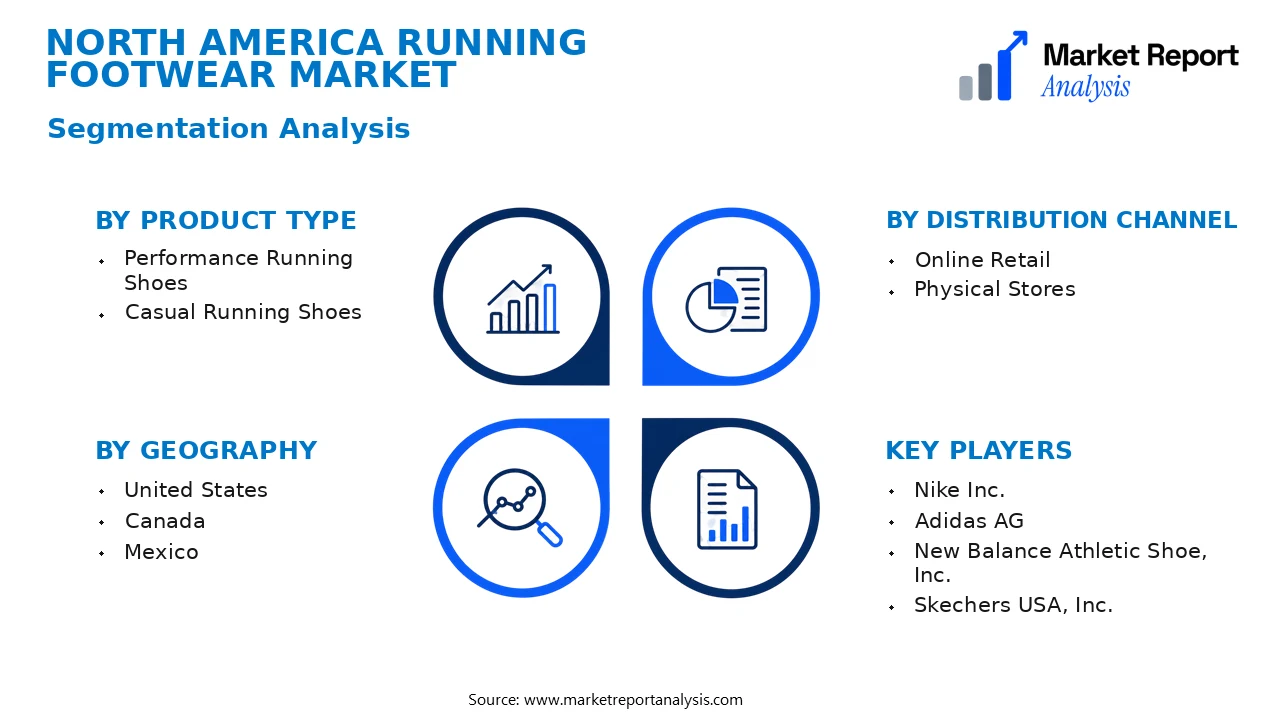
Market segmentation in the North America Running Footwear Market is structured into categories based on product type, distribution channel, and geographical regions. This segmentation aids in understanding specific demand trends, consumer preferences, and regional growth drivers within the expansive market landscape.
- Product Type
- Performance Running Shoes: Designed for athletes and running enthusiasts, these shoes focus on enhancing speed and endurance through advanced cushioning and support technologies which drive demand among dedicated runners and sports segments.
- Casual Running Shoes: These shoes combine comfort and style, appealing to casual wearers who seek versatile footwear for daily activities and light running, capturing a significant share of the non-competitive market.
- Distribution Channel
- Online Retail: Offering convenience and a broader selection, online platforms serve tech-savvy consumers, fostering rapid growth through e-commerce websites, brand portals, and specialized sportswear portals, especially among younger demographics.
- Physical Stores: Traditional brick-and-mortar outlets such as sports stores, departmental stores, and specialty sports shops continue to serve consumers valuing tactile shopping experiences and immediate product access.
- Geography
- United States: As the largest economy in North America, the U.S. dominates the market with high consumer spending, a large urban population of runners, and advanced retail infrastructure supporting diverse distribution channels.
- Canada: Characterized by rising health consciousness and outdoor lifestyles, Canada shows increasing demand for stylish and performance-oriented running footwear, supported by a robust retail network and e-commerce trade channels.
- Mexico: The emerging market with growing awareness of fitness, Mexico presents expanding opportunities for sportswear brands focused on affordability and regional marketing strategies to attract a broader consumer base.
Competitive Intelligence
The North America Running Footwear Market is characterized by intense competition among key players such as Nike, Adidas, New Balance, and Asics, with market concentration remaining moderate due to the presence of numerous regional and emerging brands. Leading companies deploy aggressive strategies, including product innovation and expanding retail channels, to strengthen their market positions. Innovation plays a critical role, with focus on lightweight, breathable materials, and performance-enhancing technologies like cushioning and stability adaptations to cater to evolving consumer preferences. Partnerships and collaborations with athletes, sports teams, and fitness influencers are common, driving brand visibility and engagement. Several major players are involved in strategic acquisitions to broaden product portfolios and enter new segments, while expanding geographically to capture growth opportunities across North America. R&D investments are substantial, aiming at sustainable, durable products and smart footwear technologies. Differentiation is achieved through brand reputation, exclusive designs, and technological advancements, fostering brand loyalty and securing competitive advantage in a highly dynamic market environment.
Leading Company Profiles
The North America running footwear market is highly competitive, featuring a mix of global giants and innovative niche brands. These companies leverage cutting-edge materials, proprietary technologies, and strategic marketing to secure market share and meet evolving consumer preferences.
- Nike Inc.
- Adidas AG
- New Balance Athletic Shoe, Inc.
- Skechers USA, Inc.
- Brooks Sport, Inc.
- ASICS Corporation
- Under Armour, Inc.
- Vibram
- Salomon Sports
- Hoka One One
Nike Inc.
Nike remains a dominant force with its innovative cushioning and lightweight running shoes, extensive product portfolio, and aggressive marketing strategies targeting diverse consumer segments in North America.
Adidas AG
Adidas emphasizes high-performance footwear integrating Boost technology, focusing on sustainable materials and digital customization options to capture environmentally conscious consumers seeking premium running shoes.
New Balance Athletic Shoe, Inc.
Known for its focus on comfort and fit, New Balance leverages advanced cushioning and stability features, appealing to serious runners and casual fitness enthusiasts alike with its tailored product lines.
Skechers USA, Inc.
Skechers combines affordability with innovation, offering lightweight, versatile running shoes featuring responsive cushioning and trendy designs aimed at a broad demographic spectrum.
Brooks Sport, Inc.
Specializing in running shoes designed for performance and injury prevention, Brooks heavily invests in biomechanical research, sports science, and personalized fitting to cater to serious athletes and enthusiasts.
ASICS Corporation
ASICS emphasizes durability, comfort, and technology-driven design, including Gel cushioning systems, and targets competitive runners through sponsorships and advanced performance footwear options.
Under Armour, Inc.
Under Armour's innovation drive focuses on lightweight materials and responsive cushioning, along with digital fitness integration and strategic sponsorships to enhance brand visibility in North America.
Vibram
Vibram specializes in minimalist and barefoot-style running shoes, promoting natural movement and lightweight design, targeting niche consumers seeking a barefoot running experience.
Salomon Sports
Although predominantly known for trail running shoes, Salomon is expanding into urban running footwear, emphasizing versatility, grip, and durability through innovative sole technology.
Hoka One One
Renowned for maximalist cushioning, Hoka combines plush comfort with lightweight materials, rapidly gaining popularity among long-distance runners seeking ultimate shock absorption and support.
Strategic business developments in the North American running footwear market have notably centered around innovations, capacity expansion, and strategic alliances. In recent months, several companies have announced key initiatives to strengthen their market position and product offerings.
- April 2023 – Nike Inc. – Launch of new eco-friendly running shoe line – Enhances sustainability credentials and appeals to environmentally conscious consumers. The product’s innovative recycled materials aim to reduce environmental impact, boosting Nike’s eco-brand image.
- June 2023 – Adidas AG – Capacity expansion at North American manufacturing plants – Increases production efficiency and supply chain resilience, enabling quicker response to rising market demand for premium performance running shoes.
- August 2023 – New Balance – Establishment of a new R&D center dedicated to smart footwear – Focuses on integrating IoT technology for personalized performance tracking and enhanced consumer engagement in digital fitness ecosystems.
- September 2023 – Skechers USA, Inc. – Strategic alliance with a leading sportswear retailer – Aims to boost distribution channels and expand market reach through exclusive product collaborations and retail expansion initiatives.
- November 2023 – Brooks Sport, Inc. – Acquisition of a smaller biomechanics startup – Strengthens research capabilities in injury prevention and personalized fit technology, enhancing competitive advantage in high-performance segments.
This continuous focus on technological advancement, capacity scaling, and strategic partnerships is shaping the competitive landscape of the North America running footwear market, ensuring sustained growth and innovation over the forecast period.
Frequently Asked Questions
What is the North America Running Footwear Market?
The North America Running Footwear Market encompasses the industry involved in designing, manufacturing, and selling running shoes tailored for various demographics and activity levels, reflecting the region's active lifestyle and preference for sportswear.
What is the current market size of North America Running Footwear Market?
As of 2026, the North America Running Footwear Market is valued at approximately USD 14 Billion, illustrating its substantial size driven by consumer demand, technological innovation, and the increasing popularity of running and fitness activities across the region.
What factors are driving the North America Running Footwear Market?
Growth catalysts include rising health consciousness, increasing adoption of athletic footwear for casual wear, advancements in shoe technology, and the influence of social media promoting fitness lifestyles, all contributing to sustained market expansion throughout the forecast period.
Which region dominates the North America Running Footwear Market?
The United States dominates the North American Running Footwear Market due to its mature retail infrastructure, high sports participation rates, and strong consumer spending power, accounting for over 75% of the total regional market share.
Which segment is expected to grow the fastest?
The women’s running footwear segment is projected to exhibit the highest growth rate, buoyed by increased health awareness among women, innovative product launches, and inclusive marketing strategies adopted by key brands.
Who are the leading companies operating in the North America Running Footwear Market?
Major players include Nike, Adidas, New Balance, Asics, and Saucony, all of which are actively expanding their product ranges and marketing initiatives, solidifying their competitive positions within the North American market landscape.
Analyst Perspective
The North America running footwear market is poised for sustained growth through 2034, driven by increasing health consciousness and a rising adoption of athletic lifestyles. The long-term outlook remains robust, with technological advancements in materials, cushioning, and sustainable manufacturing practices serving as key growth catalysts. Opportunities for brands include innovating lightweight, durable, and eco-friendly products tailored to regional preferences and climate conditions, especially in urban markets and among diverse demographic groups. Investment should focus on R&D to accelerate the evolution of smart footwear integrating IoT capabilities, as well as expanding manufacturing capacities for sustainable materials. Competitive intensity is expected to heighten as established players and new entrants vie for market share, supported by aggressive marketing and strategic collaborations. Regionally, the U.S. and Canadian markets will maintain dominant positions, while emerging markets within North America offer significant growth potential, especially in midsize urban centers. Strategic focus on technological innovation, regional customization, and sustainability positioning will be crucial for long-term success.
