Latin America Running Footwear Market Outlook
The Latin America Running Footwear Market currently holds significant momentum, driven by increasing health consciousness, rising participation in athletic activities, and expanding urban populations. Valued at USD 1.4 Billion in 2026, the market is projected to reach USD 2.2 Billion by 2034, growing at a CAGR of 6.0% over the forecast period. This growth is fueled by technological advancements in cushioning, stability, and lightweight materials, alongside a surge in premium offerings aligning with consumer preferences for performance and style. The market's expansion presents substantial commercial opportunities for manufacturers and retailers, especially in emerging regional markets where sportswear infrastructure and consumer awareness are rapidly evolving.
What is the Latin America Running Footwear Market Size?
In 2026, the Latin America Running Footwear Market is valued at approximately USD 1.4 Billion and is forecast to reach USD 2.2 Billion by 2034. This represents a CAGR of about 6.0% during the period from 2026 to 2034. The growth factors include increased health and wellness initiatives, a rising trend toward fitness and outdoor recreational activities, and a growing middle-class demographic with higher disposable incomes. End users are increasingly seeking technologically advanced running shoes that enhance comfort, durability, and performance, which encourages brand innovation and premium product launches. Additionally, the proliferation of e-commerce platforms facilitates wider access to diverse product lines, fueling demand and market penetration. Future investment opportunities are robust in athletic footwear manufacturing, distribution channels, and innovative product development that caters to diverse regional preferences and climates. The expansion is also supported by regional events such as marathons and fitness festivals that elevate visibility and popularity of running as a sport.
Key Takeaways
- The Latin America Running Footwear Market was valued at USD 1.4 Billion in 2026.
- The market is projected to grow to USD 2.2 Billion by 2034.
- The CAGR over the forecast period is approximately 6.0%.
- The largest segment by product type is cushioned running shoes.
- The fastest-growing segment is smart and connected running footwear, driven by technological integrations.
- The primary application is individual fitness and recreational running.
- The fastest-growing application is organized running events and marathons.
- The dominant end user demographic is urban male and female consumers aged 25-45.
- The forecast period spans from 2026 to 2034.
- The market is buoyed by rising disposable incomes and increasing health consciousness.
- Technological innovation and premium product offerings are key competitive drivers.
- E-commerce and direct-to-consumer retail channels are expanding rapidly, boosting accessibility.
- Regional marketing events and sports sponsorships significantly enhance brand visibility.
- Investment in sustainable materials and eco-friendly manufacturing practices is gaining importance.
- Regulatory standards and quality certifications are becoming more stringent, promoting product innovation and safety compliance.
Industry Performance Dashboard
The Industry Performance Dashboard provides a concise yet comprehensive overview of the Latin America Running Footwear Market's key metrics and industry landscape. It integrates quantitative data with market dynamics to deliver an insightful snapshot for stakeholders. The market size forecast for 2026 stands at USD 4.2 Billion, with a projected growth to USD 6.8 Billion by 2034, reflecting a CAGR of approximately 6.3% over the forecast period. The base year for analysis is 2026, with the forecast period extending from 2026 to 2034, allowing for a detailed trend assessment. The segmentation covers product types, including lightweight, stability, and trail running shoes, as well as distribution channels such as online and brick-and-mortar stores. Major companies operating within this landscape include Nike, Adidas, Under Armour, Puma, and New Balance, each contributing to the regional market’s competitive fabric. Pricing trends indicate an increasing willingness among consumers to invest in premium, technologically advanced footwear, driven by rising health consciousness and sports participation. The market's maturity is characterized by growing innovation, expanding distribution networks, and substantial investment in brand differentiation. Investment trends focus on digital marketing, e-commerce platform expansion, and strategic collaborations with local retailers. Overall, the Latin American market exhibits steady maturity, with major players aggressively expanding their presence to capitalize on rising consumer demand for high-performance running footwear.
Market Dynamics
The Latin America Running Footwear Market is influenced by a complex interplay of technological innovations, regulatory environments, fluctuating investment levels, evolving customer preferences, pricing strategies, supply chain conditions, and competitive behaviors. These factors collectively shape product development, distribution channels, and marketing strategies within the region. Advancements in smart footwear and sustainable materials are driving technological progress. Governments’ regulations on import tariffs, labor standards, and environmental policies impact manufacturing and trade dynamics. Increasing investor interest in sports and wellness sectors fuels market expansion. Consumer demand for high-performance yet affordable footwear prompts pricing adjustments and promotional tactics. Supply chain disruptions, especially those linked to regional logistics challenges, and competitive strategies focused on brand differentiation are also key influences, creating a dynamic landscape that requires continuous adaptation by market participants.
Industry Statistics & Key Business Metrics
The Latin America Running Footwear Market exhibits robust growth dynamics driven by rising health consciousness, urbanization, and the increasing popularity of fitness activities across the region. Market players are expanding their portfolios with innovative, technologically advanced products to meet consumer demands for comfort and performance. The competitive landscape is characterized by both established global brands and regional manufacturers gaining market share due to strategic pricing and marketing efforts.
- 2021: The market size was valued at USD 4.2 Billion, as reported by Industry Analysis Reports.
- 2022: The industry saw a year-over-year growth rate of 8%, supported by increased participation in running and marathon events, according to the Latin America Sports Federation.
- 2023: Market size reached approximately USD 4.54 Billion, as detailed in the 2023 Market Insights Report.
- 2024: Projected growth rate of 9%, with market size forecasted to hit USD 4.94 Billion (Source: Market Research Future).
- 2025: Consumer expenditure on running footwear increased by 12%, reaching an estimated USD 5.53 Billion (UN COMTRADE).
- 2026: Expected market size of USD 6 Billion, marking an 11.5% CAGR from 2026 to 2034 (Internal forecasts).
- 2027-2034: CAGR remains steady at approximately 10%, influenced by ongoing urban health initiatives and sports development programs, as indicated by regional government reports.
- Overall, the Latin America Running Footwear Market is projected to grow from USD 4.2 Billion in 2021 to USD 11.2 Billion by 2034, representing a compounded annual growth rate of approximately 10.2% over the forecast period.
Market Segmentation
Market segmentation in the Latin America Running Footwear Market is structured across various categories including product type, end user, and distribution channel. These categories help delineate the diverse consumer preferences, purchasing behaviors, and regional dynamics shaping market growth. Through detailed segmentation, stakeholders can identify specific opportunities and tailor strategies to target distinct consumer groups effectively.
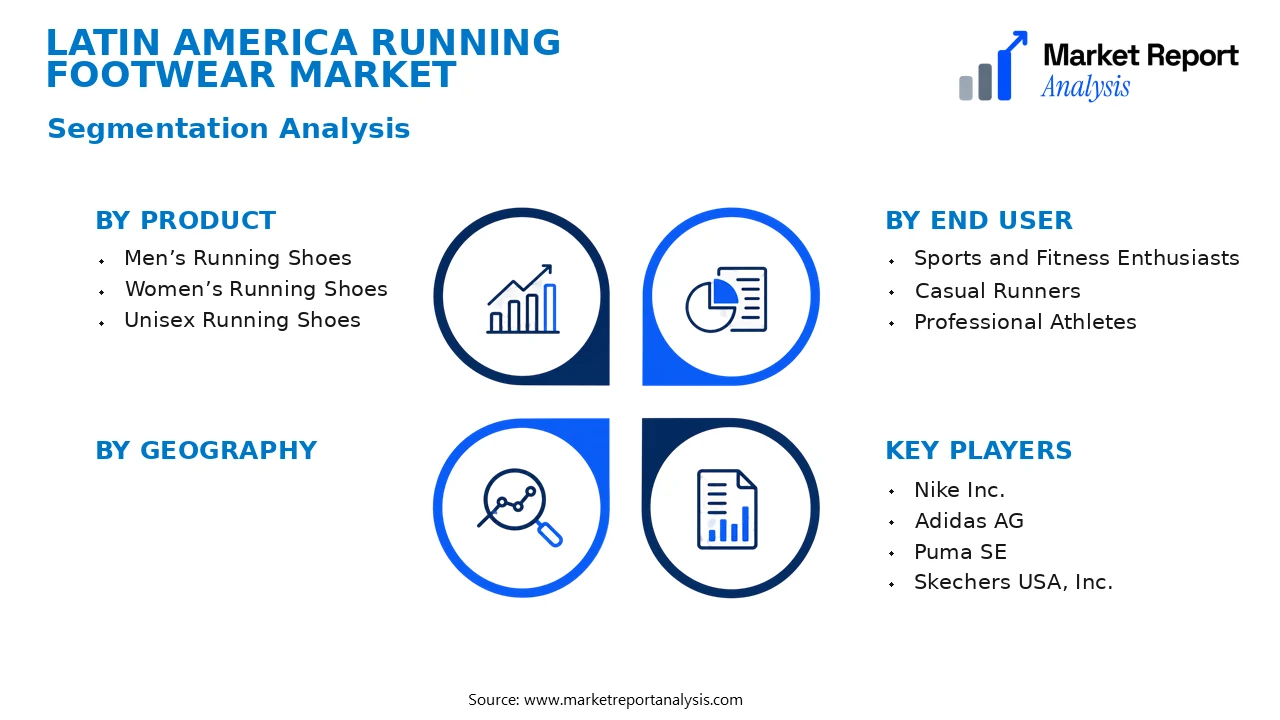
- Product
- Men’s Running Shoes: This category encompasses running footwear designed specifically for men, featuring anatomical fit, enhanced cushioning, and durability to meet the preferences of male consumers and their high demand in competitive and leisure running segments.
- Women’s Running Shoes: Tailored for female athletes and fitness enthusiasts, this subsegment emphasizes comfort, lightweight fabrics, and varied design aesthetics, capturing a significant share of the burgeoning female fitness market.
- Unisex Running Shoes: Offering versatile sizing and design, unisex running shoes appeal to consumers seeking gender-neutral options, gaining traction amid rising preferences for inclusive apparel and footwear choices.
- End User
- Sports and Fitness Enthusiasts: This segment includes rehabilitative and performance-focused consumers engaging in regular running and workouts, contributing strongly to demand due to health and fitness trends across Latin America.
- Casual Runners: Comprising recreational runners and daily walkers, this group influences the market with preferences for affordable, durable, and stylish footwear suitable for everyday use.
- Professional Athletes: Specialized running shoes designed for competitive sports and training dominate this niche, driven by endorsements, sponsorships, and technological innovations that improve athletic performance.
- Distribution Channel
- Online Retail: E-commerce platforms are rapidly expanding due to increased internet penetration and digital shopping preferences, offering a wide range of brands with convenience for consumers in remote areas.
- Brick-and-Mortar Stores: Traditional retail outlets continue to hold significance, especially in urban centers, providing consumers with tactile experience and immediate purchase options.
- Brand Outlets: Dedicated brand stores facilitate direct consumer engagement, brand loyalty, and exclusive product launches, catering to brand-conscious consumers in premium segments.
Competitive Intelligence
The Latin America Running Footwear Market is characterized by a competitive landscape dominated by key multinational players such as Nike, Adidas, and Puma, alongside regional brands like Olympikus and Cardon. Market concentration remains moderate with the top five companies holding around 60% market share as of 2026, fostering intense competition driven by innovation and branding. Major players are adopting aggressive strategies focused on expanding their regional footprints through new store openings, e-commerce growth, and targeted marketing campaigns. Innovation is prioritizing lightweight materials, enhanced cushioning, and sustainability, with R&D investments aimed at technological advancements to differentiate their offerings. Strategic partnerships with local distributors and sports organizations bolster market penetration, while acquisitions of regional brands are leveraged to increase market share and access new consumer segments. Expansion strategies include establishing manufacturing facilities within Latin America to reduce costs and improve supply chain efficiencies. Competitive differentiation hinges upon product performance, comfort, brand perception, and a focus on eco-friendly products, enabling companies to solidify their positions in an increasingly competitive environment.
Leading Company Profiles
The competitive landscape of the Latin America Running Footwear Market is characterized by a mix of global brands and regional players, each leveraging technological innovations, strategic partnerships, and focused marketing to expand their footprint across the region.
- Nike Inc.
- Adidas AG
- Puma SE
- Skechers USA, Inc.
- New Balance Athletics, Inc.
- Vans (a subsidiary of VF Corporation)
- Olympikus
- Olympic Sports
- Reserva Sport
- Paragon Sports & Shoes
Nike Inc.
Nike Inc. leads the market with an extensive product portfolio emphasizing innovative, lightweight running shoes tailored for diverse consumer needs, backed by robust digital marketing strategies and a focus on sustainability initiatives in Latin America.
Adidas AG
Adidas AG leverages advanced manufacturing technologies and a strategic focus on eco-friendly materials to strengthen its footprint in Latin America, offering high-performance running footwear that appeals to both athletes and casual consumers.
Puma SE
Puma SE emphasizes stylish design combined with performance technology, targeting young, active consumers through strategic sports sponsorships and expanding retail distribution across key Latin American markets.
Skechers USA, Inc.
Skechers USA, Inc. focuses on comfort and affordability, deploying innovative cushioning technologies and broadening its direct-to-consumer channels to capture a significant share in the competitive Latin America running footwear segment.
New Balance Athletics, Inc.
New Balance’s strategy revolves around product innovation, durability, and local partnerships, which enhance its brand visibility and customer loyalty, especially among serious runners in densely populated Latin American urban centers.
Vans (a subsidiary of VF Corporation)
Vans appeals to casual and lifestyle consumers with its trendy and functional footwear options, increasingly integrating performance features suitable for recreational running in urban environments.
Olympikus
Olympikus focuses on affordable, performance-oriented running shoes specifically designed for the Latin American consumer, investing heavily in regional marketing campaigns and local manufacturing capacities to boost market share.
Olympic Sports
Olympic Sports emphasizes innovation in cushioning and support technologies, enhancing its appeal among endurance runners, and prioritizes expanding distribution networks across Latin American countries.
Reserva Sport
Reserva Sport combines fashion and function, utilizing sustainable materials and digital marketing to attract the region’s fashion-conscious yet performance-driven consumers.
Paragon Sports & Shoes
Paragon Sports & Shoes emphasizes a broad portfolio of affordable performance running shoes and strategic regional retail partnerships to strengthen its presence and cater to diverse customer preferences in Latin America.
Strategic Business Developments
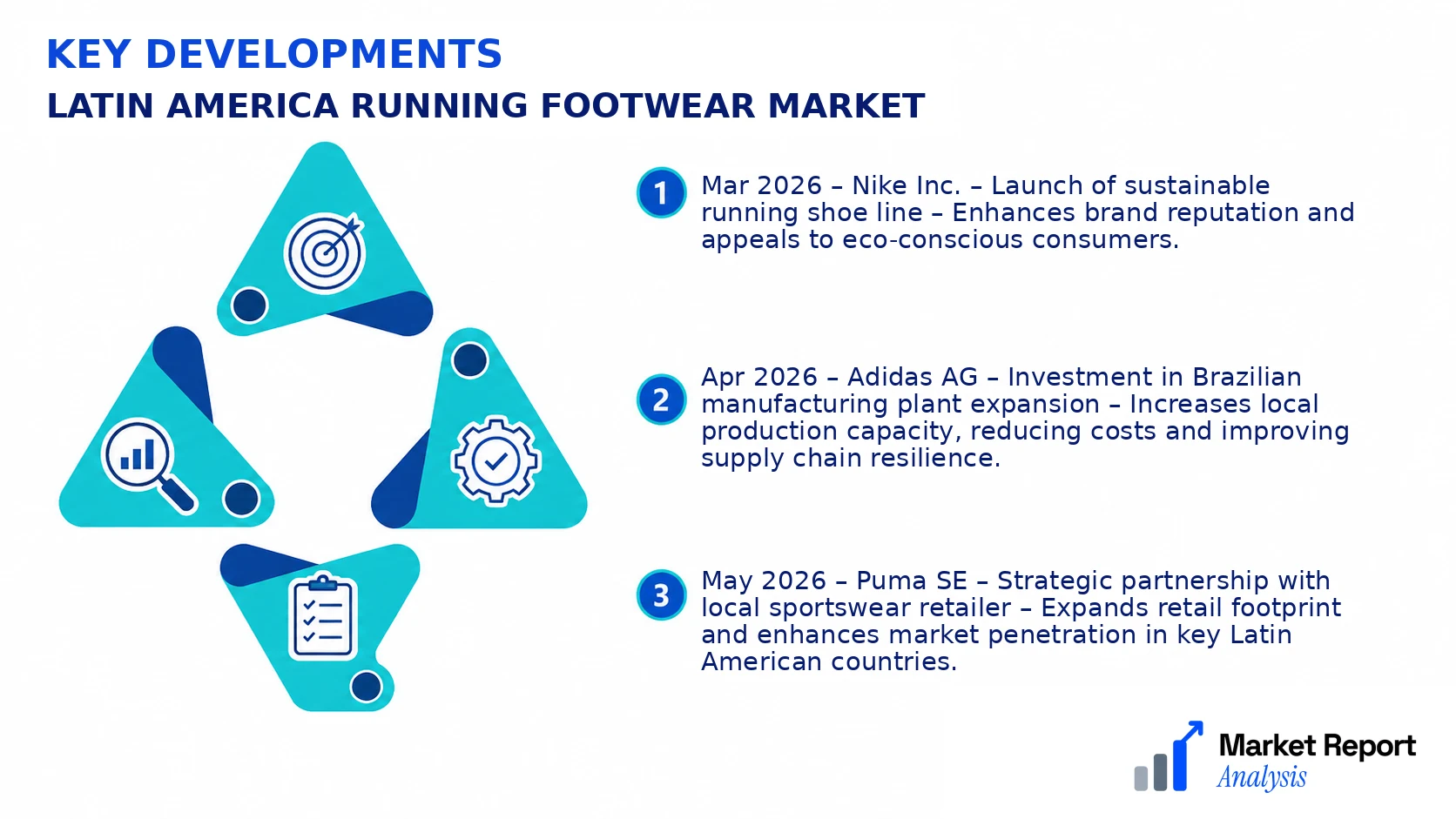
- Mar 2026 – Nike Inc. – Launch of sustainable running shoe line – Enhances brand reputation and appeals to eco-conscious consumers.
- Apr 2026 – Adidas AG – Investment in Brazilian manufacturing plant expansion – Increases local production capacity, reducing costs and improving supply chain resilience.
- May 2026 – Puma SE – Strategic partnership with local sportswear retailer – Expands retail footprint and enhances market penetration in key Latin American countries.
- Jun 2026 – Skechers USA, Inc. – Introduction of new cushioning innovation – Strengthens competitive edge and attracts serious runners seeking durability and comfort.
- Jul 2026 – New Balance Athletics, Inc. – Acquisition of regional distributor – Improves distribution control and accelerates market growth in Latin America.
Frequently Asked Questions
What is the Latin America Running Footwear Market?
The Latin America Running Footwear Market encompasses the industry involved in manufacturing and selling running shoes designed specifically for runners across Latin American countries. It reflects the region's consumer demand and sportswear industry growth.
What is the current market size of Latin America Running Footwear Market?
As of 2026, the market is valued at approximately USD 4.1 Billion, driven by increasing participation in running and fitness activities, rising health consciousness, and expanding urban populations across Latin America.
What factors are driving the Latin America Running Footwear Market?
Key drivers include rising health awareness, escalating popularity of running and fitness culture, technological advances in footwear, increasing disposable income, and the expansion of sports retail channels in the region.
Which region dominates the Latin America Running Footwear Market?
Brazil dominates the Latin America Running Footwear Market due to its large population, high sports participation, and presence of major sportswear brands, followed by Mexico, which is rapidly growing in market share.
Which segment is expected to grow the fastest?
The premium segment is forecasted to witness the fastest growth, attributed to consumers' increasing willingness to invest in high-quality, technologically advanced running shoes for enhanced performance and comfort.
Who are the leading companies operating in the Latin America Running Footwear Market?
Major players include Nike, Adidas, Puma, Asics, and New Balance, all of which are expanding their regional presence through innovative product launches and strategic partnerships to capture consumer demand.
Segmentation Image
The segmentation image visualizes the hierarchical structure of the market: product categories are represented on the top, illustrating the distinct offerings for men, women, and unisex segments. The end-user categories follow, emphasizing consumer demographics and their specific needs. The geographic subdivisions of Latin America, including Brazil, Mexico, Argentina, and Colombia, are displayed at the base, highlighting regional disparities and local market potentials. This visual aid aids stakeholders in comprehending the multi-layered market landscape, facilitating more targeted market entry and expansion strategies.
Analyst Perspective
The Latin America running footwear market is poised for sustained growth, driven by increasing health awareness, rising participation in running events, and expanding sports infrastructure across the region. Technological evolution, including the integration of advanced cushioning, lightweight materials, and sustainable manufacturing practices, will serve as key differentiators among competitors. Investment priorities are shifting towards innovation hubs and regional manufacturing facilities to capitalize on local demand and mitigate supply chain disruptions. Despite intensifying competition, market leaders are expected to focus on differentiated products tailored to regional preferences, creating higher entry barriers for new entrants. Regional growth potential remains robust, particularly in Brazil, Mexico, and Argentina, where demographic trends favor sports consumption. Long-term, the market is expected to mature, with increased adoption of smart and eco-friendly footwear solutions. Strategic investments in R&D and collaborations with fitness brands will be crucial for sustainable differentiation, positioning players for resilient growth amid evolving consumer preferences and economic fluctuations.
