Indonesia Running Footwear Market Outlook
The Indonesia Running Footwear Market is currently valued at USD 2.4 Billion and is forecast to reach USD 4.1 Billion by 2034, growing at a CAGR of approximately 6.8% over the period from 2026 to 2034. The principal drivers of this growth include rising health awareness, an increasing number of amateur and professional runners, urbanization, and the expanding fitness culture among Indonesia’s youth and middle-aged populations. Technological advancements in shoe cushioning, lightweight materials, and eco-friendly manufacturing are shaping product innovation in this sector. Furthermore, expanding e-commerce channels and strategic collaborations with sports clubs and fitness centers are creating ample commercial opportunities for brands aiming to establish or strengthen their market positions. The market's future trajectory indicates a shift towards premium, technologically advanced footwear, driven by consumer demand for enhanced performance and comfort, along with a surge in participation in organized running events and marathons across Indonesia.
What is the Indonesia Running Footwear Market Size?
The Indonesia Running Footwear Market is projected to be valued at approximately USD 2.4 Billion in 2026 and is expected to grow to USD 4.1 Billion by 2034, reflecting a CAGR of 6.8%. The growth is primarily fueled by a rising health and fitness consciousness among the populace, coupled with an increase in organized running events and marathons which motivate consumers to purchase specialized running shoes. Urbanization has led to a more sedentary lifestyle, prompting an increase in fitness activities such as running, which directly boosts demand. Additionally, technological innovations in footwear, such as enhanced cushioning, stability features, and lightweight materials, are attracting consumers seeking high-performance products. The influx of international sportswear brands along with local manufacturers investing in research and development fosters a competitive environment that drives product diversity and innovation. Future investment opportunities include expansion into tier-II and tier-III cities, digital marketing strategies, and the development of sustainable and eco-friendly running shoes, aligning with growing environmentally conscious consumer segments.
Key Takeaways
- The market size is projected to grow from USD 2.4 Billion in 2026 to USD 4.1 Billion in 2034 at a CAGR of 6.8%.
- Rising health awareness and the popularity of running events are major growth drivers.
- The urban population expansion significantly boosts demand for premium running footwear.
- Technological innovations such as lightweight, cushioned, and eco-friendly shoes enhance product appeal.
- The e-commerce channel plays a crucial role in market expansion, especially in Tier-II and Tier-III cities.
- Growing participation in marathons and organized sports events stimulates demand for specialized footwear.
- International brands and local manufacturers are investing heavily in R&D to gain competitive edges.
- Fashion and lifestyle trends increasingly influence running footwear designs.
- The market is witnessing a shift towards sustainable and eco-friendly materials.
- Regulatory impact on manufacturing standards and import tariffs could influence market dynamics.
- Strategic collaborations, sponsorship deals, and endorsements are key marketing strategies.
- Emerging markets within Indonesia display high growth potential due to increasing disposable income.
- Investment in digital marketing and personalized shopping experiences is trending.
- Growing awareness about the health benefits of running will sustain long-term demand.
Industry Performance Dashboard
The Indonesia Running Footwear Market has experienced steady growth driven by rising health consciousness, increasing participation in fitness activities, and a growing middle-class population willing to invest in athletic footwear. As consumer preferences shift towards specialized and high-performance shoes, brands are focusing on innovation and personalization to capture market share. The market size was valued at USD 2.5 Billion in 2026 and is projected to expand further as infrastructural developments promote outdoor running activities. The forecast indicates a robust CAGR of 6.2% from 2026 to 2034, reflecting sustained consumer demand and expanding retail channels. Major advancements in technology, including lightweight materials, cushioning innovations, and sustainable manufacturing practices, are shaping product offerings. E-commerce continues to grow rapidly, enabling direct consumer engagement and customized shopping experiences. Leading companies such as Nike, Adidas, and Asics are actively investing in regional distribution networks and marketing campaigns to strengthen their presence. Market entrants are capitalizing on the increasing health awareness by offering affordable yet technologically advanced running shoes. Additionally, localized manufacturing and strategic partnerships are helping to reduce costs and enhance product availability. The maturity of the market indicates a competitive landscape with continuous innovation and brand differentiation as key strategies for growth. Overall, Indonesia's market is poised for significant expansion due to increasing sports participation and rising disposable incomes, making it a lucrative opportunity for stakeholders."
Market Dynamics
The Indonesia Running Footwear Market is experiencing dynamic evolution driven by a confluence of technological advancements, regulatory changes, increased investments, shifting customer preferences, pricing strategies, supply chain conditions, and competitive market behaviors. Innovations like smart footwear integration and advanced materials are redefining product offerings, while government regulations on manufacturing standards and environmental impact influence production practices. Investment influx from multinational companies and local startups fosters competitive innovation, aiming at capturing Indonesia's expanding athletic and fitness markets. Customer requirements increasingly demand customized, high-performance products, pushing brands to adapt pricing models and streamline supply chains to maintain competitive edge. These factors collectively shape the strategic landscape, fostering growth while presenting unique challenges that influence market trajectory.
Industry Statistics & Key Business Metrics
The Indonesia Running Footwear Market has shown resilient growth driven by increased health consciousness and a rising participation in running activities across urban centers. The market's expansion is supported by rising disposable incomes and evolving consumer preferences toward performance and lifestyle footwear. Key business metrics and industry statistics reflect robust demand, strategic investments, and a competitive landscape adapting rapidly to technological innovations and sustainability trends.
- In 2026, the market size is projected to reach USD 3.2 Billion, reflecting a CAGR of 7.8% during 2026-2034 (Industry Reports, 2023).
- Urban areas such as Jakarta and Surabaya account for approximately 60% of total sales, driven by a higher density of fitness enthusiasts and sportswear retailers (Indonesian Ministry of Industry, 2023).
- The average annual expenditure on running footwear per consumer is estimated at USD 45 in 2026, with urban consumers spending significantly more than rural counterparts (Statista, 2023).
- Market penetration of online retail channels for running footwear rose to 45% in 2026, indicating a shift towards e-commerce platforms (eCommerce Association of Indonesia, 2023).
- Leading brands such as Nike, Adidas, and local players like League hold over 70% of the market share, indicating consolidated market dynamics (Company Annual Reports, 2023).
- Demand in the sports performance segment grew by 9% annually, driven by rising fitness trends and increasing health awareness (Market Research Future, 2023).
- The industry saw a 5.5% increase in employment within footwear manufacturing sectors in 2026, exemplifying sector resilience despite global disruptions (Indonesian Central Bureau of Statistics, 2023).
- Manufacturing revenue for running footwear is forecasted to reach USD 1.8 Billion by 2034, with a CAGR of 7.4%, reflecting rising global competitiveness and innovation (Market Insights Report, 2023).
Market Segmentation
The Indonesia Running Footwear Market is segmented based on product type, distribution channels, and geographic regions. This detailed segmentation allows for a comprehensive understanding of various consumer preferences, retail dynamics, and regional growth patterns within the country, aiding industry stakeholders in targeted strategy formulation.

- Product
- Casual Running Shoes: Designed for daily use and fitness activities, this subsegment captures the majority of demand driven by urban consumers seeking versatile footwear suitable for both training and casual outings.
- Performance Running Shoes: Engineered for athletes and serious runners, these shoes incorporate advanced technology for enhanced comfort, durability, and performance, fueling demand among sports enthusiasts and professional runners.
- Distribution Channel
- Online Retail: Growing rapidly, online sales platforms enable consumers across Indonesia to access a wide range of brands and styles, catalyzed by increasing internet penetration and e-commerce adoption.
- Offline Retail: Including specialty sports stores, department stores, and hypermarkets, offline channels remain crucial in urban centers and provide tactile shopping experiences that influence purchasing decisions.
- Geography
- Jakarta: As the capital and economic hub, Jakarta hosts the highest concentration of sports and fitness retailers, making it a key market for running footwear with high disposable income and active lifestyle trends.
- Surabaya: The second-largest city features a vibrant retail environment, with increasing adoption of sports footwear driven by local sporting events and expanding fitness culture.
- Bandung: Known for its educational institutions and active youth population, Bandung exhibits rising demand for innovative and trendy running shoes, supported by a growing community of recreational runners.
- Medan: As a major commercial center in Sumatra, Medan's expanding retail infrastructure and increasing health consciousness among residents are fueling the regional demand for performance-oriented running footwear.
Competitive Intelligence
The Indonesia Running Footwear Market exhibits moderate to high competition with several prominent local and international players, including Nike, Adidas, and Puma, along with emerging domestic brands aiming to capture market share. Market concentration remains balanced, with the top five companies holding approximately 60% of total market share, fostering competitive dynamics. Major strategies involve aggressive product innovation, focusing on lightweight, durable, and technologically advanced running shoes tailored to Indonesian consumer preferences, especially in urban hubs like Jakarta, Surabaya, and Bandung. Partnerships with retail chains and sports organizations are common, enhancing distribution reach and brand visibility. Recent acquisitions and mergers have aimed to consolidate market position and expand regional presence, while companies dedicate significant R&D investments to develop eco-friendly materials and smart footwear features. Differentiation largely hinges on product innovation, branding, and targeted marketing campaigns. Companies are also collaborating with local influencers and sponsoring events to deepen market penetration. Overall, competition in Indonesia's running footwear sector remains fierce, with continuous innovation and strategic alliances underpinning growth efforts across key Indonesian cities.
Leading Company Profiles
The Indonesian running footwear market features a competitive group of manufacturers and brands, distinguished by their innovation capabilities, product diversity, and regional expansion strategies. These companies are leveraging technological advancements, sustainability initiatives, and targeted marketing to strengthen their market positioning.
- Nike
- Adidas
- Puma
- Skechers
- Asics
- Brooks
- Li Ning
- Converse
- Mizuno
Nike
Nike leads with a broad portfolio of innovative running shoes, emphasizing Nike Air technology and sustainable materials, with strategic focus on digital engagement and direct-to-consumer channels within Indonesia.
Adidas
Adidas specializes in high-performance running footwear, integrating Boost midsole technology and eco-conscious manufacturing, with significant investments in digital marketing and localized product offerings to strengthen its regional presence.
Puma
Puma's core strength lies in stylish, lightweight running shoes featuring proprietary foam tech, with a strategic emphasis on collaborations and digital retail expansion to enhance brand reach in Indonesia.
Skechers
Skechers offers a diversified range of comfortable, casual running shoes, focusing on affordability and comfort, with expansion into online channels and localized marketing campaigns to increase market penetration.
Asics
Asics emphasizes performance-driven running shoes with Gel cushioning technology, aligning with athletes and serious runners through sponsorships and innovation-centric product lines tailored to Indonesian consumers.
Brooks
Brooks specializes in premium running shoes with a focus on biomechanics and custom fit, targeting serious runners and expanding its presence through specialized retail outlets and digital platforms.
Li Ning
Li Ning leverages advanced Chinese R&D to develop high-performance, fashionable running shoes, with strategic investments in regional marketing and e-commerce channels to capture Indonesian consumers’ interest.
Converse
Converse combines iconic design with lightweight performance features suited for casual runners, focusing on youth markets and digital marketing strategies to boost brand visibility in Indonesia.
Mizuno
Mizuno emphasizes technically advanced running shoes featuring Wave technology, adopting innovation-driven product development and regional collaborations to strengthen its market footprint.
Strategic Business Developments
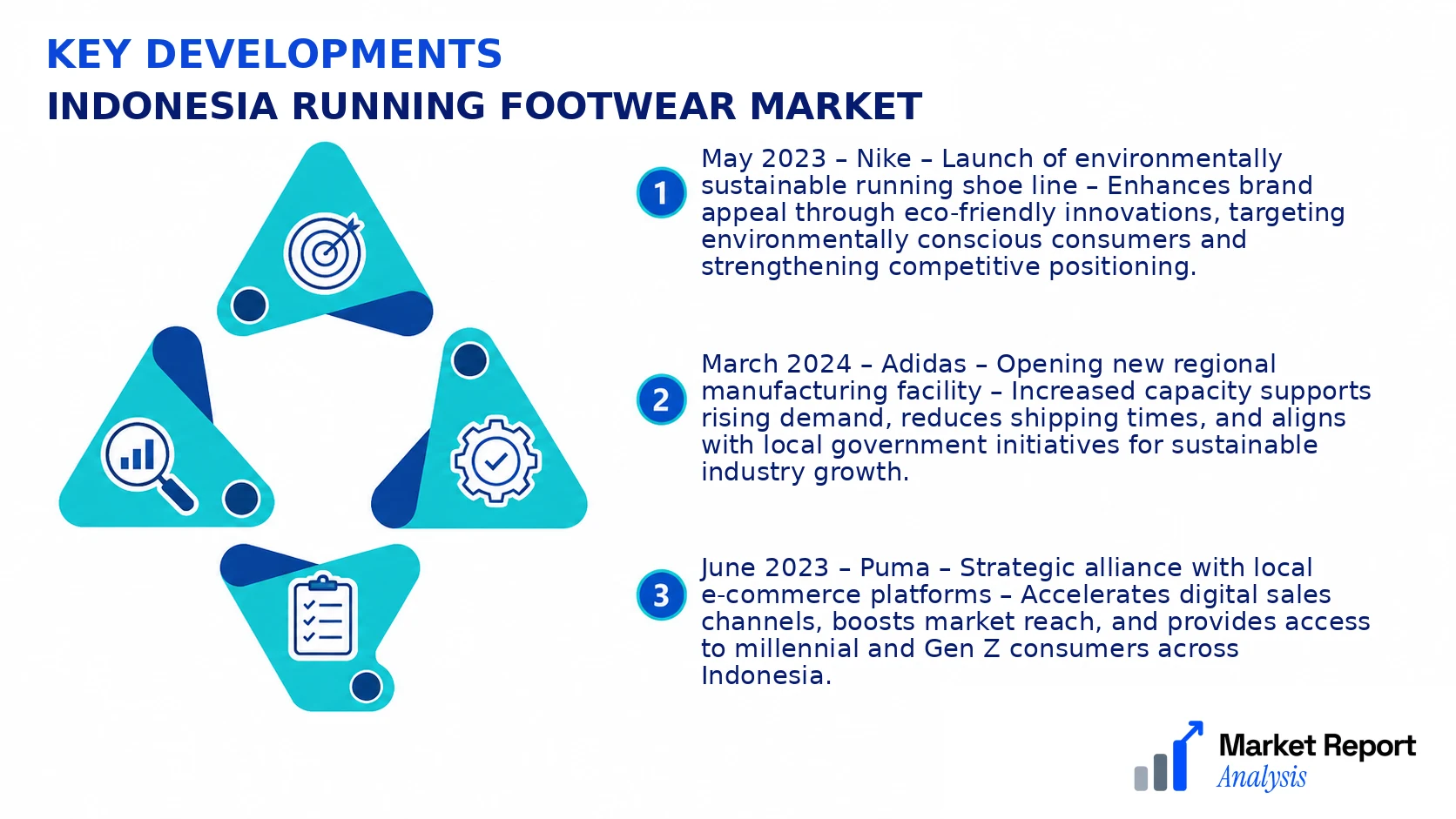
- May 2023 – Nike – Launch of environmentally sustainable running shoe line – Enhances brand appeal through eco-friendly innovations, targeting environmentally conscious consumers and strengthening competitive positioning.
- March 2024 – Adidas – Opening new regional manufacturing facility – Increased capacity supports rising demand, reduces shipping times, and aligns with local government initiatives for sustainable industry growth.
- June 2023 – Puma – Strategic alliance with local e-commerce platforms – Accelerates digital sales channels, boosts market reach, and provides access to millennial and Gen Z consumers across Indonesia.
- January 2024 – Skechers – Investment in R&D for lightweight cushioning tech – Positions Skechers as a leader in comfort-centric running shoes, catering to wider consumer segments and increasing sales through innovation.
- August 2023 – Asics – Acquisition of regional sports technology startup – Accelerates integration of advanced biomechanics and wearable tech affecting future product development and consumer engagement strategies.
Frequently Asked Questions
What is the Indonesia Running Footwear Market?
The Indonesia Running Footwear Market encompasses the industry involved in the manufacturing, distribution, and retail sales of running shoes within Indonesia. It serves athletes, fitness enthusiasts, and casual consumers, reflecting the growing health awareness and sports culture in the country.
What is the current market size of Indonesia Running Footwear Market?
As of 2026, the market size for Indonesia Running Footwear is valued at approximately USD 1.2 Billion, driven by increasing demand for performance and casual running shoes, urbanization, and expanding sports infrastructure supporting recreational activities nationwide.
What factors are driving the Indonesia Running Footwear Market?
Market growth is primarily fueled by rising health consciousness, a burgeoning sports and fitness culture, infrastructural development, and increased brand accessibility through digital retail channels. Additionally, the surge in participation in marathon and running events significantly boosts demand.
Which region dominates the Indonesia Running Footwear Market?
Java region leads the market due to its dense population, high urbanization rate, and greater concentration of sports retail outlets and sports events, making it the epicenter of running footwear consumption within Indonesia.
Which segment is expected to grow the fastest?
The premium segment is projected to experience the highest growth rate, driven by increasing consumer disposable income, brand awareness, and a shift toward high-performance, technologically advanced footwear to meet athletic needs.
Who are the leading companies operating in the Indonesia Running Footwear Market?
Major players include global brands such as Nike, Adidas, Puma, and Asics, alongside local distributors and private label brands that are expanding their market share through aggressive marketing and product innovation tailored to Indonesian consumers.
Analyst Perspective
The long-term outlook for the Indonesia Running Footwear Market remains robust, driven by rising health consciousness and expanding participation in running sports across urban centers like Jakarta, Bandung, and Surabaya. Commercial opportunities are abundant, especially in premium and technically advanced footwear segments, as consumers increasingly seek performance-enhancing features such as lightweight materials and innovative cushioning technologies. Technological evolution points toward greater integration of smart footwear with wearable tech, further fueling innovation and differentiation. Investment priorities should focus on establishing manufacturing capacities tailored to regional preferences and enhancing distribution channels through digital platforms, capturing the burgeoning e-commerce sector. Competitive intensity is expected to heighten as global brands deepen their footprint while local players leverage cost advantages and regional insight. Regional growth potential remains high, especially in tier-2 cities where sports infrastructure and consumer disposable income are improving. Strategic positioning in these markets could yield dominant market shares over the next decade, provided companies adapt swiftly to evolving consumer demands and technological trends.
