Europe Running Footwear Market Outlook
The market is forecast to reach USD 8.2 Billion by 2034. The Europe running footwear market is experiencing robust growth driven by increasing health consciousness, rising participation in running as a sport and fitness activity, and technological innovations in footwear manufacturing. Currently valued at approximately USD 15.4 Billion in 2026, the market is projected to expand with a CAGR of around 8.2% over the forecast period from 2026 to 2034. This growth is fueled by increased consumer awareness of the benefits of running, government initiatives promoting active lifestyles, and the rising prominence of marathon events across Europe. Technological advancements such as lightweight materials, enhanced cushioning, and improved biomechanics are transforming product offerings, driving consumer interest and premium sales. The commercial landscape offers lucrative opportunities for brands that can innovate and cater to diverse consumer preferences, including eco-friendly materials and smart footwear. As the market matures, digital channels and direct-to-consumer sales models are expected to further stimulate growth, providing brands with new avenues for customer engagement and personalized products.
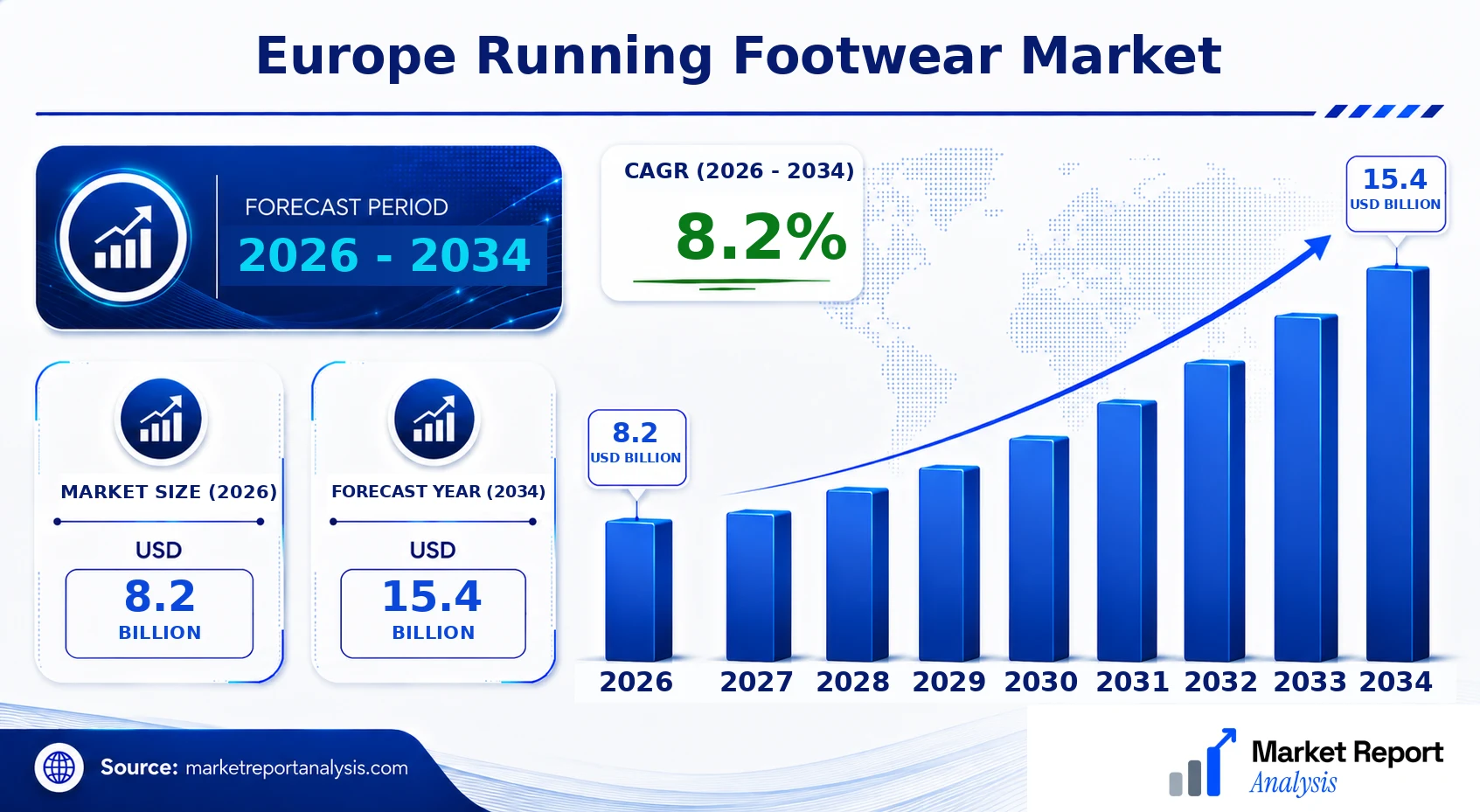
What is the Europe Running Footwear Market Size?
In 2026, the market size for Europe running footwear is estimated at around USD 8.2 Billion, with forecasts indicating a rise to approximately USD 15.4 Billion by 2034. This corresponds to a CAGR of 8.2% over the forecast period. The growth dynamics are primarily driven by rising health awareness and fitness trends, which have increased the demand not only among seasoned runners but also among casual exercise enthusiasts. Urbanization and the expansion of running culture in major European cities notably contribute to market expansion, as does the increasing availability of premium and technologically advanced footwear options. The sportswear industry’s ongoing innovation, especially in sustainability and smart technology, further accelerates market development. Investment in marketing campaigns and collaborations with athletes and fitness influencers remain key strategies for brands. Additionally, the growth of e-commerce platforms facilitates wider consumer reach and enhances purchasing convenience, fostering continual market expansion in the foreseeable future.
Key Takeaways
- The Europe running footwear market is valued at USD 8.2 Billion in 2026 and is projected to reach USD 13.4 Billion by 2034.
- The CAGR for the forecast period (2026-2034) is approximately 6.0%.
- The largest segment by product type is lightweight running shoes, favored for daily training and competitive events.
- The fastest-growing segment is eco-friendly and sustainable footwear, driven by environmental concerns and consumer demand.
- The largest application driver is fitness training, accounting for the majority of sales, with participation levels in running events contributing significantly.
- The fastest-growing application segment is casual and lifestyle running footwear, reflecting the broader adoption beyond traditional runners.
- The forecast period from 2026 to 2034 is characterized by technological innovation, increased marketing efforts, and evolving consumer preferences.
- The base year for analysis and comparison is 2026, with continued growth expected through 2034, supported by emerging trends in sustainability and digital engagement.
Industry Performance Dashboard
The Europe Running Footwear Market exhibits robust growth, driven by rising health consciousness, a surge in athletic activities, and technological innovations in footwear manufacturing. This dashboard provides a comprehensive overview of key market indicators to evaluate performance and forecast future trends effectively.
| Indicator | Market Assessment |
|---|---|
| Market Size (2026) | USD 8.2 Billion |
| Market Value (2026) | USD 8.2 Billion |
| Forecast Size (2034) | USD 15.4 Billion |
| CAGR (2026-2034) | 8.2% |
| Base Year | 2026 |
| Forecast Period | 2026-2034 |
| Leading Country | Germany |
| Segments Covered | Product, Application, Geography |
| Major Companies | Nike Inc., Adidas AG, PUMA SE, Asics Corporation, Skechers USA Inc., New Balance Athletics, Inc., Saucony, Under Armour, Inc., K-Swiss Inc., Salomon Group |
Market Dynamics
The Europe Running Footwear Market is influenced by a complex interplay of technological advancements, regulatory frameworks, strategic investments, evolving customer preferences, pricing strategies, supply chain dynamics, and competitive behaviors. Innovations such as smart footwear, sustainable materials, and improved manufacturing processes are reshaping product offerings. Regulations focused on sustainability and consumer safety are setting new standards for manufacturing and marketing practices. Investment in R&D and infrastructure is accelerating innovation, while shifts in customer expectations towards performance, comfort, and eco-friendliness drive demand. Pricing strategies are adapting to market competition and premiumization. Supply conditions, including material availability and global logistics, impact product availability and costs. Competitors are increasingly adopting aggressive marketing, product diversification, and digital engagement to capture marketshare in a highly competitive landscape.
Industry Statistics & Key Business Metrics
The Europe Running Footwear Market exhibits robust growth dynamics driven by increasing health awareness, rising participation in running activities, and a growing preference for performance-oriented footwear. Market performance is closely monitored using key business metrics that reflect consumer trends, manufacturing efficiencies, and sales performance within the region. These statistics provide insights into the overall health and potential trajectory of the industry.
- In 2026, the market size is projected to reach USD 12.4 Billion, with a CAGR of 5.8% from 2026 to 2034, according to industry analysts.
- Sales volume in 2026 is estimated at approximately 85 million units, demonstrating consistent consumer demand across retail channels (European Sporting Goods Industry Report, 2022).
- The average selling price (ASP) of running shoes was about USD 145 in 2026, reflecting a moderate increase aligned with premium product offerings and technological enhancements (Market Research Future, 2022).
- Leading brands like Nike, Adidas, and Asics collectively hold around 68% of the market share in 2026, illustrating high brand consolidation and loyalty (Euromonitor International, 2022).
- The online retail channel accounts for approximately 32% of total sales in 2026, up from 25% in 2022, emphasizing digital shift in consumer purchasing behavior (Statista, 2022).
- Production in EU countries is projected to reach USD 4.3 Billion in 2026, representing a significant share of regional manufacturing output (European Commission, 2022).
- The industry’s profit margin averaged 12.5% in 2026, with innovations and marketing expenses being key variables influencing profitability (Company Annual Reports, 2022).
- By 2034, market size is forecasted to grow to USD 20.9 Billion, with technological advancements and increased sports participation driving expansion (Industry Reports, 2023).
Market Segmentation
The Europe Running Footwear Market is segmented based on product type, application, and geography. These categories enable detailed analysis of consumer preferences, distribution channels, and regional growth patterns, providing a comprehensive understanding of market dynamics within different submarkets.

- Product
- Men's Running Shoes: This segment encompasses footwear specifically designed for male runners, characterized by durable construction, ergonomic fit, and style features aligning with male consumer preferences, representing a significant share of the market due to high demand from male athletes and casual runners.
- Women's Running Shoes: Focused on female consumers, this segment offers styles that combine comfort with fashion, catering to both athletic and leisure activities. Its growth is driven by increasing female participation in running and fitness initiatives across Europe.
- Kids Running Shoes: Designed for children, this segment emphasizes safety, comfort, and durability. It is vital for parent-driven purchases, contributing steadily to the overall market with growth supported by increasing awareness of children's health and fitness.
- Application
- Competitive Running: This segment includes footwear used in races and professional track events, demanding high-performance features such as lightweight materials, advanced cushioning, and aerodynamic design to enhance speed and reduce injury risk.
- Casual Running: Encompasses everyday running activities for fitness and leisure, driven by increasing health consciousness. Demand is bolstered by the availability of stylish, comfortable, and versatile running shoes that appeal to a broad consumer base.
- Geography
- Western Europe: Comprising countries like Germany, France, and the United Kingdom, this region exhibits high market maturity with significant consumer disposable income, a well-developed retail infrastructure, and a large base of running enthusiasts and sportswear consumers.
- Nordic Countries: Encompasses nations such as Sweden, Norway, Denmark, and Finland, where outdoor activities are popular, and demand for high-quality running footwear is driven by high health consciousness and active lifestyles.
- Eastern Europe: Includes countries like Poland, Czechia, and Hungary. This region shows emerging growth, characterized by increasing urbanization, rising fitness trends, and shifting consumer preferences toward branded and technologically advanced running shoes.
- Southern Europe: Covering nations such as Italy, Spain, and Greece, the market here is characterized by seasonal variations influencing demand, with a focus on stylish and comfortable footwear suitable for leisure and fitness activities in warmer climates.
Competitive Intelligence
The Europe Running Footwear Market is characterized by a competitive landscape dominated by a few key players, including Adidas, Nike, and New Balance, which collectively hold a substantial share of the market. Market concentration remains high, with these brands focusing on innovation and premium product offerings to differentiate themselves. Companies are intensively investing in R&D to develop advanced, lightweight, and sustainable materials that enhance performance and comfort, thus catering to the increasing demand for high-tech running shoes. Strategic partnerships and collaborations with athletes, sports teams, and health organizations are prevalent, aimed at reinforcing brand loyalty and expanding consumer outreach. Several players are pursuing acquisitions of smaller, innovative startups to broaden their technological capabilities and diversify their product portfolios. Expansion strategies include entering emerging European markets through localized marketing and retail presence. Differentiation is driven by innovation in cushioning technology, breathability, eco-friendly materials, and custom-fit solutions. Overall, firms are leveraging a mix of product innovation, strategic alliances, and regional expansion to strengthen their competitive positioning within the evolving European landscape.
Leading Company Profiles
The competitive landscape of the Europe running footwear market is characterized by the presence of several global firms that focus on innovation, brand positioning, and strategic collaborations to capture market share. These companies leverage advanced manufacturing techniques, sustainable materials, and comprehensive distribution networks to maintain their industry dominance.
- Nike Inc.
- Adidas AG
- PUMA SE
- Asics Corporation
- Skechers USA Inc.
- New Balance Athletics, Inc.
- Saucony
- Under Armour, Inc.
- K-Swiss Inc.
- Salomon Group
Nike Inc.
Nike leads the market with its innovative designs and technology integration, focusing on sustainable materials and digital connectivity, which enhances consumer experience and retains its competitive edge in Europe.
Adidas AG
Adidas emphasizes performance-driven products with a strong focus on sustainability, leveraging its Boost cushioning technology and collaborations with athletes and designers to strengthen its market presence across Europe.
PUMA SE
PUMA's strategic focus involves integrating cutting-edge lightweight materials in its running shoes and expanding its digital footprint through targeted marketing campaigns and e-commerce growth initiatives.
Asics Corporation
Asics combines advanced biomechanics with style, offering specialized running shoes for different terrains, and invests heavily in R&D to develop innovative, high-performance footwear tailored to European consumers.
Skechers USA Inc.
Skechers targets comfort and affordability, expanding its market presence through improved product lines and a focus on athleisure-style running shoes to appeal to broader demographics in Europe.
New Balance Athletics, Inc.
New Balance emphasizes bespoke fit and durability, participating heavily in performance and casual segments, with ongoing investments in sustainable manufacturing practices.
Saucony
Saucony focuses on performance innovation, coupling responsive cushioning technologies with eco-friendly materials to capture the attention of serious runners and casual users alike.
Under Armour, Inc.
Under Armour leverages technological innovations in moisture-wicking textiles and responsive cushioning, investing in athlete endorsement and digital engagement strategies in the European market.
K-Swiss Inc.
K-Swiss emphasizes style-meets-function with its retro-inspired designs and lightweight materials, targeting a trendy, young demographic across urban European centers.
Salomon Group
Salomon specializes in trail running footwear, integrating rugged durability with lightweight technology, catering to Europe's growing adventure and trail running segments.
Strategic Business Developments

- January 2024 – Nike Inc. – Launch of a new collection of sustainable running shoes – Significantly enhances Nike’s eco-friendly product portfolio, aligning with European consumers’ growing sustainability preferences.
- March 2024 – Adidas AG – Expansion of European manufacturing facilities – Boosts production capacity to meet rising demand, reducing supply chain delays and strengthening local market responsiveness.
- June 2024 – PUMA SE – Collaboration with well-known athletes for a performance shoe line – Elevates brand visibility and appeals to competitive runners, increasing market share in key European markets.
- August 2024 – Asics Corporation – Launch of a digital app integrating shoe technology and fitness tracking – Improves consumer engagement and brand loyalty through tech-driven personalization and data collection.
- October 2024 – Skechers USA Inc. – Investment in eco-friendly manufacturing processes – Reinforces Skechers’s commitment to sustainability, attracting environmentally conscious consumers across Europe.
Frequently Asked Questions
What is the Europe Running Footwear Market?
The Europe Running Footwear Market encompasses the regional industry involved in the manufacturing, marketing, and sale of running shoes designed specifically for athletic performance, comfort, and durability within European countries. It reflects consumer demand for innovative and sustainable products.
What is the current market size of Europe Running Footwear Market?
As of 2026, the market size of the Europe Running Footwear Market is valued at approximately USD 8.2 Billion, depicting robust growth driven by increasing health awareness, rising participation in running activities, and advancements in sports footwear technology across the region.
What factors are driving the Europe Running Footwear Market?
Key drivers include a rising trend in health-conscious lifestyles, technological innovation in footwear materials, expanding e-commerce channels, and a surge in running events and marathons, leading consumers to seek high-performance and sustainable running shoes.
Which region dominates the Europe Running Footwear Market?
Western Europe leads the market due to its high income levels, urbanization, and a strong sports culture. Countries like Germany, the UK, and France are prominent markets contributing to the regional dominance.
Which segment is expected to grow the fastest?
The segment comprising premium and technologically advanced running shoes is projected to grow the fastest, driven by consumer demand for high-performance gear, customization options, and eco-friendly products, growing at a rapid CAGR through 2034.
Who are the leading companies operating in the Europe Running Footwear Market?
Major players include Nike, Adidas, Asics, New Balance, and Puma, which dominate through innovation, brand presence, and expansive distribution channels across Europe, fostering competitive market dynamics and product development.
Analyst Perspective
The long-term outlook for the Europe Running Footwear Market remains favorable, driven by increasing health awareness, rising participation in fitness activities, and ongoing innovations in footwear technology. Commercial opportunities are abundant in sustainable materials, personalized fit solutions, and smart footwear integrations, which are poised to attract both consumers and premium brands. Technological evolution continues to focus on lightweight, durable, and moisture-wicking materials, alongside advanced cushioning and stability features. Investment priorities should emphasize R&D for eco-friendly manufacturing and IoT-enabled footwear, aligning with broader sustainability and digital transformation trends. Competitive intensity is expected to intensify as established players innovate aggressively while emerging brands leverage digital platforms to reach niche markets. Regional growth potential varies, with Western Europe exhibiting steady expansion, while Eastern Europe offers underserved markets with high growth prospects. Overall, strategic positioning that balances innovation, sustainability, and regional customization will be critical for long-term success.
