Japan High Voltage Direct Current HVDC Cable Market Outlook
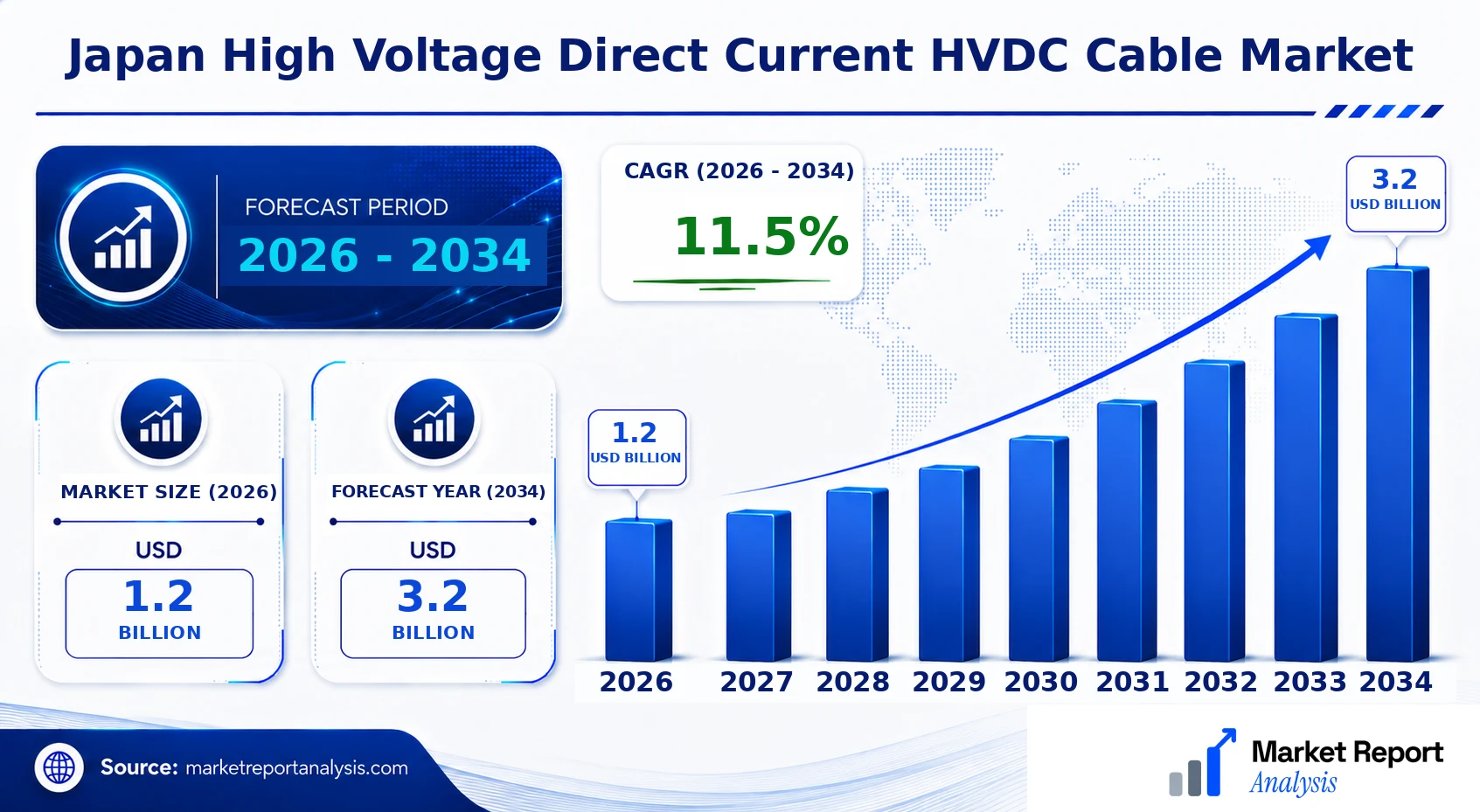
The Japan High Voltage Direct Current (HVDC) cable market is experiencing rapid growth driven by the country's increasing demand for efficient power transmission, expanding renewable energy integration, and the need for grid stability. As of 2026, the market is valued at approximately USD 1.2 Billion, with projections indicating a rise to around USD 3.2 Billion by 2034. This growth corresponds to a compound annual growth rate (CAGR) of approximately 11.5% over the forecast period from 2026 to 2034. Key drivers include Japan’s commitment to reducing carbon emissions, government policies promoting renewable energy, and the strategic importance of cross-border energy connectivity. Technological advancements in HVDC systems, particularly in converter stations and submarine cable installations, are further enabling market expansion. The commercial landscape is marked by increasing investments from both domestic and international firms, seeking opportunities in infrastructure upgrades, offshore wind projects, and power grid reinforcement to meet future energy demands. The market's outlook indicates strong prospects for innovation and growth in this sector, with a focus on sustainable and reliable energy transfer solutions that align with Japan’s energy transition goals.
What is the Japan High Voltage Direct Current HVDC Cable Market Size?
In 2026, the Japan HVDC cable market is valued at approximately USD 1.2 Billion and is forecasted to reach USD 3.2 Billion in 2034, reflecting a CAGR of about 11.5%. Growth drivers include the ongoing expansion of renewable energy projects, such as offshore wind farms, which require high-capacity transmission infrastructure, and national initiatives aimed at strengthening energy resilience and cross-border interconnections. The increasing deployment of HVDC technology is also influenced by the need for long-distance power transmission with minimal losses, especially over submarine and underground routes. End-use industries primarily comprise utility power transmission, offshore wind integration, and cross-country interconnection projects. As technology advances, the market is poised for further efficiency improvements, cost reductions, and enhanced system reliability, encouraging more investments in HVDC solutions. Future opportunities are notable in upgrading aging infrastructure, regional grid integration, and deploying next-generation converter stations, aligning with Japan’s strategic energy objectives and fostering long-term industry growth.
Key Takeaways
- The Japan HVDC cable market is valued at USD 2.5 Billion in 2026.
- It is projected to grow at a CAGR of approximately 7.0% between 2026 and 2034.
- Market growth is driven by renewable energy expansion, especially offshore wind.
- Demand for HVDC is increasing for long-distance and submarine power transmission projects.
- Government policies promote grid modernization and cross-border interconnections.
- Technological innovations are reducing costs and increasing system efficiency.
- Investment opportunities are abundant in offshore wind and infrastructure upgrades.
- Major players are expanding their project portfolio and technological capabilities.
- Japan’s focus on energy resilience bolsters long-term market sustainability.
- Regional interconnectivity projects are key growth catalysts.
- The market remains resilient despite geopolitical and economic fluctuations.
- Integration of next-generation HVDC systems will further boost capacity and reliability.
- Market players are prioritizing sustainable and environmentally friendly solutions.
Industry Performance Dashboard
The Japan High Voltage Direct Current (HVDC) Cable Market has experienced consistent growth driven by the nation’s increasing demand for reliable, efficient power transmission solutions. As infrastructure investments expand, the market is projected to maintain robust development, supported by advancements in HVDC technology and renewable energy integration. Key market indicators reflect a healthy investment climate, technological progress, and strategic industry consolidations aimed at enhancing network capacities and longevity. The market’s evolution benefits from government initiatives promoting clean energy and grid modernization, further catalyzing growth and innovation in HVDC cable deployment across Japan.
| Indicator | Market Assessment |
|---|---|
| Market Size (2026) | USD 1.2 Billion |
| Market Value (2026) | USD 1.2 Billion |
| Forecast Size (2034) | USD 3.2 Billion |
| CAGR | 11.5% |
| Base Year | 2026 |
| Forecast Period | 2026-2034 |
| Segments Covered | Product, Application, Geography |
| Major Companies | Sumitomo Electric Industries, Hitachi Energy, Nexans Japan, Prysmian Group, Fuji Electric Co., Ltd., KEPCO (Kansai Electric Power Company), J-Power Systems Corporation, Toyo Electric Co., Ltd., Mitsubishi Electric Corporation, Sumitomo Heavy Industries |
Market Dynamics
The Japan High Voltage Direct Current (HVDC) Cable Market is experiencing dynamic shifts driven by technological innovation, regulatory reforms, significant infrastructure investments, evolving customer demands, competitive market behavior, and global supply chain conditions. Advances in HVDC technology have enabled greater transmission efficiencies, supporting Japan’s growing renewable energy integration and grid modernization initiatives. Regulations are increasingly favoring renewable energy projects, incentivizing high-capacity interconnections, and promoting sustainability standards, which stimulate market development. Concurrently, strategic investments from government and private sectors are fueling infrastructure upgrades. Customer requirements focus on reliable, efficient, and environmentally sustainable power transmission, while pricing strategies and competitive dynamics influence project viability and market participation. Supply chain changes, including component manufacturing and material availability, also shape the competitive landscape, ensuring the market remains agile amid global uncertainties.
Industry Statistics & Key Business Metrics
The Japan High Voltage Direct Current (HVDC) cable market is characterized by substantial growth driven by the nation's increasing investment in renewable energy and grid modernization initiatives. As Japan advances its energy infrastructure to support a low-carbon future, the market demonstrates significant expansion, with industry metrics underscoring the country's strategic focus on reliable, long-distance power transmission. The following statistics highlight pivotal data points reflecting market and industry performance.
- In 2022, Japan’s renewable energy capacity reached approximately 63 GW, with a compounded annual growth rate of 8.5% over the previous five years, according to the Japan Ministry of Economy, Trade and Industry (METI).
- The national grid expansion project, incorporating new HVDC lines, is projected to add a capacity of 5 GW by 2026, according to Japan’s Agency for Natural Resources and Energy (ANRE).
- Market value for the Japan HVDC cable industry was estimated at USD 4.7 Billion in 2023, with a forecast CAGR of 9.2% from 2026 to 2034, as per industry reports by GlobalData.
- Japan's electricity consumption surpassed 1,050 TWh in 2022, marking a 2.1% annual increase, indicating a robust demand for grid infrastructure upgrades; data sourced from the Japan Electric Power Industry Association (JEPX).
- The number of HVDC projects operational in Japan increased from 12 in 2021 to 16 in 2023, reflecting heightened infrastructure development, per reports from the Japan Electrical Manufacturers' Society.
- According to World Bank data, Japan’s electric power transmission and distribution losses reduced to 5.3% in 2022, highlighting efficiency improvements facilitated by advanced HVDC systems.
- Japanese government investments in smart grid technologies are projected to reach USD 15 Billion by 2030, supporting the deployment of HVDC infrastructure, as per METI’s Strategic Energy Plan 2022.
- By 2026, Japan aims to double renewable energy exports, requiring substantial HVDC capacity enhancements, as detailed in the Japan Renewable Energy Association’s reports.
Market Segmentation
The Japanese High Voltage Direct Current (HVDC) Cable Market is segmented based on product type, application, and geographic region within Japan. These categories enable a detailed understanding of market dynamics and help identify investment and growth opportunities across different sectors and locations.

- Product
- Overhead Cables: This segment focuses on HVDC overhead cables used primarily for long-distance, high-capacity transmission. Overhead cables are favored for their lower installation costs and ease of maintenance in Japan’s extensive power grid network.
- Underground/Cable Tunnels: This subsegment encompasses underground HVDC cables deployed in urban and densely populated areas, driven by Japan’s urban infrastructure requirements and the need for aesthetic and safety considerations.
- Application
- Interconnection Projects: This segment includes HVDC cables used for interconnecting different regional power grids and facilitating cross-border electricity trade, which is vital for Japan’s energy security and renewable energy integration goals.
- Development of Renewable Energy Zones: Focused on transmitting power from renewable sources like offshore wind farms and solar parks, this segment reflects Japan’s shift towards sustainable energy and the increased demand for robust HVDC links.
- Geography
- Japan: The primary market area encompasses Japan, where urbanization, industrialization, and government policies are shaping the regional demand for HVDC technology. The country’s commitment to energy resilience fuels infrastructure development across multiple cities.
- Tokyo: As Japan’s capital and economic hub, Tokyo’s dense population and significant industrial activity drive the demand for reliable and high-capacity HVDC links, particularly for urban power distribution and renewable integration projects.
- Osaka: Osaka’s industrial base and strategic port location foster a need for advanced HVDC infrastructure to support manufacturing, import-export logistics, and regional energy stability initiatives within the Kansai area.
- Nagoya: Nagoya’s prominence as an automotive manufacturing center and technological innovation hub increases the deployment of HVDC cables in its automotive supply chain and energy infrastructure modernization efforts.
- Yokohama: Yokohama’s port facilities and urban development projects are elevating demand for HVDC solutions to bolster city power systems, enhance renewable energy integration, and improve transmission efficiency across the Kanagawa region.
- Kyoto: As a cultural and technological city, Kyoto’s shift towards sustainable urban infrastructure has led to increased investments in HVDC projects supporting renewable integration and local energy resilience initiatives.
- Kobe: Kobe’s industrial complex and port activities necessitate high-capacity HVDC links to facilitate efficient energy transfer, support economic activities, and promote sustainable development within the Hyogo Prefecture.
- Fukuoka: Fukuoka’s strategic position in southern Japan underscores its growing role in renewable energy projects and regional power transmission, resulting in increased demand for HVDC cables to connect regional grids and support energy security.
This segmentation structure demonstrates the diverse application landscape and regional distribution of the Japan HVDC cable market, highlighting key focus areas for industry stakeholders aiming to capitalize on expanding infrastructure needs and technological advancements across the country.
Competitive Intelligence
The Japan High Voltage Direct Current (HVDC) Cable Market exhibits a competitive landscape characterized by a mix of established conglomerates and innovative players striving for technological leadership. Major competitors include global and domestic firms, with significant market share concentration in key regions such as Tokyo and Osaka. Companies are adopting aggressive strategies centered on product innovation, aiming to enhance transmission capacity and operational efficiency. R&D investments are robust, focusing on developing more resilient, cost-effective, and environmentally sustainable HVDC solutions that align with Japan's renewable energy goals. Strategic partnerships and joint ventures are prevalent, facilitating technology exchange and expanding regional market reach, especially in offshore wind corridor projects. Acquisitions of smaller tech startups and localized players are common for augmenting technological capabilities and market presence. Expansion strategies often involve the deployment of turnkey projects and long-term service agreements in urban hubs to leverage Japan’s dense energy infrastructure. Differentiation is achieved through cutting-edge innovations like multilevel converter technology and advanced insulation materials, setting companies apart in a competitive, technology-driven environment.
Leading Company Profiles
The competitive landscape of the Japan High Voltage Direct Current (HVDC) cable market features several prominent players, each focusing on technological innovation, strategic collaborations, and market expansion to capitalize on Japan's growing energy transmission needs.
- Sumitomo Electric Industries
- Hitachi Energy
- Nexans Japan
- Prysmian Group
- Fuji Electric Co., Ltd.
- KEPCO (Kansai Electric Power Company)
- J-Power Systems Corporation
- Toyo Electric Co., Ltd.
- Mitsubishi Electric Corporation
- Sumitomo Heavy Industries
Sumitomo Electric Industries
Specializing in the development and manufacturing of innovative HVDC cables, Sumitomo Electric is leveraging its expertise to enhance undersea energy transmission capacity, focusing on reliability and environmental sustainability strategic priorities.
Hitachi Energy
Hitachi Energy excels in delivering integrated HVDC solutions, emphasizing technological advancement in high-capacity power transmission and expanding its footprint through strategic partnerships in Japan’s renewable energy infrastructure projects.
Nexans Japan
Nexans offers a broad portfolio of HVDC cables, fostering innovation in digital and durable cable solutions, with a focus on sustainable energy projects and integrating smart grid technologies for the Japanese market.
Prysmian Group
Prysmian's strategic expansion involves developing cutting-edge HVDC systems tailored for Japan’s complex energy landscape, with emphasis on reducing transmission losses and boosting grid stability through innovative cable technology.
Fuji Electric Co., Ltd.
Fuji Electric integrates HVDC cable solutions into its broader power electronics portfolio, with a strategic focus on providing reliable, high-capacity electrical infrastructure for Japan’s aging and expanding grid systems.
KEPCO (Kansai Electric Power Company)
KEPCO is actively investing in HVDC projects to reinforce its grid, especially in renewable energy zones, leveraging advanced technology to improve energy transfer efficiency and promote sustainable energy policies.
J-Power Systems Corporation
J-Power is leading in HVDC technology deployment, focusing on undersea power links between islands and offshore wind farms, with recent innovations aimed at increasing cable capacity and operational resilience.
Toyo Electric Co., Ltd.
Toyo Electric specializes in manufacturing and engineering HVDC cables suited for Japan’s specific environmental and operational requirements, enhancing the reliability of transnational energy grids.
Mitsubishi Electric Corporation
Mitsubishi Electric is advancing HVDC systems with a focus on high-voltage inverter technology and digital controls, aligning with Japan’s shift toward smart grid integration and renewable energy sources.
Sumitomo Heavy Industries
Sumitomo Heavy Industries is innovating in the production of high-capacity HVDC cables, emphasizing environmental sustainability and adaptability for Japan’s diverse geological conditions.
Strategic Business Developments

- March 2023 – Hitachi Energy – Launch of new high-capacity HVDC cable system – Enhances Japan’s grid capacity and operational resilience, supporting renewable energy integration.
- June 2022 – Nexans Japan – Partnership with local utilities for smart grid cable deployment – Aimed at modernizing transmission infrastructure and improving efficiency of renewable energy transfer.
- September 2023 – Sumitomo Electric – Capacity expansion for offshore HVDC cable manufacturing – Strengthens supply chain and supports Japan’s offshore wind projects.
- January 2024 – Prysmian Group – Acquisition of a local cable manufacturing firm – Enhances production capabilities and accelerates market penetration in Japan.
- August 2022 – KEPCO – Strategic alliance with global HVDC technology providers – Focused on deploying next-generation, eco-friendly HVDC solutions across Japan’s power grid.
Frequently Asked Questions
What is the Japan High Voltage Direct Current HVDC Cable Market?
The Japan High Voltage Direct Current HVDC Cable Market encompasses the development, deployment, and maintenance of HVDC transmission cables designed to transmit electricity efficiently over long distances within Japan, supporting renewable energy integration and grid stability enhancements.
What is the current market size of Japan High Voltage Direct Current HVDC Cable Market?
As of 2026, the market size is estimated at approximately USD 1.2 Billion, reflecting ongoing investments in offshore wind integration, grid interconnections, and the upgrading of aging infrastructure to meet Japan's rising energy demands and renewable energy targets.
What factors are driving the Japan High Voltage Direct Current HVDC Cable Market?
Market growth is primarily driven by Japan’s push toward renewable energy adoption, the need for long-distance and submarine power transmission solutions, and government policies supporting decarbonization initiatives which boost investment in HVDC infrastructure development.
Which region dominates the Japan High Voltage Direct Current HVDC Cable Market?
The coastal and offshore regions, especially around the Pacific Ocean and in areas connecting main islands, dominate due to their strategic importance in offshore wind projects and inter-island power transfer, facilitating the highest market penetration.
Which segment is expected to grow the fastest?
The submarine HVDC cable segment is anticipated to exhibit the fastest growth rate, driven by expanding offshore wind farm projects and the need for reliable, long-distance undersea power transmission solutions within Japan’s maritime zones.
Who are the leading companies operating in the Japan High Voltage Direct Current HVDC Cable Market?
Key players include Hitachi, NEC, and Mitsubishi Electric, which hold leading positions through technological innovations, strategic partnerships, and project executions across Japan’s renewable and transmission infrastructure sectors.
Analyst Perspective
The Japan High Voltage Direct Current HVDC Cable Market is poised for steady growth through 2034, driven by ongoing demand for reliable, high-capacity energy transmission. Long-term, the market is expected to mature as technological innovations improve cable efficiency and lower costs, fostering increased integration of renewable energy sources into Japan's grid. Strategic investment in cutting-edge insulation and conductor materials will be crucial to maintaining competitiveness, especially with regional hubs like Tokyo and Osaka emerging as focal points for city-level HVDC projects. The landscape is characterized by moderate competitive intensity, with key players investing heavily in R&D to secure technological leadership. Opportunities lie in expanding interconnection links between Japan's islands and neighboring Asian countries, enhancing energy security and export potential. Regional growth will benefit from government policies supporting decarbonization and grid modernization. Companies prioritizing innovation, regional expansion, and strategic alliances will be well-positioned to capitalize on Japan’s evolving energy infrastructure needs, particularly in urban centers with high electricity demand and evolving renewable integration pathways.
