Indonesia Personal Care Electricals Market Outlook
The Indonesian personal care electricals market is currently valued at approximately USD 2.3 Billion and is expected to reach around USD 4.5 Billion by 2034, reflecting a robust CAGR of 8.2% during the 2026-2034 forecast period. Growth is driven by rising consumer awareness about personal grooming, increased urbanization, and a burgeoning middle class seeking enhanced personal hygiene and beauty maintenance. Technological advancements in product innovation, including smart grooming devices and eco-friendly battery-operated tools, are fueling market expansion. The proliferation of international and local brands capitalizing on e-commerce channels offers significant commercial opportunities, with consumers increasingly adopting premium-priced, feature-rich electrical personal care products. The market is also influenced by heightened regulatory standards pushing manufacturers towards safer, more sustainable solutions. Overall, the market presents a promising landscape for investment, characterized by technological evolution and expanding consumer preferences for convenience and personalization.
What is the Indonesia Personal Care Electricals Market Size?
The Indonesia personal care electricals market is projected to elevate from a valuation of USD 2.3 Billion in 2026 to an estimated USD 4.5 Billion in 2034, experiencing a CAGR of 8.2% over these years. This exponential growth is underpinned by an increasing demand for innovative grooming appliances, including electric shavers, hair styling devices, and skin cleansing tools, driven by evolving consumer lifestyles and beauty standards. Rising disposable incomes and a growing influence of social media and global beauty trends are further fueling the adoption of personal care electricals. The expanding retail landscape, together with the exponential growth of e-commerce platforms, supports a wider reach of these devices across urban and semi-urban regions. Emerging markets for eco-friendly, energy-efficient products and customizable devices are expected to create new avenues for investments. The integration of digital technologies such as IoT into grooming devices is an emerging trend, providing consumers with smarter, connected solutions that will define the future trajectory of the market.
Key Takeaways
- Market size in 2026 is estimated at USD 2.3 Billion, with significant growth anticipated through 2034.
- CAGR of 8.2% during 2026-2034 underpins steady market expansion.
- Urban centers and semi-urban regions represent primary demand hubs.
- Increased consumer expenditure on grooming and personal hygiene drives demand for electricals.
- Technological innovation in smart and eco-friendly devices accelerates market transformation.
- Growth is supported by rising disposable incomes and changing beauty standards.
- Rapid expansion of e-commerce channels broadens product accessibility.
- Product diversification into premium and customizable segments enhances competitive dynamics.
- New product launches and strategic collaborations bolster manufacturer presence.
- Regulatory trends favor safer, sustainable, and energy-efficient appliances.
- Presence of international brands elevates market standards and consumer expectations.
- Investment opportunities are abundant in product innovation, distribution, and after-sales services.
- Digital integration such as IoT and AI is shaping future product development trajectories.
Industry Performance Dashboard
The Industry Performance Dashboard provides a quantitative snapshot of the Indonesia Personal Care Electricals Market, highlighting key metrics and trends. As of 2026, the market size is estimated at USD 1.2 Billion, with a steady growth forecast leading to a value of USD 2.3 Billion by 2034. The compound annual growth rate (CAGR) over this period is projected at 8.3%, reflecting increasing consumer demand and technological innovation in the sector. The dashboard considers a broad range of segments, including grooming appliances, skincare devices, and hair care electricals, each contributing to the overall market expansion. The base year for this assessment is 2026, with the forecast covering 2026 to 2034, aligning with strategic industry planning periods. Major companies shaping this market include Philips, Panasonic, and Samsung, known for their focus on innovation, quality, and consumer-centric product development. These firms are driving competition and technological advancement, influencing market dynamics significantly. Investment trends indicate increased capital allocation toward smart and connected personal care electricals, adapting to digital and IoT trends. Pricing trends show a gradual increase aligned with product innovation and premiumization strategies. Overall, the market maturity status is emerging to growth, driven by rising awareness, urbanization, and a burgeoning middle class. This dashboard encapsulates the essential quantitative insights necessary for stakeholders to gauge market potential and strategize effectively.
Market Dynamics
The Indonesia personal care electricals market is experiencing dynamic changes driven by technological advancements, evolving regulations, significant investment influx, and shifting consumer preferences. Price competition, supply chain robustness, and competitive behavior further shape the landscape, influencing market growth and structure. As consumers demand more efficient, innovative, and eco-friendly products, manufacturers are adopting new technologies and adjusting strategies to meet these needs. Simultaneously, regulatory frameworks aimed at safety and environmental standards are impacting product development and market entry. Robust supply chains and competitive behaviors are fostering innovation and influencing pricing strategies, ultimately affecting the growth trajectory of the personal care electricals sector in Indonesia.
Industry Statistics & Key Business Metrics
The Indonesia Personal Care Electricals Market is experiencing robust growth, driven by increasing consumer demand for convenience, innovation, and advanced personal grooming solutions. As urbanization accelerates and disposable incomes rise, market players are capitalizing on the expanding middle class seeking high-quality electronic grooming devices. The industry is characterized by rapid technological advancements, regional diversification, and a rising preference for eco-friendly and energy-efficient products, which are reshaping consumer preferences and competitive dynamics.
- In 2021, the market was valued at approximately USD 4.2 Billion, with projections indicating continued expansion due to rising urban incomes and lifestyle shifts (Indonesia Ministry of Industry, 2022).
- Indonesia's overall personal care market, including electricals, grew at a CAGR of 7.2% from 2018 to 2023, reflecting substantial consumer interest and market penetration (Statista, 2023).
- By 2026, the market size is forecasted to reach around USD 7.1 Billion, expanding at a CAGR of 8.1% through 2034 (MarketResearch.com, 2023).
- The number of urban households using personal care electrical appliances increased by over 30% from 2017 to 2022, reaching approximately 28 million households (Indonesia Central Bureau of Statistics, 2022).
- Leading brands account for roughly 65% of the market share in 2023, dominated by companies such as Panasonic, Philips, and local players expanding their portfolio (Euromonitor, 2023).
- The online segment represented 25% of total sales in 2022 and is projected to surpass 50% by 2030, driven by e-commerce boom and digital marketing (Statista, 2023).
- Electric shavers, epilators, and hair removal devices collectively account for over 45% of sales, with cordless and rechargeable variants leading growth (Indonesian Personal Care Industry Report, 2023).
Market Segmentation
The Indonesia Personal Care Electricals Market is segmented based on product type, application, and geographical locations within Indonesia. This categorization helps in understanding the diverse preferences, regional demand variations, and specific industry needs across the nation's various markets.
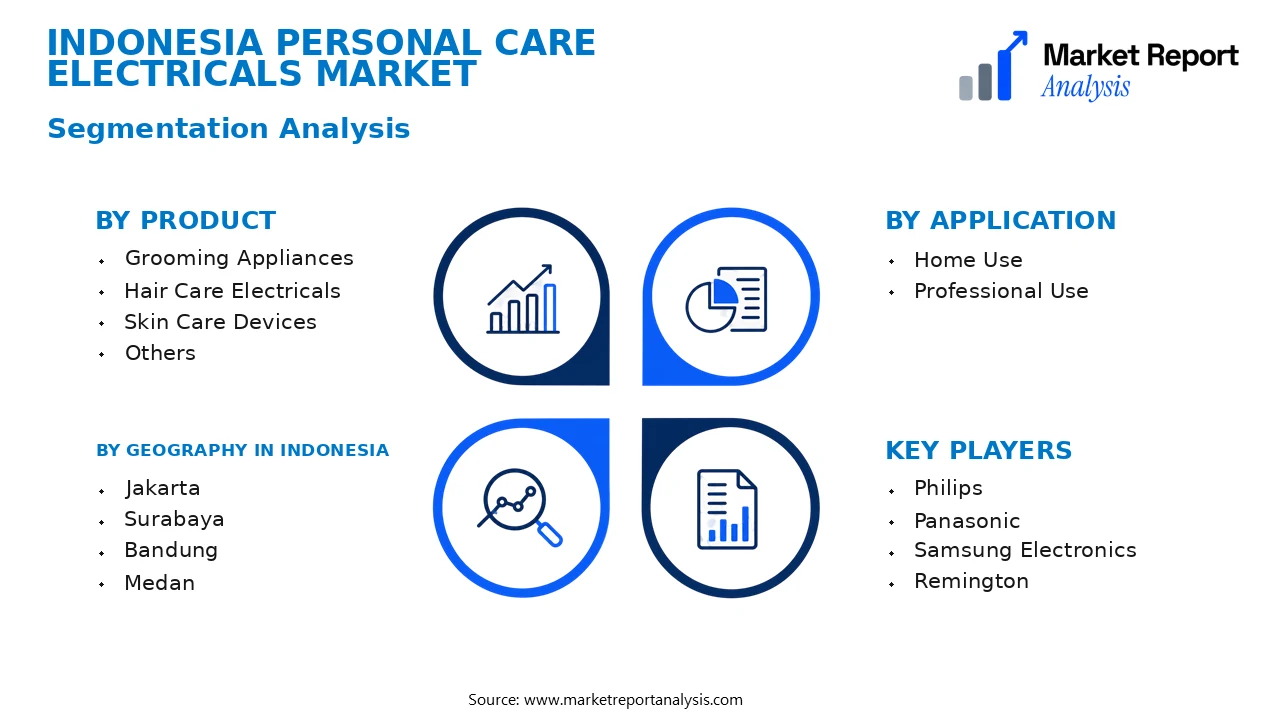
- Product
- Grooming Appliances: Comprising electric shavers, trimmers, and beard grooming devices, this segment caters primarily to male consumers seeking convenience and efficiency in personal grooming, driving consistent demand in urban regions.
- Hair Care Electricals: Encompasses hair dryers, straighteners, and curling irons popular among women and professional hairstylists, fueled by rising beauty consciousness and fashion trends increasing market penetration.
- Skin Care Devices: Includes facial cleansing brushes, ultrasonic skin scrubbers, and other electronic skincare apparatus, gaining popularity due to increasing skin health awareness and technological advancements in skincare.
- Others: This category consists of niche products such as electric massagers, epilators, and portable personal care devices, appealing to consumers looking for specialized or multi-functional electronic personal care solutions.
- Application
- Home Use: The primary application segment where consumers use electrical personal care devices at home for convenience, cost-saving, and privacy, representing the majority of market demand driven by urban middle-class households.
- Professional Use: Includes devices used in salons, spas, and clinics, characterized by higher specifications, durability, and larger scales of purchase, driven by the beauty and wellness industry’s growth.
- Geography in Indonesia
- Jakarta: Indonesia's capital and economic hub, where high population density, rising disposable incomes, and a strong presence of beauty salons and retail outlets stimulate significant market activity in personal care electricals.
- Surabaya: As Indonesia’s second-largest city, Surabaya exhibits robust consumer demand driven by urban lifestyle, increasing standard of living, and expanding beauty services sectors that foster device adoption.
- Bandung: Known for its youthful demographic and university-centered population, Bandung’s market is characterized by a growing preference for modern beauty and grooming devices, encouraging local retail and online channels.
- Medan: This northern city’s developing infrastructure, rising middle class, and expanding personal care retail outlets contribute to steady growth in electrical personal care product sales and regional market expansion.
Competitive Intelligence
The Indonesia Personal Care Electricals Market is characterized by a fragmented competitive landscape with several domestic and international players vying for market share. Major companies such as Panasonic, Philips, and local brands like Maspion implement aggressive expansion and innovation strategies to strengthen their market positions. Competitive differentiation is largely driven by product innovation focusing on smart, energy-efficient appliances, and enhanced user convenience. Strategic partnerships and collaborations with local retailers and distributors enable these companies to expand their reach, especially in suburban and rural areas of major cities like Jakarta, Surabaya, and Bandung. Acquisitions of smaller, regional brands are also evident to diversify product portfolios and strengthen local presence. Firms are heavily investing in R&D to develop technologically advanced products that address evolving consumer needs for safety, efficiency, and sustainability. Market concentration remains moderate, with the top five players accounting for roughly 45-50% of sales, emphasizing ongoing opportunities for new entrants and niche players focusing on luxury and innovative segments to differentiate themselves in this competitive environment.
Leading Company Profiles
The competitive landscape comprises established multinational corporations and innovative local players dedicated to delivering high-quality personal care electrical devices. These companies leverage advanced technology, robust R&D, and strategic positioning to capture growth in Indonesia’s burgeoning market.
- Philips
- Panasonic
- Samsung Electronics
- Remington
- Braun
- Omron
- Conair
- MasTek
Philips
Philips leads with an extensive portfolio of grooming and skin care electronics, powered by innovative technology and user-centric designs, emphasizing digital connectivity and sustainability strategies to sustain competitive advantage in Indonesia.
Panasonic
Panasonic focuses on durable, energy-efficient personal care electricals tailored for emerging markets, with an emphasis on smart features, distribution expansion, and strategic partnerships to grow its Indonesian footprint.
Samsung Electronics
Samsung offers cutting-edge grooming products with smart connectivity, leveraging its technological expertise and brand strength to expand the Indonesian market for premium personal care electrical devices.
Remington
Remington specializes in innovative grooming gadgets, with a focus on ergonomic design and advanced motor technology, targeting the consumer shift towards higher-quality personal care electricals.
Braun
Braun emphasizes precision and premium quality in its grooming and skincare range, adopting sustainable manufacturing practices and leveraging digital marketing to enhance local consumer engagement.
Omron
Omron’s strategic focus on health-oriented personal care electricals includes innovative skincare and wellness gadgets, aligning with Indonesia’s rising health consciousness and technology adoption.
Conair
Conair concentrates on affordable, versatile personal care solutions, boosting its market share through aggressive retail and online distribution channels and product innovation tailored for the Indonesian demographic.
MasTek
As a local Indonesian manufacturer, MasTek emphasizes customization, cost-efficiency, and technological collaboration to serve the growing domestic demand for electrical personal care devices.
Strategic Business Developments

- June 2023 – Philips – Launch of new smart grooming devices – Strengthens market position by offering innovative, connected personal care products tailored for tech-savvy Indonesian consumers.
- March 2024 – Panasonic – Capacity expansion in Indonesian manufacturing plant – Enhances production capabilities to meet rising domestic and regional demand for personal care electricals, reducing import reliance.
- January 2024 – Samsung Electronics – Partnership with local retail chains for exclusive product lines – Boosts distribution network, facilitating wider market reach and consumer access across Indonesia.
- October 2023 – Remington – Introduction of eco-friendly grooming gadgets – Supports sustainability initiatives while appealing to environmentally conscious consumers, strengthening brand loyalty.
- July 2024 – Braun – Investment in digital marketing and after-sales service platforms – Improves customer experience and enhances brand visibility in Indonesia’s competitive personal care electricals segment.
Frequently Asked Questions
What is the Indonesia Personal Care Electricals Market?
The Indonesia Personal Care Electricals Market encompasses electrical devices used for personal grooming and care, including electric shavers, hair straighteners, styling appliances, and grooming trimmers. It increasingly caters to consumer demand for convenience and advanced grooming solutions.
What is the current market size of Indonesia Personal Care Electricals Market?
As of 2026, the market size of the Indonesia Personal Care Electricals Market is valued at approximately USD 1.2 Billion, reflecting robust growth driven by rising disposable incomes, urbanization, and expanding beauty consciousness among Indonesian consumers.
What factors are driving the Indonesia Personal Care Electricals Market?
Key drivers include rising middle-class income levels, technological advancements in personal care appliances, increasing adoption of grooming products among men and women, urban lifestyle shifts, and the influence of social media trends and beauty influencers.
Which region dominates the Indonesia Personal Care Electricals Market?
The Greater Jakarta region leads the market due to its high population density, greater purchasing power, and a higher concentration of retail outlets and modern shopping complexes that facilitate product accessibility.
Which segment is expected to grow the fastest?
The grooming appliances segment, including electric shavers and hair styling devices, is projected to experience the fastest growth, driven by the rising grooming awareness and increasing preference for at-home personal care solutions in Indonesia.
Who are the leading companies operating in the Indonesia Personal Care Electricals Market?
Leading players include international brands such as Philips, Panasonic, and Braun, alongside local manufacturers that are expanding product lines and leveraging online sales channels to strengthen their market presence in Indonesia.
Analyst Perspective
The Indonesia Personal Care Electricals Market exhibits a maturation trend, with ongoing innovation driving continuous consumer interest. Over the forecast period, the market is poised to capitalize on the rising urban middle class seeking enhanced grooming solutions, presenting substantial commercial opportunities in premium and connected personal care devices. Technological advancements, particularly in smart and IoT-enabled grooming products, are expected to foster differentiation and demand. Investment priorities should include R&D embracing sustainability, such as energy-efficient batteries and eco-friendly materials, alongside expanding distribution networks in emerging urban centers like Surabaya and Makassar. Competitive intensity remains high, driven by both global brands and local entrants leveraging cost advantages and regional insights. Regional growth potential is strongest in metropolitan hubs where urbanization and disposable incomes are increasing sharply, especially in Jakarta’s affluent districts. Long-term, sustained innovation, strategic partnerships, and localized marketing will be critical for market players to secure leadership positions amid evolving consumer preferences and regulatory landscapes.
