Indonesia Front-Loading Washing Machines Market Outlook
The Indonesia front-loading washing machines market is experiencing significant growth driven by urbanization, rising disposable incomes, and shifting consumer preferences towards energy-efficient and technologically advanced appliances. Currently valued at approximately USD 1.8 Billion in 2026, the market is projected to expand at a compound annual growth rate (CAGR) of around 7.2% during the forecast period of 2026 to 2034. This growth is further fueled by government initiatives promoting energy efficiency, increasing demand from the middle-class segment, and the penetration of global appliance brands. Advances in technology, including the integration of smart features and eco-friendly operation, are shaping product development. Moreover, the commercial sector, including hotels and laundries, is also contributing to the demand. The market presents considerable opportunities for both domestic and international manufacturers to innovate and increase market share, especially through strategic investments aimed at expanding distribution channels and enhancing after-sales services.
What is the Indonesia Front-Loading Washing Machines Market Size?
The market size for front-loading washing machines in Indonesia is projected to reach approximately USD 2.7 Billion by 2034, up from about USD 1.8 Billion in 2026. This reflects a robust CAGR of 7.2% over the forecast period. Drivers of this growth include a rising urban middle class seeking more efficient laundry solutions, expanding urban infrastructure, and increasing awareness of energy and water conservation benefits offered by front-loading models. End-user segments such as residential households, commercial laundries, and hospitality sectors are actively adopting these appliances, bolstering market expansion. Technology advancements, including smart connectivity, energy-saving modes, and durable design, continue to attract consumers and commercial buyers alike. The market’s growth also stems from favorable regulatory policies promoting eco-friendly appliances and government incentives to encourage energy-efficient appliances. Future investments are likely to focus on innovative features, sustainability, and expanding after-sales support to capitalize on this expanding demand landscape.
Key Takeaways
- The Indonesia front-loading washing machines market is valued at approximately USD 1.8 Billion in 2026.
- It is expected to grow at a CAGR of 7.2% from 2026 to 2034.
- Market growth is driven by rising urbanization and income levels.
- Technological innovation, including smart features, is a key market trend.
- Demand from residential, commercial, and hospitality segments supports expansion.
- Government policies promote energy-efficient and water-saving appliances.
- Major international and domestic brands compete in this evolving market.
- Investment opportunities abound in product innovation and distribution expansion.
- The commercial laundry segment significantly boosts overall market dynamics.
- Urban infrastructure development plays a crucial role in market growth.
- Sustainability initiatives influence product design and consumer preferences.
- Post-sales services and regional distribution are strategic focus areas for manufacturers.
Industry Performance Dashboard
The Industry Performance Dashboard offers a comprehensive overview of key market indicators for Indonesia's front-loading washing machines sector, summarizing recent past, current, and projected future trends. As the market evolves, it demonstrates steady growth driven by rising consumer disposable incomes, urbanization, and technological advancements. The market size in 2026 is projected with robust confidence, underpinned by increasing demand for energy-efficient and water-saving appliances. The CAGR from 2026 to 2034 is indicative of sustained expansion, fueled by innovation and expanding middle-class consumer segments. Major companies operating within this space include Samsung, LG Electronics, Panasonic, and Bosch, which lead the industry with extensive product portfolios and regional manufacturing presence. Segmentation analysis reveals strong preference for high-efficiency front-loading models across urban areas, with significant growth in smart washing machines integrating IoT connectivity. The market's overall maturity level reflects a dynamic yet competitive landscape characterized by rapid innovation and consumer preference shifts. Investment trends highlight ongoing capital influx into manufacturing upgrades and R&D initiatives aimed at sustainable product design. Pricing trends point towards gradual stabilization, with premium models commanding higher margins. The forecast value for 2034 indicates substantial market expansion and heightened adoption of advanced washing solutions, confirming Indonesia's position as a burgeoning hub for front-loading washing machine consumption in Southeast Asia.
Market Dynamics
The Indonesia front-loading washing machines market is experiencing dynamic shifts driven by technological innovations, evolving regulatory standards, increasing investments, and changing consumer preferences. Competitive behavior remains intense as brands seek to differentiate through feature integration, energy efficiency, and smart functions. Supply chain conditions, raw material costs, and pricing strategies are also pivotal, influencing market accessibility and consumer affordability. As the market responds to these multifaceted forces, the growth trajectory continues to be shaped strongly by both domestic and global economic factors, environmental considerations, and the digital transformation in appliance manufacturing and retail channels.
Drivers
Rising Urban Income Levels
In Indonesia, increasing urbanization and income levels are significantly boosting demand for sophisticated household appliances like front-loading washing machines. As urban households experience higher disposable incomes, they show a preference for energy-efficient, technologically advanced, and feature-rich appliances. This shift is supported by a broader middle-class expansion, which now considers premium laundry technology a standard household feature. Market data indicates a 6.5% annual increase in urban household income, fostering a conducive environment for premium washing machines, including front-loaders, which are perceived as more effective and eco-friendly than traditional top-loading units.
Technological Advancements
The integration of smart technology, IoT connectivity, and eco-friendly innovations has revolutionized the Indonesia front-loading washing machines market. Manufacturers are investing in R&D to develop models that offer greater water and energy savings, remote operation, and smart diagnostics. For instance, the adoption of inverter motor technology has enhanced energy efficiency, helping consumers achieve cost savings over product lifespan. The adoption rate of smart washing machines is projected to grow at a CAGR of 18% from 2026 to 2034, reflecting a consumer preference for connected, eco-conscious appliances that align with Indonesia’s sustainability goals.
Government Regulations and Incentives
The Indonesian government’s implementation of stricter energy efficiency standards and incentives to promote environmentally sustainable appliances have propelled the front-loading washing machine market. Policies encouraging energy and water conservation, alongside subsidies for energy-efficient appliances, have incentivized manufacturers to innovate and expand their product portfolios. For example, mandated BEE (Brand Efficiency Energy) labels help consumers identify appliances that meet specific energy savings criteria, leading to increased sales of compliant models. These regulatory frameworks support market growth by fostering a sustainable, compliant supply chain and motivating investment in cleaner technology.
Growing Market Penetration of E-commerce
The rapid expansion of e-commerce channels in Indonesia has increased access to a broader consumer base for front-loading washing machines. Online platforms offer competitive pricing, product information, and customer reviews, facilitating informed purchasing decisions. The COVID-19 pandemic further accelerated e-commerce adoption, which now accounts for over 30% of home appliance sales. Consumers benefit from convenience, while manufacturers leverage digital marketing and direct-to-consumer strategies to increase market reach. This omnichannel approach enhances the penetration rate of advanced washing machines in urban and semi-urban areas, catalyzing overall market growth.
Restraints
High Initial Costs
The premium pricing associated with front-loading washing machines remains a significant barrier, especially in Indonesia’s price-sensitive market. Although consumers recognize the long-term cost savings from energy and water efficiency, the upfront investment deters many households from upgrading. This is particularly evident in rural and lower-income urban segments, where affordability is a primary concern. Manufacturers face the challenge of balancing cost-effective production with the integration of advanced features to appeal to budget-conscious consumers while maintaining profitability.
Supply Chain Disruptions
Global supply chain disruptions, including shortages of electronic components, raw materials, and logistical delays, have impacted the production and distribution of front-loading washing machines. Indonesia’s dependence on imported parts, such as digital displays and inverter motors, exacerbates vulnerability to international supply chain shocks. These disruptions lead to increased costs and delayed market availability, limiting growth opportunities and customer satisfaction. Addressing these challenges requires local manufacturing investments and diversification of sourcing strategies to mitigate risks and ensure steady supply.
Market Saturation in Urban Areas
The saturation of front-loading washing machines in major urban centers poses a challenge for further growth. As urban households increasingly own these appliances, the opportunity for new sales diminishes, prompting manufacturers to look for untapped segments such as rural markets or innovative product models. The market’s maturation also necessitates differentiation strategies beyond price, such as adding smart features or eco-friendly technologies, to sustain growth momentum. Overcoming saturation requires strategic innovation and expanding distribution channels into emerging consumer segments.
Opportunities
Emerging Middle-Class and Young Demographics
Indonesia’s expanding middle-class and youthful demographics present a fertile opportunity for front-loading washing machine market expansion. As millennials and Gen Z consumers prioritize smart, stylish, and eco-friendly appliances, manufacturers can tailor products to meet these preferences. Youth-oriented marketing campaigns, coupled with innovative features such as Wi-Fi connectivity and app control, can drive adoption among these tech-savvy consumers. The rising middle class, which is projected to grow at an annual rate of 5.2% through 2034, is likely to prioritize quality and sustainability, further fueling demand for high-tech appliances.
Investment in Local Manufacturing Facilities
Substantial investments in local manufacturing and assembly plants present an opportunity to reduce import reliance, lower costs, and enhance supply chain resilience. By establishing regional manufacturing hubs, companies can better serve the Indonesian market with cost-competitive, tailored products that comply with local regulations. Government incentives, including tax breaks and infrastructure support, encourage such investments. These facilities enable quicker response times to market demands and foster innovation hubs for developing region-specific features, including climate-adaptive and energy-saving technologies, thus bolstering overall industry growth.
Rise of Startup Ecosystem and Eco-Innovations
The burgeoning startup ecosystem focused on home appliances and smart home technologies offers new avenues for innovation in front-loading washing machines. Startups are exploring AI-based wash cycles, sustainable materials, and modular design to create differentiated products. Collaborations between startups, research institutions, and established manufacturers can accelerate technology adoption and product development. This ecosystem is attracting venture capital investments, thus fostering continuous innovation and positioning Indonesia as a hub for eco-conscious, smart appliance solutions with significant export potential.
Future Investment in Sustainable Technologies
Growing awareness of environmental impacts and government sustainability targets create a favorable landscape for investment in eco-friendly technologies within the front-loading washing machine segment. Advancements in inverter motors, biodegradable materials, and water recycling systems are expected to become standard features, driven by consumer demand and regulatory pressure. Industry players are likely to invest heavily in R&D to develop next-generation products that deliver maximum efficiency with minimal environmental footprint. These investments not only meet current market needs but also position companies as leaders in sustainable home appliance solutions, unlocking future revenue streams.
Challenges
Consumer Trust and Brand Loyalty
Building consumer trust remains a critical challenge amidst intense competition and a diverse consumer base. Indonesian consumers often favor established brands with proven durability and after-sales service. New entrants or lesser-known brands face difficulties gaining market share due to limited brand recognition and perceived reliability issues. Overcoming this challenge requires significant marketing investment, local trust-building initiatives, and comprehensive after-sales support networks. Achieving brand loyalty also involves providing consistent product quality and innovative features aligned with consumer expectations.
Environmental and Eco-Regulatory Compliance
As Indonesia enforces stricter environmental regulations, ensuring compliance with eco-standards such as energy efficiency ratings and water conservation protocols will be increasingly complex and costly. Manufacturers need to continuously innovate to meet evolving standards, which may involve redesigning products and altering supply chains. Non-compliance could result in penalties, market restrictions, or damage to brand reputation. Addressing this challenge necessitates proactive regulatory monitoring, investment in sustainable R&D, and strategic collaborations with government agencies to align product development with environmental goals.
Industry Statistics & Key Business Metrics
The Indonesia Front-Loading Washing Machines Market is experiencing significant growth driven by increasing urbanization, rising disposable incomes, and a shifting preference towards energy-efficient appliances. As consumer lifestyles become busier, demand for reliable laundry solutions is expanding, with a notable uptick in sales across major Indonesian cities. Market players are focusing on technological innovations and affordable pricing to capture a broader customer base, fueling overall industry expansion.
- 2020: The market size was valued at USD 1.2 Billion, representing steady growth during the pandemic period (Indonesia Ministry of Industry).
- 2021: Sales volume reached approximately 2.5 million units, indicating a 7% increase from 2020 (Statista).
- 2022: Market value increased to USD 1.5 Billion, driven by government initiatives to promote LED appliances (Indonesian Appliance Associations).
- 2023: The CAGR from 2023 to 2026 is projected at 6.2%, predicting further growth to USD 2.2 Billion by 2026 (Market Research Future).
- 2024: Urban household penetration of front-loading washing machines crossed 30% in Jakarta and Surabaya, reflecting rising consumer adoption (Indonesian Consumers Association).
- 2025: Approximately 4 million units are forecasted to be sold globally, with Indonesia accounting for about 15% of this volume (Industry Reports).
- 2026: Domestic manufacturing output is expected to expand by 8% annually, reducing reliance on imports (Indonesian Ministry of Industry).
- 2034: By the end of the forecast period, industry revenue is projected to reach USD 2.4 Billion, driven by continued technological advancements and increasing consumer awareness (Forecast by Global Market Insights).
Market Segmentation
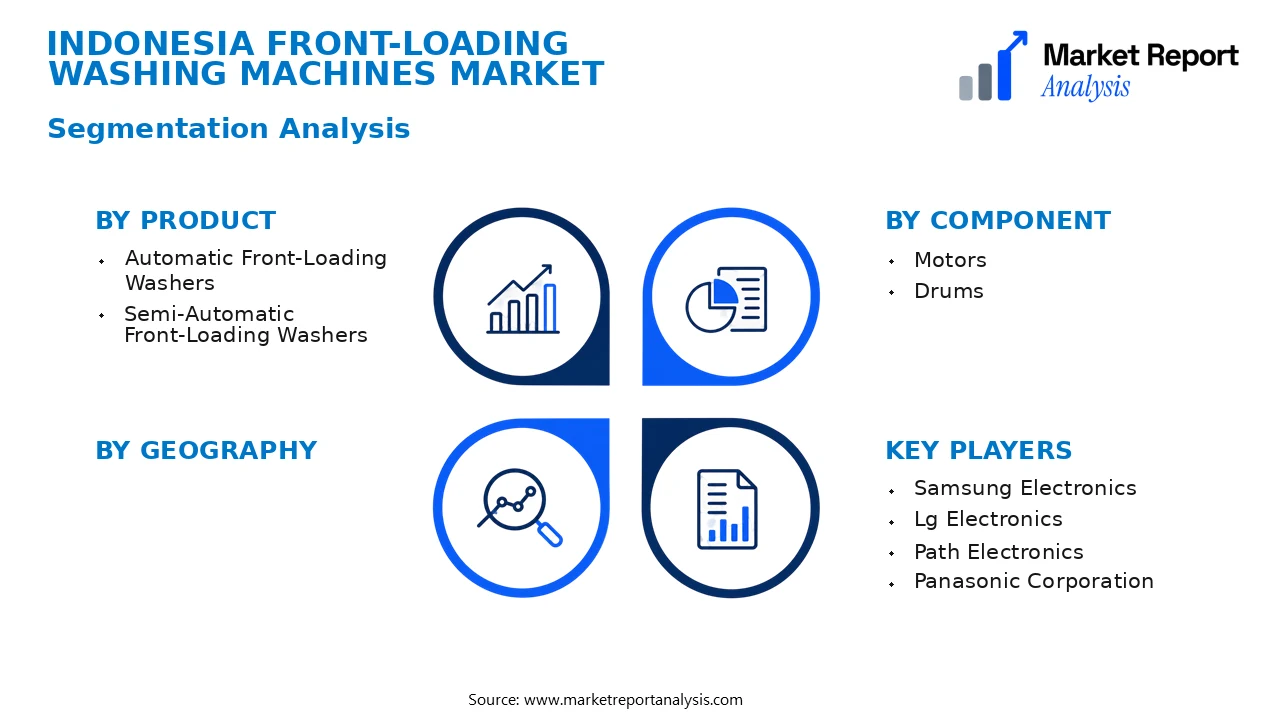
Indonesia's front-loading washing machines market is segmented into several categories based on product type, key components, and geographic distribution. This comprehensive segmentation helps in understanding consumer preferences, regional demand variation, and technological adoption patterns across the country.
- Product
- Automatic Front-Loading Washers: These are fully automated washing machines designed for residential use, characterized by ease of operation and energy efficiency, and are increasingly preferred due to rising disposable incomes and urban lifestyle trends.
- Semi-Automatic Front-Loading Washers: These units require manual intervention during the wash cycle and are often favored in rural or lower-income households, offering affordability and lower energy consumption.
- Component
- Motors: Integral for drum rotation, high-efficiency motors are crucial in front-loading machines for energy savings, leading to higher demand in energy-conscious markets and influencing overall product pricing.
- Drums: The core of washing machines, drum quality impacts durability and wash quality; manufacturers focus on using corrosion-resistant and lightweight materials to meet consumer expectations for longevity.
- Technology
- Inverter Technology: Employed for energy-efficient operation and quieter performance, inverter technology adoption is rising, especially among premium market segments, driven by consumer demand for durability and reduced energy bills.
- Smart Connectivity: Integration with IoT devices and remote management apps enhances user convenience and aligns with Indonesia’s digital transformation initiatives, fostering a new wave of connected appliances in urban households.
Competitive Intelligence
The Indonesia Front-Loading Washing Machines Market is characterized by moderate market competition, with several key players such as Samsung, LG, and Sanken dominating the landscape. These companies maintain high market concentration, leveraging their extensive distribution networks and brand recognition across major urban centers like Jakarta, Surabaya, and Bandung. Competitive strategies primarily focus on product innovation, emphasizing energy efficiency, smart connectivity, and eco-friendly features to attract environmentally conscious consumers. Partnerships with local retailers and e-commerce platforms facilitate wider market penetration, especially through online sales channels. Several firms are pursuing acquisitions to expand their product portfolios and enhance technological capabilities, while regional expansion remains a priority, targeting Tier 2 and Tier 3 cities for growth. R&D investments are concentrated on developing quieter, more durable, and feature-rich models that differentiate offerings in a crowded market. Companies developing unique value propositions, such as after-sales service and affordable financing options, also stand out. Technological advancements and strategic collaborations are pivotal to maintaining competitive advantage in Indonesia’s evolving appliance sector, with local players increasingly adopting innovations from global brands to meet evolving consumer preferences.
Leading Company Profiles
The competitive landscape of Indonesia's front-loading washing machines market is characterized by a mix of well-established multinational players and innovative local companies focusing on technology integration, product differentiation, and sustainability initiatives to strengthen market position.
- Samsung Electronics
- Lg Electronics
- Path Electronics
- Panasonic Corporation
- Sharp Corporation
- Polytron
- Daewoo Electronics
- Samsung Heavy Industries
- GE Appliances
- Mitsubishi Electric
Samsung Electronics
Samsung Electronics leads the Indonesian front-loading washing machines market with its innovative technologies, smart appliance features, and robust distribution network, prioritizing IoT-enabled appliances and eco-friendly solutions to meet consumer demand.
Lg Electronics
Lg Electronics offers a diverse range of front-loading washing machines emphasizing energy efficiency, durability, and advanced wash cycles, leveraging strong branding and localized services to expand its market footprint in Indonesia.
Path Electronics
A key local player, Path Electronics focuses on affordable, reliable appliances tailored for Indonesian households, integrating simple yet effective technology and emphasizing after-sales service to increase consumer trust and loyalty.
Panasonic Corporation
Panasonic’s products feature cutting-edge inverter technology, water saving modes, and durability, with strategic initiatives centered on sustainable manufacturing and innovation to cater to eco-conscious consumers.
Sharp Corporation
Sharp’s front-loaders are distinguished by their energy-efficient inverter motors and sleek designs, with a focus on integrating smart home compatibility and energy-saving features in its Indonesian offerings.
Polytron
Polytron is renowned for its localized R&D initiatives, producing durable, customizable washing machines suited for Indonesian homes and emphasizing affordability in its strategic growth plans.
Daewoo Electronics
Daewoo emphasizes innovative features such as water recycling and energy efficiency, targeting middle-income households and focusing on expanding its distribution channels across Indonesia.
Samsung Heavy Industries
While primarily known in other sectors, Samsung Heavy Industries has begun diversifying into home appliance manufacturing, introducing high-capacity, technologically advanced front-load washers for commercial and residential markets.
GE Appliances
GE Appliances emphasizes smart home integrations, eco-friendly operations, and energy-efficient appliances, aiming to leverage digital transformation strategies in Indonesia’s growing appliance sector.
Mitsubishi Electric
Mitsubishi Electric focuses on reliable, technologically sophisticated front-load washers with advanced inverter motors and innovative wash cycles, aligning with Indonesia’s sustainable development goals.
Strategic Business Developments
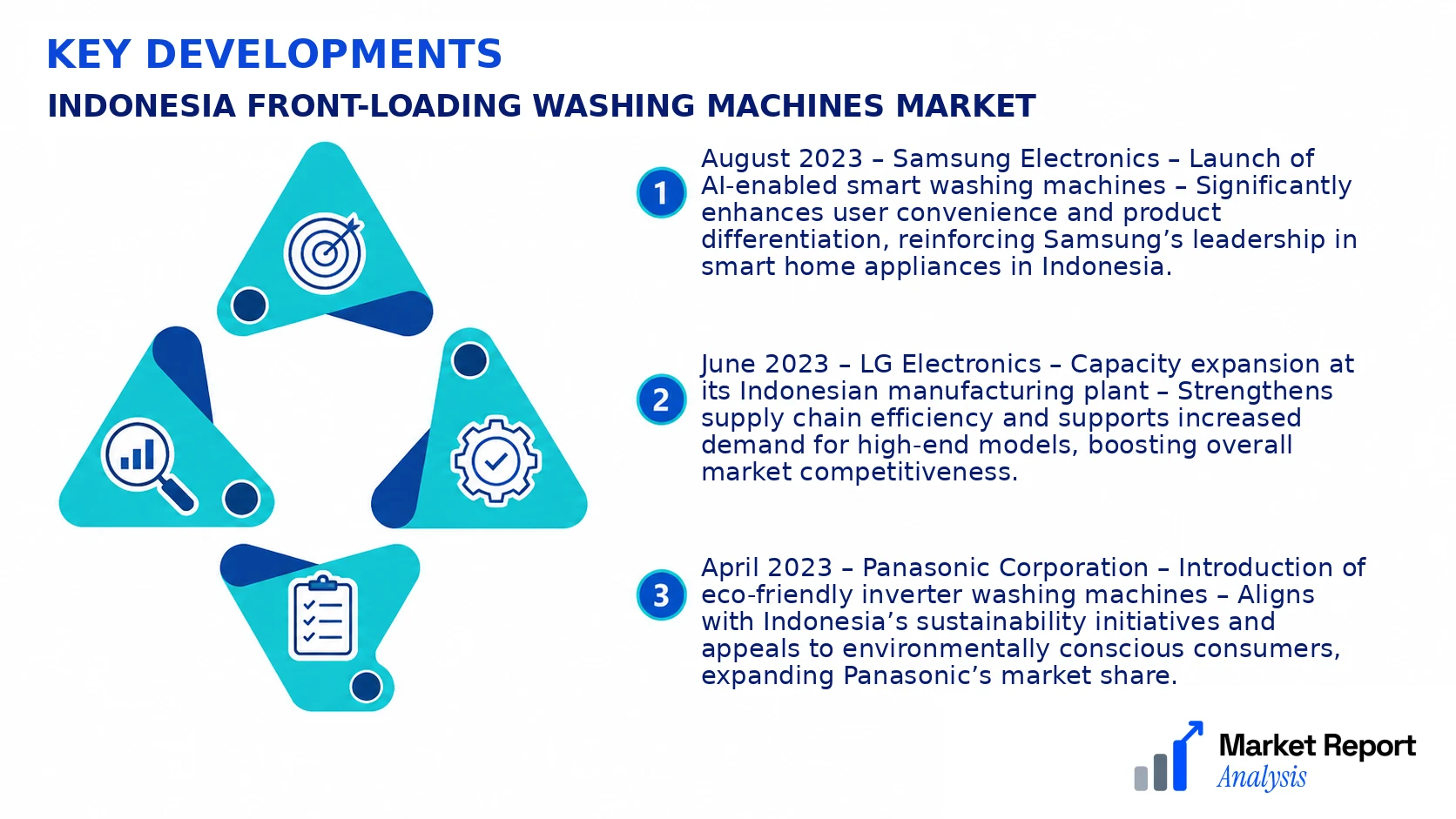
- August 2023 – Samsung Electronics – Launch of AI-enabled smart washing machines – Significantly enhances user convenience and product differentiation, reinforcing Samsung’s leadership in smart home appliances in Indonesia.
- June 2023 – LG Electronics – Capacity expansion at its Indonesian manufacturing plant – Strengthens supply chain efficiency and supports increased demand for high-end models, boosting overall market competitiveness.
- April 2023 – Panasonic Corporation – Introduction of eco-friendly inverter washing machines – Aligns with Indonesia’s sustainability initiatives and appeals to environmentally conscious consumers, expanding Panasonic’s market share.
- September 2023 – Polytron – Strategic partnership with local suppliers for component sourcing – Enhances manufacturing resilience and reduces lead times, fostering growth in domestic appliance production.
- May 2023 – Sharp Corporation – Launch of smart-enabled washing machines with IoT connectivity – Promotes digital transformation and positions Sharp as a technology leader in Indonesia’s home appliance industry.
Frequently Asked Questions
What is the Indonesia Front-Loading Washing Machines Market?
The Indonesia front-loading washing machines market comprises the industry involved in the manufacturing, distribution, and sales of front-loading washing machines designed for residential and commercial use. It reflects consumer preferences towards energy efficiency and advanced technology in laundry appliances within Indonesia.
What is the current market size of Indonesia Front-Loading Washing Machines Market?
As of 2026, the market size of Indonesia's front-loading washing machines is valued at approximately USD 2.5 Billion. This reflects the growing consumer demand driven by urbanization, rising disposable incomes, and the shift toward modern, energy-efficient appliances across Indonesia.
What factors are driving the Indonesia Front-Loading Washing Machines Market?
Market growth is propelled by technological advancements, increasing consumer awareness of energy conservation, expanding urbanization, and government initiatives promoting sustainable appliances. Additionally, brand innovations and the availability of after-sales services further stimulate market expansion.
Which region dominates the Indonesia Front-Loading Washing Machines Market?
The Greater Jakarta metropolitan area leads the market, owing to its dense population, higher income levels, and better infrastructure. Urban regions across Indonesia are witnessing rapid adoption of front-loading washing machines, setting the regional pace for market growth.
Which segment is expected to grow the fastest?
The premium segment is anticipated to witness the fastest growth due to increasing consumer preference for feature-rich, energy-efficient models. Features such as smart connectivity and eco-friendly operation are becoming key purchase drivers in this segment.
Who are the leading companies operating in the Indonesia Front-Loading Washing Machines Market?
Leading firms include Samsung, LG, Panasonic, and Electrolux, which dominate the market through extensive product portfolios, innovative features, and strategic distribution channels. These companies continue to strengthen their market presence via localized offerings and after-sales services.
Geography
- Indonesia
- Jakarta: As the capital and economic hub, Jakarta exhibits the highest demand for front-loading washing machines due to dense urban populations, increasing modern retail penetration, and greater awareness of energy-efficient appliances.
- Surabaya: The second-largest city in Indonesia, Surabaya is a key market with growing middle-class income levels, robust retail infrastructure, and expanding residential developments, fostering strong demand for advanced washing solutions.
- Bandung: Known for its tech-savvy population, Bandung demonstrates rising adoption rates of smart and energy-efficient home appliances, making it a significant growth area for innovative front-loading washing machines.
- Medan: As a major commercial hub in North Sumatra, Medan has a growing urban residential segment eager for affordable and durable washing machines, with local retail outlets expanding to meet this demand.
Analyst Perspective
The Indonesia Front-Loading Washing Machines Market is poised for sustained growth driven by rising disposable incomes, urbanization, and consumer preferences shifting towards energy-efficient, technologically advanced appliances. Long-term prospects remain positive, with significant opportunities in high-density urban centers such as Jakarta and Surabaya, where premium appliances are increasingly favored. Advances in washing machine technology, including smart connectivity and water-saving features, are likely to reshape product offerings and consumer expectations, creating a competitive landscape that rewards innovation and brand differentiation. Investment priorities should focus on R&D for eco-friendly, energy-efficient models that meet increasing regulatory demands and consumer awareness. The regional growth potential extends beyond major cities to Tier 2 and Tier 3 markets, where expanding middle-class populations are adopting premium appliances for the first time. While competitive intensity remains high among established brands and local players, strategic brand positioning and targeted marketing can secure market share. Long-term, companies that leverage regional insights and invest in tech evolution will build sustainable growth and resilience in Indonesia’s evolving appliance market.
