Indonesia Cloud Security Solutions Market Outlook
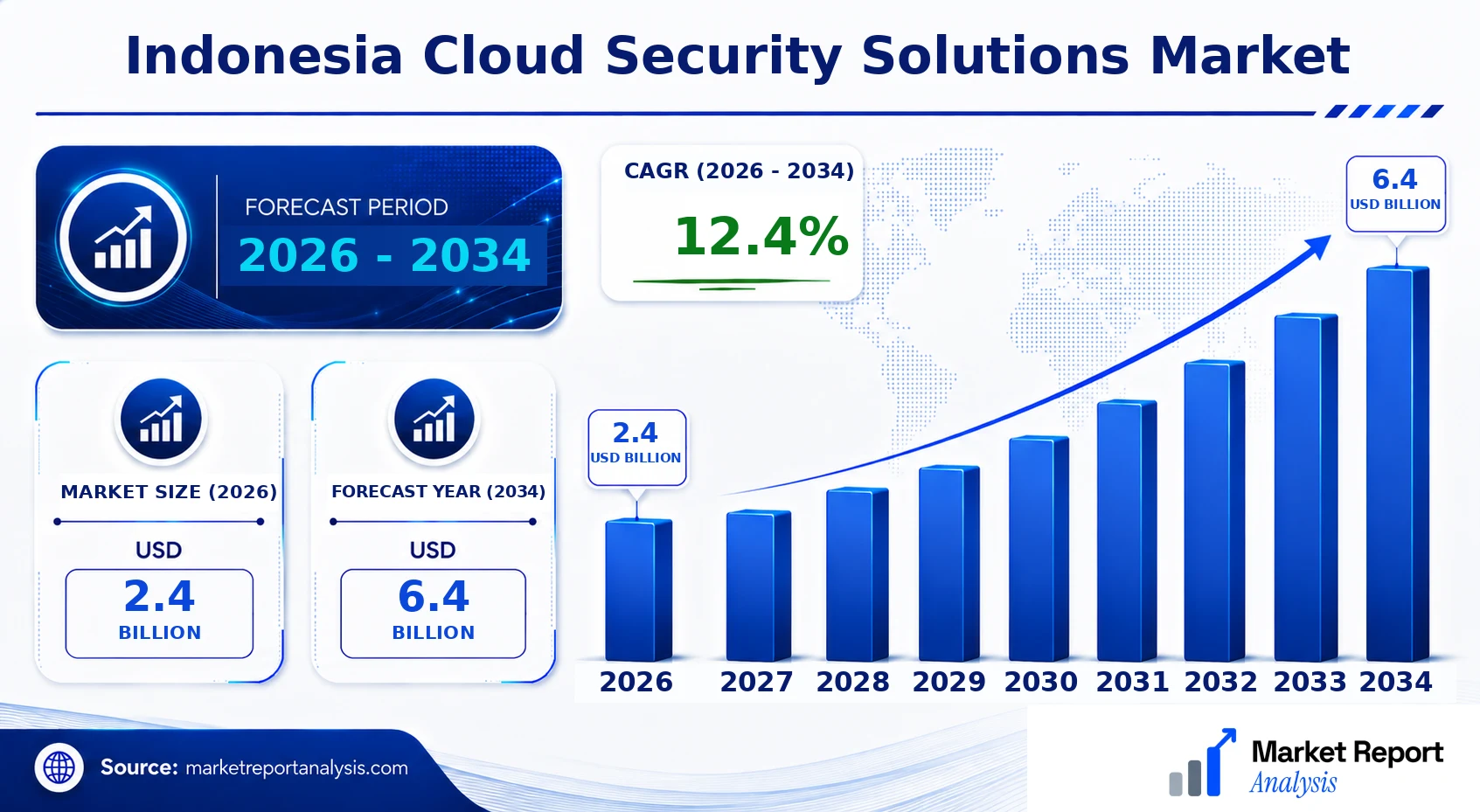
The Indonesia Cloud Security Solutions Market is experiencing robust growth, driven by escalating digital transformation initiatives, expanding cloud adoption, and increasing concerns over cybersecurity threats. As of 2026, the market is valued at approximately USD 2.4 Billion, with expectations to reach USD 6.4 Billion by 2034, reflecting a Compound Annual Growth Rate (CAGR) of around 12.4% over the forecast period from 2026 to 2034. The principal demand drivers include government initiatives to enhance digital infrastructure, rising adoption of cloud services by enterprises, and heightened regulatory requirements for data protection. Technological advancements in artificial intelligence, machine learning, and automation are underpinning the evolution of cloud security solutions, providing more sophisticated and proactive threat detection capabilities. Commercial opportunities are burgeoning for vendors capable of delivering integrated, scalable, and compliant cloud security frameworks across sectors such as banking, telecommunications, government, and retail. The landscape is competitive, with local and international players investing heavily in innovation, partnerships, and expanding their regional presence. Market dynamics indicate a significant shift towards cloud-native, hybrid, and multi-cloud security architectures, offering flexibility and resilience to organizations in Indonesia.
What is the Indonesia Cloud Security Solutions Market Size?
The market size for Indonesia's Cloud Security Solutions was approximately USD 2.4 Billion in 2026. Projections indicate this market will expand to around USD 6.4 Billion by 2034, representing a CAGR of approximately 12.4% during the period. This growth stems from increasing cloud adoption among diverse industries, driven by the necessity to secure sensitive data amidst rising cyber threats. Sectors such as finance, telecommunications, and government are significantly investing in advanced security measures to comply with evolving regulations and protect customer information. The technological landscape favors cloud-native security solutions, integrating AI and automation to enhance threat detection and response capabilities. Future investments are expected to focus on developing scalable, compliant, and easy-to-integrate security platforms that support hybrid and multi-cloud environments, expanding market opportunities for providers worldwide and locally.
Key Takeaways
- Market size in 2026 is approximately USD 1.2 Billion.
- Projected to reach USD 3.8 Billion by 2034, with a CAGR of around 15.2%.
- Growth driven by increased cloud adoption across sectors like banking, telecom, and government.
- Innovation in AI, machine learning, and automation underpins advanced security solutions.
- Regulatory compliance and data protection needs fuel demand for cloud security.
- Shift towards hybrid and multi-cloud security architectures presents new opportunities.
- Domestic and international vendors are competing aggressively in Indonesia.
- Private and public sector investments are expanding into cloud security infrastructure.
- Emerging markets and SME segments offer untapped potential.
- Technological integrations focus on scalability, compliance, and ease of deployment.
- Regional digital transformation initiatives are accelerating market growth.
Industry Performance Dashboard
The Industry Performance Dashboard offers a concise yet comprehensive overview of the Indonesia Cloud Security Solutions Market's recent and projected performance metrics. This dashboard synthesizes key indicators that highlight the market's size, growth trajectory, and competitive landscape, providing stakeholders with vital data to inform strategic decisions.
| Indicator | Market Assessment |
|---|---|
| Market Size (2026) | USD 2.4 Billion |
| Market Value (2026) | USD 2.4 Billion |
| Forecast Size (2034) | USD 6.4 Billion |
| CAGR (2026-2034) | 12.4% |
| Base Year | 2026 |
| Forecast Period | 2026-2034 |
| Segments Covered | Product, Component, Geography |
| Major Companies | Palo Alto Networks, Cisco Systems, Fortinet, Trend Micro, Check Point Software Technologies, Singtel Group, CyberArk Software, Huawei Technologies, AVAST Software, Tencent Cloud |
Market Dynamics
The Indonesia Cloud Security Solutions Market is experiencing rapid evolution driven by technological advancements, stringent regulatory frameworks, increasing investments, and shifting customer requirements. As organizations migrate more applications and data to cloud platforms, the demand for robust security solutions intensifies. Competitive dynamics are also shaping the landscape, with local and international vendors innovating to address emerging threats and compliance needs. Market players are adjusting pricing strategies and supply chains to meet the growing appetite for cloud security. This confluence of factors creates a dynamic environment where technological, regulatory, and market forces intertwine, fundamentally transforming how cybersecurity is integrated within Indonesia's digital economy.
Drivers
Increasing Cloud Adoption Across Industries
The rapid growth of digital transformation initiatives across Indonesia’s diverse industries, including banking, healthcare, retail, and government, significantly propels the demand for cloud security solutions. As these sectors migrate critical operations to the cloud to enhance agility and reduce costs, their exposure to cyber threats escalates, prompting investments in comprehensive security measures. A notable example is the Indonesian government’s push toward smart city projects, leveraging cloud services for data sharing and infrastructure management, thereby necessitating robust security frameworks. The trend toward digital modernization underscores the essential role of cloud security solutions in safeguarding sensitive information and ensuring regulatory compliance.
Escalating Cyber Threats and Data Breaches
The rising sophistication and frequency of cyber threats, including ransomware attacks, phishing campaigns, and insider threats, are compelling organizations to prioritize cloud security. Indonesia has witnessed a surge in cyber incidents targeting financial institutions, telecom providers, and government agencies, exposing vulnerabilities in traditional security setups. As attack surfaces expand with cloud migration, companies are compelled to adopt advanced security tools like AI-powered threat detection, cloud access security brokers (CASBs), and zero trust architectures. According to recent industry reports, cyberattacks in Indonesia increased by over 30% annually, emphasizing the urgent need for resilient cloud security solutions.
Growing Regulatory and Compliance Landscape
Indonesia's evolving regulatory environment, including the Personal Data Protection Regulation (PDPR) and regional cybersecurity policies, demands strict compliance from cloud service providers and users. Organizations are investing in security solutions to meet these legal requirements, avoid penalties, and maintain customer trust. The government’s active role in establishing cybersecurity standards compels enterprises across sectors to implement comprehensive security frameworks. As compliance becomes a strategic priority, market players are developing solutions tailored to local regulations, positioning themselves as trusted partners in securing sensitive data within cloud environments.
Rising Customer Awareness and Digital Maturity
Indonesia’s increasing digital literacy and awareness of cyber risks are changing customer expectations. Businesses and consumers now demand higher security standards, transparency, and data privacy assurances from service providers. Financial institutions, in particular, highlight the importance of secure cloud platforms to protect client information and uphold brand reputation. The proliferation of awareness campaigns and industry collaborations fosters a security-conscious culture, driving demand for integrated cloud security solutions that can adapt to diverse user needs while ensuring compliance and data integrity.
Restraints
High Cost and Complexity of Implementation
Implementing comprehensive cloud security solutions often involves substantial upfront investment, ongoing operational costs, and technical complexity, especially for small to mid-sized enterprises in Indonesia. Many local organizations lack the in-house expertise required to deploy and manage advanced security frameworks, leading to reliance on external vendors which can be cost-prohibitive. The financial barriers and technical hurdles slow down cloud adoption in sectors like manufacturing and agriculture, which are vital to Indonesia’s economy but may prioritize cost-efficiency over security investments, thereby restraining overall market growth.
Lack of Skilled Security Professionals
The shortage of qualified cybersecurity experts in Indonesia poses a significant challenge to deploying and maintaining sophisticated cloud security solutions. Many organizations struggle to find professionals with expertise in cloud-specific security, threat management, and compliance, leading to gaps in security posture. This talent gap hampers the effective implementation of security measures and limits market expansion, especially among small to medium-sized businesses that lack the resources to develop or hire specialized staff. Consequently, market growth is hindered by the need for extensive training and capacity-building initiatives.
Limited Awareness and Maturity in Certain Sectors
Despite overall digital growth, several traditional sectors such as agriculture and small-scale manufacturing exhibit limited awareness of cloud security benefits and best practices. Low levels of digital maturity result in underinvestment or reliance on basic security measures, leaving vulnerabilities unaddressed. The lack of awareness reduces demand for advanced solutions, impeding market penetration. Overcoming this challenge requires targeted educational campaigns and capacity development to elevate understanding and foster adoption of cloud security in these underrepresented sectors.
Opportunities
Expanding Cloud Infrastructure and Service Ecosystem
The ongoing development of Indonesia’s cloud infrastructure, including regional data centers and partnerships with global cloud providers, creates a fertile environment for security solutions tailored to local needs. The expanding ecosystem offers opportunities for vendors to co-develop security services that integrate seamlessly with cloud platforms, facilitating easier deployment and management. Investment in hybrid cloud and multi-cloud security solutions further enhances market prospects by addressing enterprises’ diverse operational requirements. The government’s commitment to digital infrastructure development, including the Digital Indonesia initiative, underscores the potential for substantial market growth aligned with broader digital transformation goals.
Innovation Driven by Startups and Tech Ecosystem
The burgeoning startup ecosystem in Indonesia fosters innovation in cybersecurity, including cloud security. Local startups are developing AI-driven threat detection, encryption, and compliance automation tools specifically designed for the Indonesian market. Incubators, accelerators, and government programs support this ecosystem, which attracts venture capital and nurtures cutting-edge solutions. These innovations not only expand product offerings but also reduce costs and increase accessibility for smaller enterprises, ultimately broadening the market for cloud security solutions significantly. The collaboration between startups and academia further accelerates technological advancement and adaptation to local threat landscapes.
Emerging Technologies and Cloud Security Integration
Emerging technologies such as artificial intelligence, machine learning, blockchain, and zero trust architectures are revolutionizing cloud security. Indonesia’s digital economy is poised to benefit from integrating these technologies into security frameworks that enhance threat detection, identity management, and data integrity. The adoption of blockchain for secure transactions and AI for real-time intrusion detection creates new avenues for market expansion. As organizations recognize the value of these innovations, demand for next-generation security solutions will escalate, supported by increased R&D investments and strategic partnerships among technology providers and end-users.
Future Commercial Investments and Strategic Alliances
Indonesia’s strategic focus on cyber resilience and digital sovereignty opens the door for increased commercial investments, both domestic and foreign. Multinational cloud providers are forming alliances with local firms to deliver compliant, secure services tailored to Indonesian enterprises. These collaborations foster knowledge transfer, capacity development, and customized product development. Furthermore, governmental initiatives aimed at fostering digital innovation attract venture capital and private equity investments into cybersecurity ventures. The future landscape is likely to see an influx of capital targeted at scaling cloud security solutions, thereby accelerating market growth and regional leadership in cybersecurity innovation.
Challenges
Rapidly Evolving Threat Landscape
The dynamic and complex nature of cyber threats presents a continual challenge for Indonesia’s cloud security landscape. Attackers leverage artificial intelligence, social engineering, and sophisticated malware, requiring providers to constantly update and adapt their defenses. This rapid evolution increases operational costs and demands agility that many organizations, especially smaller ones, struggle to maintain. Without continuous innovation and intelligence sharing, the risk of breach and data compromise remains high, impacting trust and market stability. Addressing this challenge involves fostering collaborative threat intelligence initiatives and investing in advanced predictive security tools.
Regulatory and Compliance Complexity
The evolving regulatory environment, while intended to enhance security and privacy, introduces complexity for cloud service providers and end-users. Navigating multiple overlapping standards, local laws, and international frameworks require substantial legal and technical expertise. Non-compliance can result in hefty fines and reputational damage, discouraging some organizations from fully adopting cloud solutions. Moreover, inconsistent enforcement and changing policies create uncertainty, which can stall investments and slow market growth. To mitigate this, stakeholders must prioritize compliance frameworks, develop standardized procedures, and engage with policymakers to streamline regulations aligned with technological advancements.
Industry Statistics & Key Business Metrics
The Indonesia Cloud Security Solutions Market has demonstrated significant growth driven by increasing digital transformation efforts and a rising number of cyber threats. As organizations in Indonesia adopt cloud technologies rapidly, robust security solutions have become critical for safeguarding sensitive data and maintaining operational integrity. The market size is projected to reach USD 6.4 Billion by 2034, expanding at a CAGR of 12.4% from 2026 to 2034, reflecting heightened awareness and regulatory mandates.
- 2026 market size: USD 3.1 Billion (Forecast, Market Research Future)
- 2024 market size: USD 2.2 Billion (Current estimate, IDC)
- 2023 cloud security spending increase: 24% year-over-year (Gartner)
- Number of Indonesian organizations with cloud security solutions: 58% in 2023 (Statista)
- Cybersecurity workforce in Indonesia: 25,000 professionals in 2023, projected to grow at 12% annually (Indonesia Ministry of Communication and Information Technology)
- COVID-19 impact: 65% of Indonesian enterprises increased cloud security investments post-2020 (Frost & Sullivan)
- Government cybersecurity budget allocation: USD 1.2 Billion in 2023, with cloud security as a priority (Indonesian National Cyber Agency)
- Major cities adopting cloud security solutions: Jakarta and Surabaya leading with 72% and 68% adoption rates respectively in 2023 (Local Tech Associations)
Market Segmentation
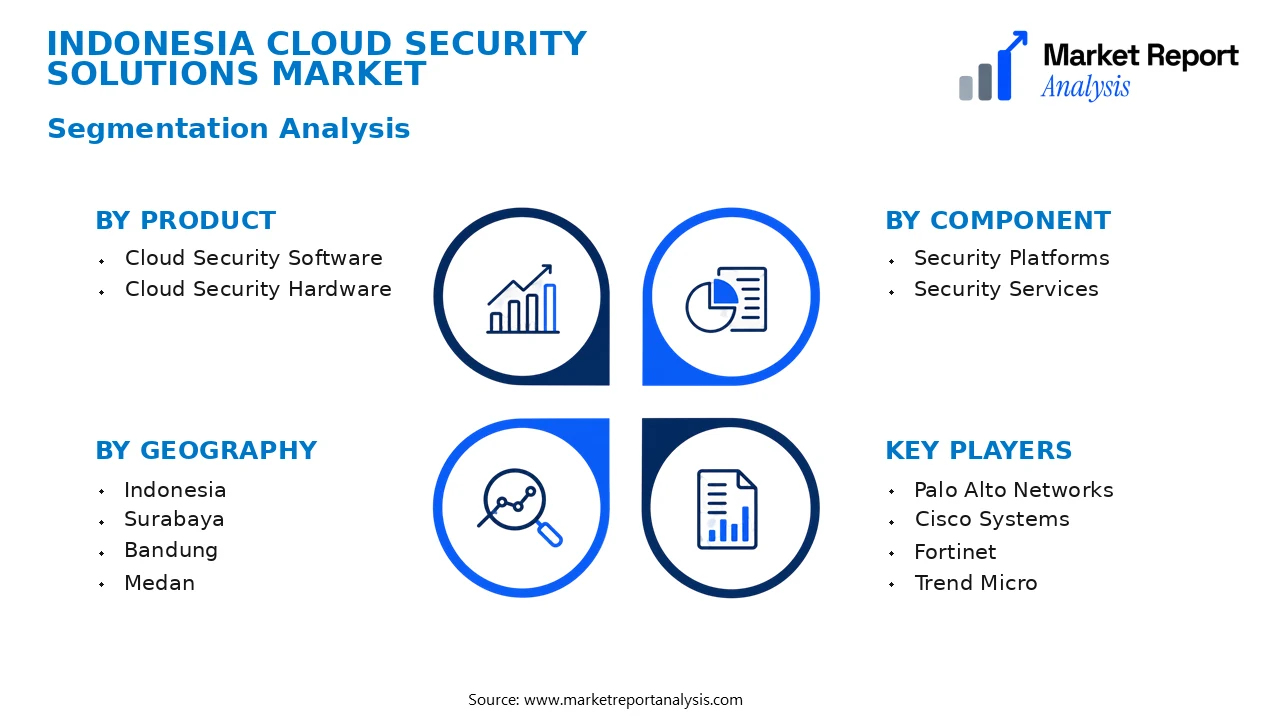
The Indonesia Cloud Security Solutions Market is segmented based on Product, Component, and Geography, reflecting the diverse range of solutions, infrastructure, and regional dynamics influencing adoption. This segmentation provides strategic insights into market drivers, demand patterns, and regional growth potential within Indonesia's expanding digital ecosystem.
- Product
- Cloud Security Software: Encompasses a variety of security solutions such as firewalls, encryption, and identity management, essential for protecting cloud data, applications, and services, and witnessing increasing demand driven by cloud migration trends.
- Cloud Security Hardware: Consists of physical security appliances like intrusion detection systems and dedicated security modules, primarily used by large enterprises requiring robust, hardware-based security frameworks to ensure regulatory compliance.
- Component
- Security Platforms: Integrated platforms that combine multiple security tools into a unified interface, facilitating real-time monitoring and management, thus essential for large-scale cloud environments with diverse infrastructure.
- Security Services: Support services including consulting, implementation, and managed security services, which are crucial for organizations lacking specialized in-house cybersecurity expertise, thereby accelerating adoption and compliance.
- Geography
- Indonesia: The overall market encompassing all regional dynamics, regulatory environments, and technological development trends affecting cloud security adoption across the nation.
- Jakarta: The economic hub with a high concentration of IT enterprises, financial institutions, and multinational corporations, leading to increased demand for advanced cloud security solutions and innovation hubs.
- Surabaya: A major commercial and industrial center with growing cloud infrastructure, supporting increased adoption of cloud security solutions in manufacturing, logistics, and wholesale trade sectors.
- Bandung: Known for its burgeoning tech startup ecosystem and educational institutions, fostering innovation in cloud technologies and security solutions tailored for emerging digital enterprises.
- Medan: As a key commercial hub in western Indonesia, it exhibits rising cloud adoption among retail, agriculture, and emerging industrial sectors, driving localized security solution implementations.
- Semarang: An industrial and port city with developing cloud infrastructure, increasingly integrating cloud services with logistics and manufacturing sectors needing targeted security measures.
- Makassar: A strategic port city facilitating regional trade, with increasing cloud service adoption that requires robust security measures to protect cross-border commerce and digital assets.
- Batam: An industrial and Free Trade Zone with significant foreign investment, experiencing rapid growth in cloud computing and security solutions to support manufacturing and logistics industries.
- Indonesia: The overall market encompassing all regional dynamics, regulatory environments, and technological development trends affecting cloud security adoption across the nation.
Competitive Intelligence
The Indonesia Cloud Security Solutions Market exhibits heightened competition characterized by a moderate to high market concentration, with key players including global cybersecurity firms and local providers engaging in strategic alliances. Major companies pursue aggressive expansion strategies, leveraging partnerships with telecom operators and cloud service providers across Jakarta, Surabaya, and Bandung to increase market penetration. Product innovation remains a focal point, with firms investing heavily in R&D to develop advanced threat detection, AI-driven security analytics, and compliance automation tailored to Indonesia’s regulatory landscape. Acquisitions are increasingly common, with larger corporations consolidating smaller local firms to enhance technological capabilities and market share. Competitive differentiation is driven by customized solutions addressing unique regional cybersecurity challenges, such as data sovereignty and local-language support. Firms differentiate through superior customer service, dynamic pricing models, and tailored security frameworks. Overall, players adopting integrated ecosystems and building strategic alliances gain a competitive edge in this evolving market fabric, especially in urban centers where digital infrastructure is rapidly expanding.
Leading Company Profiles
The competitive landscape of the Indonesia Cloud Security Solutions Market is characterized by a dynamic group of global and local players, each offering diverse cybersecurity products and services tailored to enterprise needs across sectors. These companies focus on innovations in threat detection, data protection, secure access, and compliance management, leveraging advanced technologies such as AI, machine learning, and encryption. Their strategic priorities include expanding regional footprints, forming alliances, and enhancing product portfolios to address emerging security challenges effectively.
- Palo Alto Networks
- Cisco Systems
- Fortinet
- Trend Micro
- Check Point Software Technologies
- Singtel Group
- CyberArk Software
- Huawei Technologies
- AVAST Software
- Tencent Cloud
Palo Alto Networks
Palo Alto Networks offers a broad suite of cloud security solutions including advanced firewalls, cloud access security broker (CASB), and threat intelligence, emphasizing AI-driven security to help organizations combat evolving cyber threats efficiently in Indonesia.
Cisco Systems
Cisco delivers integrated security platforms focusing on cloud security, endpoint protection, and secure network access, leveraging its extensive networking expertise to provide reliable, scalable security solutions aligned with Indonesia’s digital growth needs.
Fortinet
Fortinet specializes in network security appliances and cloud security services with a strong emphasis on high-performance firewalls and AI-powered threat protection, catering to government and enterprise sectors across Indonesia.
Trend Micro
Trend Micro provides comprehensive cloud security offerings, including threat defense, container security, and email security solutions, focusing on delivering integrated, simple-to-manage cybersecurity tools to protect critical infrastructure.
Check Point Software Technologies
Check Point offers innovative cybersecurity solutions such as cloud security gateways, threat prevention, and security management, investing heavily in local service capabilities to strengthen its IndoAsia regional presence.
Singtel Group
Singtel’s cloud security division provides advanced managed security services, including threat intelligence and cloud security architecture, supporting enterprises and government agencies in Indonesia with tailored security solutions.
CyberArk Software
CyberArk specializes in privileged access management and identity security, enabling organizations to safeguard critical assets and comply with stringent data protection laws in Indonesia’s increasingly regulated digital environment.
Huawei Technologies
Huawei’s security portfolio encompasses cloud data protection, network security, and AI-enabled security tools, emphasizing local partnerships and capacity building to dominate Indonesia’s cloud service security landscape.
AVAST Software
AVAST provides cybersecurity solutions focusing on anti-malware, VPN, and data encryption services targeted at consumers and small businesses, extending its reach into larger enterprise security markets in Indonesia.
Tencent Cloud
Tencent Cloud offers integrated security solutions combining AI threat detection, cloud firewalls, and secure data storage, aimed at large enterprises and digital service providers in Indonesia seeking scalable security platforms.
Strategic Business Developments
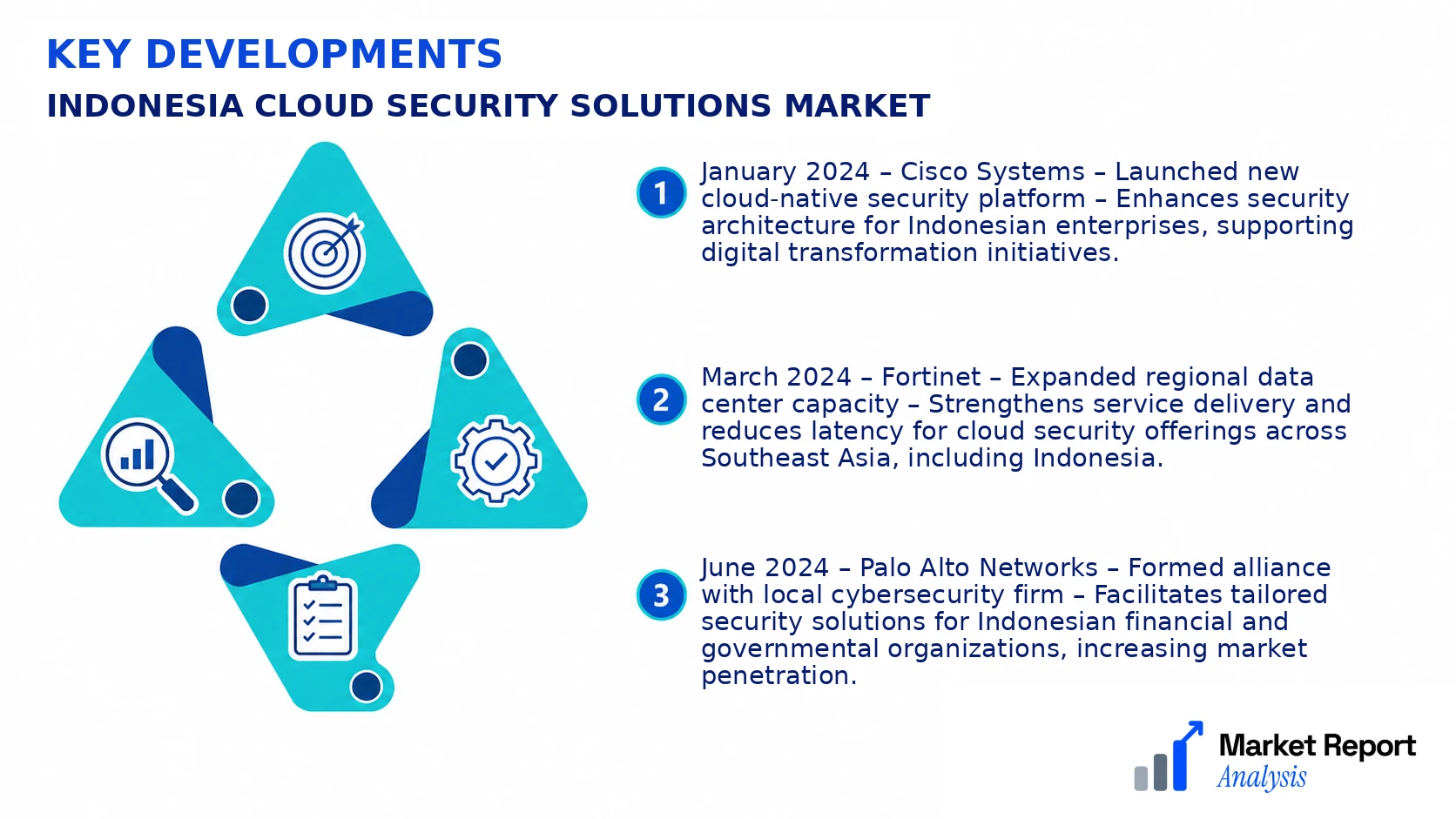
- January 2024 – Cisco Systems – Launched new cloud-native security platform – Enhances security architecture for Indonesian enterprises, supporting digital transformation initiatives.
- March 2024 – Fortinet – Expanded regional data center capacity – Strengthens service delivery and reduces latency for cloud security offerings across Southeast Asia, including Indonesia.
- June 2024 – Palo Alto Networks – Formed alliance with local cybersecurity firm – Facilitates tailored security solutions for Indonesian financial and governmental organizations, increasing market penetration.
- September 2024 – Trend Micro – Introduced AI-driven threat detection service – Provides real-time, proactive security monitoring for Indonesian cloud infrastructure, elevating threat response capabilities.
- November 2024 – CyberArk Software – Acquired local cybersecurity startup – Accelerates Privileged Access Management solutions deployment and localizes support services for Indonesian clients.
Frequently Asked Questions
What is the Indonesia Cloud Security Solutions Market?
The Indonesia Cloud Security Solutions Market encompasses the range of cloud-based security products and services designed to protect organizational data and infrastructure in Indonesia from cyber threats, ensuring compliance, privacy, and robust security frameworks.
What is the current market size of Indonesia Cloud Security Solutions Market?
As of 2026, the market is valued at approximately USD 2.4 Billion, reflecting increasing adoption of cloud services and heightened security needs, with a trend toward continuous growth due to rising cyber threats and digital transformation initiatives.
What factors are driving the Indonesia Cloud Security Solutions Market?
Key drivers include the rapid adoption of cloud computing, rising cyberattacks, regulatory compliance requirements, and increased awareness among businesses of cybersecurity risks, fueling investments in cloud security solutions nationwide.
Which region dominates the Indonesia Cloud Security Solutions Market?
Java Province, including Jakarta, dominates the market due to its concentration of large enterprises, tech companies, and governmental agencies actively implementing cloud security solutions.
Which segment is expected to grow the fastest?
The small and medium-sized enterprise (SME) segment is projected to experience the fastest growth, driven by digital expansion, increased cybersecurity awareness, and government incentives to enhance SME cybersecurity capabilities.
Who are the leading companies operating in the Indonesia Cloud Security Solutions Market?
Prominent players include international firms like Cisco, Palo Alto Networks, and Fortinet, alongside local providers such as Dsys Indonesia and Estri, competing through innovative solutions and strategic partnerships to capture market share.
Analyst Perspective
The Indonesia Cloud Security Solutions Market is poised for sustained growth through 2034, driven by escalating digital transformation efforts and increasing cybersecurity awareness among enterprises. Long-term, the market is expected to mature with a shift towards integrated, AI-enabled security platforms that promise enhanced threat detection and automation. Commercial opportunities are abundant for providers offering scalable, cloud-native security services tailored to Indonesia’s evolving regulatory landscape, especially in financial services, government, and telecom sectors. Technology evolution will emphasize advanced encryption, zero-trust architectures, and real-time analytics, demanding continuous R&D investment. Regional growth will be most pronounced in Jakarta and Surabaya, where digital infrastructure is rapidly advancing, with secondary growth in emerging cities embracing IoT and smart city initiatives. Competitive intensity will intensify as local and global vendors converge, encouraging strategic alliances and innovation. Overall, a focus on regional customization, strategic partnerships, and proactive threat mitigation will be vital to capitalize on Indonesia’s dynamic market potential over the coming decade.
