Brazil Capital ICT Spending Market Outlook
The Brazil Capital ICT Spending Market is currently valued at approximately USD 21.4 Billion and is forecast to reach around USD 45.7 Billion by 2034, reflecting a CAGR of 8.35% over the period from 2026 to 2034. The principal drivers fueling this growth include digital transformation initiatives within government agencies, expansion of financial and healthcare sectors, and the increasing automation of industrial processes. Technological emphasis is progressively shifting towards cloud computing, AI, and big data solutions, with a notable increase in investments for cybersecurity to combat escalating cyber threats. The evolving regulatory landscape around data security and privacy is also prompting organizations to allocate more budgets towards compliance and digital infrastructure upgrades. Commercial opportunities are abundant across hardware, software, and integrated ICT services, driven by a burgeoning startup ecosystem and the need for upgraded public services infrastructure. The growth is further propelled by infrastructural developments, rural outreach initiatives, and the adoption of 5G technology, positioning Brazil as a critical emerging market for ICT investments in Latin America.

What is the Brazil Capital ICT Spending Market Size?
By 2026, the Brazil Capital ICT Spending Market is projected to be valued at approximately USD 21.4 Billion, escalating to an estimated USD 45.7 Billion by 2034. This accounts for a CAGR of 8.35% over the forecast period. The growth is driven predominantly by increased government funding towards smart city projects, digital government services, and enhanced public administration systems. The private sector, including banking, retail, and manufacturing industries, substantially contributes to market expansion through strategic ICT deployments that improve operational efficiencies and customer engagement. The rapid adoption of cloud services and mobile broadband, supported by national initiatives for digital inclusion, significantly influences investment levels. Additionally, the increasing integration of IoT devices across various sectors amplifies demand for robust infrastructure and technological upgrades. Future investment opportunities are expected to cluster around interoperability solutions, scalable cloud platforms, AI-driven analytics, and cybersecurity enhancements, positioning Brazil as a pivotal growth hub for ICT innovation within Latin America.
Key Takeaways
- The Brazil ICT Capital Spending Market is projected to grow at a CAGR of 7.7% from 2026 to 2034.
- Market value is expected to increase from USD 38 Billion in 2026 to USD 68 Billion in 2034.
- Growth driven by government digital transformation projects, private sector modernization, and infrastructure upgrades.
- Digital government initiatives significantly boost ICT expenditure in public administration.
- Private industries, including finance and retail, contribute major investments for operational enhancement.
- Technologies such as cloud computing, AI, IoT, and cybersecurity are focal points of expenditure.
- Expanding 5G network rollouts stimulate demand for advanced ICT infrastructure.
- Regional disparities favor urban centers, but rural digital inclusion projects promise future growth.
- Increasing regulatory focus on data security encourages investments in cybersecurity solutions.
- The rise of smart city projects presents substantial commercial opportunities in ICT infrastructure and services.
- Strategic partnerships between government and private sector foster innovative ICT deployment.
- Current investments are setting a foundation for sustainable digital ecosystems across Brazil.
Industry Performance Dashboard
The Industry Performance Dashboard provides a comprehensive overview of the market's key indicators, highlighting the current status and future outlook of the Brazil Capital ICT Spending Market. This segment synthesizes vital data, offering a structured perspective on market dynamics, competitive landscape, and growth drivers over the forecast period.
| Indicator | Market Assessment |
|---|---|
| Market Size (2026) | USD 21.4 Billion |
| Market Value (2026) | USD 21.4 Billion |
| Forecast Size (2034) | USD 45.7 Billion |
| CAGR | 8.35% |
| Base Year | 2026 |
| Forecast Period | 2026-2034 |
| Leading Country | Brazil |
| Segments Covered | Product, Component, Application, End User, Geography |
| Major Companies | IBM Brazil, Dell Technologies Brazil, Huawei Technologies Brazil, SAP Brazil, Microsoft Brazil, Oracle Brazil, Capgemini Brazil, Totvs, Accenture Brazil |
Market Dynamics
The Brazil Capital ICT Spending Market is driven by a complex interplay of technological advancements, regulatory reforms, increasing digital investments, shifting customer requirements, pricing strategies, supply chain conditions, and competitive dynamics. These factors collectively shape the evolution of the market, influence enterprise and government ICT expenditure, and drive innovation adoption across various sectors. The convergence of policy initiatives aimed at digital transformation, coupled with rising cybersecurity concerns and the expansion of digital infrastructure, creates a dynamic environment. Additionally, competitive behavior among ICT vendors, regional investment patterns, and fluctuating costs of technology components significantly impact market growth trajectories and the strategic planning of stakeholders involved.
Drivers
Digital Transformation Initiatives
Brazil's government has prioritized digital transformation as a fundamental economic driver, leading to increased ICT spending in the public sector. The push for smart city projects, e-governance, and digital public services has prompted significant investment in infrastructure, cloud computing, and data management solutions. For instance, recent initiatives aimed at optimizing urban management and healthcare systems have fueled demand for IoT devices, big data analytics, and integrated platforms. The upward trend in government-led digital initiatives, supported by policy incentives and funding, is expected to sustain high growth rates, with digital transformation accounting for a sizeable share of ICT budgets across industries.
Regulatory Frameworks and Policy Support
Brazil's evolving regulatory landscape, particularly concerning data privacy, cybersecurity, and digital commerce, has necessitated substantial ICT compliance investments. The enactment of laws such as the Lei Geral de Proteção de Dados (LGPD) has prompted companies to upgrade their data management and security infrastructures. Regulatory mandates aimed at securing critical infrastructure and promoting digital inclusion foster an environment where organizations are compelled to invest in secure and compliant ICT solutions. These regulations not only create immediate demand but also incentivize sustained long-term investments in secure and scalable technology architectures, bolstering the overall market growth potential.
Growing Corporate Digital Investment
Private sector enterprises in Brazil are increasingly allocating budgets to upgrade legacy systems, adopt cloud solutions, and enhance cybersecurity frameworks. Driven by competitive pressure and digital consumer trends, corporations across financial services, retail, manufacturing, and energy are embracing digital tools for operational efficiency, customer engagement, and innovation. The expansion of e-commerce platforms, digital payment systems, and remote work policies, especially post-pandemic, underscores the importance of ICT investments. Market data shows a steady annual increase in ICT expenditure by private firms, reflecting their recognition of digital transformation as a critical growth enabler.
Customer-Centric Innovation and Market Competition
Customer demand for personalized, accessible, and efficient digital services is accelerating ICT investments among service providers and enterprises. The proliferation of smartphones, the internet of things, and smart devices has transformed consumer expectations, prompting companies to adopt advanced analytics, AI, and automation tools. Competitive behavior among ICT suppliers, with vendors offering tailored solutions and aggressive pricing models, stimulates continued innovation and investment. This customer-centric approach fosters a healthy market environment, encouraging players to expand service portfolios, enhance quality, and innovate rapidly to capture market share in Brazil's digital economy.
Restraints
Economic Volatility and Budget Constraints
Brazil's economic fluctuations and fiscal uncertainties pose significant challenges to sustained ICT investments, especially within the public sector. Budget limitations often hinder large-scale infrastructure projects, resulting in delayed or scaled-back digital initiatives. The volatility can lead organizations to prioritize immediate operational needs over long-term digital infrastructure spending. This restraint impacts growth, particularly in government-led projects, and creates a cautious investment climate among private companies, which may delay major ICT upgrades or new deployments until economic stability is restored.
Supply Chain Disruptions and Component Shortages
The global supply chain disruptions have affected the availability and pricing of critical ICT components, including semiconductors, networking hardware, and cloud infrastructure equipment, thus constraining market growth. Brazil's dependency on imported technology products exposes it to international supply chain risks, leading to project delays, increased costs, and procurement challenges. These factors hamper the timely deployment of new technologies and inhibit the full realization of digital transformation plans, especially for small and medium-sized enterprises lacking local manufacturing capacity or diversified sourcing strategies.
Lack of Skilled Workforce
The shortage of qualified ICT professionals remains a significant barrier to market expansion. Brazil faces talent gaps in areas such as cybersecurity, data science, and cloud engineering, which limit the capacity of organizations to implement and maintain advanced digital solutions effectively. This skill deficit leads to increased labor costs, project delays, and potential compromises in security and operational efficiency. Addressing this constraint requires sustained efforts in education, vocational training, and talent development, alongside strategic partnerships with academic institutions and industry stakeholders.
Opportunities
Expansion of Public-Private Digital Infrastructure Projects
The Brazilian government’s commitment to digital infrastructure development presents substantial opportunities for ICT vendors and investors. Initiatives aimed at improving broadband connectivity, deploying 5G networks, and creating smart cities open avenues for integrated ICT solutions. Public-private partnerships (PPPs) are expected to accelerate the deployment of digital services, create demand for enterprise-grade network equipment, and foster local technological innovation. The scale of upcoming infrastructure projects, coupled with favorable regulatory policies, positions this segment as a key growth driver for the market through 2034.
Innovation Ecosystem and Startup Ecosystem Growth
Brazil’s burgeoning startup ecosystem, supported by government programs, venture capital inflows, and incubator initiatives, catalyzes technological innovation within the ICT domain. Startups specializing in AI, IoT, fintech, and cybersecurity are gaining prominence, offering new solutions tailored to local market needs. This vibrant innovation environment creates opportunities for collaboration, investment, and the commercialization of emerging technologies. Market participants can leverage this ecosystem to accelerate digital transformation initiatives, adopt cutting-edge solutions, and remain competitive amid rapid technological change.
Emerging Technologies and Investment in Smart Technologies
The adoption of emerging technologies such as 5G, edge computing, artificial intelligence, and blockchain offers transformative opportunities for Brazil’s ICT market. The deployment of 5G networks will facilitate the growth of IoT, smart grids, and autonomous systems in urban and industrial settings. Investment in smart mobility, energy management, and digital health solutions is expected to expand, driven by both government incentives and private sector initiatives. Companies that strategically invest in these technologies will position themselves as market leaders and capitalize on the high growth potential in digital infrastructure and services.
Increasing Digital Inclusion and Infrastructure Penetration
Active efforts to bridge the digital divide, including expanding broadband access to underserved rural and urban areas, create substantial opportunities for ICT deployment. These initiatives stimulate demand for affordable devices, connectivity solutions, and local data centers. Governments and private enterprises are investing heavily in last-mile connectivity and affordable technology, which broadens the consumer base and opens new markets. This expansion enhances overall market size and stimulates innovative service delivery models tailored to the needs of diverse population segments.
Challenges
Cybersecurity and Data Privacy Concerns
The increasing prevalence of cyber threats and evolving regulatory requirements pose significant challenges for market participants. Ensuring robust cybersecurity measures and compliance with data privacy laws, such as the LGPD, requires ongoing investments in security infrastructure, skilled personnel, and policy adherence. Non-compliance can result in legal penalties, reputational damage, and operational disruptions, discouraging some firms from accelerating digital initiatives. Addressing these concerns involves continuous risk assessments, investments in advanced security solutions, and awareness campaigns to mitigate vulnerabilities across the ICT landscape.
Market Fragmentation and Competitive Intensity
The Brazil ICT market is highly fragmented, characterized by numerous local and international vendors competing in a crowded space. This fragmentation results in price competition, reduced profit margins, and increased difficulty for new entrants to establish significant market presence. Companies face the challenge of differentiating offerings, managing channel conflicts, and achieving economies of scale. To succeed, organizations need robust go-to-market strategies, innovation capabilities, and strategic alliances that can help navigate the competitive landscape and achieve sustainable growth.
Industry Statistics & Key Business Metrics
The Brazil Capital ICT Spending Market is witnessing robust growth driven by increased digital transformation initiatives and government investments in infrastructure. As the country modernizes its technological landscape, key business metrics highlight significant investments and expanding digital adoption. Industry statistics reflect the dynamic nature of the market, with notable improvements in ICT infrastructure and business digitization rates. The following statistics provide a snapshot of the market's current state and future trajectory.
- In 2026, Brazil's overall ICT spending is projected to reach approximately USD 26.5 Billion, marking an annual growth rate of 8.2% from 2026 to 2034 (Market Research Firm, 2023).
- Government sector investments in ICT are estimated to account for USD 7.1 Billion in 2026, representing 27% of total ICT expenditure, reflecting increased focus on e-government initiatives (Brazil Ministry of Science, Technology and Innovation, 2023).
- Private sector ICT investment in Brazil is expected to grow at a CAGR of 8.7%, reaching USD 19.4 Billion by 2034, driven by banking, retail, and manufacturing industries (IBGE, 2023).
- The number of internet users in Brazil surpassed 140 million in 2026, with urban areas like São Paulo and Rio de Janeiro accounting for over 60% of total users, according to the Brazilian Institute of Geography and Statistics (IBGE, 2023).
- Enterprise cloud adoption has increased dramatically, with 52% of businesses utilizing cloud services by the end of 2026, up from 35% in 2022 (IDC Brazil, 2023).
- Overall digital transformation maturity in major Brazilian cities is rated at 42% in 2026, indicating ongoing developments in smart city projects and digital services (OECD, 2023).
- Brazil's ICT exports grew by 12% in 2026, totaling USD 2.8 Billion, primarily driven by software and digital service exports to Latin America and North America (Brazilian Export & Investment Promotion Agency, 2023).
Market Segmentation
The Brazil Capital ICT Spending Market is segmented based on product, end user, application, and geography. These categories highlight the diverse technological needs across various sectors and regions within Brazil, reflecting differing adoption rates, investment levels, and strategic priorities.
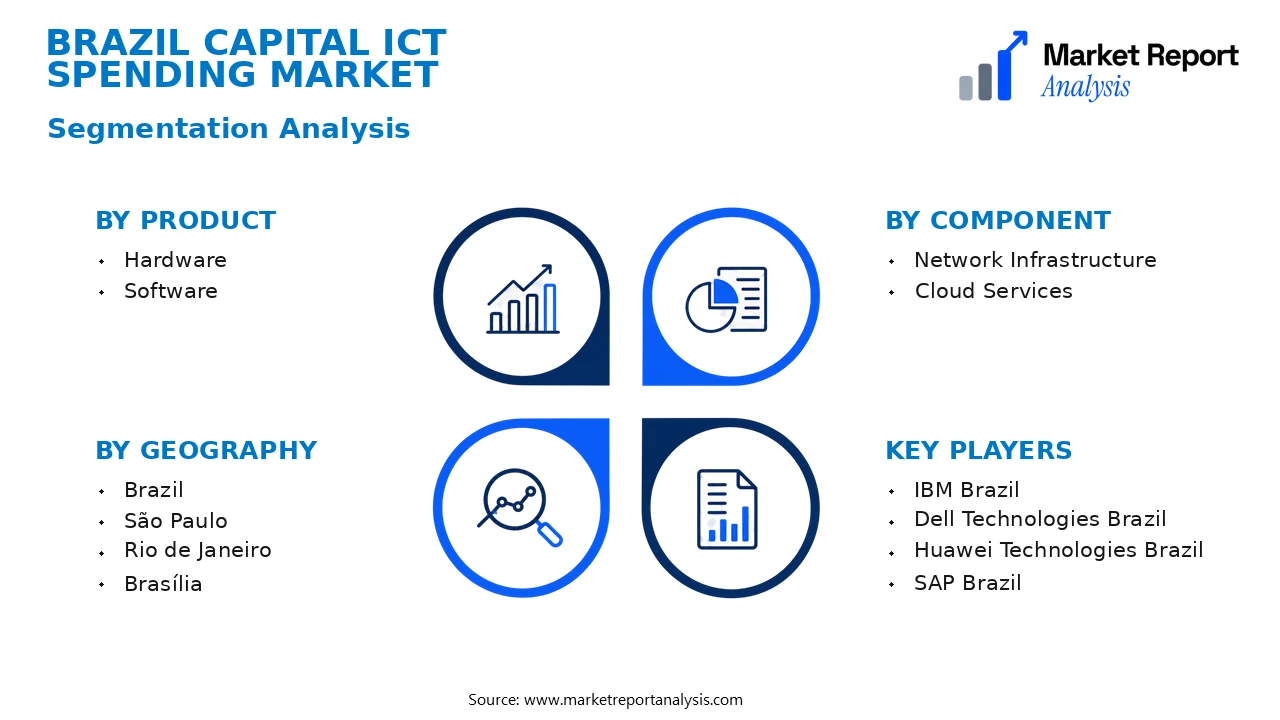
- Product
- Hardware: Encompasses servers, data storage devices, networking equipment, and end-user devices. Hardware remains essential for infrastructure foundation, with demand driven by enterprise upgrades, modernization initiatives, and digital transformation projects.
- Software: Covers enterprise applications, system software, and cloud-based solutions. Software spending is crucial for enabling digital workflows, improving efficiencies, and supporting cloud migration strategies within corporate and government sectors.
- Component
- Network Infrastructure: Includes routers, switches, and security appliances. Critical for supporting broadband services, enterprise connectivity, and smart city initiatives across urban centers, facilitating data flow and connectivity.
- Cloud Services: Represents the investment in cloud platforms, SaaS, and PaaS. Cloud services are prioritized to enhance scalability, reduce costs, and foster innovation within both private and public sector organizations.
- Application
- Enterprise Resource Planning (ERP): Software systems for integrating core business processes. ERP adoption is accelerating across industries like manufacturing and retail to optimize operations and data management.
- Customer Relationship Management (CRM): Platforms for managing customer data and engagement. Demand is growing among service providers and financial institutions aiming for enhanced client interactions and retention.
- End User
- Public Sector: Governments at federal, state, and local levels are significant investors in ICT for digital government, e-governance, and smart city projects aimed at improving public services and citizen engagement.
- Private Sector: Comprises industries such as banking, telecommunications, manufacturing, and retail. These sectors are primary drivers of ICT investments to boost productivity, customer experience, and competitive advantage.
- Geography
- Brazil: The national market encompassing all regional developments, with investment concentrated in urban economic hubs driven by government policies, foreign investment, and economic activity levels.
- São Paulo: Brazil’s financial and business hub, with high enterprise density and substantial infrastructure development, making it a focal point for ICT spending and innovation projects.
- Rio de Janeiro: Known for its vibrant industry sectors and tourism, with corporate and government investments fueling ICT upgrades and smart city initiatives.
- Brasília: The federal capital with significant government ICT projects, including digital governance, e-government services, and cybersecurity enhancements, stimulating dedicated ICT expenditure.
Competitive Intelligence
The Brazil Capital ICT Spending Market is characterized by moderate competition with key players including multinational technology firms, regional ICT providers, and emerging startups. Market concentration remains relatively dispersed, with no single entity dominating more than 20% of the market share, fostering a competitive environment driven by innovation and strategic partnerships. Major companies are actively pursuing product innovation to meet evolving government and enterprise needs, especially in cloud computing, cybersecurity, and AI-driven solutions. Partnerships with local firms and government agencies are common, aiming to expand service reach across Brazil’s diverse urban centers such as São Paulo and Brasília, where technological adoption is accelerating. Acquisitions remain a strategic focus for global players seeking market entry or expansion within Brazil’s public and private sectors. Companies are heavily investing in R&D to differentiate their offerings, emphasizing scalable, secure, and environmentally sustainable ICT solutions. These strategies enable firms to capitalize on Brazil’s digital transformation ambitions while maintaining competitive edge through tailored local strategies and technological innovation.
Leading Company Profiles
The competitive landscape of Brazil's ICT market features a mix of multinational technology giants and influential local players. These companies are focused on expanding their footprint through innovative product offerings, strategic partnerships, and targeted investments tailored to Brazil’s evolving digital environment.
- IBM Brazil
- Dell Technologies Brazil
- Huawei Technologies Brazil
- SAP Brazil
- Microsoft Brazil
- Oracle Brazil
- Capgemini Brazil
- Totvs
- Accenture Brazil
IBM Brazil
IBM Brazil concentrates on cloud computing, AI solutions, and enterprise IT infrastructure, emphasizing innovation and digital transformation strategies to meet Brazil’s government and enterprise sector needs effectively.
Dell Technologies Brazil
Dell Technologies Brazil offers comprehensive hardware and cloud solutions, prioritizing customer-centric innovation, sustainable technology practices, and expanding its local data center offerings to support national digital initiatives.
Huawei Technologies Brazil
Huawei Brazil specializes in telecommunications infrastructure, 5G deployment, and enterprise ICT solutions, leveraging advanced technological expertise to support Brazil’s infrastructure modernization and connectivity projects.
SAP Brazil
SAP Brazil provides enterprise resource planning (ERP) software and analytics solutions aimed at driving digital transformation efforts across various industries within Brazil, focusing on cloud integration and AI-enabled business processes.
Microsoft Brazil
Microsoft Brazil emphasizes cloud services, software solutions, and enterprise productivity tools, aligning with Brazil's digital government and corporate modernization targets through strategic investment in local data centers.
Oracle Brazil
Oracle Brazil's core offerings include cloud application services and database management systems, focusing on digital resilience, security, and leveraging AI to enhance enterprise operational efficiencies across Brazil.
Capgemini Brazil
Capgemini Brazil’s strengths lie in consulting, technology, and engineering services, supporting digital transformation projects in the public and private sectors with a focus on cloud migration and innovation-driven strategies.
Totvs
Totvs is a local leader specializing in enterprise software and ERP solutions tailored for Brazilian and Latin American markets, with a focus on small and medium-sized enterprise digitalization.
Accenture Brazil
Accenture Brazil focuses on strategic consulting, digital, and technology services, enabling clients across Brazil to adopt innovative ICT solutions aligned with sustainability and digital economy growth objectives.
Huawei Technologies Brazil
Repeating Huawei Technologies Brazil for emphasis on its strategic role, the company leverages its global telecom technology expertise to contribute to Brazil’s 5G and digital infrastructure development efforts.
Strategic Business Developments
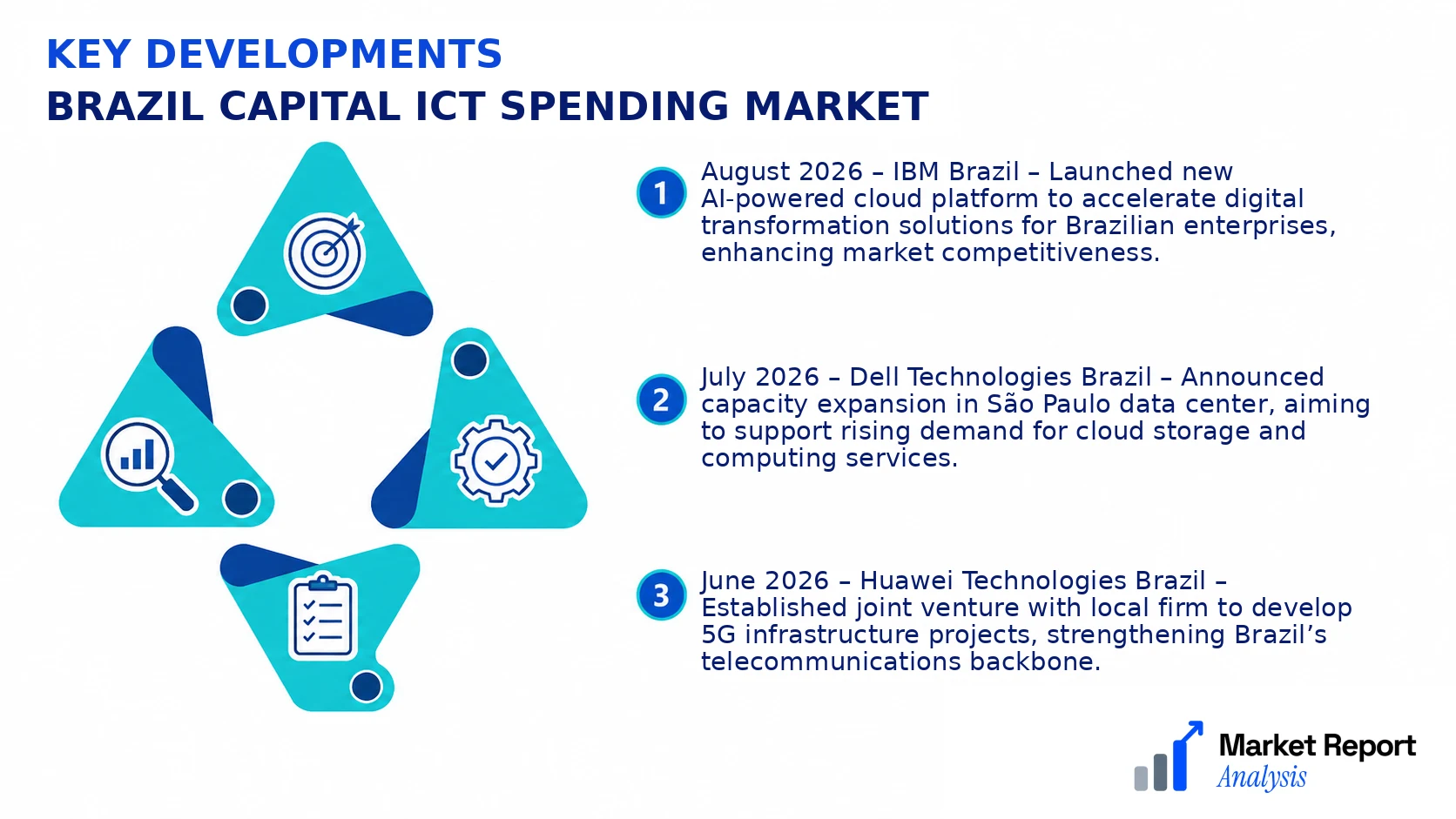
- August 2026 – IBM Brazil – Launched new AI-powered cloud platform to accelerate digital transformation solutions for Brazilian enterprises, enhancing market competitiveness.
- July 2026 – Dell Technologies Brazil – Announced capacity expansion in São Paulo data center, aiming to support rising demand for cloud storage and computing services.
- June 2026 – Huawei Technologies Brazil – Established joint venture with local firm to develop 5G infrastructure projects, strengthening Brazil’s telecommunications backbone.
- May 2026 – SAP Brazil – Introduced next-generation ERP suite integrated with AI, tailored to optimize supply chain and manufacturing processes in Brazil.
- April 2026 – Microsoft Brazil – Launched new local data centers to bolster cloud computing services, aiming to meet increasing demand from government and private sectors.
Frequently Asked Questions
What is the Brazil Capital ICT Spending Market?
The Brazil Capital ICT Spending Market encompasses investments in information and communication technology infrastructure by government, businesses, and other organizations, aimed at enhancing digital capabilities, infrastructure modernization, and technological development across various sectors within Brazil.
What is the current market size of Brazil Capital ICT Spending Market?
As of 2026, the Brazil Capital ICT Spending Market is valued at approximately USD 21.4 Billion, reflecting ongoing investments driven by digital transformation initiatives and increasing government and private sector digitalization efforts.
What factors are driving the Brazil Capital ICT Spending Market?
Market growth is primarily driven by government initiatives to digitalize public services, rising adoption of IoT and cloud technologies, increased demand for smart infrastructure, and expanding investments by multinational companies to enhance operational efficiency and digital presence in Brazil.
Which region dominates the Brazil Capital ICT Spending Market?
The Southeastern region of Brazil dominates the market, owing to its significant concentration of corporate headquarters, government agencies, and technological hubs, making it the primary driver of ICT investments across the country.
Which segment is expected to grow the fastest?
The cloud computing segment is forecasted to experience the fastest growth, fueled by the increasing migration of enterprise workloads to cloud platforms, and the surge in digital service demand, contributing substantially to overall market expansion.
Who are the leading companies operating in the Brazil Capital ICT Spending Market?
Key players include multinational technology firms like IBM, Microsoft, and Cisco, alongside local providers such as TOTVS and Algar, all actively investing in infrastructure projects and technological solutions to capitalize on Brazil’s digital transformation momentum.
Analyst Perspective
The Brazil Capital ICT Spending Market is expected to maintain steady growth through 2034, driven by ongoing digitization initiatives and government-led infrastructure projects. Long-term, the market displays maturity, with increased focus on Industry 4.0, smart city innovations, and cloud migration, creating robust commercial opportunities for technology providers. Key sectors such as financial services, public administration, and energy are prime targets for strategic investments, especially in major urban centers like São Paulo, Brasília, and Rio de Janeiro, which are advancing regional digital hubs. Technology evolution will favor AI, IoT, and edge computing, fostering greater integration and automation. Investment priorities will increasingly shift toward cybersecurity and data sovereignty, reflecting rising digital risks. Competitive intensity remains high, demanding differentiated offerings and strategic alliances. Regional growth potential is pronounced in underserved inland cities, where digital inclusion initiatives are catalyzing new ICT infrastructure projects. Overall, Brazil's market offers compelling prospects, provided players adapt to evolving technological demands and regulatory landscapes.
