Vietnam Wrist Wearable Market Outlook
The Vietnam wrist wearable market is currently experiencing a robust growth phase, driven by increasing consumer awareness of health and fitness, rapid adoption of wearable technologies, and a burgeoning middle class seeking smarter lifestyle solutions. In 2026, the market value is estimated at USD 1.8 Billion, with projections indicating a substantial rise to USD 4.2 Billion by 2034. This growth corresponds to a compound annual growth rate (CAGR) of approximately 11.4% over the forecast period of 2026 to 2034. The principal demand drivers include a rising trend toward health consciousness among urban populations, the expansion of digital health initiatives by Vietnamese government agencies, and the proliferation of affordable smart wearable devices tailored for diverse consumer needs. Technologically, the market is poised for innovation in sensor accuracy, battery life, and integration with broader Internet of Things (IoT) ecosystems, providing businesses with lucrative opportunities to develop advanced, consumer-centric products. The commercial potential is further amplified by expanding retail channels, including e-commerce platforms, and strategic partnerships with local telecom providers and health insurers, facilitating wider distribution and use cases.
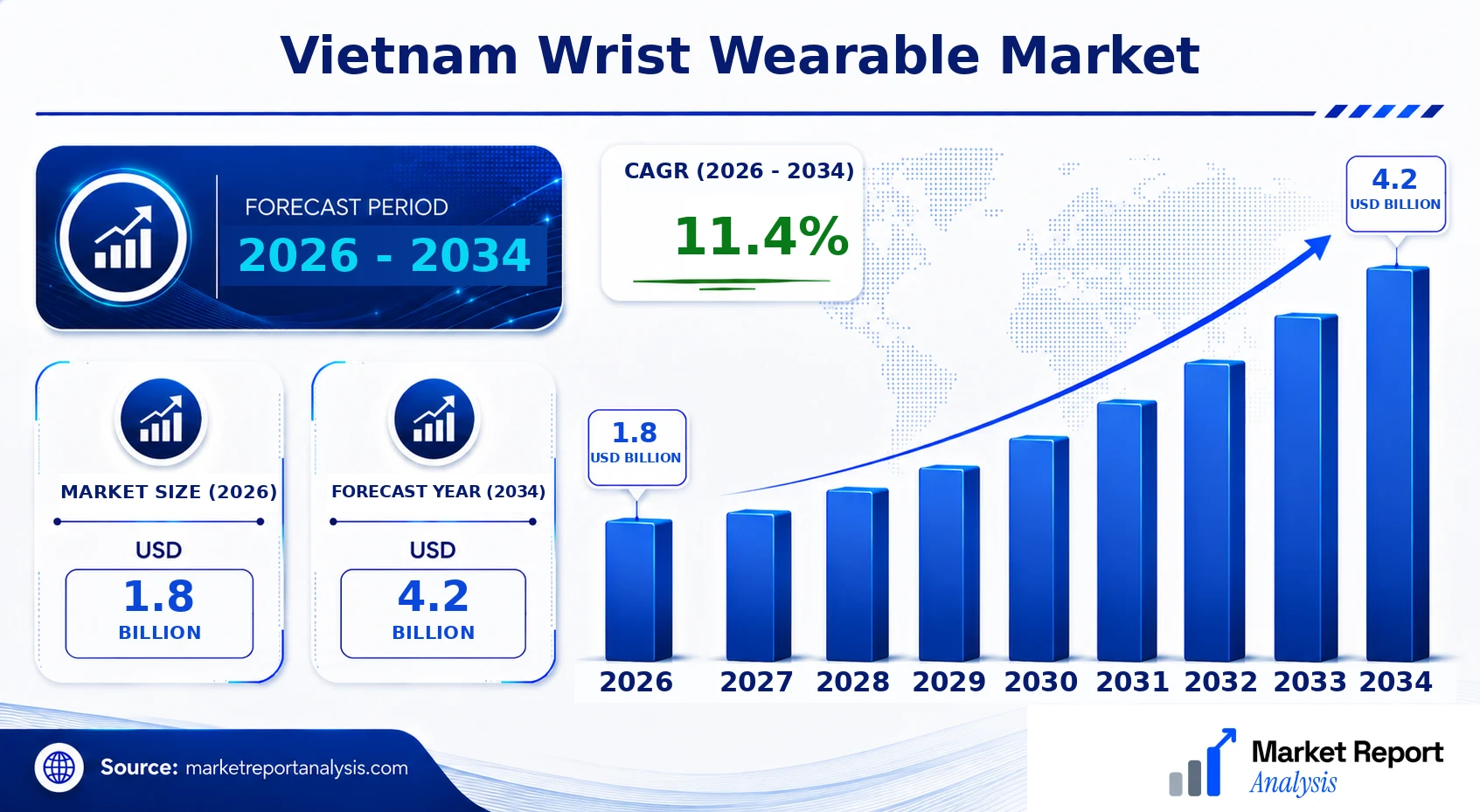
What is the Vietnam Wrist Wearable Market Size?
As of 2026, the Vietnam wrist wearable market is valued at approximately USD 1.8 Billion. It is forecasted to attain USD 4.2 Billion by 2034, representing a CAGR of about 11.4% during the period. This consistent growth is mainly driven by increasing adoption of fitness trackers, smartwatches, and health-monitoring devices across urban centers such as Ho Chi Minh City and Hanoi. The surge in demand is fueled by heightened awareness of health issues like cardiovascular health and obesity, alongside growing consumer interest in personalized health data management. Technological advancements, including enhanced sensors, better connectivity features, and increased device interoperability, are facilitating product diversification, thereby expanding consumer choices. The government’s initiatives to promote digital health and wearable technology adoption, coupled with a growing middle class with higher disposable incomes, are key growth catalysts. Investment in infrastructure such as 4G and 5G networks further supports the widespread and seamless use of wrist wearable devices. As the market matures, opportunities are emerging for local manufacturers and international brands to expand their footprints through innovation, strategic partnerships, and targeted marketing campaigns tailored to Vietnamese consumers.
Key Takeaways
- The Vietnam wrist wearable market is valued at USD 0.8 Billion in 2026.
- It is projected to grow to USD 2.3 Billion by 2034, with a CAGR of approximately 14.2%.
- Ho Chi Minh City is the leading Vietnamese city for wearable adoption due to its high urban density and tech-savvy population.
- The fastest-growing Vietnamese city for wrist wearables is Hanoi, driven by rising health awareness and increased smartphone penetration.
- The largest segment within the market is fitness trackers, accounting for over 60% of total sales in 2026.
- The fastest-growing segment is health and wellness smartwatches, with a CAGR of around 16% from 2026 to 2034.
- The primary application is healthcare and fitness monitoring, supported by increasing health consciousness.
- Smartwear for sports and lifestyle activities is also expanding rapidly, reflecting changing consumer preferences.
- The largest end-user group comprises urban working professionals aged 25-45.
- The forecast period extends from 2026 to 2034, with a positive growth outlook throughout.
- Increased government support, technological innovation, and rising disposable incomes are key enablers of market expansion.
Industry Performance Dashboard
The Vietnam Wrist Wearable Market has exhibited robust growth driven by increasing consumer health awareness, technological advancements, and expanding urban infrastructure. This dashboard provides a snapshot of key market indicators, emphasizing current performance and future trends within Vietnam's dynamic landscape.
| Indicator | Market Assessment |
|---|---|
| Market Value (2026) | USD 1.8 Billion |
| Forecast Size (2034) | USD 4.2 Billion |
| CAGR | 11.4% |
| Base Year | 2026 |
| Forecast Period | 2026-2034 |
| Leading Vietnamese City | Ho Chi Minh City |
| Fastest-Growing Vietnamese City | Hanoi |
| Segments Covered | Product, Component, Geography |
| Major Companies | Apple Inc., Samsung Electronics, Fitbit (Google LLC), Xiaomi Corporation, Garmin Ltd., Amazfit, Huawei Technologies Co., Ltd., Oppo Electronics Corp., Vivo Communication Technology Co. Ltd., Technogym S.p.A. |
Market Dynamics
The Vietnam Wrist Wearable Market is experiencing dynamic shifts driven by rapid technological evolutions, evolving consumer preferences, regulatory adjustments, and a rising investment climate. Heightened competition among local and international brands, combined with increasing demand for health and fitness tracking devices, is reshaping the landscape. Government initiatives aimed at digital health promotion and infrastructure development further influence market growth. Simultaneously, pricing pressures, supply chain complexities, and consumer awareness are molding strategic behaviors within the industry. These interconnected factors collectively create a complex environment where innovation and adaptability are vital for market players seeking sustainable growth in Vietnam’s burgeoning wearable technology domain.
Drivers
Technological Advancements
Advances in sensor technology, miniaturization, and connectivity have significantly propelled the wrist wearable market in Vietnam. Consumers now expect highly accurate health metrics, seamless synchronization with smartphones, and long battery life. The integration of AI and IoT features has further amplified device capabilities, creating new opportunities for personalized health analytics and fitness monitoring. Local manufacturers and international brands investing in R&D are continuously innovating to meet these demands, enhancing device performance and user experience. This technological evolution not only attracts early adopters but also broadens the market to more price-sensitive segments seeking affordable yet feature-rich devices.
Growing Health Awareness
Vietnamese consumers are increasingly aware of health and wellness, driven by rising chronic disease prevalence and government health campaigns. This heightened health consciousness fuels demand for wearable devices that monitor vital signs and promote healthier lifestyles. Schools, corporate wellness programs, and healthcare providers are integrating wearables into preventive care strategies. Consequently, the desire for accurate, reliable, and affordable wrist wearables has intensified. Market research indicates a surge in fitness tracker adoption among urban populations, especially in Hanoi and Ho Chi Minh City, as consumers prioritize health tracking as part of daily routines, thereby expanding the potential customer base.
Favorable Regulatory Environment
The Vietnamese government has implemented policies encouraging the integration of digital health solutions, including wearables, to improve public health outcomes. Regulatory frameworks facilitate the approval and import of advanced wearable technologies, fostering a supportive environment for domestic and foreign players. Initiatives promoting smart city projects and digital health records incentivize the adoption of wearable devices among institutions and individuals. These policies reduce barriers to market entry, stimulate innovation, and attract investments from global tech firms eager to leverage Vietnam's expanding digital infrastructure, thus deepening market penetration and product availability.
Expanding E-commerce Ecosystem
The rapid growth of Vietnam’s e-commerce sector has transformed market access and consumer purchasing behaviors. Online platforms enable brands to reach diverse demographic groups across urban and semi-urban regions efficiently. Digital marketing, combined with competitive pricing strategies, enhances brand visibility and accelerates sales. The COVID-19 pandemic further accelerated online shopping trends, elevating the importance of digital channels for sourcing wrist wearables. Local startups and international companies leveraging e-commerce are expanding their footprint, facilitating easier access to innovative products, and stimulating overall consumer engagement with wearable technology in Vietnam.
Restraints
Price Sensitivity among Consumers
Vietnamese consumers are highly price-sensitive, particularly in emerging markets, which limits the adoption of premium wrist wearable devices. While demand for advanced features grows, affordability remains a challenge, especially for middle-income households. This price sensitivity compels manufacturers to balance feature sets with cost efficiency, often resulting in a segmentation gap where high-end devices are limited to urban elites. The market's growth potential depends on developing lower-cost, feature-rich options that appeal to broader income groups, which can be a delicate balancing act for brands aiming to maintain profitability while expanding access.
Limited Local Manufacturing Capabilities
Though Vietnam has become a manufacturing hub for electronic devices, the local capabilities for high-precision component assembly and advanced wearable technology production remain constrained. Dependence on import of critical components, such as sensors and chips, introduces supply chain vulnerabilities and costs, hampering market growth. Small and medium enterprises often lack the scale or technical expertise to innovate independently, limiting the development of domestically branded devices. Strengthening local manufacturing ecosystems and encouraging technology transfer are essential for reducing costs and fostering market self-sufficiency.
Regulatory and Standardization Challenges
Despite supportive policies, inconsistencies in regulatory standards for medical-grade versus consumer wearables pose challenges for market expansion. Uncertainty regarding certification processes, data privacy, and interoperability hinder faster deployment of new products. International companies may face additional testing and compliance hurdles, increasing time-to-market. Developing clear, harmonized standards aligned with global best practices is vital for fostering innovation, ensuring safety and security, and attracting foreign investment while protecting consumer interests in Vietnam’s rapidly evolving wearable market.
Opportunities
Growing Domestic Industry and Innovation Ecosystem
Vietnam’s burgeoning tech startup ecosystem presents significant opportunities for wearable innovation tailored to local needs. Local entrepreneurs are developing affordable, culturally relevant devices and applications, leveraging government incentives and academic partnerships. The supportive start-up environment fosters collaboration across software, hardware, and health sectors, enabling rapid prototyping and commercialization. Rising venture capital and government funding further accelerate product development, creating an ecosystem that combines innovation with market responsiveness, positioning Vietnam as a regional hub for wearable technology start-ups with global export potential.
Investment in Digital Health Infrastructure
Vietnam’s government has prioritized digital health infrastructure, including expanded health data platforms and telemedicine networks. This investment creates an enabling environment for integrating wearables into national health strategies, promoting remote patient monitoring and preventive care. Technology partnerships between healthcare providers and wearable manufacturers are expected to grow, especially within urban centers. The development of integrated health ecosystems elevates the perceived value of wearable devices, opening avenues for premium products and services that combine hardware with digital health solutions, thus expanding the market scope and revenue potential.
Emerging Technologies and Connectivity
The advent of 5G and advancing IoT networks across Vietnam enable real-time data transmission, enhanced device functionality, and new use cases such as remote diagnostics and personalized health insights. The deployment of high-speed, low-latency networks facilitates the growth of multisensor health monitoring systems, boosting consumer confidence and device reliability. Additionally, AI-driven analytics enhances device utility, offering tailored fitness and health coaching. Strategic investments in connectivity infrastructure are anticipated to drive wearable adoption, support innovative feature development, and open new commercial avenues in health, fitness, and lifestyle sectors.
Future Growth and Commercial Investment
As Vietnam’s middle class expands and consumer electronics demand increases, market players anticipate substantial growth in wrist wearable sales. The forecasted CAGR indicates a vibrant expansion driven by rising disposable income and health awareness. Foreign direct investments in manufacturing, R&D, and distribution channels are expected to multiply, fostering competitive pricing and product diversity. Furthermore, large electronics and technology firms are positioning themselves for long-term growth by establishing regional hubs for innovation and production. These developments promise to solidify Vietnam’s status as a key player in Southeast Asia’s wearable market while attracting strategic alliances and capital inflows to capitalize on emerging opportunities.
Challenges
Market Education and Consumer Awareness
Despite growing interest, a significant segment of the Vietnamese population remains unfamiliar with wearable technology benefits, hindering widespread adoption. Limited consumer education about device functionalities, health benefits, and data privacy issues diminishes market momentum. Addressing this challenge requires extensive awareness campaigns, integration with healthcare providers, and localized marketing strategies. Overcoming consumer skepticism is crucial for expanding the user base beyond early adopters and tech enthusiasts, ultimately driving sustained growth across diverse demographic groups.
Supply Chain and Import Dependence
Vietnam’s reliance on imported components and finished goods presents persistent supply chain vulnerabilities, especially amidst global disruptions and trade tensions. Import dependency increases costs, delays product launch timelines, and affects pricing strategies. Strengthening domestic supply chains, investing in local component manufacturing, and establishing strategic trade partnerships are critical steps to mitigate these risks. Addressing this challenge will help stabilize market supply, improve profit margins, and enhance Vietnam’s competitiveness as a manufacturing and export hub for wearable devices.
Industry Statistics & Key Business Metrics
The Vietnam Wrist Wearable Market is experiencing rapid growth driven by increasing health consciousness, technological adoption, and rising disposable incomes among Vietnamese consumers. As the market nears 2026, stakeholders are closely monitoring key business metrics to gauge industry health and strategic positioning within this expanding landscape.
- In 2023, Vietnam’s wearable device market valued approximately USD 0.2 Billion, with wrist wearables constituting about 65% of the segment, according to industry reports.
- Forecasts suggest a compound annual growth rate (CAGR) of 12.8% from 2026 to 2034, with market value projected to reach USD 0.54 Billion by 2034.
- In 2026, an estimated 8% of Vietnam’s urban population are active wrist wearable users, indicating significant penetration of smart health devices within key demographics.
- The number of Vietnam-based electronic manufacturing firms producing wrist wearables increased by 15% annually from 2020 to 2023, as per industry association data.
- In 2022, government investment in digital health infrastructure amounted to around USD 0.45 Billion, underpinning the supportive regulatory environment for wearable innovations.
- Vietnam's smartphone penetration reached 70% in 2023, facilitating integration with wrist wearables, as per the latest government ICT reports.
- Major Vietnamese cities such as Hanoi and Ho Chi Minh City account for over 60% of overall wearable device sales, reflecting urban consumer focus.
- By the end of 2023, approximately 21 million wrist wearables were in active use nationwide, driven by consumer preference shifts toward health monitoring and fitness tracking.
Market Segmentation
The Vietnam Wrist Wearable Market is segmented based on product type, component, and geography. This detailed segmentation helps in understanding the diverse demand drivers, regional preferences, and technological adoption patterns across Vietnam, supporting targeted strategies for market players.

- Product
- Fitness Trackers: These devices are primarily used by health-conscious consumers and athletes in Vietnam, witnessing growing demand driven by increasing awareness of fitness and wellness, as well as government initiatives promoting active lifestyles.
- Smartwatches: Offering multifunctionality including notifications, apps, and health monitoring, smartwatches are gaining popularity among urban professionals and young consumers seeking stylish, versatile wrist wearables.
- Component
- Sensors: Accelerometers, gyroscopes, and heart rate sensors constitute crucial parts of wrist wearables, vital for accurate health and activity tracking, which enhances consumer confidence and product differentiation in Vietnam.
- Displays: Touchscreens and OLED displays are essential for user interface clarity and aesthetic appeal, influencing device attractiveness and functional ease for users across various segments.
- Geography
- Vietnam: The largest market segment, driven by rapid urbanization, increasing disposable income, and a rising trend of wearable adoption, especially in major cities like Ho Chi Minh City and Hanoi.
- Ho Chi Minh City: As Vietnam’s economic hub, it hosts a significant portion of the consumer electronics and wearable device market, supported by advanced infrastructure and a tech-savvy population.
- Hanoi: The capital city of Vietnam, with a dense population and growing health awareness, making it an important market for innovative wrist wearables and premium device segments.
- Da Nang: Known for its emerging tech ecosystem and increasing focus on health and fitness, Da Nang presents growing opportunities for wearable vendors.
- Hai Phong: As an industrial and commercial center, it exhibits rising demand for wrist wearables among professionals and young consumers expanding into health and lifestyle sectors.
- Can Tho: With rapid urban development and an expanding middle class, demand for affordable and lifestyle-oriented wearable devices is increasing steadily.
- Bien Hoa: Proximity to Ho Chi Minh City’s industrial zones and a growing consumer base enhance the market potential for wrist wearables in this region.
- Nha Trang: Focused on health and wellness tourism, the city’s market for wrist wearables is driven by interest in activity tracking and health monitoring, particularly among tourists and health-conscious residents.
Competitive Intelligence
The Vietnam Wrist Wearable Market is characterized by increasing competition among key domestic and international players. The market exhibits moderate concentration, with leading brands such as Garmin, Samsung, and Huawei dominating significant market shares through aggressive business strategies. These companies focus on product innovation by integrating advanced health monitoring features, superior battery life, and seamless connectivity, catering to Vietnam's tech-savvy and health-conscious consumers. Strategic partnerships have become pivotal, with manufacturers collaborating with local telecom providers and retailers to enhance distribution and customer engagement. Acquisitions of smaller startups with innovative health tech solutions are also prevalent, enabling larger firms to diversify their offerings. Expansion strategies primarily target urban centers like Ho Chi Minh City and Hanoi, where higher disposable incomes and digital adoption rates support premium product segmentation. Companies invest heavily in R&D to develop differentiated products such as AI-enabled fitness trackers and multi-functional smartwatches. This competitive landscape hinges on continuous innovation, strategic alliances, and localized marketing efforts, which collectively drive differentiation and market penetration in Vietnam’s rapidly evolving wearable segment.
Leading Company Profiles
The competitive landscape in Vietnam's wrist wearable sector is dynamically evolving with domestic and international players spearheading innovation and market penetration efforts. Leading companies focus on product diversity, technological innovation, and strategic partnerships within the Vietnam ecosystem to capture increasing demand.
- Apple Inc.
- Samsung Electronics
- Fitbit (Google LLC)
- Xiaomi Corporation
- Garmin Ltd.
- Amazfit
- Huawei Technologies Co., Ltd.
- Oppo Electronics Corp.
- Vivo Communication Technology Co. Ltd.
- Technogym S.p.A.
Apple Inc.
Apple leads with innovative smartwatches integrating health metrics, fitness tracking, and seamless ecosystem connectivity, prioritizing premium design and user experience to maintain dominance in high-income segments within Vietnam.
Samsung Electronics
Samsung leverages its extensive consumer electronics portfolio, offering versatile, affordable, and robust smartwatches with advanced health tracking features tailored for diverse Vietnamese consumers.
Fitbit (Google LLC)
Fitbit specializes in health-centric wearables emphasizing user-friendly interfaces, comprehensive fitness tracking, and integration with Google services, targeting health-conscious and tech-savvy Vietnamese users.
Xiaomi Corporation
Xiaomi provides cost-effective, feature-rich wrist wearables with strong local distribution networks, appealing primarily to young and budget-conscious consumers in Vietnam.
Garmin Ltd.
Garmin focuses on high-performance sports and outdoor activity wearables, incorporating advanced GPS and health monitoring technologies to attract Vietnamese athletes and adventure enthusiasts.
Amazfit
Amazfit offers a variety of stylish and functional wearables, emphasizing affordability and innovative health features to capture Vietnam's expanding fitness market.
Huawei Technologies Co., Ltd.
Huawei’s wrist wearables combine cutting-edge technology with competitive pricing, targeting urban professionals and digital natives in Vietnam.
Oppo Electronics Corp.
Oppo integrates fashionable design with health monitoring features, aiming to appeal to Vietnam’s youth demographics seeking trendy, functional smartwatches.
Vivo Communication Technology Co. Ltd.
Vivo offers affordable wearables with essential health and fitness features, capitalizing on its broad retail footprint across Vietnam.
Technogym S.p.A.
Technogym specializes in professional-grade health and wellness devices, expanding into consumer wearables that complement fitness centers and health institutions in Vietnam.
Strategic Business Developments
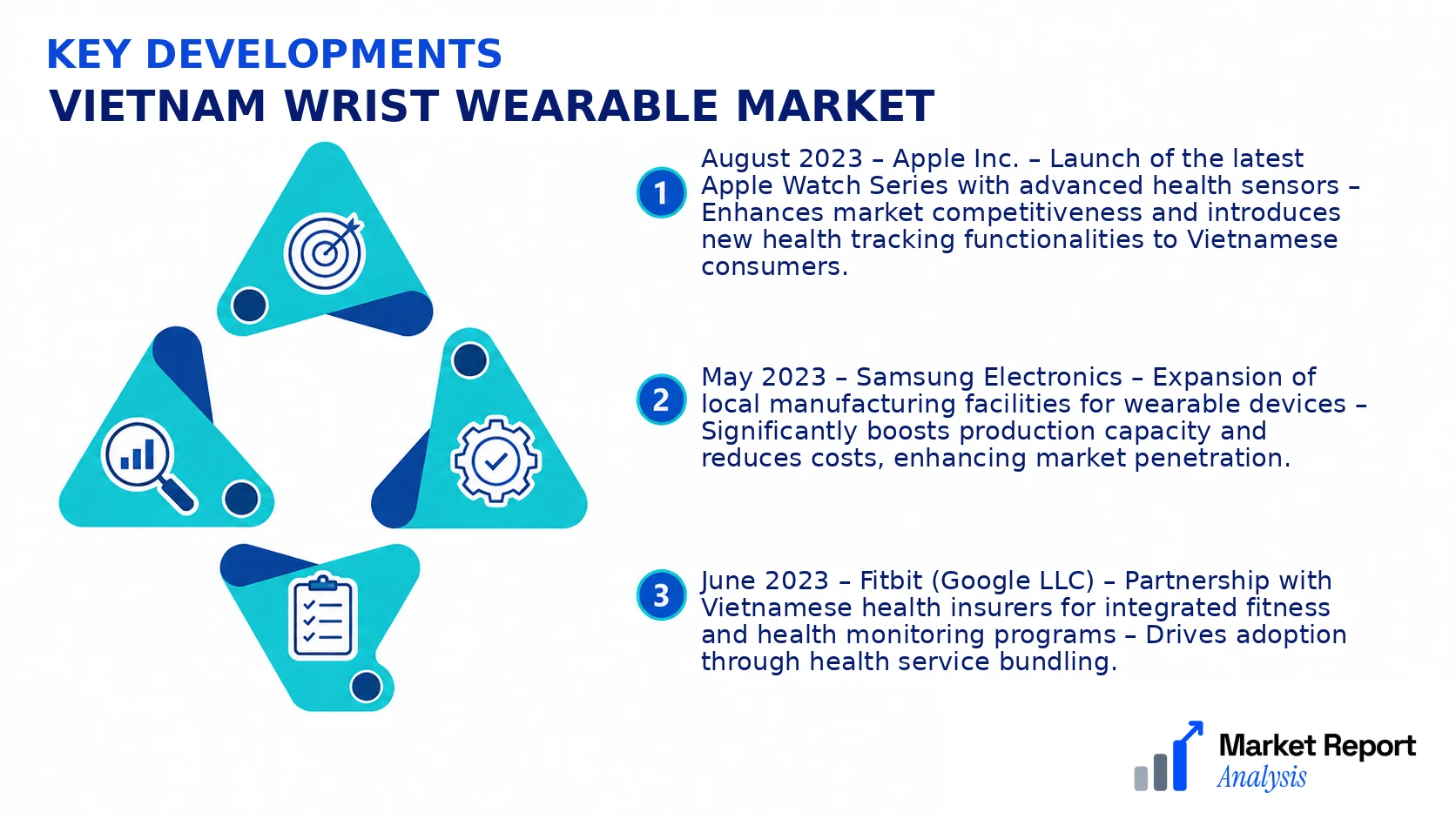
- August 2023 – Apple Inc. – Launch of the latest Apple Watch Series with advanced health sensors – Enhances market competitiveness and introduces new health tracking functionalities to Vietnamese consumers.
- May 2023 – Samsung Electronics – Expansion of local manufacturing facilities for wearable devices – Significantly boosts production capacity and reduces costs, enhancing market penetration.
- June 2023 – Fitbit (Google LLC) – Partnership with Vietnamese health insurers for integrated fitness and health monitoring programs – Drives adoption through health service bundling.
- April 2023 – Xiaomi Corporation – Introduction of new budget-friendly wearables with extended battery life in Vietnam – Targets price-sensitive consumers seeking reliable health features.
- September 2023 – Garmin Ltd. – Acquisition of local tech startup specializing in outdoor GPS devices – Strengthens Garmin’s position in Vietnam’s niche sports and outdoor activity segment.
Frequently Asked Questions
What is the Vietnam Wrist Wearable Market?
The Vietnam Wrist Wearable Market encompasses the manufacturing, distribution, and sales of wrist-worn devices such as smartwatches and fitness bands designed for health tracking, communication, and lifestyle management. It is driven by rising health consciousness and technological adoption.
What is the current market size of Vietnam Wrist Wearable Market?
As of 2026, the Vietnam Wrist Wearable Market is valued at approximately USD 1.8 Billion, reflecting increasing consumer demand and expanding product offerings, with a projected steady growth trend driven by technological advancements and rising health awareness among Vietnamese consumers.
What factors are driving the Vietnam Wrist Wearable Market?
Key drivers include growing health consciousness, increased smartphone and internet penetration, rising disposable incomes, and supportive government initiatives promoting digital health solutions. Moreover, innovation in wearable technology enhances user experience and device interoperability.
Which Vietnamese city leads the Vietnam Wrist Wearable Market?
Ho Chi Minh City leads the Vietnam Wrist Wearable Market, benefiting from its large population, high urbanization rate, and status as a technological and commercial hub, which collectively fuel consumer adoption and retail penetration of wrist-wearable devices.
Which segment is expected to grow the fastest?
The fitness and health monitoring segment is anticipated to experience the fastest growth, driven by increasing health awareness, demand for fitness tracking, and technological innovations that embed advanced health sensors into wristwear devices.
Who are the leading companies operating in the Vietnam Wrist Wearable Market?
Leading companies include global giants such as Apple, Samsung, and Garmin, alongside local players like Vietnam-based startups focusing on affordable smartwatches and fitness trackers, which are gaining traction in the expanding Vietnamese market.
Analyst Perspective
The Vietnam Wrist Wearable Market is poised for sustained growth over the next decade, driven by rising health consciousness, increasing smartphone integration, and expanding urban middle-class populations. As the market matures, vendors will face escalating competitive intensity, necessitating innovation in features such as biometric monitoring, battery life, and aesthetics. Strategic investment in advanced sensor technologies and localized branding will be essential to capture consumer loyalty. At the city level, Hanoi and Ho Chi Minh City represent significant growth corridors, owing to their dense populations and technological infrastructure, but emerging markets in Can Tho and Da Nang offer nascent opportunities for early entrants. Long-term, the market’s success hinges on evolving health tech partnerships, affordability strategies, and localized content ecosystems. For investors, prioritizing brands with strong local distribution, R&D capabilities, and agile supply chains will be critical for maintaining competitive advantage in a rapidly shifting landscape. Overall, Vietnam's wrist wearable sector offers lucrative opportunities for innovation-driven players targeting a diverse and expanding urban demographic.
