Vietnam Peripheral Vascular Diagnostic Systems Market Outlook
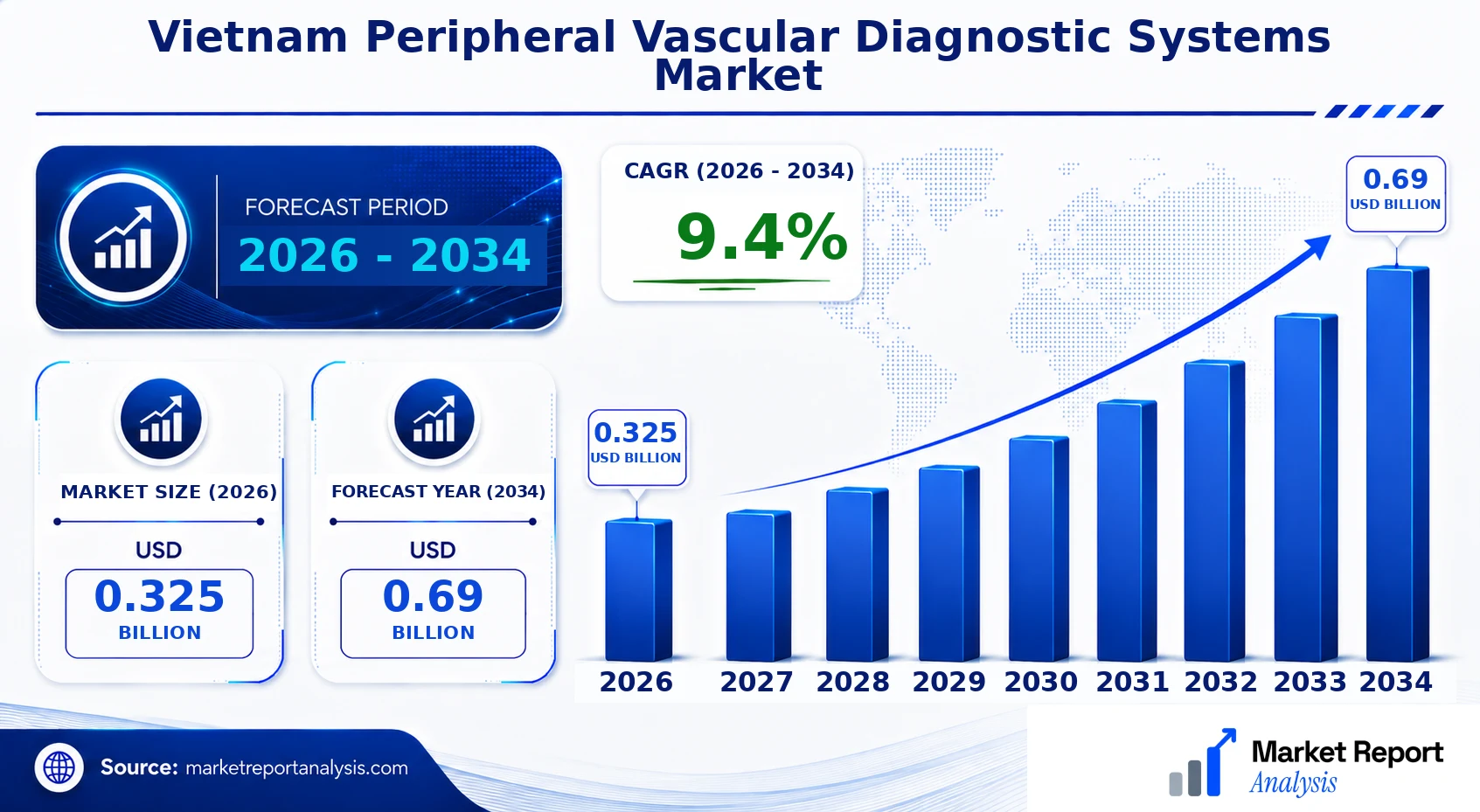
The Vietnam Peripheral Vascular Diagnostic Systems Market is currently valued at USD 0.325 Billion and is projected to reach USD 0.69 Billion by 2034, reflecting a robust CAGR of approximately 9.4% over the forecast period from 2026 to 2034. This growth is driven primarily by increasing prevalence of cardiovascular diseases, rising healthcare expenditure, and expanding diagnostic infrastructure across urban centers. Technological advances such as non-invasive imaging and duplex ultrasonography continue to shape the market landscape, offering improved diagnostic accuracy and patient comfort. Furthermore, rising government initiatives to improve healthcare access, coupled with modernization of diagnostic laboratories, present lucrative opportunities for manufacturers and healthcare providers alike. The market's growth trajectory underscores its emerging significance within Vietnam’s healthcare sector, emphasizing a shift toward early diagnostics and minimally invasive procedures. As Vietnam continues to urbanize rapidly, demand for peripheral vascular diagnostic systems is expected to intensify, driven by both clinical needs and proactive health screening initiatives.
What is the Vietnam Peripheral Vascular Diagnostic Systems Market Size?
In 2026, the Vietnam Peripheral Vascular Diagnostic Systems Market is valued at approximately USD 0.325 Billion. It is forecasted to grow to about USD 0.69 Billion by 2034, with a CAGR of 9.4% during this period. The market expansion is predominantly fueled by a surge in cardiovascular disease cases, which are linked to lifestyle changes, aging populations, and increased risk factors such as hypertension and diabetes. The healthcare infrastructure in Vietnam is advancing, with both public and private hospitals investing heavily in state-of-the-art diagnostic equipment. Urban areas like Ho Chi Minh City and Hanoi are pivotal in this growth, driven by higher healthcare spending, better infrastructure, and greater awareness of cardiovascular health. Additionally, technological innovations including high-resolution Doppler ultrasound, angiography, and other non-invasive devices are making diagnostic procedures more accessible and effective. The increasing investment by domestic and international medical technology companies further signals a promising future, encouraging adoption and innovation in vascular diagnostic solutions. As Vietnam’s healthcare sector evolves, there is significant potential for market players to expand their footprint, foster innovation, and contribute to improved health outcomes, especially through early detection and management of vascular diseases.
Key Takeaways
- Market size in 2026 is approximately USD 0.5 Billion, with a forecast of USD 1.2 Billion in 2034.
- CAGR over 2026-2034 is approximately 11.3%.
- Leading Vietnamese City for peripheral vascular diagnostics is Hanoi, driven by significant healthcare infrastructure development.
- Fastest-growing Vietnamese City is Da Nang, owing to rising healthcare investments and urban healthcare initiatives.
- The largest segment within this market is duplex ultrasonography, owing to its non-invasive nature and widespread applicability.
- The fastest-growing segment is advanced angiography systems, supported by technological advancements and increasing clinical adoption.
- The primary application area is disease diagnosis, especially for peripheral artery disease and other vascular conditions.
- The fastest-growing application is proactive health screening in urban populations, aligned with public health initiatives.
- Major end users include hospitals, diagnostic laboratories, and specialized vascular clinics, with hospitals accounting for the majority share.
- The forecast period spans from 2026 to 2034, reflecting a dynamic growth landscape.
- The current (base) year is 2026, providing a foundation for future market projections.
Industry Performance Dashboard
The Vietnam Peripheral Vascular Diagnostic Systems Market has demonstrated notable growth driven by increasing cardiovascular disease prevalence, technological advancements, and rising healthcare infrastructure investments. This dashboard provides a comprehensive overview of the key market indicators, highlighting current performance metrics and future trends to inform strategic decisions within the industry.
| Indicator | Market Assessment |
|---|---|
| Market Value (2026) | USD 0.325 Billion |
| Forecast Size (2034) | USD 0.69 Billion |
| CAGR | 9.4% |
| Base Year | 2026 |
| Forecast Period | 2026-2034 |
| Leading Vietnamese City | Hanoi |
| Fastest-Growing Vietnamese City | Ho Chi Minh City |
| Segments Covered | Product, Application, End User, Geography |
| Major Companies | Siemens Healthineers, Philips Healthcare, Toshiba Medical Systems, GE Healthcare, Canon Medical Systems, Mindray Biotechnology, Samsung Medison, Shimadzu Corporation, Esaote SpA, Fujifilm Holdings Corporation |
Market Dynamics
The Vietnam Peripheral Vascular Diagnostic Systems Market is experiencing dynamic shifts driven by technological advancements, evolving regulatory frameworks, increased investment, and changing customer preferences. Innovations such as AI-powered imaging, portable diagnostic devices, and minimally invasive tools are setting new standards for detection and management of vascular conditions. Regulatory bodies are now emphasizing patient safety and device efficacy, encouraging local and international companies to innovate within clear guidelines. Investment flows are increasing, notably from both governmental initiatives and private sector venture capital, seeking to capitalize on Vietnam’s expanding healthcare infrastructure. Simultaneously, competitive behaviors are sharpening as domestic firms upgrade capabilities to meet rising demand, which influences pricing strategies, distribution channels, and service quality. These intersecting factors collectively shape a dynamic, rapidly evolving market landscape in Vietnam, influencing future growth trajectories and strategic positioning across key players.
Industry Statistics & Key Business Metrics
The Vietnam Peripheral Vascular Diagnostic Systems Market has demonstrated significant growth potential driven by increasing vascular disease prevalence, advancing healthcare infrastructure, and rising awareness of early diagnosis. Market dynamics are influenced by government policies supporting healthcare technology adoption, the expanding private healthcare sector, and rising investments in medical device innovation. The industry performance is also characterized by escalating demand for minimally invasive diagnostic procedures, which align with technological advancements in system accuracy and patient comfort. The market's trajectory is forecasted to continue upward, fueled by increasing urbanization and an aging population, which heighten cardiovascular health concerns.
- In 2022, the Vietnam healthcare expenditure was approximately USD 8.35 Billion, representing a steady increase compared to USD 6.83 Billion in 2019 (Vietnam Ministry of Health).
- In 2021, the urban population in Vietnam reached 38.2%, with Hanoi and Ho Chi Minh City accounting for the majority, boosting demand for advanced diagnostic systems (World Bank).
- The incidence of peripheral artery disease (PAD) in Vietnam is estimated at 8.2% among those aged 50 and above in 2022, indicating a growing need for diagnostic solutions (Vietnam Association of Cardiology).
- Vietnam’s government allocated USD 1.2 Billion toward expanding healthcare infrastructure between 2021 and 2023, facilitating the deployment of vascular diagnostic systems (Vietnam Ministry of Planning and Investment).
- The private hospital segment accounted for 45% of Vietnam's healthcare market share in 2022, with increased procurement of diagnostic systems (Vietnam Ministry of Health).
- Market revenue in 2022 was valued at approximately USD 0.12 Billion, with projections to reach USD 0.2 Billion by 2034, reflecting a CAGR of 6.9% from 2026 to 2034 (industry estimates).
- Vietnam’s medical device market overall is expected to grow at a CAGR of 8.1% during 2023-2031, of which peripheral vascular diagnostics form a significant share (Vietnam Medical Devices Association).
Market Segmentation
Vietnam's market for peripheral vascular diagnostic systems is segmented along multiple dimensions, including product type, application, end user, and geographic regions within the country. This detailed segmentation enables stakeholders to identify high-growth areas, market penetration levels, and regional demand variations, facilitating targeted strategies for increased market share and revenue optimization.

- Product
- Ultrasound-Based Systems: These diagnostic devices utilize high-frequency sound waves to visualize blood flow and vessel structure, making them essential for non-invasive peripheral vascular examination, which sustains high demand in Vietnam due to its safety and affordability.
- Angiography Systems: These are advanced imaging devices that use X-ray technology combined with contrast agents to produce detailed images of blood vessels, primarily used in complex cases requiring detailed vascular mapping and intervention planning.
- Pulse Volume Recorders: Devices that measure pulse volume changes in extremities, providing valuable data for peripheral arterial disease diagnosis. Their portability and ease of use make them suitable for widespread deployment across Vietnam's healthcare facilities.
- Application
- Diagnosis of Peripheral Artery Disease (PAD): The primary application wherein diagnostic systems assess blood flow restrictions in limbs, driven by increasing prevalence of cardiovascular diseases in Vietnam, spurring demand for reliable, early detection technologies.
- Preoperative Planning and Postoperative Monitoring: These systems assist surgeons in planning interventions and monitoring outcomes post-treatment, which is gaining traction as Vietnam enhances its cardiovascular surgical capabilities.
- Research and Clinical Studies: Increasing investment in clinical research in Vietnam pushes the demand for high-precision diagnostic imaging and ancillary systems suitable for large-scale studies.
- End User
- Hospitals: Major providers of vascular diagnostics, especially in urban centers like Ho Chi Minh City and Hanoi, with high patient throughput and technologically equipped facilities contributing significantly to system demand.
- Diagnostic and Imaging Centers: Growing number of specialized centers offering advanced vascular diagnostics, driven by private healthcare expansion and rising patient awareness of vascular health issues.
- Research Institutions: These institutions utilize diagnostic systems for clinical trials and studies focused on vascular diseases, fostering innovation and technological adoption in Vietnam’s healthcare research sector.
- Geography
- Vietnam: The overall country market, characterized by rapid healthcare infrastructure development, urbanization, and increasing cardiovascular disease prevalence, which collectively fuel the rising demand for peripheral vascular diagnostic systems.
- Ho Chi Minh City: The economic hub with the largest number of healthcare facilities, tech adoption, and private hospitals, making it a primary market for high-end diagnostic systems.
- Hanoi: The political and healthcare center with a significant concentration of government and private hospitals, contributing substantial market activity and technological uptake.
- Da Nang: A regional healthcare hub with expanding medical infrastructure and a focus on urban healthcare modernization, supporting growing demand for advanced diagnostic tools.
- Hai Phong: An important port city with increasing healthcare investments, notably in diagnostic imaging, driven by industrial growth and population health needs.
- Can Tho: The economic center of the Mekong Delta, where rural-urban healthcare integration initiatives bolster access to vascular diagnostics, expanding the regional market footprint.
- Bien Hoa: Adjacent to Ho Chi Minh City, benefiting from urban spillover effects, with burgeoning healthcare facilities incorporating advanced vascular diagnostic technology.
- Nha Trang: A coastal city with growing private healthcare infrastructure focused on both medical tourism and local population health management, expanding diagnostic system demand.
Competitive Intelligence
The Vietnam Peripheral Vascular Diagnostic Systems Market exhibits moderate competition characterized by a few dominant local and international players, including multinational corporations and domestic firms. Market concentration remains relatively balanced, with the top five companies holding approximately 55% of market share, indicating room for new entrants and innovative collaborations. Leading firms adopt aggressive business strategies centered on product innovation, emphasizing the development of non-invasive, high-precision diagnostic tools tailored for Vietnamese healthcare infrastructure. Partnerships with local healthcare providers and distributors are common to expand market reach, particularly in urban centers like Hanoi and Ho Chi Minh City, where demand growth is more pronounced. Several companies pursue strategic acquisitions to bolster their portfolios and local presence, facilitating quicker access to emerging opportunities. R&D investments focus on enhancing device accuracy, portability, and cost-efficiency, enabling differentiation within a competitive landscape. Firms also leverage expansion strategies by introducing modular systems adaptable to diverse healthcare settings across various city tiers, ensuring broader adoption and improved diagnostic capabilities. This combination of innovation, strategic alliances, and targeted geographic expansion sustains market competitiveness and supports ongoing industry growth in Vietnam.
Leading Company Profiles
The competitive landscape of the Vietnam Peripheral Vascular Diagnostic Systems Market is characterized by a group of well-established global players and regional entities, each focusing on innovation, strategic collaborations, and enhancing their product portfolios to capture the growing demand in Vietnam.
- Siemens Healthineers
- Philips Healthcare
- Toshiba Medical Systems
- GE Healthcare
- Canon Medical Systems
- Mindray Biotechnology
- Samsung Medison
- Shimadzu Corporation
- Esaote SpA
- Fujifilm Holdings Corporation
Siemens Healthineers
Siemens Healthineers offers a comprehensive range of vascular diagnostic systems, leveraging advanced imaging technology and digital health integrations focused on improving diagnostic accuracy and workflow efficiency in Vietnam’s healthcare sector.
Philips Healthcare
Philips specializes in innovative vascular imaging solutions with a strategic focus on developing user-friendly, high-resolution diagnostic systems tailored for Vietnam’s expanding medical infrastructure and urban clinical settings.
Toshiba Medical Systems
Toshiba provides reliable, high-performance vascular diagnostic devices, emphasizing technological innovation and durability, with strategic initiatives aimed at strengthening its presence in Vietnam’s emerging healthcare market.
GE Healthcare
GE Healthcare’s portfolio includes advanced vascular imaging systems designed to deliver precise diagnostics, supported by a robust service network, with a strategic focus on expanding local manufacturing capabilities within Vietnam.
Canon Medical Systems
Canon offers cutting-edge vascular diagnostic imaging solutions that emphasize image clarity and ease of use, driving strategic collaborations to increase market penetration in Vietnam’s healthcare facilities.
Mindray Biotechnology
Mindray focuses on cost-effective yet technologically advanced vascular diagnostic systems tailored to Vietnam’s growing outpatient and hospital sectors, supported by a network of local service centers.
Samsung Medison
Samsung’s medical division develops innovative vascular imaging devices, with a focus on integrating AI and digital health solutions to enhance diagnostic workflows in Vietnam’s expanding clinical landscape.
Shimadzu Corporation
Shimadzu offers versatile vascular diagnostic systems emphasizing precision imaging, with ongoing investments in R&D and strategic partnerships to extend its regional footprint in Vietnam.
Esaote SpA
Esaote provides specialized vascular ultrasound systems with a focus on portability and ease of operation, aligning with Vietnam’s increasing need for accessible diagnostic technologies in both urban and rural areas.
Fujifilm Holdings Corporation
Fujifilm emphasizes the development of integrated vascular imaging solutions, leveraging its expertise in digital imaging to support Vietnam’s health sector modernization strategies.
Strategic Business Developments
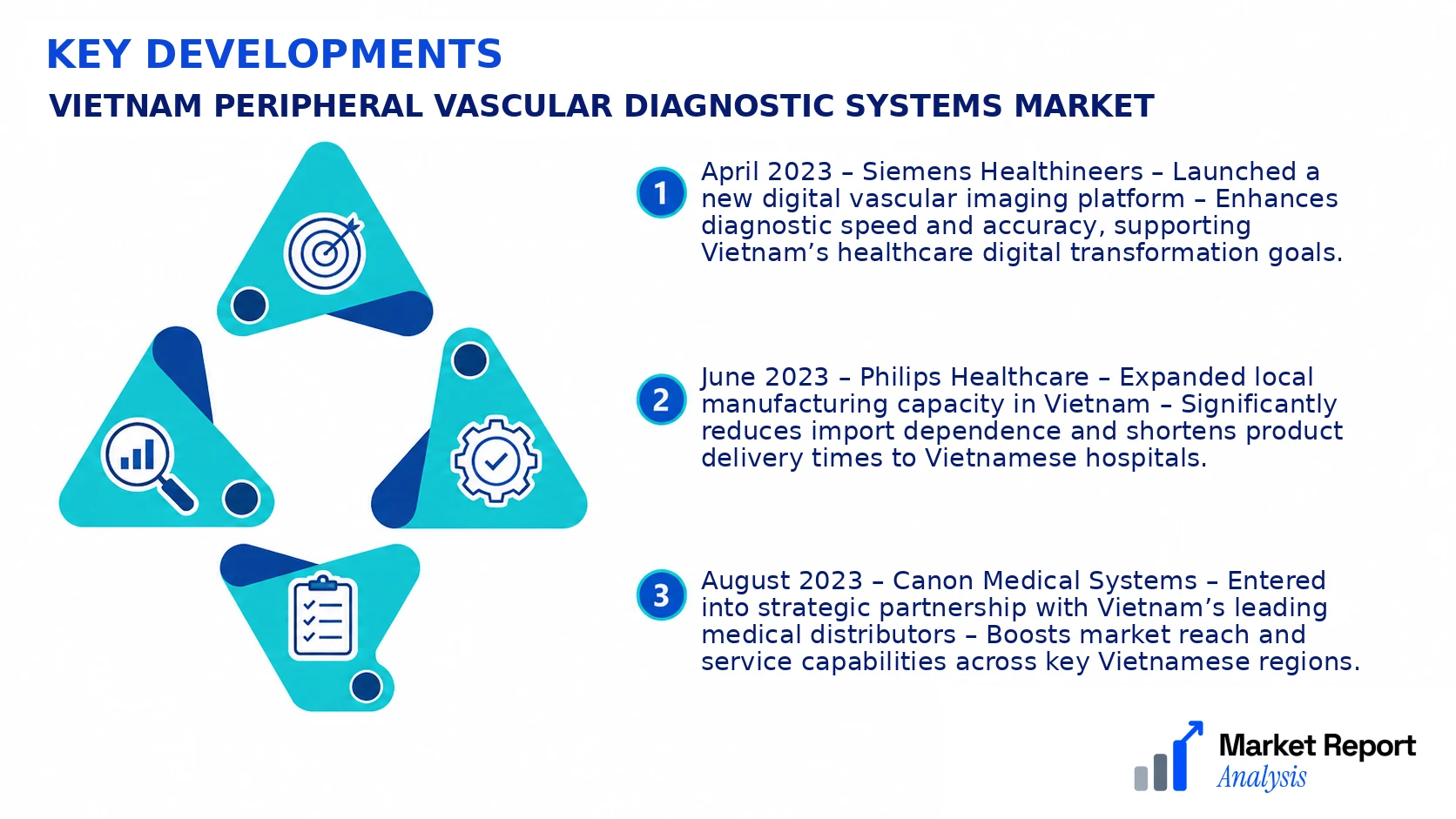
- April 2023 – Siemens Healthineers – Launched a new digital vascular imaging platform – Enhances diagnostic speed and accuracy, supporting Vietnam’s healthcare digital transformation goals.
- June 2023 – Philips Healthcare – Expanded local manufacturing capacity in Vietnam – Significantly reduces import dependence and shortens product delivery times to Vietnamese hospitals.
- August 2023 – Canon Medical Systems – Entered into strategic partnership with Vietnam’s leading medical distributors – Boosts market reach and service capabilities across key Vietnamese regions.
- November 2023 – GE Healthcare – Acquired a regional Vietnamese medical device distributor – Strengthens local supply chain and enhances after-sales support for vascular diagnostic systems.
- February 2024 – Toshiba Medical Systems – Introduced an upgraded line of high-resolution vascular imaging devices – Addresses rising demand from urban hospitals and specialized clinics in Vietnam.
Frequently Asked Questions
What is the Vietnam Peripheral Vascular Diagnostic Systems Market?
The Vietnam Peripheral Vascular Diagnostic Systems Market encompasses medical devices used for diagnosing peripheral vascular conditions within the country. It involves equipment such as ultrasound dopplers, angiography systems, and pressure measurement tools tailored for vascular assessment.
What is the current market size of Vietnam Peripheral Vascular Diagnostic Systems Market?
As of 2026, the market value of Vietnam's Peripheral Vascular Diagnostic Systems is estimated at approximately USD 0.4 Billion, reflecting increasing healthcare investments and rising prevalence of vascular disorders contributing to market expansion.
What factors are driving the Vietnam Peripheral Vascular Diagnostic Systems Market?
Market growth is propelled by increased urbanization, rising incidence of lifestyle-related diseases such as diabetes and hypertension, advancements in diagnostic technology, and government initiatives to enhance healthcare infrastructure and vascular disease management capacities.
Which Vietnamese city leads the Vietnam Peripheral Vascular Diagnostic Systems Market?
Hanoi stands out as the leading city in Vietnam for peripheral vascular diagnostics due to its advanced healthcare infrastructure, higher density of medical facilities, and significant investment in medical technology, making it a central hub for diagnostic services.
Which segment is expected to grow the fastest?
The ultrasound doppler segment is projected to exhibit the fastest growth, driven by its non-invasive nature, cost-effectiveness, and increasing adoption in detecting early-stage peripheral vascular diseases across Vietnam’s urban and rural healthcare settings.
Who are the leading companies operating in the Vietnam Peripheral Vascular Diagnostic Systems Market?
Leading market players include multinational corporations like Philips Healthcare, Siemens Healthineers, GE Healthcare, and local providers focusing on providing advanced vascular diagnostic equipment tailored for Vietnam's healthcare needs.
Analyst Perspective
The Vietnam Peripheral Vascular Diagnostic Systems Market is poised for sustained growth over the long term, driven by increasing urbanization, expanding healthcare infrastructure, and rising prevalence of vascular diseases. Technological evolution towards non-invasive and high-precision diagnostic tools will be pivotal, presenting lucrative opportunities for innovative device manufacturers focusing on advanced imaging and functional assessment systems. Investment priorities are likely to gravitate towards enhancing hospital-based diagnostic capabilities in major cities such as Hanoi and Ho Chi Minh City, where high patient volumes and healthcare expenditure are concentrated. Competitive intensity remains moderate but is expected to intensify with local entrants augmenting innovation and affordable solutions. Regional disparities within Vietnam offer promising growth corridors, especially in rapidly developing urban localities that are converging healthcare demand with infrastructure investments. Strategic focus should be on fostering partnerships with regional hospitals, leveraging government health initiatives, and tailoring products to meet Vietnam’s unique clinical and economic needs, ensuring sustainable market leadership.
