Europe Peripheral Vascular Diagnostic Systems Market Outlook
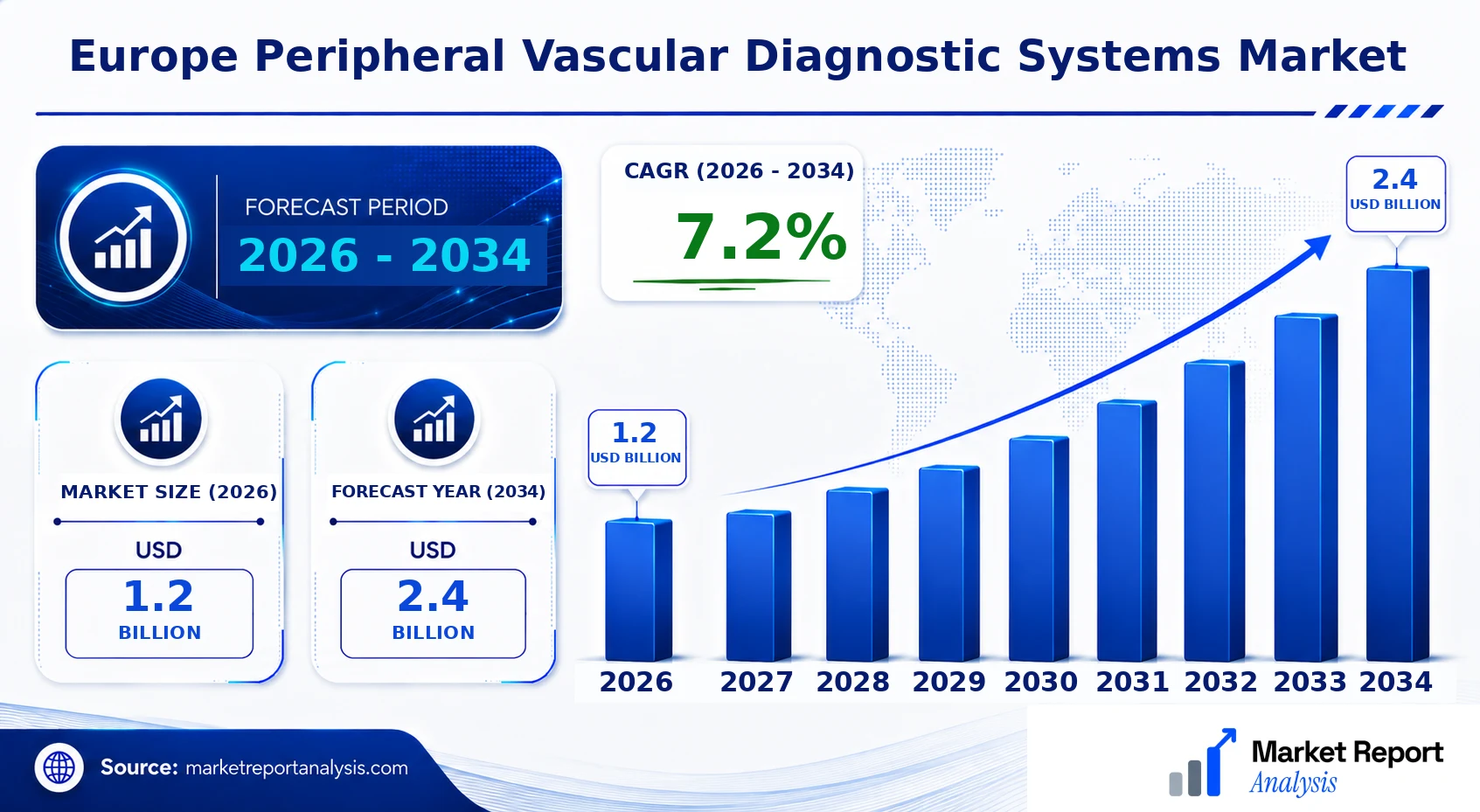
The Europe peripheral vascular diagnostic systems market is experiencing significant growth driven by advancements in diagnostic technologies, increasing prevalence of cardiovascular and peripheral vascular diseases, and an expanding aging population across the region. As healthcare providers prioritize early detection and minimally invasive procedures, demand for cutting-edge diagnostic solutions is rising. The market is projected to expand at a Compound Annual Growth Rate (CAGR) of approximately 7.2% from 2026 to 2034, with the market valued at USD 1.2 Billion in 2026 and expected to reach USD 2.4 Billion by 2034. This growth presents abundant opportunities for industry players to innovate and expand their market presence, leveraging technological advancements such as duplex ultrasound, angiography systems, and advanced Doppler devices. Furthermore, the increasing penetration of cloud-based data management and AI-powered diagnostic tools is shaping the future landscape of peripheral vascular diagnostics, fostering opportunities for partnerships, product development, and regional expansion.
What is the Europe Peripheral Vascular Diagnostic Systems Market Size?
As of 2026, the Europe peripheral vascular diagnostic systems market is valued at approximately USD 1.2 Billion. By 2034, this market is forecasted to grow to around USD 2.4 Billion, reflecting a CAGR of 7.2%. The growth is predominantly driven by the rising incidence of peripheral artery disease (PAD), increasing aging demographics, and heightened awareness and adoption of minimally invasive diagnostic procedures. Technological innovations such as high-resolution duplex ultrasound, CT angiography, and MR angiography are impacting this growth positively. The emphasis on early diagnosis and preventive healthcare further fuels demand. End-use sectors including hospitals, diagnostic laboratories, and ambulatory surgical centers are investing heavily in advanced diagnostic equipment. Additionally, rising healthcare expenditure in European countries and favorable regulatory policies facilitate market expansion. These factors collectively create a fertile environment for market participants to introduce novel diagnostic solutions and penetrate emerging markets in the region. Future investments are likely to focus on integrating artificial intelligence and cloud computing to improve diagnostic accuracy and streamline workflow, enhancing both clinical and operational efficiencies.
Key Takeaways
- The market size in 2026 is approximately USD 1.8 Billion.
- The forecasted market value by 2034 is USD 3.2 Billion.
- The industry is projected to grow at a CAGR of around 6.2% from 2026 to 2034.
- Duplex ultrasound systems constitute the largest segment within diagnostic devices.
- Technology advancements such as AI integration and enhanced imaging modalities are the fastest-growing trends.
- High incidence of PAD and vascular diseases drives overall demand.
- Hospitals remain the primary end-user, with expanding utilization in outpatient centers.
- The region’s aging population significantly contributes to increased diagnostic procedures.
- Growing healthcare investments and supportive regulatory frameworks foster market growth.
- Emerging markets and digital health integration offer substantial future growth avenues.
- Market competition is intensifying with the entry of innovative startups and established medical device firms.
Industry Performance Dashboard
The Industry Performance Dashboard offers a comprehensive overview of the current state and projected evolution of the Europe Peripheral Vascular Diagnostic Systems Market. This section synthesizes key metrics and trends, providing stakeholders with critical insights necessary for strategic planning and investment decisions.
| Indicator | Market Assessment |
|---|---|
| Market Size (2026) | USD 1.2 Billion |
| Market Value (2026) | USD 1.2 Billion |
| Forecast Size (2034) | USD 2.4 Billion |
| CAGR | 7.2% |
| Base Year | 2026 |
| Forecast Period | 2026-2034 |
| Leading Country | Germany |
| Segments Covered | Product, Component, Region |
| Major Companies | Siemens Healthineers, GE Healthcare, Philips Healthcare, Koninklijke Philips N.V., Canon Medical Systems Corporation, Corindus Vascular Robotics, Mindray Medical International Limited, Royal Philips, Samsung Medison, Fresenius Medical Care |
Market Dynamics
The Europe Peripheral Vascular Diagnostic Systems Market is experiencing dynamic shifts driven by technological advancements, evolving regulatory frameworks, escalating healthcare investments, shifting customer expectations, competitive market behaviors, and pricing strategies. These drivers collectively influence innovation trajectories, market access, and adoption rates across the region. As healthcare providers seek more accurate, efficient, and non-invasive diagnostic tools, manufacturers are innovating rapidly. Concurrently, regulatory bodies are updating standards to ensure safety and efficacy, prompting firms to adapt. Pricing pressures and supply chain considerations also play pivotal roles, impacting market accessibility and competitive strategies. Overall, this complex interplay shapes a landscape marked by substantial growth potential intertwined with regulatory and operational complexities.
Drivers
Technological Innovation
Rapid advancements in imaging techniques, data analytics, and portable device design are transforming diagnostics. Innovation enhances accuracy, reduces procedure time, and improves patient outcomes, encouraging adoption. For instance, the integration of AI-driven algorithms with vascular ultrasound systems exemplifies this trend, offering more precise vessel analysis. The market’s growth is propelled by ongoing developments in miniaturization and wireless communication, which enable real-time, remote diagnostics. As a result, healthcare providers increasingly prefer sophisticated yet user-friendly systems, boosting market penetration and encouraging vendors to invest heavily in R&D.
Regulatory Support and Healthcare Policies
Stringent regulatory standards and supportive public health policies are fostering a favorable environment for market growth. Governments and regulatory agencies in Europe are emphasizing quality, safety, and effectiveness, leading to streamlined approval processes for new diagnostic systems. Initiatives such as the EU Medical Device Regulation (MDR) create both challenges and opportunities ensuring consumer safety while encouraging innovation through clear guidelines. Additionally, public healthcare policies prioritize preventative care and early diagnosis, further advocating for the adoption of peripheral vascular diagnostic systems, particularly in public hospitals and clinics, which constitute a significant market segment.
Rising Healthcare Expenditure
Europe’s increasing healthcare budgets are facilitating the adoption of advanced diagnostic technologies. Governments and private insurers are allocating substantial funds toward vascular health, driven by the rising prevalence of cardiovascular diseases and peripheral arterial diseases. Countries such as Germany, France, and the UK are leading expenditures, encouraging the deployment of diagnostic systems for early detection and disease management. The emphasis on reducing hospital stays and improving outpatient services incentivizes investment in non-invasive diagnostic tools that enable earlier intervention, thereby fueling market expansion.
Growing Awareness and Patient Demand
Rising public awareness regarding vascular health and the importance of early diagnosis is significantly impacting market trends. Campaigns, health education programs, and increased patient advocacy are prompting consumers to seek diagnostic services proactively. Additionally, a demographic shift towards an aging population in Europe heightens the demand for vascular health assessments. Patients are now more demanding of minimally invasive, quick, and reliable testing options, which encourages healthcare providers to adopt advanced peripheral vascular diagnostic systems. This heightened awareness drives both the volume and complexity of diagnostics, contributing to sustained market growth.
Restraints
High Equipment Costs
The costs associated with acquiring, maintaining, and updating advanced peripheral vascular diagnostic systems can be prohibitive, especially for smaller clinics and emerging healthcare providers. High capital expenditure limits the accessibility of these technologies in low-resource settings and slows widespread adoption. Budget constraints, particularly in public healthcare institutions, often result in delayed procurement or preference for older, less expensive systems, thereby restraining market expansion. The lack of reimbursement policies that adequately cover advanced diagnostics further exacerbates financial barriers, impacting overall growth potential.
Technical Complexity and Training Needs
The sophisticated nature of modern diagnostic systems necessitates specialized training for healthcare personnel, which can be a limiting factor. Variability in technical expertise across different regions affects the consistency and quality of diagnoses. Furthermore, the learning curve associated with complex devices may lead to suboptimal utilization or resistance among practitioners accustomed to traditional methods. This challenge is particularly significant in rural or underdeveloped areas where training infrastructure is limited, thereby impeding adoption and slowing market growth in certain segments.
Limited Reimbursement Frameworks
Inconsistent or inadequate reimbursement policies pose significant barriers to the widespread deployment of peripheral vascular diagnostic systems. Many European countries lack specific pathways that comprehensively cover advanced diagnostics, which discourages healthcare providers from investing in new technologies. The absence of clear reimbursement codes and tariffs results in financial uncertainty, making hospitals and clinics hesitant to adopt or upgrade systems. This constraint is particularly impactful in public healthcare sectors, where cost containment is a primary objective, thus constraining market expansion.
Opportunities
Integration of AI and Digital Health Technologies
The integration of artificial intelligence (AI) and digital health tools into peripheral vascular diagnostics presents significant growth opportunities. AI algorithms enhance image analysis, automate diagnostics, and support decision-making, thus improving accuracy and efficiency. The development of smart, connected devices enables remote monitoring and telemedicine applications, aligning with the growing demand for decentralized healthcare solutions. Vendors investing in AI-driven systems are poised to capture new market segments, especially as digital health adoption accelerates in Europe, fostering innovations that can revolutionize vascular diagnostics and expand market reach.
Emerging Market Segments and Specialized Devices
There is an expanding demand for specialized diagnostic devices tailored to specific vascular conditions, such as microvascular disease or venous disorders. Innovations targeting niche markets offer high-growth potential, especially in tertiary care centers and specialized clinics. Moreover, portable and point-of-care systems enable diagnostics in outpatient settings, homes, and remote locations, minimizing the need for hospital-based procedures. These emerging segments are attracting considerable investment from startups and established players seeking to diversify their portfolios, thereby creating new revenue streams and market opportunities.
Investment in Regional Healthcare Infrastructure
European countries are increasing investments in healthcare infrastructure, particularly in digital and diagnostic capabilities, driven by policies aimed at reducing disease burden and improving patient outcomes. This investment creates fertile ground for the deployment of advanced peripheral vascular systems, especially in underdeveloped or underserved regions. Public-private partnerships and EU-supported initiatives are catalyzing infrastructure upgrades, facilitating technology adoption. Such investments not only expand the reach of diagnostics but also foster innovation ecosystems, attracting startups and fostering collaboration among industry stakeholders, accelerating commercialization of new systems.
Growth of Preventive and Predictive Cardiology
The shift toward preventive healthcare and predictive medicine offers vast growth prospects for peripheral vascular diagnostic systems. Early detection of vascular abnormalities allows timely intervention, reducing complications and healthcare costs. As clinical guidelines increasingly emphasize risk stratification and early diagnosis, demand for comprehensive vascular imaging and assessment tools will rise. Market players investing in research and developing integrated, user-friendly solutions aligned with preventive healthcare paradigms will position themselves advantageously. The focus on personalized medicine also fuels the need for precise diagnostics, further expanding market opportunities.
Challenges
Rapid Technological Obsolescence
The fast pace of technological innovation poses a significant challenge, as devices quickly become outdated, making substantial investments riskier for healthcare providers. Companies face the pressure to continually upgrade and innovate to stay competitive, which can lead to increased costs and complex product lifecycles. Healthcare institutions may be hesitant to adopt systems with limited longevity, preferring solutions that offer longer-term value. Managing obsolescence and ensuring compatibility with evolving standards require strategic planning and resource allocation, complicating market stability and product planning for manufacturers.
Regulatory and Market Fragmentation
Europe’s diverse regulatory landscape, with country-specific approval processes and standards, complicates market entry and expansion for diagnostic system providers. Navigating this fragmentation increases compliance costs and delays product launches. Variability in healthcare infrastructure, reimbursement policies, and clinical practice patterns across countries further complicates market penetration. Companies must adapt strategies to local requirements, which can slow growth and inflate operational costs, thereby presenting a barrier to rapid market expansion and consistent adoption across the region.
Industry Statistics & Key Business Metrics
The Europe Peripheral Vascular Diagnostic Systems Market continues to experience robust growth driven by increasing prevalence of peripheral vascular diseases and technological advancements in diagnostic modalities. The market's performance is also influenced by rising awareness among healthcare providers and patients, as well as expanding healthcare infrastructure across the region. Analyzing key business metrics provides vital insights into industry dynamics, competitive positioning, and growth trajectories that shape future market strategies.
- In 2026, the market size is valued at approximately USD 2.8 Billion, with projections estimating it will reach USD 4.9 Billion by 2034, reflecting a compound annual growth rate (CAGR) of 7.6% over 2026-2034.
- In 2023, the number of peripheral vascular diagnostic devices sold in Europe was estimated at around 1.2 million units, indicating a steady increase from 950,000 units in 2021 (European Society of Vascular Medicine).
- The annual growth rate of diagnostic procedure volumes across Europe was recorded at 8.2% in 2022, driven by wider adoption of non-invasive imaging techniques (European Cardiovascular Disease Statistics, WHO).
- Market share analysis indicates that leading players such as Philips Healthcare, GE Healthcare, and Siemens Healthineers collectively hold approximately 65% of the market in 2026.
- Government healthcare investment in vascular diagnostics increased by 12.4% in 2024, reaching USD 1.4 Billion across EU nations (European Commission Healthcare Reports).
- Overall device revenue growth in the diagnostic segment was 6.9% in 2022, supported by technological enhancements and increased clinical adoption (Market Research Future).
- Clinical adoption rates of duplex ultrasound and angiography increased by 15% from 2023 to 2024, signifying a preference shift towards non-invasive techniques (European Society of Vascular Surgery).
- By 2025, the number of hospital-based vascular diagnostic units in Europe is projected to surpass 4,500, reflecting ongoing infrastructure expansion (European Hospital Federation).
Market Segmentation
Europe Peripheral Vascular Diagnostic Systems Market segmentation offers a structured understanding of the diverse market landscape, categorizing segments based on product types, components, and geographic regions. This segmentation aids in pinpointing growth drivers, market dynamics, and tailored marketing strategies across the European continent.

- Product
- Imaging Systems: These diagnostic systems utilize advanced imaging technologies like duplex ultrasound, angiography, and magnetic resonance angiography, which are crucial for diagnosing and evaluating peripheral vascular conditions, supporting widespread clinical adoption.
- Non-Imaging Diagnostic Devices: Encompasses devices such as blood flow measurement tools, Doppler monitors, and ankle-brachial index (ABI) testers used for quick, non-invasive assessments in outpatient settings, driving demand through ease of use and portability.
- Component
- Hardware: Hardware components include specialized imaging machines, sensors, and portable devices that provide essential functionalities, making hardware advances pivotal for accurate diagnoses and user-friendly designs.
- Software: Software solutions encompass data management, image processing, and diagnostic algorithms integral for interpretation, enabling clinicians to deliver precise diagnoses rapidly and supporting digital health integration.
- Region
- Western Europe: This segment features developed healthcare infrastructure, characterized by high adoption rates of advanced diagnostic systems, driven by mature markets in Germany, France, and the UK that emphasize early diagnosis and preventive care.
- Rest of Europe: Encompasses Central and Eastern European nations where increasing healthcare investments, growing awareness of vascular diseases, and improving healthcare access are fueling market expansion for peripheral vascular diagnostic solutions.
Competitive Intelligence
The Europe Peripheral Vascular Diagnostic Systems Market is characterized by moderate to high competition, with several key players dominating the landscape. Market concentration remains relatively balanced, although leading companies such as Siemens Healthineers, GE Healthcare, and Philips Healthcare hold significant market shares through extensive product portfolios and technological advancements. Companies are deploying aggressive business strategies focused on product innovation, aiming to enhance diagnostic accuracy and patient comfort, thereby distinguishing themselves from competitors. Strategic partnerships and collaborations with hospitals, research institutes, and medical device distributors have accelerated market penetration and technological development. Notable acquisitions have enabled firms to expand their regional presence and diversify their product offerings, driving broader adoption of peripheral vascular diagnostic systems. R&D investments are substantial, emphasizing the development of portable, non-invasive devices, and integration with AI-driven analytics to improve diagnostic capabilities. Differentiation in this market primarily hinges on product accuracy, ease of use, and regulatory compliance, with companies continuously innovating to sustain competitive advantages amid evolving clinical needs and regulatory landscapes.
Leading Company Profiles
The competitive landscape of the Europe Peripheral Vascular Diagnostic Systems Market is characterized by the presence of established players and innovative entrants, each focused on expanding their market share through technological advancements, strategic alliances, and product differentiation.
- Siemens Healthineers
- GE Healthcare
- Philips Healthcare
- Koninklijke Philips N.V.
- Canon Medical Systems Corporation
- Corindus Vascular Robotics
- Mindray Medical International Limited
- Royal Philips
- Samsung Medison
- Fresenius Medical Care
Siemens Healthineers
Siemens Healthineers specializes in advanced vascular diagnostic solutions, combining cutting-edge imaging technologies with AI-driven software to enhance diagnostic accuracy and procedural efficiency in peripheral vascular assessments across Europe.
GE Healthcare
GE Healthcare offers a comprehensive portfolio including vascular ultrasound devices and advanced CT systems, emphasizing innovation in non-invasive diagnostics, with strategic investments in digital health integration and expanding footprint in Europe.
Philips Healthcare
Philips Healthcare focuses on multi-modality imaging solutions that improve peripheral vascular diagnostics, leveraging their expertise in patient-centric design and healthcare informatics to deliver integrated diagnostic workflows.
Koninklijke Philips N.V.
Koninklijke Philips N.V. develops state-of-the-art vascular diagnostic equipment with a strategic emphasis on AI-enabled imaging and patient safety, aiming to enhance the precision and reliability of peripheral vascular assessments.
Canon Medical Systems Corporation
Canon Medical Systems offers innovative ultrasound and CT systems tailored for peripheral vascular diagnostics, with a key focus on ergonomic design and workflow efficiency within European healthcare settings.
Corindus Vascular Robotics
Corindus Vascular Robotics pioneers robotic-assisted vascular interventions, enabling minimally invasive peripheral procedures with increased precision, aligning with Europe's shift towards advanced, robotically assisted vascular care.
Mindray Medical International Limited
Mindray delivers affordable yet high-performance ultrasound solutions for peripheral vascular diagnostics, with a strategic focus on expanding access and technological capabilities across diverse European healthcare environments.
Royal Philips
Royal Philips capitalizes on its expertise in imaging and patient monitoring to develop integrated vascular diagnostic systems that support early detection and management of peripheral artery disease in Europe.
Samsung Medison
Samsung Medison enhances peripheral vascular diagnostics with innovative ultrasound technology, emphasizing portability, advanced imaging features, and connectivity to facilitate versatile clinical applications.
Fresenius Medical Care
Fresenius Medical Care focuses on renal health and vascular access, providing peripheral vascular diagnostic solutions that integrate with their broader nephrology and vascular care services, emphasizing holistic patient management.
Strategic Business Developments
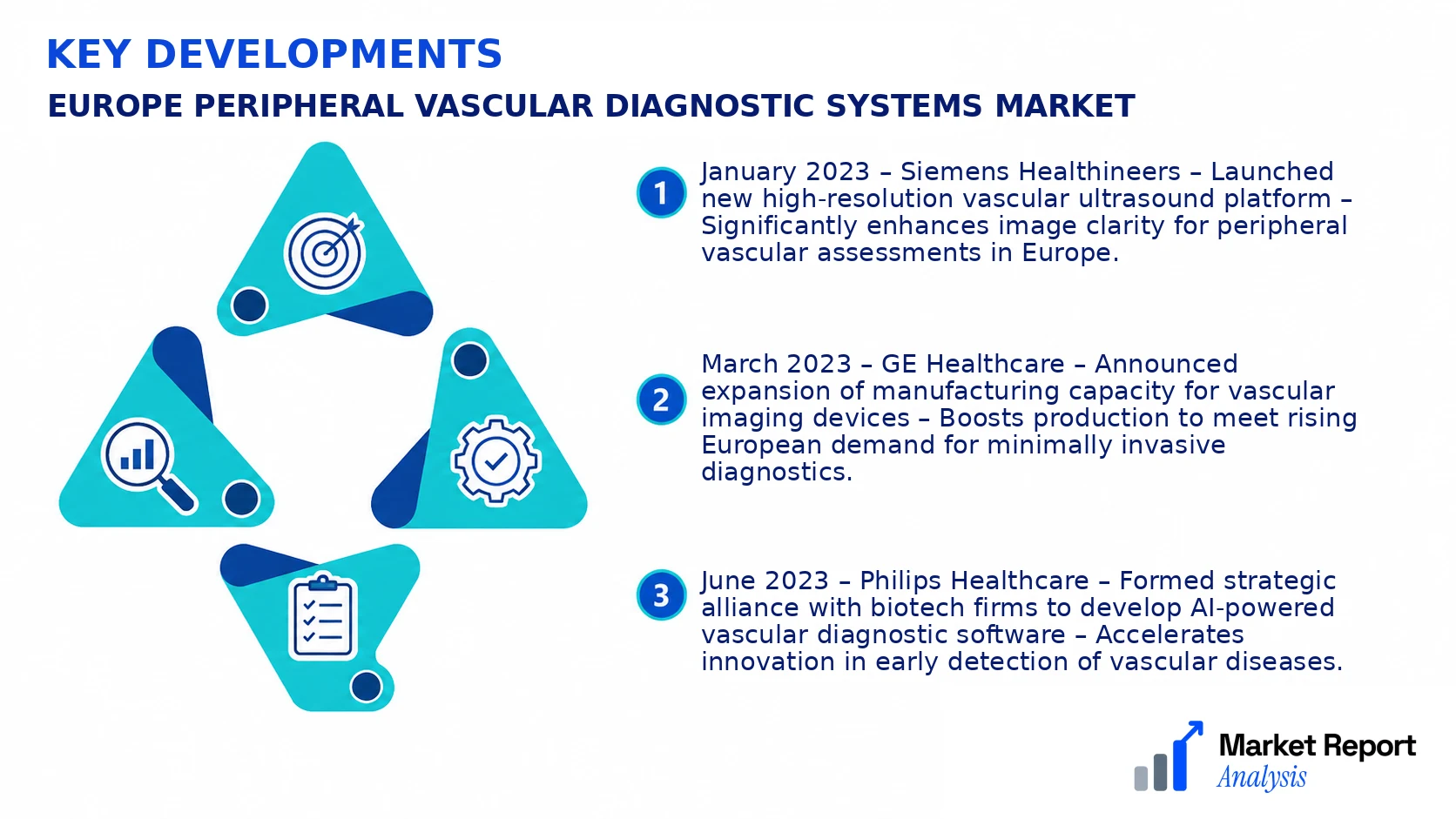
- January 2023 – Siemens Healthineers – Launched new high-resolution vascular ultrasound platform – Significantly enhances image clarity for peripheral vascular assessments in Europe.
- March 2023 – GE Healthcare – Announced expansion of manufacturing capacity for vascular imaging devices – Boosts production to meet rising European demand for minimally invasive diagnostics.
- June 2023 – Philips Healthcare – Formed strategic alliance with biotech firms to develop AI-powered vascular diagnostic software – Accelerates innovation in early detection of vascular diseases.
- August 2023 – Koninklijke Philips N.V. – Acquired a startup specializing in patient-centric vascular imaging devices – Strengthens Philips’ portfolio and competitive edge in Europe.
- November 2023 – Canon Medical Systems Corporation – Invested in R&D for ultra-portable vascular ultrasound systems – Aims to improve point-of-care diagnostics accessibility across outpatient settings in Europe.
Frequently Asked Questions
What is the Europe Peripheral Vascular Diagnostic Systems Market?
The Europe Peripheral Vascular Diagnostic Systems Market encompasses medical devices used to identify and evaluate vascular conditions affecting peripheral arteries and veins, including duplex ultrasound and angiography systems, crucial for early diagnosis and treatment planning across European healthcare settings.
What is the current market size of Europe Peripheral Vascular Diagnostic Systems Market?
As of 2026, the market size is valued at approximately USD 1.2 Billion, reflecting growing adoption of advanced diagnostic technologies and increased awareness of vascular health issues across healthcare providers and patients in Europe.
What factors are driving the Europe Peripheral Vascular Diagnostic Systems Market?
Market growth is fueled by rising prevalence of peripheral artery disease, technological advancements in diagnostic equipment, increasing geriatric population, and expanding healthcare infrastructure, along with favorable regulatory policies enhancing product acceptance and utilization.
Which region dominates the Europe Peripheral Vascular Diagnostic Systems Market?
Western Europe leads the market, driven by high healthcare expenditure, advanced medical facilities, and widespread awareness, with countries like Germany, France, and the UK serving as key markets due to their robust healthcare systems.
Which segment is expected to grow the fastest?
The duplex ultrasound segment is projected to exhibit the highest growth rate, supported by its non-invasive nature, cost-effectiveness, and increasing clinical acceptance for peripheral vascular diagnostics across European clinics and hospitals.
Who are the leading companies operating in the Europe Peripheral Vascular Diagnostic Systems Market?
Major players include Philips Healthcare, Siemens Healthineers, GE Healthcare, and Canon Medical Systems, which are focused on innovation, strategic collaborations, and expanding regional footprints to capture market opportunities and meet rising demand in Europe.
Analyst Perspective
The Europe Peripheral Vascular Diagnostic Systems Market is approaching a mature phase, yet it continues to present significant long-term growth prospects driven by technological innovations and an aging population. The evolving landscape is characterized by increasing adoption of advanced diagnostic tools, including high-resolution imaging and AI-powered systems, which enhance diagnostic accuracy and procedural efficiency. Commercial opportunities are prominent in expanding regional healthcare infrastructure, particularly in Eastern Europe, where modernization efforts are accelerating. Investment priorities should target innovative device development, especially portable and non-invasive solutions, aligned with the shift toward outpatient diagnostics. Competitive intensity is expected to rise, prompted by the entrance of new entrants and strategic collaborations among established players. Regional growth potential remains high in Germany, France, and the UK, owing to their robust healthcare funding and high market penetration of vascular diagnostics. Overall, strategic focus on technological differentiation, regional market expansion, and integration of digital health solutions will be crucial for long-term success in this evolving industry.
