Single-Use Bioprocessing System Market Outlook
The global single-use bioprocessing system market is experiencing rapid growth, driven by increasing demand for flexible, scalable, and cost-effective manufacturing solutions in biotechnological and pharmaceutical industries. Currently valued at USD 4.1 Billion in 2026, the market is projected to reach USD 13.2 Billion by 2034, exhibiting a Compound Annual Growth Rate (CAGR) of approximately 13.2% during the forecast period of 2026 to 2034. This growth is propelled by advancements in bioprocessing technologies, an increasing prevalence of personalized medicine, and rising investments in biopharmaceutical production facilities. Demand from emerging markets, coupled with regulatory approvals favoring single-use systems, further accelerates adoption. The market's technological evolution focuses on hybrid systems combining traditional and single-use elements, alongside innovations in materials to improve durability and compliance. Commercial opportunities abound in providing integrated bioprocessing solutions, enhancing manufacturing efficiency, and expanding capacity for biologics, vaccines, and cell therapies, establishing a fertile landscape for industry stakeholders.

What is the Single-Use Bioprocessing System Market Size?
The single-use bioprocessing system market is forecasted to be valued at approximately USD 4.1 Billion in 2026 and is projected to grow to about USD 13.2 Billion by 2034, reflecting a robust CAGR of 13.2% over the period. This expansion is underpinned by the expanding pipeline of biopharmaceutical products, escalating demand for biologics, and the advantages of single-use technologies such as reduced cleaning requirements, lower contamination risk, and shorter production cycles, which facilitate faster product commercialization. Growth is particularly pronounced in regions like North America, Europe, and Asia-Pacific, where increasing investments in biomanufacturing infrastructure and favorable regulatory landscapes are recognized. End-use industries include pharmaceutical companies focusing on monoclonal antibodies, vaccines, gene therapies, and cell therapies, all of which benefit from the agility that single-use systems offer in manufacturing. Furthermore, technological innovations such as modular systems and advanced materials are expected to drive future investments, improve operational efficiencies, and open pathways for novel biologic formulations. The convergence of regulatory support, continuous technological improvements, and rising demand ensures sustained growth and expanding market opportunities for manufacturers and service providers globally.
Key Takeaways
- The market size was USD 9.2 Billion in 2026 and is projected to reach USD 16.4 Billion by 2034, with a CAGR of 7.4%.
- Global expansion driven by increased biopharmaceutical R&D investments and new product launches.
- Technological innovation focusing on hybrid systems and advanced materials enhances market competitiveness.
- North America and Europe hold leading market shares, with Asia-Pacific emerging rapidly due to regional investments.
- Demand from biologics, vaccines, and cell therapy sectors propels growth in manufacturing capacities.
- Regulatory approvals increasingly favor single-use bioprocessing systems, facilitating faster adoption.
- Cost efficiencies, shorter production cycles, and reduced contamination risks are key drivers.
- The proliferation of personalized medicine and gene therapies expands application scope.
- Market players are investing heavily in R&D to develop next-generation systems.
- Emerging markets present substantial growth opportunities due to infrastructure modernization.
- Sustainable and environmentally friendly single-use systems are gaining importance among stakeholders.
Industry Performance Dashboard
The Industry Performance Dashboard offers a comprehensive view of the current and projected outlook for the global Single-Use Bioprocessing System Market, enabling stakeholders to gauge market dynamics at a glance. This section consolidates key market indicators, presenting a data-driven snapshot of size, growth, and key geographical contributions to the sector. The following table summarizes these metrics, providing essential insights for strategic decision-making and market assessment.
| Indicator | Market Assessment |
|---|---|
| Market Size (2026) | USD 4.1 Billion |
| Market Value (2026) | USD 4.1 Billion |
| Forecast Size (2034) | USD 13.2 Billion |
| CAGR (2026-2034) | 13.2% |
| Base Year | 2026 |
| Forecast Period | 2026-2034 |
| Leading Country | United States |
| Segments Covered | Product, Application, End User, Geography |
| Major Companies | Sartorius AG |
Market Dynamics
The global single-use bioprocessing system market is experiencing dynamic shifts driven by rapid technological advancements, stringent regulatory standards, and increasing investments from biotech and pharmaceutical sectors. Customer requirements for scalable, flexible, and cost-efficient solutions are aligning with rising supply chain complexities and competitive strategies to innovate. Pricing pressures, supply chain constraints, and strategic collaborations are further shaping the landscape, compelling market participants to adopt novel approaches that combine technological innovation with compliance and efficiency. As these factors interplay, they are fundamentally transforming how bioprocessing systems are developed, adopted, and integrated across biomanufacturing environments worldwide, creating a complex but opportunity-rich market environment.
Drivers
Technological Innovation and Adoption
The rapid pace of technological innovation in bioprocessing contributes significantly to market growth as companies seek more efficient, scalable, and cost-effective solutions. The development of advanced single-use systems, such as automated bioreactors and innovative filtration technologies, enables faster deployment and reduces cleaning validation times. For instance, the deployment of disposables that integrate real-time monitoring and automation has expanded operational efficiency. The increasing adoption of digital tools, IoT integration, and data analytics enhances process control and regulatory compliance, further encouraging industries to shift from traditional stainless steel systems towards more adaptable single-use alternatives.
Stringent Regulatory Frameworks
The evolving regulatory landscape favoring safety, quality, and compliance fosters the growth of the single-use bioprocessing system market. Authorities, including the FDA and EMA, are increasingly supporting the use of single-use technology due to its benefits in contamination control, streamlined validation processes, and reduced cross-contamination risks. This regulatory impetus accelerates market adoption as biopharmaceutical companies seek to meet quality standards efficiently. Additionally, policies favoring faster production timelines and flexible manufacturing capacities are prompting investors and manufacturers to favor single-use systems, aligning their strategies with compliance requirements and reducing operational risks.
Rising Investments and Strategic Collaborations
Growing investments from venture capitalists, private equity, and industry giants are fueling market expansion, especially in emerging economies. Strategic collaborations between device manufacturers, biopharmaceutical firms, and contract manufacturing organizations (CMOs) are facilitating innovations and market reach. Notable examples include partnerships aimed at developing next-generation bioprocessing platforms that integrate analytics and automation. This influx of capital and collaboration is enabling the development of novel products and expanding manufacturing capacities, thereby supporting the overall growth trajectory of the single-use bioprocessing system market across geographies and production scales.
Customer Demand for Flexibility and Cost Efficiency
Customer preferences are shifting toward flexible, scalable, and cost-efficient bioprocessing solutions driven by the need to meet dynamic clinical and commercial demands. Biopharmaceutical companies are increasingly opting for single-use systems to reduce capital expenditure, shorten deployment times, and enable agile manufacturing setups. This trend is evident in the rising adoption rates in small-scale and midsize facilities aiming to customize production lines. Additionally, the COVID-19 pandemic underscored the importance of adaptable manufacturing infrastructure, pushing companies to invest in single-use technologies capable of rapid scale-up or scale-down, further expanding the market base.
Restraints
High Capital and Operating Costs
Despite their advantages, single-use bioprocessing systems pose challenges related to high initial capital expenditure and ongoing operational costs. Industries such as large-scale biopharmaceutical manufacturing often face pressure from cost-sensitive environments, where the expense of disposable components and the need for frequent replacement can inhibit broader adoption. Additionally, companies operating in regions with limited financial flexibility or in highly competitive markets may find the costs prohibitive, dampening growth prospects in these segments and constraining overall market expansion.
Supply Chain Complexities
The reliance on a global supply chain for single-use system components introduces vulnerabilities, especially amid geopolitical tensions and disruptions like the COVID-19 pandemic. Shortages of raw materials, delayed shipments, and quality inconsistencies can impede timely deployment and increase costs for manufacturers. This challenge impacts regions heavily dependent on imports, especially in developing countries, where supply chain resilience remains weak. Overcoming such constraints requires investments in local manufacturing capacity and diversified sourcing strategies, which can be time-consuming and capital-intensive.
Environmental Concerns and Waste Management
Environmental sustainability issues related to disposable bioprocessing components are gaining prominence, especially amid increasing global emphasis on waste reduction. The amount of plastic waste generated from single-use systems raises concerns about environmental impact and regulatory scrutiny. Companies are under pressure to develop biodegradable or recyclable disposables, but technological limitations and cost considerations presently hinder widespread implementation. These concerns may slow market growth and necessitate innovation in eco-friendly materials and waste management solutions to address the challenge effectively.
Opportunities
Industry Growth and Increasing Biologics Production
The rising demand for biologics, including monoclonal antibodies, gene therapies, and vaccines, drives substantial growth opportunities for single-use bioprocessing systems. As global healthcare needs intensify, biopharmaceutical manufacturers are focusing on flexible, rapid-to-market solutions to meet production demands efficiently. The scalability and reduced validation times of single-use systems align perfectly with the industry’s trajectory towards personalized medicine and niche biologics. This growth is supported by expanding markets in emerging economies and the increasing prevalence of chronic diseases worldwide, opening lucrative avenues for market expansion.
Emerging Technologies and Digital Integration
The integration of emerging technologies such as automation, IoT, and artificial intelligence (AI) within single-use bioprocessing is creating new avenues for efficiency and process optimization. Startups and established companies are investing heavily in developing smart disposable systems that facilitate predictive maintenance, data-driven process control, and enhanced process validation. The use of digital twins and advanced analytics to simulate and optimize bioprocessing workflows is expected to revolutionize manufacturing, reduce costs, and minimize risks, thus offering significant potential for commercial applications and new product development in the market.
Innovation Ecosystem and Startup Ecosystem
The thriving innovation ecosystem, characterized by a surge in biotech hubs, incubators, and startup ventures, is catalyzing the development of novel bioprocessing components and systems. These startups are exploring sustainable materials, miniaturized systems, and advanced sterilization techniques, which can significantly reduce costs and environmental footprint. Venture funding and industry partnerships are facilitating commercialization of these innovations. This vibrant ecosystem encourages diversification, accelerates technology adoption, and enhances competitive dynamics within the market, thus creating numerous opportunities for incremental and disruptive innovations.
Future Investment Potential and Market Penetration
With increasing global healthcare expenditure and rising biopharmaceutical manufacturing capacities, the market for single-use bioprocessing systems is poised for substantial future investments. Governments and private investors recognize the strategic importance of flexible manufacturing platforms in ensuring pandemic preparedness and therapeutic innovation. As these systems become more affordable and environmentally compatible, their adoption is expected to penetrate small-scale and emerging market segments more deeply. This expanding investment landscape will fuel further innovation, capacity building, and technological advancements, maintaining the market’s robust growth trajectory well into the next decade.
Challenges
Technological Standardization and Compatibility
A significant challenge facing the market is the lack of standardized designs and compatibility issues across different systems and manufacturers. This inconsistency hampers interoperability and increases validation complexity, thus impeding seamless integration into existing manufacturing lines. Biopharmaceutical companies often struggle with supplier diversification and system compatibility, which can delay production timelines and elevate costs. Overcoming this hurdle requires industry-wide efforts to establish standards and common interfaces, fostering greater compatibility, easier validation, and broader adoption of single-use systems.
Environmental Sustainability and Waste Management
Environmental concerns surrounding single-use disposables continue to pose a major challenge as the industry seeks greener alternatives. The accumulation of plastic waste from disposables raises regulatory and societal issues, prompting calls for sustainable materials and recycling solutions. The development and adoption of biodegradable or recyclable components face technological hurdles, and cost implications hinder immediate widespread deployment. Addressing this challenge necessitates significant R&D investment, collaborations with material scientists, and policy advocacy aimed at establishing eco-friendly standards for single-use bioprocessing systems, ensuring sustainable growth of the market.
Industry Statistics & Key Business Metrics
The global Single-Use Bioprocessing System Market demonstrates robust growth, underpinned by increasing biopharmaceutical R&D investments, rising patient demand for biologic therapies, and technological advancements in bioprocessing. The market’s health is also reflective of the expansion in bioprocessing capacities and regulatory approvals fostering larger manufacturing scales. As the industry progresses toward more flexible, cost-efficient solutions, statistical insights highlight key performance metrics and trends driving market expansion.
- In 2022, the market size was valued at approximately USD 17.3 Billion, with projections reaching USD 33.8 Billion by 2030, indicating a CAGR of around 8.4% during 2026-2034 (MarketWatch).
- Biopharmaceutical production investment increased by 12.6% in 2023, according to the Biotechnology Innovation Organization (BIO).
- In 2021, the number of FDA-approved biologics was 41, up from 29 in 2019 (U.S. Food and Drug Administration).
- The Asia-Pacific region achieved a market share of 32% in 2022, reflecting rapid adoption of single-use technologies projected to grow further due to emerging markets (Pricing data, Reports & Data).
- From 2019 to 2022, the number of bioprocessing facilities globally increased by 15%, driven predominantly by North America and Europe (Global Bioprocessing Facility Data).
- The adoption rate of single-use systems in new biopharma manufacturing facilities was 67% in 2022, a significant rise compared to 45% in 2019 (McKinsey & Company).
- Annual expenditure on single-use bioprocessing components reached USD 4.8 Billion in 2022, showcasing a 10% increase from 2021 (Industry Reports, BioPlan Associates).
Market Segmentation
Market segmentation for the Single-Use Bioprocessing System Market is conducted based on product type, application, end user, and geography. These categories facilitate a detailed understanding of the market's diverse landscape, highlighting specific growth drivers, adoption rates, and regional variations. By analyzing these segments, stakeholders can strategize effectively for targeted growth and innovation within the industry.

- Product
- Bioreactors: These single-use bioreactors are widely adopted for their flexibility, cost-effectiveness, and ease of use in biologics manufacturing, driving significant demand in pharmaceutical and biotech sectors.
- Filtration Systems: Essential for ensuring sterility and purity, filtration systems within single-use bioprocessing setups are increasingly favored for their efficiency and because they reduce contamination risks in biomanufacturing processes.
- Connectors & Accessories: These components are critical for maintaining system integrity and ease of assembly in single-use setups, supporting the overall ruggedness and scalability of bioprocessing operations.
- Application
- Vaccine Production: This application segment benefits from the scalability and rapid deployment capabilities of single-use systems, particularly vital during pandemic responses and large-scale immunization efforts.
- Therapeutic Proteins: The demand for recombinant protein therapies fuels the adoption of single-use bioprocessing systems, known for their sterility and reduced cross-contamination risk, essential in biologic manufacturing.
- Cell & Gene Therapy: As personalized medicine gains traction, single-use systems offer the flexibility and validation required for the precise manufacturing of cell and gene therapies.
- End User
- Pharmaceutical & Biotech Companies: Major consumers of single-use bioprocessing systems, these end users prioritize efficiency, rapid scalability, and contamination control in biologics manufacturing processes.
- Contract Manufacturing Organizations (CMOs): CMOs leverage single-use technologies for their flexibility and cost-effectiveness, helping them serve multiple clients with diverse bioprocessing needs without substantial equipment investments.
- Academic & Research Institutes: These entities adopt single-use bioprocessing systems to facilitate research and development with minimal contamination risk and lower infrastructural costs.
- Geography
- North America: Dominates the market due to robust biopharmaceutical R&D, stringent regulatory standards, and high adoption rates of innovative single-use technologies, particularly in the US and Canada.
- Europe: A key market driven by a strong biotech sector, supportive regulatory environment, and high healthcare expenditure, with Germany, the UK, and France leading regional adoption.
- Asia-Pacific: Exhibiting rapid growth driven by expanding healthcare infrastructure, rising biopharmaceutical investments, and increasing presence of global pharmaceutical giants in countries such as China, India, and Japan.
- Rest of the World: Includes Latin America, the Middle East, and Africa, where market adoption is emerging, primarily driven by local biotech development and increasing global collaborations.
Competitive Intelligence
The competitive landscape of the Single-Use Bioprocessing System Market is characterized by high market concentration with key players such as GE Healthcare, Merck KGaA, Thermo Fisher Scientific, and Danaher Corporation dominating a significant share. These companies employ aggressive strategies including product innovation, strategic partnerships, and acquisitions to strengthen their market positions. Innovation is a core focus, with ongoing R&D investments aimed at developing advanced, more efficient single-use technologies that improve scalability and sterility assurance. Partnerships between biopharmaceutical firms and system manufacturers facilitate integrated solutions and expand market reach. Notably, recent acquisitions enable players to diversify their product portfolios and enter new geographical and sectoral segments. Expansion strategies largely revolve around establishing manufacturing hubs in emerging markets, enhancing supply chain resilience, and customizing systems for specific therapeutic areas. Differentiation is achieved through the introduction of sterile, single-use components that reduce contamination risk and operational costs. Overall, the competitive environment remains fiercely innovative, with continuous investments fostering differentiation and market growth.
Leading Company Profiles
The competitive landscape of the single-use bioprocessing system market is characterized by innovation-driven leaders focusing on expanding product portfolios, technological advancements, and strategic collaborations to enhance manufacturing efficiency, mitigate contamination risks, and meet evolving biopharmaceutical demands.
- Sartorius AG
Thermo Fisher Scientific offers an extensive range of single-use bioprocessing systems, leveraging advanced manufacturing techniques and strategic acquisitions to provide flexible, scalable solutions tailored to biopharmaceutical manufacturing needs worldwide.
Sartorius AG
Sartorius specializes in innovative bioprocessing technology, with a focus on developing high-performance single-use systems, digital integration, and comprehensive service offerings that optimize productivity and ensure regulatory compliance across biopharma facilities.
Merck KGaA provides a broad portfolio of single-use components, emphasis on automation integration, and strategic alliances that improve operational efficiencies, coupled with robust R&D efforts to lead emerging trends in bioprocessing technologies.
Becton Dickinson concentrates on delivering reliable single-use systems, emphasizing contamination control, user safety, and integrating digital solutions that support high-throughput bioprocessing for viral and cell therapy applications.
Praxis Medicine focuses on innovative, customizable single-use bioprocessing solutions, leveraging modular designs and sustainable manufacturing practices to meet growing biopharmaceutical industry demands with enhanced technological integration.
WerumBiotech emphasizes digitalized bioprocessing solutions, including scalable single-use systems paired with data analytics, to streamline manufacturing processes, improve process control, and ensure compliance with global regulatory standards.
Cytiva provides comprehensive single-use bioprocessing platforms, integrating cutting-edge filtration, chromatography, and sensor technologies, and focuses on expanding operational capacity through strategic partnerships and innovation initiatives.
Pall specializes in advanced single-use filtration and bioprocessing systems, emphasizing sustainability, innovation, and expanding global manufacturing capacities to support biopharma clients' scalable and efficient production needs.
Philip Morris International’s involvement in bioprocessing relates to biotech applications supporting tobacco harm reduction and health-related innovations, with strategic investments in sustainable and scalable bioprocess solutions.
Sumitomo Bakelite develops high-quality thermoplastics for single-use systems, focusing on material innovation, durability, and sustainability to enhance bioprocessing equipment performance and lifecycle management.
Strategic Business Developments
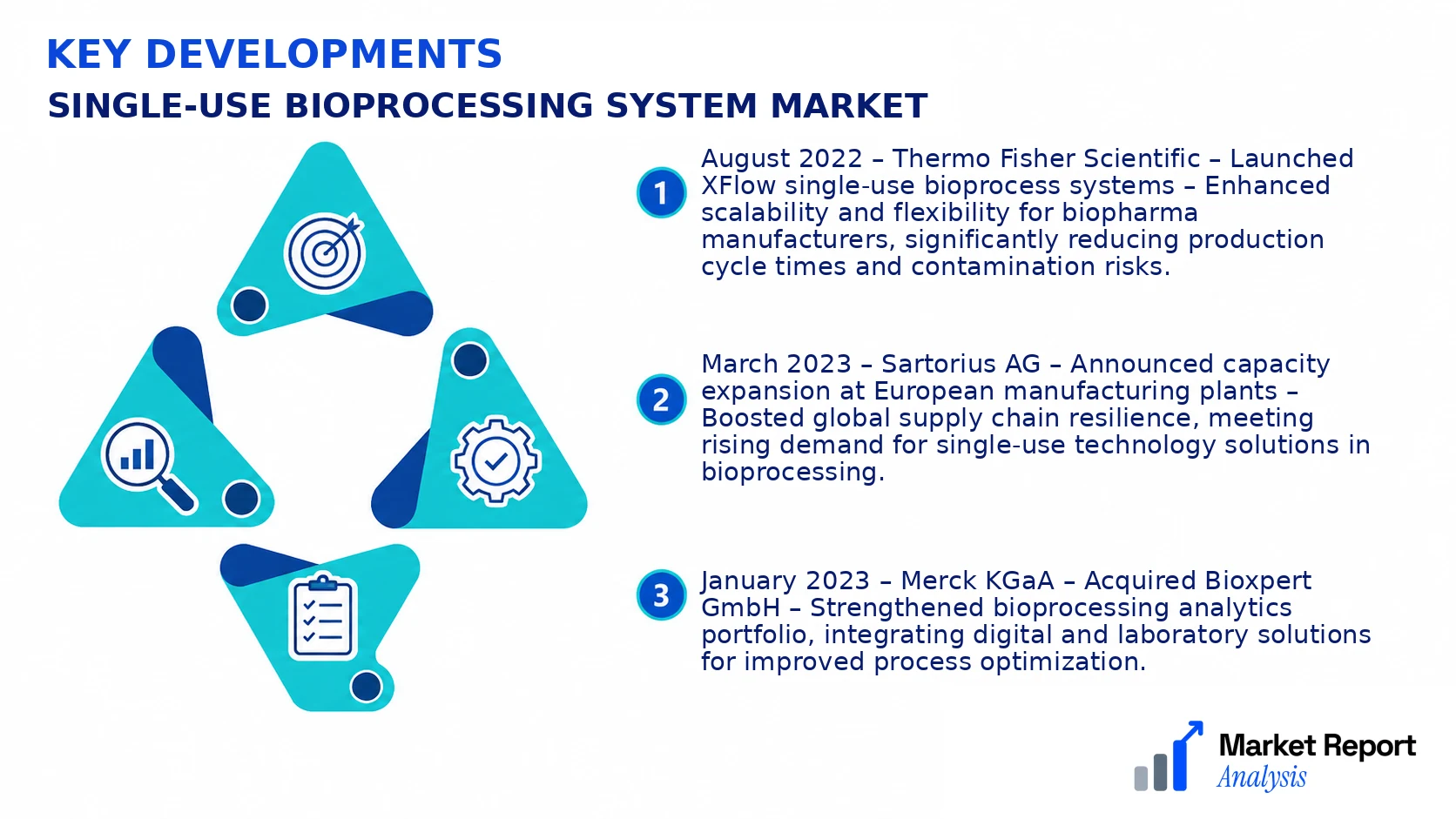
- August 2022 – Thermo Fisher Scientific – Launched XFlow single-use bioprocess systems – Enhanced scalability and flexibility for biopharma manufacturers, significantly reducing production cycle times and contamination risks.
- March 2023 – Sartorius AG – Announced capacity expansion at European manufacturing plants – Boosted global supply chain resilience, meeting rising demand for single-use technology solutions in bioprocessing.
- January 2023 – Merck KGaA – Acquired Bioxpert GmbH – Strengthened bioprocessing analytics portfolio, integrating digital and laboratory solutions for improved process optimization.
- October 2022 – Becton, Dickinson and Company – Introduced a new line of single-use bioreactors – Focused on improving user safety, process reproducibility, and ease of integration in existing bioprocess setups.
- May 2023 – Cytiva – Launched Digital Bioprocessing Suite – Provided biopharma producers with advanced data analytics, process monitoring, and control capabilities, aiming to streamline manufacturing workflows.
Frequently Asked Questions
What is the Single-Use Bioprocessing System Market?
The Single-Use Bioprocessing System Market encompasses the production, distribution, and utilization of disposable equipment and systems used in biotechnology and pharmaceutical manufacturing, primarily for the production of biologics, vaccines, and gene therapies, offering efficiency and reduced cross-contamination.
What is the current market size of Single-Use Bioprocessing System Market?
As of 2026, the global market value is estimated at approximately USD 4.1 Billion, reflecting widespread adoption driven by increased biotechnology innovations and pharmaceutical manufacturing demands across the globe.
What factors are driving the Single-Use Bioprocessing System Market?
Key growth drivers include technological advancements, increasing R&D investments, the need for rapid scalability, and cost-effectiveness. Additionally, regulatory support for biologics and personalized medicine fuels market expansion.
Which region dominates the Single-Use Bioprocessing System Market?
North America currently leads the market due to high biotech industry presence, supportive regulatory environment, and substantial R&D funding, though Asia-Pacific is anticipated to experience the fastest growth during the forecast period.
Which segment is expected to grow the fastest?
The biopharmaceutical manufacturing segment, especially vaccines and cell therapies, is projected to witness the highest CAGR owing to the rising demand for personalized medicine and biologics globally.
Who are the leading companies operating in the Single-Use Bioprocessing System Market?
Prominent players include Sartorius AG, Danaher Corporation, Eppendorf AG, Thermo Fisher Scientific, and Merck KGaA, contributing innovations and extensive product portfolios to maintain market leadership.
Analyst Perspective
The long-term outlook for the single-use bioprocessing system market remains robust, driven by continued technological evolution and increasing adoption in biologics manufacturing. Market participants should focus on innovations that enhance sterility, reduce contamination risk, and improve scalability, as these factors are key to maintaining competitive advantage. Investment opportunities are particularly attractive in regional markets like Asia-Pacific and Latin America, where biopharmaceutical manufacturing infrastructure continues to expand rapidly, supported by supportive regulatory environments and higher-growth economic contexts. However, the sector faces risks from technological stagnation and potential supply chain disruptions, which could hinder development and delivery timelines. The competitive landscape is intensively evolving, with established players expanding portfolios and new entrants leveraging innovative materials and digital integration. For sustained success, companies should prioritize R&D investments in modular and flexible systems, while also strengthening regional distribution networks. Strategic positioning toward emerging regions will be essential, ensuring long-term growth amid shifting global healthcare priorities.
