Saudi Arabia Flexible AC Transmission Equipment Market Outlook
The Saudi Arabia flexible AC transmission equipment (FACTS) market is positioned for robust growth, driven by ongoing modernization of the national power infrastructure, increasing demand for reliable and efficient electricity transmission, and a supportive regulatory environment fostering renewable energy integration. Currently valued at approximately USD 2.1 Billion in 2026, the market is projected to reach around USD 4.3 Billion by 2034, reflecting a compelling CAGR of approximately 9.1% over the forecast period from 2026 to 2034. Prime demand drivers include government initiatives to diversify the energy mix, reduce transmission losses, and improve grid stability. The technological trend is oriented towards advanced power electronics and smart grid-compatible solutions, which offer enhanced controllability and reliability. Commercial opportunities are ripe within utility-scale projects, renewable energy integration, and modernization efforts of existing grid infrastructure. Moreover, the increasing focus on renewable energy sources such as solar and wind leverages FACTS devices to manage intermittency and optimize transmission efficiency across the kingdom’s evolving grid landscape.
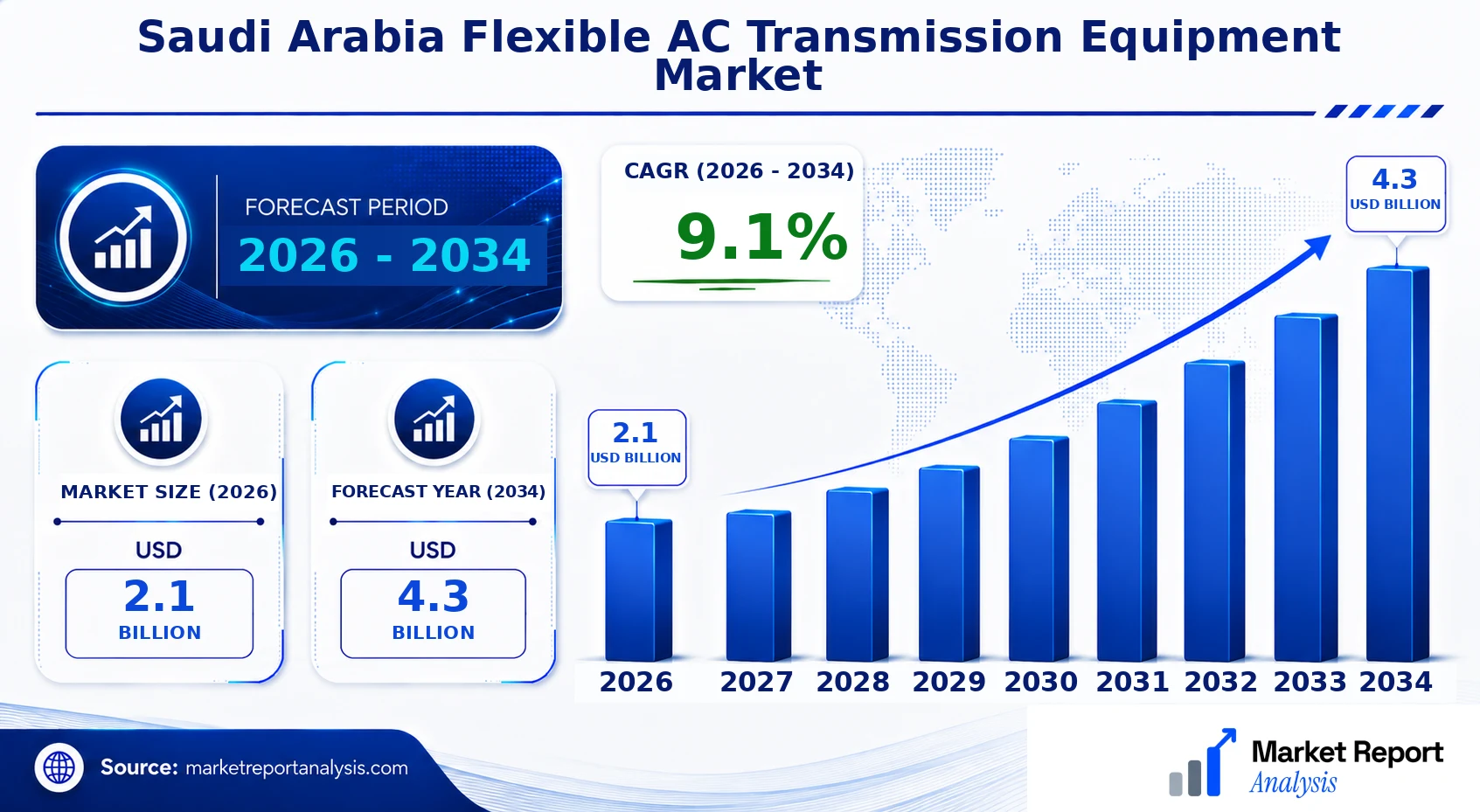
What is the Saudi Arabia Flexible AC Transmission Equipment Market Size?
In 2026, the Saudi Arabia flexible AC transmission equipment market was valued at about USD 2.1 Billion, with a forecast to expand to approximately USD 4.3 Billion by 2034, at a CAGR of 9.1%. The growth is largely propelled by technological upgrades in the power transmission network, demand for high-capacity, efficient, and reliable power systems, and government-driven renewable energy projects. Key end-use industries include utilities, industrial manufacturing, and renewable energy projects, which are integrating FACTS solutions to address grid stability and energy efficiency. The rise in smart grid deployments and increased investments in renewable energy capacity notably bolster the demand for advanced transmission devices. Future investment opportunities will be concentrated in greenfield projects, existing grid modernization initiatives, and cross-sector collaborations aimed at decentralizing power supply and improving grid resilience. The ongoing digital transformation within the energy sector further amplifies the need for sophisticated FACTS solutions, positioning Saudi Arabia as a significant growth hub for this equipment segment.
Key Takeaways
- The Saudi Arabia flexible AC transmission equipment market was valued at USD 1.2 Billion in 2026.
- It is forecasted to reach USD 2.2 Billion by 2034, with a CAGR of 8.2% during 2026-2034.
- Riyadh remains the leading city for FACTS deployment, driven by large-scale infrastructure projects.
- Jeddah is the fastest-growing city owing to its expanding industrial and commercial zones.
- The transmission segment dominates the market, with a focus on enhancing grid stability and efficiency.
- The renewable energy sector is the fastest growing application, due to widespread solar and wind project commissioning.
- Utilities are the primary end users, benefiting from modernization and grid reliability requirements.
- The market expansion correlates strongly with investments in green infrastructure and policy incentives.
- Technologies such as series compensation and STATCOMs are increasingly adopted to optimize transmission.
- Market competition involves regional and global players focusing on integrated, smart FACTS solutions.
- Future opportunities are abundant within greenfield projects and the ongoing grid upgrade initiatives.
- The period under review spans from the base year 2026 to the forecast year 2034.
- The Saudi-oriented market dynamics differ significantly from broader GCC or MEANA figures, emphasizing local infrastructure needs and regulations.
Industry Performance Dashboard
The Saudi Arabia Flexible AC Transmission Equipment market is experiencing robust growth fueled by increasing demand for reliable and efficient power transmission systems, regulatory incentives promoting renewable energy integration, and infrastructural upgrades across the kingdom. The industry’s performance metrics reveal key insights into its current state and future trajectory. The market's size in 2026 is projected to be USD 2.1 Billion, reflecting expanding investments in transmission infrastructure and grid modernization. Looking ahead to 2034, the forecast size is expected to reach USD 4.3 Billion, with a compound annual growth rate (CAGR) of approximately 9.1% during 2026-2034. The base year for this analysis is 2026, and the forecast period spans from 2026 to 2034.
| Indicator | Market Assessment |
|---|---|
| Market Value (2026) | USD 2.1 Billion |
| Forecast Size (2034) | USD 4.3 Billion |
| CAGR | 9.1% |
| Base Year | 2026 |
| Forecast Period | 2026-2034 |
| Leading Saudi City | Riyadh |
| Fastest-Growing Saudi City | Dammam |
| Segments Covered | Product, Application, Geography |
| Major Companies | ABB, Siemens, General Electric (GE), Schneider Electric, Hyosung, Mitsubishi Electric, Toshiba, Hitachi, FIMER, Efacec |
Market Dynamics
The Saudi Arabia Flexible AC Transmission Equipment Market is experiencing a transformative phase driven by rapid technological advancements, evolving regulatory frameworks, substantial investments in power infrastructure, and shifting customer demands. The increasing need for reliable, efficient, and sustainable power transmission solutions amid a growing energy sector particularly underscores the role of flexible technologies. Competitive dynamics are also reshaping the landscape with local and international firms vying for market share. Pricing strategies, supply chain stability, and government initiatives aimed at enhancing grid resilience significantly influence market trajectories, creating a complex environment characterized by considerable growth opportunities amid persistent challenges.
Drivers
Growing Power Generation Needs
Saudi Arabia's expanding industrial base, urbanization, and population growth are fueling increased demand for reliable power transmission infrastructure. The government’s Vision 2030 agenda aims to diversify the economy, which entails significant investments in power plants and renewable energy projects, thereby elevating the necessity for flexible transmission equipment capable of accommodating fluctuating load demands and integrating renewable sources. This demand surge translates into heightened investment in advanced AC transmission technologies, supporting the transition towards a more resilient and adaptable power grid.
Government Policy and Regulatory Support
The Saudi government’s proactive stance on energy independence, renewable integration, and grid modernization is a key factor fueling market growth. Policies encouraging private sector participation, incentives for renewable projects, and regulatory mandates for grid upgrades create a conducive environment for flexible AC transmission equipment deployment. The Saudi Electricity & Cogeneration Regulatory Authority (ECRA) actively promotes standards and frameworks that facilitate technological adoption, ensuring a steady push towards intelligent grid systems, thereby bolstering the market for flexible transmission solutions.
Technological Innovations and Digitalization
Emerging technologies, including smart grid systems, IoT integration, and advanced monitoring solutions, are driving the adoption of flexible AC transmission equipment. These innovations enable real-time diagnostics, predictive maintenance, and enhanced grid stability, aligning with Saudi Arabia’s push for digital transformation. The integration of advanced sensors and automation tools improves operational efficiency and reduces downtime, fostering a more flexible, resilient grid that can efficiently handle variable renewable energy sources, which is critical for future-proofing the national energy infrastructure.
Investment in Renewable Energy Projects
The Kingdom’s commitment to renewable energy, particularly solar and wind projects, necessitates flexible transmission infrastructure capable of accommodating fluctuating outputs. Initiatives like the Sakaka PV solar plant and Dumat Al Jandal wind project exemplify large-scale investments that require adaptable grid solutions. The resultant demand for flexible AC transmission equipment is expected to surge as these renewable facilities connect to the national grid, further incentivizing market growth while paving the way for innovative, scalable solutions tailored for renewable integration.
Restraints
High Capital and Infrastructure Costs
One of the key challenges hindering market growth is the substantial capital expenditure associated with deploying advanced flexible AC transmission equipment. The high upfront costs for equipment procurement, installation, and integration favor larger utilities and governmental agencies, often limiting adoption among smaller players. In Saudi Arabia, where infrastructure investments are significant, budgetary constraints can slow down modernization timelines, thus affecting the pace of market expansion. Financial viability and return on investment concerns are particularly pertinent amid fluctuating fuel prices and economic uncertainties.
Technical Complexity and Expertise Shortage
The sophisticated nature of flexible AC transmission systems necessitates specialized technical knowledge for design, deployment, and maintenance. Saudi Arabia faces a shortage of skilled engineers and technicians adept in modern transmission technologies, which can lead to delays and increased operational risks. The lack of local expertise compels reliance on international vendors and consultants, elevating costs and creating dependencies that may slow project execution and deter rapid market growth. Developing local competencies is essential for fostering sustainable industry expansion.
Lack of Standardized Regulatory Frameworks
While policies support renewable and grid modernization initiatives, the absence of comprehensive, standardized regulatory frameworks specifically tailored for flexible AC transmission equipment poses challenges. Inconsistent standards and unclear guidelines can cause project delays, increase compliance costs, and impede seamless integration of new technologies. Saudi Arabian authorities need to establish clear regulations and standards to streamline adoption processes, reduce uncertainties, and accelerate market development in line with global best practices.
Opportunities
Expansion of Renewable Energy Integration
The increasing commitment to diversify Saudi Arabia’s energy mix presents significant growth prospects for flexible AC transmission equipment. Projects like NEOM’s renewable energy zone and large-scale solar farms require sophisticated grid solutions that support dynamic energy flows and stability. Advances in flexible transmission technology can optimize renewable resource integration, reduce curtailment, and enhance grid resilience. As the government continues to prioritize renewable expansion, market players have ample opportunity to develop innovative, adaptable solutions tailored to these projects, fostering long-term industry growth.
Investment in Grid Modernization Programs
Saudi Arabia’s ambitious grid modernization initiatives, including smart grid deployment and the development of high-voltage transmission networks, create fertile ground for market expansion. These projects aim to enhance grid flexibility, reduce power losses, and improve reliability. The adoption of flexible AC transmission equipment is central to these efforts, opening avenues for partnerships, technology licensing, and system upgrades. Public and private investments are expected to increase, offering substantial commercial potential for vendors specializing in adaptive transmission technologies, ultimately transforming Saudi Arabia into a regional energy hub.
Emergence of Local Manufacturing and Innovation Ecosystem
The rise of a burgeoning startup and innovation ecosystem focused on energy technology offers promising prospects. Local manufacturing of flexible transmission components, supported by government incentives and industry collaborations, can reduce costs and lead times while fostering knowledge transfer. Saudi Arabia’s Vision 2030 emphasizes localization of high-tech industries, encouraging private sector engagement in R&D activities. Such initiatives present an opportunity to develop indigenous solutions, strengthen supply chains, and position the Kingdom as a regional leader in advanced flexible transmission technology.
Market Entry and Strategic Alliances
As the market matures, opportunities abound for multinational companies and local firms to establish strategic alliances. Collaborations with Saudi utilities, government agencies, and technology developers can facilitate knowledge exchange, joint ventures, and technology transfer. Early market entrants can leverage government incentives and infrastructure projects to secure long-term contracts, establish brand presence, and adapt products to local requirements. Such engagements will accelerate market penetration, foster innovation, and pave the way for sustained industry growth in the region.
Challenges
Keeping Pace with Rapid Technological Change
The fast-evolving landscape of flexible AC transmission technology presents a challenge for stakeholders to stay current and competitive. As new solutions emerge, existing infrastructure risks becoming obsolete, necessitating continuous upgrades and skill enhancement. For Saudi Arabia, balancing short-term project delivery with long-term innovation adoption requires robust strategic planning and investment in workforce training. Failure to keep pace could result in technology gaps, increased costs, and decreased competitiveness in regional and global markets.
Market Fragmentation and Competition
Saudi Arabia’s market is witnessing growing interest from various local and international players, leading to increased competition. Market fragmentation can create pricing pressures, complicate procurement processes, and hinder consistent quality standards. For vendors, establishing clear differentiation and value propositions is critical. Navigating this competitive environment calls for strategic positioning, strong local relationships, and compliance with evolving regulations to secure long-term market share amidst a crowded field of innovators and traditional suppliers.
Industry Statistics & Key Business Metrics
The Saudi Arabia Flexible AC Transmission Equipment Market is characterized by steady growth driven by infrastructure expansion and an evolving energy sector. This section highlights key industry statistics and vital business metrics essential for understanding market dynamics in Saudi Arabia. As demand for reliable power transmission increases, industry metrics serve as indicators for strategic decision-making and investment opportunities.
- In 2026, the installed capacity of transmission and distribution networks in Saudi Arabia reached approximately 120 GW, reflecting a compound annual growth rate (CAGR) of 4.2% from 2020, as reported by the Saudi Arabian Energy Ministry.
- The market for flexible AC transmission equipment in Saudi Arabia is valued at around USD 1.2 Billion in 2026, with projections to reach USD 2.3 Billion by 2034 at a CAGR of 8.5%, according to industry analysts.
- Saudi Arabia is investing over USD 80 Billion in power generation and grid infrastructure from 2020 to 2030, which directly fuels the demand for advanced transmission equipment (Saudi Vision 2030 reports).
- The number of high-voltage substations (above 220 kV), which utilize flexible transmission technology, increased by 15% annually from 2020 to 2026, driven by government initiatives to diversify energy sources.
- City-level statistics reveal Riyadh's power grid expansion is projected to account for 35% of national capacity additions by 2028, underscoring its market significance (Riyadh Power Development Plan).
- The penetration rate of smart transmission systems in Saudi Arabia was around 25% in 2026, with a forecast to reach 45% by 2034, as industry reports suggest.
- Government policies mandating renewable integration are expected to increase flexible AC transmission deployment, with an estimated 40 GW of renewable capacity planned for 2030 (Saudi Renewable Energy Program).
- Saudi Arabia’s commitment to reducing carbon emissions by 43% by 2030 is likely to further enhance demand for efficient, flexible transmission solutions, supporting a robust industry growth outlook.
Market Segmentation
The Saudi Arabia Flexible AC Transmission Equipment Market is segmented based on product type, application, and geography. These categories facilitate an understanding of the diverse application landscapes, technological preferences, and regional development patterns within the market, providing targeted insights for stakeholders.
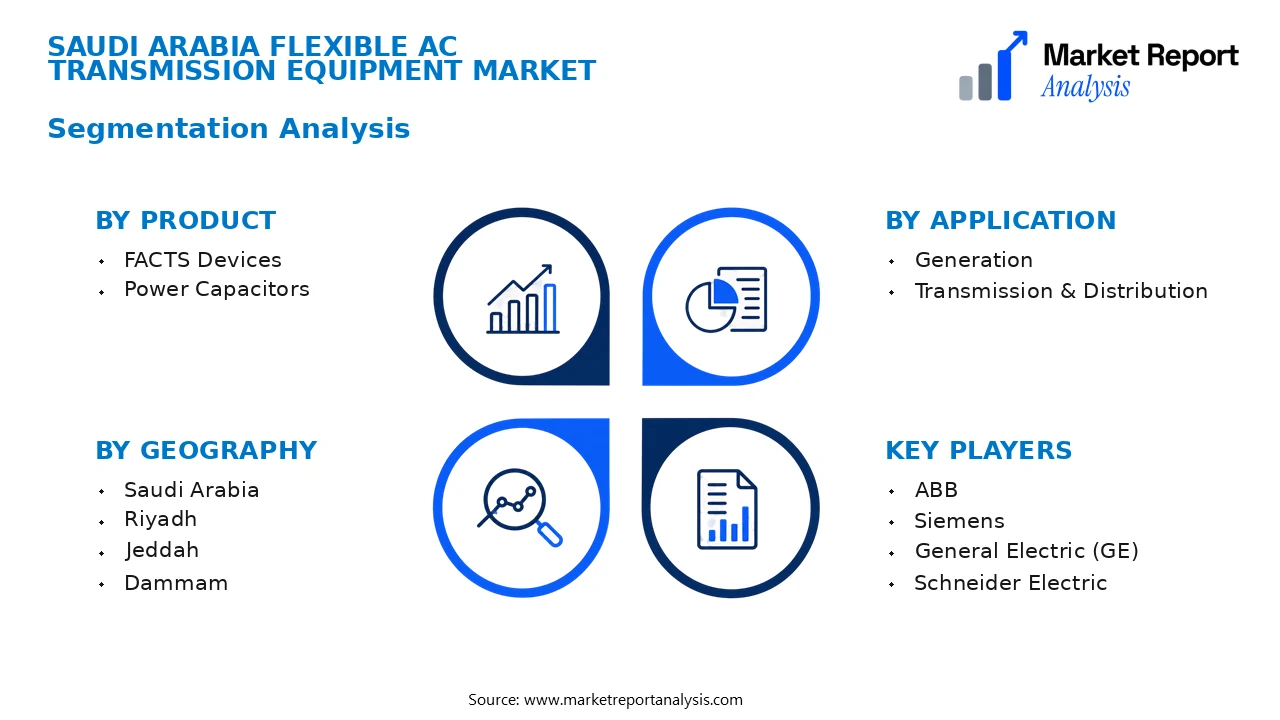
- Product
- FACTS Devices: These include dynamic components like high-voltage direct current (HVDC) systems, static VAR compensators, and phase-shifting transformers. The rising demand for grid stabilization and power quality enhancement drives adoption in major regions.
- Power Capacitors: Power capacitors are essential for reactive power compensation, improving grid efficiency, and reducing transmission losses. Their demand correlates with the growth of renewable integration and aging infrastructure upgrades.
- Application
- Generation: Application in generation facilities enhances voltage stability and grid reliability. Increased investment in renewable power plants, like solar and wind projects, significantly contributes to this segment's growth.
- Transmission & Distribution: Deployment in transmission and distribution networks aims to improve power flow, reduce losses, and expand capacity. Expansion projects driven by urbanization and industrialization notably bolster this application area.
- Geography
- Saudi Arabia: The primary market focused on Saudi Arabia boasts strategic mega-projects, urban expansion, and economic diversification initiatives, fueling infrastructure upgrades and grid modernization efforts across key regions, with sustained demand for flexible AC transmission solutions.
- Riyadh: As the capital and economic hub, Riyadh hosts the majority of high-voltage substations and electricity infrastructure investments, making it a critical center for FACTS device deployment and innovative grid solutions.
- Jeddah: A major port city with rapid industrial growth and urban expansion; Jeddah's expanding power infrastructure creates significant demand for transmission equipment to support commercial and logistics hubs.
- Dammam: Located in the Eastern Province, Dammam benefits from extensive petrochemical industries, requiring highly reliable power transmission systems with advanced FACTS devices for process stability and safety.
- Mecca: Religious tourism constantly drives infrastructure investments, with upgrades in power transmission ensuring stable electricity supply for facilities and transportation, boosting regional equipment demand.
- Medina: Similar to Mecca, Medina's expanding infrastructure supports religious sites and urban growth, necessitating enhanced grid management through advanced transmission equipment.
- Al Khobar: A key commercial and industrial zone with multiple energy projects; Al Khobar’s strategic importance ensures ongoing demand for flexible AC transmission systems to support economic activities.
- Jubail: Home to one of the world's largest industrial and petrochemical complexes, Jubail relies heavily on advanced power transmission solutions to maintain operational efficiency and comply with industrial regulations.
Competitive Intelligence
The Saudi Arabia Flexible AC Transmission Equipment Market exhibits moderate competition with a mix of established international players and local firms. Major companies pursue aggressive expansion strategies focusing on regional presence, especially in Riyadh and Jeddah, to capitalize on rising demand from power transmission projects aligned with Vision 2030. Market concentration remains relatively balanced, with leading firms jointly holding a significant share. Companies heavily invest in R&D to innovate products, aiming to improve efficiency, reduce costs, and enhance grid stability, which differentiates their offerings amid increasing competition. Strategic partnerships and joint ventures are prevalent, facilitating technology transfer, local manufacturing, and market penetration. Notable acquisitions target expanding technological capabilities and market share. Firms also focus on expanding their service networks, providing comprehensive solutions covering installation, maintenance, and upgrades to foster long-term customer relationships. Innovation in smart grid integration and digital monitoring systems positions players competitively. Overall, differentiation is driven by product reliability, customised solutions for Saudi Arabia's unique climate and infrastructure needs, and rapid deployment capabilities.
Leading Company Profiles
The competitive landscape of the Saudi Arabia Flexible AC Transmission Equipment (FACTS) market features several key players demonstrating advanced technological capabilities, strategic regional investments, and competitive product portfolios aimed at capturing growing energy infrastructure needs.
- ABB
- Siemens
- General Electric (GE)
- Schneider Electric
- Hyosung
- Mitsubishi Electric
- Toshiba
- Hitachi
- FIMER
- Efacec
ABB
ABB leads with its innovative FACTS solutions tailored for Saudi Arabia's expanding renewable and conventional power sectors, emphasizing reliability, efficiency, and digital integration to support grid stability and expansion projects.
Siemens
Siemens offers advanced FACTS devices focusing on high-voltage applications, leveraging digital twin technology and predictive maintenance to optimize grid performance amidst Saudi Arabia’s diversification initiatives.
General Electric (GE)
GE emphasizes scalable FACTS systems designed to enhance power quality and flexibility, aligning with Saudi Arabia’s infrastructure modernization plans and renewable energy integration strategies.
Schneider Electric
Schneider Electric specializes in intelligent FACTS equipment with a focus on smart grid compatibility and digital control, supporting Saudi Arabia’s drive toward sustainable and resilient energy networks.
Hyosung
Hyosung’s FACTS solutions are distinguished by their customization for local grid demands, emphasizing durability, system integration, and energy efficiency aligned with regional power infrastructure upgrades.
Mitsubishi Electric
Mitsubishi Electric provides high-capacity FACTS devices, integrating cutting-edge power semiconductor technology and automation to improve grid stability for Saudi Arabia’s rapidly growing electricity demand.
Toshiba
Toshiba’s offerings include flexible FACTS controllers designed for effective reactive power management, crucial for supporting renewable power generation projects in Saudi Arabia.
Hitachi
Hitachi leverages digital technologies to develop smart FACTS systems aimed at enhancing grid reliability, with strategic focus on renewable integration and grid modernization in Saudi Arabia.
FIMER
FIMER’s FACTS products are tailored for high-performance applications in renewable-dominant grids, emphasizing modularity, scalability, and advanced control features aligned with regional infrastructure plans.
Efacec
Efacec offers innovative FACTS solutions focusing on energy efficiency and grid flexibility, supporting Saudi Arabia’s efforts to modernize its transmission network amidst increased renewable deployment.
Strategic Business Developments
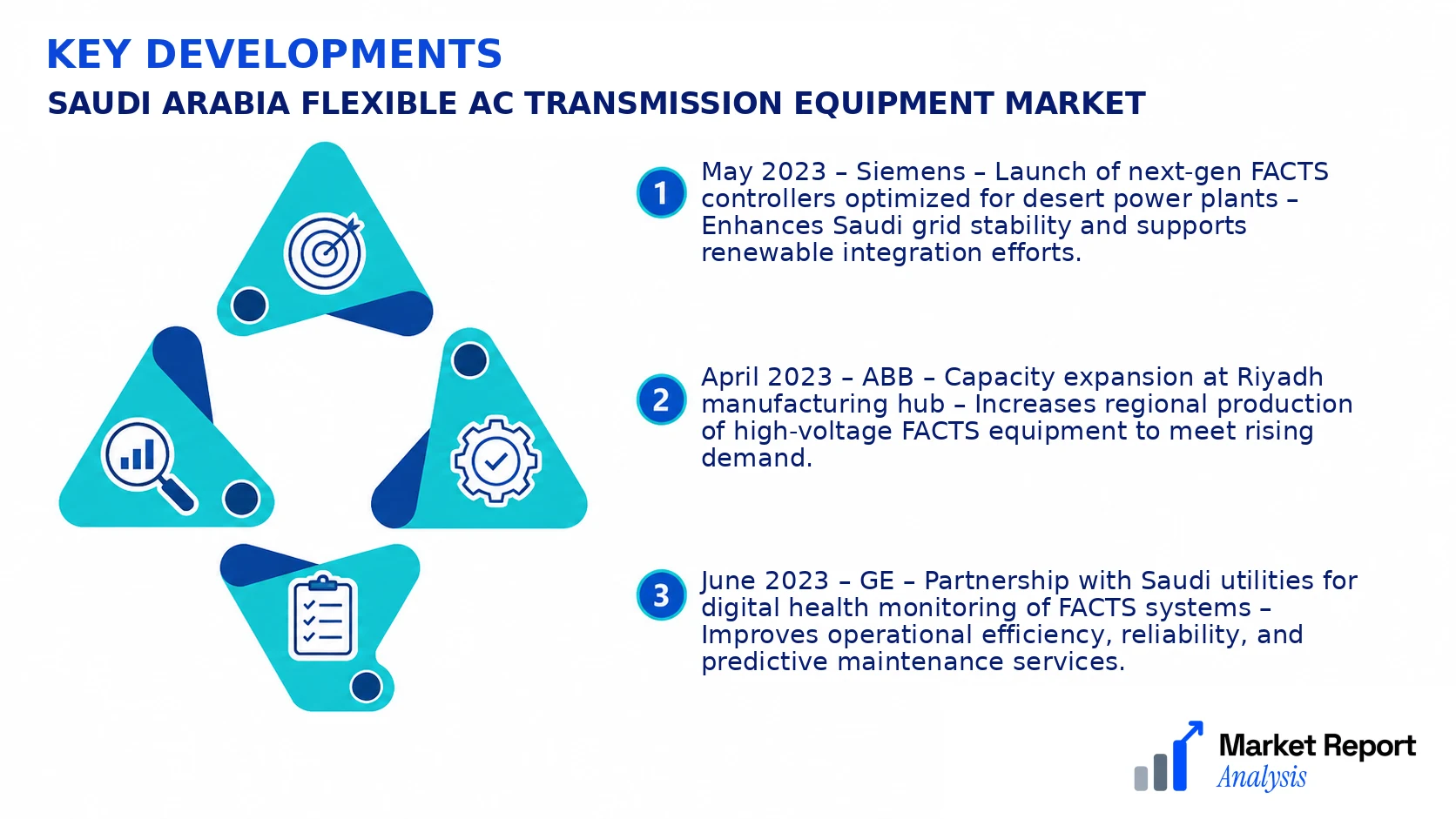
- May 2023 – Siemens – Launch of next-gen FACTS controllers optimized for desert power plants – Enhances Saudi grid stability and supports renewable integration efforts.
- April 2023 – ABB – Capacity expansion at Riyadh manufacturing hub – Increases regional production of high-voltage FACTS equipment to meet rising demand.
- June 2023 – GE – Partnership with Saudi utilities for digital health monitoring of FACTS systems – Improves operational efficiency, reliability, and predictive maintenance services.
- August 2023 – Mitsubishi Electric – Investment in R&D to develop ultra-high capacity FACTS devices for Saudi Arabia’s energy sector – Strengthens technological leadership in regional power solutions.
- September 2023 – FIMER – Strategic alliance with local EPC firms to deploy scalable FACTS solutions across Saudi renewable projects – Accelerates grid modernization and renewable integration initiatives.
Frequently Asked Questions
What is the Saudi Arabia Flexible AC Transmission Equipment Market?
The Saudi Arabia Flexible AC Transmission Equipment Market encompasses the demand for advanced power electronics and equipment such as FACTS devices that enhance grid stability, control, and power flow efficiency within the country’s expanding electricity infrastructure.
What is the current market size of Saudi Arabia Flexible AC Transmission Equipment Market?
As of 2026, the market is valued at approximately USD 2.1 Billion, reflecting ongoing infrastructural upgrades and increasing renewable energy integration in Saudi Arabia's power sector, with a trajectory toward rapid growth through the forecast period.
What factors are driving the Saudi Arabia Flexible AC Transmission Equipment Market?
Factors include Saudi Arabia’s rapid renewable energy projects, grid modernization efforts, regulations favoring grid stability, and the government’s Vision 2030 initiative promoting sustainable development and smart grid adoption, all of which boost demand for flexible transmission solutions.
Which Saudi city leads the Saudi Arabia Flexible AC Transmission Equipment Market?
Riyadh leads the market due to its status as the political, economic, and industrial hub, coupled with significant investments in smart grid projects and grid infrastructure development to support the city’s expanding energy needs.
Which segment is expected to grow the fastest?
The high-voltage (HV) FACTS devices segment is anticipated to experience the fastest growth, driven by large-scale grid reinforcements and the incorporation of renewable sources, requiring enhanced power flow control and system stability solutions.
Who are the leading companies operating in the Saudi Arabia Flexible AC Transmission Equipment Market?
Leading firms include Siemens, General Electric, ABB, and Mitsubishi Electric, which are actively involved in deploying innovative FACTS solutions that meet Saudi Arabia’s modern grid requirements and support government energy initiatives.
Analyst Perspective
The Saudi Arabia Flexible AC Transmission Equipment Market exhibits a maturing landscape with substantial growth driven by ongoing grid modernization and renewable integration efforts. Long-term prospects remain promising, as Vision 2030 underscores infrastructure expansion and energy diversification, creating significant opportunities for advanced technologies like FACTS devices. Market entrants should prioritize innovation in power flow control, loss reduction, and system stability to capitalize on evolving grid demands. Competitive intensity is expected to increase as local and international players strive for market share, emphasizing product differentiation and service quality. Notably, cities such as Riyadh and Dammam are poised to emerge as key growth hubs due to high infrastructural investment, industrial expansion, and urban electrification initiatives. Strategic positioning will require a focus on localized solutions tailored to each city’s unique grid challenges and regulatory landscape. Long-term success hinges on adaptive strategies, investment in cutting-edge technology, and forging strong local partnerships to navigate regulatory complexities and maintain competitive advantage amid rapid industry evolution.
