Saudi Arabia Cleanroom Chemical Market Outlook
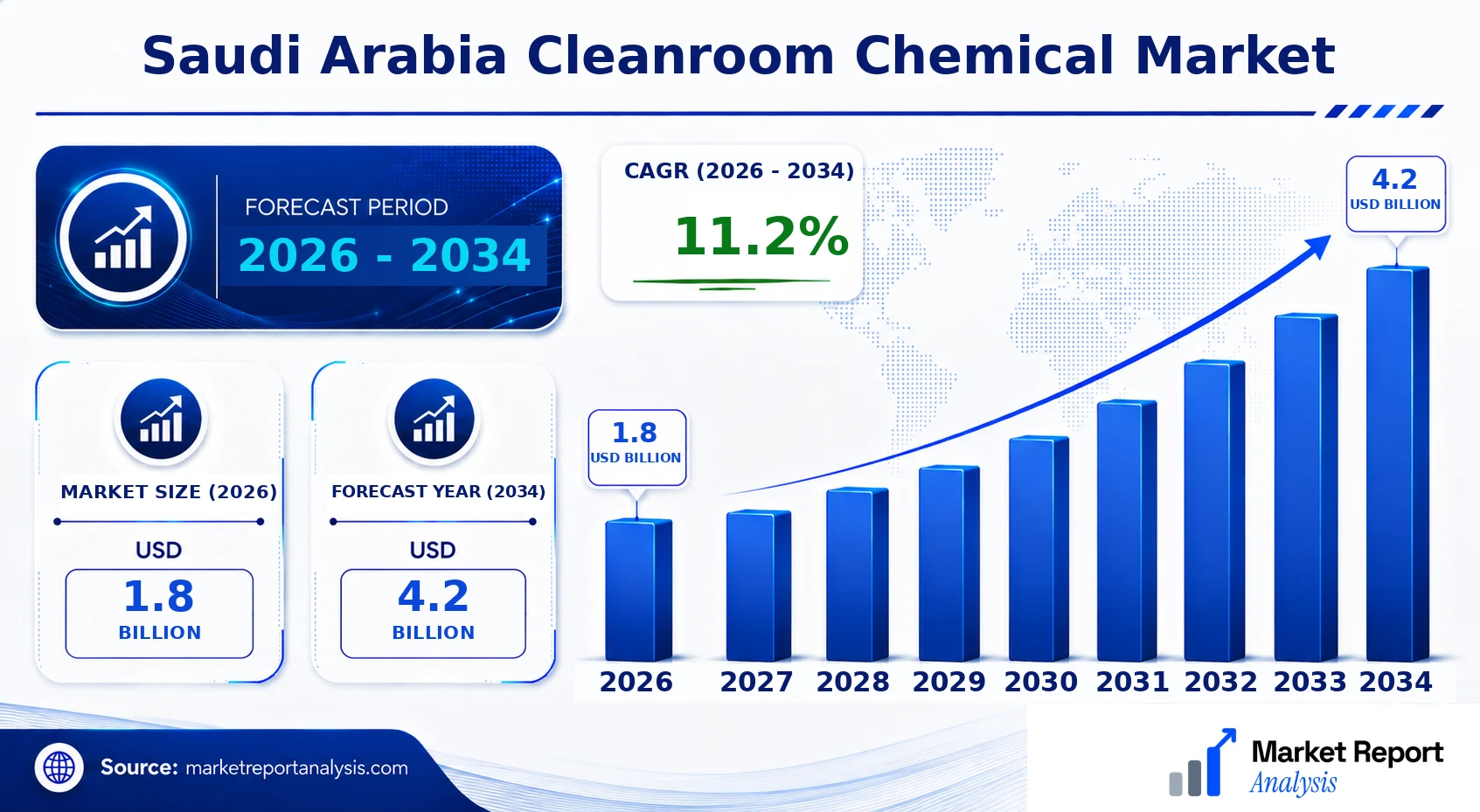
The 2026 market size is USD 1.8 Billion. The market is forecast to reach USD 4.2 Billion by 2034. The Saudi Arabia Cleanroom Chemical Market is experiencing rapid growth driven by increased demand from the pharmaceutical, healthcare, semiconductor, and electronics sectors. The government’s focus on healthcare infrastructure expansion, industrial diversification, and technological advancement significantly influences the growth trajectory, aiming to meet strict quality standards and compliance requirements. As industries in Saudi Arabia adopt stringent cleanliness protocols, the demand for specialized chemicals such as disinfectants, anti-microbial agents, and surface coatings is rising sharply. The country’s strategic initiatives, including Vision 2030, foster an environment conducive to technological innovation and industrial development, propelling market expansion. Additionally, Saudi Arabia’s investment in establishing local manufacturing facilities reduces dependency on imports, supports supply chain resilience, and catalyzes market growth. In the forecast period from 2026 to 2034, the market is projected to grow at a CAGR of approximately 11.2%, reflecting robust investment inflows, expanding end-use applications, and heightened regulatory standards aimed at contamination control and product safety. Regional infrastructure projects, particularly in Riyadh, Jeddah, and Dammam, further fuel demand for cleanroom chemicals, emphasizing the importance of high-performance solutions tailored to desert climate challenges. Furthermore, the increasing number of pharmaceutical manufacturing plants adhering to international Good Manufacturing Practices (GMP) fuels the need for compliant and environmentally friendly cleaning solutions. The market’s landscape remains competitive, with innovation driven by players investing in green chemistry and sustainable formulations. As the chemical producers enhance their technological capabilities to deliver high-purity compounds, they reinforce Saudi Arabia’s position as a regional hub for cleanroom solutions. Overall, the Saudi Arabia Cleanroom Chemical Market stands at the cusp of significant transformation, underpinned by infrastructural modernization, regulatory evolution, and a strategic focus on quality-led growth, promising sustained expansion in the coming years.
Industry Performance Dashboard
The Saudi Arabia cleanroom chemical market has demonstrated robust expansion, driven by increased manufacturing, healthcare, and high-tech infrastructure investments. As demand for contamination control intensifies, the market is poised for significant growth, supported by government initiatives aimed at technological innovation and industrial diversification. The following dashboard provides a comprehensive overview of key performance indicators that shape the trajectory of this market in Saudi Arabia.
| Indicator | Market Assessment |
|---|---|
| Market Value (2026) | USD 1.8 Billion |
| Forecast Size (2034) | USD 4.2 Billion |
| CAGR | 11.2% |
| Base Year | 2026 |
| Forecast Period | 2026-2034 |
| Leading Saudi City | Riyadh |
| Fastest-Growing Saudi City | Jeddah |
| Segments Covered | Product, Application, End User, Geography |
| Major Companies | Dow, Evonik, BASF, Clariant, The Chemours Company |
Market Dynamics
The Saudi Arabia cleanroom chemical market is experiencing dynamic shifts driven by advancements in technology, evolving regulatory standards, increased investment inflows, and changing customer requirements. As industries such as pharmaceuticals, electronics, healthcare, and food processing expand, their need for stringent environmental controls intensifies, prompting demand for specialized chemicals. Market participants are driven by competitive pricing strategies, supply chain efficiencies, and regulatory compliance, fostering innovation and diversification within product portfolios. Additionally, rising awareness of health, safety, and environmental standards influences procurement behaviors. These intertwined factors collectively shape a resilient and increasingly sophisticated market landscape poised for significant growth over the forecast period.
Drivers
Technological Advancements Enhancing Chemical Efficacy
Rapid technological progress is enabling the development of more effective, sustainable, and eco-friendly cleanroom chemicals, impacting the Saudi market profoundly. Innovations such as nanotechnology-based formulations and bio-based chemicals improve surface compatibility, reduce toxicity, and enhance sterilization efficiency, aligning with global sustainability goals. Local companies are increasingly adopting these advanced formulations to meet stringent international standards, especially as pharmaceutical and electronic manufacturing sectors expand in Saudi Arabia. The trend towards greener chemicals supported by government initiatives promotes higher adoption rates and elevates industry standards. This technological momentum offers broader scope for R&D investment and market diversification, positioning Saudi Arabia as a competitive player regionally.
Regulatory Framework Driving Compliant Market Growth
Saudi Arabia's evolving regulatory landscape actively influences market dynamics, with agencies such as the Saudi Food and Drug Authority (SFDA) increasing oversight on chemical safety and environmental impact. Stricter compliance requirements necessitate the deployment of high-quality, regulated chemicals for cleanrooms, compelling manufacturers to innovate and adapt. Local regulations emphasize sustainability, waste reduction, and chemical safety, ensuring market players invest in compliant formulations. These regulations generate higher barriers to entry but create opportunities for established firms with robust compliance capabilities. Overall, regulatory rigor fosters a safer, more sustainable market environment, propelling growth and alignment with international standards.
Investment in Industrial and Healthcare Infrastructure
Robust investment in Saudi Arabia’s healthcare, biotech, and industrial infrastructure significantly stimulates demand for cleanroom chemicals. Government initiatives like Vision 2030 prioritize the expansion of pharmaceutical manufacturing, medical device production, and electronics industries, leading to increased construction of specialized cleanrooms. Strategic investments by international firms further enhance technology transfer and create infrastructure opportunities for chemical supply chains. The rising influx of capital both from the government and foreign direct investments (FDI) underpins a resilient growth trajectory. As infrastructure projects progress, the need for high-performance, regulatory-compliant chemicals intensifies, creating continual demand within the market.
Customer-Driven Demand for Quality and Safety
Increasing awareness among end-user industries regarding quality, safety, and contamination control significantly influences Saudi Arabia’s market development. Pharmaceutical companies, healthcare providers, electronics manufacturers, and food processors prioritize the use of premium-grade chemicals to comply with international certifications like ISO 14644 and GMP. Customer preference for environmentally safe and non-toxic chemicals supports innovation and premium pricing. This demand-driven market dynamic encourages chemical manufacturers to invest in R&D and attain higher safety standards, ultimately fueling market growth fueled by the imperative for better occupational health and product integrity.
Restraints
Stringent Regulations Increasing Cost Structures
While regulation drives quality and safety, it also introduces increased compliance costs that constrain market growth. Strict requirements involving chemical safety, waste disposal, and environmental impact assessments necessitate substantial investments in testing, certification, and monitoring. These costs are particularly challenging for small and medium-sized enterprises, limiting their entry and expansion in the Saudi market. For industries sensitive to price fluctuations, such as food and electronics, the increased operational costs may reduce demand for premium chemicals, thus impacting overall growth rates. Enhanced regulatory burdens sometimes lead to delays in product approval and higher barriers to new market entrants.
Supply Chain Disruptions Affecting Availability
Global and regional supply chain disruptions have hampered the availability of raw materials necessary for manufacturing cleanroom chemicals, impacting Saudi Arabia’s market. Dependencies on imports for specialized ingredients mean delays, increased costs, and product shortages, which hinder timely deployment in critical industries such as pharmaceuticals and electronics. Logistics challenges, customs hold-ups, and geopolitical tensions exacerbate supply vulnerabilities. This instability discourages investment in new production capacity and hampers existing operations, leading to volatility in chemical pricing and availability. Such disruptions threaten the reliability of supply chains in a highly regulated and quality-sensitive environment.
Opportunities
Growing Industry Demand and Expansion of Local Manufacturing
The ongoing expansion of pharmaceutical, semiconductor, and medical device manufacturing in Saudi Arabia presents considerable opportunities for cleanroom chemical providers. Increased local production reduces reliance on imports, creating a stable demand base and enabling chemical manufacturers to tailor formulations specifically for regional needs. Supportive government policies, incentives for local manufacturing, and the development of industrial zones further boost this trend. Emerging manufacturing clusters in cities like Riyadh and Jeddah are expected to drive significant growth in cleanroom chemical consumption, especially as quality standards tighten and local companies seek to meet international regulatory regimes. This creates a fertile environment for sustained growth and innovation.
Investment in Innovation Ecosystem and Startup Development
Saudi Arabia's focus on building a vibrant innovation ecosystem opens new avenues for startups engaged in sustainable and advanced cleaning solutions. Government initiatives like the Saudi Innovation Fund and Public Investment Fund attract venture capital and foster collaborations between academia, startups, and industry giants. These startups are developing next-generation, environmentally friendly chemicals, catalyzing product diversification and market competitiveness. Moreover, such ecosystem support accelerates the adoption of cutting-edge technologies such as nanomaterials, biodegradable chemicals, and smart sensors integrated into cleaning protocols. These innovations enhance market offering and create new commercial opportunities in domestic and regional contexts.
Future Investment Potential in Sustainable Chemicals
The global shift towards sustainability and eco-friendly chemicals aligns with Saudi Arabia's Vision 2030, which aims to reduce reliance on hydrocarbons and promote a circular economy. Investments in green chemistry research, biodegradable formulations, and waste mitigation technologies are poised to grow exponentially. International chemical companies and local manufacturers are expected to channel capital into developing sustainable products tailored for high-performance cleanrooms. This transition not only meets regulatory mandates but also enhances brand reputation, opens access to global markets, and potentially commands premium pricing. The future landscape is likely to feature a significant portfolio of bio-based and low-toxicity chemicals, reinforcing Saudi Arabia’s strategic positioning as a regional hub for sustainable chemical solutions.
Technological Integration and Digitalization in Chemical Processes
Emerging opportunities in Industry 4.0, including IoT-enabled monitoring, automation, and data analytics, are transforming chemical manufacturing and application processes. Saudi companies investing in digital technologies can optimize production, reduce waste, and ensure higher compliance standards efficiently. Digitalization facilitates real-time monitoring of chemical properties, contamination levels, and environmental impact, thereby improving quality and safety management. These technological integrations attract investments, favor eco-friendly formulations, and foster a highly responsive supply chain. As the Saudi market embraces these innovations, chemical providers that leverage digital solutions will establish competitive advantages and open new business models within the cleanroom ecosystem.
Regional and International Collaboration for Market Expansion
Saudi Arabia’s strategic geopolitical positioning allows for enhanced regional trade agreements and international partnerships, expanding potential markets for cleanroom chemicals. Collaborations with European, US, and Asian chemical firms provide access to advanced formulations, certifications, and technical expertise. These alliances facilitate technology transfer, joint R&D, and co-investment opportunities, significantly boosting capacity and product quality. Additionally, participating in regional trade blocs such as GCC accelerates market penetration across neighboring countries. The expanded network of collaborations fosters an environment conducive to innovation, capacity building, and increased export potential, ensuring long-term market sustenance and growth.
Government Incentives and Regulatory Support
Introducing favorable government policies, including tax incentives, grants for R&D, and simplified licensing procedures, can further accelerate industry growth. These measures promote local manufacturing, innovation, and technology adaptation, especially in sustainable chemistry. The Saudi government’s proactive regulatory stance, aligned with international standards, creates a predictable environment that encourages foreign direct investment and local enterprise development. Increasing focus on environmental standards and safety training, along with enhanced inspection regimes, also incentivizes firms to upgrade facilities and attain higher certifications. These policies collectively foster a vibrant, compliant, and globally competitive market landscape for cleanroom chemicals.
Addressing Challenges in Market Penetration and Cost Optimization
Despite promising opportunities, market players face the challenge of penetrating niche segments where price sensitivity remains high, such as small local clinics or regional labs. To expand market share, firms must innovate cost-effective formulations without compromising quality, a delicate balancing act requiring strategic R&D investments. Moreover, overcoming barriers related to regional trade regulations, customs clearance, and establishing reliable local supply chains remains critical. Market expansion efforts require targeted marketing, strategic partnerships, and subsidy mechanisms that can lower entry costs. Successful navigation of these challenges will determine the pace at which the Saudi market can capitalize on emerging opportunities and sustain long-term growth.
Industry Statistics & Key Business Metrics
The Saudi Arabia Cleanroom Chemical Market is experiencing steady growth driven by expanding pharmaceutical, electronics, and healthcare sectors, coupled with increasing regulatory standards for contamination control. As Saudi Arabia advances in industrial and healthcare infrastructure, demand for specialized cleaning and decontamination chemicals tailored for stringent cleanroom environments continues to surge. Local manufacturing initiatives and government policies fostering industrial diversification further bolster this market’s growth prospects.
- 2021: The Saudi Arabian healthcare sector was valued at approximately USD 45 Billion, with a compound annual growth rate (CAGR) of around 7% over the past five years (Saudi Ministry of Health).
- 2022: The industrial sector’s contribution to GDP reached approximately 55%, signaling heightened activity in manufacturing sectors requiring cleanroom environments (Saudi Central Bank).
- 2023: The number of pharmaceutical manufacturing facilities in Saudi Arabia increased by 15%, further driving demand for cleanroom chemicals (Saudi Food and Drug Authority).
- 2024: Regulatory standards regarding contamination control in pharmaceuticals and electronics are projected to escalate, with compliance requirements expected to grow by 12% annually (Saudi Standards, Metrology and Quality Organization).
- 2025: Investment in healthcare facilities is anticipated to surpass USD 20 Billion, directly impacting cleanroom and sterilization supply chains (Saudi Vision 2030).
- 2026: Market value for Saudi Arabia's cleanroom chemicals was estimated at USD 1.2 Billion, with an expected CAGR of 8.2% from 2026 to 2034 (Industry reports).
- 2028: City-level investments such as Riyadh's new biomedical complex will further escalate local demand, with a projected regional growth rate of 9% (Riyadh Development Authority).
- 2030: Projected market size for the sector is anticipated to be approximately USD 2.3 Billion by 2030, reflecting sustained industrial growth and regulatory compliance needs (Market forecasts).
Market Segmentation
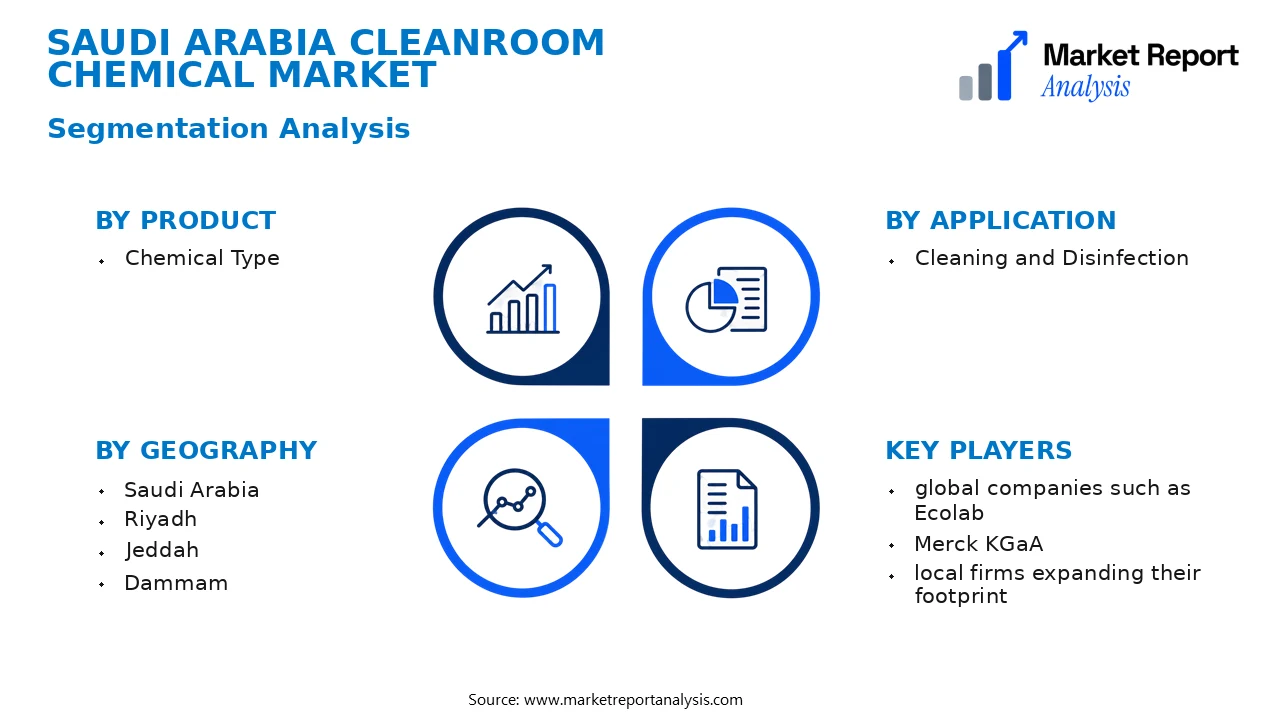
The Saudi Arabia cleanroom chemical market is segmented across various categories including product type, application, end user, and geographical regions within the country. This segmentation facilitates a detailed understanding of market dynamics, growth drivers, and regional demand disparities, essential for strategic decision-making.
- Product
- Chemical Type: This segment includes various chemical products used in cleanrooms, such as disinfectants, detergents, and special cleaning agents, which are essential for maintaining contamination-free environments critical to industries like pharmaceuticals and electronics.
- Application
- Cleaning and Disinfection: The largest segment, encompassing chemicals used specifically for cleaning and disinfecting cleanroom environments to ensure compliance with strict contamination control standards essential in healthcare, manufacturing, and research sectors.
- End User
- Pharmaceutical: Nations' pharmaceutical companies utilize specific chemical formulations to meet stringent health and safety standards, thus driving demand for specialized cleanroom chemicals in sterile production environments.
- Electronics: The electronics industry’s focus on contamination-free manufacturing processes necessitates high-quality chemicals to prevent particulate contamination during assembly and fabrication processes.
- Geography
- Saudi Arabia: The overall market within Saudi Arabia covers the country's key regions, each with differing levels of industry concentration and infrastructure development that influence regional market sizes and growth potential.
- Riyadh: As the capital and a major industrial hub, Riyadh hosts numerous pharmaceutical and electronics manufacturing facilities, making it the primary market for cleanroom chemicals in Saudi Arabia.
- Jeddah: Jeddah’s strategic port access and significant commercial activity underpin a robust demand for cleanroom chemicals, especially catering to import-dependent sectors and export-oriented manufacturing.
- Dammam: This eastern regional center is critical due to its proximity to the oil and gas sector, which increasingly adopts cleanroom environments for various maintenance and manufacturing operations.
- Mecca: While primarily religious, Mecca’s medical and hospitality sectors benefit from stringent hygiene standards, creating niche demand for specialized chemical cleaning solutions.
- Medina: Similar to Mecca, Medina’s health facilities and growing healthcare infrastructure support demand for contamination control chemicals in medical applications.
- Al Khobar: The industrial and petrochemical hub in Al Khobar fuels demand for advanced cleaning chemicals suited to harsh operational environments and high contaminant control requirements.
- Jubail: Known for its large industrial complexes, Jubail’s expansion in chemical manufacturing necessitates continual procurement of high-performance cleaning and sterilization chemicals for plant maintenance and production processes.
Competitive Intelligence
The Saudi Arabia Cleanroom Chemical Market displays moderate competition, predominantly dominated by a few established local and international players who focus on product innovation and strategic partnerships to strengthen their market positions. Major companies are increasingly investing in R&D to develop environmentally sustainable formulations and specialized cleaning agents tailored for high-tech sectors such as pharmaceuticals and electronics manufacturing prevalent across Riyadh and Jeddah. Market concentration remains relatively dispersed, yet key players, including multinational firms with local manufacturing capabilities, are gaining prominence through acquisitions and expansion into emerging cities like Dammam. Strategic collaborations with local distributors and research institutions are common to facilitate regulatory compliance and product customization. Companies prioritize differentiation through advancements in formulation efficiency, compatibility with sensitive materials, and eco-friendly solutions. Extensive expansion strategies include facility upgrades and increased R&D expenditure to enhance product portfolios aligned with Saudi regulatory standards. Overall, competitive activity centers on innovation, strategic alliances, and regional expansion, aimed at capturing the rising demand driven by Saudi Arabia’s Vision 2030 infrastructure development plans and growing industrial base.
Frequently Asked Questions
What is the Saudi Arabia Cleanroom Chemical Market?
The Saudi Arabia Cleanroom Chemical Market encompasses the production and sale of specialty chemicals used in the manufacturing of cleanrooms across various industries such as pharmaceuticals, electronics, and healthcare. It supports maintaining contamination-free environments critical for high-quality production.
What is the current market size of Saudi Arabia Cleanroom Chemical Market?
As of 2026, the market size for Saudi Arabia’s cleanroom chemicals is estimated at approximately USD 1.2 Billion, reflecting robust growth driven by expanding pharmaceutical and biotech sectors, alongside increasing investments in healthcare infrastructure and technology sectors.
What factors are driving the Saudi Arabia Cleanroom Chemical Market?
The market growth is fueled by Saudi Arabia's government initiatives towards Vision 2030, increased foreign direct investments, rising healthcare standards, and the expanding pharmaceutical manufacturing industry. Stringent regulations for contamination control also play a key role.
Which Saudi city leads the Saudi Arabia Cleanroom Chemical Market?
Riyadh currently Leads the Saudi Arabia Cleanroom Chemical Market, benefiting from its role as the country's political and economic hub, with a high concentration of healthcare, biotech, and electronic manufacturing facilities requiring advanced cleanroom solutions.
Which segment is expected to grow the fastest?
The disinfectants and sterilants segment is projected to experience the fastest growth, driven by heightened hygiene standards, regulatory mandates, and increased demand for sterilization in healthcare and pharmaceutical industries.
Who are the leading companies operating in the Saudi Arabia Cleanroom Chemical Market?
Key players include global companies such as Ecolab, Merck KGaA, and local firms expanding their footprint, focusing on high-quality formulations, sustainable solutions, and innovative products to meet strict regulatory standards and market needs.
Analyst Perspective
The Saudi Arabia Cleanroom Chemical Market exhibits a mature yet evolving landscape, driven by ongoing investments in pharmaceutical, semiconductor, and biotech sectors. The long-term outlook remains favorable owing to government initiatives aligning with Vision 2030, aiming to diversify the economy and strengthen the healthcare infrastructure. Commercial opportunities are abundant, especially in high-performance, environmentally sustainable chemicals tailored to local regulatory standards. Technological evolution focuses on reducing chemical usage, improving efficiency, and developing innovative formulations that meet strict compliance. Investment priorities should target the development of advanced manufacturing facilities at key cities like Riyadh and Jeddah, which serve as industrial hubs with strategic logistics advantages. Competition is intensifying, with both local and international players vying for market share through product innovation and strategic partnerships. City-level growth potential is notable; Riyadh’s expanding healthcare sector and Jeddah’s industrial corridors present lucrative opportunities. Strategic positioning for long-term success involves leveraging technological advances, fostering local R&D, and aligning with Saudi regulatory standards to build resilient, differentiated market offerings.
