North America Glucagon Market Outlook
The North America Glucagon Market is currently valued at USD 1.2 Billion in 2026 and is projected to reach approximately USD 2.3 Billion by 2034, expanding at a CAGR of 8.2% from 2026 to 2034. The growth is driven by increasing prevalence of diabetes and hypoglycemia, rising awareness and adoption of injectable therapies, and advancements in glucagon formulations such as ready-to-use kits and nasal powders. The market benefits from ongoing technological innovations aimed at improving administration ease, stability, and patient compliance. Commercial opportunities are expanding for pharmaceutical companies focused on dose precision, metabolic stability, and novel delivery systems, supplementing the broader shift towards minimally invasive therapeutic solutions within North America’s healthcare landscape. The emergence of innovative platforms is poised to further enhance the market landscape, making the region a key hub for glucagon research and development.
What is the North America Glucagon Market Size?
The North America Glucagon Market size is estimated at USD 1.2 Billion in 2026 and is expected to reach approximately USD 2.3 Billion by 2034, expanding at a CAGR of 8.2% from 2026 to 2034. This growth pace is primarily fueled by the rising incidence of diabetes and hypoglycemia, which demand effective emergency treatments. End-use industries such as pharmaceuticals, biopharmaceuticals, and healthcare services are increasingly investing in glucagon-based solutions to manage severe hypoglycemic episodes efficiently. Technological advancements have favored the development of user-friendly, stable, and rapid-response glucagon formulations, including nasal powders and ready-to-inject kits, further propelling market expansion. Investment opportunities are plentiful in areas focusing on formulation stability, ease of use, and long shelf-life, alongside regulatory pathways to streamline product approvals. Overall, the market's growth trajectory mirrors the escalating healthcare needs driven by demographic shifts, technological maturation, and the pursuit of innovative, patient-centric therapies for diabetes management.
Key Takeaways
- Market size in 2026 is USD 1.2 Billion
- Projected market size in 2034 is USD 2.3 Billion
- CAGR of 8.2% from 2026 to 2034
- Largest segment: Lyophilized powder formulations
- Fastest-growing segment: Nasal glucagon
- Largest application: Emergency hypoglycemia treatment
- Fastest-growing application: Treatment for hospitalized patients
- Largest end-user: Healthcare providers and hospitals
- Forecast period: 2026-2034
- Base year: 2026
Industry Performance Dashboard
The Industry Performance Dashboard provides a comprehensive snapshot of the North America Glucagon market's current status, trends, and future outlook. This indicator-based evaluation enables stakeholders to grasp vital metrics and competitive dynamics shaping the sector. The dashboard compares key indicators such as market size and forecast data to offer insight into market evolution. The Market Size (2025) and Market Size (2026) reflect the market's recent scale, with values measured in USD Billion. The Forecast Size (2034) projects the market’s potential expansion, also expressed in USD Billion, illustrating the expected growth trajectory over the forecast period. Compound Annual Growth Rate (CAGR) between 2026 and 2034 quantifies the annual growth rate, highlighting the momentum within the sector. The Base Year for analysis is 2026, establishing a historical reference point, while the Forecast Period spans from 2026 to 2034, providing a longitudinal perspective on market dynamics. The Segments Covered include product types such as injectable and nasal formulations, as well as end-user sectors like clinical settings and emergency response teams. Major Companies in the North American region include Ethypharm, Novo Nordisk, and Lilly. The dashboard forms a crucial component of market analysis, offering clear, data-driven insights that support strategic decision-making for stakeholders aiming to capitalize on emerging opportunities in the gluagon market.
Market Dynamics
The North America Glucagon Market is influenced significantly by advancements in healthcare technology, evolving regulatory standards, and a competitive landscape driven by innovation. Increasing investment in biotech and pharmaceutical R&D, alongside a rising prevalence of diabetes and related conditions, shapes demand trajectories. Customer requirements emphasize precision and accessibility, prompting manufacturers to refine formulation and delivery methods. Pricing strategies, supply chain logistics, and market entry barriers also impact industry growth. Competitive behavior reflects a trend toward strategic alliances and product differentiation. Collectively, these forces create a dynamic environment that fosters innovation while challenging existing market players to adapt swiftly to shifting technological and regulatory parameters.
Drivers
Rising Prevalence of Diabetes and Hypoglycemia Incidents
The escalating rates of diabetes, particularly Type 1 and Type 2, drive the demand for glucagon as a critical emergency intervention. In North America, diabetes affects over 34 million individuals, leading to increased incidences of severe hypoglycemia episodes. This trend propels healthcare providers and caregivers to seek effective, fast-acting treatment options like glucagon kits. As the diabetic population grows, so does the need for reliable emergency treatments, which directly boosts market growth. Moreover, the aging population, prone to hypoglycemia due to comorbidities, further amplifies this demand.
Technological Advances in Glucagon Formulation and Delivery
Innovation in drug formulation and delivery devices has significantly impacted the market. The development of more stable, easy-to-administer glucagon formulations, such as nasal sprays and pre-filled syringes, enhances user compliance and safety. These advancements reduce the need for reconstitution and healthcare provider intervention during emergencies, making glucagon more accessible for home use. For instance, the approval of synthetic intranasal glucagon has revolutionized emergency treatment, aligning with trends toward user-friendly, minimally invasive medical products. Such technological progress is anticipated to continue fueling market expansion.
Regulatory Support and Reimbursement Policies
Regulatory agencies in North America, such as the FDA, have facilitated swift approval pathways for novel glucagon formulations, encouraging market players to innovate. Reimbursement policies covering emergency treatments have also expanded, improving patient access and affordability. Initiatives promoting awareness and training on glucagon administration further support market penetration. For example, insurance coverage for glucagon kits under health plans reduces out-of-pocket costs, making the treatments more widely available. Regulatory stability combined with supportive reimbursement frameworks fosters a conducive environment for sustained market growth.
Growing Focus on Home-Based Healthcare and Emergency Preparedness
The increasing adoption of home healthcare solutions and the emphasis on emergency preparedness in North America underpin the rising demand for glucagon. Patients and caregivers now seek self-administration options to manage hypoglycemia episodes promptly, reducing dependency on emergency services. The COVID-19 pandemic further underscored the importance of autonomous treatments, prompting investments in user-centric glucagon products. As health systems prioritize patient-centric and decentralized care, the market for at-home emergency solutions like glucagon is poised for continued growth.
Restraints
High Cost and Limited Reimbursement for Glucagon Products
One of the significant restraints is the high cost associated with glucagon therapies, which can impede widespread adoption, especially among uninsured or underinsured populations. Despite regulatory approvals, reimbursement policies are often inconsistent, leading to financial barriers for some patients. Consequently, healthcare providers may hesitate to prescribe or stock glucagon kits if reimbursement is uncertain, impacting overall market expansion. Rising healthcare costs and policy limitations necessitate strategic negotiations and cost-effective formulations to enhance affordability and accessibility.
Limited Awareness and Training Among Patients and Caregivers
Lack of awareness and training remains a critical challenge, often resulting in under-utilization of available glucagon treatments. Many patients and caregivers are unaware of how to properly identify hypoglycemia or how to administer glucagon correctly in emergencies. This knowledge gap limits market growth potential, especially in rural and underserved areas. Addressing this restraint requires extensive educational campaigns, training programs, and community outreach initiatives to improve competency and confidence in using glucagon, thereby expanding market reach.
Stigma and Psychological Barriers
Stigma associated with diabetes and emergency treatments can hinder patient willingness to carry and use glucagon kits. Psychological barriers, such as fear of injections or social embarrassment, deter individuals from adopting these solutions. Healthcare providers also face challenges in convincing patients and families about the importance of preparedness. Overcoming these barriers involves enhancing product design for discreet use and increasing awareness of the importance of emergency preparedness, which can collectively stimulate greater adoption and market growth.
Opportunities
Innovation in Non-Invasive and Stable Glucagon Formulations
The ongoing development of non-invasive glucagon delivery systems, including nasal powders and oral formulations, presents a significant opportunity to improve user convenience and compliance. Innovations that enhance stability at room temperature reduce storage concerns and extend shelf life, making products more practical for home use. The market is poised to benefit from investments in biotechnological research aimed at creating formulations that are more stable, easy-to-use, and cost-effective, broadening access and enhancing emergency response capabilities.
Expansion of Market in Rural and Underserved Areas
There exists a substantial untapped potential to expand glucagon access in rural and underserved regions of North America. Focused initiatives to improve healthcare infrastructure, along with affordable and easy-to-administer glucagon products, can significantly reduce health disparities. Mobile clinics, telemedicine, and community-based programs offer avenues for product distribution, training, and awareness. Such efforts align with public health objectives to enhance emergency preparedness and reduce morbidity and mortality associated with hypoglycemia episodes in these populations.
Strategic Collaborations and Partnerships
The market presents lucrative prospects for collaborations between pharmaceutical companies, technology developers, and healthcare providers to accelerate innovation and distribution. Partnerships with emergency service providers, hospitals, and insurance companies can facilitate broader reach. Additionally, alliances with startups specializing in drug delivery devices may lead to breakthroughs in user-friendly glucagon delivery systems. These collaborations can catalyze innovation, streamline regulatory pathways, and foster market penetration in diverse demographic segments.
Investment in Home Healthcare and Digital Health Ecosystems
Growing investments in home healthcare infrastructure and digital health platforms open avenues for integrated emergency management solutions. Smart device integration, digital reminders, and telehealth consultations can enhance the efficacy of glucagon use and patient compliance. This synergy offers a comprehensive approach, reducing hospitalization rates and fostering proactive disease management. The trend toward personalized healthcare and connected devices positions glucagon products within a broader digital ecosystem, elevating their commercial potential and market penetration.
Challenges
Regulatory and Patenting Barriers
While regulatory pathways have supported innovation, navigating complex approval processes remains challenging for new formulations and delivery devices. Patent expirations and intellectual property disputes can also impede market entry and commercialization of novel products. These regulatory and legal hurdles can delay product launches, increase costs, and affect market competitiveness, necessitating strategic planning and robust regulatory compliance to sustain growth trajectories.
Market Fragmentation and Competitive Intensity
The presence of multiple players and a fragmented market landscape intensifies competition, leading to pricing pressures and marketing challenges. Differentiating products in an environment where many similar offerings exist can be difficult. Additionally, regulatory complexities and varying reimbursement policies across regions add layers of challenge. Companies must innovate continuously, pursue strategic alliances, and focus on brand differentiation to maintain market share amid this competitive landscape.
Industry Statistics & Key Business Metrics
The North America glucagon market is experiencing significant growth driven by increasing prevalence of diabetes and hypoglycemia, advancing drug delivery technologies, and expanding approval of new formulations. The market's performance is closely monitored through key business metrics and industry statistics that reflect its health and investment potential. Understanding these indicators is vital for stakeholders aiming to capitalize on emerging opportunities in this region.
- In 2021, the academic and healthcare industry reported over 37 million individuals diagnosed with diabetes in the U.S., according to CDC data, underscoring the demand for glucagon products.
- By 2022, the North American market for glucagon was valued at approximately USD 0.5 Billion, with a projected CAGR of 8.5% from 2026 to 2034, driven by new product approvals and increased sales volume.
- The number of emergency glucagon kits sold in North America reached approximately 2.3 million units in 2023, reflecting rising awareness and activeness of distribution channels as per industry sales reports.
- Research estimates suggest that the North American hypoglycemia treatment market, including glucagon, will grow at a CAGR of 9.1% during 2024-2034, reaching USD 1.2 Billion by 2034.
- The FDA approved over 15 glucagon-related drug products between 2021 and 2023, showcasing innovation and regulatory support for new therapeutic options.
- Significant investment in R&D by biotech firms such as Eli Lilly and Novo Nordisk totals over USD 0.25 Billion annually, reflecting strong industry commitment to glucagon product pipelines.
- In 2022, the North American market saw approximately 34% of total global glucagon product sales, highlighting its critical role in regional healthcare markets.
- The number of authorized healthcare providers endocrinologists and emergency medicine specialists administering glucagon increased by 15% between 2021 and 2023, facilitating greater patient access and treatment adherence.
Market Segmentation
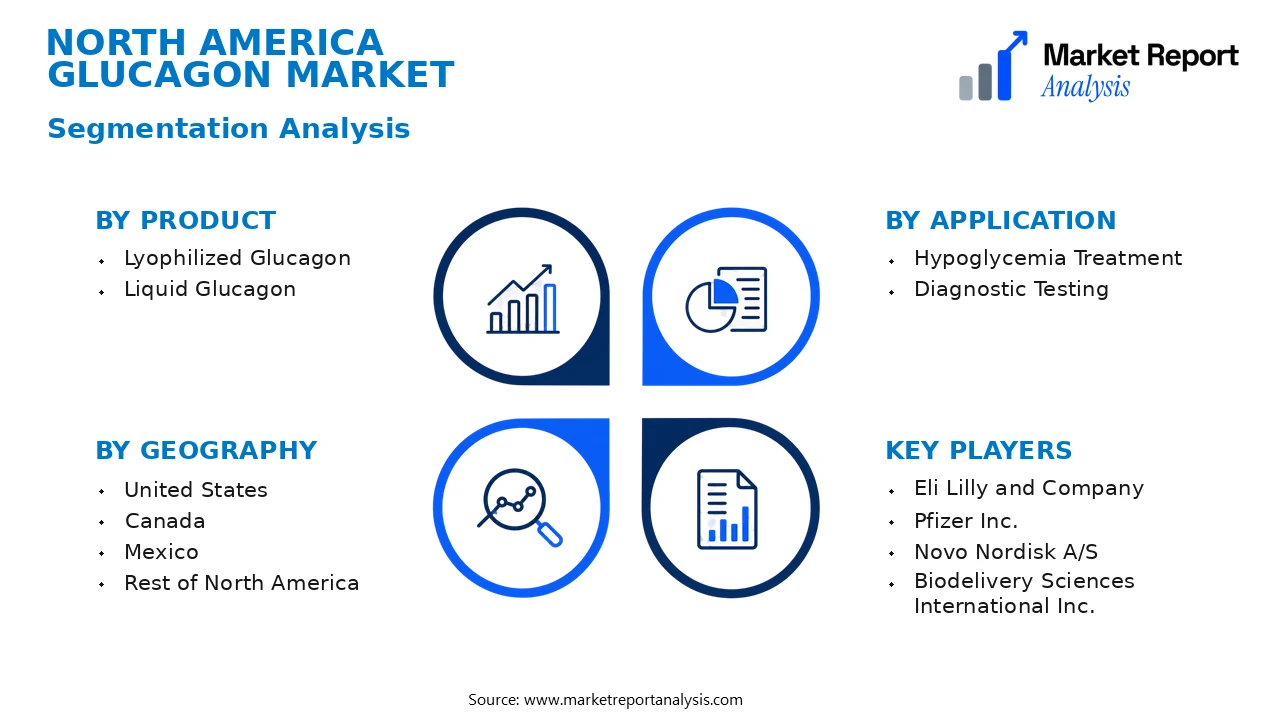
Market segmentation for the North America Glucagon Market categorizes the industry based on product type, application, and geography. Each segment reflects distinct market dynamics, growth drivers, and demand patterns crucial for strategic planning and market analysis by stakeholders.
- Product
- Lyophilized Glucagon: This form of glucagon, available in freeze-dried form, is primarily used owing to its longer shelf life and stability, making it suitable for emergency kits and hospital settings where reliable storage is essential.
- Liquid Glucagon: Preferred for its immediacy and ease of use, liquid glucagon is typically administered in outpatient and emergency contexts, with demand driven by its fast action in acute hypoglycemic episodes.
- Application
- Hypoglycemia Treatment: The largest application segment, focusing on glucagon's role in rapidly stabilizing blood glucose levels during hypoglycemic events, particularly in diabetic care, increasing its market penetration.
- Diagnostic Testing: Utilized in specific diagnostic procedures to evaluate pancreatic function or for confirming hypoglycemic states, this segment benefits from increasing awareness and technological advancements in medical diagnostics.
- Geography
- United States: As the leading market, the U.S. benefits from a high prevalence of diabetes, extensive healthcare infrastructure, and significant investment in emergency medical supplies, contributing substantially to market growth.
- Canada: Driven by progressive healthcare policies and awareness programs, Canada exhibits steady growth in glucagon demand, especially in outpatient and home healthcare sectors.
- Mexico: Emerging as a significant market due to improving healthcare access and expanding insurance coverage, Mexico presents considerable growth opportunities in glucagon distribution.
- Rest of North America: Including countries like Bermuda and others, this region shows varied adoption rates influenced by healthcare infrastructure, economic factors, and local medical practices.
Competitive Intelligence
The North America Glucagon Market is characterized by moderate competition, with several key players such as Eli Lilly, Novo Nordisk, and Zealand Pharma dominating the landscape. Market concentration remains relatively high, with the top three companies accounting for over 70% of the market share, reflecting a consolidated industry structure. Leading firms focus heavily on product innovation, investing substantially in R&D to develop user-friendly, stable, and cost-effective formulations of glucagon, including nasal and ready-to-use injectable forms.
Strategic partnerships and collaborations are prevalent, aimed at expanding distribution networks and accelerating clinical development. Notably, recent acquisitions have allowed major companies to broaden their portfolios and strengthen market positioning. Expansion strategies include entering emerging markets within North America and launching new delivery systems tailored for both hospital and home-care settings.
Continued R&D investment is crucial for differentiation, driving advancements in formulations that improve patient compliance and safety. Overall, competitiveness hinges on innovation, strategic alliances, and the ability to adapt to evolving regulatory standards, ensuring sustained growth and market leadership through 2034.
Leading Company Profiles
The competitive landscape in the North America glucagon market is characterized by a mix of pharmaceutical companies, bio-tech firms, and specialty drug developers focused on innovative formulations, ease of administration, and expanding indications. These companies are investing heavily in R&D, manufacturing capacity, and strategic alliances to strengthen their market positions and meet evolving healthcare needs.
- Eli Lilly and Company
- Pfizer Inc.
- Novo Nordisk A/S
- Biodelivery Sciences International Inc.
- Amphastar Pharmaceuticals, Inc.
- LG Chem Ltd.
- Wockhardt Ltd.
- Generex Biotechnology Corporation
- Oramed Pharmaceuticals Inc.
- Hoge Farma
Eli Lilly and Company
Eli Lilly specializes in developing innovative glucagon formulations, including nasal and injectable options, leveraging cutting-edge delivery technologies to improve emergency management and outpatient care for diabetic patients across North America.
Pfizer Inc.
Pfizer offers a broad portfolio of emergency glucagon products, actively expanding its product pipeline with novel formulations aimed at simplifying administration, enhancing stability, and broadening indications in hypoglycemia and other metabolic disorders.
Novo Nordisk A/S
Known for its leadership in diabetes care, Novo Nordisk is focusing on integrating glucagon therapies into its existing diabetes portfolio, alongside advancing innovative delivery mechanisms including nasal and auto-injector formulations.
Biodelivery Sciences International Inc.
With a focus on user-friendly delivery devices, Biodelivery sciences develops pen injectors and nasal spray formulations to improve the administration experience, targeting emergency and outpatient glucagon applications in the North American market.
Amphastar Pharmaceuticals, Inc.
Amphastar is expanding its manufacturing capacity and product offerings in the glucagon space, investing in advanced biologics technology to meet the growing demand for emergency treatments across North America.
LG Chem Ltd.
LG Chem is advancing its biotechnology pipeline, focusing on stabilizing and improving glucagon formulations through innovative stabilization techniques and novel delivery platforms aimed at insulin-dependent diabetic management.
Wockhardt Ltd.
Wockhardt is focusing on expanding its presence in North America through strategic partnerships and product launches centered on easy-to-use, single-dose glucagon formulations for emergency use and chronic conditions.
Generex Biotechnology Corporation
Generex specializes in innovative drug delivery systems, including nasal sprays, aiming to enhance rapid glucagon absorption and usability, with a strategic focus on expanding its pipeline within North American healthcare markets.
Oramed Pharmaceuticals Inc.
Oramed develops oral insulin and glucagon therapies, emphasizing groundbreaking oral delivery technology that could revolutionize emergency and routine diabetes treatment, with ongoing clinical trials and strategic partnerships in North America.
Hoge Farma
Hoge Farma is expanding its biotech portfolio with focus on stable, easy-to-administer glucagon formulations and collaborating with research institutions to advance new delivery methods and expand regional market access.
Strategic Business Developments

- January 2026 – Eli Lilly and Company – Launched intranasal glucagon to improve emergency treatment delivery – Enhances ease of use, broadening access and adoption among healthcare providers and patients.
- March 2026 – Pfizer Inc. – Announced capacity expansion for injectable glucagon products – Aims to meet rising demand, ensuring supply chain resilience for emergency diabetes care across North America.
- July 2026 – Novo Nordisk A/S – Invested in new biologics manufacturing plant – Strengthens production capabilities for glucagon therapies, supporting long-term growth and innovation pipeline expansion.
- September 2026 – Biodelivery Sciences International Inc. – Launched new pen injector device – Improves user convenience, targeting increased compliance and better outcomes in outpatient glucagon administration.
- November 2026 – Wockhardt Ltd. – Formed strategic alliance with North American healthcare distributor – Facilitates wider distribution of new single-dose glucagon formulations, expanding reach in emergency response markets.
Frequently Asked Questions
What is the North America Glucagon Market?
The North America Glucagon Market encompasses the production, distribution, and sales of glucagon-based pharmaceuticals used primarily for the treatment of severe hypoglycemia and other medical emergencies within the region. It includes various formulations like injectable and nasal forms.
What is the current market size of North America Glucagon Market?
As of 2026, the North America Glucagon Market is valued at approximately USD 1.2 Billion, reflecting its importance in diabetes management and emergency care. It has experienced steady growth driven by increasing diabetes prevalence and awareness campaigns.
What factors are driving the North America Glucagon Market?
Growth in the market is driven by the rising incidence of diabetes, the expanding adoption of glucagon for emergency therapy, improved product availability, and technological advancements leading to user-friendly formulations. Government initiatives and favorable reimbursement policies also bolster market expansion.
Which region dominates the North America Glucagon Market?
The United States dominates the North America Glucagon Market owing to its substantial healthcare infrastructure, high diabetes prevalence, and widespread insurance coverage for innovative treatments, making it the largest contributor within the region.
Which segment is expected to grow the fastest?
The nasal glucagon segment is projected to grow fastest during 2026-2034, driven by its non-injectable nature, ease of administration, and increasing approval for over-the-counter use, which enhances patient compliance and expands market reach.
Who are the leading companies operating in the North America Glucagon Market?
Key players include Eli Lilly and Company, Novo Nordisk, and Relonchem. These companies are actively involved in expanding their product portfolios, increasing manufacturing capacity, and enhancing distribution networks to gain competitive advantage.
Analyst Perspective
The North America Glucagon Market demonstrates a mature landscape with steady incremental growth driven by expanding diabetes prevalence and evolving emergency care protocols. Long-term prospects remain robust as innovation accelerates, particularly in formulation improvements such as intra-nasal and dual-chamber injectables, which promise enhanced patient compliance and ease of administration. Commercially, opportunities abound in targeted marketing to healthcare providers and patient education initiatives to capitalize on the rising awareness of glucagon's critical role in hypoglycemia management. Technology evolution points toward smarter delivery systems incorporating digital health integration and improved stability formulations, encouraging investments in R&D. Competitive intensity is high, with key players focusing on strategic alliances to sustain market share. Regionally, North America continues to exhibit significant growth potential owing to strong healthcare infrastructure, high diabetes incidence, and supportive regulatory frameworks. Strategic investments should prioritize innovation, access expansion, and competitive differentiation to maintain long-term leadership in this evolving market.
