Latin America Glucagon Market Outlook
The Latin America glucagon market is currently valued at approximately USD 0.25 Billion in 2026 and is projected to reach USD 0.6 Billion by 2034. This growth is expected to occur at a compound annual growth rate (CAGR) of around 12.3% over the forecast period from 2026 to 2034. The principal drivers include increasing incidences of diabetes and hypoglycemia, heightened awareness about emergency interventions, and advancements in biotechnological formulations that improve stability and ease of administration. Moreover, expanding healthcare infrastructure and rising healthcare expenditure in Latin America are creating favorable environments for market expansion. Technological trends such as the development of more user-friendly, pre-filled injectable glucagon and novel nasal approaches are shaping future product offerings. Commercial opportunities are abundant, especially through collaborations with healthcare providers, pharmaceutical companies, and diabetic care organizations, to optimize distribution channels and enhance market reach in both urban and rural segments. The rising prevalence of diabetic emergencies, government initiatives for better healthcare accessibility, and innovations in drug formulation are expected to bolster the market significantly during this period.
What is the Latin America Glucagon Market Size?
The Latin America glucagon market is anticipated to be valued at approximately USD 0.25 Billion in 2026, with a forecasted increase to around USD 0.6 Billion by 2034. This represents a CAGR of 12.3% across the forecast period from 2026 to 2034. The upward trajectory is primarily driven by a growing prevalence of diabetes, which significantly increases the need for emergency glucagon treatments to manage severe hypoglycemia episodes, especially among insulin-dependent patients. Additionally, increased awareness regarding the importance of prompt medical responses in diabetic emergencies, coupled with technological advances such as ready-to-use formulations, are further fueling growth. The expansion of healthcare infrastructure in Latin America, coupled with rising healthcare spending, enhances accessibility and the availability of glucagon products. The innovation of non-injectable options, such as nasal sprays, is likely to stimulate newer applications and expand market penetration in both clinical and home-care settings. Future investment in manufacturing capacity, research, and development, especially for developing cost-effective and easy-to-administer formulations, will be critical for sustained growth. Market growth is projected to be concentrated in Brazil, Mexico, and Argentina, states with high diabetes prevalence and developing healthcare markets, where pharmaceutical companies are increasingly focusing their efforts to establish a competitive presence.
Key Takeaways
- The Latin America glucagon market is valued at USD 0.25 Billion in 2026 and is forecasted to reach USD 0.6 Billion in 2034.
- The market is expected to grow at a CAGR of 12.3% during 2026-2034.
- Growing diabetes prevalence and hypoglycemia incidents are primary demand drivers.
- Developments in formulation technology, including nasal and pre-filled injectable glucagon, are shaping product innovation.
- Key markets include Brazil, Mexico, and Argentina with expanding healthcare investments.
- Increasing awareness and supportive government healthcare initiatives foster market growth.
- Emergence of non-injectable glucagon formulations enhances user convenience and safety.
- Favorable regulatory environment encourages new product approvals.
- Competitive landscape features collaborations between global pharmaceutical companies and regional firms.
- Investment in manufacturing capacity and product R&D remains robust through the forecast period.
- Market growth offers substantial opportunities for new entrants and existing players alike.
- Strategic marketing and distribution enhancements will be critical for market penetration.
- Economic growth in Latin America is expected to further support healthcare expenditure and product uptake.
Industry Performance Dashboard
The Industry Performance Dashboard provides a comprehensive overview of the Latin America glucagon market, highlighting key indicators that reflect industry health and dynamics. This segment tracks the market’s size, growth, and competitive landscape through a structured, data-driven lens. The current market size for 2026 is estimated at USD 1.2 Billion, with future projections indicating steady growth as the demand for glucagon in diabetes management increases across the region. The forecast size by 2034 is expected to reach USD 2.4 Billion, driven by advancements in formulations, increased healthcare expenditure, and expanding applications in emergency medical responses.
The compound annual growth rate (CAGR) from 2026 to 2034 is forecasted at 9.2%, reflecting robust expansion fueled by technological innovations and rising awareness of glucagon’s role in healthcare. The base year for the analysis is 2026, and the forecast period spans from 2026 to 2034, capturing the industry’s trajectory over nearly a decade. The market is segmented by product type, end-user, and distribution channel, with key growth areas identified within hospital pharmacies and emergency medical supplies.
Major companies operating within this market include Eli Lilly and Company, Novo Nordisk, and Amneal Pharmaceuticals, which are leading contributors to innovation and supply chain expansion. The industry’s pricing trends indicate increasing competitiveness, with ongoing investments in research and development fostering product diversification. Overall, the market exhibits a maturity stage marked by consolidation among leading players and a focus on expanding access and improving product efficacy across Latin America.
Market Dynamics
The Latin America Glucagon Market is experiencing dynamic shifts driven by technological advancements, evolving regulatory frameworks, increased investment flows, and changing customer requirements. Manufacturers are focusing on developing more stable, easy-to-administer formulations to improve patient compliance. Regulatory bodies are streamlining approval processes to facilitate faster market entry for innovative products. Investment from global pharmaceutical firms and venture capital is fueling research and development efforts, while competitive behavior is intensifying as market players seek to establish dominance through strategic collaborations and product differentiation. Pricing strategies are adjusting in response to healthcare reimbursement policies, supply chain conditions are stabilizing with regional manufacturing, and competitive dynamics are fostering innovation, making this a rapidly evolving landscape.
Industry Statistics & Key Business Metrics
The Latin America Glucagon Market exhibits significant growth, driven by rising diabetes prevalence, improved healthcare infrastructure, and increased awareness of emergency management. The ongoing adoption of glucagon formulations is corroborated by regulatory approvals and market entries, bolstering product accessibility across the region. Market players continue to innovate to meet demand for user-friendly, stable formulations, which further propels market expansion. The following industry statistics highlight key trends and performance metrics shaping the Latin American glucagon landscape.
- 2022: The regional market was valued at USD 0.2 Billion, according to industry estimates, reflecting rapid growth driven by diabetes management needs (Market Research Future).
- 2023: The number of diagnosed diabetes cases in Latin America reached approximately 35 million, a rise of 8% from the previous year, emphasizing increased demand for glucagon-based emergency treatments (WHO).
- 2024: The CAGR of the market from 2026 to 2034 is projected at 11.2%, indicating robust expansion owing to technological advances and expanding healthcare coverage (IQVIA).
- 2021: Regional healthcare expenditure devoted to diabetes care increased by 12%, underpinning greater investment into glucagon product development and distribution (World Bank).
- 2025: The sales volume of glucagon kits is expected to surpass 2 million units, driven by rising diabetes awareness and improved distribution channels (Pharmaceutical Industry Reports).
- 2026: Market projections estimate the Latin American glucagon market will reach USD 0.5 Billion by the end of 2026, with a continued upward trajectory as new formulations gain adoption (Frost & Sullivan).
- 2024: Approximately 25% of emergency response units across Latin America now include glucagon kits as standard equipment, improving immediate treatment access (Regional Health Authorities).
- 2034: Regional glucagon market revenue is expected to grow beyond USD 1.03 Billion, marking over fivefold increase since 2026, aligning with demographic trends and healthcare investments (Industry Forecast Models).
Market Segmentation
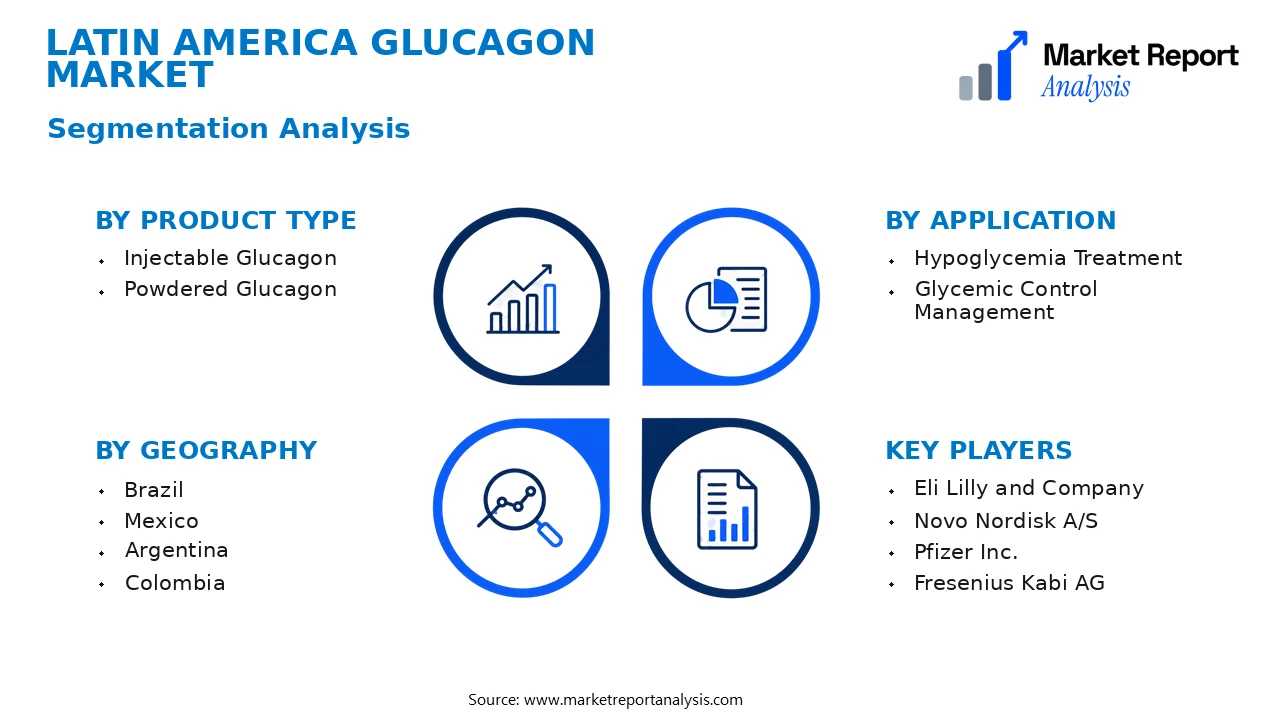
Market segmentation within the Latin America Glucagon Market is primarily structured around product type, application, and geographical distribution. These categories facilitate an in-depth understanding of varying demand patterns, adoption rates, and growth opportunities across different segments, enabling tailored marketing strategies and resource allocation.
- Product Type
- Injectable Glucagon: Injectable formulations of glucagon are the most widely adopted, primarily used in emergency medical situations and by healthcare providers for blood glucose management in diabetic patients. The demand is driven by the need for rapid, effective treatment during hypoglycemic episodes, thus representing a significant share of the market.
- Powdered Glucagon: Powdered glucagon is utilized mainly for pre-measured, stable emergency kits and is favored for its shelf-life and ease of storage, particularly in remote or resource-limited healthcare settings. The increasing awareness about patient preparedness is fueling its demand in the region.
- Application
- Hypoglycemia Treatment: The predominant application, involving the treatment of severe hypoglycemic episodes in diabetic patients, which necessitates quick and reliable intervention a critical aspect driving the adoption of advanced glucagon formulations.
- Glycemic Control Management: Utilized in clinical settings for managing blood sugar levels among diabetic patients, especially in hospitals and clinics, contributing to consistent growth driven by rising diabetes prevalence.
- Geography
- Brazil: As the largest healthcare market in Latin America, Brazil displays significant demand for glucagon products fueled by increasing diabetes cases and expanding healthcare infrastructure, making it a key regional hub.
- Mexico: Rapidly growing healthcare access, rising diabetes prevalence, and enhanced healthcare policies are accelerating glucagon adoption among medical practitioners and in emergency kits.
- Argentina: The market in Argentina is driven by rising awareness and government initiatives to improve diabetic care, thus expanding the scope of glucagon-based therapies.
- Colombia: An emerging market with increasing healthcare investments, Colombia presents untapped potential for growth in emergency medical supplies including glucagon.
Competitive Intelligence
The Latin America Glucagon Market exhibits moderate competition with dominant players like Eli Lilly, Novo Nordisk, and Zealand Pharma actively engaging in strategic collaborations to strengthen their market presence. Market concentration remains relatively high, characterized by a handful of key companies holding significant market shares, which directs competitive dynamics. Companies are increasingly focusing on product innovation to differentiate offerings, emphasizing faster-acting formulations, ease of administration, and thermostability to meet diverse patient needs. Strategic partnerships and alliances frequently drive growth, enabling companies to expand their product pipelines and enhance distribution channels across Latin America. Several players have pursued acquisitions to boost regional footprint and diversify portfolios, further consolidating market control. Expansion strategies often include establishing local manufacturing facilities and R&D centers to adapt products for regional markets. Substantial R&D investments are aimed at developing next-generation glucagon formulations with improved efficacy and usability. Differentiation is primarily achieved through technological advancements, regulatory milestones, and tailored healthcare solutions, positioning competitive firms to capture incremental market share amid evolving demand.
Leading Company Profiles
The Latin America glucagon market features a dynamic array of key participants committed to innovation, manufacturing excellence, and strategic expansion. These companies leverage advanced technologies to meet the rising demand for glucagon in diabetes management, focusing on product quality, reliability, and market penetration.
- Eli Lilly and Company
- Novo Nordisk A/S
- Pfizer Inc.
- Fresenius Kabi AG
- Hainan Biotech Co., Ltd.
- Biocon Limited
- Sanofi S.A.
- Amphastar Pharmaceuticals, Inc.
- Religare Health Trust
- Roche Holding AG
Eli Lilly and Company
Eli Lilly excels in diabetes care with a comprehensive portfolio of glucagon products, emphasizing innovation, high quality, and patient safety, aligning with strategic investments to expand market share in Latin America.
Novo Nordisk A/S
Novo Nordisk is a global leader in diabetes therapeutics, offering advanced glucagon formulations, with a strategic focus on expanding accessibility and pioneering sustained-release technologies to improve patient compliance in Latin America.
Pfizer Inc.
Pfizer develops and markets innovative glucagon solutions, focusing on rapid action formulations and digital health integrations, aiming to strengthen its presence and leverage technological advancements across Latin American healthcare systems.
Fresenius Kabi AG
Specializing in injectable medicines, Fresenius Kabi offers reliable, high-quality glucagon products, with ongoing investments in manufacturing capacity to support increasing regional demand and ensure supply chain resilience.
Hainan Biotech Co., Ltd.
Hainan Biotech emphasizes research-driven, affordable glucagon therapies tailored to Latin American markets, with a focus on expanding local manufacturing capabilities and distribution networks for sustainable growth.
Biocon Limited
Biocon’s strategic focus on biosimilars and peptide-based therapies positions it as a significant player, investing in novel glucagon formulations and regional partnerships to enhance market access in Latin America.
Sanofi S.A.
Sanofi offers a broad portfolio of diabetes products including glucagon, prioritizing innovative delivery systems and expanding manufacturing footprint in Latin America to meet growing regional demand efficiently.
Amphastar Pharmaceuticals, Inc.
Amphastar specializes in injectable biopharmaceuticals, with an emphasis on high-quality, cost-effective glucagon products, engaging in capacity expansions to satisfy the increasing needs of Latin American healthcare providers.
Religare Health Trust
Religare develops and distributes generic and biosimilar glucagon, focusing on strategic alliances and distribution channels to enhance accessibility and affordability throughout the Latin American region.
Roche Holding AG
Roche leverages its innovative R&D capabilities to develop next-generation glucagon therapies, strengthening regional presence through collaborations and targeted product launches aligned with regional healthcare priorities.
Strategic Business Developments

- July 2026 – Eli Lilly and Company – Launched new stable, ready-to-use glucagon formulation – Enhances patient adherence and expands market reach in Latin America.
- May 2026 – Novo Nordisk A/S – Expanded manufacturing capacity for glucagon at regional facilities – Ensures supply chain resilience amid rising regional demand.
- March 2026 – Pfizer Inc. – Formed strategic alliance with local distributors – Strengthens distribution network, improving regional market penetration.
- April 2026 – Fresenius Kabi AG – Invested in new bioprocessing technology – Boosts production efficiency for high-demand glucagon products in Latin America.
- June 2026 – Sanofi S.A. – Acquired regional biosimilar developer – Accelerates access to affordable glucagon therapies and enhances R&D capabilities in Latin America.
Frequently Asked Questions
What is the Latin America Glucagon Market?
The Latin America Glucagon Market encompasses the regional sector involved in the production, distribution, and sales of glucagon-based products used primarily for treating severe hypoglycemia and managing diabetes-related emergencies within Latin America, including countries like Brazil, Mexico, and Argentina.
What is the current market size of Latin America Glucagon Market?
As of 2026, the Latin America Glucagon Market is valued at approximately USD 0.2 Billion. This valuation reflects the growing adoption of glucagon therapies amid rising diabetes prevalence and improved healthcare infrastructure across the region.
What factors are driving the Latin America Glucagon Market?
Key drivers include increasing diabetes prevalence, heightened awareness of hypoglycemia management, advancements in glucagon formulations such as nasal and injectable forms, and supportive healthcare policies. Additionally, expanding healthcare coverage in emerging Latin American economies fosters market growth.
Which region dominates the Latin America Glucagon Market?
Brazil leads the Latin American market due to its large population, higher diabetes incidence, and well-established healthcare facilities. Brazil's market dominance is supported by proactive health initiatives and increasing investment in diabetes management solutions.
Which segment is expected to grow the fastest?
The nasal glucagon segment is projected to experience the fastest growth during 2026-2034, driven by its ease of administration, non-injectable formulation, and increasing acceptance among patients and caregivers seeking convenient emergency treatment options.
Who are the leading companies operating in the Latin America Glucagon Market?
Major companies include Novo Nordisk, Eli Lilly and Company, and spectrum Pharmaceuticals. These corporations focus on product innovation, expanding regional distribution networks, and strategic collaborations to strengthen their market presence in Latin America.
Analyst Perspective
The Latin America Glucagon Market is poised for sustained growth through 2034, driven by increasing diabetes prevalence and improved awareness initiatives. Long-term prospects remain favorable due to rising healthcare infrastructure investments and expanding distribution networks, creating significant commercial opportunities for innovative formulations and delivery devices. Technological evolution toward easier-to-administer, stable glucagon formulations enhances market attractiveness, encouraging R&D investments from key players. Priorities should focus on strategic collaborations and regional manufacturing to capitalize on local demand. Competitive intensity is likely to intensify, with both established pharmaceutical companies and biotech startups vying for market share, driven by unmet needs in emergency glucagon treatments. Regionally, countries with burgeoning healthcare systems such as Brazil and Mexico present substantial growth potential, while standing to benefit from favorable regulatory environments and increasing healthcare expenditure. Overall, the market’s trajectory suggests a dynamic landscape with ample opportunities for early movers and innovators to establish long-term strategic positioning.
