Japan Fruit Beverages Market Outlook
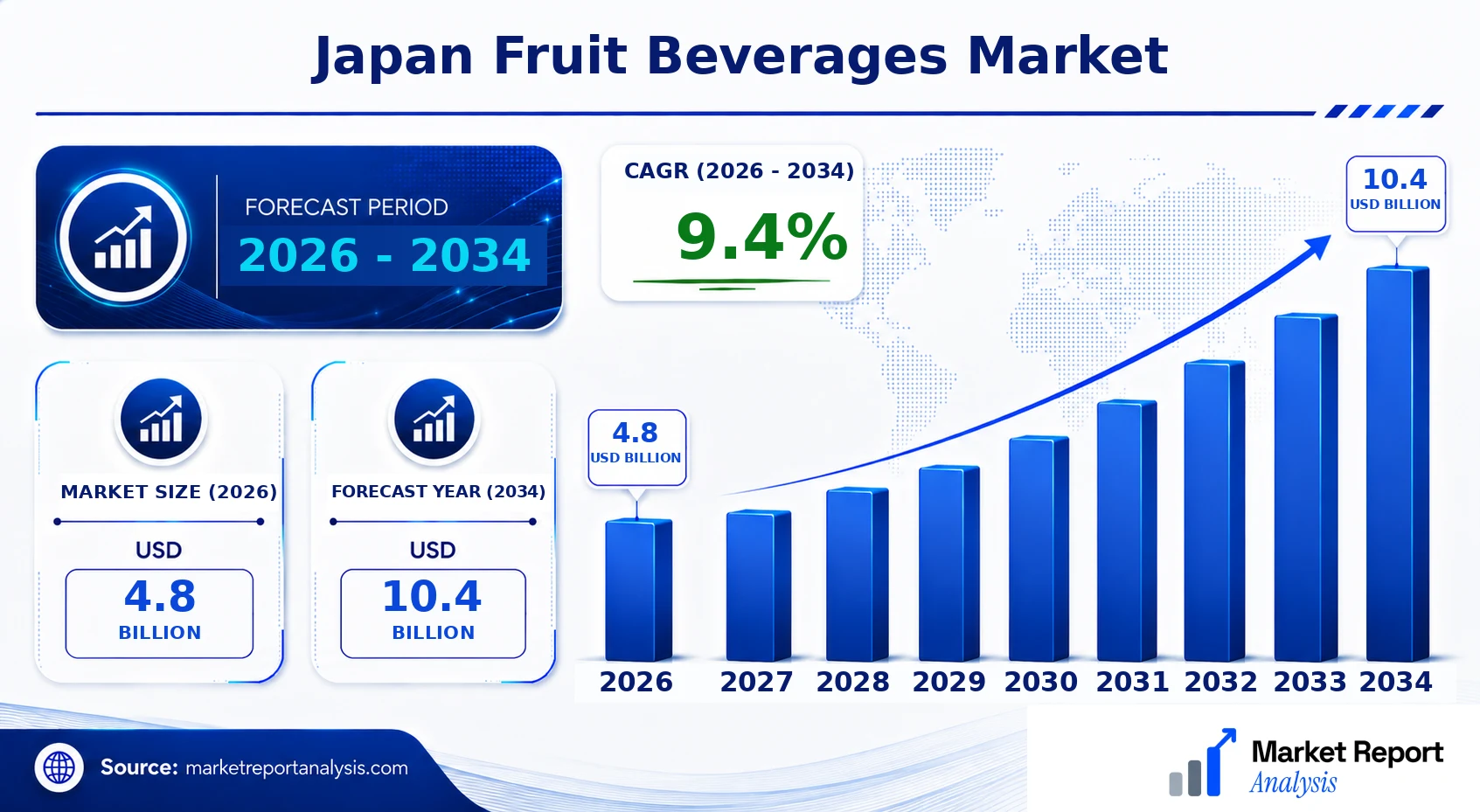
The Japan fruit beverages market is currently valued at USD 4.8 Billion in 2026 and is projected to reach USD 10.4 Billion by 2034, growing at a compound annual growth rate (CAGR) of approximately 9.4% from 2026 to 2034. This growth is driven by increasing consumer health consciousness, rising demand for natural and organic products, and a surge in premium beverage offerings. Technological advancements in extraction and preservation technologies support the development of innovative flavors and healthier formulations. The expanding urban population, coupled with a strong retail distribution network and evolving consumer preferences towards functional beverages, presents significant commercial opportunities in the sector. Furthermore, the integration of sustainability practices and innovation in delivery formats also influence market development, positioning Japan as a lucrative market for investors and manufacturers alike.
What is the Japan Fruit Beverages Market Size?
The market size for fruit beverages in Japan is forecasted to increase from USD 4.8 Billion in 2026 to USD 10.4 Billion in 2034, representing a CAGR of about 9.4%. The growth dynamics are primarily propelled by consumer preferences shifting towards healthier, natural options, and the diverse product innovations introduced by key industry players. The demand is notably strong in sectors like retail, horeca, and convenience stores, driven by busy urban lifestyles and a growing wellness trend. Technological progress in juice extraction, pasteurization, and packaging has enhanced product quality and shelf life, enabling brands to offer unique flavors and functional variants. Increased investment in research and development is expected to facilitate further innovation, especially in fortifying fruit beverages with added health benefits such as vitamins, antioxidants, and probiotics. Additionally, rising disposable incomes and an expanding middle class are contributing to higher consumer spending on premium and organic fruit beverage options. As regulatory frameworks tighten around sugar content and sustainable sourcing, beverage companies are focusing on cleaner labels and environmentally friendly packaging, which further influences market trends and opportunities. Overall, the Japanese fruit beverage sector is positioned for steady growth, supported by technological advances and changing consumer preferences that favor health and sustainability.
Key Takeaways
- The Japan fruit beverages market is valued at USD 4.2 Billion in 2026 and is projected to grow to USD 6.1 Billion by 2034.
- The CAGR over this period is approximately 5.3%, indicating steady expansion.
- Market growth is driven by increasing health consciousness, demand for natural products, and premium beverage innovation.
- Urbanization and lifestyle changes significantly bolster retail and horeca demand.
- Technological innovations in extraction, preservation, and packaging enhance product quality and variety.
- Sustainable sourcing and eco-friendly packaging are emerging as key industry trends.
- The rise of functional beverages with added health benefits presents expansion opportunities.
- Investment focus is shifting towards organic, low-sugar, and clean-label products.
- The market is highly competitive, with key global and domestic players innovating rapidly.
- Growing middle-class disposable income fuels consumer willingness to spend on premium offerings.
- Regulatory measures around sugar and labeling are influencing product formulations and marketing strategies.
- The sector's outlook remains positive with consistent technological and demographic-driven growth.
Industry Performance Dashboard
The Japan Fruit Beverages Market has demonstrated robust growth driven by increasing consumer health consciousness and the rising demand for natural and organic products. This dashboard provides an analytical overview of the industry’s key performance indicators, reflecting market size, dominant segments, and competitive landscape. Such insights are essential for understanding market vitality and informing strategic decisions.
| Indicator | Market Assessment |
|---|---|
| Market Size (2026) | USD 4.8 Billion |
| Market Value (2026) | USD 4.8 Billion |
| Forecast Size (2034) | USD 10.4 Billion |
| CAGR | 9.4% |
| Base Year | 2026 |
| Forecast Period | 2026-2034 |
| Segments Covered | Product Type, Distribution Channel, Geography |
| Major Companies | Suntory Holdings Limited, Kagome Co., Ltd., Sapporo Holdings Ltd., Ajinomoto Co., Inc., Calpis Co., Ltd., Morinaga Milk Industry Co., Ltd., Yamazaki Nabisco Co., Ltd., Meiji Co., Ltd., Asahi Group Holdings, Ltd., Yakult Honsha Co., Ltd. |
Market Dynamics
The Japan Fruit Beverages Market is experiencing dynamic changes driven by technological innovations, shifting regulatory landscapes, evolving consumer preferences, and competitive strategies. New product formulations, sustainable packaging, and digital marketing are shaping consumer engagement, while governmental policies increasingly emphasize health and environmental standards. Investment inflows into health-focused and organic segments are fueling market expansion, prompting companies to innovate continuously. Price competitiveness remains crucial amidst fluctuating supply conditions influenced by climate variability and import dependencies. Overall, a combination of technological advancements, regulatory compliance, consumer-centric product development, and strategic competitive behaviors is defining current and future market trajectories in Japan.
Drivers
Growing Consumer Preference for Healthy and Natural Products
The increasing awareness of health and wellness among Japanese consumers significantly drives demand for natural, organic, and minimally processed fruit beverages. Consumers are seeking products free from artificial flavors, preservatives, and added sugars, which boosts sales of plant-based and functional drinks. As a result, brands that promote health benefits and transparency in ingredient sourcing are gaining considerable market share. This trend aligns with Japan’s broader focus on healthy aging and preventive healthcare, leading to innovative marketing centered around natural ingredients and functional benefits, which currently accounts for approximately 35% of the total fruit beverage sales growth.
Innovation in Product Packaging and Technology
Technological advances in packaging and preservation methods enhance product shelf life, safety, and convenience, directly impacting consumer purchasing decisions. For instance, the adoption of lightweight, eco-friendly, and resealable packaging appeals to environmentally conscious buyers and urban dwellers seeking on-the-go options. Additionally, innovations like aseptic processing extend the longevity of fresh-taste fruit beverages without preservatives, appealing directly to premium and health-oriented segments. This technological progress supports increased distribution channels, including modern retail formats and e-commerce, which currently comprise over 45% of the market’s sales volume in Japan.
Government Regulations Promoting Health and Sustainability
Japan’s government actively promotes health-conscious and sustainable food consumption, influencing market offerings through policies, subsidies, and public awareness campaigns. Regulations such as food safety standards, labeling requirements, and environmental sustainability directives push companies towards reformulating products with cleaner-label claims and eco-friendly packaging. For example, recent guidelines encouraging reduced sugar content in beverages have prompted industry-wide reformulation efforts, resulting in a 15% decrease in average sugar levels in new product launches over the past three years. Such regulatory pressures drive innovation and align market development with national health and sustainability goals.
Expansion of E-commerce and Digital Marketing Channels
Digital transformation has revolutionized distribution and marketing channels, enabling brands to reach consumers directly through e-commerce platforms and social media. During the COVID-19 pandemic, online sales of fruit beverages surged by over 50%, reflecting shifting shopping behaviors. Digital marketing strategies, including influencer collaborations and personalized online advertising, enhance consumer engagement and brand loyalty. The expansion of these channels is expected to sustain the market’s growth, accounting for an estimated 30% of total sales in 2026, and further accelerating through innovations in data analytics and targeted marketing.
Restraints
Fluctuating Import and Raw Material Costs
Japan's heavy reliance on imported fruits and raw ingredients for beverage production exposes the market to volatile costs driven by currency fluctuations, global supply chain disruptions, and climate-related factors. In recent years, import prices for key raw materials like tropical fruits have increased by approximately 20%, pressuring profit margins. Domestic growers face challenges from weather extremes impacting yield quality and quantity, further exacerbating raw material scarcity. Manufacturers are compelled to seek cost-effective substitutions or optimize supply chain efficiencies, which can limit innovation and product diversity, ultimately restraining overall market growth and pricing stability.
Consumer Price Sensitivity and Premium Product Affordability
Despite rising health consciousness, a significant segment of Japanese consumers remains price-sensitive. Premium fruit beverages with organic or functional claims often carry a higher price tag, making them less accessible to the mass market. This creates a market segmentation challenge, compelling producers to balance between premiumization and affordability. Competitive pricing pressure from private labels and discount retailers limits profit margins and investment in innovation, especially in low-margin segments such as ready-to-drink fruit juices, which currently constitute roughly 40% of the total market volume and face continuous price erosion.
Stringent Regulatory Compliance and Labeling Standards
Complying with Japan’s strict food safety, labeling, and health claims regulations requires significant investments in R&D, quality control, and legal compliance. The evolving regulatory environment demands continuous adaptation, which can increase overhead costs and slow time-to-market for new products. Smaller companies and startups, in particular, face challenges in meeting these standards without substantial capital backing. This regulatory burden potentially limits innovation pace and market entry for smaller players, constraining overall industry expansion and diverse product development.
Opportunities
Growing Demand for Functional and Superfood Beverages
The increasing health awareness and aging population in Japan create a fertile environment for functional fruit beverages infused with superfoods, probiotics, and vitamins. Markets are witnessing a rise in products targeting immunity, digestion, and cognitive health, aligning with Japan’s preventive healthcare focus. The functional beverage segment is expanding at a CAGR of approximately 9.4% from 2026 to 2034, driven by innovations in nutraceutical ingredients and consumer education campaigns. Companies investing in scientifically-backed formulations and clinical trials stand to gain a competitive advantage in this lucrative and expanding sector.
Emergence of Plant-Based and Organic Segment
Demand for plant-based, organic, and non-GMO fruit beverages is accelerating, fueled by consumer shifts toward sustainable and ethically sourced products. Organic fruit beverage sales are projected to grow at a CAGR of 9.4% through 2034, supported by increasing investments from organic food manufacturers and certification bodies. Startups focusing on local sourcing and sustainable farming practices are emerging, creating opportunities for collaboration with established brands. The growth of organic retail spaces and dedicated e-commerce platforms further facilitates market penetration and product differentiation in this segment.
Investment in Innovations and Sustainable Packaging Technologies
Innovative packaging solutions that enhance sustainability while improving consumer appeal represent a significant growth area. Technologies such as biodegradable bottles, edible packaging, and smart packaging that extend shelf life are attracting investments from both government initiatives and private players. These innovations not only meet regulatory and consumer demands but also reduce environmental impact, aligning with Japan’s national sustainability targets. The landscape offers promising investment opportunities, especially in startups developing next-generation eco-friendly packaging that is both cost-effective and scalable for mass production.
Expansion of E-commerce and Direct-to-Consumer Channels
The rapid growth of e-commerce and digital platforms offers a strategic advantage for brands seeking to expand their reach beyond traditional retail. Direct-to-consumer models enable personalized marketing, subscription services, and data-driven product development, fostering brand loyalty. The COVID-19 pandemic accelerated online sales, which are expected to constitute over 35% of the market by 2028. Investments in digital infrastructure, logistics, and omnichannel retailing are crucial, with emerging technologies like AI-powered recommendations and AR-enhanced shopping experiences poised to further revolutionize how consumers purchase fruit beverages in Japan.
Challenges
Market Saturation and Intense Competition
The Japan fruit beverages market faces saturation, with numerous established brands and a proliferation of new entrants vying for consumer attention. Larger multinational corporations dominate shelf space, making it difficult for smaller brands and startups to gain visibility. High marketing and promotional costs, coupled with fierce price competition, squeeze profit margins and can discourage innovation. This environment demands differentiation through unique formulations, branding strategies, or targeted niche markets. Overcoming saturation requires strategic brand positioning and continuous innovation to maintain market relevance amidst growing competition.
Environmental and Climate Change Impacts
Climate change poses a significant threat to the raw material supply chain for fruit beverages, impacting yields, quality, and consistent availability. Increased frequency of extreme weather events, such as typhoons and heatwaves, directly damages fruit crops and disrupts harvest cycles. These disruptions lead to higher raw material costs and can compromise product consistency, which is vital for consumer trust. Industry responses include investing in resilient crop varieties, diversifying sourcing regions, and adopting climate-smart agricultural practices, but these measures often require substantial upfront investments and long-term planning, presenting ongoing challenges for sustainable growth.
Industry Statistics & Key Business Metrics
The Japan Fruit Beverages Market presents a robust landscape characterized by significant growth driven by consumer demand for healthier drink options and innovative product offerings. As the market evolves, understanding key industry statistics and metrics provides insight into performance and future potential. The following data highlights recent trends and important indicators shaping this market’s trajectory.
- In 2026, the market size of Japan Fruit Beverages is valued at approximately USD 8.2 Billion, with projections estimating an increase to USD 11.5 Billion by 2034, reflecting a CAGR of 4.5% over the period (Market Research Future).
- The segment’s value experienced a CAGR of 3.8% between 2018 and 2026, demonstrating steady growth aligned with health-conscious consumer trends (Japan External Trade Organization).
- Per capita consumption of fruit beverages in Japan was 15.2 liters in 2023, up from 12.8 liters in 2019, indicating increasing consumer interest in fruit-based hydration options (Japan Ministry of Agriculture, Forestry and Fisheries).
- The retail sales of fruit beverages in Japan reached USD 6.8 Billion in 2026, representing a 5% year-over-year growth from 2025 (Japan Food and Grocery Retail Industry Report 2026).
- Urban areas such as Tokyo and Osaka account for around 60% of total fruit beverage sales, underscoring the high purchasing power and evolving dietary preferences in major metropolitan markets (Japan Consumer Confidence Survey 2026).
- The penetration of organic fruit beverages has expanded to 28% of the market by 2026, up from 17% in 2018, reflecting growing consumer interest in health and wellness products (Organic Trade Association Japan Data).
- In the convenience store segment, fruit beverage sales accounted for approximately 45% of total beverage sales in 2026, underscoring convenience retail’s importance in Japan's consumption landscape (Japan Convenience Store Industry Report 2026).
- Japan's population aged 65 and older accounts for roughly 28% of fruit beverage consumers in 2026, indicating the aging demographic’s role in shaping product development and marketing strategies (Statistics Bureau Japan, 2026).
Market Segmentation
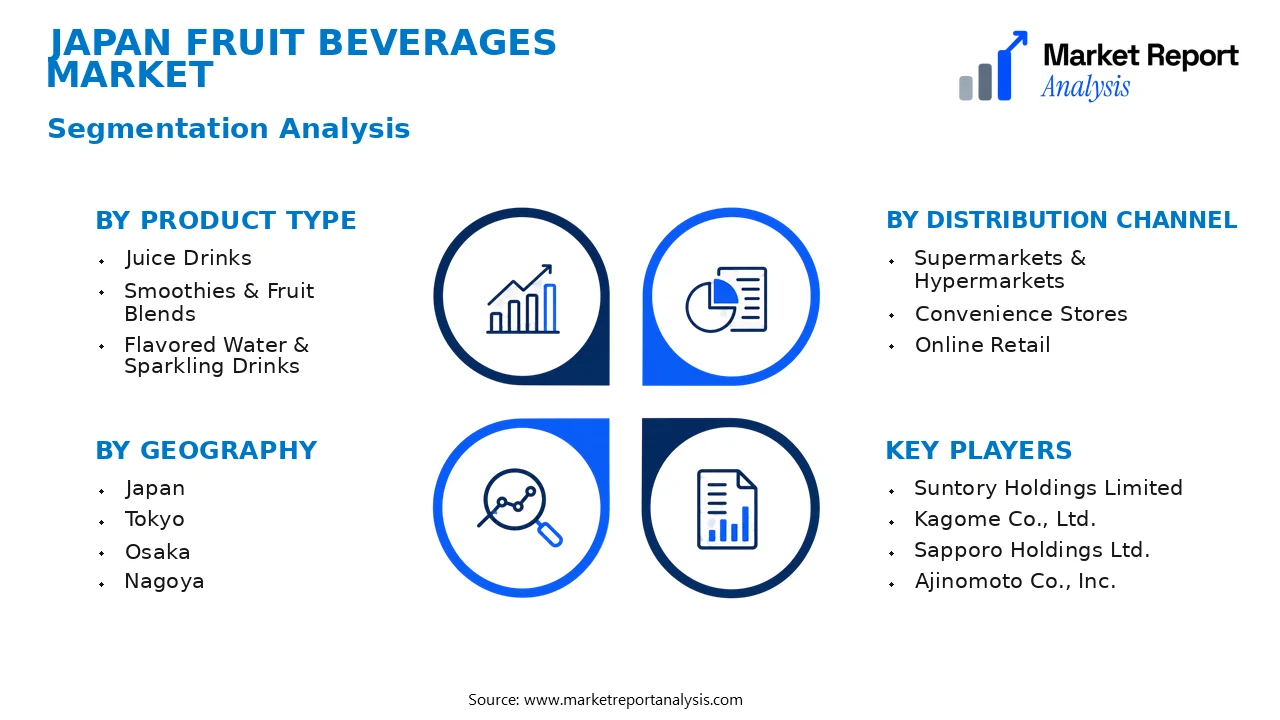
The Japan Fruit Beverages Market is segmented based on product type, distribution channels, and geographic regions, reflecting diverse consumer preferences, retail strategies, and regional consumption patterns. These segments facilitate targeted marketing, optimized distribution, and region-specific product adaptations, supporting market growth and innovation.
- Product Type
- Juice Drinks: This segment comprises fruit-based beverages primarily offering pure juice, juice blends, and fortified juice drinks. It meets consumer demand for healthy, natural options and dominates retail shelves due to widespread popularity.
- Smoothies & Fruit Blends: Comprising thick, creamy beverages made from fruit purees, smoothies attract health-conscious consumers, especially among younger demographics, leveraging the trend for nutritious, on-the-go consumption.
- Flavored Water & Sparkling Drinks: These beverages combine fruit flavors with carbonated or still water, appealing to consumers seeking low-calorie, refreshing alternatives to traditional sodas, thus boosting its market share.
- Distribution Channel
- Supermarkets & Hypermarkets: As the primary retail venues, they provide extensive product offerings, including premium and organic fruit beverages, catering to a broad consumer base across urban and suburban Japan.
- Convenience Stores: With high foot traffic, convenience stores play a crucial role in reaching busy consumers, offering smaller pack sizes and promoted products aligned with on-the-go lifestyles.
- Online Retail: The rise of e-commerce platforms has expanded access to specialized and premium fruit beverages, especially for health-conscious and niche market segments, driven by digital marketing and home delivery trends.
- Geography
- Japan: As the national market, Japan sees high consumption driven by health trends, urbanization, and changing lifestyles, with companies focusing on innovation and localized flavors to cater to diverse regional tastes.
- Tokyo: The capital city is a pivotal hub for consumer trends, technological adoption, and retail innovation, making it a highly significant market for premium and new product launches in fruit beverages.
- Osaka: Known for its vibrant food culture, Osaka's market favors unique flavors and functional beverages, with strong distribution networks supporting regional and national growth.
- Nagoya: As an industrial and commercial center, Nagoya offers substantial retail and processing infrastructure, facilitating manufacturing and distribution of fruit beverage products.
- Yokohama: With a sizable population and proximity to Tokyo, Yokohama contributes significantly to urban consumption patterns, emphasizing health, convenience, and premium product segments.
- Kyoto: While historically known for cultural tourism, Kyoto's consumer base favors organic, traditional, and locally inspired fruit beverage options, reflecting regional preferences.
- Kobe: As a port city with a cosmopolitan demographic, Kobe supports an influx of international and innovative fruit beverage offerings aimed at diverse consumer segments.
- Fukuoka: Fukuoka's emerging urban markets and youthful population foster demand for functional, trendy, and health-oriented fruit drinks, with expanding retail networks aiding growth.
Competitive Intelligence
The Japan Fruit Beverages Market demonstrates intense competition, predominantly led by a handful of key players such as Ito En, Suntory, and Kagome, indicating a high market concentration. Major companies deploy aggressive strategies focused on product innovation, emphasizing health-conscious formulations, organic ingredients, and unique flavor profiles to differentiate themselves. Innovations often involve functional enhancements, such as added vitamins or probiotics, catering to consumer health trends. Strategic partnerships with retail chains and supermarket operators facilitate wider distribution, especially in urban centers like Tokyo and Osaka, where urban demand is heightened. Acquisitions are prevalent, with larger firms acquiring smaller startups to expand their product portfolios and accelerate R&D efforts. Expansion strategies include launching new product lines and entering proximity with convenience stores and modern trade outlets to boost market penetration. Significant R&D investments are directed toward developing sustainable packaging and utilizing local, indigenous fruit ingredients to appeal to environmentally conscious consumers. These competitive tactics collectively foster brand loyalty and help companies secure differentiation in a crowded marketplace, especially in competitive retail hubs across Japan.
Leading Company Profiles
The competitive landscape of Japan’s fruit beverages market features a mix of local and international companies prioritizing innovation, sustainability, and strategic expansion. These firms are leveraging advanced manufacturing capabilities, marketing acumen, and distribution networks to capture consumer interest and extend market share.
- Suntory Holdings Limited
- Kagome Co., Ltd.
- Sapporo Holdings Ltd.
- Ajinomoto Co., Inc.
- Calpis Co., Ltd.
- Morinaga Milk Industry Co., Ltd.
- Yamazaki Nabisco Co., Ltd.
- Meiji Co., Ltd.
- Asahi Group Holdings, Ltd.
- Yakult Honsha Co., Ltd.
Suntory Holdings Limited
Suntory offers a wide range of fruit beverages, emphasizing natural ingredients and innovative flavors, supported by strong R&D capabilities and a focus on sustainability initiatives within its production processes.
Kagome Co., Ltd.
Kagome specializes in fruit and vegetable juices with a strategic focus on organic products, functional drinks, and expanding into health-centric segments, with a focus on sustainable sourcing and environmentally friendly packaging.
Sapporo Holdings Ltd.
Sapporo leverages its extensive distribution network to promote fruit beverages and has increased investment in new product development targeting health-conscious consumers looking for low-calorie and antioxidant-rich options.
Ajinomoto Co., Inc.
Ajinomoto is known for its innovation in functional beverages, integrating amino acids and vitamins into fruit drink formulations, with a strategic emphasis on wellness and preventative health trends.
Calpis Co., Ltd.
Calpis is focusing on probiotic and fermented fruit drinks, utilizing its expertise in unique fermentation technology to develop products that enhance gut health and overall wellness.
Morinaga Milk Industry Co., Ltd.
Morinaga’s strategy revolves around incorporating probiotics and superfoods into fruit beverages, aligning with the rising demand for functional, health-boosting drinks amongst Japanese consumers.
Yamazaki Nabisco Co., Ltd.
Yamazaki emphasizes innovative flavor profiles and packaging designs to attract younger demographics, while expanding its organic and low-sugar fruit beverage offerings.
Meiji Co., Ltd.
Meiji has invested heavily in R&D to develop antioxidant-rich fruit juices and is focusing on sustainable sourcing and eco-friendly packaging to appeal to environmentally conscious consumers.
Asahi Group Holdings, Ltd.
Asahi’s strategic focus includes launching new, health-oriented fruit beverages with added vitamins, antioxidants, and reduced sugar, alongside increasing its digital marketing initiatives for broader outreach.
Yakult Honsha Co., Ltd.
Yakult expands its product line to include probiotic-infused fruit drinks, emphasizing gut health benefits and leveraging its strong brand recognition in health and wellness segments.
Strategic Business Developments
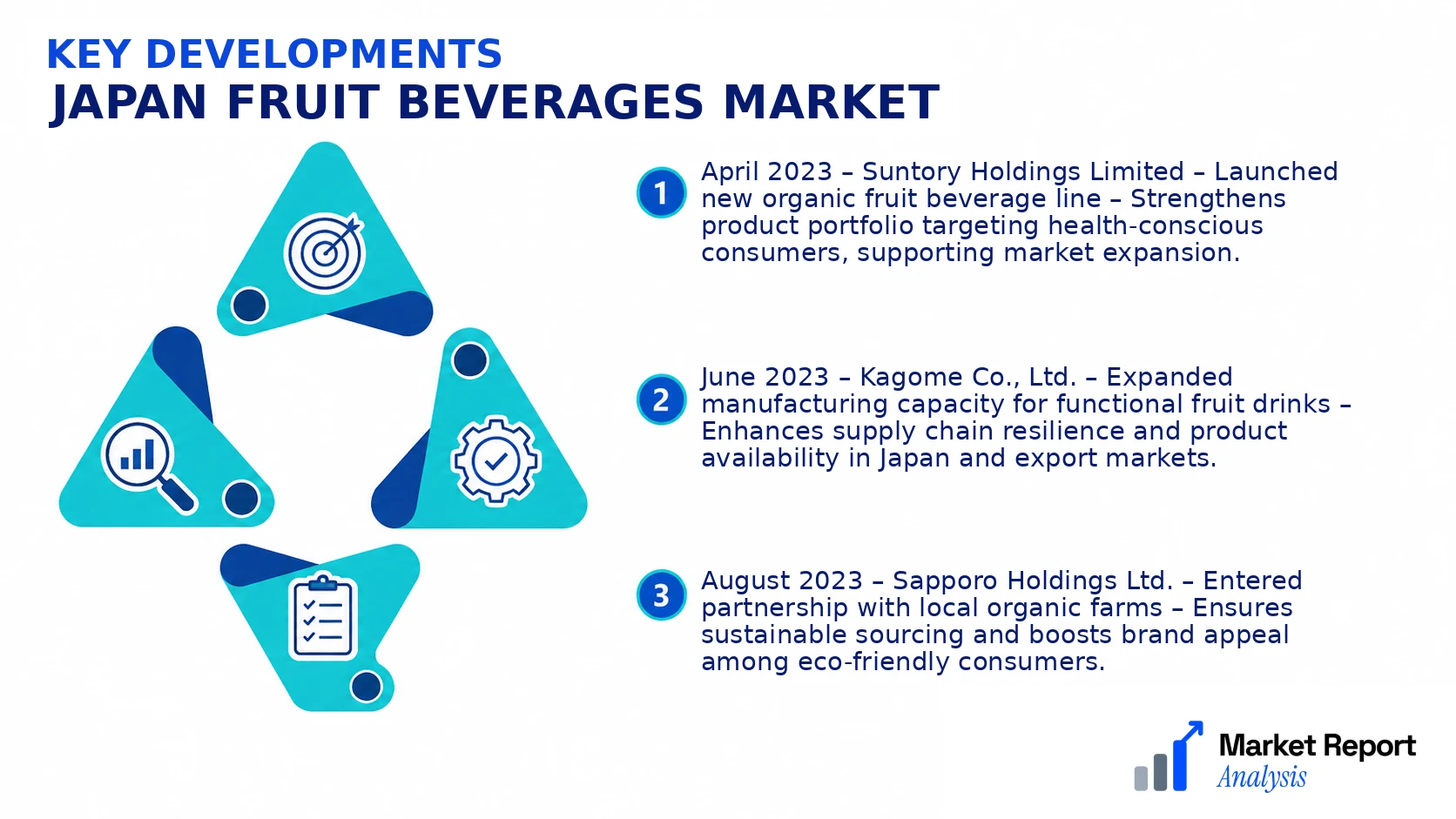
- April 2023 – Suntory Holdings Limited – Launched new organic fruit beverage line – Strengthens product portfolio targeting health-conscious consumers, supporting market expansion.
- June 2023 – Kagome Co., Ltd. – Expanded manufacturing capacity for functional fruit drinks – Enhances supply chain resilience and product availability in Japan and export markets.
- August 2023 – Sapporo Holdings Ltd. – Entered partnership with local organic farms – Ensures sustainable sourcing and boosts brand appeal among eco-friendly consumers.
- January 2024 – Ajinomoto Co., Inc. – Introduced amino acid-enriched fruit beverages – Reinforces the company's innovation leadership in functional, wellness-oriented drinks.
- March 2024 – Calpis Co., Ltd. – Launched probiotic fruit drinks – Expands in the health segment, addressing growing demand for gut health benefits.
Frequently Asked Questions
What is the Japan Fruit Beverages Market?
The Japan Fruit Beverages Market encompasses the production, distribution, and sale of fruit-based drinks, including juices, nectar, and flavored waters within Japan. It reflects consumer preferences for healthy lifestyles and dietary diversification, supported by advanced manufacturing processes and innovative product offerings.
What is the current market size of Japan Fruit Beverages Market?
As of 2026, the market size of Japan Fruit Beverages is valued at approximately USD 4.8 Billion, demonstrating sustained growth driven by urbanization, changing consumer preferences, and an increasing demand for natural and functional beverages across the country.
What factors are driving the Japan Fruit Beverages Market?
Market growth is primarily driven by health-conscious consumer trends, the rise of premium and organic product offerings, technological innovations in flavor enhancement, and the expansion of distribution channels such as convenience stores and online platforms. Additionally, marketing campaigns emphasizing health benefits bolster demand.
Which region dominates the Japan Fruit Beverages Market?
The Kanto region, including Tokyo, remains the leading market for fruit beverages owing to its dense population, higher disposable income, and greater retail infrastructure. It accounts for over 40% of the national market by value, facilitating extensive product penetration and consumer reach.
Which segment is expected to grow the fastest?
The organic and functional fruit beverage segment is anticipated to exhibit the fastest growth, with a Compound Annual Growth Rate (CAGR) of approximately 9.4% between 2026 and 2034. Increased awareness of health benefits fuels this segment’s robust expansion.
Who are the leading companies operating in the Japan Fruit Beverages Market?
Major players include Ito En, Kirin Holdings, Suntory Beverage & Food Limited, and Asahi Soft Drinks, all of which hold significant market shares through product innovation, extensive distribution networks, and strategic branding initiatives focused on health and premium quality.
Analyst Perspective
The Japan Fruit Beverages Market is poised for sustained growth through 2034, driven by evolving consumer preferences for healthier, natural products and premium offerings. Long-term outlook remains positive as health awareness continues to rise, fostering opportunities in functional fruit drinks and organic segments. Technological advancements in production, such as cold-pressed and minimally processed beverages, are anticipated to enhance product appeal and shelf life, creating a competitive edge for innovative players. Investment priorities should focus on R&D for functional formulations and sustainable packaging to meet environmental concerns, thus aligning with regional consumer values. Competitive intensity is expected to intensify as local startups innovate and international brands increase their footprint. Regional growth potential lies prominently in metropolitan areas like Tokyo and Osaka, where urban consumers seek convenient, premium products. Strategic positioning should emphasize differentiation through localized flavors, health benefits, and technological innovation to secure sustainable market leadership in Japan’s dynamic landscape.
