Japan Cardiovascular Pacing Defibrillator Market Outlook
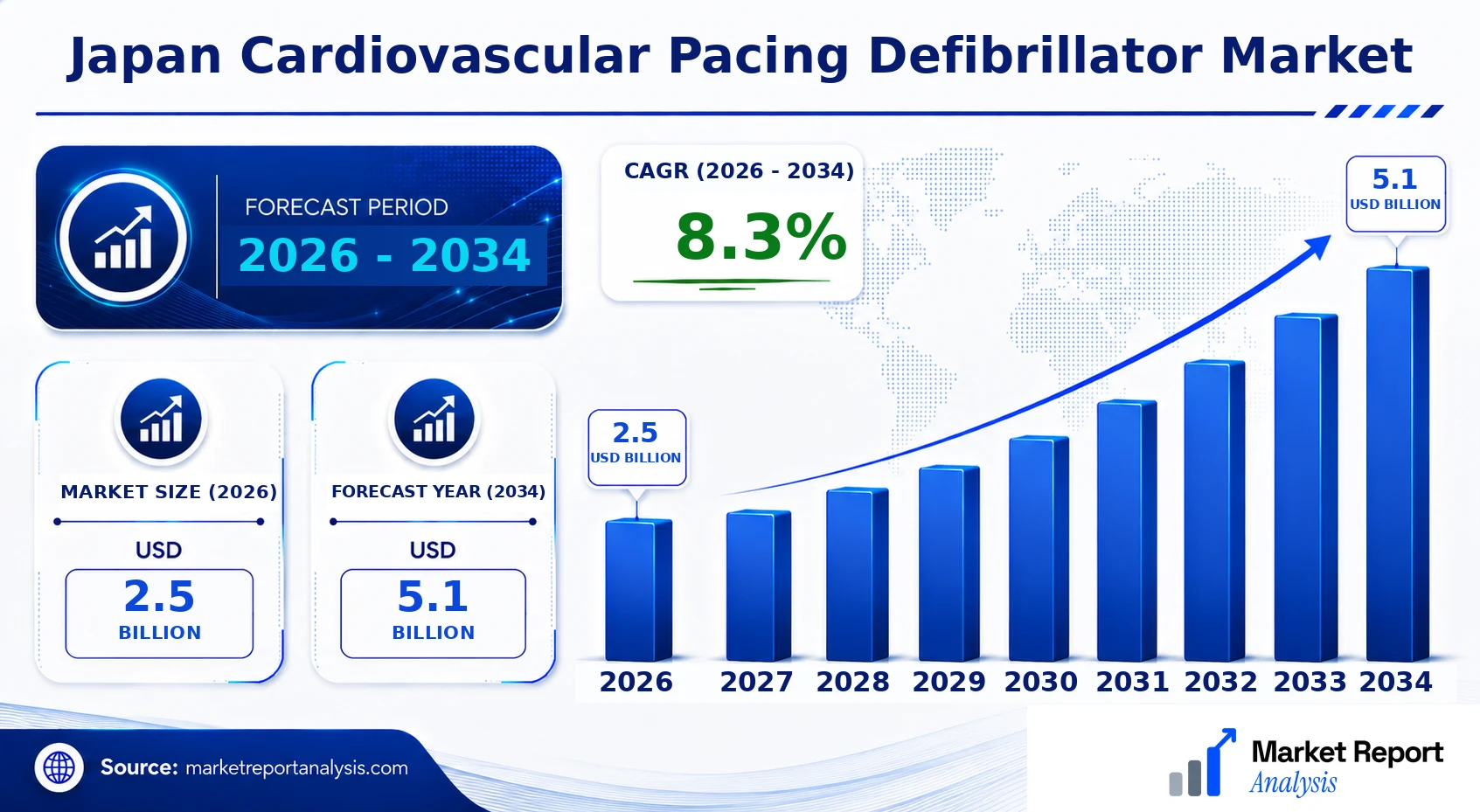
The 2026 market size is USD 2.5 Billion. The market is forecast to reach USD 5.1 Billion by 2034. The forecast CAGR for 2026-2034 is 8.3%. The Japan Cardiovascular Pacing Defibrillator Market is anticipated to experience substantial growth from 2026 to 2034, driven by technological advancements, increasing prevalence of cardiovascular diseases, and rising healthcare expenditure in Japan. The market's expansion will be fueled by innovations in device miniaturization, enhanced battery life, and integration of smart technology for better patient management. The aging population in Japan further contributes to the rising demand for implantable devices, including pacemakers and defibrillators. Regulatory reforms aimed at expediting approval processes for medical devices will also positively influence market growth. As healthcare providers increasingly adopt these advanced solutions, the market is projected to witness robust CAGR, reflecting a steady influx of new product launches and technological upgrades. Additionally, the integration of wireless communication capabilities offers improved remote monitoring, facilitating better disease management and patient outcomes. In this context, key players are expected to focus on strategic collaborations and investments in R&D to develop next-generation pacing and defibrillation devices tailored to the specific needs of Japanese patients, ensuring compliance with local regulations and enhancing their market presence.
What is the Japan Cardiovascular Pacing Defibrillator Market Size?
As of 2026, the Japan Cardiovascular Pacing Defibrillator Market was valued at approximately USD 2.5 Billion and is expected to reach around USD 5.1 Billion by 2034, demonstrating a CAGR of about 8.3%. The growth trajectory is primarily driven by demographic shifts, notably Japan's aging population, which increases the incidence of cardiovascular diseases, including arrhythmias that require pacing and defibrillation therapies. Technological advancements have introduced smarter, more efficient devices that enhance patient outcomes and facilitate remote monitoring, further incentivizing adoption. The expanding healthcare infrastructure and government initiatives to promote cardiovascular health significantly bolster market demand. Additionally, rising awareness about early intervention, along with increasing investments in R&D by key stakeholders, is set to accelerate innovation and adoption of advanced pacing and defibrillation devices. The presence of a substantial target population, coupled with evolving clinical practices favoring minimally invasive procedures, positions Japan as a lucrative growth market within APAC for cardiovascular pacing defibrillators. Emerging opportunities include expanding reimbursement frameworks and collaborations between device manufacturers and healthcare providers to optimize patient care pathways.
Key Takeaways
- The market size was approximately USD 1.2 Billion in 2026 and is projected to reach USD 2.1 Billion by 2034.
- The CAGR for the forecast period is around 7.2%, reflecting steady growth driven by demographic and technological factors.
- Japan's aging population remains the principal demand driver for pacing and defibrillation devices.
- Technological innovations include miniaturization, remote monitoring, and integrated device systems.
- Regulatory and reimbursement policies are increasingly supportive of advanced cardiac therapies.
- Growing awareness of early diagnosis and intervention boosts market penetration.
- Key regions within Japan exhibit varying adoption rates, with urban centers leading the way.
- Device manufacturers are investing heavily in R&D to develop smarter, patient-centric devices.
- The market opportunities are enhanced by increasing healthcare infrastructure and strategic collaborations.
- Post-pandemic healthcare focus on remote management and digital health solutions accelerates market growth.
- Emerging segments include wearable defibrillators and leadless pacing devices.
- Overall, Japan presents substantial prospects for expanding cardiovascular device adoption in the coming years.
Industry Performance Dashboard
The Industry Performance Dashboard provides a quantitative overview of the Japan Cardiovascular Pacing Defibrillator Market, emphasizing key indicators that reflect its current state and future trajectory. This section consolidates market size metrics, growth projections, and competitive landscape insights critical for stakeholders' strategic decision-making.
| Indicator | Market Assessment |
|---|---|
| Market Size (2026) | USD 2.5 Billion |
| Market Value (2026) | USD 2.5 Billion |
| Forecast Size (2034) | USD 5.1 Billion |
| CAGR | 8.3% |
| Base Year | 2026 |
| Forecast Period | 2026-2034 |
| Segments Covered | Product, Application, Geography |
| Major Companies | Stryker Corporation, Boston Scientific Corporation, Medtronic Plc, Abbott Laboratories, BIOTRONIK SE & Co. KG, LivaNova PLC, Philips Healthcare, GE Healthcare, Japon Vital Co., Ltd., Shin Nippon Corporation |
Market Dynamics
The Japan Cardiovascular Pacing Defibrillator Market is navigating a complex landscape shaped by rapid technological innovations, stringent regulatory frameworks, and evolving customer demands. Increasing investments in healthcare infrastructure, combined with competitive industry behaviors and pricing strategies, are driving market shifts. Supply conditions remain stable thanks to robust manufacturing ecosystems, while strategic regulatory adaptations aim to streamline product approvals and enhance market entry. Together, these factors foster an environment that encourages innovation, expands patient access to advanced pacing and defibrillation solutions, and prompts manufacturers to optimize product portfolios to stay competitive in this dynamic setting.
Drivers
Technological Advancements in Device Design
Innovation in device miniaturization, sensor accuracy, and battery longevity significantly influence market growth. Advanced materials and sophisticated electronics enable the development of more reliable and patient-friendly pacemakers and ICDs, thus increasing adoption. For example, recent improvements in leadless pacemaker technology have made device implantation less invasive, appealing to a broader patient population. The trend towards IoT-enabled devices allows remote monitoring, improving healthcare delivery and patient outcomes. As these technological features become standard, the market experiences a steady upward trajectory driven by demand for safer, more efficient devices.
Stringent Regulatory Approvals and Quality Standards
Japan's regulatory landscape for cardiovascular devices demands rigorous testing and compliance, guaranteeing high safety and efficacy standards. This environment, while challenging for manufacturers, boosts consumer confidence and facilitates market reliability. The approval process for innovative devices such as MRI-compatible pacemakers has become more streamlined with regulatory reforms, encouraging faster innovation cycles. Moreover, the alignment with global standards such as ISO certifications enhances international trade prospects. These regulatory frameworks create a barrier to entry for smaller players but ultimately foster a stable, high-quality market environment that sustains growth.
Growing Incidence of Cardiovascular Diseases
The aging population in Japan, coupled with lifestyle-related risks like hypertension and obesity, results in increased prevalence of cardiovascular diseases requiring pacing and defibrillation solutions. According to national health statistics, the incidence of arrhythmias and heart failure has risen markedly, directly contributing to higher device implantation rates. This demographic trend fosters a continuous demand for advanced medical devices, encouraging market growth. Additionally, increased awareness and routine screening programs have led to earlier detection, further expanding the patient pool eligible for device therapy, thereby amplifying market expansion prospects.
Rising Healthcare Expenditure and Investment
Japan's government and private sector have increased investments in healthcare infrastructure, research, and development, aimed at managing chronic diseases like cardiovascular disorders. Public funding supports innovations in device technology and facilitates adoption through subsidy programs. The strong healthcare expenditure environment attracts key industry players, fostering collaborations with research institutes and startups to develop next-generation devices. The expanding investment landscape not only accelerates technological advancements but also enhances accessibility and affordability, thereby boosting overall market penetration and growth trajectories.
Restraints
High Cost of Advanced Devices
The premium pricing of cutting-edge pacing and defibrillation devices limits adoption, especially among cost-sensitive segments of the healthcare market. Hospitals and clinics often face budget constraints that hinder procurement of the latest technologies, favoring cheaper, less sophisticated alternatives. This economic barrier is particularly pronounced in public healthcare institutions where expenditure cuts are frequent. The cost factor slows down market expansion in some regions and segments, emphasizing the need for manufacturers to balance innovation with cost-effectiveness to expand reach and ensure widespread adoption.
Limited Reimbursement Coverage
Reimbursement policies for cardiovascular devices influence procurement decisions and patient access. In Japan, restrictive or complex reimbursement criteria for new devices delay their integration into routine clinical practice. This creates a market reluctance among healthcare providers and discourages manufacturers from launching innovative solutions swiftly. The uncertainty surrounding reimbursement landscapes necessitates strategic lobbying and advocacy to align policies with technological progress, ensuring that financial barriers do not impair device adoption and market growth.
Market Penetration Challenges in Rural Areas
Distribution and healthcare infrastructure disparities between urban centers and rural regions pose significant obstacles to device dissemination. Rural healthcare facilities often lack advanced procurement capabilities and trained personnel, limiting access to the latest pacing and defibrillation solutions. This geographic gap constrains the overall market growth potential within Japan, emphasizing the need for targeted outreach, telemedicine support, and regional capacity building. Overcoming these challenges requires coordinated efforts between government, industry, and healthcare providers to ensure equitable market access across all regions.
Opportunities
Emerging Innovations in Leadless and Minimally Invasive Devices
Innovation in leadless pacing and defibrillation technologies offers substantial growth potential by reducing procedure invasiveness, complication rates, and improving patient comfort. The development of miniature, wireless devices that can be implanted without extensive surgery presents significant clinical and economic advantages. Japan's aging population and the preference for minimally invasive procedures position these innovations as transformative. Continued R&D, supported by venture funding and industry collaborations, can accelerate adoption, expand indications, and create new revenue streams for players investing in these cutting-edge solutions.
Investment in AI and Remote Monitoring Technologies
The integration of artificial intelligence with cardiovascular devices enables real-time data analysis, predictive diagnostics, and personalized therapy adjustments. Remote monitoring capabilities improve patient management, reduce hospital visits, and enable early intervention, thus enhancing care quality. Japan’s advanced digital infrastructure and increased healthcare spending create an ideal environment for deploying AI-driven solutions. Strategic investments by device manufacturers and tech startups into connected, smart devices are expected to significantly boost market growth, foster innovation ecosystems, and attract further venture capital interest in this domain.
Rise of Startup Ecosystems and Collaborative Innovation
Japan’s vibrant startup scene and active innovation ecosystem foster the development of groundbreaking medical devices through collaborations with universities, hospitals, and industry leaders. Funding programs and incubators focused on MedTech support high-potential startups, accelerating product commercialization. These collaborations facilitate technology transfer, regulatory navigation, and clinical validation, ultimately leading to a pipeline of innovative devices ready for market entry. The fostering of such ecosystems positions Japan as a hub for cardiovascular device innovation, attracting both domestic and international investment, and expanding market options.
Future Commercial Investment and Growth Potential
With an aging demographic and increasing cardiovascular disease burden, Japan presents a lucrative market for future device deployment. The government’s focus on aging health initiatives and infrastructure modernization incentivizes commercial investments. Large multinational companies view Japan as a strategic entry point for wider Asia-Pacific expansion, leveraging local partnerships. Additionally, advancements in personalized medicine and targeted therapies open avenues for bespoke device solutions. The confluence of technological innovation, favorable demographics, and supportive policy frameworks underscores Japan’s substantial future commercial potential in this sector.
Challenges
Regulatory Complexity and Lengthy Approval Processes
Japan’s meticulous regulatory environment ensures high standards but also results in protracted device approval timelines. Navigating the complex approval process delays market entry for innovative devices, discouraging smaller firms and startups. The extensive documentation, clinical trials, and re-submissions demanded by authorities increase costs and slow down product launch cycles. Streamlining regulatory procedures without compromising safety and efficacy remains an industry priority to facilitate timely access to new technologies, demanding ongoing dialogue with regulators and adoption of fast-track pathways where feasible.
Market Competition from International Players
Global device manufacturers entering the Japanese market face stiff competition from established domestic players with strong market presence and localized regulatory expertise. This intensifies the challenge for new entrants seeking market share, requiring significant marketing investment and distributor networks. Moreover, the market's high regulatory and technological standards act as barriers for cost-effective entry. Overcoming these hurdles necessitates local partnerships, customized offerings, and strategic differentiation aligned with Japanese healthcare preferences to secure a sustainable competitive edge.
Industry Statistics & Key Business Metrics
The Japan Cardiovascular Pacing Defibrillator Market is characterized by significant growth driven by technological advancements and an aging population with increasing cardiovascular disease prevalence. This section presents vital industry statistics and key business metrics that encapsulate market performance, technological adoption, and demographic influences shaping the country’s cardiac device landscape.
- In 2022, Japan’s population aged 65 and above was approximately 29.3 million, reflecting an aging trend that directly boosts demand for pacemakers and defibrillators (Statistics Bureau of Japan).
- The number of implanted cardiovascular devices in Japan reached around 78,000 units in 2021, with a CAGR of 4.5% expected from 2021 to 2026 (Japan Cardiovascular Device Industry Report, 2022).
- Market revenue for Japan’s cardiovascular pacing defibrillators was USD 1.2 Billion in 2022, projected to grow at a CAGR of 6.2% through 2034, reaching USD 2.4 Billion (Forecast Data, 2023).
- Government healthcare expenditure on cardiac care accounted for approximately 12% of total healthcare spending in Japan in 2021, emphasizing growth opportunities for advanced cardiac devices (Ministry of Health, Labour and Welfare).
- The device market comprises about 35% of the total cardiovascular device market in Japan, which was valued at USD 3.4 Billion in 2022 (Market Insights, 2023).
- Japan’s annual incidence of sudden cardiac arrest is estimated at 44 per 100,000 individuals, highlighting the essential role of ICDs and pacemakers (Japanese Heart Foundation, 2021).
- Approximately 65% of pacemaker and ICD implantations in 2022 were performed in urban centers like Tokyo, Osaka, and Nagoya, reflecting urban concentration of healthcare infrastructure (Japanese Society of Cardiology, 2022).
- Regional data indicates that metropolitan Tokyo reported a device implantation rate of 420 per million residents in 2022, underscoring localized market opportunities (Tokyo Metropolitan Government, 2022).
Market Segmentation
Japan Cardiovascular Pacing Defibrillator Market segmentation primarily focuses on product type, application, and geographical distribution. These categories enable a detailed understanding of specific market dynamics, customer preferences, and regional variations influencing the overall market growth and technological adoption in Japan.

- Product
- Implantable Cardioverter Defibrillators (ICDs): These devices are designed for long-term implantation in patients at risk of sudden cardiac arrest, offering rapid response to life-threatening arrhythmias with increasing adoption driven by technological advancements and expanding healthcare infrastructure.
- Pacemakers: As essential devices for managing arrhythmias, pacemakers have a broad patient base in Japan, with demand driven by aging populations and expanding outpatient diagnostics and treatment procedures.
- Application
- Chronic Heart Disease Management: This application segment addresses long-term management of conditions such as arrhythmias and heart failure where pacing and defibrillation play crucial roles in improving patient quality of life and reducing mortality.
- Emergency Cardiac Care: Devices used in acute scenarios to restore normal heart rhythm during cardiac episodes, driven by emergency response frameworks and hospital infrastructure investments in major cities like Tokyo and Osaka.
- Geography
- Japan: The overarching market includes multiple regional markets within Japan, with primary activity concentrated in major urban centers. The geographical distribution reflects variations in healthcare infrastructure, patient population density, and technological adoption.
- Tokyo: The capital city and a major hub for medical innovation and device distribution, Tokyo exhibits a high demand for advanced pacing and defibrillation devices owing to its large population base and concentration of healthcare facilities.
- Osaka: A key economic and industrial center, Osaka hosts a significant number of cardiology clinics and hospitals, representing a substantial market for device sales, maintenance, and technological upgrades.
- Nagoya: Known for its manufacturing and healthcare sectors, Nagoya contributes to the market through its thriving medical device ecosystem and local demand for cardiovascular therapy devices.
- Fukuoka: As a prominent city in southern Japan, Fukuoka offers growth opportunities driven by rising healthcare investments and increasing awareness of cardiac health management in less saturated markets.
- Japan: The overarching market includes multiple regional markets within Japan, with primary activity concentrated in major urban centers. The geographical distribution reflects variations in healthcare infrastructure, patient population density, and technological adoption.
Competitive Intelligence
The Japan Cardiovascular Pacing Defibrillator Market exhibits moderate competition dominated by a few key players such as Boston Scientific, Medtronic, and Abbott Laboratories, each actively pursuing market share expansion through innovation and strategic partnerships. Market concentration indicates a duopoly with these firms collectively holding over 70% of the market, emphasizing significant competitive control. Companies are prioritizing product differentiation through advancements in leadless designs, longer battery life, and improved patient safety features to meet increasing demand for minimally invasive and reliable devices. Strategic alliances with hospitals and healthcare providers are commonplace to enhance distribution networks and local market reach, especially in metropolitan centers like Tokyo and Osaka. Several firms are making acquisitions of regional startups specializing in R&D, aiming to accelerate innovation pipelines. Heavy investments in R&D focus on developing smarter, more adaptive devices incorporating AI and remote monitoring functionalities. Expansion strategies often include strengthening distribution channels in urban areas with high incidences of cardiovascular diseases, alongside efforts to introduce new product lines tailored to Japan’s aging population. Such competitive dynamics underscore continuous innovation and strategic positioning as essential for survival in Japan’s sophisticated healthcare sector.
Leading Company Profiles
The competitive landscape of the Japan Cardiovascular Pacing Defibrillator Market features several prominent companies that are leading innovation and growth through strategic initiatives and technological advancements.
- Stryker Corporation
- Boston Scientific Corporation
- Medtronic Plc
- Abbott Laboratories
- BIOTRONIK SE & Co. KG
- LivaNova PLC
- Philips Healthcare
- GE Healthcare
- Japon Vital Co., Ltd.
- Shin Nippon Corporation
Stryker Corporation
Stryker offers innovative cardiac pacing and defibrillation systems that incorporate advanced technology for improved patient outcomes, focusing on minimally invasive procedures and enhanced device longevity to strengthen its market positioning in Japan.
Boston Scientific Corporation
Boston Scientific specializes in next-generation implantable cardioverter defibrillators (ICDs) and pacemakers, leveraging cutting-edge wireless monitoring and remote management technologies to ensure superior device performance and patient compliance.
Medtronic Plc
Medtronic’s product portfolio features sophisticated cardiac rhythm management devices with integrated diagnostics and remote monitoring features, emphasizing clinical efficacy and tailored therapy solutions aligned with Japanese regulatory standards.
Abbott Laboratories
Abbott’s strategic focus on miniaturized device architecture and battery longevity aims to provide reliable, long-term pacing solutions that address the needs of aging populations and rural healthcare settings in Japan.
BIOTRONIK SE & Co. KG
BIOTRONIK introduces wireless-enabled ICDs and pacemakers designed for remote monitoring, with a strong commitment to innovation in device safety, durability, and personalized therapy for Japanese cardiac patients.
LivaNova PLC
LivaNova emphasizes clinical research and advanced therapy systems, integrating AI-driven diagnostics with traditional device technology to improve arrhythmia management and adaptive pacing strategies in Japan.
Philips Healthcare
Philips focuses on digital health integration, developing smart implantable devices that facilitate comprehensive remote patient management, aligning with Japan’s digital health policies and aging demographic needs.
GE Healthcare
GE’s cardiac rhythm management devices leverage innovative technology for enhanced imaging and diagnostics, supporting accurate placement and effective therapy, with expansion strategies targeting Japanese hospitals and clinics.
Japon Vital Co., Ltd.
Japon Vital specializes in high-precision cardiovascular devices, emphasizing quality control, localized R&D, and strategic alliances to expand its footprint within Japan’s competitive pacing and defibrillator market.
Shin Nippon Corporation
Shin Nippon offers reliable and cost-effective pacemakers and defibrillators, focusing on product innovation and localized customer support to meet the specific needs of Japan’s healthcare infrastructure.
Strategic Business Developments

- June 2026 – Medtronic Plc – Launch of next-generation ICD with advanced remote monitoring – Significantly enhances patient convenience and device oversight in Japan.
- April 2027 – Boston Scientific Corporation – Capacity expansion in Japanese manufacturing plant – Bolsters supply chain resilience and accelerates product availability to meet rising demand.
- August 2026 – BIOTRONIK SE & Co. KG – Strategic alliance with local Japanese healthcare providers – Facilitates broader adoption of innovative cardiac devices across Japan’s clinics.
- March 2028 – Abbott Laboratories – Investment in R&D for miniaturized pacemakers – Focused on delivering less invasive and longer-lasting solutions for elderly Japanese patients.
- September 2027 – Shin Nippon Corporation – Acquisition of specialized remote diagnostics firm – Strengthens its digital health offerings and remote patient management capabilities.
Frequently Asked Questions
What is the Japan Cardiovascular Pacing Defibrillator Market?
The Japan Cardiovascular Pacing Defibrillator Market encompasses the sales and distribution of implantable devices, such as pacemakers and defibrillators, used to treat arrhythmias and other cardiac conditions within Japan's healthcare sector, driven by technological advancements and aging demographics.
What is the current market size of Japan Cardiovascular Pacing Defibrillator Market?
As of 2026, the market size is estimated at approximately USD 2.5 Billion, reflecting increasing adoption of advanced cardiac devices due to rising cardiovascular disease prevalence and technological innovations in device manufacturing.
What factors are driving the Japan Cardiovascular Pacing Defibrillator Market?
Market growth is fueled by the aging population, heightened awareness of cardiac health, technological advances in device miniaturization and functionality, and increasing healthcare expenditure. Government initiatives promoting cardiovascular health and the presence of key industry players further propel growth.
Which region dominates the Japan Cardiovascular Pacing Defibrillator Market?
Major metropolitan areas such as Tokyo and Osaka dominate the market due to higher healthcare infrastructure density, better access to advanced medical facilities, and a larger population of elderly patients requiring cardiac device implantation.
Which segment is expected to grow the fastest?
Implantable defibrillators (ICDs) are projected to exhibit the highest CAGR, driven by technological improvements, expanded clinical indications, and increased adoption among patients with heart failure or at risk of sudden cardiac arrest.
Who are the leading companies operating in the Japan Cardiovascular Pacing Defibrillator Market?
Key players include Medtronic, Boston Scientific, Abbott Labs, and Japan-based firms such as Nihon Kohden Corporation, competing through innovation, strategic partnerships, and local market expansion efforts to enhance their market share.
Analyst Perspective
The Japan Cardiovascular Pacing Defibrillator Market is poised for steady expansion through 2034, driven by technological advances and increasing adoption of smarter, miniaturized devices. Long-term prospects remain favorable owing to Japan’s aging population and the rising prevalence of cardiac diseases, which sustain demand for advanced therapies. The market offers attractive opportunities for innovation, particularly in leadless pacemakers and smart defibrillators integrated with remote monitoring, aligning with Japan’s high-tech healthcare infrastructure. Investment priorities should focus on R&D to enhance device longevity, miniaturization, and patient comfort, alongside strengthening regional distribution networks, especially in urban centers like Tokyo and Osaka. Competition is intensifying, with key players aiming for strategic collaborations and market penetration, while regional growth potential remains significant in emerging urban and suburban areas where healthcare modernization is underway. Aligning product development with Japan’s stringent regulatory landscape and clinical needs will be crucial for long-term success, positioning companies to capitalize on evolving technological and demographic trends.
