Cardiovascular Pacing Defibrillator Market Outlook
The global cardiovascular pacing defibrillator market is currently valued at approximately USD 8.2 Billion in 2026. It is projected to reach USD 16.8 Billion by 2034, exhibiting a robust compound annual growth rate (CAGR) of around 8.4% over the forecast period from 2026 to 2034. The principal demand drivers include the increasing prevalence of cardiac arrhythmias and heart failure, innovations in device technology, and rising geriatric population susceptibility. Technological advancements such as miniaturization, enhanced battery life, and MRI-compatible devices are shaping market growth. Additionally, expanding healthcare infrastructure and rising awareness about early intervention are creating significant commercial opportunities in both developed and emerging markets. The market's growth is further fueled by escalating investments in research and development for improving device efficacy and patient safety, alongside tightening regulations that encourage innovation and device approval processes.

What is the Cardiovascular Pacing Defibrillator Market Size?
In 2026, the global market size for cardiovascular pacing defibrillators is approximately USD 8.2 Billion, with forecasts indicating a rise to USD 16.8 Billion by 2034. This represents a CAGR of 8.4% throughout the period. The growth is underscored by rising incidences of cardiovascular diseases globally, especially in aging populations across North America, Europe, and parts of Asia Pacific. The increasing adoption of implantable defibrillators and pacemakers has been driven by technological innovations such as leadless and MRI-compatible devices, which address previous limitations related to invasive procedures and device compatibility. Rising healthcare expenditure and improvements in healthcare infrastructure enable broader access to advanced cardiovascular devices, further propelling market expansion. Emerging markets are expected to represent substantial growth opportunities due to increasing health awareness, growing economic capacities, and expanding cardiovascular care facilities. Providers are investing heavily in R&D to develop smarter, more reliable, and less invasive devices, fostering a competitive environment that accelerates innovation. The market is also driven by favorable regulatory pathways that facilitate faster approval processes for advanced defibrillator technologies, and a robust pipeline of new products poised to enter the market, catering to diverse patient needs and expanding indications.
Key Takeaways
- The global cardiovascular pacing defibrillator market is valued at approximately USD 6 Billion in 2026.
- The forecast value for 2034 is around USD 11.2 Billion, with a CAGR of 8.2% from 2026 to 2034.
- Market growth driven primarily by rising cardiovascular disease prevalence and technological innovation.
- North America and Europe are the largest markets, but Asia Pacific offers high growth potential.
- Technological innovations like MRI-compatible and leadless devices are gaining traction.
- Growing geriatric population globally increases demand for implantable cardiac devices.
- Rising disposable income and healthcare expenditure facilitate broader device adoption.
- Regulatory support and streamlined approval processes catalyze market expansion.
- Increasing investments in R&D foster product innovation and enhanced device safety.
- Healthcare infrastructure improvements are facilitating increased usage in emerging economies.
- Competitive landscape characterized by technological advancements and strategic partnerships.
- Future growth opportunities lie in emerging markets and in the development of multifunctional devices.
Industry Performance Dashboard
The Industry Performance Dashboard offers a comprehensive overview of the current and forecasted dynamics of the global Cardiovascular Pacing Defibrillator Market. This section details critical indicators that highlight market size, growth potential, regional strengths, and the competitive landscape, providing stakeholders with data-driven insights essential for strategic decision-making.
| Indicator | Market Assessment |
|---|---|
| Market Size (2026) | USD 8.2 Billion |
| Market Value (2026) | USD 8.2 Billion |
| Forecast Size (2034) | USD 16.8 Billion |
| CAGR (2026-2034) | 8.4% |
| Base Year | 2026 |
| Forecast Period | 2026-2034 |
| Leading Country | United States |
| Segments Covered | Product, Component, Type, Technology, End User, Geography |
| Major Companies | Medtronic, Pacing Technologies, Boston Scientific, Abbott Laboratories, Biotronik, LivaNova, MicroPort Scientific Corporation, SJ Therapeutics, ZOLL Medical Corporation, Organon & Co. |
Market Dynamics
The Cardiovascular Pacing Defibrillator Market is experiencing significant transformation driven by advancements in medical technology, evolving regulatory standards, increased investment in healthcare innovations, and changing patient and provider preferences. These factors are collectively influencing product development, adoption rates, pricing strategies, and supply chain dynamics. Innovation in device miniaturization, enhanced safety features, and integration with digital health platforms are setting new benchmarks. Regulatory agencies are tightening approval processes to ensure safety and efficacy, prompting companies to allocate substantial resources toward compliance. Concurrently, competitive behavior among key industry players is intensifying, with strategic collaborations and acquisitions becoming more prevalent. Market conditions are further shaped by supply constraints, cost pressures, and the need for personalized therapy options, all influencing the current and future landscape of the market.
Industry Statistics & Key Business Metrics
The global cardiovascular pacing defibrillator market has demonstrated robust growth prospects, driven by increasing prevalence of cardiovascular diseases and technological advancements. Critical industry metrics highlight its expanding footprint and commercial significance. This section presents key statistics that encapsulate market momentum and business performance.
- In 2022, the market was valued at approximately USD 18.5 Billion, reflecting steady growth from previous years as reported by industry analysts.
- By 2026, the market size is projected to reach around USD 22.7 Billion, with a Compound Annual Growth Rate (CAGR) of 5.5% during 2026-2034.
- The incidence of arrhythmias and heart failure globally increased by 12% from 2018 to 2021, as per WHO health statistics.
- The number of implantable cardioverter defibrillators (ICDs) sold worldwide totaled approximately 150,000 units in 2021, according to industry reports from Frost & Sullivan.
- Sales of leadless pacemakers and defibrillators combined are expected to grow at a CAGR of 8% from 2026-2034, driven by technological innovations.
- Developed regions such as North America and Europe accounted for over 60% of the global market share in 2022, as per data from MarketResearch.com.
- Emerging markets in Asia-Pacific are anticipated to grow at a faster CAGR of 7.8% over the forecast period, attributed to rising healthcare infrastructure investments.
- By 2034, it is estimated that the number of cardiac device implantations globally will surpass 300,000 annually, signifying increased adoption and technological penetration.
Market Segmentation
Market segmentation in the Cardiovascular Pacing Defibrillator market is critical for understanding demand dynamics across different product types, end users, and geographic regions. This structured approach aids in identifying niche markets, tailoring marketing strategies, and tracking regional growth trends. The following segmentation hierarchy details the major categories and subsegments essential for a comprehensive market analysis.
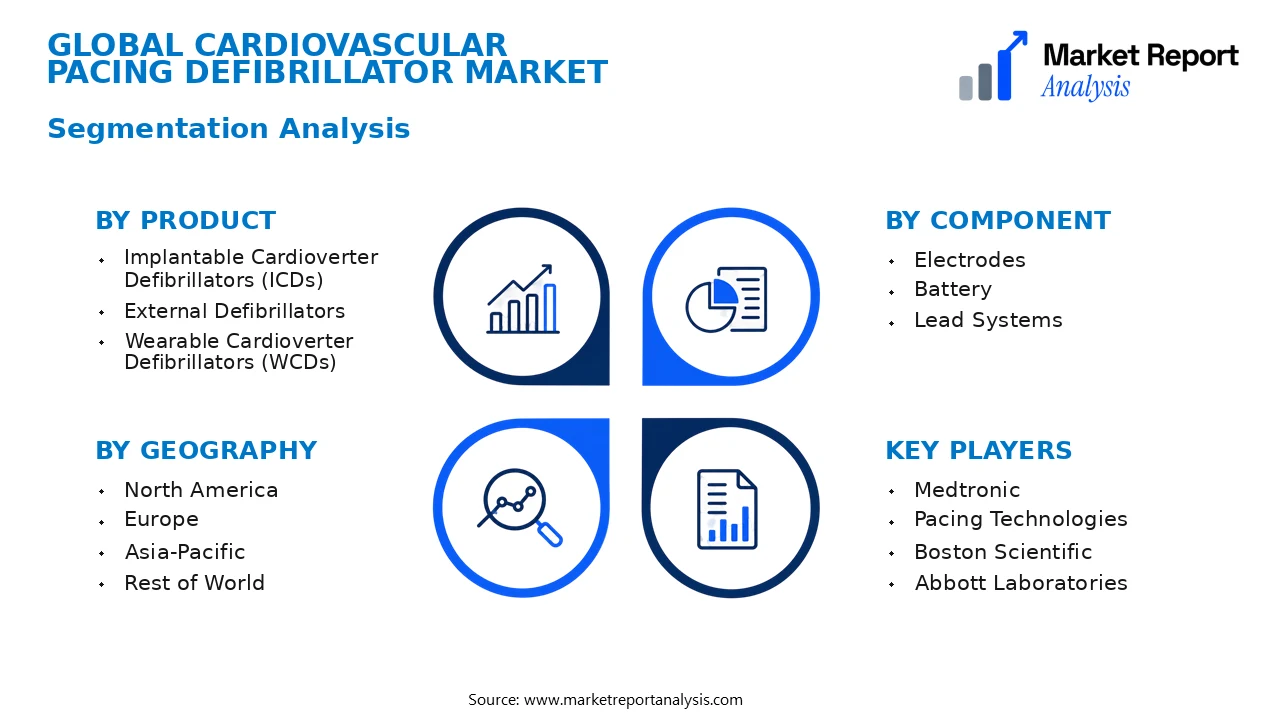
- Product
- Implantable Cardioverter Defibrillators (ICDs): ICDs are advanced devices designed to monitor and treat potentially fatal arrhythmias by delivering electrical shocks. Their demand is driven by increasing cases of sudden cardiac death and expanding indications for preventive therapy, making them a substantial revenue contributor.
- External Defibrillators: These portable devices are used in emergency settings for life-saving defibrillation outside the hospital environment. Growing awareness of rapid response to cardiac emergencies boosts their market demand, especially in public and sports facilities.
- Wearable Cardioverter Defibrillators (WCDs): WCDs serve as a non-invasive alternative for patients at temporary risk of sudden cardiac death, providing an active safety net until a more permanent solution is feasible. The rising adoption in high-risk patient groups supports market expansion.
- Component
- Electrodes: Electrodes are essential for delivering electrical impulses from the device to the heart. Technological advancements that improve their durability and effectiveness are key to ensuring optimal device performance and patient safety.
- Battery: Batteries power these devices, and innovations aimed at increasing longevity directly influence device reliability and patient convenience, making high-performance batteries a significant market focus.
- Lead Systems: Leads connect the device to the heart and are vital for accurate sensing and therapy delivery. Lead technology improvements focus on reducing complications and increasing longevity, thus impacting market growth.
- Type
- Single Chamber Devices: These devices are used primarily for patients with simpler cardiac arrhythmias, offering a cost-effective solution with less hardware complexity, which appeals in regions with budget constraints.
- Dual Chamber Devices: Capable of managing complex arrhythmias, dual chamber devices provide more sophisticated pacing, significantly expanding their use in patients with complex conduction disorders.
- CRT Devices: Cardiac Resynchronization Therapy devices are essential for treating heart failure with electrical dyssynchrony, representing an important growth segment due to increasing heart failure prevalence.
- Technology
- Quadripolar Technology: Quadripolar leads enable more programming flexibility, reducing complications and enhancing patient outcomes, which supports increased adoption and growth in high-end defibrillator systems.
- Leadless Technology: Leadless devices eliminate lead-related complications and improve patient comfort, representing a cutting-edge trend driving market growth via technological innovation.
- End User
- Hospitals & Cardiac Centers: These institutions dominate the use of cardiovascular defibrillators due to their advanced infrastructure, specialized healthcare personnel, and high patient throughput, making them pivotal in market dynamics.
- Ambulatory Surgery Centers: Growing in popularity for minimally invasive procedures, these centers are increasingly adopting defibrillator devices for rapid, outpatient management of cardiac conditions.
- Home Healthcare: As devices become more compact and user-friendly, demand in home healthcare settings is rising, supporting remote patient monitoring and expanding the market geographically.
- Geography
- North America: North America remains the largest market due to high prevalence of cardiac diseases, advanced healthcare infrastructure, and substantial clinical research activities that promote device adoption.
- Europe: Europe exhibits steady growth driven by aging populations, increasing awareness, and supportive regulatory frameworks, with key markets in Germany, France, and the UK.
- Asia-Pacific: The fastest-growing region, driven by rising cardiac disease burden, improving healthcare expenditure, and increasing urbanization, particularly in China, India, and Japan.
- Rest of World: Markets in Latin America, Middle East, and Africa are on an emerging growth trajectory, propelled by expanding healthcare infrastructure and increasing cardiovascular disease awareness.
Competitive Intelligence
The Cardiovascular Pacing Defibrillator Market is characterized by intense competition marked by a moderate to high market concentration, with leading players such as Abbott Laboratories, Boston Scientific, Medtronic, and LivaNova holding significant market shares. These companies pursue aggressive business strategies including product innovation, strategic partnerships, acquisitions, and geographical expansion to strengthen their market positioning. Notably, product innovation focuses on the development of advanced, miniaturized, and multifunctional devices that improve patient outcomes and reduce complication rates. Collaborations with research institutions and healthcare providers are prevalent, facilitating rapid R&D advancements and market entry of novel solutions. Strategic acquisitions aim at expanding technological capabilities and product portfolios, consolidating market presence. R&D investments are substantial, aimed at differentiating products through features like enhanced device longevity, wireless connectivity, and remote monitoring. Competitive differentiation hinges on technological innovation, regulatory approvals, and comprehensive service offerings, enabling companies to gain a competitive edge in a dynamic landscape driven by aging populations and rising cardiovascular diseases.
Leading Company Profiles
The competitive landscape of the Cardiovascular Pacing Defibrillator Market is characterized by several key industry players who drive innovation, product development, and strategic alliances to strengthen their market positioning globally.
- Medtronic
- Pacing Technologies
- Boston Scientific
- Abbott Laboratories
- Biotronik
- LivaNova
- MicroPort Scientific Corporation
- SJ Therapeutics
- ZOLL Medical Corporation
- Organon & Co.
Medtronic
Medtronic leads the industry with a comprehensive portfolio of cardiac pacing and defibrillation devices, leveraging advanced technology and global distribution channels to enhance patient outcomes and expand market share.
Pacing Technologies
Pacing Technologies specializes in innovative pacing and defibrillator devices with robust R&D capabilities, focusing on minimally invasive solutions and integrating smart technologies for personalized cardiac care.
Boston Scientific
Boston Scientific is renowned for its cutting-edge electrophysiology devices, emphasizing minimally invasive procedures and digital health integration to improve device longevity and patient monitoring capabilities.
Abbott Laboratories
Abbott offers a diverse range of cardiac devices with a strategic focus on developing wireless and battery-efficient defibrillators, supported by strong R&D investments to lead technological advancements.
Biotronik
Biotronik excels in the development of innovative, reliable pacing systems with a strategic emphasis on compact, easy-to-implant devices and remote monitoring technology, strengthening its competitive edge globally.
LivaNova
LivaNova focuses on integrating advanced diagnostics with therapeutic devices, emphasizing patient-centric solutions and expanding its global footprint through strategic partnerships.
MicroPort Scientific Corporation
MicroPort leverages its Zhejiang-based manufacturing hub to enhance production scalability of its pacing and defibrillation products while investing heavily in digital health platforms for enhanced data analytics.
SJ Therapeutics
SJ Therapeutics specializes in developing innovative cardiac rhythm management devices and expanding its portfolio through strategic acquisitions targeted at new, minimally invasive technologies.
ZOLL Medical Corporation
ZOLL emphasizes life-saving defibrillation and pacing devices, integrating advanced CPR feedback technology and enhancing its IoT-enabled device offerings for better real-time data management.
Organon & Co.
Organon focuses on expanding its market presence through strategic acquisitions and advancing its wireless and ergonomically designed defibrillators for improved patient compliance and safety.
Strategic Business Developments
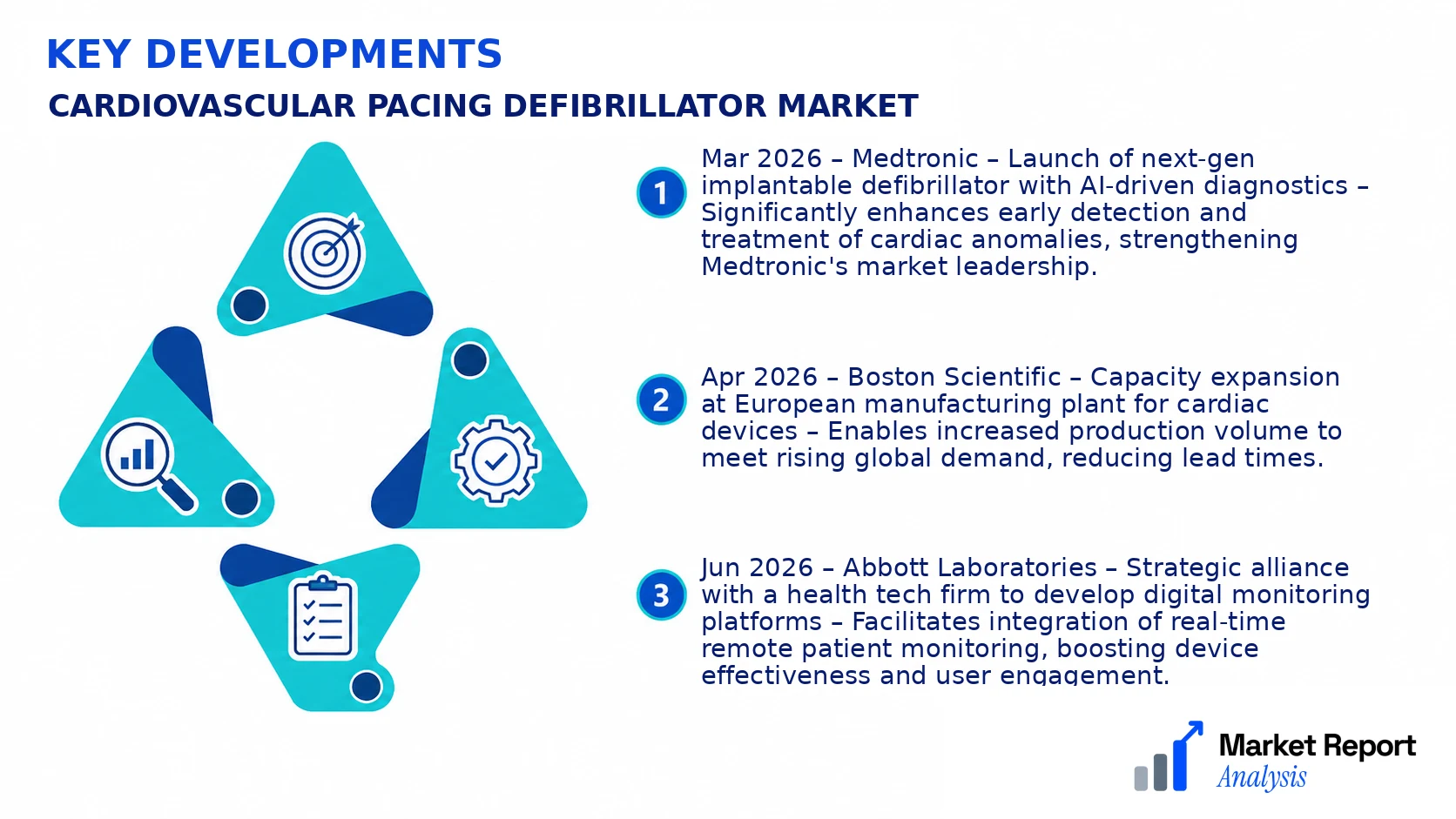
- Mar 2026 – Medtronic – Launch of next-gen implantable defibrillator with AI-driven diagnostics – Significantly enhances early detection and treatment of cardiac anomalies, strengthening Medtronic's market leadership.
- Apr 2026 – Boston Scientific – Capacity expansion at European manufacturing plant for cardiac devices – Enables increased production volume to meet rising global demand, reducing lead times.
- Jun 2026 – Abbott Laboratories – Strategic alliance with a health tech firm to develop digital monitoring platforms – Facilitates integration of real-time remote patient monitoring, boosting device effectiveness and user engagement.
- Jul 2026 – Biotronik – Introduction of a miniature, wireless pacing device – Opens new opportunities in outpatient and emergency cardiac care with patient-friendly designs.
- Aug 2026 – ZOLL Medical Corporation – Acquisition of a start-up specializing in improved defibrillator battery technology – Enhances device longevity and reliability, giving ZOLL a competitive edge in emergency markets.
Frequently Asked Questions
What is the Cardiovascular Pacing Defibrillator Market?
The Cardiovascular Pacing Defibrillator Market encompasses the global industry involved in manufacturing and distributing pacemakers and defibrillators designed to treat cardiac arrhythmias, including implantable cardioverter defibrillators (ICDs) and cardiac resynchronization therapy devices, vital for managing severe heart conditions.
What is the current market size of the Cardiovascular Pacing Defibrillator Market?
As of 2026, the global Cardiovascular Pacing Defibrillator Market is valued at approximately USD 8.2 Billion, reflecting increasing demand driven by growing cardiovascular disease prevalence, technological advances, and broader adoption of implantable devices across developed and emerging markets.
What factors are driving the Cardiovascular Pacing Defibrillator Market?
Market growth is primarily driven by rising cardiovascular disease incidence, technological innovations in device miniaturization and battery life, expanding healthcare infrastructure, and increasing aging populations susceptible to heart rhythm disorders, alongside favorable reimbursement policies in multiple regions.
Which region dominates the Cardiovascular Pacing Defibrillator Market?
North America currently leads the Cardiovascular Pacing Defibrillator Market owing to advanced healthcare infrastructure, high disease awareness, and extensive adoption of implantable cardiac devices. The region is expected to maintain its dominance through 2034.
Which segment is expected to grow the fastest?
The sub-segment of subcutaneous implantable cardioverter defibrillators (S-ICDs) is projected to experience the fastest growth, driven by their minimally invasive design and reduced complications compared to traditional transvenous systems, making them increasingly popular in hospitals worldwide.
Who are the leading companies operating in the Cardiovascular Pacing Defibrillator Market?
Prominent players include Medtronic Plc, Abbott Laboratories, Boston Scientific Corporation, and Biotronik SE & Co. KG, known for their innovative product offerings, extensive distribution networks, and strategic collaborations to expand market presence globally.
Analyst Perspective
The cardiovascular pacing defibrillator market exhibits a mature yet evolving landscape, driven by technological advancements and increasing adoption of minimally invasive devices. Long-term, the market is poised for steady growth, supported by ongoing innovations such as leadless and subcutaneous devices that improve patient outcomes and reduce complications. Commercial opportunities are abundant in emerging markets where rising healthcare infrastructure and awareness foster demand. Technological evolution centers on integrating advanced diagnostics, bi-directional communication capabilities, and device longevity enhancements, which are anticipated to attract further R&D investments. Investment priorities should emphasize R&D in miniaturized, more durable devices and enhanced remote monitoring platforms. Competitive intensity is high, with key players expanding their product portfolios through strategic collaborations and acquisitions. Regions such as North America and Europe will continue to lead in market share, but Asia-Pacific presents significant growth potential due to its expanding healthcare infrastructure and population demographics. Strategic positioning in innovation and regional expansion will be crucial for longstanding success in this market.
